Synagogue in Tehran at American Media

By Ali Rahbar
On television channel “ABC” America is a photo of a synagogue (the Kenisa) has released the Jews in central Tehran.
In this release, certain rituals and worship of Iranian Jews is portrayed.
The total population of 350 thousand Iranian Jews is now about 10 thousand of them in Iran, 250 thousand of them in Israel and 80 thousand of them live in America.
Jews addition has Maternity Hospital in Tehran, restaurant, library, gym, school and their professional associations.
According to the constitution, Iranian Jews have one representative in Parliament.
Iranian Jews, are the largest Jewish community in the Middle East.

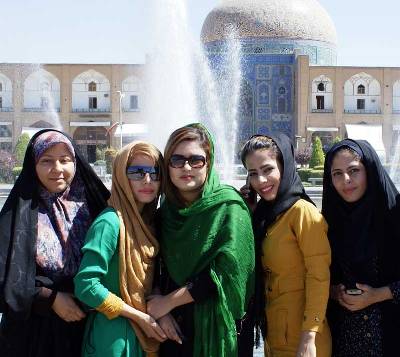
Costumes Clothes, Gilan
 with special beauty due to proper coverage is also consistent with our religious beliefs.
men and women in different regions have their own local and traditional clothing for example, in GHASEMABAD, effort and Deylaman women and men who are seen with national coverage.of course, in rural and mountainous areas this is more important.
In recent years young people have been willing to wear such clothes and participate
In some weddings and celebrations with these clothes .

 A Canadian family in Iran
 A five-member Canadian families have started its journey around the world.
They have started their journey with an old Land Rover.
They traveled from America to England and then France, Italy, Greece and Turkey reached to Iran.
In this section you you see the photos of this family.


Tourism is on the rise in Iran
More visitors have explored Iran since last year’s landmark nuclear deal and the lifting of the sanctions.


When the video Do not go to Iran first hit the internet in spring title did some Iranians fear that it would be yet another attempt to sabotage the country’s image.

But it was the opposite. French filmmaker Benjamin MARTINIE said the video aims to clear up misunderstandings about Iran, by counteracting the usual stereotypes through clips from his latest visit. The video has now been viewed hundreds of thousands of times on YouTube and Vimeo, and often divided between Iranians inside the country via social media.
“I would say a lot of people might not know [much] of Iran, outside of those things you hear on the news,” MARTINIE, which specializes in trips videography, told Al Jazeera. “Iran is changing, and tourist potential is really high. The warmth of the people, culture, warmth and the many amazing landscapes are all assets.”

The tourism industry in Iran is experiencing a renaissance these days, after years of stagnation following the 1979 revolution and the war with Iraq in the 1980s.


After the election of President Hassan Rouhani, who is seen as a moderate in 2013, the number of incoming tourists to Iran increased by almost a quarter to 4.8 million, according to the World Tourism Organization. The landmark 2015 nuclear deal between Iran and world powers, along with the lifting of sanctions, has opened the door for more visitors: last year, reported the country’s tourism department 5.2 million tourists, with each spending an average of $ 1,700 during their stay, bringing in a total turnover of more than $ 8 billion.
Iran is home to 19 UNESCO-designated World Heritage Site, more than any other country in the Middle East. From 2500-year-old ruins of Persepolis to the large, historic bazaars of Tabriz and Tehran, there are a variety of cultural options for tourists to embrace.

“Even now, it was difficult for us to get the hotel. It was completely full, mostly in Tehran and Isfahan,” Leo Wong, a tourist from the UK who recently visited the southern city of Shiraz with his wife Sera, told Al Jazeera.

Sera said Iran has been on the couple’s travel radar for close to a decade, but friends and family back home was initially worried about their safety, “Everyone was, like, freaking out,” she said. “Some people the impression of Iran is the terrorists, no alcohol and veils because they do not really understand.”

But Iran is ready for a tourism boom?

According Mojtaba Rahmanian, a founder of Iran Travel Service – a company that offers a variety of tours to Iran – the industry is growing rapidly, and will require significant investment in order to continue.

“We need more five-star hotels and more service of high caliber,” Rahmanian told Al Jazeera.

As part of its 20-year economic plan, Iran has an ambitious target to host 20 million foreign tourists annually by 2025, and is in need of more places to house them.


With exhausted infrastructure is often a problem for the tourism industry, a new element to strengthen tourism ties with Turkey gave the green light for more Turkish investors to build hotels in Tehran, Isfahan, Shiraz, Tabriz and Mashhad. Hotel groups from France and Spain have also invested in Iran in recent years, while Iran has strengthened tourism ties with China through the establishment of tourist offices in Shanghai and Guangzhou, hoping to attract Chinese tourists and investors.

The lifting of sanctions has also enabled Iran to upgrade its aging fleet of passenger aircraft, while airlines like Air France and British Airways have announced that they will resume flights to Tehran.

But Rahmanian says tourists can still face challenges when it comes to booking hotels or buying plane or train tickets in the country. The use of credit cards is still not available in Iran, forcing many tourists to get cash.

Despite these issues, Rahmanian says he has seen an increase in visitors through their own tours.

“Last year, tourists were mostly from Australia and Germany, but we have seen a lot more from places like Italy, Spain and even the United States, too,” he said.

“We also had two Americans come to Iran for their honeymoon” Rahmanian added, noting that the custom turn to include a trip to northern Iran, a trendy mountainous region covered in forest.

Iran Prepares for an Uptick in Tourism
 A handful of mostly European hotel groups looking to steal a march on their American competitors by moving into the Iranian hotel market, while US companies still face legal uncertainty.


Most international sanctions related to Iran’s nuclear program was lifted at the beginning of this year. It aroused great interest among international companies to enter a country of 80 million that remained isolated for decades.

Representatives of the fast-growing US companies as Hilton Worldwide Holdings Inc., Marriott International Inc. and Choice Hotels International reduced either comment or said they are staying on the sidelines for now./

“We have been carefully watching the status of the US sanctions, the rule changes to these sanctions and we are evaluating opportunities resulting from these changes,” said Alex Kyriakidis, president and CEO, Marriott International Middle East and Africa./

Meanwhile, other companies are wasting no time. Abu Dhabi-based Rotana Hotel Management Corp. PJSC, the French Accor, Spain Meliá Hotels International and Germany’sSteigenberger Hotel Group are all moving quickly in anticipation of a tourism and economic boom.

Iran’s economy is the second largest in the Middle East behind Saudi Arabia.

“Everyone is waiting for international changes take effect – we go forward,” says Guy Hutchinson, Chief Operating Officer of Rotana. “We are moving full speed ahead,” he said

Rotana, which operates more than two dozen cities in emerging and often complex markets such as Iraq and Sudan, has four properties under construction in Iran, the first one, a five-star hotel with 362 rooms, will open next year in the holy city of Mashhad.


Rotana can draw from their experiences in the holy cities of Mecca and Karbala in Iraq, where the alignment of pilgrims as an important source of demand presents unique challenges, said Mr Hutchinson. For example, more flexible check-in and checkout times may be needed to take account of the prayer, he said.

“If you talk to American companies, they do not necessarily have the same understanding of the markets that this virgin markets where there are special challenges in how to use,” said Mr. Hutchinson.

Frankfurt-based Steigenberger has recently signed a letter of intent to open 10 hotels in Iran, whilst the Meliá has a five-star hotel in the works on the shores of the Caspian Sea. Part of their optimism is driven by Iran’s ambition to increase the number of visitors to 20 million by 2025 from around five million by 2015.

Since the 1979 Islamic revolution, Iran’s hotel industry has been a local matter characterized by the absence of international brands. Visitors to Tehran, whether leisure or business, lamenting the lack of top-end hotel

“There is not enough space for business travelers in Tehran,” said Maryam Kiaie international business development manager for Rah Shahr, a major Iranian infrastructure firm. “We have business delegations postpone travel because of it.”

Ms. Kiaie estimates that Tehran needs 5,000 more high-value rates. Hotels can be attractive to investors because they are easier to buy and upgrade than other property types

“I think it is a very safe sector to invest in,” says Ms. Kiaie. “It’s easier to get financing to build the hotel, and there are many local investors interested in entering into a joint venture with foreign investors. It is a good opportunity for hotel chains.”


Some of Tehran’s hotel markets itself as a four or five-star hotels, but analysts say most of them would not get the same classification of international standards. Rates at the two Accor branches in Tehran ranges between $ 100 and $ 140 per night.

“Iran has some great potential for growth because there is a shortage of hotels, both qualitatively and quantitatively,” says Christophe Landais, COO of Accor Iran. Paris-based Accor over the past year opened two properties under the Ibis and Novotel brand, next Tehran International Airport. It works in about 10 additional projects will be located in Tehran and Mashhad.

Since opening its doors in Iran, Mr. Landais most positive feedback from customers, he has been focusing on the Accor offer free Wi-Fi and up to 40 international channels in the bedrooms – usual offerings in the Western world, but more rare in the existing Iranian hotels.

But being an early entrant to the Iranian hotel market also took its challenges, in particular the relative inexperience of local investors with international hotel practice, Mr. Landais.

“It is an advantage (to be first) but the other side of the coin of our groundbreaking, paving the way is that it is very difficult,” he said. “We spend a lot of time explaining how the hospitality development work.”

Mr. Hutchinson likened the present Iran situation to China before it became an economic powerhouse.

“It may take a little while until it fully opens and starts to move, but when it starts (it will go quickly),” he said.

There is also a risk of Iran’s leadership abandoning its current policies that enabled the country to rejoin the international business community in the first place.

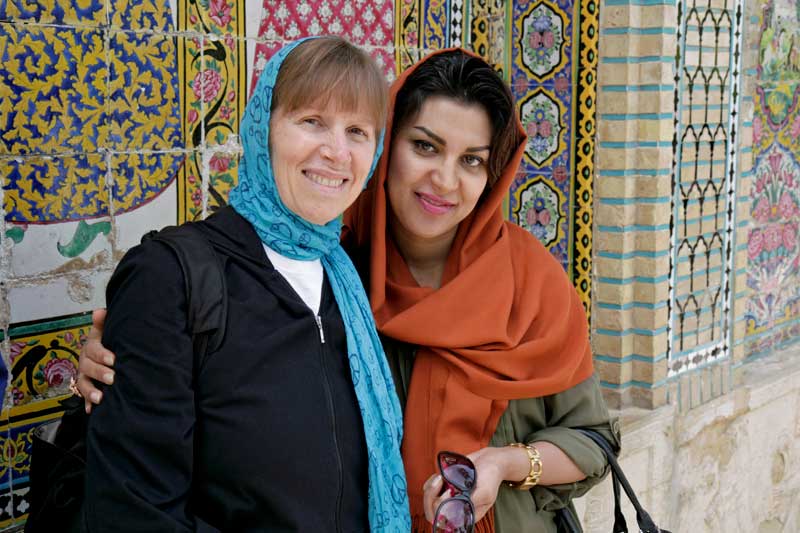
World oldest travel company Cox & Kings predict Iran as one of the hottest destinations in 2017


Iran and Jordan on Cox & Kings hot list for 2017

Cox & Kings has predicted that Russia, Iran and Jordan will be among the “hottest” destinations next year.
Founded in 1758, Cox & Kings has predicted travels for centuries.
The operator has made his predictions for “on trend” destinations next year, based on political changes in the world and major events and anniversaries.


Iran
Cox & Kings introduced Iran to its Middle East collection in October 2015 for the first time since 2011.
The operator said the demand from customers to travel back to Iran was “remarkable but not surprising”.
The operator explained that it is offered to one of the most popular tours of Cox & Kings.
British Airways relaunched its direct flights in September, making the country even more accessible.

Iran tourism for women: Safe or not safe?
By: Justine Oliver


With sanctions relaxed on Iran and airlines including British Airways reintroducing direct flights to Tehran, Iran is attracting foreign companies and travelers again. Having just returned from a one-month self-drive tour of the country, I can assure you that the destination has a lot to offer.

Justine Oliver is an independent travel security specialist with comprehensive global expertise that specializes in solo female travel. For 16 years she has been advising multinationals, NGOs, media organizations, educational institutions, companies and individuals on how to operate abroad safely. From 2001 to 2015, Justine worked at Control Risks and then as a joint venture between Control Risks and International SOS in London, providing customers across the globe with all aspects of rice safety, incident and crisis management, business continuity and security .During this time, Justine regularly provided training for customers who worked abroad or sent new travelers and ex-patrons to unfamiliar surroundings. It conducts training sessions, both through the webinar and reciprocal, to individuals and groups across Europe. Before she specialized in travel security, Justine lived in Hong Kong for four years, where she worked in development for the Hong Kong Cancer Fund.When leaving Southeast Asia, Justine, instead of flying home, decided to return a 30-foot sailboat with her future husband to London for ten months. During this time, honored their writings by documenting their journey and their resulting articles were serialized in Yachting Monthly. Justine has traveled and worked in more than 58 countries and has just returned from a five month trip with her husband and two children who are returning a landrover from 1957 to Iran and back. Justine holds a degree in Combined Studies from Newcastle University. She currently lives in South-West France.
Business, culture, history, landscape, food and the people are just some of the compelling reasons to travel to Iran, but one of the main barriers to visit the country for many people is often their colleagues and friends asking ” It really safe travel?

Western media often portray Iran as negative. There is a widespread misunderstanding about the true nature and security of the country spoiled by the reputation of some of its politically unstable neighbors.
That’s why people are often stunned when they are told Iran, with the exception of a few  locations, is considered a low-risk country and a safe destination to visit.
As a travel security consultant, specialising in women travellers, here are my top 10 tips to ensure visitors have a safe and fascinating trip to Iran.

CRIME


Crime rates are low in Iran and many women travel to the country alone without any problems. As with traveling to any destination, you should always basic, healthy people understand precautions, such as do not visit isolated places after dark or find yourself alone with men you do not know. The rates of small crimes such as pocket tears and pick pockets are far lower than in Western countries and serious crime against foreigners is even rarer.

CULTURAL DIFFERENCES
The main danger for women traveling is the foul of cultural feelings. The country is Islamic and as a woman you are limited in terms of your clothes and behavior. The risks for women are twofold; The religious authorities and the male attention unintentionally. The latter is much less likely than in other Muslim countries such as Egypt and Pakistan, where it is not uncommon to be bothered by unwanted male attention. Iranians are incredibly friendly and welcoming, but are also very respectful of your personal space. They are extremely unlikely to be hit in Iran.
It is considered very rude to approach a woman without being invited. They can also be gazed at by men and women, but this is probably due to genuine curiosity and excitement that you visit their country. If you are friends in Iran you will surely be like the Iranians are some of the friendliest people on earth, you have to be careful to make Western style look contact with men in the group as you will feel them uncomfortable or worse Can your eye contact as To accept an invitation. Wearing sunglasses can help avoid inadvertently avoid contact with people you are not talking with. Touching, tapping on the back, shaking hands with men and other physical contact is not advisable.

CLOTHING


The religious authorities are a threat to women traveling, and it is very important to stick to the strict dress code by wearing the hijab. The word hijab can mean both headscarf and “modest clothing,” but in Iran it means that your hair and body should be totally covered and your upper body should not be too close and should be low enough to cover your bottom.
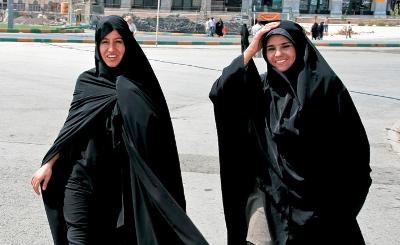
Iranian women are in two groups with more religious women tend to wear the “Chador” meaning “tent”, an informal black dress that covers their entire body. The other group is wearing bright colors, and usually a “manteau”, or thigh-length, lightweight jacket over jeans. Examination of the limits of the permissible seems to be an Iranian sport, especially in Tehran, but the Islamic police patrol the streets and attract people into inappropriate clothes.
Each city seems to have different standards and in more religious cities like Qom you will not feel comfortable in your colorful Manteau and want to wear nude, loosely fitting black clothes and socks when you wear sandals.

COVERING YOUR HAIR
Nobody hides her face Iran, but every woman before puberty must cover her hair and décolleté. In reality, every city and city follows these rules more or less. In Tehran, you see some women with most of their hair uncovered and their heads only attached to the back of their heads, while in Tabriz, no one will show any hair. Take some hairpins to help keep your veil in place and be sure to leave every time you leave your hotel room and leave your hotel room for breakfast.

EATING AND DRINKING


One of the things women do not travel on their own is eating alone. Iranians are so friendly and cheerful that it is unlikely that you have to endure a lot of lonely food. Because of social constraints, men are unlikely to approach you, but it is very likely that Iranian women, in groups or with their family, invite you to dine with them. Do not be surprised if they pay for your food, even if you have refused to join them!

PUBLIC TRANSPORT AND GENDER SEPARATION
Public transport is safe to use but aside from the Tehran Metro, it is probably not the ideal mode of transport for a business traveller.
The Tehran Metro is cheap, clean, air-conditioned and easy to navigate. At the front and back of each train are women wagons. These were implemented for gentleman’s reasons instead of sexist or discriminatory and can provide a less crowded and more comfortable experience, especially during the rush hour crush in the central carriages. Women can have other carriages alone or with male colleagues.

TOILETS
Toilets are definitely a low point in what is otherwise a very demanding company. Surprisingly, they are not always separate. It is not uncommon to visit the bathroom in a restaurant to find out that you have to go through the toilets of the men to get to the women’s area. But there is always soap, for which one is most grateful!

ROAD TRAFFIC INCIDENTS
The main roads in Iran are very good quality, but the driving behavior is bad. Always check that your vehicle is working seat belts and sitting in the back. Drivers will try to drive as fast as possible; Ask them to slow down if you are concerned and feigned travel sickness if you make any progress.

Count Down Begins to the Most Significant World Tourism Event in Iran
By: Mina Mehdinia


Count Down Begins to the Most Significant World Tourism Event in Iran

The “2017 WFTGA Convention”, Presenting Iranian Humanity and Hospitality…

The Convention Confirmed Seminar, The Deep-rooted Alliance Showcase

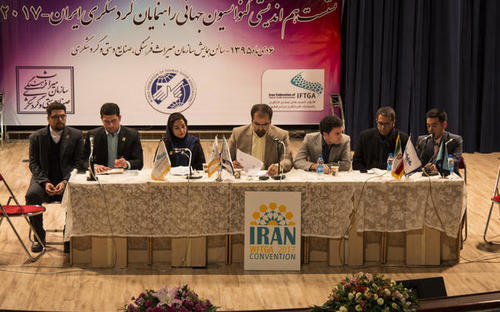
The wrap-up meeting held on the Cultural Heritage, Handicrafts & Tourism Org. auditorium, on 26 Dec 2016, to finalize the process and report the developments.   

Less than one month, Iran will proudly host 400 tourist guides from 45 countries. The Convention acts as an occasion to introduce Iran worldwide and IFTGA ambassadors will well done it.   

Morteza Rahmani Movahed, deputy head of the Iran’s Cultural Heritage and Tourism Org. fully cares the Convention, said in his speech: “Great workout is coming, hence our responsibility to protect it is on the rise day after day. Definitely the participants will talk years about Iran’s attractions and Iranian etiquette and hospitality”. “Tourist guides play an important role in the tourism industry and the Convention is the fruit of their mission. To touch the goals, governmental establishments support the convention”, he added.

“Wholeheartedly, all sections should have a hand in this national event, avoid opposition or hostility and warmly work to get the result”, Rahmani Movahed emphasized.

The 2017 Convention executive secretary, Mohsen HajiSaeed said in the 26th Dec seminar: “70 percent of the specialists assured that Iran selected in a most befitting manner. Fighting against Iranophobia and encourage people to travel Iran are the main purposes of us in this Int’l event”.    

He also explained the goings-over through the Convention and added: “Thanks to the attempts of Iran’s tourism Org., Mr. Taleb D. Rifai, UNWTO Secretary General, will attend in the day of opening. All details are checked but still we need to get help from the airlines and linked agencies”.

Pre-tour, convention and post-tour’s planning were also clarified with the presence of Director Generals of Tehran, Zanjan, Hamedan, Yazd, Fars and Isfahan Tourism organizations. The mentioned provinces are involved in the planning which will be held on Jan 25th – Feb 6th.

“High quality facilities, standard services and competitive capacities would be the achievement of the Convention”, stated Ali Baqer Ne’mati, director of the Promotion and Marketing Office at Iran’s Cultural Heritage, Handicrafts and Tourism Organization.

Registration for the event has started and over 300 foreigner and 111 domestic guides are in the list totally. Almost 250 Iranian Visa Codes are issued till now, 203 are accepted and others are on the process. With no trouble the invitees will get the airport visa.  

The event will absolutely lead to show the exact peaceful face of Iran to the world. Collaboration between the organizers controls every details. Full security and safety provide to the Convention guests from the start point to the last step, alongside with best sightseeing tours and conferences awaits them.

Additionally, the 2017 WFTGA Convention’ poster was unveiled during the conference.

In the last part, executive members and the Head, Arash NoorAghaee, negotiated about the rest of the route.

Latest Newsletter for the 17th WFTGA Convention


As you know, we have less than 30 days to the Opening Ceremony, we are

trying  our best to have a memorable convention for you.

We have prepared the list of Workshops, Lectures, and the things related to

the Visa, Airlines, Delegate meeting and the pre-tour in the newsletter.

Please find the newsletter for the 17th WFTGA Convention here.

If you have any question please contact us in our

skype:  +989036782017

email This email address is being protected from spambots. You need JavaScript enabled to view it.

Wftga2017.com/contact

We are looking forward to seeing you soon in IRAN.

Best wishes,

17th WFTGA Organizing Team

Iran saw 11.5% increase in US tourist 2016


Iran experienced an 11.5 percent increase in US tourists compared to the previous month in September 2016, said a report in Fortune and Euromonitor International.
The report comes from the US government office for tourism and travel and notes Iran is one of the countries with the largest jumps in the year-to-September, Karavaniq.com reported.

US passport holders have a harder time in Iran than the nationals of most other countries because they are obliged to have an official guide who accompanies them at any time. Visa procedures are also lengthy.
The report follows similar information published by the tourism authorities of Iran, which last year saw a 12% boom of tourists in the country.

In 2015, the Islamic Republic welcomed around 5.5 million foreign guests. However, 2016 data will not be released until the Iranian New Year in March 2017.
The country, which was recently untried, wants to attract 20 million tourists by 2025 – a figure that many have questioned due to the current lack of facilities for existing numbers of visitors.

US citizens, along with Canadians, have a difficult time in Iran due to the strict vispolitik. Meanwhile, Mexicans, the other North American state, have visa-on-arrival for Iran.

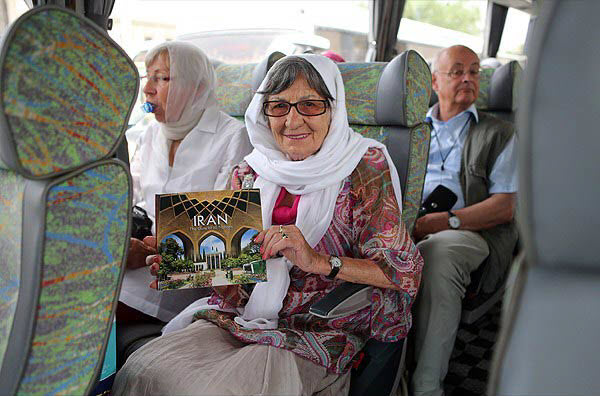
As with many Western tourists who come to Iran, a significant portion of those who enter the country are in the older demographic and comes as part of the organized tours.