Iranian-Kabab-Koobideh

Iranian-Kabab-Koobideh

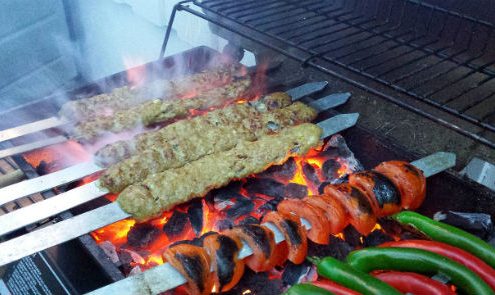
Iranian Kabab Koobideh on BBQ

Iranian kebab is one of the most favorite and well known Iranian traditional foods. Kebabs are made based on various recipes. That’s why you see a long list of them in Iranian restaurants’ menus. What you read here is how to grill Kabab Koobideh, which is the ground meat version of it.

There’s a whole range of various types of Kebabs grilled in Iran. People use their oven’s grill at home or a metal short-legged or long-legged barbeque to make this food outdoor on the gentle heat of fiery charcoal. Iranians have referred to Kebab in their literature for centuries. It’s even well known outside of Iran and has its own fans across the world.

Ingredients for Making Iranian Kebab:

  • 500 g ground lamb (flank)
  • 500 g ground beef (sirloin)
  • 2 medium onions, grated
  • 1 pinch saffron threads, crushed
  • ½ tsp. black pepper powder
  • Salt
  • Sumac

Directions to Grill Kabab Koobideh:

1. Put grated onion in a sieve and press it to release and discard the juice.

2. Put the crushed saffron in a cup and add two small ice cubes. Set it aside and let the ice cubes melt slowly.

3. Mix ground lamb and ground beef in a large bowl and knead them well. Then add grated onion, soaked saffron, black pepper powder, and salt. Mix them with the meat thoroughly into a smooth paste. When you’re done, cover the bowl with cellophane and refrigerate it for 2-3 hours.

4. Remove the bowl from the fridge and get ready to skewer the Iranian kebab. Take a bowl of cold water next to yourselves. Wet your hands in cold water. Take a handful of the mixture and make a ball. Place a wide metal skewer on it and start spreading the meat ball around the skewer. To do this, use your thumb and index finger. Continue with the rest of mixture and skewers.

Notes:

  • Use a little bit more pressure at both ends of your meat spreads. It helps the meat to stick more securely to the skewers while grilling.
  • Leave a few inches from the tip and handle of the skewers free for grilling.
  • The mixture should be about ½ inch thick around the skewers.
  • Put the prepared skewers on a tray with raised sides to avoid meat touching the surface and refrigerate them for a while.

5. Arrange the prepared kebabs on a grill. To avoid the meat falling off the skewers on the heat, start turning the skewers right away in order that you’ve arranged them. Do it for a few minutes until both sides of the kebabs start grilling at the same time. After that you can let one side grill completely and then turn it to the other side.

Note:

It’s necessary to follow this instruction. If you wait for one side to get grilled completely while the other side is raw and then start turning it, the meat can’t stick to the skewers and falls apart.

6. Place the grilled Kabab Koobideh between two sheets of bread and pull out the skewers. It’s time to enjoy your home made Iranian Kebab!

Notable Tips to Make Kabab Koobideh

  • Grind your meats two or three times. The more you grind it, the smoother and stickier paste you will have.
  • Don’t add turmeric to your mixture ever! It spoils the taste.
  • If your skewers are new, you’d better put them on heat for a while and then start using them after getting cold. Otherwise, it would be probable that the meat fall off the skewers.
  • Your mixture for this kind of kebab have to be made up of lamb only or a mix of beef and lamb. It’s not possible to use just beef because it’s not fatty enough.

How to Serve Kabab Koobideh


Iranian-Kabab-Koobideh

Iranian-Kabab-Koobideh


Kabab Koobideh is best served as such!

Every culture has got its own way of serving food. Iranian gastronomy is no exception. They have two ways to serve this dish:

  • Serve it on a platter with sheets of Lavash or Sangak bread (Iranian traditional breads). Each person can take a kebab on their plates, cut it to small pieces, wrap it in a piece of bread, and eat it.
  • Serve it with rice. That’s what Iranians call Chellow kabab. You’ll need a spoon and fork to eat it. In Iran, it’s almost served with a small stick of butter on the side which gets melted slowly by the heat of your dish. You can spread it over the rice or kebabs based on your taste.

Note:

Most of the people use a spoon and a fork to even cut the Kabab Koobideh, not a knife, but you can ask for it if you’re in a restaurant and it’s not already placed in front of you.
You can decorate the kebabs with some sumac and most commonly used table vegetables, parsley and basil. For Iranians, the most favorite side dish with this food is grilled tomato. But there can be some others like Yogurt, table vegetables, lemon (to squeeze it and spread the juice on kebabs), or raw onion (chopped into pieces).

The most favorite beverage with Iranian kebab or Chelow kabab is Doogh (Iranian yogurt drink) seasoned by dried mint powder or some other local herbs.
If you’re in Iran, no matter in which city or area, you can have this food in your menu. So, don’t be in doubt, order it! And if enjoyable, I’m sure it will be, try this recipe to repeat this amazing taste experience for yourselves and share it with your family or friends at home.
 

ghormeh-sabzi-dish

ghormeh-sabzi-dish

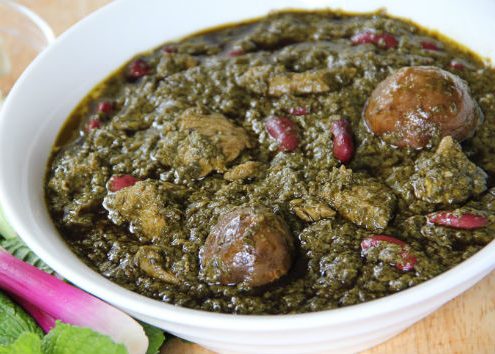
A dish of Ghormeh Sabzi Stew

Among all Iranian dishes, there are a few ones experiencing no major changes throughout their history. Ghormeh Sabzi is one of them which is a particular favorite of almost every Iranian.

Hundred years ago, it was prepared and cooked in almost the same way as today by Nomads. The meat would be provided from their sheep and prepared by animal fats and oils. The herbs would be collected from mountains and plains, and soar grapes or lemon juice would be used for flavoring.

Ingredients for Cooking Ghormeh Sabzi:

  • 2 cup finely chopped parsley
  • 2 cup finely chopped chives
  • 1 cup finely chopped dill leaves
  • 1 cup finely chopped spinach (when not available, use chard’s leaves instead)
  • 1 cup finely chopped cilantro
  • 1 tbsp. dried, crushed fenugreek leaves
  • ½ cup red kidney beans, pre-soaked over night
  • 500 g stew meat (lamb)
  • 1 big onion, finely chopped
  • 1 tsp. turmeric powder
  • 4-5 Dried limes
  • Cooking oil
  • Salt and hot pepper powder

Directions to cook Ghormeh Sabzi:

1- Mix the prepared herbs. Fry them over medium heat with 2 tablespoon oil in a nonstick pan for about 10 minutes.

2- Add dried, crushed fenugreek leaves to the pan. Continue heating just for 5 minutes, and then set the pan aside.

Note:

  • The amount of fenugreek leaves and the time of heating have to be less than the other herbs, otherwise, it gives a bitter taste to your stew.

3- In a stewpot, fry finely chopped onion with 2 tablespoon oil over medium heat until golden.

4- Add turmeric powder and fry for a few more minutes.

5- Add the meat and increase heat a little bit. Stir until the meat cubes get brown.

Notes:

  • Some people use chicken or ostrich meat rather than lamb.
  • You can also use bone-in meat.

6- Add pre-soaked beans, fried herbs, and 3 cups of boiling water. Increase heat for the mixture to start boiling. Then, reduce heat to medium, and let it simmer gently for about 3 hours with the lid on.

Note:

  • If you need to add some more water before the end of cooking time, use boiling water.

7- At the last 30 minutes, add salt, hot pepper powder, and dried limes.

Note:

  • In Iran, dried lime is called “Limoo Amani”. It’s available in two varieties, black and yellow. Black dried limes are better to be used in Ghormeh Sabzi. Before adding them to the mixture, pierce them with a fork to give its sour flavor to your stew while simmering.
  • You have to add salt and dried limes when meat and beans are tender, otherwise they don’t get cooked properly, and it will take much more time for the stew to get ready.
  • You can substitute dried limes with lemon juice, or use both together if you like it to taste sourer.

8- Get the lid off and check the stew. If you can see a thin layer of oil floating on the top, it’s ready to serve.

Different areas and slight differences in cooking Ghormeh Sabzi

The followings are some minor manipulations usually done in the recipe of this Iranian dish:

  • Northern Iran: without fenugreek leaves, and using rose coco beans rather than red kidney beans.
  • Southern Iran: larger amount of cilantro, and sometimes adding tomato paste to the mixture of herbs and meat.
  • Fars province: adding medium diced potato to the mixture at the last hour of cooking process.
  • Azeris: They don’t fry the herbs, use black eyed peas rather than red kidney beans, and add tomato paste to the mixture of herbs and meat.

How to serve Ghormeh Sabzi Stew

This stew is served with rice, in a big bowl or small ones for each person. Everyone should take a spoonful of the stew, put it on their rice and take a mouthful of both in a spoon with the help of a fork until finishing with their meal. The most common side dishes with Ghormeh Sabzi are Doogh (Iranian yogurt drink) and Shirazi salad (a kind of cucumber and tomato salad flavored with sour grape juice or lemon juice).

This Iranian dish is even one of the favorites of visitors who come to Iran from all over the world. If you try it once, you’ll be one of the fans, too.

khoresht-Gheimeh

khoresht-Gheimeh

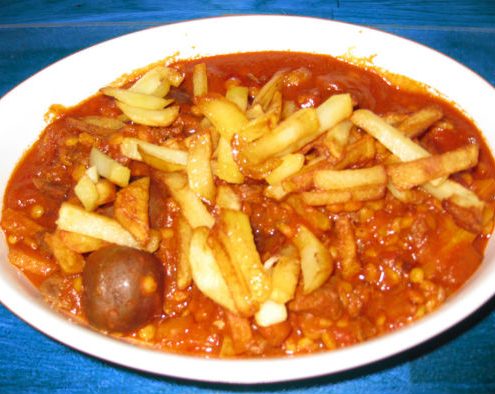
A Plate of Khoresht Gheimeh, Iranian Stew

It’s one of the most popular foods in Iranian gastronomy. A reason for the popularity of Khoresht Gheimeh is that, in most religious occasions and ceremonies in Iran, it’s one of the most common dishes cooked and distributed as a votive food. “Khoresht” is the Persian equivalent for “stew”.

In some areas of Iran, there are slight differences in the recipe of this Persian food. But they all have the basic ingredients (yellow split peas, dried lime, and French fries) in common. However, the following is the main and most common recipe for Khoresht Gheimeh.

Ingredients of Khoresht Gheimeh:

  • 500 g stew meat (lamb or veal)
  • 1 big onion, finely chopped
  • 1 ½ cup yellow split peas, pre-soaked for a about 1-2 hours
  • 4 medium sized potato, cut into long thin strips
  • 4 dried limes
  • 2 tbsp. tomato paste
  • Cooking oil
  • 1 tsp. turmeric powder
  • Salt and hot pepper powder
  • ¼ tsp. crushed saffron threads (optional)
  • ½ tsp. cinnamon powder (optional)

Directions to Cook Khoresht Gheimeh:

1. Put the crushed saffron in a cup and add one small ice cube. Set it aside and let the ice cube melt slowly.

2. Drain the pre-soaked peas and put them in a pot. Add about 3 cups of water and put the pot over high heat. When the water starts boiling, reduce the heat to medium and let the peas simmer with the lid on to get nearly undercooked. Then, remove the pot from heat, drain the peas, and set them aside.

Note:

  • Cover the pot with the lid loosely to keep it from boiling over.

3. In a stewpot, fry finely chopped onions with 2 tablespoons of oil over medium heat until slightly golden.

4. Add turmeric powder and fry for a few more minutes.

5. Add the meat and increase heat a little bit. Stir until the meat cubes get brown.

Note:

  • You can substitute lamb or veal with turkey. But it’ll take more time to get ready and cooked.

6. Add the prepared peas and saffron to the meat. Mix them and continue heating.

7. After about 3-4 minutes, add 3 cups of boiling water to the mixture and stir a bit. Increase heat to bring the mixture to a boil. Then reduce heat to medium and let your stew simmer gently with the lid on for about 1 hour and 30 minutes. Stir occasionally.

Notes:

  • In case you need to add some more water before the end of the cooking time, use boiling water.
  • While the stew is simmering, you have enough time to make the French fries needed for garnishing.

8. Take a frying pan. Put the sliced potatoes into it. Add about 2 tablespoons of oil. Fry them over medium heat until they are golden and crispy. Then, add a little bit salt, stir for a few seconds, and set the pan aside.

Note:

  • Instead of homemade French fries, you can use packaged French fries.

9. At the last 30 minutes of simmering, add salt, hot pepper powder, tomato paste, and dried limes. (salt and pepper to your taste)

Notes:

  • If you heat the tomato paste with one tablespoon of oil for a few minutes in a frying pan before adding, it’ll give the stew a better color.
  • Before adding dried limes, pierce them with a fork. This way, the sour flavor of the lime penetrates your stew while simmering.
  • You have to add salt and dried limes when the meat and peas are tender. Otherwise, they don’t get cooked properly, and will take much more time to get ready. Also, if the stew simmer for a long time with dried limes in it, its taste will turn bitter.
  • You can substitute dried limes with lemon juice, or use both together if you like your Khoresht Gheimeh to taste sourer.

10. Add the cinnamon powder at the last 15 minutes if you like its flavor.

Note:

  • It’ll give a dark color to your food if you add it sooner.

11. After the intended time, get the lid off and check the Persian food you’ve cooked. If you can see a thin layer of oil floating on the top and it’s got the desired consistency (which resembles that of a spaghetti sauce), it’s ready to serve.

How to Serve Khoresht Gheimeh:

This stew is served with rice like other Iranian stews. You can serve it in a big bowl for all or in small ones for each person. Use the French fries to garnish the bowls.

To eat this savory Persian food, take a spoonful of the stew, put it on your rice, and take a mouthful of both using a spoon. A fork can be used to help taking the mixture of stew and rice in the spoon.

Common side dishes to have with your meal can be table vegetables, green salad, yogurt, or various kinds of pickles. And the most favorite drink served with this food is Doogh (Iranian yogurt drink seasoned by dried mint powder or some other local herbs).

You’ll be pleased with the taste of this Persian food, especially the one you yourselves have made it.

Dolmeh-Barg-e-Mo

Dolmeh-Barg-e-Mo

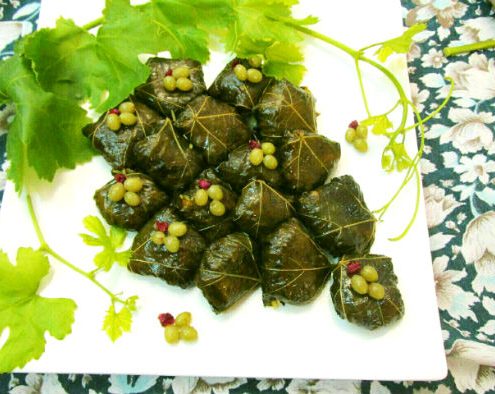
A Dish of Dolmeh Barg-e Mo

As many of you may have heard the name of this Iranian dish, I must say that Dolmeh Barg-e Mo is one of the Iranian traditional foods originally cooked among Azari people in West Azerbaijan. It’s cooked in almost every area of Iran, but with some slight differences specific to each area. It has a special position among favorite summer dishes for Iranians.

What you’ll see here is a sample of Iranian recipe for what’s called Dolma worldwide.

Ingredients of Dolmeh Barg-e Mo

  • 500 g medium-size grape leaves
  • 2 cup ground beef (500 g)
  • 2 large onion, chopped
  • Vegetable oil
  • 2.5 – 3 cup undercooked yellow split peas
  • 2 – 2.5 cup a combination of dried chives and savory (dried tarragon, basil, dill, parsley or mint could be substituted)
  • 2 cup rice, soaked
  • Salt, hot pepper powder, turmeric powder
  • 4 – 5 tbsp. sour dripped yogurt
  • 1 cup dried barberry, for decoration

Directions to Make Dolmeh Barg-e Mo:

I know preparing and cooking Dolmeh Barg-e Mo is rather time consuming, like some other Iranian traditional foods, but I promise you’ll enjoy the taste of your handiwork. So, let’s do that:

1. Wash the leaves with cool water. Take a pot, fill 2/3 of it with water, and heat the water to boil. Then, put the leaves gently into the boiling water. After 3 minutes, rinse them in a basket and let them get cold.

2. Wash the rice with warm water. Take another pot of boiling water and add the rice to it. Simmer for about 15 minutes (the exact estimated time depends on the kind of rice used).

Option: You can add one teaspoon of turmeric powder to the boiling water while simmering in order for the rice to get a little colored.

3. Heat the vegetable oil in a pan. Add ground beef, 2/3 of chopped onion, and enough turmeric powder. Cook the mixture over medium-high heat.

4. Remove the pan from the heat. Add rice, dried vegetables, undercooked yellow split peas, salt, pepper powder, and sour strained yogurt. Mix them thoroughly.

5. Pour a tablespoon of the vegetable oil into a pot and fill the bottom of it with some grape leaves.

6. Now it’s time to stuff your grape leaves. Take a leaf. Put about a tablespoon of the prepared mixture in the middle, and wrap it. Put each piece you made in the pot upside down not to get unwrapped. Continue the process with the rest of the leaves and layer the wraps in the pot.

7. Add 2 cups of water to the pot and spread 3 tablespoon of vegetable oil on the wraps. Then, put the pot over medium-high heat.

Notes:

  • Instead of water, you can dilute one cup of pomegranate molasses with 1/2 cup of water and spread it on the warps and then spread the oil. But note that if you want to do this, you should omit dripped yogurt from the ingredients because it spoils pomegranate taste. This version of recipe is my own favorite and I suggest you give it a try.
  • To prevent the wraps from getting unwrapped while cooking, place a ceramics plate upside down on the wraps and then put the pot over heat.

8. When the water starts to boil, reduce the heat. Let the wraps be cooked slowly for about 2 hours.

9. Heat the vegetable oil in a pan. Add the remaining 1/3 of chopped onion and fry it. Then, add barberry and mix them on heat for about 5 minute. Put this mixture away for decoration.

How to Serve Dolmeh Barg-e Mo

Serve this food on a platter. Use the mixture of fried onion and barberry to decorate the platter. It’s typically a hot served meal but you can have it cold as well.

Dolmeh Barg-e Mo is a kind of finger food, so there is no need to knife or fork. But if it helps, you can use a spoon. The leaves can be eaten and you don’t need to separate them. As a side dish you can have green salad, pickles, or yogurt. I hope you enjoy this Iranian traditional food.

khoresht-fesenjan-persian-dish

khoresht-fesenjan-persian-dish

A plate of rice and khoresht Fesenjan, which Iranians serve with more rice

It’s one of the ancient Persian foods dating back to Sassanid era. As part of a tradition, Khoresht Fesenjan was cooked in Nowruz ceremonies to celebrate the end of winter and the beginning of spring. This stew is one of the traditional Persian dishes cooked throughout Iran, but it’s originally from Mazandaran province, central north of the country.

In hunting seasons, fall and winter, people in northern parts of Iran sometimes use the meat of hunted birds like duck or goose for this food. At other times, and also most commonly, chicken or turkey is used. People prefer Khoresht Fesenjan more during cold seasons.

Ingredients of Khoresht Fesenjan:

  • 500 g chicken thigh or ground veal
  • 1 big onion, finely chopped
  • 400 g walnut
  • 1 tbsp. flour (to thicken the stew)
  • 1 cup pomegranate molasses (sour, sweet, or sour-sweet; to your taste)
  • 3 tbsp. sugar (optional)
  • Cooking oil
  • ½ tsp. turmeric powder
  • Salt

Directions to Cook Khoresht Fesenjan:

1. Fry finely chopped onions with two tablespoons oil over medium heat until slightly golden.

2. Add turmeric powder and stir for just a few more minutes.

3. Add chicken and continue heating until the meat pieces get golden brown on all sides. Then set them aside.

Notes:

  • You can cut chicken into medium size pieces.
  • If you wish, bone-in chicken can be used instead.
  • If you want substitute chicken with ground veal, there’s no need to fry the onions separately. Mix the veal, onions, turmeric powder, and salt (to your taste) thoroughly. Then, make medium size meat balls, fry them until brown, and set them aside.

4. Toast the flour in a pot over low heat until slightly brown. Remove it from heat and let it cool down.

Note:

  • While toasting, stir the flour constantly, otherwise it burns quickly. And don’t make it too brown because it’ll give a bitter taste to your food.

5. Toast the walnuts in a pan for about 2 minutes. Then, let them cool down.

6. Get the toasted walnuts medium or finely chopped in a food processor.

Note:

  • You can substitute about ¼ of walnuts with pistachio or almond.

7. Add about 3 cups cold water gradually to the toasted flour and stir simultaneously. In this way, you prevent forming lumps.

8. Add chopped toasted walnuts. Put the pot over high heat and bring it to a boil. Meanwhile, stir the mixture constantly and watch it not to boil over.

9. Add the prepared chicken or meat balls and stir a bit. Then, let the stew simmer gently for about 2 hours over low heat with the lid on. Stir approximately every 30 minutes to prevent the mixture from sticking to the bottom of the pot.

Note:

  • Put the lid on loosely to prevent boiling over.

Note:

  • You better cook this Persian dish gently over low heat to let the walnuts give off their oil. That’s the only oil needed for this food.

10. At the last 20 minutes, add pomegranate molasses, sugar, and salt (to the taste). Stir for a few minutes and then let it continue simmering.

Notes:

  • You can substitute sugar with palm or grape syrup.
  • Adding sugar or the amount of it depends on how sour or sweet you prefer your Khoresht Fesenjan to be. So, adjust it to the taste. The amount of pomegranate molasses can also be decreased or increased a little bit if you wish.

11. Take a look at the stew. If it’s as thick as a spaghetti sauce, the meat is tender, and you can see a thin layer of oil floating on the top, your food is ready to serve.

Note:

  • If the meat is tender but the mixture does not have the desired thickness, remove the meat from the stew and then continue heating for a few more minutes. Before serving, you can add the meat again.

How to Serve Khoresht Fesenjan:

This Persian dish is served with rice. Have the stew in a bowl and, if available, garnish it with pomegranate seeds. Table vegetables and green salad are more common to have beside this Persian dish. And to drink, Doogh (Iranian yogurt drink) can be the best option.

This Iranian traditional food has a lot of fans, but more specifically, it can be one of your choices if you have a sweet tooth.

kashk-e-bademjun-eggplant-dish

kashk-e-bademjun-eggplant-dish

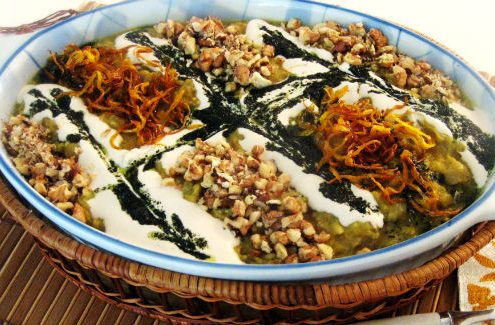
A plate of eggplant dish known as Kashk-e Bademjun in Iran

Going through the menu in an Iranian restaurant, you can find Kashk-e Bademjun among appetizers. It’s a kind of traditional food cooked and served throughout Iran. Outside Iran, some people call it eggplant dish. Two main ingredients in this Iranian appetizer have made the name:

Kashk, whey, is a whitish dairy product made from yogurt or sour milk, and has been used traditionally in Iranian cuisine. It’s produced through a long process and the final product comes out as dried solid pieces or a thick liquid. It can be both eaten plain and used in cooking. This sour dairy product is available in most Middle Eastern markets. And Bademjun is the Persian equivalent for eggplant.

Although Kashk-e Bademjun is mostly regarded as an appetizer, it can be also served as a light meal for dinner.

Ingredients of Kashk-e Bademjun:

  • 4 medium eggplants, peeled
  • 2 medium onions
  • 2 garlic cloves (optional)
  • ½ cup ground walnut (optional)
  • 1 cup liquid Kashk
  • 2 tsps. crushed dried mint leaves
  • Salt, black pepper powder, and turmeric powder, to the taste
  • Cooking oil

Directions to Cook This Savory Iranian Appetizer

1. Full a big bowl to half with cold water. Dissolve about 1 tablespoon salt in it. Slice the eggplants lengthwise into 3 or 4 pieces and soak them in the bowl for about 1 hour.

Note:

  • By doing so, you season the eggplants and prevent them from getting dark while preparing them to fry. In addition, in this way, they absorb less oil while frying.

2. In a colander, Rinse the eggplants with cold water and let them drain. Then, immediately, fry them in a pan over medium heat until golden brown at both sides.

Notes:

  • You should fry the eggplant immediately after draining because they get dark so soon when they are peeled and exposed to air.
  • You can drain the fried eggplants on paper towels for a few minutes.
  • The eggplants could be grilled instead of fried. In this way, you would have this Iranian appetizer low in fat.

3. Mash the prepared eggplants using a potato masher or a fork until it gets chunky, not a complete paste. Set it aside.

4. Grate one of the onions and the garlic cloves. Fry them over medium heat until golden. Add about 1 teaspoon turmeric powder. Stir for a few more minutes, and then remove it from heat.

Note:

  • The onion could be sliced into thin slivers or diced, and the garlic could be minced instead of grated.

5. In a pot, mix the mashed potato, prepared onion and garlic, and ground walnut. Set the mixture aside.

6. Dilute the kashk with about ½ cup cold water in a boiling pot. Put it over high heat to bring it to a boil. Then reduce heat to low, and let the kashk boils for about 20 minutes. Meanwhile, you can prepare the mint and remaining onion.

7. Slice the other onion into thin slivers. Fry it until golden. Add a little turmeric powder. Stir a few more minutes. Remove it from heat and set it aside.

8. Heat 2 tablespoons oil in a frying pan over low heat until sizzling. Add the mint. Stir it continuously and continue heating for just 1 minute. Then remove it quickly from heat because it can easily burn.

9. Mix the boiled kashk and 2/3 of prepared mint with the eggplant mixture thoroughly. Heat the pot for about 15 minutes with the lid off. When the eggplant is completely tender and you have a thick and paste like mixture, it’s ready to serve.

Notes:

  • You can modify the amount of kashk, walnut, and garlic to adjust them to your taste.
  • Since kashk is a little salty, usually there’s no need to add salt to your Kashk-e Bademjun while cooking. However, you can check it and add a little bit salt if feel necessary.
  • If kashk is not available, you can substitute it with sour yogurt. In that case, you can’t heat the eggplant mixture containing yogurt. So, add about ½ cup water to the mixture. Put it over medium heat for about 15 minutes until the eggplants are completely tender. Remove the pot from heat and let it cool down a little bit. Then add yogurt and mix it thoroughly. Adjust the amount of salt to your taste.

How to Serve Eggplant Dish:

Transfer this Iranian appetizer into a serving bowl. Use some more kashk and walnut, fried onion slivers, and the remaining sautéed mint to garnish. This food can be served with table vegetables, pickles, and sliced raw onion. And like most of Iranian traditional foods, Doogh accompanies the meal as a favorite drink.

Spoon a small amount of Kashk-e Bademjun onto a piece of bread and put it in your mouth. The taste and smell is so tempting that you’ll be hooked.

dizi-traditional-persian-dish

dizi-traditional-persian-dish

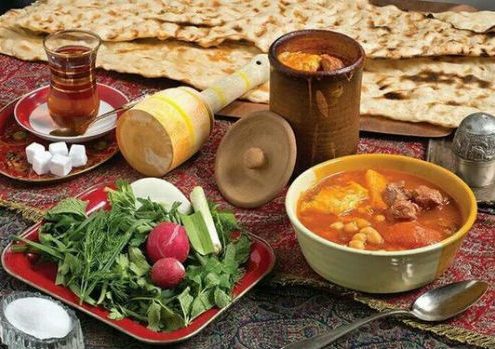
Dizi along with table vegetables, Sangag bread, etc.

It dates back to hundreds of years ago when Iranians made this food called Dizi. The reason for such naming is that people traditionally cooked and served it in small stone dishes called Dizi. It’s actually the name of the container. Iranian traditional restaurants still use these stone dishes for this food.

Iranians also call this traditional Persian dish Abgoosht, which literally means “meat broth”. This high-calorie food, which is a good source of protein, is more common and preferred in winter. It would be originally made with lamb and chickpeas only before tomatoes and potatoes were introduced to Iranian cuisine and developed the recipe.

Meat and beans are the major ingredients of Dizi, but in some areas locals may add different things to the recipe based on their tastes. For example, in northern parts of Iran, garlic, and in Kerman province, people may add caraway for seasoning. In Armenia, people cook a similar food too.

Follow the recipe and cook this popular and nutritious food at your home.

Ingredients to Cook Dizi:

  • 500 g bone-in lamb (shank, shoulder, or short ribs), cut into medium-size pieces
  • ½ cup chickpeas, pre-soaked overnight
  • ½ cup white beans, pre-soaked overnight
  • 1 large onion, roughly chopped
  • 2 peeled garlic cloves (optional)
  • 1 tsp. turmeric powder
  • 4 dried lime
  • 2 medium tomatoes, halved
  • 2 medium potato, cut into four pieces
  • 1 tbsp. tomato paste
  • 1 cup sour grapes (optional)
  • Salt, black pepper powder, and lime juice, to the taste
  • Dried mint leaves, for seasoning (optional)
  • Dried tarragon leaves and fresh mint leaves, for garnishing

Directions to Cook This Traditional Persian Dish:

1. Put the lamb, chickpeas, white beans, chopped onions, and garlic cloves in a pot. Sprinkle turmeric and pepper powder. Then add about 6 cups of water and bring them to a boil.

Notes:

  • Don’t remove the meat’s fat. It provides the needed oil for cooking this traditional Persian dish.
  • Some use beef instead of lamb to cook Dizi, but lamb is much more preferred and common.
  • You can substitute white beans with kidney or rose coco beans. Or, you can omit the beans and use chickpeas only. In that case, the amount of chickpeas has to be doubled.

2. While boiling, skim the foam floating on the top. Continue until no more foam is produced. Then, cover the pot and let it simmer over medium heat for about 2 hours until the meat and beans are tender.

3. Add potato, tomato halves, tomato paste, dried limes, and sour grapes. Stir a bit and cover the pot again. Let it simmer for about more 30 minutes.

Notes:

Pierce the dried limes with a fork before adding them to the pot.

  • If you like to have sour grapes in your Dizi, make sure you reduce the amount of dried limes and lime juice. Otherwise, your food may taste more sour than desired.
  • If you heat the tomato paste with one tablespoon of oil for a few minutes in a frying pan before adding, it’ll give the stew a better color and flavor.

4. In the last 15 minutes, add salt and lime juice.

Note:

  • Adding salt from the beginning prevent the meat to cook properly, and thus, it takes more time to get your food ready.

5. Finally, when all ingredients are completely tender, you’re done with the cooking phase.

Note:

  • If you feel the food needs more time to be over heat, don’t worry. Let it simmer for more time. Just watch it not to lose too much water.

6. Put a colander over a big bowl and drain the ingredients. Set the broth aside.

7. Remove the bones from the meat. Transfer the ingredients to another bowl and mash them all up into a paste.

Note:

  • In case of using shanks, If you like, you can remove the morrow from the bones and add it to the broth or to the mashed up ingredients.

8. Taste the broth and paste for seasoning, and then, get ready to serve.

9. If you’re going to use dried mint for seasoning, heat 1 tablespoon oil in a frying pan over low heat until sizzling. Crumble the mint leaves in your hand and add them to the oil. Stir it continuously and continue heating for just 1 minute. Then, remove it quickly from heat or it can easily burn. Add the sautéed mint to the broth.

How to Serve Dizi:

This traditional Persian dish has to be served hot, otherwise, you spoil the its taste. The other point is that you should serve the broth and the paste in separate dishes – the broth in a bowl with crumbled tarragon leaves sprinkled on the top, and the paste on a plate garnished with fresh mint leaves.

An interesting part of serving this food for guests is to let them mash the ingredients themselves, and it’s what happens in almost all traditional restaurants in Iran. While serving Dizi, the waiters offer guests meat smashers to crush the ingredients if they like to have it in form of a paste. This is only an offer, because some people prefer it unmashed.

You should have the broth first in your preferred way. To get started, tear a sheet of bread into small pieces and soak them in the broth. Then use a spoon to stir it a bit and eat this delectable mixture. What you make with your broth is called Terid in Persian. Afterward, go for the paste. Spoon a small amount onto a piece of bread and put it in your mouth. Bon appetite!

The Kind of bread commonly preferred with Dizi is Sangak, an Iranian traditional bread. Iranians serve table vegetables, sliced raw onion, yogurt, and various kinds of pickles alongside this traditional Persian dish. And to drink, Doogh (Iranian yogurt drink) is the best and most common option.

Table vegetables are the best side dish you can have with this food because they help it get easily digested. You can season table vegetables and sliced onions with a little bit lime juice and salt.

I hope you cook this convenient and nutritious Persian food and enjoy its unforgettable taste.

tahchin-Pesrian-rice-cake

tahchin-Pesrian-rice-cake

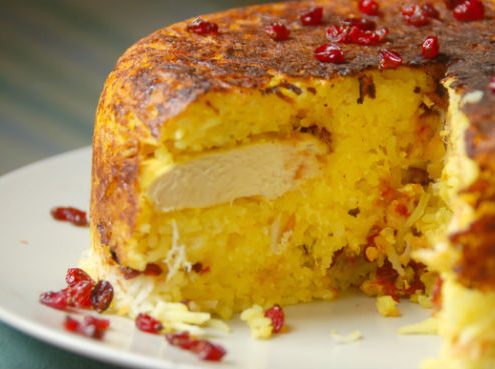
A dish of Tahchin, The famous Persian Rice Cake

Apart from an amazing taste, it’s a good-looking Iranian food, and that’s why it’s an integral item on the menu of almost every restaurant, party, or formal ceremony in Iran. In Persian, “tah” means “bottom” and “chin” means “arrange”. So, the reason for such naming is that you have to arrange the ingredients and layer them up from the bottom of a dish to prepare them for cooking.

There are different versions of Tahchin all of which mainly involve layering rice and a kind of meat or vegetable. But one made with chicken is the most common and favored version of this Persian rice cake. And what’s come below is the recipe for it.

Ingredients to Cook Tahchin:

  • 4 cups rice, pre-soaked for about 2 hours
  • 800 g chicken, bone-in (preferably breast)
  • 1 big onion, chopped
  • 1 cup sour dripped yogurt
  • 2 tsps. crumbled saffron threads
  • 1 egg
  • 1 cup chicken stock
  • Cooking oil
  • Salt and black pepper powder, to the taste
  • 1 tsp turmeric powder
  • 50 g butter (optional)
  • 1 cup dried barberry, pre-soaked for about 1 hour, for garnishing
  • ½ cup almond slivers, for garnishing
  • ½ cup pistachio slivers, for garnishing

Directions to Cook Persian Rice Cake:

1. Add 3-4 small ice cubes to the crumbled saffron in a cup. Set it aside and let the ice cubes melt slowly.

2. Cook the chicken in a pot with chopped onions, salt, turmeric powder, about 2 cups of boiling water, and 1 tablespoon of oil until it’s tender.

3. Take out the chicken and let it cool down. Then remove the bones and made chicken strips using your hands.

4. Drain the pre-soaked rice and add it to a pot of boiling water. Add some salt and simmer until al dente (soft on the outside, but a little bite left on the inside). Then drain it and rinse with cool water.

5. In a bowl, mix the dripped yogurt, prepared saffron, salt, pepper powder, and 1 tablespoon oil thoroughly. Take about ¼ of the mixture and set it aside. Then add the egg to the remaining part and whisk them.

Note:

  • You can change the amount of saffron a little bit if you like your Tahchin with more or less color and flavor.

6. Take a nonstick baking pot and spread 1 tablespoon of oil at the bottom of it.

7. Mix 2 cups of the prepared rice with about half of the yogurt and egg mixture in a bowl. Then, spread it at the bottom of the pot and get it flat with the back of a tablespoon.

8. For the second layer of your Persian rice cake, mix the chicken strips with the second half of the yogurt and egg mixture and spread it evenly on the first layer.

9. For the third layer, cover the chicken strips with the remaining rice.

10. Mix 1 cup of chicken stock with the ¼ of the yogurt mixture you’d set aside and Spread it over the surface of the rice. Then, using the back of a large spoon put a little pressure on the rice to help the layers of your Tahchin stick together properly.

10. Cut up the butter and put the pieces on the rice. They will melt while cooking and give a delicate flavor to the food.

11. Cover the pot and put it over medium heat for about 5 minutes. Then reduce heat to low and continue heating for about 1:30-2 hours. When the sides are golden brown and the rice is fluffy, it’s ready to serve.

Notes:

  • The bottom of the rice cake gets darker than the sides, so be careful not to overheat.
  • Adding too much chicken stock, or spending more time for simmering the rice than what mention in the instruction makes your Tahchin mushy.
  • The more the rice gets softer than al dente, the less amount of chicken stock and yogurt is needed.
  • To cook this Persian rice cake, you can also use oven (Preheated 400 F, the lowest rack, for about 1 hour and 15 minutes). In this case, cover the dish with foil before heating. The required time adjustment depends on the type of the oven you use.

The Flavor of Creativity! Use a jumbo cupcake pan instead of the pot and serve your guests smaller personal-size Tahchins.

12. Fry the dried barberry, and almond and pistachio slivers with 1 tablespoon of oil for a few minutes, and set them aside for garnishing.

Notes:

  • They can be mixed, or fried separately.
  • If you don’t like the sour taste of barberry, add a little sugar to it to balance the taste. Stir until the sugar is melted and then remove from heat.

How to serve:

Remove Tahchin from heat and Let it cool down for about 10 minutes. Then place a serving platter over the pot and invert it. Use the prepared barberry, almond, and pistachio to garnish. Dripped yogurt can be also used for decoration if you like. Before eating, the rice cake has to be cut into pieces with a knife.

Everybody takes a piece in their plates and enjoys the taste using a spoon and a fork. This Persian food is usually served with table vegetables, various kind of pickles, green salad, or Shirazi salad (a kind of cucumber and tomato salad flavored with sour grape juice or lemon juice attributed to Shiraz).

The outer layer, which is crispy golden brown, is the most favored part of this food. To be honest, I die for it, and I think most Iranians have the same feeling. In Persian, it’s called Tahdig which means the bottom of the pot because it’s the crispy layer made at the bottom of the cooking pot.

It may takes some time to learn how to adjust the proportion of ingredients to each other to have a perfect Tahchin. But when you gain mastery in doing this, at the moment you invert this Persian rice cake on a platter with that eye-catching golden brown look, it gives you the impression of a professional cook. That’s really enjoyable, believe me.

mirza-ghasemi

mirza-ghasemi

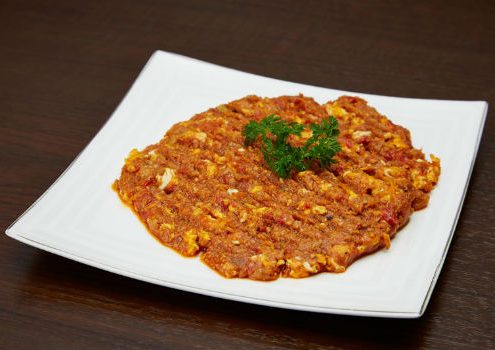
A Plate of Mirza Ghasemi ready to be served

Travelling to the north part of Iran, specifically Gilan province, Mirza Ghasemi is one of the most popular dishes you hear about. It dates back to Qajar period when Mohammad Ghasem Khan, the governor of Rasht (the capital of Gilan), made this food for the first time. So it was named after him, and gradually, went through across the country. It’s usually served as an appetizer.

It takes you a little time to prepare the ingredients and cook this Iranian appetizer. More importantly, it’s a healthy food mainly consisting of vegetables. What follows is the recipe for popular, time saving, healthy Mirza Ghasemi.

Ingredients to cook Mirza Ghasemi:

  • 6 medium eggplants, unpeeled
  • 5 garlic cloves, grated or minced
  • 2-3 medium tomatoes, grated or diced
  • 2-3 eggs
  • 1/3 cup Cooking oil
  • 1 tsp. turmeric powder
  • Salt and pepper powder
  • Fresh parsley and mint leaves, for garnishing

Directions to prepare Mirza Ghasemi:

1. Wash the eggplants under cold water properly.

2. Grill the eggplants over hot coals, on stove, or in oven until the skin is charred and they get tender. Then let them cool down for a few minutes. Take the skin off and dice them. Set side.

3. In a pan, fry the prepared garlic with turmeric powder over medium heat until slightly golden. Then add the prepared eggplants and mix them.

Note:

  • You can substitute oil with butter if you like the flavor.

4. Add the prepared tomatoes, salt, and pepper, and mix. Cover the pan and let the mixture simmer for about 15 minutes over medium heat. Stir a few times.

Notes:

  • If you like, remove the skin of tomatoes before dicing or grating. To make it easier, score an X at the bottom of each tomato and blanch them for about 1 minutes. This way, the peeling process can happen rather quickly and effortlessly.
  • If you’re not satisfied with the color of your Mirza Ghasemi, add some tomato paste to your taste and continue heating for a few more minutes.

5. When the mixture is not watery anymore, it’s time for the eggs.

6. Crack the eggs into a bowl. Season them with salt and pepper, and whisk.

7. Add the prepared eggs to the pan. Stir until the eggs are cooked and well mixed with the eggplant and tomato. Then it’s ready to serve.

Note:

  • You can crack the eggs directly on top, sprinkle some salt and pepper, and leave them whole. Or you can mix the egg whites with a knife gently and leave just the yolks intact. Anyway, in this case, cover the pan for a few more minutes to get the eggs cooked.

How to Serve This Iranian Apetizer:

Transfer the food into a bowl or onto a plate and use parsley and mint leaves to garnish. Then serve it with bread or rice. As an appetizer, it would be better to serve Mirza Ghasemi with bread. Sangak (an Iranian traditional bread) is the most preferred kind of bread to have with this Iranian appetizer.

Spoon a small amount of Mirza Ghasemi onto a piece of bread or the rice you have in your plate and enjoy your meal. Table vegetables, yogurt, green salad or Shirazi salad, and thinly sliced cucumbers are the common possible side dishes for this food. And as usual, yogurt is the most favored drink.

This traditional food is included in almost everyone’s list for tasting local foods while travelling to the north of Iran. It can be true about you, too, especially if you’re a vegetarian.

morassa-polo-persian-food

morassa-polo-persian-food

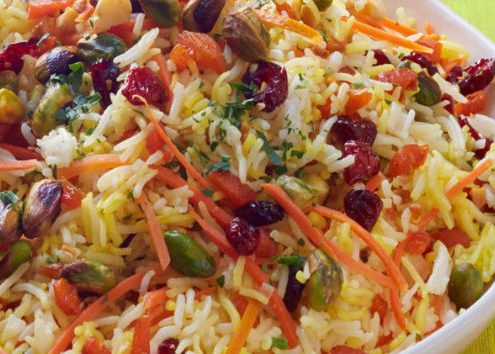
Morassa Polo, A Persian Food for formal ceremonies and Parties

Morassa Polo is one of the best options for serving in formal ceremonies or parties especially weddings. “Morassa” means “jeweled” and “polo” refers to the cooked rice. In fact, the use of colorful ingredients in this Persian food is the reason for such naming.

It dates back to Safavid period when Morassa polo was innovated. At that time, Persian cuisine had a considerable progress and such ceremonial foods came to existence. Shiraz is the origin of this Persian dish but it’s cooked and well known enough all over Iran. It’s a popular dish even in some foreign countries.

Ingredients to Cook Morassa Polo:

  • 5 cups rice (presoaked for about 2 hours)
  • 800 g. boneless chicken breast (skinless)
  • 2 medium onions, diced
  • 1 cup almond slivers
  • 1 cup pistachio slivers
  • 1 cup raisins (presoaked for about 30 minutes)
  • 1 cup finely slivered orange rind (sweetened and dried)
  • 1 cup dried barberry (presoaked for about 30 minutes)
  • 2 tsp. crushed saffron threads (presoaked with 4-5 small ice cubes)
  • Cooking oil
  • Salt, sugar and turmeric powder

Note:

  • To have sweetened orange rind slivers follow the instruction below (By sweetening I mean preparing the orange rind so that its bitter taste is removed):

Bring a pot of water to a boil. Add the orange slivers. Let it simmer for about 10 minutes. Then change the water and repeat the process once more. Afterward, soak the slivers in cold water for 1 or 2 days (until they don’t taste bitter anymore). Meanwhile, change the water 3 or 4 times. Then drain and spread them onto a tray to dry. In this way, you have orange rind slivers sweetened to use for cooking any kind of Persian food.

Directions to Cook This Persian Food:

1. Drain the presoaked rice and add it to a pot of boiling water. Add some salt and simmer until al dente. Then drain it and rinse with cold water.

2. Spread about 1 tablespoon oil at the bottom of a nonstick baking pot. When it starts sizzling over medium heat, add the prepared rice. Cover the pot and after about 5 minutes reduce heat to low (it helps you to make a better tahdig). Let the rice cook gently until fluffy. Meanwhile, you have enough time to prepare other ingredients.

3. Cut the chicken into medium size pieces.

Note:

  • You can use other parts of a chicken as well for this Persian food. The only point is that you need the cooked chicken boneless.

4. Fry the onion with about 3 tablespoon oil over medium heat until slightly golden. Add some turmeric powder and continue heating for a few more minutes.

5. Add the chicken pieces and stir until they get golden brown. Add about 2-3 cups boiling water, 1 teaspoon of liquid saffron, and salt. Let it simmer until completely tender.

6. Take out the chicken and let it cool down. Then make thin chicken strips using your hand. Set them aside.

7. Fry the almond and pistachio slivers separately over medium heat just for a few minutes. Set them aside.

Note:

  • To give a better flavor to your Morassa polo, you can presoak the slivers in rosewater with a little bit sugar (to your taste) dissolved in it overnight.

8. In a frying pan, heat some oil. Before it starts sizzling, remove the pan from heat. Add the raisins. Stir as long as the oil is hot and until the raisins get tender. Set them aside.

9. Fry the orange rind slivers with some sugar (to your taste) over medium heat for a few minutes. Set them aside.

10. Fry the dried barberry with some sugar (to your taste) and 1 teaspoon of liquid saffron over medium heat for a few minutes. Set it aside.

Note:

  • You can substitute oil with butter for preparing all these ingredients if you like the flavor.

11. Check the rice. If ready, it’s time for serving the food.

How to serve Morassa Polo

Take about 2 cups of cooked rice. Mix it with the remaining liquid saffron and set it aside for garnishing. Then transfer half of the remaining cooked rice onto a serving platter. Spread the chicken strips evenly on it as the second layer. Cover the chicken with the rest of rice for the third layer.

To garnish, use the prepared saffron rice, almond and pistachio slivers, raisins, slivered orange rind, and barberry. Then spread some oil or melted butter over them. Actually, garnishing is the most important part of serving this Persian food because of an eye-catching appearance produced.

You can serve table vegetables, green salad, and yogurt alongside. The tahdig of your rice as well as the chicken stock can be also served with this Persian food.
Give this food a go. I promise you won’t regret, but also you may fall in love with its amazing flavor and look.