Yazd

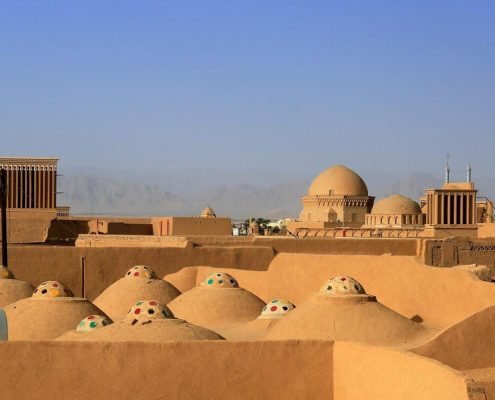
With a history of 5,000 years, and possessing a shining heritage of an ancient culture and civilization during different ages, Yazd is a glorious ancient city in the heart of Persian history located 270 km (170 mi) southeast of Esfahan. According to some historians, the original foundation of Yazd belongs to Alexander the Great who ordered the constructing of a prison, after his conquest in 331 B.C. On the other hand, some historians believe that the name was derived from “Yazdangerd” belonging to Yazdgerd I (339-421 A.D) in the Sassanid era. Literally, “Yazd” means “holy, auspicious and worship-worthy.” Greek historians have called it “Isatis” which had been founded after ruining the ancient city of “Katteh”. After the appearance of Islam, the name of the city changed to “Darol’ebadeh” which means “place of praying”.

This area has been counted among the important passages periods throughout history. Fortunately, because of its climatic features, it remained safe from violations and wars during Iran’s critical period particularly during the Mongols invasion. Moreover, arduous road and shortage of water sources have been major hindrances of conquering it by any inside and outside invaders. Yet, Yazd could be considered a rich city of all times hosting signs of Mithraism, Zoroastrianism and Islam in every corner.

This is maybe the only standard eco-camp in Iran. the standards in this complex are green. The power is provided by solar panels, so as the warm water. The wastes from the camp will be divided and sent to Matin Abad village.

There are organic farms which are the supplies for the food.

They offer safari tours, camel riding, trekking in desert etc…

Accommodation

Matinabad Eco-Camp
You will be greeting at the entering door of the main building which is designed like a  Carnanseraei. The Main building of the Complex is equipped with seven big rooms including  bathroom with Hot showers and flush western toilets,  Wooden beds with soft mattress, air conditioner, refrigerator and a TV set. There are two beds in each room and it is possible to add one extra bed.
Top of the roof, there is an elegant suite located with a similar interior design and facilities of the rooms but with a capacity of minimum four with a panoramic view of the Desert, farms and yards. It is called Shah Neshin (King’s Room). Adorning lush Persian fabrics in elegantly designed rooms with picturesque desert views at Matinabad  Eco-camp complete your Iran trip experience. The interior design of rooms is based on the traditional Iranian desert houses where a combination of thatch, break and plaster is used in decoration.
Matinabad Eco-Camp

Tents

Matinabad Eco-Camp
You will stay in an elegant traditional Iranian desert nomad tent equipped with mosquito nets for warm weather and with Korsi (Iranian style heating) or heater for the colder months.Tents are set up on a bench to produce minimal environmental impact while providing an efficient thermal and wind resistant unit, with great exposure to nature in our magnificent area.
The tents are set up with enough space between them to provide adequate privacy. The location is close to the main building, bath and wash rooms. Electricity is available in the tents. Rug, Mattress, Pillow, blanket, and sheets are available according to the number of people reserved for that tent.

Koome ( Hut Room)

Matinabad Eco-Camp
Koomeh in Persian refers to small rooms in a desert that in the past farmers built them to protect their land or hunters to hunt their prey. Matinabad eco-camp has 13 Koomehs now. Mtinabad Koomeh’s are built with brick and muds and the roof has a dome shape for the best natural air circulation in the room. These rooms are equipped with air-conditioners and heaters. Koomehs are supplied by 2-beds that have the possibility of adding one more if needed.

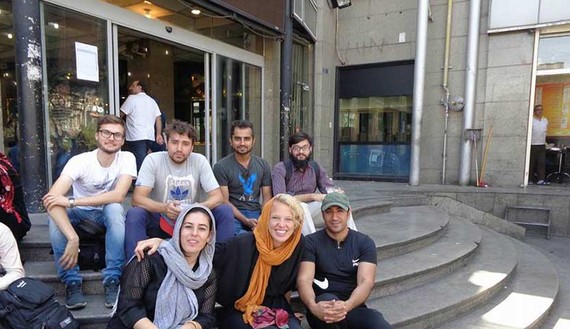
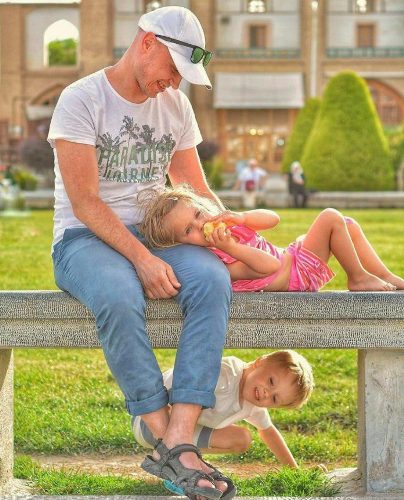
Young tourists who travel to Iran and  locate in cheap hostels


                                           New generation of Iranian hostels attract younger tourists

Tourism is one of the most important sectors of the Iranian economy which, following the abolition of the international sanctions last year, underwent rapid growth within the framework of the 2015 Atomic Energy Convention.
As the Iranian tourism industry grows, a new generation of hostels that younger travelers encounter around the country emerges.

With the rise of arriving travelers, the development and growth of the Iranian tourism industry have become one of the main priorities of the administration of President Hassan Rouhani. The Rural Tourism Vision 2025 plan outlines the goal of increasing the country’s share of international tourists in the world from 0.9% in 2004 to 1.5% by 2025, representing 20 million visitors and $ 30 billion annual revenue. According to Iranian officials, more than 6 million foreign tourists visited the country in the previous Iranian calendar year, which ended on March 20 and generated about $ 8 billion in sales.

While the average age of tourists visiting Iran was about 60, officials say the average age has fallen between 45 and 50, as more young travelers visit the country. In fact, Iran, which has been designated by the World Economic Forum as the world’s cheapest destination in three consecutive semi-annual reports, has become a new destination for backpackers who prefer to travel at a lower cost and avoid luxury hotels and services.

In this regard, hostels offering hospitality services at a cheaper standard and lower costs than hotels are of interest to investors and tourists alike.

The first permanent hostel was founded in Germany in 1912 and soon became popular elsewhere. Although these hostels are widespread around the world, they are still established in their childhood in Iran, with only a few in the capital, Tehran and major tourist cities in recent years.

Jalal Rashedi, the founder and CEO of the Seven Hostels Group, told Al-Monitor: “We started the first place in Tehran, which was in line with the internationally recognized standards of a typical hostel in terms of facilities and Vibe Theme on other cities such as Shiraz, Esfahan, Alamut and also extended to a small town near Dizin Ski Resort. “

He said that Seven Hostels Group began creating a domestic platform for booking hostels in Iran through English-language websites to facilitate the reservation of tours and also transportation services.

The increase in the number of young foreign tourists visiting Iran is an important factor in the growing number of hostels around the country. While Iran with an insufficient number of high-standard hotels, cheaper, traditional accommodation is not successful in attracting foreign tourists.

Irans traditional budget accommodation, known as “mosaferkhaneh” (traveler’s house), has long been used by locals. These facilities are widely used in religious cities such as Qom, Mashhad and Shiraz, where pilgrims travel from all walks of life to visit sacred sites. In a mosaferkhaneh, guests can rent a room that has one or more beds, each room has either a bathroom and a kitchen or sharing such facilities with other rooms.

But despite a large number of these traditional low-cost accommodations across Iran, they were rarely used by foreign travelers. “Mosaferkhanehs are not really popular among foreign tourists, they lack the young, lively and international atmosphere that you will enjoy in a typical hostel, and the best thing to stay in a youth hostel is to meet other young travelers from other countries and share stories And this is definitely something you can not experience with a typical mosaferkhaneh, “said Rashedi.

He added, “Iranian Mosaic Kings do not have proper websites in English and the tourists have no idea what to expect in these places.”

This is the reason why Golnar Zamani and Habibeh Fathi, young women who own “Hi Tehran Hostel”, believe that the easiest way to explain what is on offer is by simply labeling. “Hostels are internationally known by the backpackers and young travelers who create the majority of tourism these days,” said Golnar Al’s monitor.

The two entrepreneurs claim that the traditional, cheap accommodation of Iran is not properly presented to foreign tourists.

Iran, South Korea agree to launch direct flights


Senior officials said senior airlift officials from Iran and South Korea have agreed to start direct flights between the two countries.

Asadullah Abbasi, head of the Iran-South Korean parliamentary friendship group, said Sunday that South Korea has confirmed direct flights between Tehran and Seoul, according to Fars News Agency.

He stressed that South Korea is interested in Iran’s natural and historical tourism.

Officials of the Iranian Civil Aviation Organization (ICAO) and the Iranian National Flag will hold joint meetings with their counterparts in South Korea.

In mid-June, media reports said South Korean financial officials are negotiating with their counterparts in Iran to create a $ 13 billion credit line to invest in Iran.

Kimia Eximbank (KEXIM) will provide the lion’s share of the $ 8 billion loan to Iran. The Persian newspaper Sharq Persian reported that the remaining funds, $ 5 billion, will be offered by Korean Trade Company in the coming weeks.

Iran and South Korea have also agreed to build a hospital.

The $ 13 billion credit line allocated by South Korea to Iran will open the way for operations by Japanese and European banks.

South Korea announced in May that it had provided a package of loans worth $ 25 billion to develop Iran’s infrastructure projects.

During the visit of the former South Korean President Gun Hae Park to Iran, the statement went to Iran.

During his stay in Tehran, Park supervises the two-dozen agreement between Iran and South Korea to strengthen cooperation on energy, energy, the automotive industry, and railways.


English (Persian) Fārsī
فارسى
Welcome (khosh amadid) خوش آمدید
Hello
(General greeting)
(dorood) درود (salâm) سلام
How are you? (hale shoma chetor ast?) حال شما چطور است؟
(haletun chetore?) حالتون چطوره؟
(halet chetore?) حالت چطوره؟

(chetorin?) چطورین؟

Reply to ‘How are you?’ من خوبم ممنون، شما چطوريد؟
(man khubam mamnun, shoma chetorid?)
Long time no see خيلي وقته که ازت خبري نيست
(kheili vaghte ke azat khabari nist)
مدت زمان زيادي است که شما را نديده ام
(moddate ziadi ast ke shoma ra nadideh am)
What’s your name? (esm e shoma chist?) اسم شما چیست؟
(esmetun chie?) اسمتون چيه؟
vfrm – (naam e shoma chist?) نام شما چيست؟
inf – (esm e shoma chie?) اسم شما چيه؟
My name is … (esm e man … ast) اسم من … است.
vfrm – (naam e man … ast) نام من … است
inf – (esm e man … eh) اسم من … ه
Where are you from? (shoma ahleh koja hastid?) شما اهل کجا هستيد؟
(ahle kojayee?) اهل کجايي؟
I’m from … (man az … hastam) من از … هستم
Pleased to meet you! از ملاقات شما خوش وقتم
(az molaghat-e shomâ khosh vaghtam)
Good morning
(Morning greeting)
(sobh bekheir) صبح بخير
Good night (shab bekheir) شب بخير
Goodbye
(Parting phrases)
(bedrood) بدرود (khoda hafez) خداحافظ
Good luck (mo’afagh bashed) موفق باشيد
Cheers!
(Toasts used when drinking)
(salâmati!)سلامتي! (be salâmati!) به سلامتي!
Have a nice day (ruze xubi dâšte bâšid!) روز خوبي داشته باشيد!
Bon appetit /
Have a nice meal
(befarma’id) بفرماييد (nooshe jan) نوش جان
Bon voyage /
Have a good journey
(safar khosh) سفر خوش (safar be kheir) سفر به خير
(be salamat) به سلامت
I don’t understand (nemifahmam) نمي فهمم
(motevajjeh nemisham) متوجه نميشم
I don’t know (Nemidanam) من نمی دانم
Please speak more slowly ميشه آهسته تر صحبت کنيد؟
(mishe ahesteh tar sohbat konid)
خواهش مي کنم آهسته تر صحبت کنيد
(khahesh mikonam ahesteh tar sohbat konid)
Please say that again مي شه دوباره بگيد؟
(miše dobâre begid?)
خواهش مي کنم دوباره تکرار کنيد
(khahesh mikonam dobare tekrar konid)
Please write it down (lotfan yaddasht konid) لطفا یادداشت کنید
Do you speak Persian? frm – (shomâ fârsi sohbat mekunid?) شما فارسي صحبت مي کنيد؟
inf – (to fârsi harf mizani?) تو فارسي حرف مي زني؟
Yes, a little
(reply to ‘Do you speak …?’)
(bale, man fârsi harf mizanam) بله ، من فارسي حرف مي زنم
(bale, ye kam) بله، يه کم
How do you say … in Persian? (shoma … ro be Fārsi chi migin) شما … رو به فارسي چي ميگين؟
Excuse me (bebakhshid) ببخشيد! (mazerat mikham) معذرت ميخوام
How much is this? (gheymatesh chande?) قيمتش چنده؟
(gheymate in chand ast?) قيمت اين چند است؟
Sorry (moteassefam) متاسفم!
Thank you frm – (mamnūnam) ممنونم vinf – (mersi) مرسي
vfrm – (moteshakkeram) متشكرم
Reply to thank you (khahesh mikonam) خواهش مي كنم
Where’s the toilet? (dashtshuee kojast?) دستشويي کجاست؟
This gentleman/lady will pay for everything (un barâye hameci pul mide) اون براي همه چي پول مي ده
Would you like to dance with me? (dust dârid bâ man beraqsid?) دوست داريد با من برقصيد؟
(bâ man miraqsid?) با من مي رقصيد؟
I miss you (delam barat tang shodeh) دلم برات تنگ شده
I love you (asheghetam) عاشقتم
used in poetry and songs – (dūset dāram) دوست دارم
Get well soon (zud xub šo) زود خوب شو
Leave me alone! (man ra tanha bohzarid!) من را تنها بگذاريد!
(mano tanha bezar!) منو تنها بذار!
Help!
Fire!
Stop!
(komak!) کمک!
Fire! (âtiš!) آتیش
Stop! (vâysâ!) وایسا
Call the police! (poliso xabar konid) پليسو خبر کنيد
Christmas and New Year greetings (kerismas mobārak) كریسمس مبارک
(sale no mobārak) سال نو مبارک
Easter greetings (eide pak mobārak) عيد پاک مبارک
Birthday greetings (tavallodet mobārak) تولدت مبارک
One language is never enough (yek zabân kâfi nist) يک زبان کافي نيست
My hovercraft is full of eels
Why this phrase?
هاورکرافت من پر مارماهى است
(havercrafte man pore mārmāhi ast)


Iran’s Abbasi: The Middle East’s most beautiful hotel
By: CNN Travel

(CNN) — Flick through almost any travel magazine these days and you’re bound to come across an article hailing Iran as the next big destination.
Prompting the spike in interest in the Islamic Republic is recent geopolitical wrangling in the shape of a nuclear deal with world powers that has ended some longstanding sanctions.
But while the country is trying to modernize its tourism industry in the face of increasing visitor numbers — 5.2 million came in 2016 and more are expected in 2017 — its more traditional offerings still have the potential to charm.
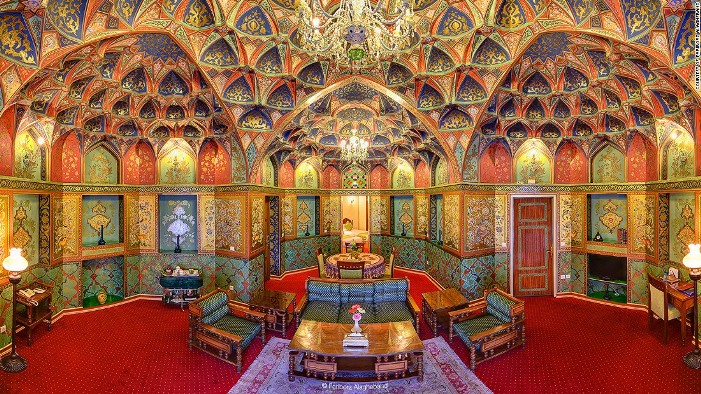
None more so than the Abbasi Hotel, an opulent if careworn establishment located in the ancient city of Esfahan.
It’s a place like no other.
Esfahan has its fair share of historical wonders (some which are UNESCO World Heritage sites), but in many ways the Abbasi has become a tourist attraction in its own right.
Built around 300 years ago, under the Safavid dynasty reign of Shah Sultan Husayn, it was originally used as a pit stop for merchants traveling the ancient Silk Road.


Iran completes ‘beauty link’ in North-South trade corridor


Iran is preparing to launch what could be the most beautiful railway in the country at the heart of an intercontinental multimodal transport project.

A 205-kilometer railway from Qazvin to Rasht in northern Iran is nearing completion and could be among the last parts of a rail link through which Russia would send its goods to Mumbai, India, Including Iran.

A report by the Iranian news agency IRNA said the railway could increase the number of tourists visiting Gilan province in northern Iran.

Situated on the shores of the Caspian Sea, Gilan is a popular destination for Iranian travelers – especially during the summer holidays and the New Year. Official figures show that it welcomes more than 30 million visitors each year.

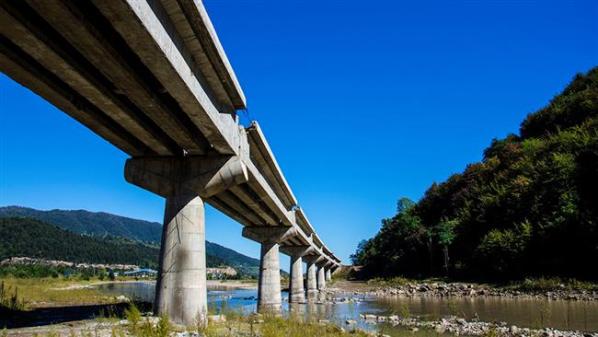
The construction of the Qazvin-Rasht railway is already considered one of the most difficult rail projects in Iran given the wide variety of terrain. An important part of the challenge was to dig 25 kilometers of tunnels and build about 8 kilometers of bridges.

In Gilan, it was necessary to take him to the jungles and over the rice fields and rivers to minimize the damage to the environment.

An extension to the northern port city of Bandar Anzali would lead passengers to the shores of the Caspian and would also offer a return trip inland for cargo destined for domestic markets or Mumbai through the port of the Persian Gulf of Bandar Abbas. Another extension of Rasht would go to Astara in Azerbaijan.

Previously, Abbas Akhoundi, Iranian Minister of Roads and Urban Development, said the Qazvin-Rasht rail link would be ready by the end of the summer.

The North-South International Transport Corridor (NSTC), a multi-model road linking India and the Middle East to the Caucasus, Central Asia, and Europe, is encouraged to significantly reduce costs and travel time and Stimulate trade.

The route of the ship, the road, and the railway connects Mumbai from India to the Iranian port of Bander Abbas and Baku in Azerbaijan as well as Astrakhan, Moscow and St. Petersburg in Russia before extending to the Northern Europe and Scandinavia.

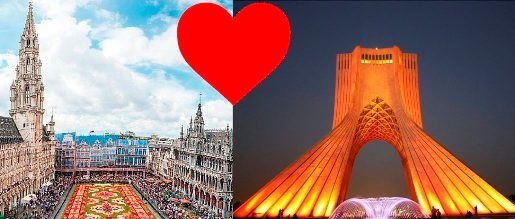
The first direct flight from Tehran to Brussels began


The first Tehran-Brussels route operated by an Iranian airline was officially launched on Tuesday.

The service is offered once a week by Qeshm Air, but it could increase to three weekly flights in the future, said the CEO of airline Mahmoud Shekarabi by ISNA.

The airline uses an Airbus A319 for the flight. Shekarabi said that Brussels airport is a transport hub, making Brussels the last ideal foreign destination of the airline.

Qeshm Air operates 21 international routes, said its website.

“Some 25,000 Iranians live in Belgium,” the CEO added.

The duration of the flight is approximately six hours and a return ticket costs 16.9 million rials ($ 450), reported the Mehr news agency.

Before that, travelers spent between 15 and 30 hours traveling between the two cities, with up to two routes.

Iran highlights the arrival of 6.5 million foreign tourists this year

Iran aims to attract some 6.5 million foreign travelers by the end of the current calendar year 1396 (March 20, 2018), but the country’s tourism infrastructure and public services need to be improved, Responsible for tourism. In 1395, some 5.5 million travelers visited Iran, recovering about $ 8 billion for the country, said IRNA.


“With proper planning and development of the infrastructure, it is possible to achieve our goals,” said Morteza Rahmani Movahhed, MP for Tourism of the Cultural Heritage, Tourism and Handicraft Organization.

“However, it takes time to clean up the county’s international image, which has been tarnished by some Western outlets for years,” the official said.

Following a historic nuclear deal, Tehran and the world powers won in 2015, Iran is repeatedly named as a hot travel destination by a circle of international media in terms of rich history, picturesque landscapes, Traditions, cooking and welcoming people.

Iran’s brilliant goal is to attract 20 million foreign travelers each year by 2025. However, with only eight years to go, according to some experts, the target seems to be somewhat unfeasible.

At present, European travelers, including France, Italy and Germany, who represent the majority of Western tourists, can now obtain visas upon arrival in Tehran and Mingle with tourists from China, Japan and other countries.

The government also announced plans to create sufficient accommodation and transportation for the growing number of tourists. There is a plan to increase the number of upscale hotels from 130 to over 1,000 in 10 years.

Blind terrorism does not affect the Iranian tourism industry


Blind terrorist activities would have no effect on Iran’s flourishing tourism industry, says the deputy head of the Cultural Heritage, Crafts, and Tourism Organization.

The country’s tourism industry is on the fast track and it is on the way to development with an even higher speed, said Morteza Rahmani Movahed on Saturday.

Rahmani Movahed, referring to the twin terrorist attacks of July 7 against the Iranian parliament and Imam Khomeini’s Mausoleum, said terrorists were following to achieve political goals.

“It was an attempt by the terrorists to show,” he said.

“Iran’s flourishing tourist activity will not be affected by such attacks,” he added.

Rahmani Movahed then continued praising Iran’s permanent security and said that the security and safety that foreign and foreign tourists find in Iran are the results of sacrifices made by the country’s military and police forces.