Hassan Rouhani visits Rome as Iran seeks new business deals with Europe
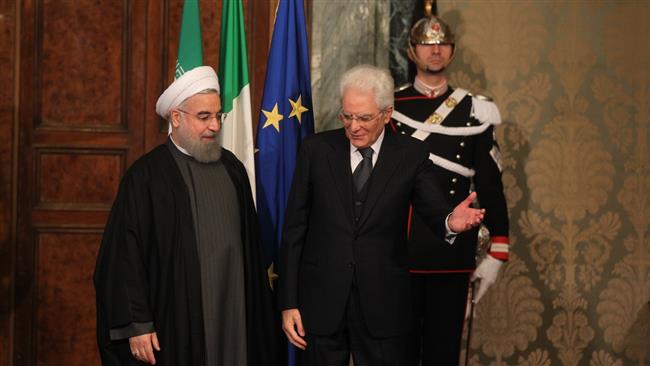
Iran President Hassan Rouhani flew into Italy on Monday looking to reap the economic and political dividends from the lifting of international sanctions imposed over the Islamic Republic’s nuclear programme.

Rouhani will also visit the Vatican and France on his first overseas trip since the nuclear deal came into force earlier this month, clearing the way for Iran to rebuild its relationship with the West.


The Iranian leader touched down in Rome accompanied by more than 100 ministers, officials and businessmen who are expected to help him clinch deals worth billions in trade and investment, topped by a major order for new Airbus planes.

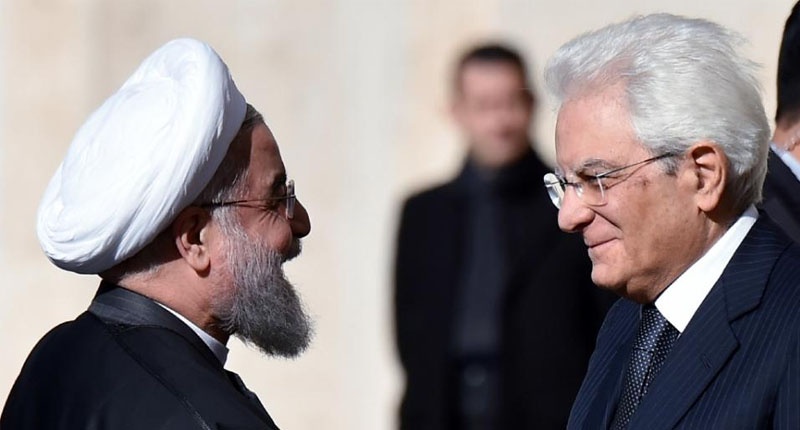
He smiled broadly for the cameras at Italy’s presidential palace before being ushered away for a working lunch with Italian President Sergio Mattarella, the first appointment in a five-day trip.

The fight against the Islamic State group, whose attacks on Paris forced Rouhani to delay a trip originally scheduled for November, and the war in Syria are expected to feature highly in diplomatic contacts during the visit.

Rouhani, 67 and a former academic and diplomat, is seen as a pragmatist who was elected in 2013 on a pledge to end sanctions and improve relations with the West.

He was scheduled to meet Italian Prime Minister Matteo Renzi on Monday evening and will be received by Pope Francis on Tuesday and by French President Francois Hollande on Wednesday.

“We have had friendly relations with Italy and France in the past and we want to continue our good relations with them,” Rouhani told reporters before his departure on Monday from Mehrabad Airport.

He also revealed that “important contracts” were in the works with French car makers Peugeot and Renault, adding to a burgeoning list of deals being struck as European companies scramble to get back into a $400-billion (370-billion-euro) economy with the fourth biggest reserves of oil in the world and a consumer market of 80 million people.

National carrier Iran Air said on Sunday it would be buying 114 Airbus planes to modernise an ageing fleet that has struggled to stay in the air as a result of the impact of sanctions.


The deal, to be signed in Paris this week, underlines the huge economic stakes involved in Iran’s re-opening, particularly for Europe’s manufacturing and engineering sectors.

Iran’s Transport Minister Abbas Akhoundi said the first Airbuses were earmarked for delivery by March and that Iran was in the market for a total of up to 500 planes.

Peugeot is tipped to forge a car assembly joint venture with Iran Khodro, reviving a partnership which generated Iranian sales of 473,000 units in its last year before the French company pulled out in 2012.

Iranian media reported the deal will involve investment of 500 million euros.

Iran’s Central Bank governor said last week the country was counting on the nuclear deal unblocking some $50 billion worth of foreign investment.

Italian companies have been amongst the quickest off the blocks with a major business delegation having visited Tehran in November and some 500 entrepreneurs invited to a forum Rouhani will attend on Tuesday.

Italy was formerly Iran’s biggest European trading partner but trade has dwindled to a fifth of its former volume as a result of the sanctions.

Italian media are predicting deals this week worth 17 billion euros, topped by a five-billion-euro contract for pipeline company Saipem.

National carrier Alitalia said Monday it was upgrading its Rome-Tehran service from four a week to a daily flights in anticipation of increased business and tourist travel.

Amid the scramble for slices of the Iranian pie, rights groups fear Tehran’s repression of political dissent and extensive use of the death penalty will be forgotten.

Pope Francis is expected to reiterate the Vatican’s concerns on both issues, as well as asking Rouhani to help protect Christians in the Middle East.


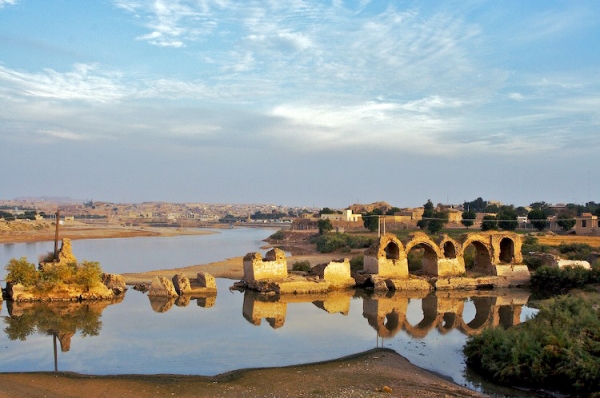
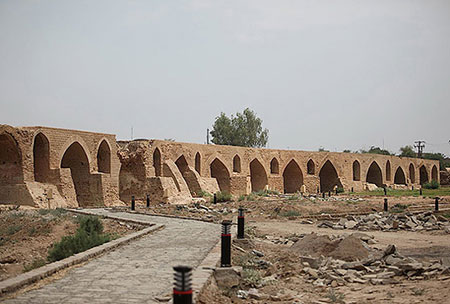
Band-e Kaisar a Roman ancient arch bridge in Shushtar

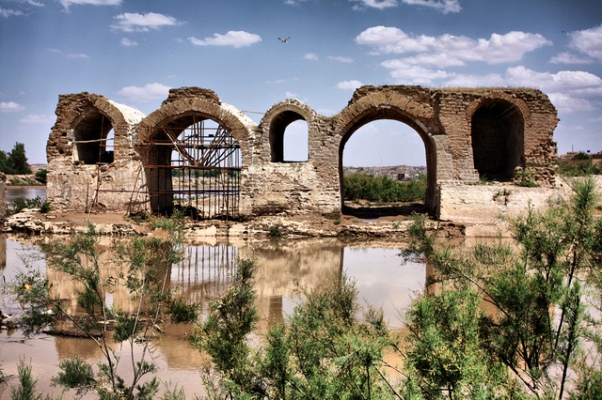
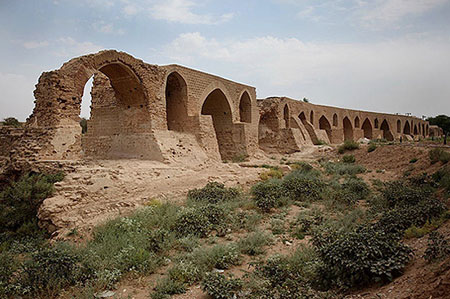
The Band-e Kaisar (Caesar’s dam‎‎), Pol-e Kaisar (“Caesar’s bridge”), Bridge of Valerian or Shadirwan was an ancient arch bridge in Shushtar, Iran, and the first in the country to combine it with a dam.Built by a Roman workforce in the 3rd century AD on Sassanid order,it was also the most eastern Roman bridge and Roman dam, lying deep in Persian territory.Its dual-purpose design exerted a profound influence on Iranian civil engineering and was instrumental in developing Sassanid water management techniques.

shadravan bridge Shoushtar

The approximately 500 m long overflow dam over the Karun, Iran’s most effluent river, was the core structure of the Shushtar Historical Hydraulic System from which the city derived its agricultural productivity,and which has been designated by the UNESCO as Iran’s 10th World Heritage Site in 2009.The arched superstructure carried across the important road between Pasargadae and the Sassanid capital Ctesiphon.Many times repaired in the Islamic period,the dam bridge remained in use until the late 19th century.

shadravan bridge Shoushtar

According to Persian tradition, the Band-e Kaisar is named after the Roman emperor Valerian (253–260 AD) who was captured with his entire army by the Sassanid ruler Shapur I after having been defeated in the Battle of Edessa (260). This vast labour force, which may have numbered up to 70,000 men and included the Roman engineering corps, was employed by the victors for construction work in Shushtar, an important agricultural center in south-western Iran.To service its large stretches of arable land, altogether some 150,000 hectares, the Romans set out to construct three structures: a canal called Ab-i Gargar, and the two dams of Band-e Kaisar and Band-e Mizan which directed the water flow of the Karun river into the artificial watercourse.

shadravan bridge Shoushtar

The story is related by the Muslim historians Tabari and Masudi in the 9th and 10th centuries. Although their novelistic narrative cannot be blindly trusted, the historical presence of the Romans is corroborated by modern local names, such as “Roumischgan” for a nearby village, and a Lurs tribe by the name of “Rumian”.Moreover, local tradition ascribes to Roman settlers the origin of a number of trades, like the production of brocade, and several popular customs.

shadravan bridge Shoushtar

The dam bridge at Shushtar belonged to the important road connection between the Sassanid centres of Pasargadae and Ctesiphon.Two further Sassanid dam bridges on this road, the Pa-i-Pol across the Karkheh and the one at Dezful over the Ab-i Diz, are also assumed to be the contemporary work of Roman prisoners of war. Both exhibit typically Roman masonry bound with mortar, a technique completely foreign to indigenous architecture.

Modelled on the Roman example, the integration of a bridge superstructure into dam design became a standard practice of Iranian hydraulic engineering which lasted until about 1000 AD, when it culminated in the still existing Band-e Amir at Shiraz.


Soltanieh Dome the Second one’s in the World


Soltanieh Dome Zanjan

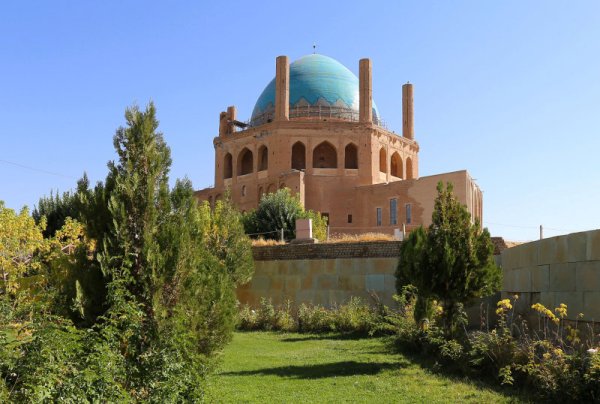
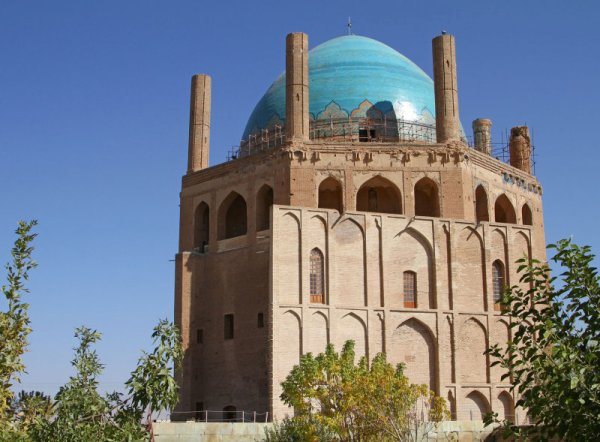
The Mausoleum of Oljaytu was constructed in 1302–12 CE in the city of Soltanieh, the capital of the Ilkhanid dynasty, which was founded by the Mongols.

Situated in the province of Zanjan, Soltanieh is one of the outstanding examples of Persian architecture and a key monument in development of Islamic architecture. The octagonal building is crowned with a 50-meter dome ― covered in turquoise-blue faience. It is surrounded by eight slender minarets. It is the earliest example of the double-shelled dome which still exists in Iran. The mausoleum’s interior decoration is also outstanding.


Soltanieh Dome Zanjan

The Mausoleum of Oljaytu plays an important role in the development of Islamic architecture in central and western Asia, from the classical Seljuk phase into the Timurid period. This is particularly relevant to the double-shelled structure.

Soltanieh, as ancient capital of the Ilkhanid dynasty, represents an exceptional testimony to the history of the 13th and 14th centuries CE.

The Mausoleum of Oljaytu is characterized by its innovative structure, spatial proportions, architectural forms, and the decorative patterns and techniques.


Soltanieh Dome Zanjan

Soltanieh is located some 240 km from Tehran. There is archeological evidence that the site had been occupied at least from the first millennium BCE. The construction of the settlement began during Ilkhanid dynasty.

Arghun Khan, the fourth Mongol ruler in Persia, decided to build a summer residence in this region, because it boasted good hunting grounds and rich pastures for horse breeding. His son, Ghazan Khan, had a mausoleum built over his tomb, known as Noor Hill.

There is little information about start of the new settlement until Oljaytu (later Sultan Muhammad Khodabandeh) came to power in 1304 CE when he decided to expand the city and make it his capital, naming it Soltanieh (Imperial).

Together with Tabriz, Soltanieh became a major trading center on route between Asia and Europe. However, Soltanieh Dome gradually declined and remained in ruins. Only a rural village was built over the remains.

The Mausoleum of Oljaytu ― the principal monument of the city ― stands in the middle of a rural settlement, surrounded by fertile meadows. The building is in octagonal form, rising to a stunning high-profile dome ― covered with turquoise-blue faience tiles. This structure represents the earliest existing example of double dome in Iran. The dome has no buttresses. The second-storey galleries of the mausoleum open outwards.


Soltanieh Dome Zanjan

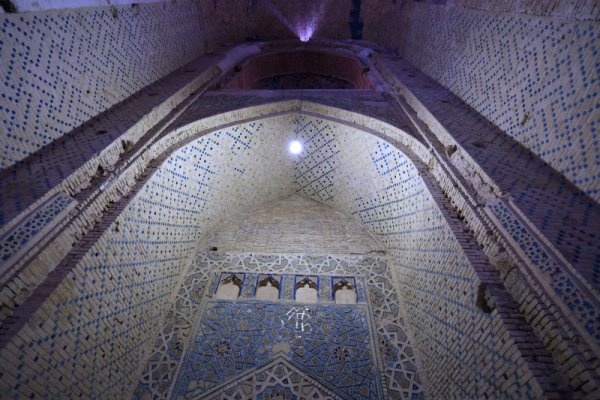
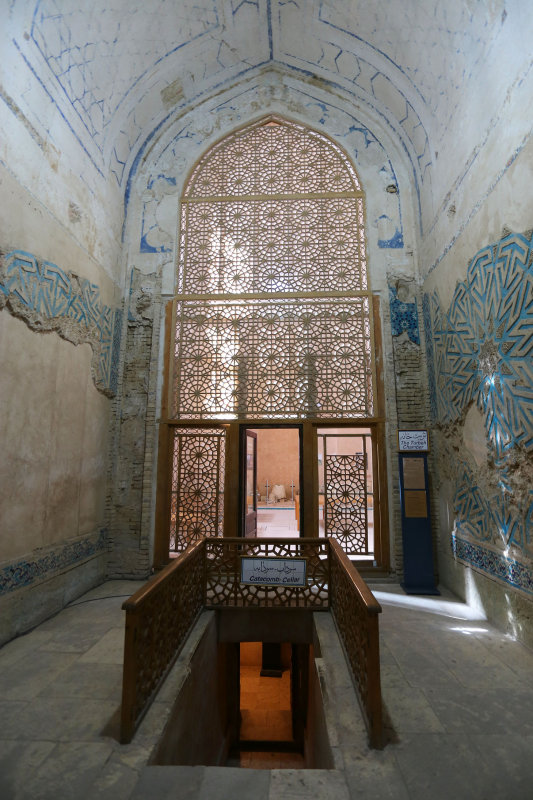
Structurally, the building is considered a masterpiece. The interior walls were originally decorated with light golden-toned bricks and dark blue faience tiles. Later, it was redecorated with plaster by using fine ornaments.

The immediate surroundings of the mausoleum consist of a stone terrace in citadel form. Originally, the citadel was surrounded by a 30-meter-wide moat. Today, it is an archaeological site.

In historic texts, the area of Soltanieh was called ‘Prairie of the Alezans’ or ‘The Falcon’s Hunting Ground’. The special nature of these meadows is due to the soil, which prevents the entire absorption of rain water. As a result, it was especially fertile pasture, particularly appropriate for horse breeding. This was also one of the reasons for establishment of the city in this location.

In the 13th century CE, Persia was devastated by Mongol invasions. They captured Baghdad in 1258 CE, terminating the Abbasid caliphate there. They also founded Ilkhanid Empire in Persia with the capital in Tabriz, in the northwestern part of present-day Iran. The title ‘Ilkhan’ indicated subordinate or peaceful khan in deference to the Great Khan in China. After Kublai Khan died in 1294 CE, the Ilkhanids converted to Islam and the links with China became weaker. The Ilkhanid dynasty governed Persia until 1335 CE.

There is archeological evidence that Soltanieh site had been occupied at least from the first millennium BCE. The construction of a settlement only started by Ilkhanid dynasty around 1290 CE.

The main phase of construction was completed by 1313 CE.


Soltanieh Dome Zanjan

The Ilkhanids had converted to Shia religion, and they are believed to have wanted to transfer the relics of Imam Ali (PBUH) and his son, Imam Hussein (PBUH), from Baghdad to Soltanieh. This never happened and the shrine became the mausoleum of Oljaytu instead.

After the death of Oljaytu in 1316 CE, the city was driven into oblivion. Later, it fell in the hands of small dynasties.

In 1384 CE, Tamerlane’s army seized the city and sacked it, but spared Oljaytu’s mausoleum. In the following years, the city suffered, though it continued to function as a commercial center comparable to Tabriz. In the 16th and 17th centuries CE, Soltanieh gradually declined and remained in ruins. Only a village was built over the remains. Some restoration was undertaken in Oljaytu’s Mausoleum in 19th century CE. At the same time, the plain served as an instruction camp for army of Qajar kings.

Brickwork
Soltanieh Dome, which was the world’s tallest building of its time, currently ranks third after Italy’s Saint Mary church in Florence and Turkey’s Aya Sofia Mosque in Istanbul, Presstv reported.
With its octagonal base and beautiful tile-work, the 54-meter tall Dome is taller than many of Iran’s major historical sites.
The building comprises three parts: mausoleum, dome chamber and vault.
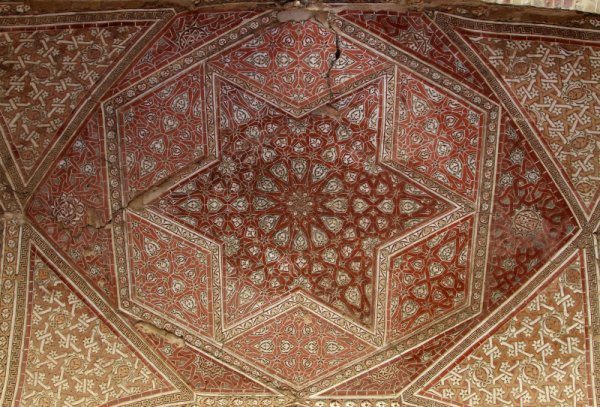
The dome chamber is decorated with Islamic inscriptions and beautiful muqarnas (a traditional Persian art).


Soltanieh Dome Zanjan

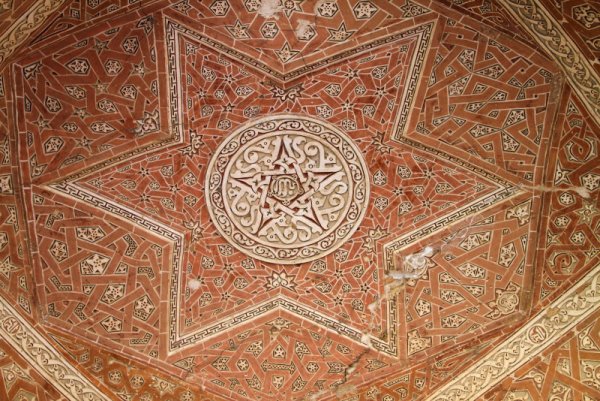
Tile-work
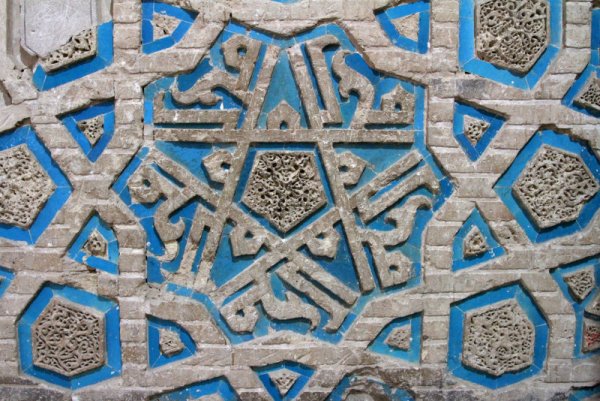
Unique Kufic and Sols inscriptions, and exquisite arabesque decorations adorn the mausoleum located above the vault where the king’s body was laid to rest and two guards protected the gilded royal tombstone at all times.
Although the passage of time has left its mark on the mausoleum, the interior retains its superb mosaics, faience and murals.
Stunning brick patterns and beautiful hexagon tiles once decorated the dome’s interior, which was later covered up with plaster, colorful inscriptions and floral patterns.


Soltanieh Dome Zanjan

Iran’s Cultural Heritage, Handicrafts and Tourism Organization is currently in charge of the 200-ton dome’s restoration in which experts are using azure tiles made in traditional kilns to refurbish the exterior.
The dome’s double-shell structure, built of two parallel and completely separate brick layers connected with buttresses, gives it a unique quality turning it into one of the world’s unique architectural examples, inspiring many other Muslim cupola constructions such as the Taj Mahal in Agra, India.
The celebrated Italian architect Filippo Brunelleschi is said to have been inspired by the Soltanieh Dome when designing the dome of the Santa Maria Del Fiore cathedral in Florence.
Soltanieh Dome was registered on UNESCO’s World Heritage list in 2006 after the Naqsh-e Jahan Square, Persepolis, the Chogha Zanbil Ziggurat, Takht-e Soleiman, Passargad and the Bam Citadel.

Vinci seals Iran airport expansion deal
Vinci Airports, a major player in the aviation sector which manages the development and operations of 25 airports worldwide, has signed a memorandum of understanding for the expansion of two airports in Iran.

The airport in Mashhad, which recorded 8.2 million passengers in 2014, is located in the northeast of the country and serves the country’s second largest city, a holy city that attracts more than 20 million pilgrims every year.

The Isfahan airport, with 2.6 million passengers in 2014, serves Iran’s third largest city, the capital of the Persian empire in the 16th and 17th centuries, renowned for its rich cultural and historic heritage.

The Iranian Ministry of Roads and Urban Development and the Iran Airports Company signed the agreement with Vinci during the state visit of Iranian President Hassan Rouhani to France, said a statement from Vinci.

The agreement for Mashhad and Isfahan airports is the first step in a process that should result in the establishment of concessions that will renovate, extend and operate each of the two airports in 2016,  it stated.

With tourism increasing more than 35 per cent in 2014 and the recent effective lifting of international sanctions, airport activity holds out major economic potential in Iran. With its large population and territory, Iran lends itself to air transport, it added.

Islamic tourist cruise to connect Iran, Oman and India


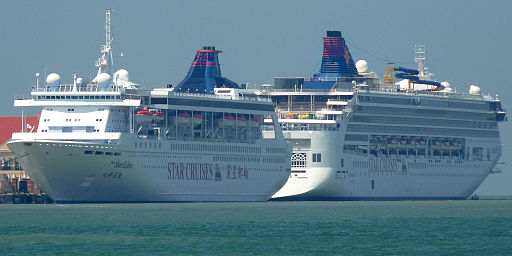
MUSCAT: An Islamic tourist cruise connecting Iran, Muscat, Salalah and Mumbai is expected to be launched in 2016, said a representative of an Iranian shipping company.

An initiative is being studied with the support of Iran’s Ports and Maritime Organisation to launch an Islamic leisurely cruise, Abdolhossein Khedri, chairman of Khedri Jahan Darya Company, told Times of Oman in an exclusive interview.

Khedri Jahan Darya Company, which is affiliated with Marine Silk Road Holding, has been providing the first-ever regular direct shipping services for cargo transport between Iran and Oman following an agreement signed between the company and Iranian and Omani authorities.

Cruise journey

Each planned cruise journey is expected to take around seven to 10 days catering to both Iranian and Omani tourists, Khedri said during Iran’s second solo exhibition, which was held in Muscat from January 26 to 30.

Asked if the company plans to launch any passenger transport services between Iran and Oman, the official said that it has been invited to do so but the issue is that Omani vessels are very expensive and their fuel consumption is high.

So it would not be economical to use them for the transport of passengers between the two countries, he noted, adding that the company had decided to participate in the exhibition to use it as a platform to promote Iran’s tourism, with the permission it has received from the Iranian government.


Omani taste

There is no doubt that Iran has great tourism potential but still many attractions in Iran, especially those which would be interesting for Omanis, are still unknown to them, he added.

According to him, the company had sought to introduce such places in the Muscat exhibition through the distribution of booklets written in Arabic and English among the visitors.

For example, visiting Persepolis is important for European tourists but it may not be that interesting for an Omani visitor, said the chairman of Khedri Jahan Darya Company.

Dizin ski resort


An Omani tourist would find the northern parts of Iran or places such as Dizin ski resort much more fascinating, Khedri explained. The northern parts of Iran near the Caspian Sea, which is the largest enclosed inland body of water on Earth by area, are famous for their dense forests, impressive sea shores and spectacular mountains.

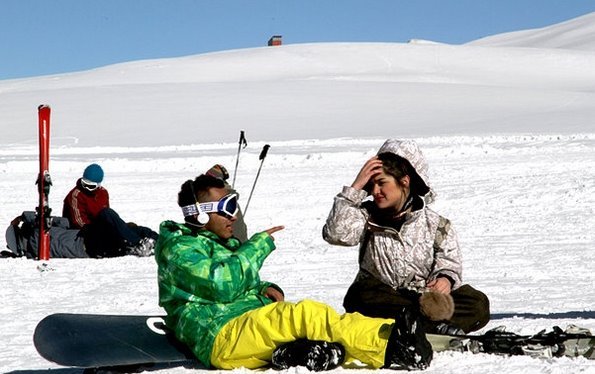
Dizin ski resort is one of the best and most popular ski resorts for sports enthusiasts in Iran, which is located in the Alborz mountain range.

Hot springs

Mohammad Mohammadzadeh, chairman of Rah Abrisham Marine Shipping Agency, which is affiliated with Marine Silk Road Holding, also believes that ski resorts in Iran would be appealing for many Omani tourists.

Other popular places to visit include hot springs in northern or western Iran, he said.

Hot springs in Iran has been drawing many visitors, especially those looking for traditional hydrotherapy.

Medical, religious tourism


Mohammadzadeh said that Iran has a huge tourism potential, not only in the field of leisure tourism but also medical and religious tourism given its many tourist attractions, religious sites and good hospitals and medical professionals.

However, he believes that Iran’s tourism potential has still remained untapped and should be promoted further. The official said that Rah Abrisham Marine Shipping Agency is much more than just an agency as it is seeking to open new markets in the tourism sector.

Rah Abrisham Marine Shipping Agency is currently the representative of liner shipping services between Iran and Oman offering various services.

Mohammadzadeh said that the company is supposed to become an Iranian ‘ambassador’ in Oman with the support of the concerned authorities in Iran with the aim of introducing existing opportunities to both Iranians and Omanis, especially in various branches of tourism.

According to the Iranian embassy in Muscat, the flow of tourists from Iran to Oman increased by around 10 per cent in the previous year and the number of Iranian visas issued to Omanis showed an increase of around 37 per cent.

Oman Air flights

Oman Air has added a second daily flight to Tehran and there are plans to launch flights between Oman and the Iranian cities of Mashhad and Shiraz, the embassy has said.


Oman Air recently announced that it plans to increase the number of flights to Tehran.

Iran is known as the country of four seasons. At any time of the year, people can enjoy one of the four seasons in different parts of the country.

Apart from its majestic natural landscapes ranging from the shores of the Caspian Sea in the north to the coasts of the Gulf in the south, Iran has a number of unique cultural sites registered on the UNESCO’s (United Nations Educational, Scientific and Cultural Organisation) list of world heritage sites, reflecting the country’s rich and ancient history.

Some of these sites include Persepolis, Takht-e Soleyman, Bisotun, Golestan Palace, Pasargadae, Shahr-e Sukhteh, Chogha Zanbil and Jameh Mosque of Isfahan.

British Airways to resume flights to Iran


flights from London to Tehran

British Airways will resume direct flights from London to Tehran from July, renewing links with the Iranian capital after sanctions were lifted.

The British airline followed Air France-KLM in confirming its intention to restart flights to Tehran after Iran curbed its nuclear programme in return for the lifting of U.S., EU and United Nations sanctions in January.

The deal has sparked hopes that Iran could secure a wave of foreign investment for the country of 80 million people after President Hassan Rouhani visited Europe last week.

Owned by IAG, BA will initially run six flights per week before moving to daily flights from winter 2016, departing from London’s Heathrow Airport.

“The recent lifting of sanctions opens up exciting new prospects for Iran as a tourist destination and with its rich heritage, unique architecture and world-class food it’s unsurprising Tehran is tipped to be a popular destination for 2016,” said Neil Cottrell, BA’s head of network planning.

BA said it had a long history of flying to Tehran and offered its first scheduled flights to the city in 1946. It stopped regular flights in 2012 due to a combination of commercial and political reasons.

Britain reopened its embassy in Tehran in August nearly four years after protesters stormed the compound.

Post-sanctions Iran is set to be an enticing market for Western aircraft makers. Iran agreed last week to buy 118 Airbus jets worth $27 billion at list prices, including a dozen A380 superjumbos.

Iran seeks 20 mln tourists, $30 billion revenue annually by 2025
Long seen as a destination strewn with shortcomings, Iran is making a fresh pitch for tourists, with the recent lifting of economic sanctions providing an opportunity to cash in, AFP reports.


The tourism industry has been overlooked by successive governments in Tehran but the deal Iran struck with world powers over its nuclear program last summer could change that.

Tourists, and the healthy revenues they could generate, are among the huge economic changes stemming from the nuclear deal.

Ski resorts, UNESCO-listed world heritage sites and deserts combine with cities steeped in Middle Eastern grandeur and tradition, according to AFP.

A tourism push was launched after President Hassan Rouhani came to power in 2013, ending the hardline era of Mahmoud Ahmadinejad during which Iran’s international isolation deepened.

Entry procedures have been simplified, meaning visitors from only 11 countries are not eligible for a visa on arrival. The United States, Britain, Canada and France top the exclusion list but some people will not be put off by the restrictions.

For Rouhani, tourism offers a way to offset falling oil prices that have slashed government income. The goal is 20 million tourists annually by 2025 which would provide $30 billion a year, a fivefold increase in current revenues from foreign visitors.

There have been 4.16 million visitors in the first nine months of the Iranian year, which started in March 2015, up five percent from a year earlier, according to the tourism ministry.

Of the country’s 1,100 hotels, only 130 are four or five star — 400 more would be needed to accommodate 20 million tourists annually

Iran Air Said to Prepare to Restart Flights to Japan
Iran Air is preparing to restart flights to Japan following last month’s international deal to end sanctions imposed over Iran’s nuclear program, according to two people familiar with the situation.

The carrier will initially restart flights connecting Tokyo’s Narita airport with Tehran, with a stop in Beijing, on a once-a-week basis, said one of the people, who asked not to be identified because a final decision hasn’t been made. The earliest that Iran Air is likely to resume service is next year after ending flights in 2012, the person said.

Iran and Japan also are discussing allowing direct flights between the countries for multiple airlines, and will come to an agreement on this soon, said another person, who asked not to be identified because the information is not public. Japan Airlines Co. stopped direct flights to Tehran in 1980 following the Iranian Revolution the previous year.

The Middle Eastern country placed an outline order in late January for 118 planes from Airbus Group SE worth almost $27 billion at list prices, according to Bloomberg calculations. The deal includes 45 single-aisle planes and 73 wide-body aircraft. The airline is also purchasing 12 A380 superjumbos.

Iran Air’s Chairman and Managing Director Farhad Parvaresh didn’t comment on the timing of any potential resumption of flights to Japan when reached by e-mail.

Aircraft Delivery

“It all depends on the delivery of our planned aircraft,” he said. Iran air currently serves Beijing with Boeing Co. 747s.

An official at Japan’s Transport Ministry said they have received several requests from Iran Air and the Iranian government about resuming flights, but “nothing has been decided yet.” It would be less time-consuming to approve charter flights than regular commercial flights, the official said.

European airlines are readying to restart flights to Iran, with British Airways saying Feb. 3 it will resume service to Tehran in July.

Iran’s minister of economic affairs and finance, Ali Taiebnia, signed an investment agreement Feb. 5 in Tokyo with Japanese Foreign Minister Fumio Kishida to increase economic cooperation between the countries.

The agreement is to help Japanese companies compete for contracts and build facilities in the Middle Eastern country. That in turn will spur demand for flights between the two countries for business officials.

Iran Investment

Iran is an important source of oil for Japan and companies including Cosmo Energy Holdings Co., Chiyoda Corp. and Inpex Corp. are keen to deepen relationships and make deals in the industry.

Chiyoda, a Japanese industrial plant maker, has reached a basic agreement to renovate refineries in the southern Iranian port city of Bandar Abbas, NHK reported last week. It is the first infrastructure order by a Japanese company since sanctions were lifted, the broadcaster said. The Yokohama, Japan-based company, confirmed it is making efforts to develop deals in Iran, while it denied it had reached any agreements with the Iranian government, it said in a statement after the report.

Cosmo Energy will decide to increase Iranian crude purchases if it makes economic sense, Eita Ushioda, a Tokyo- based spokesman for the company, said January.

Inpex, Japan’s biggest energy explorer, is also keen to make investments in Iranian assets, Masahiro Murayama, a managing executive officer at the Tokyo-based company, told reporters Thursday.

Iranian Handicrafts Exhibition in Paris


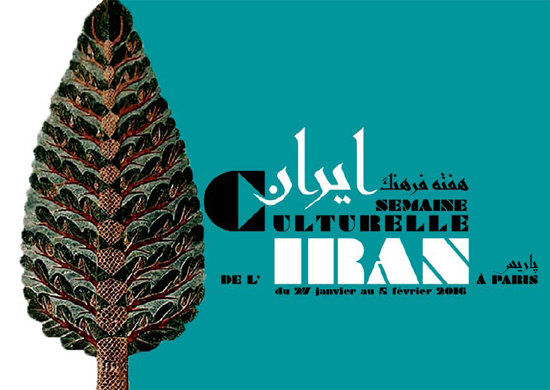
Concurrent with the visit of President Rouhani to France, Paris will host Iran’s cultural week and open an Iranian handicraft exhibition, Deputy Head of Cultural Heritage said.

 Deputy Head of Cultural Heritage, Handicrafts and Tourism Organization (ICHTO) Bahman Namvar Motlagh told MNA correspondent that coinciding with President Rouhani’s visit to France, Iran’s Cultural Heritage Organization in collaboration with Iranian Embassy in France, will hold various programs during Iran’s cultural week, saying this is the first time a political visit has been entwined with culture. “As a cultural country, we have planned to hold an exhibition in Paris municipality showcasing 150 items of unique and highly valuable Iranian handicrafts,” he said. According to Namvar Motlagh, the exhibition aims to promote and introduce Iranian handicraft to French people, although all items can be ordered for purchase. He went on to add that a number of paintings of Iran’s historical sites and monuments will be also put on display. Iran’s cultural week will be officially inaugurated in Paris on Thursday, 28 January. In addition to handicrafts exhibition, there will be a number of programs on Iranian cinema and music.

Iran is home to one of the richest art heritages and handicrafts in world history and distinguished in many disciplines,
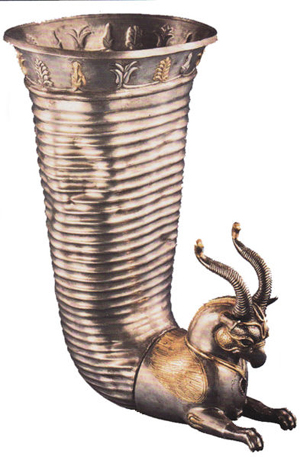


The Art of Achaemenids
Rytone- The Art of Achaemenids

including architecture, painting, weaving, pottery, calligraphy, metalworking and stone masonry. Persians were among the first to use mathematics, geometry, and astronomy in architecture and also have extraordinary skills in making massive domes which can be seen frequently in the structure of bazaars and mosques. Iran, besides being home to a large number of art houses and galleries, also holds one of the largest and valuable jewel collections in the world.

The art of carpet weaving in Iran dates backs to 2,500 years and is rooted in the culture and customs of its people and their instinctive feelings. Weavers mix elegant patterns with a myriad of colors. The Iranian carpet is similar to the Persian garden: full of florae, birds and beasts. The colors are usually extracted from wild flowers, and are rich in colors such as burgundy, navy blue and accents of ivory. The proto-fabric is often washed in tea to soften the texture, giving it a unique quality. Depending on where the rug is made, patterns and designs vary. Some rugs such as Gabbeh, and Kilim have variations in their textures and number of knots as well. Out of about 2 million Iranians involved in the trade, 1.2 million are weavers who produce the largest amount of hand-woven carpets in the world.

Oriental historian Basil Gray believes “Iran has offered a particularly unique art to the world which is excellent in its kind”. Caves in Iran’s Lorestan province exhibit painted imagery of animals and hunting scenes. Those in Fars province and Sialk are at least 5,000 years old. Painting in Iran is thought to have reached a peak during the Tamerlane era when outstanding masters such as Kamaleddin Behzad gave birth to a new style of painting. Qajarid paintings, for instance, are a combination of European influences and Safavid miniature schools of painting such as those introduced by Reza Abbasi. Masters such as Kamal-ol-Molk further pushed forward the European influence in Iran. It was during the Qajar era when “Teahouse painting” emerged. Subjects of this style were often religious and nationalist in nature depicting scenes from Shiite history and literary epics like Ferdowsi’s Shahnameh.

A Persian miniature is a richly detailed miniature painting which depicts religious or mythological themes from the region of
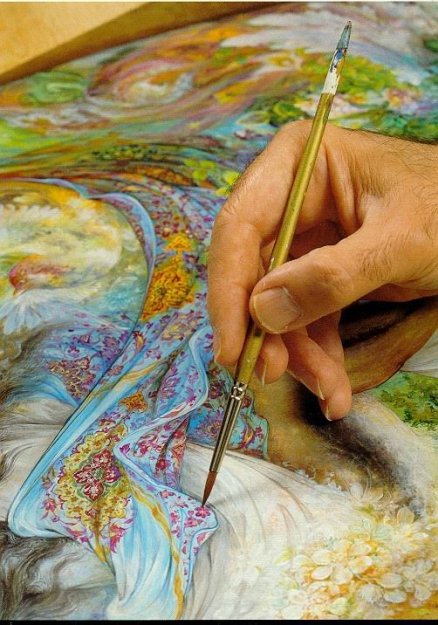

the Middle East now known as Iran. The art of miniature painting in Persia flourished from the 13th through the 16th centuries, and continues to this day, with several contemporary artists producing notable Persian miniatures. These delicate, lush paintings are typically visually stunning, with a level of detail which can only be achieved with a very fine hand and an extremely small brush. Persian miniature is a small painting, whether a book illustration or a separate work of art intended to be kept in an album of such works. The techniques are broadly comparable to the Western and Byzantine traditions of miniatures in illuminated manuscripts, which probably had an influence on the origins of the Persian tradition. Although there is an equally well-established Persian tradition of wall painting, the survival rate and state of preservation of miniatures is better, and miniatures are much the best-known form of Persian painting in the West. Several features about Persian miniatures stand out. The first is the size and level of detail; many of these paintings are quite small, but they feature rich, complex scenes which can occupy a viewer for hours. Classically, a Persian miniature also features accents in gold and silver leaf, along with a very vivid array of colors. The perspective in a Persian miniature also tends to be very intriguing, with elements overlaid on each other in ways which sometimes feel awkward to people who are accustomed to the look and feel of Western art.

Prominent archeologist Roman Ghirshman said, “The taste and talent of these people [Iranians] can be seen through the designs of their earthenware.” Of the thousands of archeological sites and historical ruins of Iran, almost every one of them can be found to have been filled, at some point, with earthenware of exceptional quality. Thousands of unique vessels alone were found in Sialk and Jiroft sites. The occupation of the potter (kouzehgar) has a special place in Persian literature.

Persian calligraphy has several styles. The style initiated by Darvish was emulated by his contemporaries–Mirza Hassan
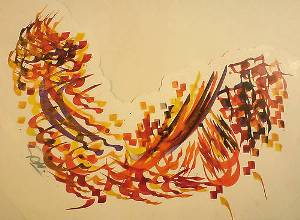

Isfahani, Mirza Kouchek Isfahani and Mohammad Ali Shirazi. After his death, the Shekasteh style fell into stagnation until it was revived in the 1970s. Says writer Will Durant: “Ancient Iranians, with an alphabet of 36 letters, used skins and pen to write instead of earthen tablets.” Such was the creativity spent on the art of writing. The significance of the art of calligraphy in works of pottery, metalwork and historical buildings is such that they are considered deficient without the calligraphic adorning. Illuminations, especially in the Qur’an and works such as Shahnameh, Divan-e Hafez, Golestan and Boustan, are recognized as highly invaluable because of their delicate calligraphy alone. Vast quantities of these are scattered and preserved in museums and private collections worldwide such as the Hermitage Museum of St. Petersburg and Washington’s Freer Gallery of Art among many others.

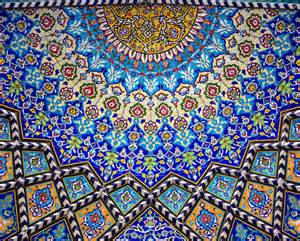
 Tilework is a unique feature of the blue mosques of Isfahan. In the old days, Kashan (kash + an literally means “land of tiles”) and Tabriz were famous centers of Iranian mosaic and tile industry in the past. Since centuries, Iranian art has developed particular patterns to decorate Iranian crafts. These motifs can be: – Inspired by ancestral nomad tribes (such as geometrical motifs used in kilims or gabbehs). – Islam influenced, with an advanced geometrical research. – Oriental based, also found in India or Pakistan.

Delicate and meticulous marquetry has been produced since the Safavid period. In fact, khatam was so popular in the court that princes learned this technique alongside music and painting. Khatam means incrustation and Khatamkari refers to incrustation work. This craft consists in the production of incrustation patterns (generally star shaped) with thin sticks of wood (ebony, teak, zizyphus, orange, rose), brass (for golden parts) and camel bones (white parts). Ivory, gold or silver can also be used for collection objects. Sticks are assembled in triangular beams, themselves assembled and glued in a strict order to create a cylinder 70 cm in diameter, whose cross-section is the main motif: a six-branch star included in a hexagon. These cylinders are cut into shorter cylinders, and then compressed and dried between two wooden plates, before being sliced for the last time, in 1 mm wide trenches. These sections are ready to be plated and glued on the object to be decorated, before lacquer finishing. The trench can also be softened through heating in order to wrap around objects. Many objects can be decorated in this fashion, such as jewelry/decorative boxes, chessboards, pipes, desks, frames or some musical instruments. Khatam can also be used in Persian miniatures, making it a more attractive work of art. Based on techniques imported from China and improved by Persian know-how, this craft has existed for more than 700 years and is still practiced in Shiraz and Isfahan.
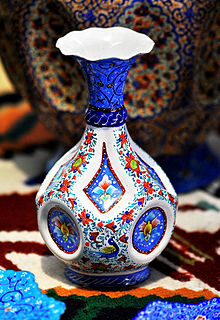

 Enamel working and decorating metals with colorful and baked coats are one of the distinguished artwork in Isfahan.
Although this course is of abundant use industrially for producing metal and hygienic dishes, it has been paid high attention by painters, goldsmiths and metal engravers since a long time. Worldwide, it is categorized as follows: 1- Enamel painting 2- Charkhaneh or chess- like enamel 3- Cavity enamel. Enamel painting is practiced in Isfahan and specimens are kept in the museums of Iran and abroad, indicting that Iranian artists have been interested in this art and used it in their metalwork ever since the rule of Achaemenian and Sassanid dynasties. Since enamels are delicate, we do not have many of them left from ancient times. Some documents indicate that throughout the Islamic civilization of and during the Seljuk, Safavid and Zand dynasties, there have been outstanding enameled dishes and materials. Most of the enameled dishes related to the past belong to the Qajar dynasty during 1810–90. Bangles, boxes, water-pipe heads, vases and golden dishes with beautiful paintings in blue and green colors remain from that time. This art stagnated for 50 years due to World War I and the social revolution. However, this art was fostered in terms of quantity and quality by Master Shokrollah Saniezadeh, the outstanding painter of Isfahan, for 40 years. Since 1992, this art has begun to thrive after many distinguished artists began working in this field.

Ghalamkar (Qalamkaar, also qalamkar, kalamkar) fabric is a type of Textile printing, patterned Iranian Fabric. The fabric is printed using patterned wooden stamps. It is also known as Kalamkari in India which basicaly is a type of hand-painted or block-printed cotton textile.
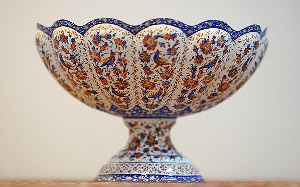

Termeh is a handwoven cloth of Iran, primarily produced in the Yazd province. Weaving Termeh requires a good wool with tall fibers. Termeh is woven by an expert with the assistance of a worker called “Goushvareh-kesh”. Weaving Termeh is a sensitive, careful, and time-consuming process; a good weaver can produce only 25 to 30 centimeters in a day. The background colors which are used in Termeh are jujube red, light red, green, orange and black. Termeh has been admired throughout history: Greek historians commented on the beauty of Persian weavings in the Achaemenian (532 B.C.), Ashkani (222 B.C.) and Sasanidae (226-641 A.D.) periods and the famous Chinese tourist Hoang Tesang admired Termeh. After Islam’s arrival in Iran, the Persian weaving arts were greatly developed, especially during the Safavie period (1502-1736 A.D.), during which time Zarbaf and Termeh weaving techniques were both significantly refined. Due to the difficulty of producing Termeh and the advent of mechanized weaving, few factories remain in Iran that produce traditionally woven Termeh. Rezaei Termeh is the most famous of the remaining factories.
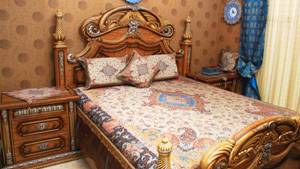


termeh
Termeh

Kilims are flat tapestry-woven carpets or rugs produced from the Balkans to Pakistan. Kilims can be purely decorative or can function as prayer rugs. Recently made kilims are popular floor-coverings in Western households. Kilims are produced by tightly interweaving the warp and weft strands of the weave to produce a flat surface with no pile. Kilim weaves are tapestry weaves, technically weft-faced plain weaves, that is, the horizontal weft strands are pulled tightly downward so that they hide the vertical warp strands. When the end of a color boundary is reached, the weft yarn is wound back from the boundary point. Thus, if the boundary of a field is a straight vertical line, a vertical slit forms between the two different color areas where they meet. For this reason, most kilims can be classed as “slit woven” textiles. The slits are beloved by collectors, as they produce very sharp-etched designs, emphasizing the geometry of the weave. Weaving strategies for avoiding slit formation, such as interlocking, produce a more blurred design image. The weft strands, which carry the visible design and color, are almost always wool, whereas the hidden warp strands can be either wool or cotton. The warp strands are only visible at the ends, where they emerge as the fringe. This fringe is usually tied in bunches, to ensure against loosening or unraveling of the weave.

Iran seeks to attract tourism as nuclear chill ends


The tourism industry has been overlooked by successive governments in Tehran but the deal Iran struck with world powers over its nuclear programme last summer could change that.
Long seen as a destination strewn with shortcomings, Iran is making a fresh pitch for tourists, with the recent lifting of economic sanctions providing an opportunity to cash in.

The tourism industry has been overlooked by successive governments in Tehran but the deal Iran struck with world powers over its nuclear programme last summer could change that.

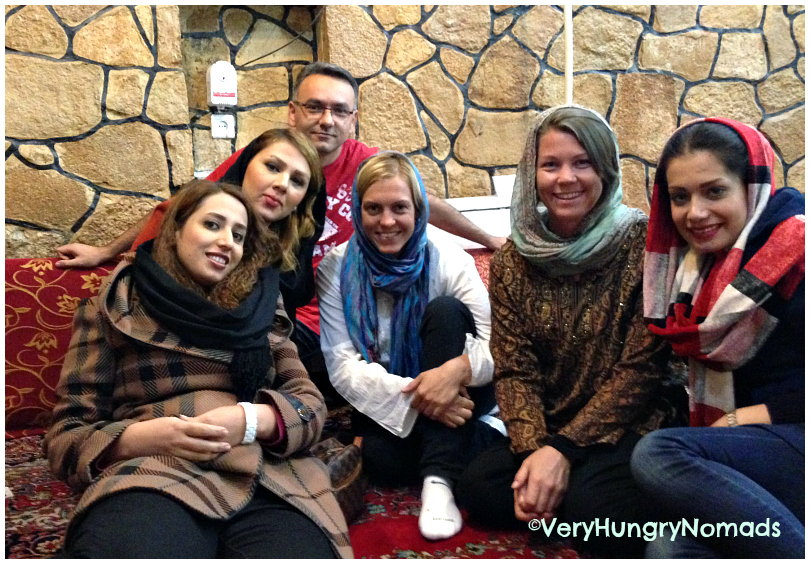
Along with nine companions including Americans and Germans, China-based Frenchman Yannick Lequelenec said he aims to make “one unique journey” every year. For 2016, he chose Iran.

“My family told me I was crazy, but people have been welcoming and very friendly,” he said in Tehran of his one-week trip taken over the Chinese New Year holidays.

Tourists, and the healthy revenues they could generate, are among the huge economic changes stemming from the nuclear deal.

Ski resorts, UNESCO-listed world heritage sites and deserts combine with cities steeped in Middle Eastern grandeur and tradition.

A tourism push was launched after President Hassan Rouhani came to power in 2013.

Entry procedures have been simplified, meaning visitors from only 11 countries are not eligible for a visa on arrival.

The United States, Britain, Canada and France top the exclusion list but some people will not be put off by the restrictions.

“The first thing we did was to go skiing in Tochal,” said Rachel Punter, a 41-year-old British teacher based in Shanghai who was among Lequelenec’s group.

The ski resort is one of several close to the capital. That outing was followed by trips to Isfahan, Shiraz and Yazd, cities considered much more beautiful and relaxed than Tehran.

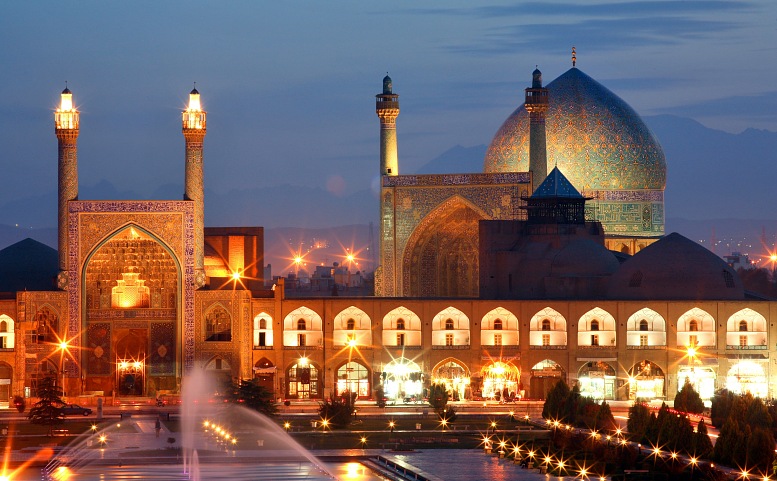
Among the popular sites in Isfahan is Imam Square, second in size only to Tiananmen Square in Beijing, but with water fountains and impressive architecture the Iranian site is much more attractive.

For Rouhani, tourism offers a way to offset falling oil prices that have slashed government income. The goal is 20 million tourists annually by 2025 which would provide $30 billion a year, a fivefold increase in current revenues from foreign visitors.

International credit and debit cards still do not work in Iran, but arriving with foreign currency and converting it into a large bundle of local rial notes does not seem a handicap.

There have been 4.16 million visitors in the first nine months of the Iranian year, which started in March 2015, up five percent from a year earlier, according to the tourism ministry.

Two thirds of them come from neighbouring countries, such as Iraq, Azerbaijan, Armenia and Afghanistan or Pakistan.

Western tourists currently number only five percent but the trend is upward, according to Ebrahim Pourfaraj, head of Pasargad Tour Agency and president of the Association of Iranian Tour Operators.

“For tourists, the sense of security and peace is very important. The nuclear deal and the trips of President Hassan Rouhani to Italy and France have reinforced this phenomenon,” he said.

Those visits underlined Iran’s acceptance and willingness to trade with Europe after the nuclear deal.

But after decades of inadequate investment, facilities and capacity are sparse.

Of the country’s 1,100 hotels, only 130 are four or five star – 400 more would be needed to accommodate 20 million tourists annually.

Azam Ayoubian, owner of the 2001 travel agency in Tehran, also said demand far exceeds supply.

“Compared to last year, we can easily see an increase by a factor of two or three,” she said of enquiries from abroad.

French or English speaking guides are booked up to the end of 2017 and the four or five star hotels in Isfahan, Shiraz and Yazd are sold out months in advance.

The foreign visitors are people who “have travelled the world and want quality holidays,” Ayoubian said.

“We can’t just put them in a hotel in which they’d be uncomfortable.”

Iran will have to adapt quickly to make the most of renewed interest.

“If the infrastructure existed, we could take 30 percent more tourists who are not visiting for religious reasons,” Pourfaraj added.