Japan to fund Iran’s purchase of MRJs


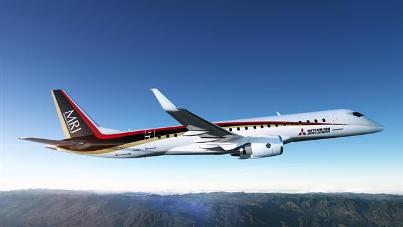
Iran says Japan has agreed to fund a plan to purchase passenger planes from its industrial giant Mitsubishi Heavy Industries.

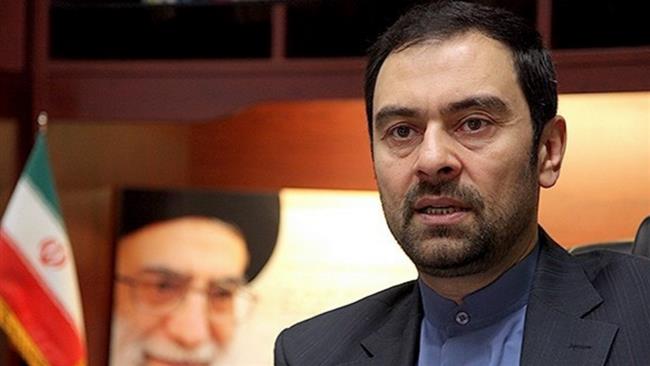
Iran’s Deputy Transport Minister Asghar Fakhrieh-Kashan has been quoted by the media that the agreement has been reached during a recent visit to Tokyo by an Iranian delegation.

Fakhrieh-Kashan added that based on the agreement, the government of Japan would fund the purchase of Mitsubishi planes based on a scheme known as build-operate-transfer (BOT).

The official further added Japan has agreed to provide the fund to make the purchase without any guarantees from the Iranian government.

Fakhrieh-Kashan also said that Japan has signed an agreement with Iran’s Ministry of Economy and Financial Affairs to provide Iran with a loan of $10 billion. He said the mechanisms on how exactly to use the loan will be decided during an upcoming visit to Tehran by a delegation from Japan’s Ministry of Land, Infrastructure, Transport and Tourism.

Japan’s Nikki newspaper reported in mid-July that Mitsubishi Aircraft – the aviation arm of Mitsubishi Heavy Industries – is negotiating with Iran to provide the country with its Regional Passenger Jets (MRJs) that are currently under development.  It said the company had started surveys over the Iranian market last September – several months before the US-engineered sanctions against Iran were lifted.

It said the company has been negotiating over jet sales with Iran’s flag carrier Iran Air and Iran Aseman Airlines, as well as the country’s aviation authorities.

Iran Air is weighing purchasing 80 70-seat MRJs and using them for domestic routes, Nikki added.  

To the same effect, Fakhrieh-Kashan was quoted by the media in late July that Aseman Airlines will purchase 25 MRJs.  He added that the value of the purchase will be around $500 million.

Iran’s Tourism Income Amounts to $1m an Hour


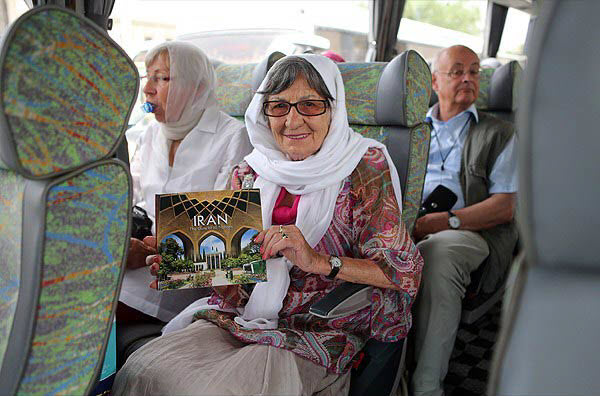
Within the past four months, Iran’s tourism industry has earned nearly $1m per hour thanks to the massive influx of foreign tourists in the country after the nuclear deal between Tehran and world powers, an official said.

“Since the beginning of new Persian calendar year [started on March 20], Iran has earned $2.85bn from the arrival of foreign tourists,” Valiollah Afkhami, the head of Iran’s Trade Promotion Organization (TPO), announced on Wednesday, August 3.

According to a report by ISNA, as translated by IFP, the country is planning to increase the income to more than $4bn in the near future.

The figure shows that the country has made $23m a day, and nearly $1m an hour within the past four months, he went on to say.

Earlier, the Head of Iran’s Cultural Heritage, Handicrafts and Tourism Organization (ICHHTO) Massoud Soltanifarhad announced that Iran has formulated plans to increase revenue from the tourism industry within the next ten years to an amount equal to the income generated by oil sales

In an interview with the Tasnim, Soltanifar said according to the plans, Iran’s income from attracting tourists will amount to the oil incomes in 2025.

Referring to a 12-14 percent rise in the number of foreign visitors to Iran over the past two years, he expected that the country will be hosting 20 million tourists in 2025.

With a large number of attractive natural and historical sites, Iran is one of the most touristic countries in the world.

More foreign tourists are starting to arrive in Iran after a lasting nuclear deal between Tehran and the Group 5+1 (Russia, China, the US, Britain, France and Germany) came into force and nuclear-related anti-Iran sanctions were terminated.

Back in February 2016, the then Foreign Ministry Spokesman Hossein Jaberi Ansari announced a decision that will enable the citizens of all but nine countries to obtain Iran’s visa on arrival at the country’s airports.

Iran, Azerbaijan Call for Broadening of Ties


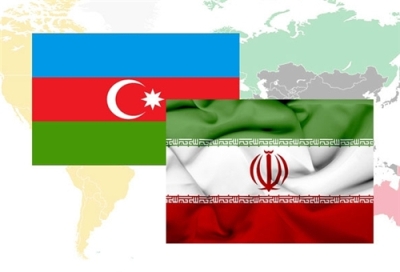
TEHRAN (FNA)- Iranian Minister of Communications and Information Technology Mahmoud Vaezi and Azeri President Ilham Aliyev in a meeting in Baku underlined the need for the further expansion of mutual cooperation between the two countries.

During the meeting in the Azeri capital on Tuesday, Vaezi and President Aliyev explored avenues for bolstering and reinvigorating of bilateral relations in different areas.

Vaezi appreciated President Aliyev’s role in enhancement of the two countries’ bilateral ties, and said that the two countries’ presidents are determined to boost the level of their cooperation in different fields.

The Azeri president, for his part, hailed Vaezi’s role in expanding ties between the two countries.

The two sides also discussed political and economic ties between the two countries and cooperation in the Caspian Sea, and exchanged views about the prospects of relations in energy, transport, investment, finance, banking, agricultural, tourism and healthcare.

Vaezi, heading a high-ranking delegation, arrived in Baku on Monday on a two-day visit aimed at paving the way for the upcoming visit of President Hassan Rouhani to the Azerbaijan on August 8.

During his stay, Vaezi has held talks with Azerbaijan’s Foreign Minister, Economy Minister and communications minister.

In relevant remarks in February, Iranian and Azeri presidents called for greater cooperation between the two neighbors in the war against terrorism and extremism.

“Iran and Azerbaijan are determined to strengthen cooperation in the ongoing war on terror in the region,” Rouhani said at a joint press conference with Aliyev in Tehran.

He said the two neighbors also believe that regional crises should be settled through dialog and not militarily.

Aliyev, for his part, highlighted the agreement reached between Tehran and Baku to work together in the war on terror, adding that the two neighbors share similar views on the region, specially on Syria.

“We also believe that the Syrian people should decide their own fate and their own political future,” he noted.

AZ BARJIN TA ASAK


by Seyyed Shahabodin Hedayati

In past farmers in the Abarkuh agricultural with low water in the desert. Nowadays Abarkuh is the center of wheat production in Yazd province and In the middle of the geography of the Islamic Republic of Iran. Accordingly wheat is one of the indicators of tourism Abarkuh. So the first cultural tourism festival of “AZ BARJIN TA ASAK” with responsibility of IRAN DISABLED TALENT IDENTIFICATION  INSTITUTE and with the aim of preserving the traditions of the past, branding wheat Abarkuh city, introduce history of the past and the presence of guests from around the world on August 12 will be performance in Abarkuh city.
This festival is includes a series of exhibitions wheat production scenario from farm to production of bread at home and use it and will be completed by an exhibition of children’s drawings about all stages of production to consumption of wheat. Festival name derivative from BARJIN (old threshing) and ASAK (old hand mill) and these names used only in speech  local people Abarkuh city.

To know more, you can send your message to this email address: This email address is being protected from spambots. You need JavaScript enabled to view it.   
Seyyed Shahabodin Hedayati responsible of AZ BARJIN TA ASAK festival


Iran is to build the longest gondola lift line in the world
2000 individuals can be moved per hour while staying in the gondola lift for 17 minutes.

The aerial lift line which is 36 km long is to be built in northwestern city of Orumieh, the Director General of Cultural Heritage, Handicrafts and Tourism organization of Western Azerbaijan province Asadollah Alizadeh told reporters.

“The initial phase of the gondola lift starts to be built Saturday August 28 in the presence of some officials of the province,” he said, adding the project involves resorts and tourism complexes as well.

The project would be accomplished in three routes, Alizadeh continued.

He added, the gondola lift’s speed reaches 6 meters per second and the project involves 86 gondola lifts each one is able to carry 6 people.

He said, 2000 individuals can be moved per hour while staying in the gondola lift for 17 minutes.

The project needs 5 billion dollars and 120 thousand euro jointly funded by Iranian private sector and two Italian and Turkish companies, he noted.


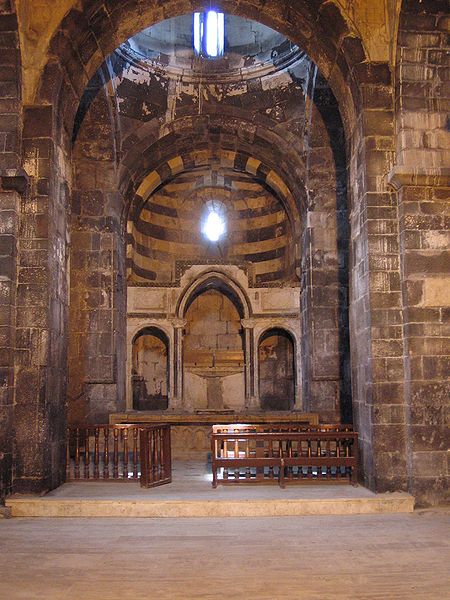
Qara Kelisa, St. Thaddeus Church: Day of St. Thaddeus

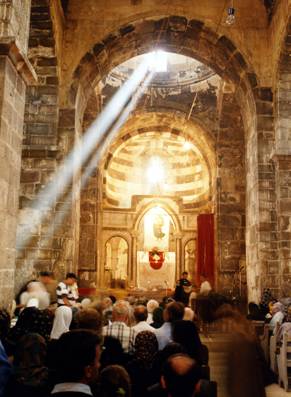
Iran’s Qara Kelisa will honor the memory of Saint Thaddeus and his faithful followers during a ceremony in the northern province of West Azarbaijan.

Scores of Armenians, Assyrians and Catholics from Iran and other countries will attend the annual event as part of their pilgrimage on the Day of St. Thaddeus.

The ceremony is known as one of the largest religious ceremonies held by Armenians.

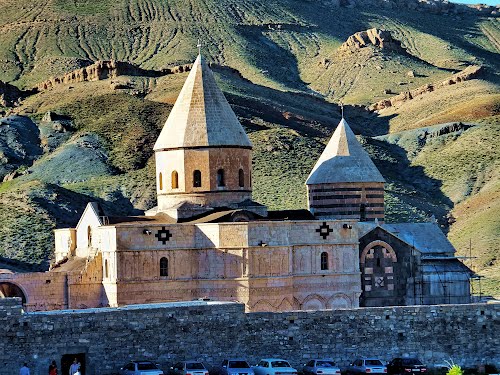
Qara Kelisa, also known as the St. Thaddeus Church, is one of the oldest and most notable surviving Christian monuments of Iran that carries great significance for the country’s Armenian Orthodox community.

Armenians hold that Qara Kelisa is the world’s first church and was constructed in 68 CE by one of the apostles of Jesus, Saint Thaddeus, who traveled to Armenia, then part of the Persian Empire, to preach the teachings of Christ.

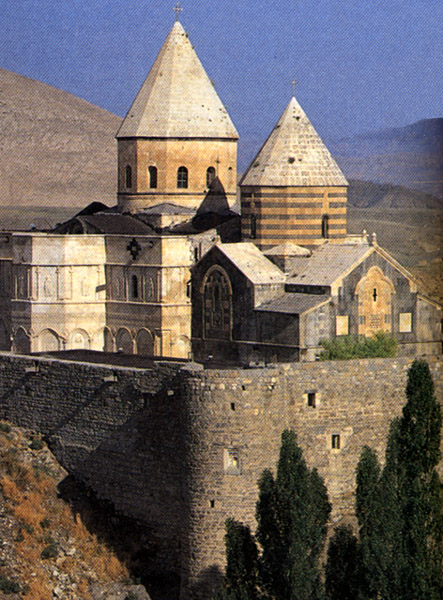
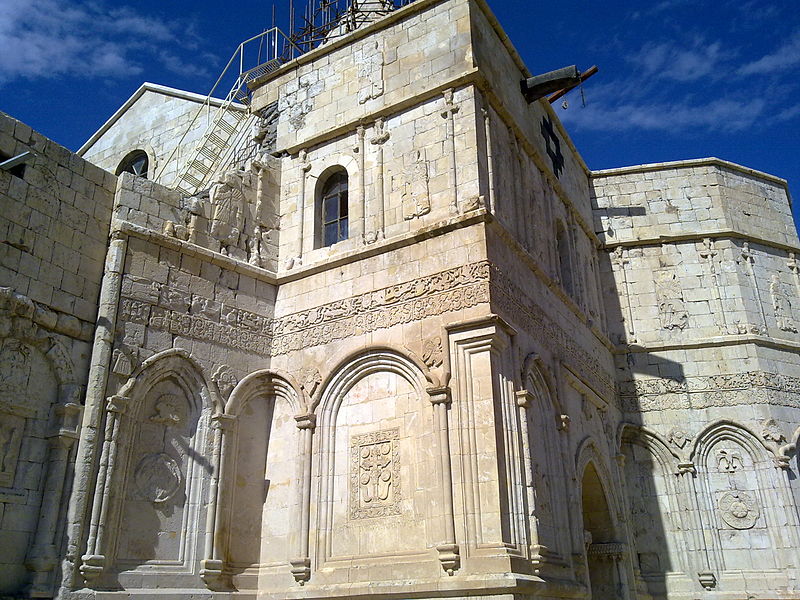
The church is composed of two parts: a black structure, the original building of the church from which it takes its name and a white structure, the main church, which was added to the original building’s western wing in 1810 CE.

An ancient chapel two kilometers northwest of the church is said to have been the place where the first Christian woman, Sandokh, was martyred. The chapel is believed to be as old as Qara Kelisa.

The structure was inscribed along with two other monastic ensembles of the Armenian Christian faith namely St. Stepanos and the Chapel of Dzordzor.

Saint Thaddeus Monastery
The Saint Thaddeus Monastery is an ancient Armenian monastery located in the mountainous area of Iran’s West Azarbaijan Province, about 20 kilometers from the town of Maku.

The monastery is visible from a distance because of the massiveness of the church, strongly characterized by the polygonal drums and conical roofs of its two domes. There are several chapels nearby: three on the hills east of the stream, one approximately 3km south of the monastery on the road to Bastam, and another that serves as the church for the village of Ghara-Kilise.

One of the 12 Apostles, St. Thaddeus, also known as Saint Jude, (not to be confused with Judas Iscariot), was martyred while spreading the Gospel. He is revered as an apostle of the Armenian Apostolic Church. Legend has it that a church dedicated to him was first built on the present site in AD 68.

Not much appears to remain of the original church, which was extensively rebuilt in 1329 after an earthquake damaged the structure in 1319. Nevertheless, some of the parts surrounding the altar apse date from the 10th century.

Most of the present structure dates from the early 19th century when Qajar prince Abbas Mirza helped in renovations and repairs. The 19th century additions are from carved sandstone. The earliest parts are of black and white stone, hence its Turkish name Kara Kilise, the Black Church.

A fortified wall surrounds the church and its now-abandoned monastery buildings.

According to Armenian Church tradition, the Apostles Thaddeus and Bartholomew traveled through Armenia in AD 45 to preach the word of God; many people were converted and numerous secret Christian communities were established there.

The ancient Christian historian Moses of Khorene tell the following story, considered a legend by most modern historiography.

Thaddeus converted King Abgar V of Edessa. After his death, the Armenian kingdom was split into two parts. His son Ananun crowned himself in Edessa, while his nephew Sanatruk ruled in Armenia. About AD 66, Ananun gave the order to kill St. Thaddeus in Edessa.

The king’s daughter Sandokht, who had converted to Christianity, was martyred with Thaddeus. Her tomb is said to be located near the Ghara Kelisa.

History and Architecture
In Turkish, Qara means black and the church was called so because a part of it was black. Apparently the main building of the church was built entirely of black stones but after reconstruction part of the stones was replaced by white ones. This was most probably done intentionally so that future generations would be informed of the original shape and façade of the church.

The church was destroyed and reconstructed at different eras for different reasons. A great part of the church was destroyed in the year 1230 (616 Lunar Hejira) during the attack of Genghis Khan.

When Hulagu Khan was residing in Azarbaijan, Khaje Nassireddin Toosi embarked on its reconstruction.

The main church, built in 1811-1820 is a massive structure, built of light sandstone and adorned with blind arches and decorative and geometric shapes.

Its twelve-sided tambour has been built in alternating light- and dark-colored stones and has an equal number of windows.

The church has two large courtyards, the first of which seems to have been used for agricultural purposes, while the second encircles the white structure, the portico, and a number of rooms.

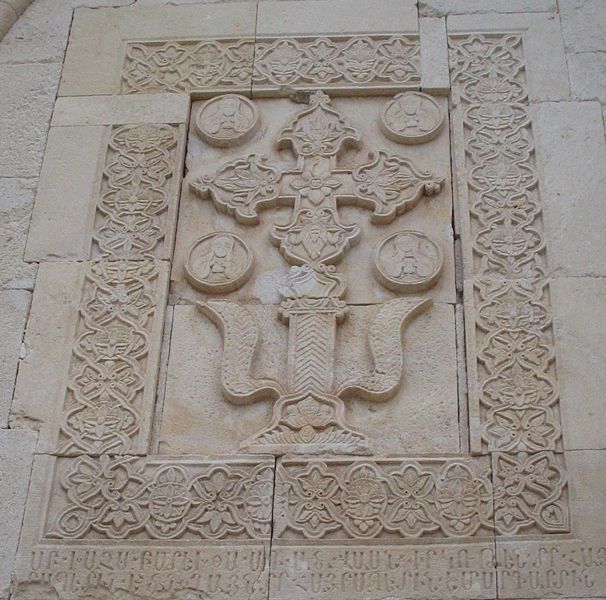
The first courtyard includes oil-extracting rooms, a miniature windmill, an oven, and a fountain. It is decorated with ornamental motifs and two intricately designed stone crucifixes.

A small door opens to the second courtyard where the refectory and the kitchen along with rooms for resident monks and abbots are located.

The portico, which has been left unfinished, dates back to the mid 19th century.

The building’s exterior is adorned with five rows of alternating dark and light stones as well as numerous round and blind arches, decorated with rosettes, coats-of-arms, flowers and animal figures.

Statues of angels adorn the front facade of the church and its northern and southern facades are decorated with dark-colored stone crucifixes.

Sculptured bas-reliefs bearing passages from the Old and New Testaments, mythical animals and effigies of saints have added to the beauty of the monument.

In the eastern part of the complex, there is a chapel and a sacristy hall. An Armenian inscription, carved on stone, gives an account of the construction of the buildings.

The church was destroyed as a result of an earthquake in 1319 and as narrated by Andranik Hovian there is a document showing it was rehabilitated by Saint Zachary in 1329.  The church was repaired in 1691 with black stones, in 1810 with white stones by Maku archbishop, Simon Beznoni and during the Qajar era by Abbas Mirza.

Qara Kelissa enjoys specific Armenian architecture and is considered one of the most valuable historical monuments of the country in terms of technique and volume. The building is world famous and a great number of Armenians from inside and outside the country come to the church to hold religious rituals.

Armenians believe Qara Kelissa or St. Thaddeus Church was the first church constructed in the world at the orders of evangelists and apostles of Jesus and since from religious point of view they consider martyrdom the highest of salvations for humanity, every year a special service is held at Qara Kelissa in the second half of July which coincides with the murder of Saint Thaddi and his Christian followers.

Anyway, the church is annually the gathering place of Armenians of Iran and even neighboring countries on the occasion of an annual ceremony. On the week beginning July 22, Armenians from the cities of Tabriz, Uremia, Tehran, Isfahan, Qazvin, and… converge at Qara Kelissa church in groups or as a family.

In addition to Armenians, Assyrians and rarely Catholic families take part in the ceremony.

One of the rituals held during the three-day pilgrimage is the baptism of Armenian children and youngsters because some believe baptism of their children at the first church of Jesus Christ and the martyrdom site of his apostles will bring blessings. Some parents also baptize their children with some vows and pledges and for this reason the age of those being baptized sometimes reaches 15 to 20.

To Armenians, the Qara Kelissa ceremony is a combination of theological, racial, traditional, family, emotional, and entertainment motives as well as traveling and enjoying summer weather and visiting friends and relatives. Preparing food, eating and drinking is the public entertainment of families over the three days.

Food is served inside tents or at the entrance of tents day and night and the tables set or food cloths spread on the ground serve as a center for gathering of families and relatives.

Visiting friends and relatives is one of the characteristics of the three-day festivity so that some of the Armenians see each other only when they gather at Qara Kelissa.

Church services are held in the morning and evening on July 19 and 20 but on the third day the service is held only once and within a special festival held by an archbishop who comes from Tehran as well as the Tabriz bishop.

Participation in the church services on the festival days is not obligatory and some people are seen who have never attended the ceremony.

There is a chapel on a hill two km northwest of the church which, according to sayings, is the martyrdom place of Sandokh, the first Christian woman martyr. This chapel is as old as the Qara Kelissa church.

The church is located at the end of a road which has been constructed merely for this church and a small nearby village.

Qara Kelissa was registered as the ninth historical-cultural heritage of Iran at the 32nd International Heritage Committee of the United Nations Educational Scientific and Cultural Organization (UNESCO) in Quebec, Canada.

 

All Iranian border checkpoints informed that Armenian citizens allowed to enter Iran without visas
All Iranian border checkpoints are already informed that Armenian citizens are allowed to enter Iran’s territory without visas, Iranian Ambassador to Armenia Seyyed Kazem Sajjad said Saturday as met with Hovik Abrahamyan, Armenian prime minister.

Abrahamyan and Sajjad expressed confidence that visa free regime between the two countries will give a new impetus to development of tourism.

Iran and Armenia have lifted their mutual visa regime enabling their citizens to freely commute between the two countries.


Iran’s Ambassador to Yerevan Kazem Sajjadi says an agreement that it recently signed with Armenia to remove the visa regime between the two countries has come into effect as of 6 August 2016.

Iran’s Ambassador to Armenia Kazem Sajjadi was quoted by the media as saying that the removal of the visa regime between the two countries followed a relevant agreement that they had signed to the same effect recently. 

Sajjadi was quoted by the Armen Press news agency as saying that the removal had come into effect on 6 August 2016.

Armen Press also said the Iranian envoy had discussed the issue in a meeting with Armenia’s Prime Minister Hovik Abrahamyan. 

Sajjadi further emphasized that the removal of the visa regime with Armenia is expected to contribute to the development of tourism between the two countries.  

Armenia announced in early June that it has approved signing an agreement with Iran to abolish the visa regime between the two countries.

The country’s Deputy Foreign Minister Shavarsh Kocharyan was quoted by media as saying that the agreement will help develop relations between Iran and Armenia.

The agreement was signed between the two countries on June 5 during a visit to Tehran by Armenia’s Foreign Minister Edward Nalbandian.

The agreement will allow Iranians and Armenians to travel to the two countries with citizens and diplomatic passports without a visa and stay there for maximum 90 days within a 180-day period, the media reported at the time.

Iran’s officials have already said the country seeks reciprocal visa waiver programs with 28 countries as part of its bid to boost tourism.

Citizens of Turkey, Lebanon, Azerbaijan, Georgia, Bolivia, Egypt and Syria can travel to Iran and stay in the country without visa from 15 to 90 days.

Iran’s President Hassan Rouhani – currently on a visit to Baku – told reporters on Sunday that Iran and Azerbaijan are working on a scheme to remove the visa regime between the two countries.  

Iran and Azerbaijan have signed a series of basic agreements to promote cooperation in several key areas.


Iran and Azerbaijan have signed several basic documents to expand cooperation in several key areas.

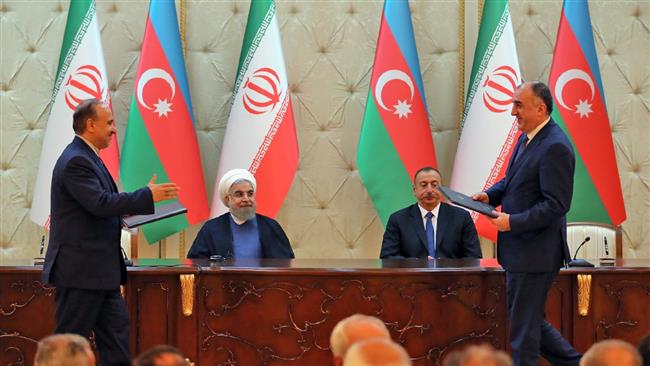
Iran’s President Hassan Rouhani, who is visiting Baku, and his Azeri counterpart Ilham Aliyev oversaw the signing ceremony of the agreements.

A key document was a protocol of intentions that envisages the materialization of an ambitious project to create a North-South transport corridor.

The corridor – named the North-South Transport Corridor (NSTC) – is an intercontinental multi-modal route that would link St. Petersburg to Mumbai. It primarily involves moving freight from India, Iran, Azerbaijan and Russia via ship, rail and road.

The protocol of intentions over the NSTC was signed by Iran’s Minister of Roads and Urban Development Abbas Akhoundi and Azerbaijan’s Transport Minister Ziya Mammadov.

Other basic agreements that the two countries signed included one that concerned cooperation on banking issues, another on cyber security, and several others on tourism, agriculture and standardization.

President Rouhani arrived in Baku on Sunday.  He is expected to sit in a trilateral meeting with Aliyev and Russia’s President Vladimir Putin on Monday.  

They are to discuss certain regional issues as well as mechanisms to expand their economic cooperation in several key areas including commerce, energy, communications as well as transport.

Rouhani is also expected to hold a bilateral meeting with President Putin in Baku to exchange views on Tehran-Moscow relations as well as other issues of mutual interest.

Prior to his departure, Rouhani described the Baku summit as “highly important,” saying the discussions will chiefly focus on the NTSC project.  

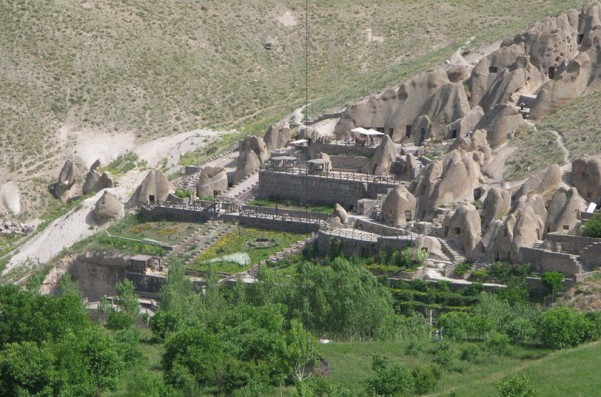
Kandovan Rocky Hotel


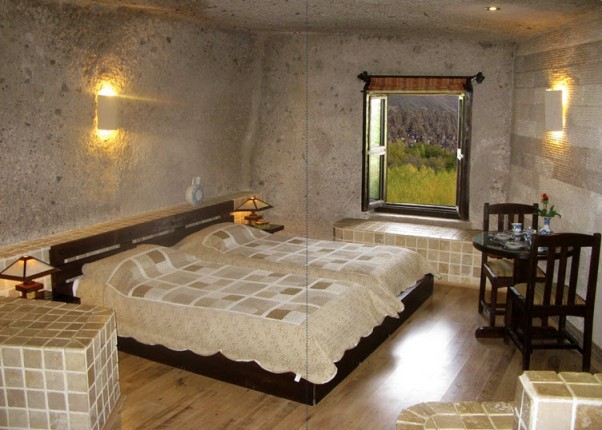
Laleh Rocky Hotel in Kandovan is the third rocky hotel in the world and one of the nine extraordinary hotels throughout the world, which is located at a 60 kilometer distance from the city of Tabriz in a green and beautiful valley near the village of Kandovan.


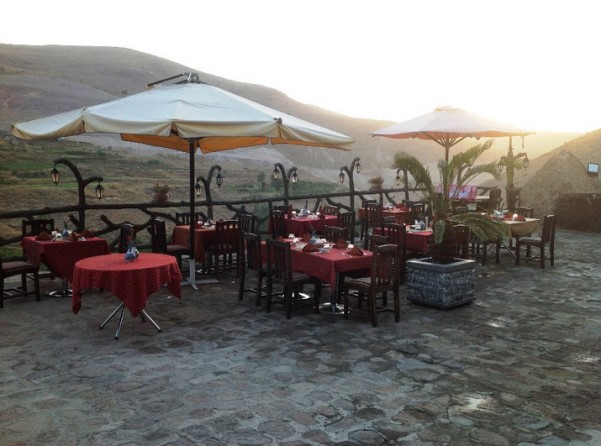
This hotel has the capacity of 120 guests, and has ordinary rooms, rooms with Jacuzzi, and Royal and Imperial Suites with a natural and exclusive design. The beautiful and unique rocky restaurant, the tranquil coffee shop and the only rocky conference room in the world, along with the most equipped ventilation systems and other amenities, have created the conditions for the presence of domestic and foreign tourists in the best way.


As this hotel has been built observing natural rocky architectural principles, it provides a new and pleasant experience to tourists during their stay. The historical village of Kandovan, as well as being situated in the area of environmental protection in the midst of the beautiful wildlife, clean and pleasant air, a wonderful perspective of the green nature and the precious mineral water have added to the attractions of the only rocky hotel in Iran.