Matinabad herbal extracts festival


For the first time Matinabad Eco-Camp and Organic Farm is going to have a local herbal extracts festival on Thursday August 25, 2016.
To remain loyal to our values of establishing Matinabad eco-camp, that is improving quality factors of local people’s lives and preserving valuable occupations, we grow plants and flowers and extract them using the skills of our local farmers and labor.
Drinking great quality and fresh rose water, sweetbrier extract, peppermint extract, and Sisymbrium irio syrup accompanied by live traditional music at the camp will make your evening fresh and aromatic like the roses from our own garden. The eco-camp’s restaurant will serve a meal different from the day’s special to leave a more vivid memory of the event for you.   
Herbal oil and extracts have been used as a medicine to heal body and soul in Iran since antiquity. To follow the footsteps of our ancestors we want to emphasize on the benefits of natural extracts and get our dear guests to know the pleasant taste of plants.
Join us on the last days of summer and treat yourself by our natural and organic herbal teas and a variety of floral extractions at this festival. We will give you the experience of heaven in the middle of desert by making a magical drink of rosewater and peppermint extract.

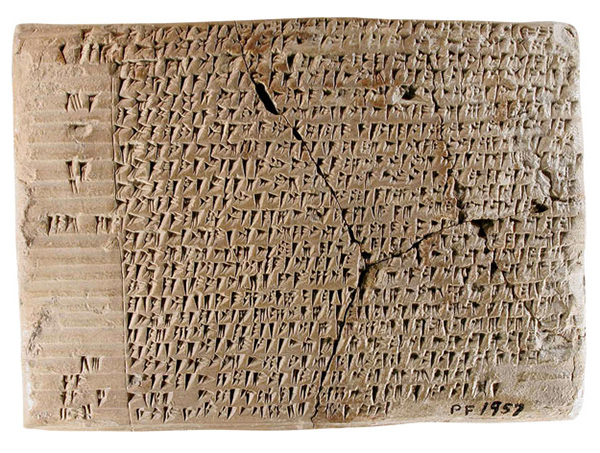
Iran to Reclaim Achaemenid Tablets from US after 80 Years


Iranian Vice President Massoud Soltanifar announced that the Achaemenid tablets kept in the US will be repatriated to the country after 80 years unless those who have accused Iran of an alleged involvement in the 1997 Jerusalem terrorist attacks ask the court of appeals for a reversal.

According to a report by ISNA, as translated by IFP, Soltanifar, who is also the head of Iran’s Cultural Heritage, Handicrafts and Tourism Organization (ICHTO), announced that the largest collection of historical and cultural relics of the Achaemenid Empire will be returned to the country after 80 years.

According to him, the Persepolis Collection, which dates back to the Achaemenid era (550–330 BC), includes about 3,000 clay tablets and fragments that Iran loaned to the University of Chicago Oriental Institute for research, translation and cataloguing some 80 years ago.
 
Unfair Seizure of Iranian Historical Relics
“The study on tablets in Chicago was supposed to take only three years,” he regretted.

Families of American victims injured in a Hamas suicide bombing in Israel in 1997 have accused Iran of involvement in the incident, and thus expect compensation from Iran.

Soltanifar went on to say that the rest of the Persepolis Collection will be returned to the country, should the victims’ families refrain from protracting the seizure of Iranian historical relics by appealing to the court of appeals.

“The restitution of parts of these Achaemenid tablets has taken place in three different periods of time so far,” Soltanifar noted.

Thanks to the attempts made by the Cultural Heritage Organization and with the help of the Ministry of Foreign Affairs, the court of appeals ruled in July 19, 2016 that, “since the relics were not used for commercial activity in the US, they are immune from attachment and execution.”

On July 19, the US Seventh Circuit Court of Appeals ruled Chicago’s Field Museum and the University of Chicago’s Oriental Institute are not required to return ancient Persian artefacts over to the victims of the attack.

Soltanifar further announced that, Iran has also been successful to reclaim other historical, cultural relics, as many as four, from other countries.

Cultural Heritage Enthusiasm among Officials
Soltanifar expressed contentment over the fact that the protection of tangible and intangible cultural heritage of the country has been accepted as a principle among officials during the past three years.

“Our main achievement is that almost all of the governors, ministers and mayors of the country have assimilated the importance of protecting historical monuments and sites. Therefore, they have put it high on their agenda.”

Soltanifar announced that the municipality offices have kicked off talks with the Cultural Heritage Organization on restoration and utilization of historical sites and said, “Fortunately, this has turned to a competition among them.”

“It’s good to know that many Members of the Parliament have also shown interest to pass a bill for protection of cultural heritage,” he added.

Eying Global Registration of Arba’een Rally and Mourning Rituals

“The country’s mourning rituals and Arba’een rally [40th day after Imam Hussein’s martyrdom] have also bought a place in the national heritage list, which is a prelude to global registrations of these rituals,” he noted.

 Shortage of Manpower to Protect 32,000 Historical Sites

“After a 10-year pause I am glad to announce that 550 contributions have been made to the restoration of historical houses so far; 20 global Board of Trustees have also been established in the last three years,” Soltanifar said.

“With regard to the copious number of 32,000 registered national heritage sites, I have to admit that we lack the required manpower,” he argued, concluding that “the establishment of popular associations active in cultural heritage fields is one of our most significant achievements.”

He said that the responsibility of protecting historical sites and relics lies upon popular associations that are composed of 120,000 cultural heritage enthusiasts.

Soltanifar stressed that Iran is one of the pioneering countries in terms of UNESCO inscriptions and added, “During the past three years, Iran has inscribed five sites in UNESCO including Shahr-e Sukhteh (burnt city), Susa, Meymand, The Persian Qanat, and Lut Desert.”


 

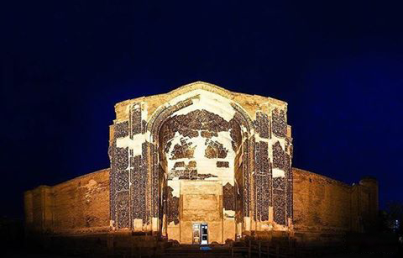
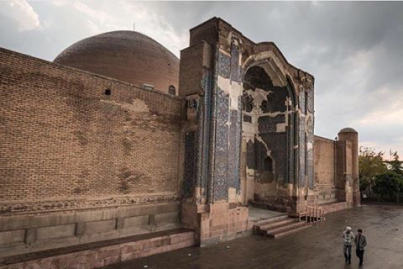
Blue Mosque the Turquoise of Islam
one Mosque of Tabriz Mozafariyeh Monument . built upon the order of Jahanshah . ebn – e shah-yusef,a ruler of the

Qara – Qoyunloo dynasty .

Kaboud Mosque Entrance door

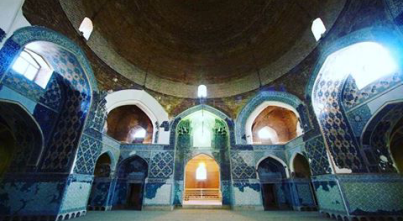
Attests to the  constructive efforts of this dynasty in an Tabriz and constitutes an example of the refined taste of the noble people of Iran. The perseverance  of whose fearless heroes is rooted in its history.The construction of the Blue Mosque of Tabriz was begun at the request of Khatun-Jan Beigom, the consort  of Johanshah, under the supervision of Ezz-ed-Din gamchi. and was completed in Rabi’-ol-Avval 870 AH / AD Oct.-Dec. 1465. A thorough examination of this monument reveal that its construction was based on a predetermined project comprising plans and decorative schemes prepared by eminent architects and artists of the time. The exterior appearance of the building bears a mystical character which calls upon devotees to Serenely approach the house of God, where the wish of joining the beloved fills the lovers’ mind. The artists in charge of the construction of the mosque ; utilizing indigo, turquoise-colored, white and black tiles in tessellated patterns, which represent the most perfect type of tie-work in the Islamic world. and benefiting from various delicate arabesque motifs have  created a masterpiece

unparalleled in the entire Islamic world. Tall Spaces . Well proportioned masses  and an exquisite decoration have brought into being a  composition which leaves the Viewer dazzled.Jahan shah had his dynastic mausoleum built in the southern part of the mosque, in a flawless organic unity with it. This adjacency was chosen in reason of the loftiness deriving from the

Kaboud Mosque Entrance door

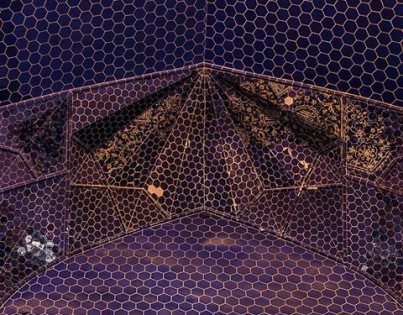
nearness with the house of God. The entrance of the mausoleum. has been intentionally  located inside the mosque so that visitor entranced by the heavenly atmosphere of the mosque may Pray  for the forgiveness of the deceased in all purity. The spandrels of the mausoleum are faced with 160 cm -high marble slabs on which verses from An-Naba’. Al-Bayyeneh and al-Farsurahs are engraved in thulth script on a background of fine arabesques. The adoption of thulth script on a background of delicate arabesques indicates the perspicacity of the engravers, who have combined the harmonious slow of God’s words with patterns as refined as man’s thought and as firm as his faith. The use of indigo tiles in a magnificent Oroder in the decoration of the mausoleum attests to the mastery of the artists of the the ninth century AH /15th century AD. who have been able, using simple hexagonal tiles, to give birth to an unequaled clcganece  – Although simple . the stalactite interior decoration of the mausoleum of jahan shah constitute an admirable example of ninth century architectural decoration .

Kaboud Mosque Inside dome

The roof of the mausoleum and the main dome chamber of  the mosque. Which provably collapsed during an earthquake in 193 AH / AD 1779 – 8 was rebuilt in 1973 thanks to the efforts of the late master Reza Memaran .
A famous architect from Tabriz, and under the supervision of the National Organization for the Preservation of Ancient Monuments. The roof of the dome chamber, spanning 17 meters at a height of 20 meters, was rebuilt following a twin-layered method. The walls of the main prayer hall (dome chamber) are decorated with indigo, turquoise-colored, white and black tiles in various tessellated patterns. The use of verses from the Holy Qor’an. the names of God and episodes from the Prophet’s tradition in the tile-work decoration has further enhanced its majesty.The decoration of the lateral prayer hall, which follows that of the dome chamber. Complement the art and knowledge used throughout the mosque. The most beautiful tile –work of the mosque can be admired in its prayer niche. Stalactites faced with tessellated turquoise-colored, indigo, white and golden tiles and arabesques distinguish this prayer niche and its flanking walls.The arabesques in the tiles of the outer edge of the prayer niche are most elegant  and elaborate, indeed unique, laying the foundations of .a style which was later copied and perfected in the Safavid period. The main Portico of  mosque is adorned with tessellated tile-work, Qor’anic

Kaboud Mosque Inside dome

inscriptions on thulth CP on indigo and white backgrounds, and panels of verses from the Holy Qor’an in masons, kufic script, displaying the besi example of the tile-work decoration of the Islamic period. Remains of tessellated  tile p work and  stalactite adornment on the exterior surfaces of the building indicate that these surfaces were entirely decorated in this manner. The diverse kusic. thuluh, naskh and ta’liq scripts, the exquisite arabesque patterns and the admirable chromatic compositions of these facades, which are truly stupendous, were created by Ne’matollah ebn-e Mohammad al-Bavvab the famous artist of the ninth century A.H. The bequeathal document of the mosque, written in 869 AH / AD 1464-5, certifies that hundreds of villages: caravansaries, bathhouses and markets were bequeathed to the Mozaffariyeh ensemble, with the death of Jahanshah in 872 AH / AD 1467-8 during a war with Uzun-Hassan Bayandor, the founder of the Aq-Qoyunloo dynasty. the enlargement and completion of the mosque remained unfinished. and the restoration of the mosque and the completion of the ensemble were Resumed by Jahanshah’s daughter. Saleheh Khatun, during the reign of uzun-Hassan’s successor, Soltan Ya’qub. As extant documents indicate this majestic monument was extensively damaged by the earthquake and snow. Rainwater and harsh winters in subsequent years damaged the remaining decoration and tile-works. In 1318 As AD 1939 the main portico of the mosque,

Bluemosque

and in 1327 AS / AD 1948 and  1328  AS / AD 1949 some of its  walls were restored by Esma’il Dibaj and Haj-Ahalqassem  Me’mar Also .

Necessary protective restorations have been carried out in recent years , and now one Blue Mosque so solid enough and apt to be utilized.
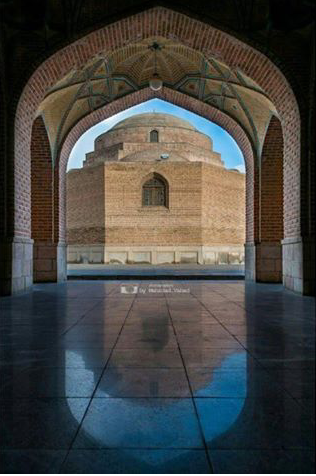
The brick dome  of the Blue Mosque of Tabriz is one of to larges brick constructions created by Muslim architects in the ninth century , AH (870 H /  AD 1465-6), who perpetuated the 11 -khanid architecture . The distribution of the domes weight on a multitude of pillars , visible inside the  Blue Mosque. was one the greatest achievements of Iranian architects in the course of this country’s history which was rooted in the ancient pass particularly ,the Sasanian period. The stone spandrels. uniform exterior brick surfaces and great height of this building well display the majesty of the Blue Mosque. Extensive attention to the interior decoration and its suppression on the outside are expressive of the introvert architecture of the Qara – Qoyunloo period. The architectural style and the tessellated tile-work within the main prayer hall. particularly on the massive walls of the dome chamber illustrates the culmination of the trend begun in Iran in the early 8th century AH / 14 th century AD. reaching an exceptional degree of perfection in the Blue Mosque .


The Hara forest


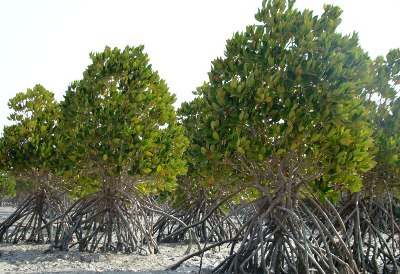
The Hara forest the common name for mangrove forests on the southern coast of Iran, particularly on and near the island of Qeshm in the Persian Gulf. Dominated by the species Avecennia marina , known locally as the  ” Hara ” or ” Harra ” tree , the forests represent an important ecological resource. The “Hara protected area” on Qeshm and the nearly main land is a biosphere reserve where commercial use is restricted to fishing (mainly shrimp), tourist boat trips, and limited mangrove cutting for animal feed. Hara tree characteristics
The Hara tree, Avicennia marina, grows to heights of three to eight meters and has bright green leaves and twigs. The tree is salt – water plant that is often submerged at high tide. It usually blossoms and bears fruit from mid July to August, with yellow flowers and a sweet almond – like fruit. The seeds fall into the water, where wave action takes them to more stationary parts of the sea. The Hara seeds become fixed in the soil layers of the sea and grow. The area on the north shore of Qeshm and the neighboring main land is particularly suited to the growth of the plant, and large mangrove – forests have developed . The long , narrow , oval leaves of the tree have nutritious value for livestock roughly equivalent to barley and alfalfa . The roots of the trees are knee – form, aerial, sponge – like and usually external. There is a filtration property in the Hara tree’s bark which allows the plant to absorb water while salt is eliminated .

Forest extent and significance

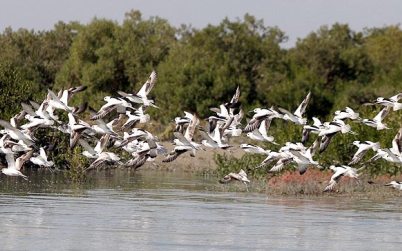
The Hara forest on Qeshm and opposite mainland covers an area of approximately 20km by 20km, with many tidal channels. The traditional stock breeders of Qeshm Island used the leaves of the Hara tree for feeding livestock. In 1972 the Hara protected area was established to preserve suitable condition for the growth of maintenance of the forests . The area is a major habitat for migratory birds in the cold season and for reptiles , fish , and varieties of arthropoda and bivalves , Green (or hooked) turtles and venomous aquatic snakes are also indigenous to the forests. Bird life includes herons, flamingos, pelicans, and anger eagles. Another important feature of these forests is the appropriate and suitable seabed conditions for the ovulation of fish in the Persian Gulf .

Save

Save


The Memory of Saint Thaddeus and His Faithful Followers
By Alireza Nazari


qara kelisa

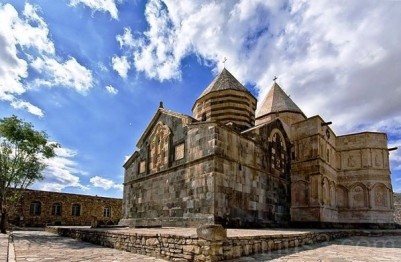
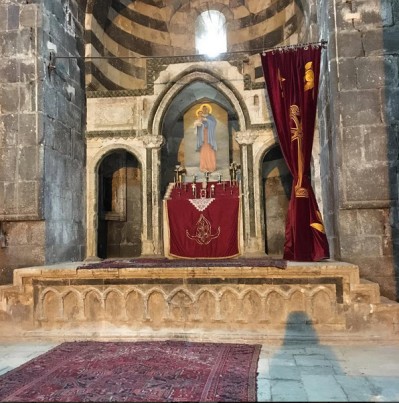
Iran’s Qara Kelisa will honor the memory of Saint Thaddeus and his faithful followers during a ceremony in the northern province of West Azarbaijan.
The church is located at the end of a road which has been constructed merely for this church and a small nearby village. Qara Kelissa was registered as the ninth historical-cultural heritage of Iran at the 32nd International Heritage Committee of the United Nations Educational Scientific and Cultural Organization (UNESCO) in Quebec, Canada.

Scores of Armenians, Assyrians and Catholics from Iran and other countries will attend the annual event as part of their pilgrimage on the Day of St. Thaddeus.
The ceremony is known as one of the largest religious ceremonies held by Armenians.
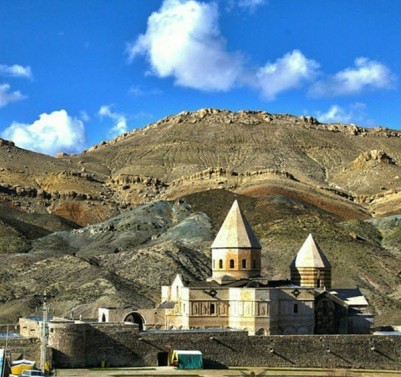
Qara Kelisa, also known as the St. Thaddeus Church, is one of the oldest and most notable surviving Christian monuments of Iran that carries great significance for the country’s Armenian Orthodox community.
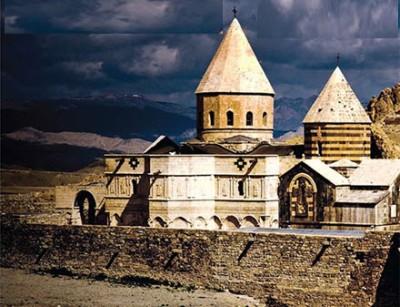
The church is composed of two parts: a black structure, the original building of the church from which it takes its name and a white structure, the main church, which was added to the original building’s western wing in 1810 CE.


qara kelisa

An ancient chapel two kilometers northwest of the church is said to have been the place where the first Christian woman, Sandokh, was martyred. The chapel is believed to be as old as Qara Kelisa. The structure was inscribed along with two other monastic ensembles of the Armenian Christian faith namely St. Stepanos and the Chapel of Dzordzor.

Saint Thaddeus Monastery
The Saint Thaddeus Monastery is an ancient Armenian monastery located in the mountainous area of Iran’s West Azarbaijan Province, about 20 kilometers from the town of Maku. The monastery is visible from a distance because of the massiveness of the church, strongly characterized by the polygonal drums and conical roofs of its two domes. There are several chapels nearby: three on the hills east of the stream, one approximately 3km south of the monastery on the road to Bastam, and another that serves as the church for the village of Ghara-Kilise.
One of the 12 Apostles, St. Thaddeus, also known as Saint Jude, (not to be confused with Judas Iscariot), was martyred while spreading the Gospel. He is revered as an apostle of the Armenian Apostolic Church. Legend has it that a church dedicated to him was first built on the present site in AD 68.
Not much appears to remain of the original church, which was extensively rebuilt in 1329 after an earthquake damaged the structure in 1319. Nevertheless, some of the parts surrounding the altar apse date from the 10th century.


qara kelisa

Most of the present structure dates from the early 19th century when Qajar prince Abbas Mirza helped in renovations and repairs. The 19th century additions are from carved sandstone. The earliest parts are of black and white stone, hence its Turkish name Kara Kilise, the Black Church. A fortified wall surrounds the church and its now-abandoned monastery buildings.
According to Armenian Church tradition, the Apostles Thaddeus and Bartholomew traveled through Armenia in AD 45 to preach the word of God; many people were converted and numerous secret Christian communities were established there.
The ancient Christian historian Moses of Khorene tell the following story, considered a legend by most modern historiography.
Thaddeus converted King Abgar V of Edessa. After his death, the Armenian kingdom was split into two parts. His son Ananun crowned himself in Edessa, while his nephew Sanatruk ruled in Armenia. About AD 66, Ananun gave the order to kill St. Thaddeus in Edessa. The king’s daughter Sandokht, who had converted to Christianity, was martyred with Thaddeus. Her tomb is said to be located near the Ghara Kelisa.

History and Architecture
In Turkish, Qara means black and the church was called so because a part of it was black. Apparently the main building of


Qara Church

the church was built entirely of black stones but after reconstruction part of the stones was replaced by white ones. This was most probably done intentionally so that future generations would be informed of the original shape and façade of the church.
The church was destroyed and reconstructed at different eras for different reasons. A great part of the church was destroyed in the year 1230 (616 Lunar Hejira) during the attack of Genghis Khan.
When Hulagu Khan was residing in Azarbaijan, Khaje Nassireddin Toosi embarked on its reconstruction.
The main church, built in 1811-1820 is a massive structure, built of light sandstone and adorned with blind arches and decorative and geometric shapes.
Its twelve-sided tambour has been built in alternating light- and dark-colored stones and has an equal number of windows.
The church has two large courtyards, the first of which seems to have been used for agricultural purposes, while the second encircles the white structure, the portico, and a number of rooms.


Qara Church

The first courtyard includes oil-extracting rooms, a miniature windmill, an oven, and a fountain. It is decorated with ornamental motifs and two intricately designed stone crucifixes.
A small door opens to the second courtyard where the refectory and the kitchen along with rooms for resident monks and abbots are located.
The portico, which has been left unfinished, dates back to the mid 19th century.
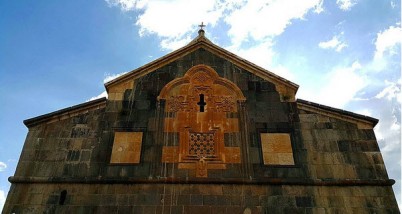
The building’s exterior is adorned with five rows of alternating dark and light stones as well as numerous round and blind arches, decorated with rosettes, coats-of-arms, flowers and animal figures.
Statues of angels adorn the front facade of the church and its northern and southern facades are decorated with dark-colored stone crucifixes.
Sculptured bas-reliefs bearing passages from the Old and New Testaments, mythical animals and effigies of saints have added to the beauty of the monument.
Armenians hold that Qara Kelisa is the world’s first church and was constructed in 68 CE by one of the apostles of Jesus, Saint Thaddeus, who traveled to Armenia, then part of the Persian Empire, to preach the teachings of Christ.
The church was destroyed as a result of an earthquake in 1319 and as narrated by Andranik Hovian there is a document showing it was rehabilitated by Saint Zachary in 1329.

You can now fly to Iran again – if you fancy your chances


British Airways will resume flights to Iran today for the first time since the service was suspended four years ago.

London, Tehran: The first British Airways (BA) passenger plane landed at Tehran international airport on Friday morning after the airline suspended flights to Iran in October 2012.

The airline will operate six flights a week between London Heathrow and Tehran, rising to a daily service later this year.

The Boeing 777, which departed from London’s Heathrow airport at 9.10 p.m, arrived in Imam Khomeini International at 6.15 a.m, Xinhua news agency reported.
British Airways became the first British airline in four years to fly directly to Iran following the lifting of some sanctions against Tehran.
BA first offered flights between London and Tehran in 1946 but ended its service in 2007 as sanctions were imposed on Iran over its nuclear programme.

 The service was suspended in October 2012 amid instability in the Middle Eastern country.

Six return flights per week will operate between London Heathrow and Tehran, rising to a daily service later this year.

BA described the Iranian capital as “an important destination” for the airline.


Isfahan Armenian Cathedral among must-see stops for British tourists

The Holy Savior Cathedral, an Armenian church in Iranian city of Isfahan was included in the International Business Times’ recommendations for British tourists who will from now on be able to travel to the Islamic Republic thanks to direct London-Tehran flights.

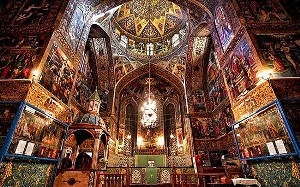
The Holy Savior Cathedral, commonly known as Vank Cathedral, is an Armenian Apostolic church built in the early 1600s in Isfahan and located in the New Julfa district.

The cathedral was established in 1606, dedicated to the hundreds of thousands of Armenian deportees that were resettled by Shah Abbas I during the Ottoman War of 1603-1618.

The interior is covered with fine frescos and gilded carvings and includes a wainscot of rich tile work.

Also included in the list are Mount Damavand, the Bazaar of Isfahan, the Ali Kapu Palace, Isfahan’s Allāhverdi Khan Bridge, Persepolis, Golestan Palace in Tehran, the Zagros Mountains and many other wonders.

British Airways resumed direct flights to Iran, running six round trip flights per week with more flights scheduled to be added later this year. Some sanctions against Iran were lifted earlier this year as part of the nuclear deal between Iran and world powers.

“Iran is expected to experience a tourism boom. Visitors may be surprised to discover the riches the country has to offer, including ancient ruins, pristine beaches and popular ski resorts. Iran made it on to the top destination lists of major publications thanks to sights that include 2,500-year-old ruins at Persepolis near Shiraz and 16th-century Islamic architectural gems in Isfahan,” IBTimes said.


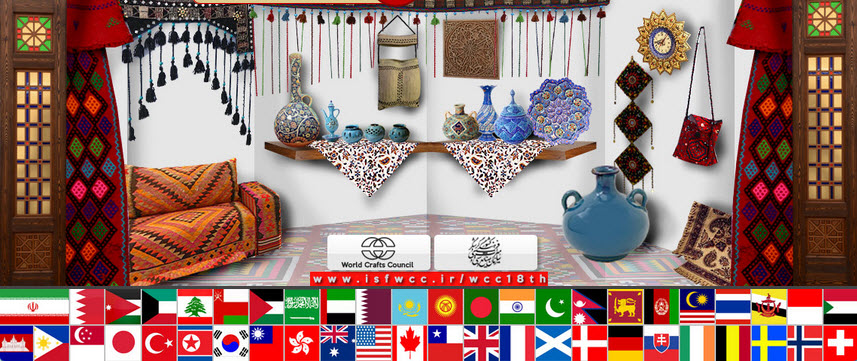
The 18th General Assembly of the World Crafts Council (WCC) (22-29 September, 2016)


The general assembly of WCC is an event held every four years in one of the member states following the termination of the 4-year presidency and the initiation of the new term. In this council, which is host to all real and natural persons and state-run and private institutions affiliated with WCC, a number of decision-making and policy-making procedures such as the election of the new president of the council, regional directors and sub-regional presidents are made. It is customary to hold regional meetings and conventions during the convention of WCC.

With the establishment of WCC in 1964, the first general assembly was held in New York, and today 71 meetings of this assembly have been held in different countries across the world.

The 18th general assembly is held in the city of Isfahan, despite the fact that in the last session of the council in the city of Chennai, India, no decision was made about the venue of the coming convention.

The selection of Isfahan as the venue of the 18th general assembly meeting came after one- year absence of Iranian Handicrafts Industry at international arena. In 2015, when WCC chose Isfahan and Tabriz as the world cities of handicrafts and carpet, and following the ceremony in which these titles were granted, the hosting proposal was put forth by the regional president of WCC-APR, Dr.Ghada Hijjawi, and consequently approved by the governor of Isfahan province, and Vice-President of I.R. Iran & President of Iranian Cultural Heritage, Handicrafts & Tourism Organization.

Accordingly, Vice-President of I.R. Iran & President of Iranian Cultural Heritage, Handicrafts & Tourism Organization presented his proposed plan for the nomination of Isfahan in February 2016, and it was sent along with detailed reports to the WCC twice.

On April 10th, in the meeting of regional presidents in China, the nomination proposal of Isfahan was put forth by Dr.Ghada Hijjawi-Qaddumi, the President of WCC-Asia Pacific Region. Indonesia was also planning to propose Jakarta as another nomination for hosting this convention, but hopefully the exhaustive evidences and reports submitted by Isfahan could win the majority of votes and this city was chosen to host the 18th general assembly of WCC.

After receiving the official letter of Mr.Wang Shan, the president of WCC, Vice-President of Iranian Cultural Heritage, Handicrafts & Tourism Organization of Isfahan with the contribution of private sector held their first meeting in Isfahan on May 13, 2016, and in a meeting with provincial authorities and mayor of Isfahan, the preparations for the organization of this convention were set into motion.

Huge rise of 200% in UK tour sales to Iran


Huge rise of 200% in UK tour sales to Iran

The media in the UK say the resumption of direct flights to Iran by major airlines has already made the Islamic Republic as one of the hottest tourism destinations with one travel agency already reporting a whopping rise of 200 percent in sales of tours to the country.

The Irish Independent said in a report that Iran is being viewed by tourists as the second most affordable country to fly to after the United Arab Emirates.

“Our data shows Iran is already on the radar as the UK’s second most affordable long-haul country to fly to after the UAE,” the daily quoted Andrew Shelton, managing director at Cheapflights.co.uk, as saying.

“Now British Airways is back in Iran, other airlines may follow – Air France re-launched their service in April this year – and flight prices may fall further.”

The report further added that the reopening of Iran’s Embassy in London, the lifting of sanctions, and the relaxing of travel advisories earlier this year had already resulted in rising bookings.

G Adventures (gadventures.com), which offers a 14-day Discover Persia tour to Iran through land, has reported that sales are up 200 percent year-on-year, the Irish Independent reported.

The report has quoted Rachel Wasser, the company’s global product manager, as saying that “magnificent mosques, diverse history and unrivalled hospitality” are specific drawcards for Iran.

Iran is internationally regarded as among the world’s top 20 countries with the highest number of tourism attractions.  The country is home to 19 UNESCO-designated World Heritage sites.

Official figures show that Iran hosted above 5.2 million tourists last year and that this had generated a total income of above $8 billion for the country.  

Tehran to host first Iran Hotel and Tourism Investment Conference


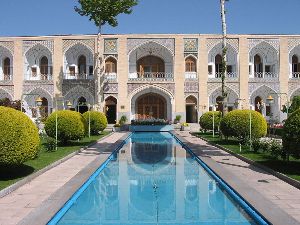
ABBASSI HOTEL ISFAHAN

Iran, the 18th largest economy in the world, is to host the first Iran Hotel and Tourism Investment Conference (IHTIC), a top-level gathering of international investors, owners, operators, developers and government officials.

In addition to rich reserves of oil, gas and metals, Iran has a promising consumer sector with a well-educated population of 80 million inhabitants. There are huge investment opportunities across all of Iran’s economic sectors – energy, mining, hospitality and tourism, fast moving consumer goods, food & beverage, retail, automotive, aviation and manufacturing.

Under the 2025 Tourism Vision plan, Iran is expecting to increase the number of tourism arrivals from 4.8 million in 2014 to 20 million by 2025. The 4.8 million tourists brought around $6.5 billion in revenue to the country despite sanctions and limitations imposed by the EU, the UN and the US. With the lifting of sanctions in January, it is expected that by 2025 the country will receive $30 billion from tourism income.

Only 13 out of the 96 hotels in Tehran are classified as four or five-star, although it is widely acknowledged that these would not meet internationally recognised standards for such classification.

Sébastien Bazin, chairman and CEO, AccorHotels speaking at Ahif 2015 said: “The Iranian market is a top priority for AccorHotels, as are Africa and India. These three geographies are ones where I want to make a major push. They have a lot of things in common: civilization, architecture, demography, booming medium-sized enterprises, lack of supply, lack of infrastructure and lack of low-cost airlines”

In 2014, AccorHotels became the first international hotel group to enter the market since the 1979 revolution. Bazin said: “We are very excited about signing this partnership with Aria Ziggurat in Iran. We are certain that Novotel and ibis will fit perfectly into the growth momentum that Iran’s hospitality sector is enjoying. Our brands are looking at huge growth potential in this country. Our ambition is to develop an important network in the country thanks to our global portfolio of brands covering all segments, from luxury to midscale and economy.”

According to Iran’s Chief of Cultural Heritage, Handicrafts and Tourism Organization, Masoud Soltanifar, investing in the tourism sector has become one of the priorities of the Iranian authorities. The government has provided a series of incentives through the Foreign Investment Promotion and Protection Act (FIPPA) including a 50 per cent full term tax reduction on income, loan structure and eligibility for government funding and property ownership rights.

Other hotel operators have also seen the potential and entered the market already. Abu Dhabi-based Rotana Hotel Management has signed management agreements for four hotels in Iran – two in Tehran (opening in 2018) and two in Mashad (opening in 2017). Melià Hotels International is planning to open a 319-room hotel in 2017 on the Caspian Sea, with investment coming from a third party, and German hospitality company, Steigenberger Hotel Group, is set to build 10 hotels in different parts of Iran over the next 10 years.

Jonathan Worsley, chairman of Bench Events and founder of IHTIC, said: “I greatly enjoy pioneering new markets; it started with IHIF in Berlin 20 years ago and has continued right through to the Iran Hotel & Tourism Investment Conference in 2017. I believe in Iran’s hospitality potential and whilst breaking new ground is risky with numerous obstacles, those that are first-to-market will no doubt benefit from healthy ROI’s and relationships with both local partners, investors and authorities alike.”