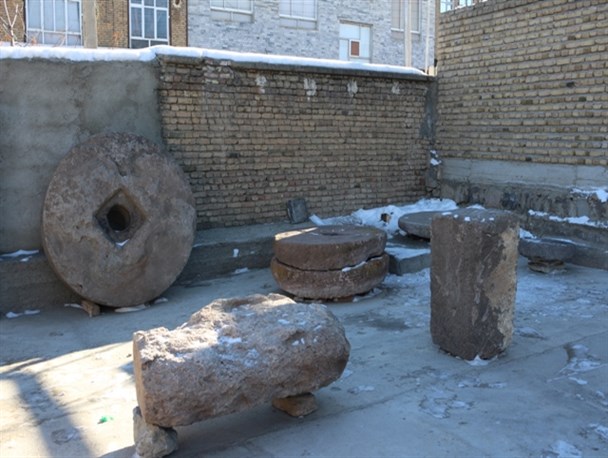
40 stone works dating back to 8,000 years ago have been discovered in Chaldoran, northwestern Iran.
“In Chaldoran, northwest Iran, 40 stoneworks were discovered and collected,” said Moharram Abdollahpour, head of the Iranian Office of Cultural Heritage and Handicrafts and Tourism (ICHO) in Chaldoran. “These stone works were used for cooking, ranching, bathing, marking graves and building in neolithic, prehistoric, Islamic and contemporary periods.”
“Such pieces as stone lion, capital, millstone, gravestone, quarner stone, laver and mower will be publicly displayed in the Chaldoran ICHTO office,” he added. According to a Farsi report by the IRNA, Abdollahpour further stated that there are more than 100 national monuments in Chaldoran. One of them, the monastery of Saint Thaddeus, was registered in the UNESCO World Heritage List.
Chaldoran is named after a historical war between the Iranian army under the leadership of Ismail I, Safavid King and Ottoman forces of Suleiman I in August 1514; In which the lower Iranians were defeated by the large, well-equipped Ottoman army.
https://kalouttour.com/wp-content/uploads/2017/08/kalout-300x225-80x80.png00adminhttps://kalouttour.com/wp-content/uploads/2017/08/kalout-300x225-80x80.pngadmin2017-01-24 14:22:442017-03-13 13:42:228000-Year-Old Stone Works Discovered in Iran
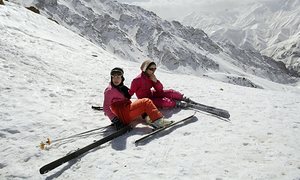
For experienced skiers who have ticked off many of the resorts in the Alps, exotic skiing destinations renowned for their powder hold a special allure. Kashmir, Japan, Russia and Chile are among dream destinations but the ultimate edgy ski trip has to be to Iran. Tourism is growing at a stupendous rate, especially since FCO advice was relaxed for the country last summer.
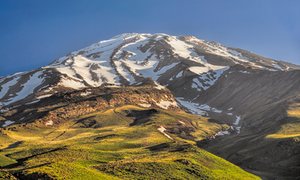
Overnight snowfalls in excess of 50cm are not uncommon at its two main resorts, in the Alborz mountains north of Tehran. Shemshak is 2,550 metres high, and Dizin 2,650 metres, with slopes up to 3,500 metres, making it the highest resort in the country, with views of Iran’s tallest mountain: 5,610-metre Damavand.
Dress code is more relaxed on Iran’s ski slopes than in Tehran. Photograph: Reuters/Corbis
I picked Dizin for a day trip from Tehran in early December: a taxi takes about 90 minutes. Ali, a guide from new operator helped sort out equipment hire (just £8 a day) and a lift pass for £6. I yo-yoed up and down the French-built chairlifts and gondolas a few times and covered a good chunk of the ski area’s nine wide, long, rolling runs and powdery bowls, full of fantastic dry snow.
Men and women are segregated on the lifts but unite at the top and can share food and tiny tumblers of tea in the few cafes and restaurants.
Up here the Islamic dress code strictly enforced in Tehran is casually relaxed. I saw peroxide-blonde hair pouring from under woolly hats and forearms scandalously uncovered.
“Sometimes the gaste-ershad [morality police] come up here, but most are bad skiers so we can escape them,” said Soriah, from Tehran. At the foot of the slopes, she and her friends were drinking cans of non-alcoholic beer and smoking stubby Iranian-made Bahman cigarettes.
Four men return to their car pleased with the day’s skiing at Dizin. Photograph: Alamy
“You must have the ghormeh sabzi!” said Soriah, referring to Iran’s national dish of green herb and lamb stew, with sides of radishes, onions, gherkins, limes and mint. “In Tehran, I feel trapped,” she added. “I come to Dizin as much as I can in winter. I feel freer up here.”
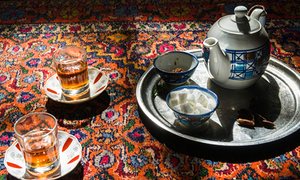
After a couple of rounds of Iranian tea, served with lolly-like dipping sticks of crystalline yellow sugar, we stepped back into our skis.
Dizin’s pistes may be splendid, but it has no après ski at all – the Islamic Republic is not big on public nightlife anywhere. Most skiers avoid the cluster of sad-looking concrete hotels and head back to the capital after the slopes close.
On the way back, I stopped on the edge of the mountains an hour from Dizin in Darband. Once a village but now part of the fringes of northern Tehran, it has dozens of Persian-carpeted, open-air cafes, some on wooden platforms over the rivers that flow from the Alborz mountains on to the Tehran plateau below.
I ate garlic and lentil soup and beautifully cooked koobideh (minced lamb) kebabs, washed down with doogh, a popular salted and minted yogurt drink. A boy was preparing tobacco in an alyān, a variant of the Arabic hookah with a straight wooden pipe and an almost hysterically sorrowful old-time Persian tune played though the cafe’s crackling speakers. OK, I wasn’t doing vodka jelly shots with British seasonaires in Tignes but, for me, Darband’s après ski was a fine thing.
https://kalouttour.com/wp-content/uploads/2017/01/3500.jpg00adminhttps://kalouttour.com/wp-content/uploads/2017/08/kalout-300x225-80x80.pngadmin2017-01-24 14:20:122018-09-29 11:34:35high times on Iran’s ski slopes | Travel
Iran Favors Expansion of Regional Cultural Heritage Trainings
TEHRAN (IRNA) – Deputy Director of Cultural Heritage, Crafts and Tourism, has called for the promotion of cultural heritage in the regional countries. Mohammad-Hassan Talebian made the comments in the opening session of the first International Training Workshop on the Museum of the Environment and Preventive Conservation, which took place in the Palace of Golestan. The Public Relations Research Institute for Cultural Heritage and Tourism (RIGHT) quoted Talebian as a reference to the diversity and the number of historical monuments in Iran that have transformed the country into the land of cultural heritage and reiterated the importance of education at regional level Level And stressed the willingness of Iran to continue these events.
Head of Iran’s ICOM (International Council of Museums), Seyed Ahmad Mohit Tabatabaei, and head of the Golestan Palace Museum, Nosrati, once again spoke about the history of the palace and its historical and artistic values. Abdolkarim Shadmehr, the administrative finance department of RICHT, set up research centers of the Institute and available capacities for supporting joint research projects.
The lecturers of the workshop and foreign participants expressed satisfaction with the capacity of the workshop and demanded the continuation of the training activities in this respect. They urged them to work together with museums and other foreign cultural centers.
The first International Training Workshop for the Museum Environment and Preventive Conservation was sponsored by the Research Center for the Conservation and Restoration of Historical and Cultural Monuments of the Institute for Cultural Heritage and Tourism. It has been organized in collaboration with the Cultural Heritage, the Cultural Institute of the Cultural Heritage, the Cultural Institute of the Cultural Heritage, the Cultural Institute of the ECO, the International Center for the Research and Restoration of Cultural Objects (ICCROM) and the English Cultural Heritage with the support of The International Department of Environment and Sustainable Development At the Ministry of Foreign Affairs.
The first International Training Workshop for the Museum Environment and Preventive Conservation aims to improve the knowledge of the curators and protectors of museums and active trustees of the cultural heritage in museums.
https://kalouttour.com/wp-content/uploads/2017/08/kalout-300x225-80x80.png00adminhttps://kalouttour.com/wp-content/uploads/2017/08/kalout-300x225-80x80.pngadmin2017-01-24 14:16:452017-03-13 13:43:20Iran Favors Expansion of Regional Cultural Heritage Trainings
Being completely disconnected on holiday isn’t as romantic as some purist travellers may suggest. It might be fine if you plan to stay on a beach or spend your days snorkelling with dolphins, but if you have to navigate your way around a country, travelling without access to GPS-assisted maps, currency converters and email seems a silly restriction. Especially when travelling in a country like . Here, the private and public spheres are two completely different worlds and access to social media can make the difference between merely learning about heritage through visits to historical sites and experiencing the everyday lives of modern Iranians.
It was how I came to be at a party in Tehran among a crowd of good-looking, fashionable millennials: men, women, gay, straight. The obligatory hijabs were left at the door. On the kitchen table, there were unmarked bottles of aragh saghi – literally, dog alcohol – a moonshine made from raisins. People were dancing, drinking, and discussing whether it was time to call a drug dealer.
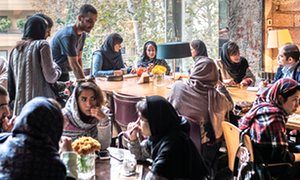
Coffee bar in Tehran
Before I embarked on my month-long trip to Iran, Iranian friends suggested I use social media to guide my travels through the Islamic Republic. Even during the first two weeks, which I spent on an organised tour, writing a feature for another publication, I was able to fill a few holes in the standard group itinerary with meaningful interactions outside the comfortable but limiting tourist bubble. It started in the city of Isfahan when I accepted an offer from Alireza, a 24-year-old auto parts dealer who had contacted me through couchsurfing.org, a social media platform for hospitality exchange. He invited me to dinner with his family.
When I arrived at his home, I was welcomed with a generous meal and curious questions from family and friends gathered around a fire in the leafy courtyard. In particular, they wanted to know about the image of Iran abroad. This had been the recurring theme from people who had approached us in the street, often stopping simply to express their gratitude to us for visiting Iran.
I had grown used to Iranians going out of their way to point out that any anti-western propaganda we encountered was an embarrassment to them. On a walk around downtown Tehran on the day of my arrival, I had paused to photograph a large sign on the side of a 10-storey building. It depicted Barack Obama on par with Shemr, the seventh-century villain who killed the beloved Imam Husayn, grandson of the prophet Muhammad. “Please, nobody takes these things seriously,” said two passersby. This apologetic attitude continued on Instagram after I posted the photo, and applied the hashtags #seeyouiniran and #tehranlive. In the comments, Iranians ridiculed the sign and assured me that “only a tiny minority of idiots” thought this way. Along with their messages came invitations to show me around in Tehran.
Cafe Kooche in the Gheytarieh neighbourhood, Tehran.
After we finally cleared our plates, Afshin called friends who arrived in a car to drive us all to a mountain park, where we watched the shimmering city lights, talked politics and religion, and smoked weed. It was my first glimpse of a different side of Iran: the everyday reality hidden behind news reports and history pages. It was generous, warm, fun and defiant.
In the following weeks, I travelled independently, relying on the advice and generosity of ordinary Iranians through Facebook, Instagram, and the hugely popular instant messaging app Telegram Messenger, which many believe is better secured against government monitoring than WhatsApp. Of course, not all encounters were limited to instant messages and emails. Through Couchsurfing, people invited me to stay at their homes and show me around.
In Shiraz, I stayed with a poet and human rights activist who demonstrated how he, as with many others in the city that was once renowned for its wineries, secretly produced his own wine at home. “You crush grapes, leave them to ferment, stir every three days, and after 40 days, you’ve got wine,” he explained, pointing at a large glass container in the corner of his kitchen.
Tajrish bazaar, Tehran
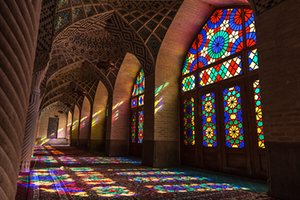
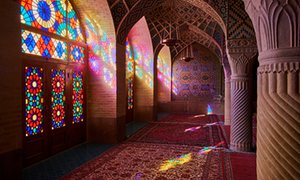
While he was at work, his friends took me to their favourite sites in Shiraz: the Nasir ol Molk mosque (also known as the pink mosque), where stained-glass windows cast kaleidoscopic patterns on the Persian-carpeted floors in the early morning; and the palatial Narenjestan-e Qavam, a 19th-century merchant’s house overlooking a lush garden with fountains and towering date palms. But they also showed me their favourite shopping malls, design boutiques, and Brentin, a busy restaurant inside an old, atmospheric villa. Before the mountainous chelow kebab arrived, I had already helped myself to a salad of pomegranate and lentils, a bowl of yoghurt with little rolls of fried courgette, vegetable samosas and bread with a dip of fried aubergine, onion, walnut and mint.
Stained-glass windows cast kaleidoscopic patterns on the floor of Nasir ol Molk mosque, or the Pink Mosque, in Shiraz
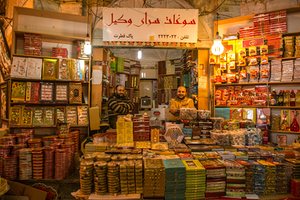
In Tehran, I was shown around the city’s cinema museum by a local photographer. Afterwards, we enjoyed a lunch of tagliatelle at the posh museum cafe, where a famous actress was interviewed under the cool gaze of a crowd with fashionable hairdos, who sipped expensive teas flavoured with saffroned rock sugar. This was followed by a quick walk though past the stalls of the old Tajrish bazaar, selling everything from framed carpets to Kalashnikov-shaped hookahs, after which we moved to the intimate Cafe Kooche in the Gheytarieh neighbourhood. Here, I was introduced to a blogger who would later take me on a tour to Etemad, one of the leading art galleries in Tehran.
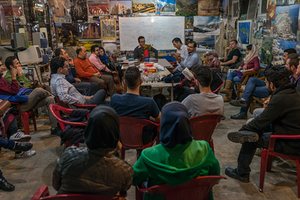
Poetry event in Tehran organised by a local Couchsurfing member
The gardens of Mahan
While I was trying to resolve the practical matter of staying online in a country where the internet was throttled and censored, it took less than half an hour to receive the necessary information about where to purchase a local sim card for data, and which app was used to circumvent the Iranian firewall. One of the Facebook group members even gave me her password to a paid VPN service.
Initially, this seemed an online extension of Iranian hospitality, which was the only form of “extremism” I encountered during my stay. But there is another, more political reason: a strong desire to battle cultural misunderstandings and what the group’s founder, Navid Yousefian, refers to as “Iranophobia”.
Clearly, Iran’s poor image abroad is an endless source of frustration to many Iranians. “I was surprised and saddened to hear that some well-travelled people think they can’t visit Iran,” wrote Yousefian, a expatriate PhD student living in California, in the Facebook group’s introduction. He called for Iranians in and outside the country to join the group to help visitors.
Etemad art gallery in Tehran
Today, See You in Iran has close to 45,000 Facebook members and has branched out to Tumblr, Instagram and Telegram Messenger. “What makes it different from the usual guidebooks is that all the input is directly from Iranians and former travellers,” says Sogand Fotovat, an American-Iranian repatriate studying Iranian history in Tehran, who is one of five active administrators of the group. “Because of our on-the-ground organising and networking efforts, See You in Iran is grassroots. We don’t dictate or control any of the content.”
Following this success, Yousefian is developing a dedicated See You in Iran app. “It will have two features,” says Yousefian. “Localiser, which will help travellers find locals to show them around and, if they want, stay with them for the night. And Travel Mater, which helps people find travel buddies while in Iran.”
One surprising aspect of Iranian internet censorship is that it seems oddly permissive in unexpected places. Facebook is blocked but Instagram, owned by Facebook, isn’t. Here, the Rich Kids of Tehran, an obnoxious yet fascinating band of spoiled brats, emulate the popular Rich Kids Of Instagram feed. Aside from the inane displays of wealth and excessive rhinoplasty, their posts are often provocative and pro-western.
Young people are sidestepping censorship to connect with friends and visitors online
While the popular dating app Tinder is, perhaps predictably, blocked, Grindr, a similar app for gay men, isn’t. Indeed, in a country where sharia law prescribes death to sodomites, the app hosts a thriving community whose members don’t seem concerned about persecution. Tellingly, even in Mashhad, a deeply religious city towards the Afghan border that rose to infamy a decade ago for the hanging of two gay teenagers, the men I spoke to were remarkably unafraid to show their faces on their profile photos. “As long as you’re not having sex in public, they’ll leave you alone,” one of them said. “The police have better things to do than to case us.”
Tinder is still used, of course, as people know how to circumvent the Iranian firewall. Through both dating apps, I received invites to underground parties in private homes and desert valleys.
This is how I ended up being offered dog alcohol at the home of someone who named her kitten “Coca”. I had not imagined taking such a risk – and it was a risk, considering Iran’s strict laws and customs governing music, dress codes, and alcohol consumption – but after a few weeks among young, modern Iranians, it was a risk I had grown used to. Even though sharia law prescribes 80 lashings for those caught drinking, partygoers remain defiant. “The risk of a raid makes it more exciting,” the friend who had invited me to the house party said. “In 95% of the cases the police just want a bribe. But, yes, there’s always that 5%.”
https://kalouttour.com/wp-content/uploads/2017/01/4912.jpg00adminhttps://kalouttour.com/wp-content/uploads/2017/08/kalout-300x225-80x80.pngadmin2017-01-24 14:13:252017-03-13 13:43:22Exploring the real Iran, with social media as your guide | Travel
The desert town of Aberkooh, between Yazd and Shiraz, was a flourishing city on the Silk Road in the 10th century and largely destroyed by the Afghans in the mid-1700s. There’s a 4,000-year-old cypress tree, one of the best coffee shops in Iran, and the beautifully restored Aghazadeh Mansion with its double height windcatcher, using 19 wooden vents to channel cool breezes into the house. With luck you may run into the charming 12-year-old Amir Reza and be invited back to his home for lavender tea sweetened with saffron sugar. baty37
No blood but plenty of sweat and tears, Isfahan
Wrestlers taking part in Zurkhaneh. Photograph: Alamy
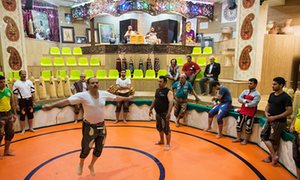
When in Isfahan don’t miss watching zurkhaneh, a 3,000-year-old form of athletics originally used to train warriors, involving sweaty men in leather breeches doing press-ups and swinging clubs to deafening music and chanting. The zurkhaneh pits are difficult to locate but ask a local or guide to get you a ringside seat.
everoptimistic2014
Travel independently
Photograph: Jorge Fernández/Getty Images
Brits, know this: you don’t need a tour guide. The visa process remains tricky, but once an agency or Iranian citizen has sponsored your successful application, you should have little trouble going it alone. This allows you to make the most of your encounters with the country’s endlessly hospitable and inquisitive people and the inevitable invitations for tea or to their homes. While you might not think of it as a country where spontaneity is rewarded, such chance meetings will be the highlights of your stay, as they were for me (a Brit) during a recent three-week trip. ID5052288
Explore Damavand city and around
Mount Damavand. Photograph: Alamy
Damavand is a little over 70km from Tehran and one of the most authentic of small cities. Mount Damavand is the highest active volcanic peak in Asia, and one of the best ski resorts, Aab Ali, is also nearby. There are many natural waterfalls and the area is famous for its honey. panvari
Varzaneh desert at sunset
Varzaneh is a small desert town, not too far from Isfahan. Arriving at the small-but-quaint Chapaker Guest House (Beheshti Street, +98 913 203 0096) you will be greeted by the ever-smiling, energetic Mr Reza and his quirky companion Rouhallah. The neighbouring ladies wear shining white chadors in contrast to the usual black ones and peer at you with curiosity. For a couple of dollars Mr Reza will take you to splendid views of vast wetlands, a volcanic crater, the majestic salt lake and the magnificent Varzaneh desert stretching into the sunset. Jessica Fast
Hidden Alborz mountain castles
Alamut Castle in the Alamut valley, Alborz mountains. Photograph: Getty Images
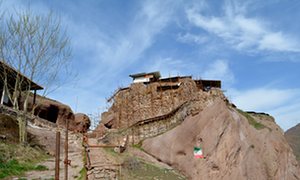
After enjoying the Shiraz to Tehran route, take a few days to go north-east from Tehran to Qazvin and then into the Alborz mountains to discover the remote 11th- and 12th-century castles of the Nizari Ismaili “Assassins”, especially Alamut and Lambesar. They will remind you of the mountain retreats of the French Cathars, with stunning valleys, high mountains and views. Zarabad makes an ideal village base. BrianParrott
The unique heritage of Abyaneh village
Photograph: Alamy
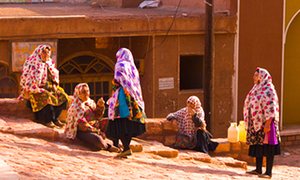
Abyaneh is a 13th-century mountain village about 80km south of Kashan. Its culture, traditions, costumes and dialect are unlike anywhere else in Iran. In 1973 it was registered as a national heritage site. Houses built of mud and straw are stepped into the hillside; narrow unpaved roads slope up and down the hills. Women wear colourful headscarves – the size of the flowers denoting their marital status, while married men wear voluminous satin trousers. As everywhere else in Iran, the people are wonderfully friendly and welcoming. Sue Crofton
Morning sun in Nasir-al-Molk
Photograph: Tuul and Bruno Morandi/Getty Images
In Shiraz stay in (if you can) or at least have lunch in the courtyard of the (twin room £40). Once you have visited the incredible Nasir al-Molk mosque in the morning for the sun streaming through the stained glass windows, cross Lotfali Khan Street, and turn left, in the direction of the citadel, take the third right alley and on your right is a beautiful madrasa (religious school, free). The madrasa courtyard is peaceful and a great place to sit quietly, watch the mullahs in discussion and see life unfold. Continuing down the same alley, hang left and you enter the famous bazaar where you can try faloodeh, the refreshing, if strange, Shirazi dessert. Gráinne Mc Namara
Eco-tour and intellectual chit chat
Visit the See You In Iran Facebook page and check for upcoming events or tours. I went on a three-day eco-tour organised by the site and mingled with other curious backpackers and young, cosmopolitan, engaged Iranians. We hiked in the mountains near Masal, close to the Azerbaijani border and slept in a remote hillside village. It was amazing to disconnect – there was no mobile reception or Wi-Fi for miles. 1womancomments
Gheshm Island geological park
Photograph: Abdolhamid Ebrahimi/Getty Images
Fly from Tehran or Shiraz to this island in the Strait of Hormuz, or make the short ferry crossing from Bandar Abbas. You do not have to be a geologist to enjoy Gheshm’s extraordinary geology. Eight main sites are spread around an island 60 miles long and can be visited by taxi: negotiate a day rate of around £20. Otherworldly landscapes have been carved over millennia by wind and water. I stayed in Tabl village, at Mr Amini’s house, which was clean and welcoming. (Any meal or night’s accommodation was £3.) qeshmgeopark.ir cjleggett
Breakfast in Masuleh
Rudkhan castle in Fuman, Gilan Province, Iran. Photograph: Alamy
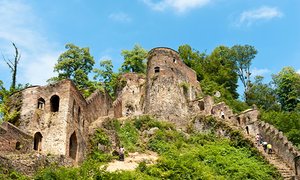
I had proudly taken my fiance to see Ephesus in Turkey; now it was his turn to show me his homeland. We arrived at our first stop, Masuleh, on a starry night, and awoke to incredible scenery. Perched on our rooftop, we took it all in over a breakfast of warm bread with saffron and carrot jam, and tea. We then drove to Rudkhan castle and scaled the 1,000 steps to absorb yet more spectacular views. Houses in Masuleh are available to rent upon arrival for around £35 a night and can usually accommodate three or four guests. FilizErol
Golshan Hostel, a shining star in Shiraz
From our trip to Shiraz, I have to mention Golshan Hostel. This traditional hostel radiates Persian warmth and hospitality, and it’s a perfect base for exploring the ancient city. There is a charming courtyard with a blue-tiled pool, flowering vines and bright, scattered cushions. It’s hard not to mingle, chai in hand, in such a tranquil place. golshanhotelshiraz.blogfa.com Shaz Rakhshan
The Golestan Palace, Tehran
Photograph: Alamy
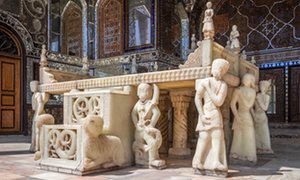
This is a beautiful 400-year-old masterpiece, displaying the earliest representations of a fused European and Persian style, and the complex formed the foundation of Iran’s modern artistic movement. My top tips for inside the palace are the dramatic and awe-inducing Takht’e Marmar (Marble Throne), which stands in an outdoor terrace, and the magnificent Talar-e Ayaheh (Hall of Mirrors) which is exactly that. Only a stone’s throw away is Tehran’s famous Grand Bazaar. ID9101224
Isfahan, for tea and coffee lovers
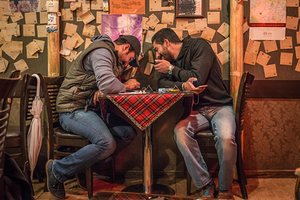
Navigating Isfahan by its old teahouses and new coffee shops is a nice way to spend an afternoon. The Azadegan Teahouse, in a lane off the north-east corner of Imam Square, has ceilings and walls decked with metal pots and lanterns, with tea, snacks and qalyan (hookah) on the menu. On the other side of the city, stylised coffees and virgin cocktails can be found in Café Ahang, near Charbagh Abasi Street. With its bookshelf and tables decorated with post-it notes, it has a cosy, local feel.
Nicole Zandi
Bam
The Arg-e Bam citadel. Photograph: Earl and Nazima Kowall/Getty Images
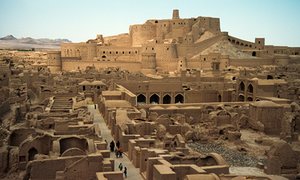
The desert oasis of Bam, in the province of Kerman, was largely destroyed by an earthquake in 2003 but has since been rebuilt. You can wander through gardens full of orange and pomegranate trees and date palms. A must-see is the impressive, Unesco-listed Arg-e-Bam citadel, which is being beautifully restored. Bam is also an excellent base for exploring the surrounding desert, including overnight stays in desert camps. CaseyD4
Observing Ashura in Yazd
I recommend visiting Yazd at the time of Ashura (it will be on 1 October in 2017). It’s the festival of mourning for the murder of Imam Hossein and there is a genuine grief evident in the rituals. Visitors are welcome to the upper galleries of mosques, generally opposite the women’s galleries, to witness hundreds of men beating their chests as the story is chanted. Our group was invited to a large temporary feeding area for a free lunch and supper (donations welcomed). You will also see fountains running red. HelenCurrie
https://kalouttour.com/wp-content/uploads/2017/01/6000.jpg00adminhttps://kalouttour.com/wp-content/uploads/2017/08/kalout-300x225-80x80.pngadmin2017-01-24 14:04:392017-03-13 13:43:25Holidays in Iran: readers’ travel tips | Travel
Women’s ski camps, Verbier, Switzerland Element ski school, set up in Verbier last year by a female ski instructor, is running women-only ski “camps” this winter. Weekend and week-long ski schools are aimed at three levels: intermediate, advanced and expert. Skiers get daily video feedback and action plans, plus life-coaching for “women who love mountains”. •About £240 for a weekend, £562 for a week, excluding accommodation and flights, elementconcept.com
All-terrain course, Baqueira Beret, Spain
Baqueira Beret, Spain. Photograph: Snoworks
Snoworks has a new all-terrain course in Baqueira Beret in the Pyrenees north-west of Andorra. It is open to “adventurous intermediates” and above, and involves five days of off-piste skiing, steep couloirs and heli-ski options. Accommodation is in a four-star chalet. •£1,475 including seven nights half-board, transfers from Toulouse and ski instructor, but excluding flights, 28 January to 4 February, snoworks.co.uk
Accommodation
Moontain Hostel, Oz-en-Oisans, France
Moontain Hostel, Oz-en-Oisans.
Moontain Hostel is a new pad for skiers on a budget, with dorm beds from just €20 and private rooms from €60. Breakfast is from €7, packed lunch €4 and dinner €10. The hostel is at 1,350 metres in the centre of Oz-en-Oisans, which is linked by pistes and chairlift to Alpe d’Huez and three neighbouring resorts. There’s a handful of bars and restaurants in the village, which is 50km from Grenoble. •moontain-hostel.com
RockyPop Hotel, Chamonix, France
RockyPop Hotel, Les Houches, Chamonix.
This hotel/hostel hybrid in Les Houches is another great budget option, with dorm beds from €10, quad rooms from €100 and doubles from €60. It is a fun place to stay, with pop-art-inspired design, a hairdresser, a photo booth and film nights. There are three food counters: serving burgers, pizzas and Savoyard specialities. The bar serves decent cocktails and has live bands and DJ sets. The RockyShuttle heads to the slopes twice a day. •rockypop-chamonix.com
Sport Resort Hohe Salve, Hopfgarten, Austria
Sport Resort Hohe Salve, Hopfgarten. Photograph: sportresorthohesalve.at
The fitness team at this resort work with the University of Innsbruck to put together training programmes for guests, and there is a yoga room, gym and outdoor training area, spa and pool. Beginner skiers who want to get fit are welcome, as are advanced skiers. A cable car runs from Hopfgarten to the top of the Hohe Salve in the SkiWelt Wilder Kaiser-Brixental ski area. •From €85pp a night half-board, including fitness facilities, opens December, hohesalve.at.
Flights
New routes for skiers this winter include Stansted to Chambéry in the French Alps with BA (twice a week, from £100 return, britishairways.com). This gives easy access to several resorts: Espace Killy, Les Trois Vallées, Paradiski Val d’Isère and Tignes. Delta is flying from Heathrow to Salt Lake City this year, the first time skiers can fly direct to the US resorts of Deer Valley and Park City (up to four times a week, from £885 return, delta.com). They can also reach Jackson Hole with a one-hour onward flight. EasyJet has new flights from Gatwick to Åre-Östersund, Sweden, from 11 December (once a week, from £46 return, easyjet.com). The airport is near two resorts, Åre and Vemdalen, both good for first-time and family skiing.
Destinations
Lech and St Anton, Austria
St Anton am Arlberg. Photograph: Alamy
Lech and St Anton are merging to form Austria’s biggest ski area: 340km of marked ski runs. A new lift between Stuben/Rauz and Zürs will connect the entire Arlberg area. It is best explored on a new 65km, 18,000-vertical-metre ski circuit, the Run of Fame. The route starts in St Anton, heads to Lech and Zürs, then over to Warth and Schröcken, before the White Thrill run back to St Anton. •stantonamarlberg.com
Val d’Isère, France
Solaise, Val d’Isere. Photograph: Getty Images
Solaise, one of the two main mountains in Val d’Isère, his just finishing a two-year, €16m redevelopment. The final phase is a new gondola, which opens in December, increasing capacity by 40%, carrying 3,600 passengers an hour and taking just seven minutes to reach the summit. A new day lodge at the top has great views and welcomes picknickers – so no more overpriced resort food. There is also a new beginners’ area, which means novices can enjoy learning at the top of the mountain. Finally, there is a new €35-a-day lift pass for green and blue runs. •valdisere.ski
Events
Slope sommeliers, Alta Badia, Italy
Group of skiers at the Sommeliers on the Slope wine-tasting event Photograph: Getty Images
This event, which was trialled last year, combines ski touring and wine tasting. Skiers are guided between mountain huts by an instructor and a sommelier; the latter gives tutored tastings of local wines at each stop. •€25pp, 19 & 26 January, 9 & 16 February, 9 & 16 March, email info@altabadia.org or call +39 0471 836176
La Grande Première, Val Thorens, France
Skiers take a break at Val Thorens, from Montagnes. Photograph: Cyril Cattin
Val Thorens, Europe’s highest resort, is holding a film premiere-themed opening weekend on 26-27 November. As well as red-carpet fun, there will be activity zones offering tasters of ski touring, carving, snow-scoot trampolines and big-air bags; instructors on hand to guide skiers around the area; the chance to test new ski equipment; and an après-ski show. •From €108pp for a two-day ski pass and apartment, valthorens.com
Trips
Skiing in Iran
Shemshak ski resort in northern Tehran. Photograph: Alamy
Family skiing in Vemdalen, Sweden
Vemdalen, Sweden. Photograph: Alamy
Ski Safari has a new trip to Vemdalen in west Sweden, which has three linked ski areas – Björnrike, Vemdalsskalet and Klövsjö/Storhogna – and activities such as dog sledding and snowmobiling. In Björnrike, the new Sameland is a place to learn about the Sami people, feed the reindeer and have a traditional meal in a Sami house. •From £775pp for a seven-night family trip on 12 February (two adults and two children), including apartment, flights from London to Östersund, and transfers or car hire, skisafari.com
Health and fitness, Morzine, France
Sitting room in an AliKats chalet. Photograph: Damian McArthur
AliKats Mountain Holidays is running a health and fitness week in its luxury chalets in Morzine, with activities before and after skiing. They include stretching, yoga, pilates, trail running and sports massage, plus four days’ skiing with an instructor and two days of free skiing. There’s healthy food on the menu, and a hot tub and sauna for aching muscles. •From £995pp full-board, excluding flights, 2-9 April, alikats.eu
Ski with Eddie the Eagle, Kicking Horse, Canada
Eddie the Eagle. Photograph: Alex Grimm/Getty Images
OK, it’s far too expensive for most of us, but superfans might be tempted by a week’s skiing with Eddie the Eagle. The trip involves six days of skiing in three resorts – Kicking Horse, Lake Louise and Revelstoke; a tour of the Olympic Park in Calgary where Eddie became a ski-jump legend in 1988; and a snowmobile evening. •£2,595pp, including accommodation in a boutique hotel, meals, activities and transfers from Calgary, but not flights, kickinghorsepowdertours.com
Activities
Zipwire, Ischgl, Austria
Skyfly Ischgl operates all year. Photograph: Stefan Kuerzi
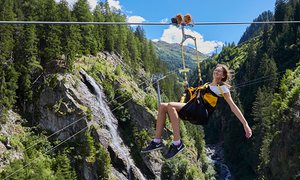
Skyfly, a 2km twin zipwire from mountain to valley in Ischgl, is a new way to reach the après-ski pronto, after a hard day on the slopes. It starts at the Silvretta gondola mid-station and lands on the valley station of the Pardatschgrat gondola; cables are 50m above the ground and riders can reach speeds of up to 84kmph (52mph). Ski and snowboard gear can be hooked up to fly down with the owners; it beats queueing for the gondola. •€35 adults/€21 children, ischgl.com
https://kalouttour.com/wp-content/uploads/2017/01/2500.jpg00adminhttps://kalouttour.com/wp-content/uploads/2017/08/kalout-300x225-80x80.pngadmin2017-01-24 13:58:022017-03-13 13:43:27Goggles on, heads up … what’s new in skiing this season? | Travel
In a leafy street in Isfahan’s laid-back but ancient Jolfa quarter, away from Imam Square and the bazaar for which the city is renowned, the Isfahan Music Museum provides welcome refuge. A love letter to Iran’s rich musical heritage, the small museum is much more than a series of instruments hanging on a wall. Founded and funded by local musicians Mehrdad Jeihooni and Shahriar Shokrani in December 2015, it showcases more than 300 instruments from around Iran, many unchanged from their depictions in centuries-old paintings or miniatures on display around the city’s historic sites.
Bookshop and outdoor cafe
These instruments include the kamancheh, thought to be the ancestor of the modern violin and the tar, supposedly the precursor of the guitar. There is also a variety of animal-skin drums, reed flutes (ney), nomadic camel bells and a majestic harp, all in beautifully lit glass cabinets on crisp white walls, with descriptions in English and Farsi. (Visitors are welcome to pick up and try the less precious pieces.) After a guided tour – whether for one person or a group of 20 – the visit culminates in a small, intimate performance, where traditional love songs and Persian poetry are played by modern masters.
In the short time it has been open, the museum has received two awards, the latest from the International Council of Museums (Icom) for the best private museum in Iran. Even those who are not music fans will be entranced by the energy, warmth and sheer joy Mehrdad and Shahriar exude at the sight of visitors.
“We are mad! Totally mad for music,” acknowledges Mehrdad, a broad smile appearing beneath his impressive moustache.
My beloved British friends! It has been 25 years since I threw that goodbye party in Brixton, complete with saffron-laden rice dishes, to bid you farewell before I returned to Iran. You were the cast of my life from the day I arrived as a homesick 12-year-old. From schoolgirl, to undergraduate, to Londoner, you were at my side.
Yet, in a quarter-century, none of you has accepted my offer of coming to visit me here. The image of Iran is so calcified by its politics that not even one of your own could persuade you to come and explore for yourself. This is my last-ditch invitation: maybe you’ll get over that psychological hurdle and catch the six-hour flight to Tehran.
You will need to organise a visa and travel through a tour operator though, since Britons can’t get a visa at the door, unlike many other nationalities. But that is easily done, so many Britons and Americans are visiting these days – and from Monday British Airways has daily flights to Tehran from London.
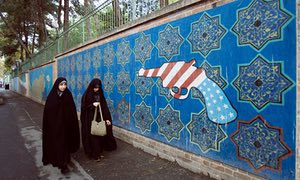
A mural outside the former US embassy in Tehran. Photograph: Alamy
The capital. This is where you’ll get a chance to see, first-hand, the Iran you know from news bulletins. The wall murals often seen in stock media images are a great way to step into the recent history of the place. They lionise revolutionary leaders and, more poignantly, memorialise martyrs of the eight-year war with Iraq. Almost every street is named after someone lost in that war. The murals provide an insight into the country’s priorities: from the zeal of early revolution and war to the contemporary penchant for the decorative. The walls of the US embassy, now officially referred to as “the nest of spies”, will provide selfie backdrops to shake your Instagram feed.
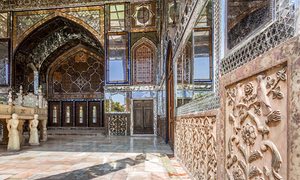
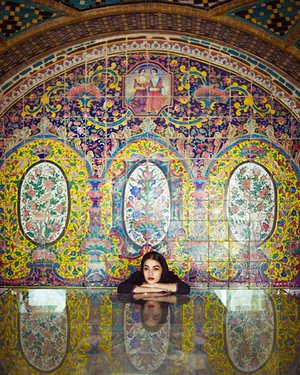
Having explored the political veneer of the city, we’ll head to Golestan Palace in the heart of old Tehran. Here, Nassereddin Shah, the 19th-century Qajar king, introduced photography to Iran and practised his hobby taking pictures of the moustachioed women of his harem. The palace has an impressive archive of Iranian photography, thanks to him.
Golestan Palace, Tehran. Photograph: Alamy
By now you’ll be hungry, so we’ll take a short walk to the entrance of the Grand Bazaar, the bustling hub of commercial activity. You can find almost anything here, but we are stopping for the famous lunch at “>Moslem restaurant. We’ll queue to get into this congested delight, but it’s worth it: it serves the best tah-chin in town. Portions of saffron and yogurt rice, served with chicken and barberries, easily feed two Iranians – and we know how to eat!
Moving on, we will go find Tehran’s buzzing art scene, where the young and the hip spend Friday afternoons gallery-hopping. New galleries around town are helping regenerate the old centre of Tehran: these include Aaran Gallery (12 Dey Street) which showcases work by young Iranian artists. As we head north, we’ll pop into Ag Gallery (3 Peysan Street) for photography, via Dastan’s Basement (6 Bidar Street) a bijou gallery where the art is still affordable.
Perhaps we’ll grab a Persian herbal infusion in one of the many new coffee shops, as the après art scene requires – you won’t see a Starbucks or McDonald’s while you’re here. Now, there’s an incentive.
Kashan
Manouchehri House, a boutique hotel in Kashan
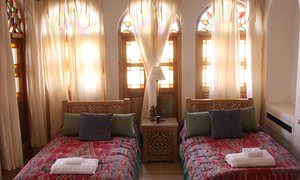
Many Iranians like to go north to take in the Caspian Sea’s lush vegetation and humid climate. But most foreign visitors go south to see the historic cities of Isfahan, Shiraz and Yazd. We’ll start in Kashan, the gateway city to the central desert region and will stay at Manouchehri House (doubles from £70), a 19th-century property, now a boutique hotel, renovated even as the country was experiencing the worst of the sanctions.
When many people were thinking of leaving, the owner raised this house from a heap of dust and rubble. We all thought she was crazy but, these days, booking in advance is necessary to enjoy a night in what is now an admired example of architectural renovation. Tehranis, tired of the crowds and the villas that have mushroomed in the Caspian region, now run to the desert to buy and rebuild abandoned homes.
Fin Garden. Photograph: Alamy
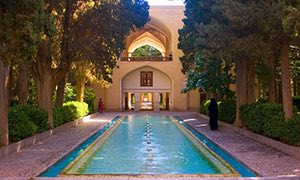
In Kashan we’ll also visit the Agha Bozorgi seminary, the only mosque in Iran with a sunken garden. Before we turn away from the city, we’ll visit Fin Garden too, which had the dubious honour of housing Amir Kabir, one of Iran’s modernising prime ministers in exile. He was killed in the bath house. To lighten the mood, we’ll grab a kebab, sitting on beds alfresco, at Gholam’s Kebab House before hitting the motorway towards Yazd.
On the way to Yazd
Aghda old town. Photograph: Haleh Anvari
There can be stops at any town that takes your fancy as we travel along the edge of Dasht-e Kavir, one of Iran’s two central deserts. There are significant historical sites in Natanz, Naeen and Ardestan, the latter home to a mosque built on the remains of a Zoroastrian fire temple dating from 1158. There’s also the Moon Qanat, an ancient double-tier aqueduct. The underground irrigation system associated with it dates from 1,000BC, and is an early technological wonder that brought water to Persia’s many arid cities, employing a system of underground wells and canals.
It’s a long journey, so we’ll stop for the night at Aghda, famous for its pomegranates, where the old town has been abandoned in favour of modern housing. The mainly uninhabited neighbourhood makes for an evocative stroll. One of the larger houses has been restored as the cosy Khaloo Mirza hotel (doubles from £25). Here, we’ll sleep on floor mats in shared rooms, traditional Iranian style. Food is provided by the hotelier’s aunt from a large kitchen, and it will no doubt include Aghda’s superb pomegranate paste.
Camping in Dashte E Kavir
Kavir-e Lut desert. Photograph: Brian A Vikander/Getty Images
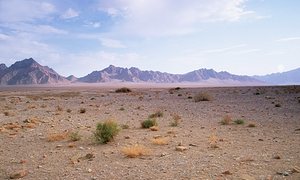
Before getting to Yazd, we’ll make a detour to join an off-road group to camp amid the desert dunes, where the landscape is spectacular and the unexpected flora otherworldly. This vast landscape is not a place to go on your own, so we’ll join Hamid Boreiri, who has been leading groups on desert excursions for 19 years (zistnc.com).
Everyone brings their own 4WD vehicle (spare seats are shared around). We’ll help dig the car out of soft sand as we traverse the dunes, and pitch camp ourselves – it’s tents and sleeping bags here. Travellers report that they feel a surge of energy under the desert skies. Walking barefoot in the sand exfoliates your feet but it also cleanses the soul. You certainly come out of the desert feeling lighter. Maybe it’s to do with the salt in the sand; these deserts were once seas. Maybe the feminine curves of the dunes suggest a softer place. That said, all that screaming as vehicles crest the dunes is cathartic!
Yazd
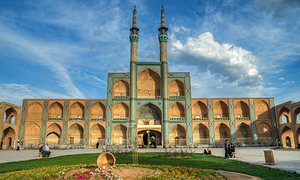
Amir Chakhmagh. Photograph: Getty Images
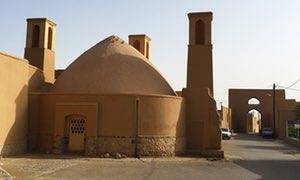
To Yazd, the city of wind towers, which suck the hot desert air down on to a shallow pool of water and cool the house. One of these has been recreated in a wonderland mall in Dubai but here, in Dowlatabad Garden, we can see the tallest functioning wind tower in the world. No other city in Iran has been preserved so meticulously by its residents, who have resisted the lure of building the classical pastiche high-rises so beloved of the nouveau riche in Tehran.
The city has strong associations with Iran’s pre-Islamic religion. Zoroastrians gather annually at Chak Chak, a mountainside temple closed to Muslims. But we can visit a functioning fire temple in town and make the hike to the Towers of Silence where, until 70 years ago, bodies of dead Zoroastrians were left to be consumed by carrion birds. Follow me to the Khalifa pastry shop and order its famed Yazdi delicacies of baghlava and sweetmeats to take back home.
Amir Chakhmagh, a three-storey structure known as a hosseinieh – for commemoration ceremonies – will bring us back to Iran’s present Shia rituals. This is a place where the martyrdom of Imam Hossein is marked each year. The large wooden nakhl, representing a palm that carried his body, is dressed in black decorative cloth and used as the centrepiece for the mourning processions of Ashura every year.
Rest will come at Khan restaurant, once a typical Iranian hammam, before we go to sample broad bean and dill rice with lamb at Talar Yazd restaurant. We’ll stay in Moshirolmamalek hotel (doubles from £115 B&B) with its own Persian garden on the edge of the city.
Shiraz
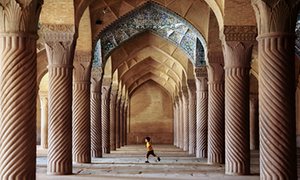
A boy runs between pillars at the Vakil mosque in Shiraz. Photograph: Pascal Mannaerts/Barcroft Images
How can we not visit Shiraz, the garden of Iran and the heart of its poetic soul? Venerated poets Sa’di and Hafez are buried here. Iranians use Hafez’s mystic poetry for divinations, and visit his grave as if on a secular pilgrimage. Although we will have to dash to see all that is on offer here, dashing is not the Shirazi way. Whereas Isfahanis are famous for their quick wit and love of money, Shirazis are known for their appreciation of a gentler lifestyle centred on the city’s many private and public gardens. The city has a fine selection of accessible Persian gardens, including Eram, Jahan-nama, and Delgosha, and the newly reopened Shapouri Pavilion Garden includes a new restaurant where we can take the weight off our feet.
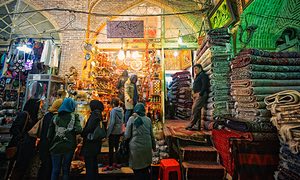
Vakil bazaar. Photograph: Emad Aljumah/Getty Images
The city’s sublime air, laced with the scent of orange blossom wafting from the many citrus orchards, is legendary. The Shirazi aromatic lime is indispensable to our cooking, and is served liberally with faloodeh, the local frozen noodle dessert. The Vakil bazaar is one of the most colourful in the country. The proximity of Shiraz to the homelands of nomadic tribes means the place is full of the bright, glittery fabrics favoured for traditional clothes.
Not far from the bazaar is the Shahcheragh mausoleum, a Shia shrine with mirror-work decorations that have inspired contemporary artists including Monir Farmanfarmaian. Here, you do have to wear a chador – they are provided at the door and are not black. After a long day, perhaps we’ll stay at the new Shiraz Grand Hotel (doubles from £130 B&B) by Qur’an Gate, an example of the new modern architecture that is popping up around Shiraz.
Persepolis
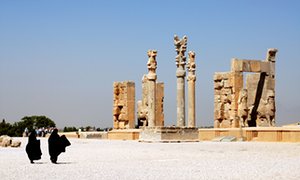
Xerxes’ Gateway, also known as the Gate of All Nations, at Persepolis. Photograph: Alamy
An hour’s drive north-east of Shiraz is our portal to the ancient past. Persepolis, the ceremonial palace built by the Achaemenid king Darius in 518BC, was a significant site in the Persian empire. Our ancient history is sometimes lost in the noise of contemporary politics, but images and words from this era abound in our daily life, serving as the glue that binds the nation. The Achaemenids were expansionists and ruled more than 40% of the then known world, but the fact that the palace was built by hired hands and not slaves marks the Achaemenids as progressive for their time.
As we will see, the surprisingly well-preserved bas-reliefs show guests from the many nations of the empire arriving at the palace bearing gifts. Among imposing statues of mythical animals are the well-known winged bulls, guardians of the palace. Sadly they didn’t deter Alexander the Macedonian (who does not go by the title of “Great” in this country) from burning the place down.
Next morning, on our way to Isfahan, we’ll stop at Pasargad, the Tomb of Cyrus the Great, the founder of the Persian empire and the first king of Iranians. His sarcophagus stands without pomp on a windswept plain. In 1971, Mohammad Reza Shah held a huge ceremony to mark 2,500 years of monarchy in Iran. His famous words – “Cyrus sleep easy for we are awake” – became the words of the last Iranian king to its first. The revolution followed eight years later.
Isfahan
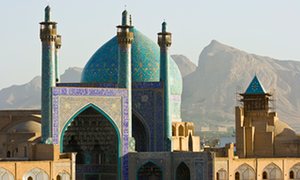
Mosque in Imam Square, Isfahan Iran. Photograph: Alamy
Isfahan should always be the last city on any travel itinerary in Iran. OK, I’m biased (it is my home town) but this truly is the jewel in the crown. Most of what we’ll see was built by Shah Abbas in the 17th century, when his capital was established here. The magnificent Naghshe Jahan Square, with its turquoise domes, and palace of Alighapou, positioned around an old polo field, are wondrous and you’ll want to see them again and again.
This is a living and working neighbourhood: Isfahanis still come to procure spices and jewellery in the old Gheisariyeh bazaar, and the surrounding passageways bustle with artisans making handicrafts. My favourite is the coppersmiths’ passage, where the cacophony of beating hammers is a centuries-old sound. Another joy is the ceiling of the Lotfollah mosque. Here, the design of the tiles creates the same sensation as watching a starry night, drawing you upwards as if falling into the sky. Not far away is the Jameh mosque, one of the oldest in the country, rebuilt in the 11th century. No colourful tiles here: the wonder is in the patterns and craftsmanship of the brickworks.
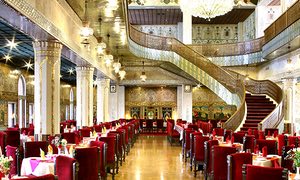
Fine dining … the restaurant at the Abbasi hotel. Photograph: Abassi Hotel
Finally, a major feature of Isfahan is the river, along the banks of which Isfahanis go to take the air. There are a number of old bridges here, from the plain-brick Si-o-se pol with its 33 arches, to the Khaju bridge with its decorative motifs and tiles, where the king would sit to enjoy the sound of water falling over specially designed steps. Nowadays, the river runs dry most of the year, but that hasn’t stopped Isfahanis continuing to use its banks in their leisure time.
Staying in the Abbasi hotel (doubles from £130 B&B) is a must. The old caravanserai has been converted into possibly the most beautiful hotel Iran has to offer. The quince-laden trees and the dome of the Chaharbagh seminary visible in the garden make this a magical end to your stay.
But only if you come!
Sound advice
Showing musical instruments being played is still banned on Iranian television but concerts are held regularly in Tehran. Visit Iran Music for details and catch a live gig.
State of the art
Housed in two renovated old houses in Tehran are Gallery O and Ab-anabar, both of which showcase cutting-edge art in what were once Tehran’s modern houses.
https://kalouttour.com/wp-content/uploads/2017/01/3464.jpg00adminhttps://kalouttour.com/wp-content/uploads/2017/08/kalout-300x225-80x80.pngadmin2017-01-24 13:44:592017-03-13 13:44:08Iran holiday guide: from Tehran to Isfahan and beyond | Travel
A useful first port of call is Tourism Iran’s official feed, which shows the kaleidoscopic mosaics of the country’s mosques and palaces, countryside, bustling and hill villages, as well as portraits of local workers.
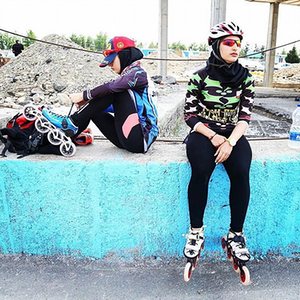
Women getting ready to roller skate at Azadi Sports Complex, Tehran.
A mobile photographic project inspired by @everydayafrica offering snapshots curated from several photographers. It aims to reflect real life.
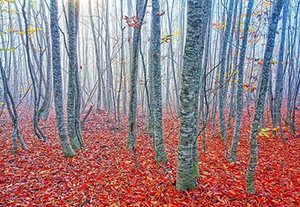
Autumn in a forest in Gilan province.
Ali Shokri is based in Tabriz and focuses on the country’s diverse landscapes, from the rainbow-coloured mountains of Aladağlar to the forests, rivers and waterfalls of Gilan province.
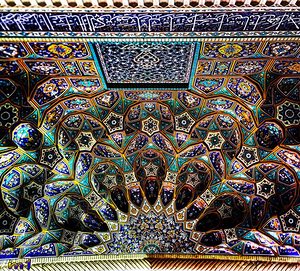
Ceiling of Shahe cheragh shrine in Shiraz, Iran.
Mehrdad’s feed provides a document of Iran’s history and culture through architecture. Mosques are shown with symmetry and colour; other shots are like gazing into the milky way.
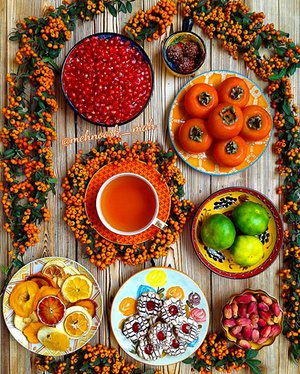
The page is a riot of colour, full of beautifully prepared and presented shots of dishes such as gheimeh (a stew of meat, tomatoes, split peas, onion and dried lime), havij polo (rice with carrots, topped with chicken and barberry), and homemade pickles.
Inspiration: five films to watch
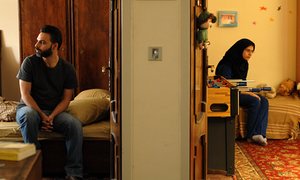
Actors Peyman Moaadi (left) and Sarina Farhadi in a scene from director Asghar Farhadi’s A Separation
• The Lover’s Wind Albert Lamorisse’s 1970s doc provides a superb view of Iran from the air.
•Ganj-e Qarun Melodrama in which a rich man finds compassion in his abandoned son.
•The Lizard Post-revolutionary comedy about a thief on the run from the law.
•Border Cafe A widow’s struggle to maintain her independence by running a cafe.
•A Separation A story of Iranian family life, this won the best foreign film Oscar in 2012.
Five tour operators to try
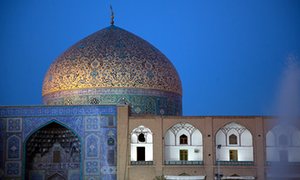
The dome of Sheikh Lotfollah mosque, Isfahan. Photograph: Pascal Mannaerts
Inspiration: five books to read
•My Uncle Napoleonby Iraj Pezeshkzad Satire about a family under the patronage of a British-fearing patriarch.
•Hajji Baba of Ispahan by James Morier 19th-century tale that gives an insight into Orientalist attitudes to Iranians.
•All the Shah’s Men by Stephen Kinzer Iran’s attitude to the west seen through the 1953 coup that toppled its premier.
•Stories from Iran 35 shorts from contemporary writers
•Tehran Noir,edited by Salar Abdoh Short story collection by young writers writing in, and about, Tehran
https://kalouttour.com/wp-content/uploads/2017/01/5760.jpg00adminhttps://kalouttour.com/wp-content/uploads/2017/08/kalout-300x225-80x80.pngadmin2017-01-24 13:30:362017-03-13 13:44:10Iran holiday inspiration: Instagram feeds to follow – and more | Travel
Imagine a verdant, landscape filled with rice paddies, tea plantations and olive groves. A land where you can hike up mountains in the thick mist of the morning and picnic by waterfalls on sun-weathered rocks in the afternoon. A land filled with golden apricots that taste like honey, peaches so succulent you barely notice the sweet juice that runs down your chin, and small black figs, firm and velvety to the touch, that erupt with jammy stickiness as you tear them open. I enjoyed all of these delights and more when I travelled through Iran in search of the secrets of the Persian kitchen.
On my journey, I cooked and feasted with Iranians of all walks of life who welcomed me into their homes to share their favourite recipes. In a country most commonly viewed through the narrow prism of its politics, food is a wonderful vehicle for discovery. A really good meal is something everyone can relate to.
Those unfamiliar with Iranian food often assume that it is fiery or spicy, perhaps befitting the country’s climate or politics. But it is, in fact, gentle and soothing, a poetic balance of subtle spices such as dried limes, saffron and rosewater. Slow-cooked stews, known as khoresh, and elaborate rice dishes layered with herbs, vegetables, nuts and dried fruit are the bedrocks of Persian cuisine, creating a dazzling mosaic of scents, textures and colours at the dining table. Regional and seasonal delicacies are plentiful, making the most of Iran’s bountiful produce.
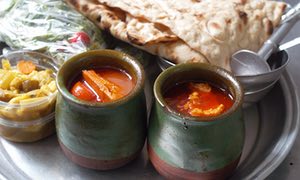
Traditional dizi stew is made to an ancient recipe. Photograph: Kaveh Kazemi/Getty Images
My journey started in Tabriz, in north-west Iran, a place of culinary connection for centuries, a trading crossroads connecting the Caucasus, the Middle East and Europe. Tabriz was one of the capitals of the old Persian empire, famed for its bazaar, where spices from India and China were sold alongside delicate silks and intricately patterned carpets.
Today, the bazaar is a Unesco world heritage site and nearby is one of the best places in town to sample to city’s signature dish, kofte tabrizi. Shariar Traditional Restaurant (corner of Tarbiyat Street, +98 41 554 0057) is converted from one of the city’s old hammams, and the lamb meatballs are the size of your fist, stuffed with hard-boiled eggs, walnuts and dried plums. They are served in a tomato and saffron sauce that’s mopped up with warm flatbreads.
Tabriz also has some of Iran’s most comforting street food. I was shown around town by psychology student Yasamin Bahmani, who took me on a stroll around El Goli park with its famed Persian garden, insisting every few hundred metres that we stop at one of the street stalls that line the paths. We feasted on mashed potato and hard boiled eggs, smothered in thick slabs of melting butter, sprinkled with dried mint and wrapped in a warm flatbread, and tender steamed purple and yellow beetroot that we sprinkled generously with sumac.
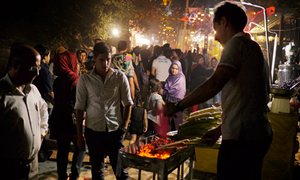
A man roasting corn at a street stall in Darband. Photograph: Amos Chapple/Getty Images/Lonely Planet Images
Heading south, I hit the coast of the Caspian Sea and the rolling green hills of the Gilan province, famed for its river fish and caviar. The cuisine of Gilan is as green as its landscapes, making it the best place in Iran for vegetarians. Aubergines and garlic appeared at every meal, alongside the mounds of fresh coriander, parsley and dill that are used to create fragrant bases for stews and emerald-green kuku (a type of frittata).
I spent an afternoon with farmer Roya Baighi, who taught me how to cook torshi-tareh, an elegant green stew made from herbs we picked from her garden. It was bursting with flavour and virtuosity. Gilan is also home to one of Iran’s most famous dishes: fesenjoon, chicken poached in an earthy sweet-and-sour sauce of ground walnuts and pomegranates. I enjoyed it at Mahtab restaurant in Lahijan (Golestan Square, +98 141 422 2963), with white rice and crisp, buttery tahdig, the golden saffron-infused rice crust that Iranians prize so much.
This atmospheric restaurant celebrates Gilaki culture with a menu of regional dishes, and live folk music in the evenings. It is adjacent to one of Gilan’s most popular tourist attractions, Lahijan lake and promenade, which are a perfect spot to walk off any overindulgence.
The Koohpayeh restaurant in Darband.
No trip to the region would be complete without sampling koloocheh, small pastries stuffed with ground walnuts, cinnamon and cardamom which are the speciality of Fuman, a small town in the south-west of the province. Stalls all over town sell these baked treats and they were particularly welcome, washed down with dainty glasses of black tea, after a rigorous hike in the surrounding hills.
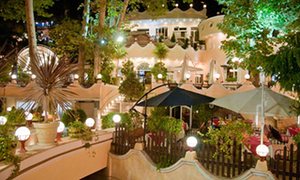
Tehran is filled with upscale restaurants serving dishes ranging from sushi and frozen yoghurt to dizi, a lamb, chickpea and potato stew made to a centuries-old recipe, cooked in a clay pot for several hours until the meat is so tender it can be mashed into a paste with a fork. The best local feasting, though, is in Darband, a neighbourhood in the north of the city at the foot of the Alborz mountains. It’s a district of narrow winding mountain paths lined with trees adorned with fairy lights. Koohpayeh restaurant is about a 10-minute walk up the Darband hill and provides a scenic backdrop for sampling some of the city’s finest juicy lamb kebabs. Finish the night by relaxing on faded Persian carpets in one of the many small wooden pavilions up and down the road and join the locals in smoking some apple-flavoured shishas.
In central Iran, I visited saffron farms, rosewater festivals and pomegranate orchards, discovering the history and horticulture behind Iran’s most evocative ingredients. The pomegranate is indigenous to Iran and, in ancient Persian mythology, the hero warrior Isfandiar is said to have eaten its seeds and become invincible.
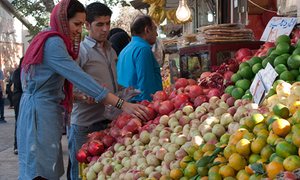
Yasmin Khan choosing pomegranates, the nation’s favourite fruit, at an Iranian market. Photograph: Shahrzad Darafsheh
Today, pomegranates retain their near-mythical status and are revered as the nation’s favourite fruit. As well as being enjoyed on their own – their scarlet seeds sprinkled with a pinch of golpar, an earthy, citrussy spice – they are also salted, dried and pounded into fruit leathers or cooked into molasses to be added to savoury dishes.
The city of Shiraz is synonymous with poetry, and with the roses that flourish in the town’s famed garden, Bagh-e Eram. Roses are indigenous to Iran and it was here that the petals were first distilled into rosewater, over 2,500 years ago. Today, this is mainly used in desserts such as faloodeh, an aromatic and refreshing rosewater and lime sorbet with frozen vermicelli. The Hafez garden is one of the best places to sample this local speciality and I was taken there by Shahin Hojabrafkan, a handsome and charming secondhand car salesman. We sat overlooking Hafez’s shrine, squeezing wedges of lime into our fragrant rosewater-infused sorbets and watching a steady stream of Iranians pay reverence to their most cherished poet.
Central Iran is also home to the country’s finest pistachios, which feature in both sweet and savoury dishes. My favourite way to enjoy their creamy texture is at one of the many ice-cream parlours in the ancient city of Isfahan at night, such as Mahfal ice-cream on Makineh Khajoo. One of the most moreish is bastani akbar mashti, a saffron and rosewater custard ice-cream flecked with toasted pistachios.
Waiter serving lunch, Iranian style. Photograph: Jason Edwards/National Geographic/Getty Images
The final stop on my travels was the southern port town of Bandar Abbas, on the Persian Gulf. Bandar, as it is known, is a town of scorching sunshine, warm blue waters and towering palms, and was once an important post on the spice route from India to Europe. By contrast with the rest of Iranian cuisine, the food of this region is an assault on the senses – a thrilling mix of Persian, Indian and Arabian flavours. Tropical fruits, such as mangos, pineapples and guavas, are picked green and used for Indian-style pickles, and seafood from the warm Persian Gulf is stewed, grilled as kebabs, or fermented, dried and ground into powders and pastes.
The best place to sample the day’s catch is at the fish market, where burly men shout their deals of the day and women crouch on the floor next to them, deftly shelling prawns. Next to the market, a row of fish restaurants serve specialities including ghaleyeh maygoo – a prawn, fresh coriander and tamarind stew – and small spicy fishcakes called kuku-ye mahi, .
Travellers in Iran are always met with warmth and hospitality: it is not uncommon to be invited to an Iranian home for dinner after just exchanging a few pleasantries. For those wishing to expand their culinary knowledge, or simply enjoy one of the most sophisticated cuisines in the world, Iran offers a wealth of culinary delights. The only challenge for most visitors will be squeezing into their jeans at the end of the trip.
https://kalouttour.com/wp-content/uploads/2017/01/3008.jpg00adminhttps://kalouttour.com/wp-content/uploads/2017/08/kalout-300x225-80x80.pngadmin2017-01-24 13:19:172017-03-13 13:44:17A foodie tour of Iran: it’s poetry on a plate | Travel