
Iran Eager to Receive Albanian Tourism Investors
TEHRAN (MNA) – Iranian Vice President Ahmadipour said Iran would welcome Albanian investors to build the tourist infrastructure.
Zahra Ahamadipour, Vice-President and Head of Cultural Heritage, Crafts and Tourism, made the comments on Sunday at a meeting with the visiting Albanian Foreign Minister, Ditmir Bushati.
She pointed out that the country would support the investment of foreign parties, as the positive atmosphere is available in accordance with the Joint Action Plan (JCPOA).
She also expressed the willingness to hold exhibitions, conferences, and encourage interaction between artists from both countries.
The official expressed the hope that Teheran and Tirana would resume cooperation after two decades and consider expanding cultural relations as a prerequisite for deepening bilateral relations or strengthening political cooperation.
Ahmadipour and pointed out the excellent ability to exchange tourists between Iran and Albania and declared that Iran is a country with a rich cultural heritage and an ancient history that has provided great opportunities in historical and cultural tourism, especially the world European.
At the meeting, Albania’s Bushati also underlined that his visit to Iran, in response to his country’s readiness to strengthen relations with Iran in all areas.
Iran builds Mideast’s highest swing bridge
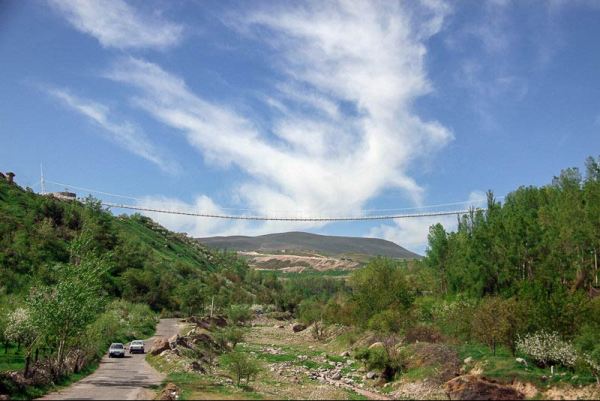
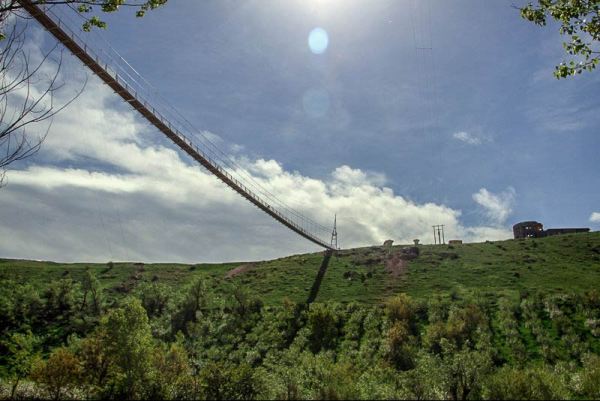
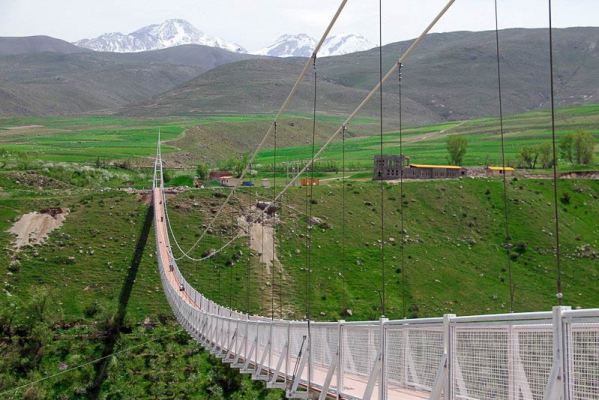
Iran has unveiled the Middle East’s highest suspension bridge in the lap of nature in the northwestern Ardabil province, known for its magnificent pastures, hot mineral springs and towering mountains. The bridge over the river of Khiyav Chai in Meshginshhar is 345 meters long, suspended 80 meters above the ground.
The region, known for its pure natural honey, is undergoing a flurry of construction and sprucing up its face to attract tourists.
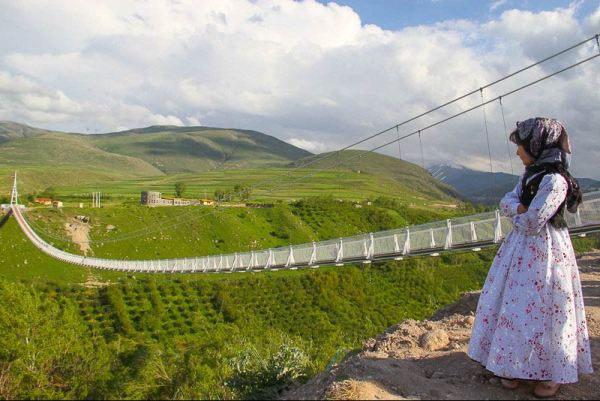 |
It is tucked away at the foot of the iconic Sabalan mountain which oozes a rich stream of thermal waters with healing qualities, attracting millions of tourists every year.
Iran is aiming to raise its tourism revenues put around $6 billion a year, which account for less than 0.5% of the world’s total income from the sector.
 |
“Iran’s 20-year vision plan targets attracting 20 million tourists by 2025 which will earn the country $30 billion,” director of Iran’s Cultural Heritage, Handicrafts and Tourism Organization Masoud Soltanifar has said.
The country is seen as one of the world’s top potential tourist destinations as it holds countless ancient sites. Iran is home to 17 historic sites listed by the UNESCO.
 |
It has a diverse landscape and its tourism industry offers a myriad of recreational opportunities.
They range from natural hot water showers in the northwest to hiking and skiing in the Alborz mountains to magnificent architectural sight-seeing in the center and beach holidays in the Persian Gulf and the Caspian Sea.
Apart from its glorious ancient sites, the country’s allure lies in its people’s reputation for hospitality.
 |
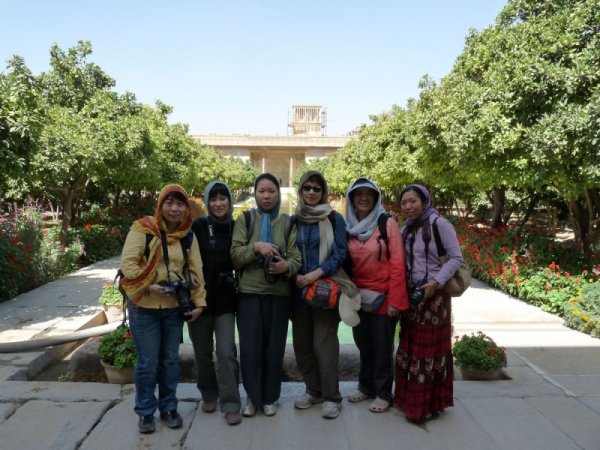
THE GARDENS OF SHIRAZ
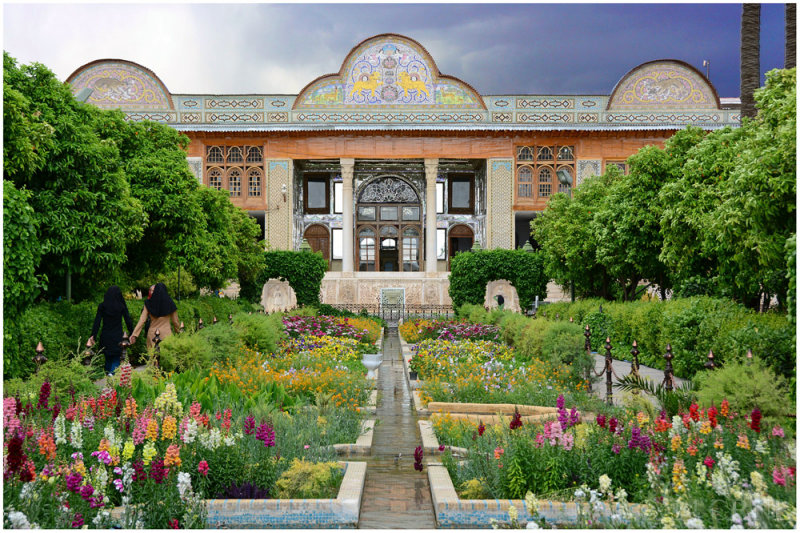 |
Shiraz in ancient times possessed large and pleasant gardens, which unfortunately, through the revolutions and invasions of the past centuries, have disappeared, and of many of them nothing but their name in history remains.
The natural situations, the equable climate and the sunshine in Shiraz caused such gardens to of travelers this is confirmed by the statements in past centuries, such as John Fryer, who came here in 1672, and writers as follows:-
 |
«In our stay we had opportunity to the observe Shiraz, not only by fame, but indeed to be, second to none, except the royal city in the whole Empire. The stately gardens and summer-houses are out of the town, whither resort those invited either by curiosity or recreation; the most famous of which we visited, under whose shady bowers we were feasted from the heel of every day till midnight. Among which, that, honoured with the royal claim, and therefore styled the King’s Garden, deservedly carries the lustre from the rest, and though everyone share in some excellency or other, yet this comprehends them all in one, being a large map of the whole. Here grow the loftiest cypresses in the universe. The nightingale, the sweet harbinger of the light, is a constant cheerer of these groves, charming with warbling strains the heaviest soul into a pleasing ecstacy. »
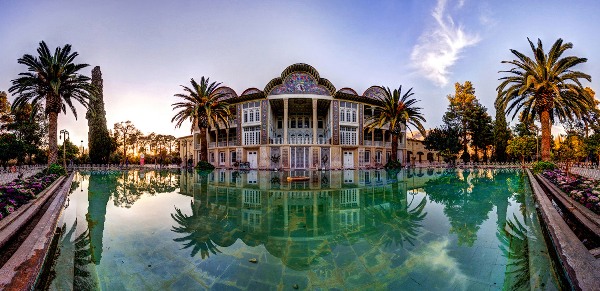 |
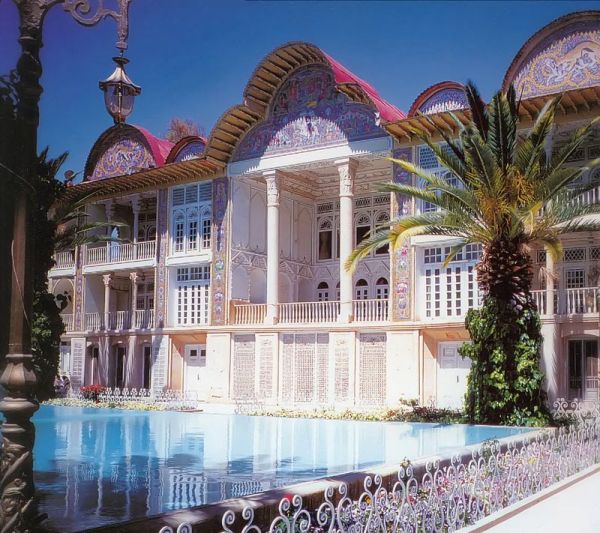
Among the numerous Shiraz gardens a few that are larger and older are here referred to: – Bágh-i-Delgushá (the exhilarating garden); Bágh-i-Eram (the Garden of Paradise); Bágh-i-Afífábád (the Garden of the Abode of Chastity), sometimes called Bágh-i-Gulshan.
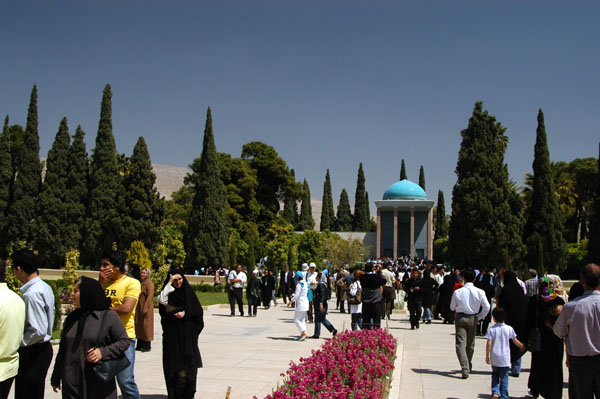 |
The Bágh-i-Khalílí also is a newly-laid-out garden which on account of the keen interest of its owner, Mr.Muhammad Khalil Khalili, who is one of the well-known horticulturists of Iran, is as far as the variety of its flowers goes, one of the best and most beautiful garden of Shiraz. The owner, who has excellent taste, has endeavoured, by spending much time and money, to introduce from other countries every kind of flower that might flourish in the Shiraz climate, and to grow and cultivate them here. And though the area of the garden compared with the number of the flowers and fruit-trees is small, and it lacks the spacious vistas of the Bágh-i-Eram and the Bágh-i-‘Afífábád, yet the plentiful display of flowers and fine fruit dispels this deficiency, and makes it a garden unique of its kind.
In the Bágh-i-Eram there are many cypresses, one of which in height and proportion is unexampled in its own field, and worthy to be called the King of Cypresses.
 |
Iranian tourist numbers to Russia rise in 2015
2015 witnessed a significant increase in Iranian tourists visiting Russia, the Association of Tour Operators said on its website.
According to Rosstat (Russia’s state statistics service), nearly 34,000 Iranian tourists visited Russia in the first nine months of 2015, a rise of 111 percent when compared to the same period a year ago.
On January 14, a delegation from Iran, headed by Deputy Head of the Cultural Heritage and Tourism Mortaza Rahmani Movahed, came to Moscow to discuss cooperation in tourism with Rostourism (Russia’s state agency for Tourism).
Iranian airline Mahan Air will launch direct flights between Moscow and Tehran from January 21.
Iran’s Nuclear Sanctions Lifted
 |
Sanctions imposed on Iran over its nuclear program are lifted following confirmation of Tehran’s commitment to the Joint Comprehensive Plan of Action by the International Atomic Energy Agency.
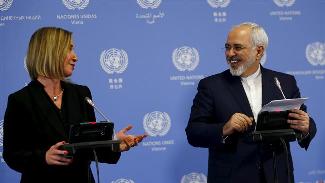
European Union foreign policy chief Federica Mogherini and Iranian Foreign Minister Mohammad Javad Zarif made the announcement during a joint press conference in Vienna on Saturday, January 16 2016.
Mogherini read out a statement in English which was subsequently read out by Zarif in Persian.
“As Iran has fulfilled its commitments, today, multilateral and national economic and financial sanctions related to Iran’s nuclear program are lifted in accordance,” read the statement. “All sides remain firmly convinced that this historic deal is both strong and fair, and that it meets the requirements of all.”
“This achievement clearly demonstrates that with political will, perseverance, and through multilateral diplomacy, we can solve the most difficult issues and find practical solutions that are effectively implemented,” it added.
“UN sanctions related to Iran’s nuclear programme are lifted. United Nations Security Council resolution 2231 (2015), which endorsed the JCPOA, will from now onwards, together with the Treaty on the Non-Proliferation of Nuclear Weapons (NPT), be the sole international legal framework related to Iran’s nuclear activities, terminating provisions of resolutions 1696 (2006), 1737 (2007), 1747 (2007), 1803 (2008), 1835 (2008), 1929 (2010) and 2224 (2015).”
Iranian President Hassan Rouhani responded to the announcement by hailing the Iranian nation in a tweet for the “glorious victory.”
Iranian Ambassador to the IAEA Reza Najafi announced that Amano would be traveling to Iran to meet Rouhani, Head of the Atomic Energy Organization of Iran (AEOI) Ali Akbar Salehi, and other officials on Sunday, January 17 2016.
Head of the Atomic Energy Organization of Iran (AEOI) Ali Akbar Salehi said that Iran gained its “right” through support from the Iranian nation and Leader of the Islamic Revolution Ayatollah Seyyed Ali Khamenei.
Many world leaders and politicians respond to the implementation of Iran’s historic nuclear deal with world powers.
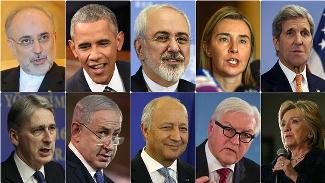
US Secretary of State John Kerry, also present in Vienna, confirmed the IAEA’s report, saying that “The US sanctions-related commitments… are now in effect.”
Kerry said the United States would “immediately” remove sanctions imposed on Tehran, “expanding the horizon of opportunity for the Iranian people.”
“Today marks the moment that the Iran nuclear agreement transitions from an ambitious set of promises on paper to measurable action in progress,” said US Secretary of State John Kerry after the announcement.
United Nations Secretary General Ban Ki-moon also hailed the agreement implementation.
 |
“This achievement demonstrates that international proliferation concerns are best addressed through dialogue and patient diplomacy,” said Ban’s spokesman in a statement. “This is a significant milestone that reflects the good faith effort by all parties to fulfill their agreed commitments,” he added.
In a statement released by the IAEA, the agency’s Director General Yukiyo Amano said that “Relations between Iran and the IAEA now enter a new phase. It is an important day for the international community. I congratulate all those who helped make it a reality.”
British Foreign Secretary Philip Hammond released a statement saying that “Years of patient and persistent diplomacy, and difficult technical work, have borne fruit as we now implement the deal.”
French Foreign Minister Laurent Fabius also welcomed the deal, calling it an “important step for peace and security implementation.”
“At a time when the region is seeing immense challenges and strong tensions, I hope that the spirit of cooperation that marked the conclusion of the deal can also be brought to all the other regional issues,” he said.
German Foreign Minister Frank-Walter Steinmeier also hailed the announcement as a “historic success for diplomacy.”
He added that the diplomatic victory could lead to success “in defusing other urgent crises and conflicts in the region, especially regarding the civil war in Syria,”
Meanwhile, US President Barack Obama signed an executive order for the removal of sanctions on Iran, the White House announced.
Leading US Democratic presidential candidate Hillary Clinton praised Obama for implementing the nuclear agreement, yet claiming that concerns still remain.
“Iran is still violating UN Security Council resolutions with its ballistic missile program, which should be met with new sanctions designations and firm resolve,” Clinton said.
Israeli Prime Minister Benjamin Netanyahu also repeated Tel Aviv’s anti-Iran rhetoric, saying, “Even after signing the nuclear deal, Iran has not relinquished its ambition to obtain nuclear weapons.”
Netanyahu added that Israel would “follow the implementation of the deal and warn of any violation.”
The 2800 years old kiss
 |
This is from an archeological site called Hasanlu, level IVB, which was burned after a military attack. People from both fighting sides were killed in the fire, which apparently spread quite unexpectedly and quickly through the town. These skeletons were found in a plaster grain bin, probably hiding from soldiers, they almost certainly asphyxiated quickly because of the fire. They are both male, which could indicate a family connection (or maybe a homosexual relationship). The “head wound” is actually from modern-day excavators. The skeleton couple was unearthed in 1972.
Theses skeletons were found in a bin with no objects. The only feature is a stone slab under the head of the skeleton on the left hand side (SK335). Some sources claim that skeletons, appearing to kiss each other, were buried 6000 years ago, but that’s not true. The archeologist who studied the skeletons say they were there since 2800 years ago. The University of Pennsylvania has determined that the couple died together in about 800 B.C. The skeletons do appear like they are kissing each other before they died – as if to signify that love is eternal.
The source of this image comes from the Penn Museum and they have name it as “The Lovers”. Its description reads:
“The Lovers” from 1972 season at Hasanlu
Hasanlu is an archaeological excavation site in Iran, Western Azerbaijan, Solduz Valley. Theses skeletons were found in a Bin with no objects. The only feature is a stone slab under the head of the skeleton on the left hand side (SK335).
Penn Museum
Teppe Hasanlu, located in northwest Iran is a very famous archaeological site of an ancient city and was excavated in 10 seasons between 1956 and 1974 by a team from the University Museum, University of Pennsylvania and the Metropolitan Museum of New York. Many valuable artifact were unearthed, including this eternal couple.
Iran to buy 114 Airbus planes this week from France
The first batch of new planes will arrive in the country by March 21.
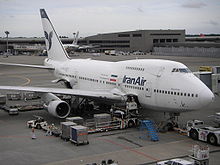 |
Iran will sign a contract this week to buy 114 Airbus planes from France, during a visit to Paris by Iranian President Hassan Rouhani, Tehran’s transport minister said on Sunday.
Abbas Akhoundi, quoted by Iranian media, said the deal “will be signed between Iran Air and Airbus” when Rouhani is in Paris on Wednesday on the final day of his first official European visit.
Rouhani’s trip follows the implementation of a nuclear deal with world powers that curbs Tehran’s atomic activities in exchange for the lifting of punishing economic sanctions.
Iran desperately needs to modernise its ageing passenger plane fleet, which has only 150 operational planes out of more than 250, according to Akhoundi.
“We have been negotiating for 10 months” for the purchase of planes but “there was no way to pay for them because of banking sanctions,” Iranian state media quoted Akhoundi as saying.
“We need 400 long- and mid-range and 100 short-range planes,” he added.
The first batch of new planes will arrive in the country by March 21, he said.
Iran, with a population 79 million, has a good road network but still needs major transport upgrades, which Tehran hopes will aid tourism.
Rouhani is to visit Italy and France on January 25-27 to boost Iran’s economic ties with Europe.
Iran currently has no deals in place with American manufacturer Boeing “because of problems with negotiating with the US,” according to Akhoundi.
State television said the US Treasury had not yet permitted Boeing to enter talks with Iran, “but we will definitely negotiate with this company too,” the minister added.
Apart from new planes, Iran’s airports also need USD 250 million worth of upgrades, he said.
Only nine of Iran’s 67 airports are currently operational.
The Islamic republic yesterday signed a USD 2 billion contract with China to electrify the railway line linking Tehran with second city Mashhad, Akhoundi said.
Iran to buy 114 Airbuses to revamp ageing fleet
Iran said Sunday it will buy 114 Airbus planes to revitalise its ageing fleet, in the first major commercial deal announced since the lifting of sanctions under its nuclear agreement.
|
Transport Minister Abbas Akhoundi said a deal on the purchase would be signed between national carrier Iran Air and Airbus during a visit to Paris this week by President Hassan Rouhani.
Rouhani will travel to Italy and France from Monday to Wednesday, on his first visit to Europe since the implementation of the deal curbing Tehran’s nuclear activities in exchange for the lifting of punishing economic sanctions.
Rouhani has hailed the agreement as a “new chapter” for Iran as its economy returns to global markets.
Modernising the country’s air fleet and infrastructure is a top priority, with Akhoundi saying Sunday that only 150 of the country’s 250 planes are operational.
“We have been negotiating for 10 months” for the purchase of planes but “there was no way to pay for them because of banking sanctions,” Iranian state media quoted Akhoundi as saying.
“We need 400 long- and mid-range and 100 short-range planes,” he said.
He said the first batch of new planes would arrive in Iran by March 19 but provided no financial details of the deal with Airbus.
An Airbus spokesman declined to comment.
Iran, with a population 79 million, has a good road network but still needs major transport upgrades, which Tehran hopes will boost tourism and trade.
Iran’s airports also need $250 million (230 million euros) worth of upgrades in navigation systems, Akhoundi said.
– Talks with Boeing –
Only nine of Iran’s 67 airports are currently operational.
Iran has suffered several air crashes in recent years blamed on ageing planes, poor maintenance and a shortage of new parts.
News of the Airbus deal came as aviation industry representatives from 85 companies met in Tehran on Sunday to assess opportunities in the Islamic republic after sanctions were removed.
“It’s a really exciting time, there’s never been a situation like this,” said Peter Harbison, the head of the CAPA consultancy which organised the conference.
“A whole array of different aviation services and new jobs obviously are going to be created,” Harbison told AFP.
“Aviation is one of those industries that creates massive economic flow-on benefits, so tourism will expand, so you’ll need more infrastructure growth in hotels and right across the board.”
Akhoundi said Sunday Iran was also negotiating with US plane manufacturer Boeing, but provided no details.
He said Iran was in talks with the United States on the possibility of reopening direct air routes, which were cut after the 1979 hostage crisis that ended all diplomatic ties between the two countries.
Rouhani’s European tour will see him seeking to restore commercial ties with Italy and France, which were among Tehran’s main economic partners before the tightening of international sanctions in January 2012.
Competition to tap the Iranian market has been fierce as it emerges from international isolation.
Meeting with Chinese President Xi Jinping on Saturday, Rouhani said the two countries aim to build up economic ties worth up to $600 billion in the next 10 years.
They signed a slew of trade agreements, including a $2 billion contract for China to electrify the railway line linking Tehran with second city Mashhad.
France and Italy mull deals with Iran on visit by Rouhani
PARIS/ROME — President Hasan Rouhani brings the case to Europe this week for Iran as a potential investment bonanza, after the lifting of financial sanctions brought his country of 80-million people back into the world of global commerce.
Mr Rouhani championed the deal under which Iran curbed its nuclear programme in return for the lifting of US, European Union and United Nations sanctions this month.
On his first trip abroad since the accord, he will lead a 120-strong delegation that includes Iranian entrepreneurs as well as the oil and gas minister and other officials for five days in Paris and Rome. He will meet Pope Francis and French President Francois Hollande.
A week after nearly all sanctions were lifted, French and Italian officials still do not expect major deals to be signed yet during the trip.
Mr Rouhani has spoken of a “long road” to Iran’s economic integration with the world.
Iran demonstrated its hunger for western goods at an aviation conference on the eve of the visit, announcing plans yesterday to buy eight A-380 superjumbo jets from Airbus and up to 100 aircraft from Boeing.
The visit also comes as global diplomats are trying to arrange the first peace talks in two years to end the Syrian civil war.
The visit to France, the first by an Iranian president since 1999, will provide opportunities to smooth over particularly awkward relations with a country that has historically been comparatively friendly.
Paris took a hard line towards Iran among the six powers that were party to the nuclear negotiations, and has been outspoken in its condemnation of Iran’s support for Syrian President Bashar al-Assad.
“Trust needs to be built,” said a senior French diplomat.
“On the nuclear accord, the relationship is relaxed, but not on the other subjects.
“There is no change on the Iranian position for now on a number of regional issues … so the idea (of the visit) is to open a new page,” the diplomat said.
Since July, Paris has appeared more conciliatory. A senior French economic and political delegation travelled to Tehran in September.
About 130 firms took part ranging in sectors from agriculture to construction and tourism to lay the groundwork for the first business accords between the two countries since the nuclear deal.
Companies such as Total, aircraft maker Airbus and car manufacturer Peugeot are interested in the new opportunities.
“There will be some accords and progress on deals,” said another French diplomat.
“But I do sense some prudence among companies,” the diplomat said.
Without the same diplomatic constraints as France, Italian officials appear more upbeat.
Italy has traditionally had close economic ties with Tehran and is rubbing its hands at the prospect of a possible surge in new contracts following the demise of sanctions.
Italy’s export credit agency, Sace, has said Italian exports to Iran might rise by about €3bn in the four-year period between 2015-18.
Exports totalled an estimated €1.56bn last year.
Iran opens new chapter with 114 Airbus planes deal
 |
TEHRAN — Iran said on Sunday that it would buy 114 Airbus planes to revitalise its ageing fleet, in the first major commercial deal the country has announced since the lifting of sanctions under its nuclear agreement, the country said at the weekend.
Transport Minister Abbas Akhoundi said a deal on the purchase would be signed between national carrier Iran Air and Airbus during a visit to Paris this week by President Hassan Rouhani.
Mr Rouhani was set to travel to Italy and France from Monday to Wednesday, on his first visit to Europe since the implementation of the deal curbing Tehran’s nuclear activities in exchange for the lifting of economic sanctions.
He has hailed the agreement as a “new chapter” for Iran as its economy returns to global markets. Modernising the country’s air fleet and infrastructure is a top priority, with Mr Akhoundi saying only 150 of the country’s 250 planes were operational.
“We have been negotiating for 10 months” for the purchase of planes, but “there was no way to pay for them because of banking sanctions”, Iranian state media quoted Mr Akhoundi as saying. “We need 400 long-and mid-range and 100 short-range planes,” he said.
 |
Mr Akhoundi said the first batch of planes would arrive in Iran by March 19, but provided no financial details of the deal with Airbus. An Airbus spokesman declined to comment.
Iran, with a population of 79-million, has a good road network, but needs major transport upgrades. Iran’s airports needed $250m worth of upgrades in navigation systems, Mr Akhoundi said.
Only nine of Iran’s 67 airports are operational. Iran has had several air crashes in recent years blamed on ageing planes, poor maintenance and a shortage of new parts.
News of the Airbus deal came as aviation industry representatives from 85 firms met in Tehran at the weekend to assess opportunities after sanctions were removed.
“It’s a really exciting time; there’s never been a situation like this,” said Peter Harbison, head of Capa Consulting, which organised the conference. “A whole array of different aviation services and new jobs … are going to be created.
“Aviation is one of those industries that creates massive economic flow-on benefits, so tourism will expand, so you’ll need more infrastructure growth in hotels and right across the board,” he said.
Mr Akhoundi said Iran was also negotiating with US aircraft manufacturer Boeing, but provided no details.
Iran was in talks with the US on the possibility of reopening direct air routes, cut after the 1979 hostage crisis that ended diplomatic ties between the two countries.
Mr Rouhani’s European tour will see him seeking to restore commercial ties with Italy and France, major economic partners before the tightening of international sanctions in January 2012.
Meeting with Chinese President Xi Jinping at the weekend, Mr Rouhani said the two countries aimed to build economic ties worth up to $600bn in 10 years.
They signed a slew of trade agreements including a $2bn contract for China to electrify the railway line linking Tehran with Mashhad.