Iranian archeologists trace industry footprints around Persian Gulf


Iranian archeologists trace industry footprints around Persian Gulf
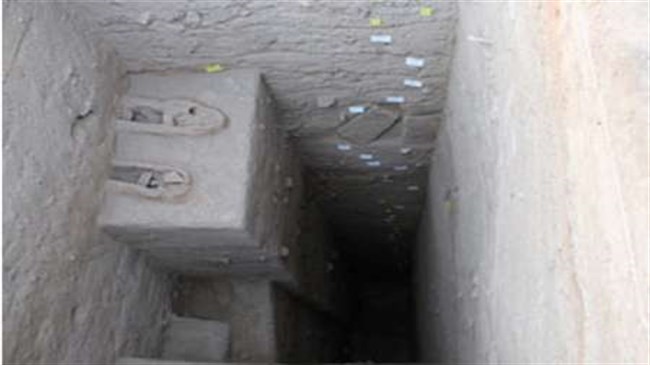
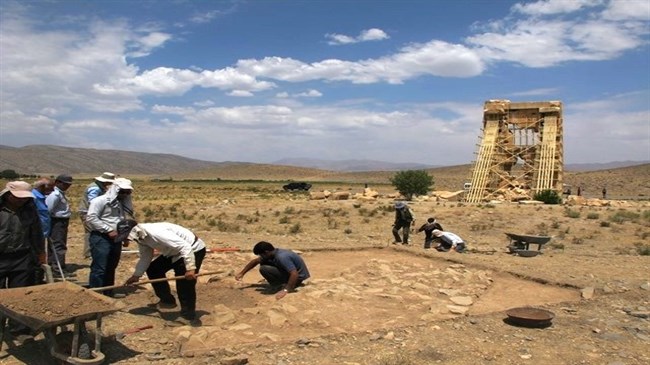
Objects excavated in the historic site of Tom Maroon in the province of Hormuzgan on the Persian Gulf suggest that during the Bronze Age the inhabitants of the region were involved in industrial activities such as metalwork, glassmaking and pottery.
The research institute of the Iranian cultural heritage, the arts and tourism organization, quoted the chief of the excavation team Siamak Sarlak, that the archaeologists looked at two oval furnaces, weldments, furnace slags and glass fountains during their excavations.

He also noted that among the objects a glass button-like seal, which may be important for the analysis of economic relations between Tom Maroon and other regions during this period.

He named the objectives of the current excavation phase as the identification of the subsequent cultural epochs of the region, the creation of a chronology of the area, and the definition of the role and importance of the area in shaping cultural relations of the communities on the northern and southern shores of the Persian Gulf The Bronze Age until the Islamic period.
Sarlak quoted other aims of the excavation as an understanding of the instinctive features of the region in developing the cultural perspectives of the communities living in the region, especially in the Bronze Age, carrying out research in the cultural history of the Persian Gulf and collecting new documents The aim is to clarify the historical situation and importance of the Persian Gulf.
The third phase of the explorations will be until the middle of March 2017 in view of the cultural peculiarities of the region and coordination with the Institute of Archeology and Hormuzgan Cultural Heritage, he added.

Sarlak pointed out that in the second season of the excavations about 7.5 meters of accumulated layers and cultural property of the area were questioned. He added that nine main and two subphases of Parthian architecture were identified.

Based on the documents obtained during the exploration of Tom Maroon, Sarlak noted that the most important building material used in the architecture of the Parthian era is large-format adobes with clay mortar.
He said until three decades ago, there were five satellite hills around Tom Maroon, which were now completely leveled to the ground and converted into citrus plantations and currently only a small part of Tom Soltan Miran, 800 meters of Tom Maroon, remained intact.

The archaeologist emphasized that on the basis of the documents received in the excavations on the southern slopes of Tom Maroon, four cultural periods, including the ancient Bronze Age, the Parthian era, the Sassanid era, and the early centuries of the Islamic period were identified .

He said the Persian Gulf is considered one of the important regions in the archaeological studies of Iran and ancient Orient in view of its strategic location.
Archäologische Untersuchungen, die in Hormuzgan, der alten Steinzeit, der alten Bronzezeit, dem Parthischen, dem Sassaniden und den islamischen Epochen (insbesondere den Safaviden) wurden in der Region blühende Kulturen und Zivilisationen existierten.

Tom Maroon befindet sich in der Provinz Hormuzgan in einer fruchtbaren alluvialen Ebene, bekannt als Komiz Plain, umgeben von niedrigen Bergen.
Iran – “the bright star with big tourism potential”
The FINANCIAL – The television news of centrifuges, nuclear power plants and barred negotiations has certainly made the visions of the beautiful beaches on the Caspian Sea, the sun-drenched islands in the Persian Gulf and the cultural sites – Iran is back On the tourist map, according to the regional Leading observers.


There are major challenges, but the decision of many countries to abolish sanctions under the Atomic Energy Agreement has opened up investor potentials like nowhere else.

“Iran is a bright star,” says Nikola Kosutic, Research Director for the Middle East at Euromonitor, the respected international analyst. “The potential is enormous, considering where they are now and what they could achieve in the near future.” Iran is likely to become the leading tourism market in the Middle East and North Africa, provided the infrastructure is capable of developing and coping with changes. “
The full report by Euromonitor International on travel and tourism in Iran outlines the road to the future and the threats of reaching the country’s goal of achieving a huge increase in tourists to $ 35 billion per year by 2025 . Tourism currently less than eight billion dollars.
The report will be a focal point for the opening of the Iran Hotel & Tourism Investment Conference (IHTIC) organized by Bench Events on the 7th – February – a new high-level meeting of international investors, consultants and local leaders in the hotel industry, who come together to meet and discuss how the development of the country’s tourism sector.
Iran offers a diversity that is unique in the region, according to the report. Mixing Persian and Arab cultures, the list of attractions is long: from the great city of Isfahan, the mountains of Damavand, the religious tourism site of Mashhad, and the island of Kish While the US has still imposed sanctions, hotel groups based outside the US have already begun to intervene. The French Accor group was the first in 2016. Others follow, including the UAE Rotana and Spain’s Melia. It is expected that by 2018, Iran will have six different international brands.


In response, the country is striving to develop its infrastructure including airport capacities in Tehran, Isfahan, Tabriz, Mashhad and Shiraz. Iranian Airlines has bought more aircraft as international carriers are focusing on the market, including British Airways, which recently launched daily flights to Tehran.
But there are weaknesses, according to the Euromonitor report. Airport capacity is still limited and more investment is required. The hotel market is massive under supply often with poorly trained staff. And Internet infrastructure – especially online payment systems – is underdeveloped as a result of bank transactions. Online sales are declining, but pick up quickly. The slow but gradual improvement of the domestic currency of Iran also helps.
The report says the current Iranian government wants to promote international tourism – apart from everything else, it needs the revenue. It supports – politically and financially – an organization of cultural heritage for the coordination of 160 projects, including hotels. And it is advertising abroad.
But in many international eyes, Iran remains at the centre of regional unrest of which it is a key player. Potential tourists will have to be convinced.
Nikola Kosutic believes that she can be. With culture, ecotourism and skiing, there are attractions about age groups. Enough to compete against many regional goals, especially Egypt, Dubai, Oman and Turkey, the latter of which was recently confronted with an increase in terrorism. Iran is a safe target.
The largest source markets are Iraq and Azerbaijan at the moment, but the strongest growth has come from countries in Europe, and the Americans are also returning after decades of Iranian isolation. Nikola predicts that Russians will also arrive in large numbers. Visa procedures are relaxed – Iran has begun 30-day visas for tourists from 58 countries on arrival.
It is not so easy for investors. A reliable local partner – to navigate bureaucracy, rivalry and even corruption – is crucial. Without one, the task is impossible

Italian Photographer Portrays Use of Science and Math in Persian Architecture
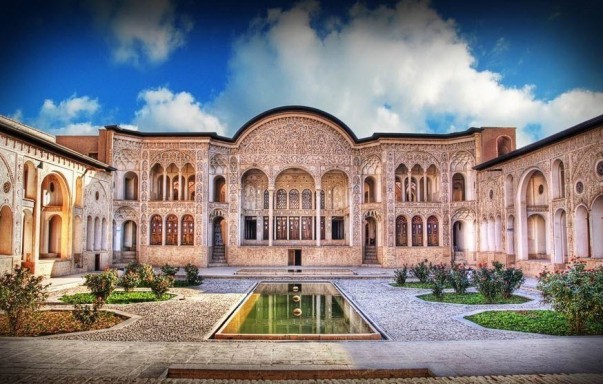
The Italian photographer Massimo Rumi spent a month admiring the breathtaking ancient mosques and bazaars of Iran, taking stunning photographs of Islamic buildings that show how Persian architects used science and mathematics in their works.

According to an IFP report, these breathtaking images show how a photographer explored Iran for one month to understand science and mathematics behind the “divine beauty” of Islamic buildings.
After reading an article on the use of certain conditions and geometries in Persian architecture, Massimo Rumi was fixed on the idea of traveling from his home country Italy to Iran.
He took his trip in November 2016 and only intended that it remain for 10 days, but the travel freedom in Iran and friendliness of the locals, made him decide to stay longer, Daily Mail reported.
During this time, the photographer visited the oldest and most breathtaking mosques and bazaars in the world.
He said, “Iran’s visit has always been to me, not only to admire the incredible mixture of colors and geometric patterns of many Iranian buildings, but to learn more about one of the oldest civilizations in the world.”
“The holy grail of Persian architecture are Isfahan and Shiraz, but everywhere you go you find something that will surprise and amaze you.”
Here are some his wonderful photos of Persian architecture:

Foreign Tourists in Iranian Traditional Medicine Centres


Iran intends to present its traditional medicine to the world by founding specialized health centres.

For a long time, Iran is a health tourism destination for foreign people who wanted to do cosmetic surgeries, or to be treated for refractive disorders, infertility, etc.
Now, Iran wants to present its traditional medicine through the establishment of dedicated health care centers where people can undergo traditional treatments and buy the herbal medicines they need.
“Foreign health tourists sign up where the Iranian patients are doing.You are usually less aware of such a science, some of whom have already heard of Iranian methods of breathing, apitherapy and leech therapy,” said Mohammad Panahi, the general director of the Department of Health Tourism In Iran’s cultural heritage, crafts and tourism organization (ICHTO).
According to a report from the Iranian newspaper “Farsi”, he said: “There should be standards for the supply of medicinal plants, pharmaceutical products and distillates to meet the needs of the customers, we should all try to gain the confidence of the patients, To expand the circle of health tourists who are relying on traditional medicine.
Panahi noted that while some tourists know nothing about Iranian traditional medicine, some others have tried it and are worried about the consequences, so they are looking for a fully certified center. Some tourists go to health centers just to gather information on the subject. The costs are the same for domestic and foreign patients.

The least harmful method
“Not only is the chemical drugs less known among humans, their combinations with each other and their use in amounts more or less than what is prescribed can also be harmful.” The process of traditional treatment takes more time but the herbal medicines in this Method are the least harmful, “Panahi noted
“Medicinal plants are prescribed in traditional medicine in the form of herbal medicinal products, made by new technologies or old medicines, but in any case they are prescribed by a traditional doctor,” he added.
“As people believe that there is no harm in consuming fruits and vegetables, they have confidence in traditional medicine,” added the manager of first Iranian traditional medicine centre.
“75% of patients who go to house doctors do not need medication or can be cured by self-prescribed drugs when they are trained in self-care,” said Mahmoud Khodadoust, the former Iranian Deputy Minister of Health and Medical Education in the Department of Traditional Medicine, during the opening of the province of Alborz traditional medicine center, which is the most prominent in the recovery of health tourists.
He added that Iranians tend to believe in traditional medicine, referring to the existence of 10,000 traditional physicians and 15,000 apothecaries.

Iran to host 306 tour guides in 2017 biggest tourism event


Iran will host 306 tour leaders from 45 countries at the 17th ‘WFTGA Convention: Iran’ which is scheduled for February.
According to Arash Nouraqaei, who heads the Iranian Guild of Tour Leaders, the event will be the biggest of its kind in 2017.

He added that the meeting offers the best opportunity for Iran to introduce its tourism potential at the highest level in the world, because the tourists who attend the event, in fact, tourism ambassador, the embassy of Iran to the world To be conveyed.
In the last 34 years, in which the event showed 16 editions, no high-ranking official visited, while Iran will for the first time host high-ranking officials including Secretary General of the World Tourism Organization Taleb Rifai, the official added.
Earlier, member of the Iranian Association of Tour Guides’ Associations Oveis Kiyani said that international travel leaders from all over the world would travel to Iran to participate in the “17th WFTGA Convention: Iran”.
He encouraged officials from all relevant fields such as construction and administrative co-operation in preparing for the event.

He said that the guests would have the opportunity to get acquainted with the tourist capacities of Iran and then return groups of tourists to Iran to return to their own countries.
WFTGA is a not-for-profit organization that is committed to promoting high standards of education and ethics in the profession.

The event takes place in the northwest city of Zanjan in February 2017 for two weeks, Nouraqaei said.
The WFTGA aims to build contacts with tour guides all over the world, strengthen their professional ties and promote and protect the interests of professional tour guides; To represent professional tourist guides internationally and to improve the quality and reputation of the profession of tourist guides worldwide.

The WFTGA events take place every two years.

40 states invited to ‘Mashhad 2017’ cultural event


More than 250 foreign guests and ambassadors from 40 countries have been invited to take part in ‘Mashhad 2017’ cultural event on January 24, 2017.
Saeed Sarabi, Director General of the Province of Khorasan Razavi, announced that 14 ministers from Islamic countries as well as 20 dignitaries, including former ministers and officials, were invited to the ceremonial ceremony in addition to the mayors of the big cities.
He said about 150 cultural personalities, media managers and directors from different ministries are among the domestic participants.
The official predicts that about 120 Islamic figures will participate in the cultural event.

Mashhad was chosen as the Asian cultural capital of the Islamic world in 2017 by the Islamic educational, scientific and cultural organization on Sunday.

Archeologists after new discoveries from Sassanid Empire at Gorgan Wall


Archeologists after new discoveries from Sassanid Empire at Gorgan Wall

Archaeologists reconstruct the settlement pattern in Castle 2 and thus add another sheet to their knowledge of the Sassanid Empire within the districts of Gorgan Wall.

The Research Institute of the Iranian Cultural Heritage, Crafts and Tourism Organization quoted the head of the joint Iran-Britain team, responsible for the eighth excavation season at Gorgan Wall, Hamid Omrani-Rakavandi, that the excavations aimed at the type of building materials Identify Used in Castle 2 and create its geophysical map.
The archaeologist further said that the main objectives of the team this season were to discover a way to the living room, closet, cooking area, the holes dug in the room for food remnants and the craftsmanship of the inhabitants of the castle And other instruments and instruments that make changes in The next periods, chronological sampling and the determination of the duration of the construction of the castle and later settlements.
According to Omrani-Rakavandi, the eighth excavation phase, due to studies on castles in large and small towns on the southern side of the Gorgan Wall, cleans an illegal ditch of 4mx2m with a depth of six meters on the south-east side of the castle known as Bouraq Tappeh .
He said the measure was taken to define architectural layers and collect samples, including pieces of clayworks, animal bones, coal and other organic materials for laboratory and chronological studies.
The archaeologist pointed out that the excavation team also analyzed geomagnetic data, the aerial images of the castles of the Gorgan Wall, the ancient Gargaz Dam, a series of castles in the city in the southern side of the territory of the Gorgan Wall Survey of the landscape using satellite images to identify a number of extended city castles from prehistoric times to the Islamic period.
It also conducted studies on geological changes and progress of the Caspian sea water and its impact on Gorgan Wall in the western side of the territory.

According to him, the team intends to collect, classify, wash, and study the cultural history (clay work and animal bone).

In the eighth dig, the team of British archaeologists was headed by Wolfram Eberhard Sauer, a faculty member of the University of Edinburgh, Scotland.

Iran’s Mashhad, Capital of Islamic Culture in 2017


The city of Mashhad in northeastern Iran was selected as the Asian capital of Islamic culture in 2017, and preparations are underway to introduce the culture of the holy city into the world.

According to a Farsi report by the IRNA, the Islamic Educational, Scientific and Cultural Organization (ISESCO) each year selects the main cities of Islamic culture in different regions. Iran’s Mashhad was chosen as capital in 2017.
Reza Salehi Amiri, the Iranian Minister of Culture and Islamic Leadership, announced that the preparations for the Islamic culture in Mashhad have officially begun. The ceremony takes place on 24 January in the presence of foreign authorities.
“This is an opportunity to introduce the Razavi culture – the legacy of Imam Reza, the eighth Imam of the Shiites – to the world,” he noted in a meeting with the Iranian leader in Mashhad Ayatollah Ahmad Alamolhoda.
“If the world wants safety, Mashhad is the safest place of the world in 2017. All Muslims can travel to this Iranian city,” he added.
“We have invited the leaders of the various Islamic sects to Mashhad for communication, interaction and unification,” he added, adding that the event in Iran will be presented with a focus on Mashhad.
He went on to say that festivals, conferences and ceremonies were to be held. The logo of Mashhad 2017 will be shown during interim games. Plus, boards at the entrance of the cities and venues will inform the people of the Islamic Culture Capital event.
“This year, we should try to attract tourists from all over the world to Mashhad,” Salehi Amiri noted, “And to make the event propitious for the people of Mashhad.”
He referred to the revival of the ancient Khorasan school among the aims of this event, saying that Iranians should find a new Islamic civilization on this geographic, historical point, as there has been no new civilization after the Safavid dynasty.

[ad_1]

Full charter flight to cultural ambassadors devotes


In accordance with the tourist guide convention, which can be mentioned as one of the most important tourist events, there was a concern about the support of airlines for the routes from Tehran to Shiraz and Shiraz to Yazd. Finally, one of the airlines won full charter flight to cultural ambassadors.
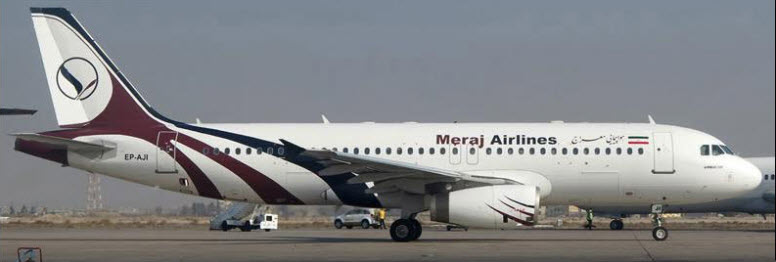
During the last week several meetings were held between the airlines and the Congress Secretariat. Finally, on 2 January a Memorandum of Understanding was signed between IFTGA and Meraj Airline to conduct flights for the 17th World Convention of Tour Guides.
According to this memorandum of understanding, an airbus 300-600 for full charter flight was devoted to cultural ambassadors of more than 40 countries.

[ad_2]

Iran Air takes delivery of first Airbus aircraft following historic deal
Iran Air has taken over its first new aircraft, an A321, in a surrender ceremony in Toulouse with Farhad Parvaresh, Iran Air Chairman and Airbus Commercial Aircraft President Fabrice Bregier.
The delivery is the first of a fixed order from Iran Air in December 2016 for 100 Airbus aircraft (46 single-speed and 54 wide-angle jets) to renew and expand their fleet.
“This significant milestone marks the first practical step in Iran’s ambitious passenger aircraft fleet renewal and its stronger presence in international civil aviation.
“Iranische Reisende können mit unserer Auswahl der weltweit modernsten Single-Aisle-Flugzeuge stolz sein”, sagte Parvaresh.
“Iran Air is delighted about this first Airbus delivery and congratulates all those who have made it possible.
“Today signals that with international cooperation and cooperation, we can achieve mutually beneficial commercial goals.”

Iran is expected to modernize some 400 to 500 new airplanes and expand its existing passenger fleet in order to catch up the demand for demand both at home and abroad.
The latest generation of fuel-efficient aircraft also allows new routes and markets to be used

The delivery corresponds to all relevant international laws.

Airbus closely co-ordinated with regulatory authorities in the EU, the US and elsewhere to understand and fully comply with the common approach, better known as Iran nuclear business.

“Today is an important occasion, and I congratulate Iran Air on the takeover of the first new aircraft in many years.

“As we are carrying out these initial steps together, we are ready to support the development and modernization of Iran Air,” Bregier said.

“In a country of 80 million people, it is clear that the latest passenger aircraft must meet both domestic and international demand.”

[ad_2]