
One of the most important monuments of Safavid era is Chehel Sotoun or Kolah Farangi edifice in Qazvin located in the middle of a large garden and it is one of the remaining royal palaces of the Shah Tahmasp era.

The building was known as Kolah Farangi (when Qazvin was the capital) in the Safavid dynasty. This edifice was rebuilt by Mohammad Bagher Sad al-Saltane, the governor of Qazvin in Qajar period and it was named Chehel Sotoun in that time.
Kolah Farangi edifice and Ali Qapu entrance gate are the only remained buildings from the Safavid era in Qazvin that is built by the use of a Turk architect’s map in an octagonal building in two floors.

The building has halls and small rooms on each floor made too small in a plaid way and have very elegant and beautiful wooden windows. A porch with brick columns and semicircular arches covers the building and a porch with wooden pillars has been built on top of it. The building map includes the crusader designs and the roof of the first floor has been covered with some innovative stalactite designs and the other roof decorated with Iranian architectural designs.

Wall paintings on the first floor are samples of Qazvin painting school with a global reputation. The walls, which are decorated with murals are unique in its kind and three layers of murals on these walls show different historical periods. Now, as the calligraphy museum of Qazvin, this building is a place to keep the precious works such as calligraphies, old books and etc.
Shiraz is known as the city of poetry, passion and love; it’s like an old quilt composed of pieces with various patterns and designs. Shiraz’s is a journey to innumerable attractions visiting all of which takes days. Persepolis, Naqsh-e Rustam, gardens such as Delgosha, Afifabad, Narenjestan-e Ghavam and Eram, Hafiz and Saadi’s tombs, Citadel of Karim Khan, Nasir-ul Molk Mosque and Vakil Mosque and Bathhouse are only a few of the attractions of this beautiful city. Vakil Bazaar, however, is the beating heart of this city, its main economic center. It has been said that when Karim Khan Zand– the just king of the Zand Dynasty who was Vakil-al Ra’aya (Deputy of the People) observes the Gheysaryieh Bazaar of Lar City, he decides to build a similar bazaar in the heart of Shiraz, capital of Iran at the time, hence the name of the beautiful Vakil Bazaar. Situated at the center of the city, the bazaar still accommodates some part of the city’s business activities and its corridors and galleries are still bustling with buyers and sellers.
The scent of spices, colors of textiles, and the magical patterns of carpets and rugs in the bazaar take you back to the past. Walking around the corridors and galleries of the bazaar is a pleasing excursion. You can close your eyes and be enraptured with the music and delightful ambiance of this old bazaar.
Vakil Bazaar is one of the most charming bazaars of Iran made of an intersection with a domed arch and four bazaars perpendicular to each other. The bazaars of drapers, wholesalers, saddlers, and silk sellers make up the main sections of Vakil Bazaar. The corridors of this bazaar are made of three parts: a passageway for customers, the frontage of the shop which is generally two steps above the ground and the shop itself as the selling space. The materials used in constructing the bazaar include plaster, brick and lime and some of the arches are embellished with medallion designs. In addition, several caravanserais such as Roghani, Ahmadi and Gomork were built later and added to Vakil Bazaar complex. Don’t miss Shiraz’s springtime afternoons; walking the streets and gardens of Shiraz at sunset and when the fragrance of bitter oranges fill the air will the best moments of your trip to the city of poetry and passion. Working hours of the bazaar are between 9 AM and 5 PM, but in Spring it is usually open until midnight. You may buy some of your souvenirs and mementos from this bazaar: masghati, various distillates, lime juice and Yukhe sweets are some of Shiraz’s souvenirs. While in the bazaar, don’t forget to eat Shiraz’s fallodeh with lime juice and sour cherry juice. There is also an old restaurant by the bazaar where you may try local Shirazi cuisine including Kalam Polo (Rice and Cabbage) with Shirazi Salad, Aloolapolo (Plum-in-rice) and Dopiazeh aloo (Potatoes and onions).
Diversity of designs and exclusive architectural styles in Persian gardens symbolizes the image of Eden with four Zoroastrian elements of sky, earth, water and plants. Persian garden with three certain features and an exclusive design is globally well-known as outstanding example of Persian culture: (1) located along the water stream; (2) surrounded by high walls; and (3) contained a summer edifice and a pool of water.
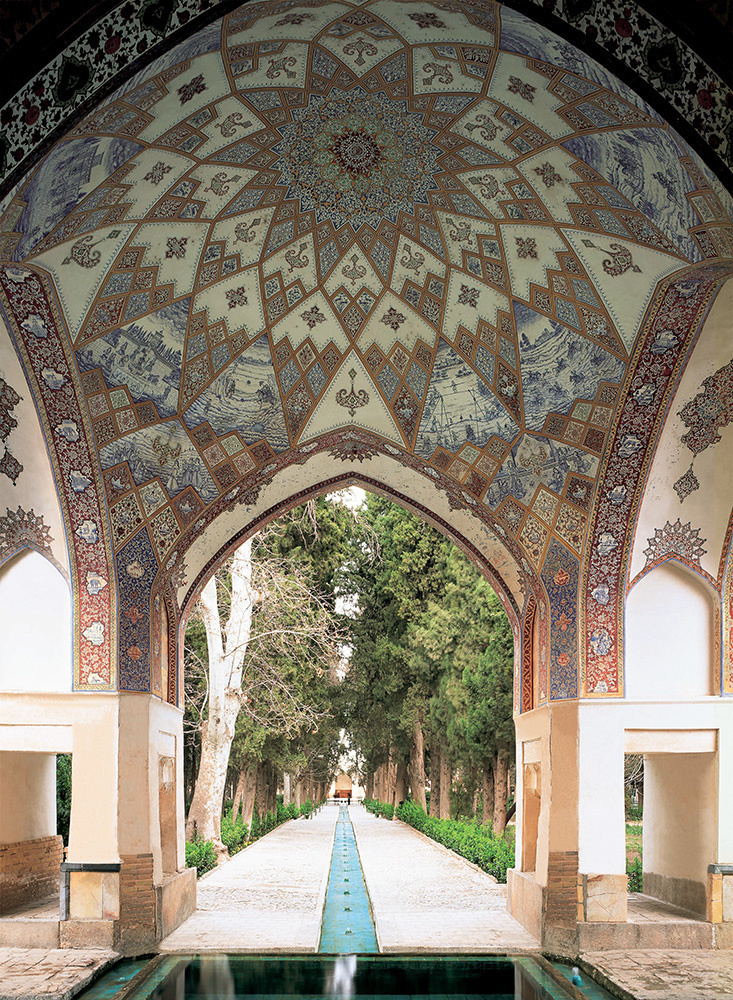
Nine Persian garden registered in UNESCO include: Pasargade garden in Shiraz as the mother of Persian gardens, built in 6th century BC, and related to Cyrus the great; Eram garden of Shiraz , built in Seljuk era with a Qajar edifice; Chehel Sotun garden of Isfahan, The royal garden, Safavid period; Fin garden of Kashan, Safavid era; Mahan garden of Kerman, late Qajar era; Akbarieh garden of Birjand , late Zandieh and early Qajar era; Dolat Abad garden of Yazd, late Afsharid dynasty; Pahlevan pour garden of Mehriz, late Qajar dynasty; Abbas Abad garden, Safavid era.
Vakil bath is the most famous Bath in Shiraz which is one of the Karim Khan Zand monuments built by his order in the Shah Square neighborhood, next to the Vakil Mosque and its infrastructure is about 8660 meters, 120 meters long and 80 meters wide, in 1187 AH.
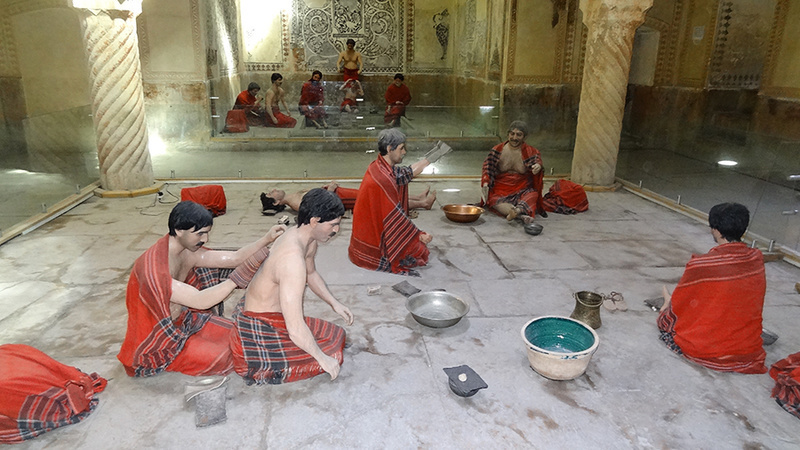
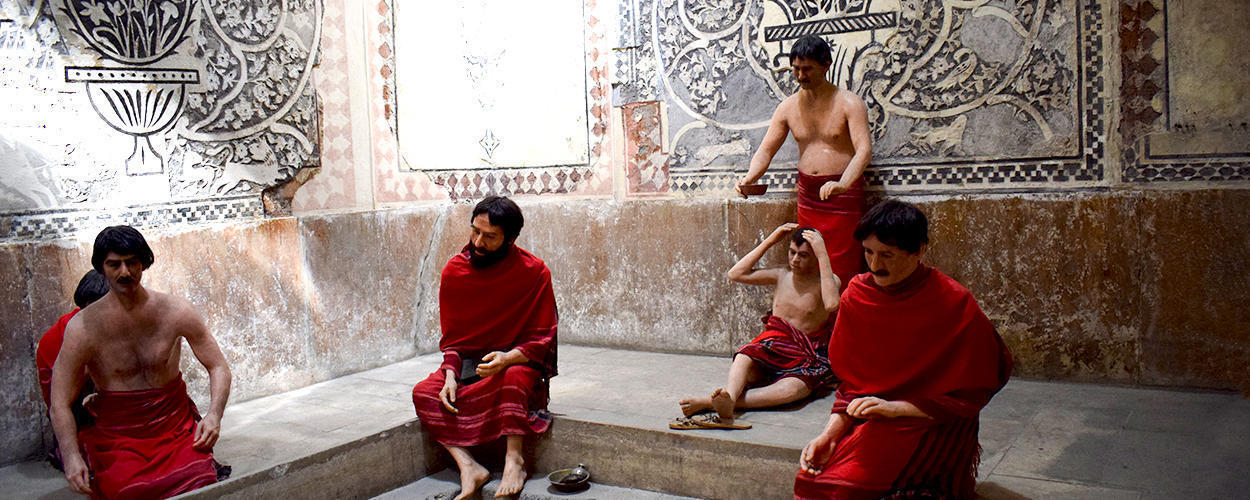
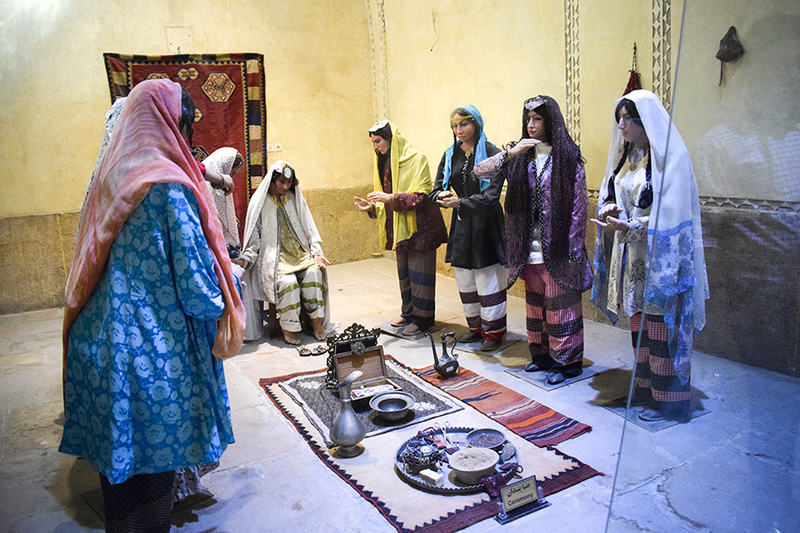
This large bathroom has the most advanced principles of Zand’s architecture. One of the interesting parts in this bathroom is a special place named “Shahneshin” that was special to Kings.
The other space of bathroom includes a cloakroom, a warm home and Khazine (a place for collecting the water). (Sarbine) cloakroom with colored octagon shape and eight columns, keeps the ceiling dome of this bathroom.
The lime designs which attract the viewer are the symbol of the prophet, Imam Ali (peace be upon him) and Zolfaqar, Shirin and Farhad’s visit, Bijan and Manijeh’s visit painted on the roof.
Vakil Bath has been repurposed as a restaurant and later as the museum of ethnography to identify the culture and traditions of people in Shiraz.
As one travels to Shiraz during the spring, where the air is permeated with the scent of orange blossoms, they can look more closely into the source of inspiration for a lot of great Iranian poets who inhabited the region, the likes of Hafez and Saadi. Although it’s quite hot and the weather condition is utterly extreme in the area, Shiraz is replete with marvellous gardens, beautifully designed through centuries, Jahan-nama, Delgosha, Afif-abad and Eram gardens are just a few to mention.
Bagh-e-Eram, literally translates to Paradise Garden, is one of the nine UNESCO inscribed cultural heritage sites as Iran’s Persian Gardens. Due to the torrid climate conditions in Iran, these Gardens are the result of an inspired intelligence which has been able to make the most of different fields of knowledge, including water management, engineering, architecture, botany and agriculture. All the more, the idea of the Persian Gardens, as an earthly paradise, colours the Iranian common and artistic expressions within various fields, such as literature, music, poetry, calligraphy and carpet design, which, in turn, have aesthetically inspired the arrangement of the Gardens.
Eram Garden is located in the north of Shiraz on the northern shore of Khoshk River. Date of its foundation is not clear, but it was certainly developed during Seljuqi period, and was further established during Zand period in the 18th century. It was, then, sold to one of the chiefs of a Qashqai tribe, who built the original mansion and ordered the plantation of different species of flora and trees. During Qajar period it was sold to Nasir-ol-molk, who founded the present pavilion, which was eventually finished by his son after his death. Currently, the garden and the building are within Shiraz botanical garden, protected by Iran’s Cultural Heritage Organization, and open to public as a historical landscape.
Similar to other Persian Gardens, Eram Garden was designed in four sections with precise geometrically proportionate measurements, in order to provide the irrigation and other necessary conditions, namely shadow areas for specific plants, to be able to grow this diverse range of vegetation, consisting of variety of roses, tulips and puppies, fruit trees such as pomegranate, quince, apple and pear, evergreen trees, pines and quite remarkable among all, the tallest cypress in Shiraz, known as Sarv-e-Naz. At present the previously mentioned pavilion is in the centre of the garden, an example of early Qajar architecture, a three-storey building with a basement within which a narrow flow of water used to make the summer afternoons less unbearable. On the second floor there is a veranda supported by two tall pillars of the Achaemenid architecture style and two rooms on each side, all looking directly over the beautifully paved pathway with towering trees on both sides. The face of the building contains different sorts of tiling, among which the three crescent shaped inscriptions and paintings on the top are of great significance.
Shah Cheragh is a famous holy shrine of Imam Mousa Kazem’s (7th Shia Imam) son, Mir Seyed Ahmad, who is the brother of Imam Reza (peace be upon him), many Shias go to Shiraz for pilgrimage this place and it is one of the most significant sights of this city.
The first building of Shah Cheragh holy shrine antiquity dated back to Azdodole Deilami who was one of the Ale Boye kings and the new buildings repaired and linked to the main courtyard was established in Fars Atabakan, Shah Ismaeil Safavi and Nader Shah Afshar periods. Two main gates are in south and north of holy shrine decorated by 2 big tiled entrances and linked to the vast courtyard of the shrine. The Shah Cheragh holy shrine is located in the west of the courtyard and his brother’s shrine is located in the northeastern of this place.
The beauty of this building is increased by use of small colored mirrors, tiling, Persian and Arabic hand-writings in the shrine. There are some rooms decorated with mosaic tiling around the yard. Iron columns of the shrine decorated with exquisite wood, a large integrated flat roof inlaid with wood and marble pulpit sculpted are the other beauties of this building.
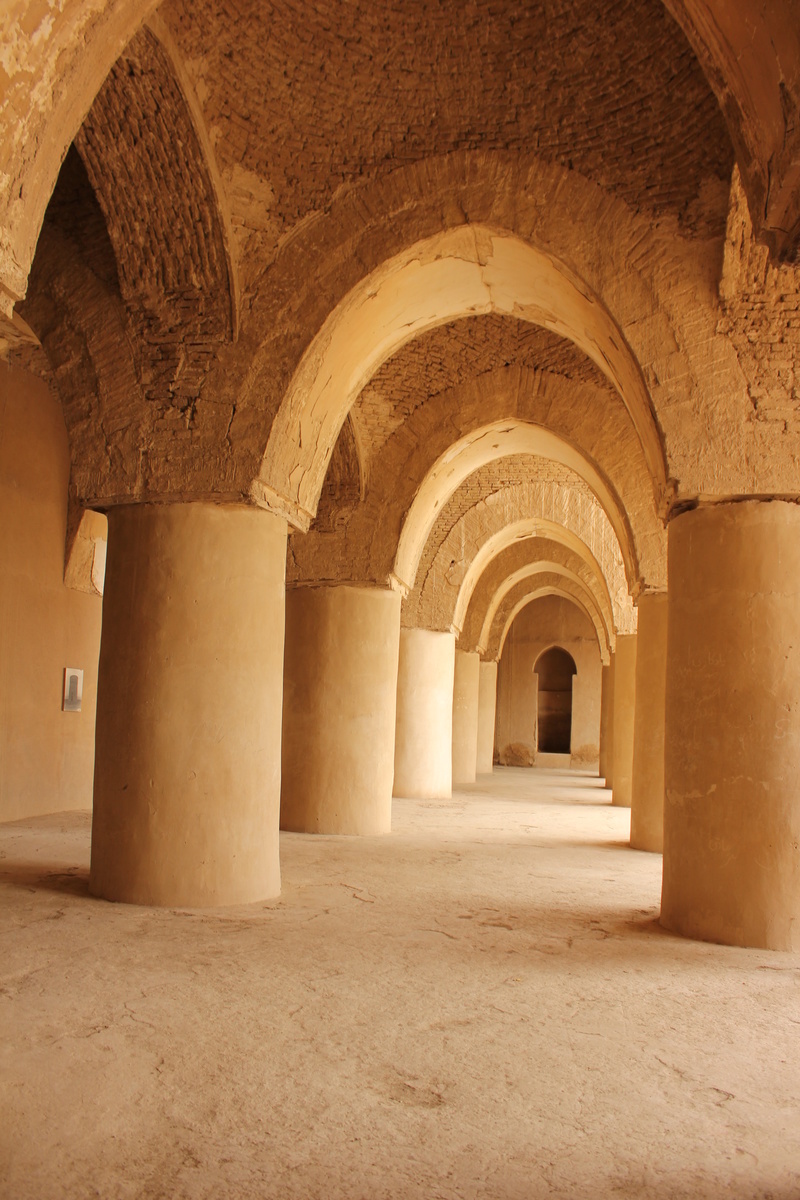
Tarikhane (means God’s house, the house of God) is one of the Damghan heritages, before the domination of Arabs in Iran, which initially was a fire temple and then turned into a mosque over the centuries and has been repeatedly repaired.
The Damghan Tarikhane Mosque is one of the oldest and the first mosques of Iran, where a minaret was built for that. Its new building is related to the second century and the building style of the Sassanid era. The building plan is based on columned bed-chamber and its basic design is based on the central courtyard style. There is an almost large square courtyard with 22 porches with the cross arches on circular columns around the yard which is opened in the main central yard.
The brick minaret with 25 meters height was added to this building during the Seljuk reign in 420 AD. Its body has very beautiful bricked decorated in Seljuk style. The mosque minarets width is about 6.5 square meters and its circumference is about 13 meters at the bottom gradually reduced and reached to 6.8 meters at the top of it.

Arg-e Kolah Farangi is a historical monument of Birjand that is now the place of governorship in South Khorasan Province. Attributed to Amir Hassan Khan Sheibani, the building once belonged to Amir Alam, who donated it to the governor of Birjand.
This building belongs to the late Zand and the early Qajar eras and is known under different names, including Arg Hesam al-Dole, Bibi Arus Castle and Arg-e-Sarkar.
This monument is generally different from other buildings of the city in terms of architectural design.The Arg’s architecture is hexagonal and ends in a mesmerizingly beautiful white, cone-shaped at the top.
Built in a Ziggurat style, the building has six floors. The ground floor features the best architectural plan of all. The Arg’s entrance, built ahead of the ground floor, features a few beautiful arches.
Two floors of the building are large and usable, while the other floors were designed to supplement the exterior facade, which is decorated magnificent architectural ornaments with mud, brick, lime and mortar on the dome of howz space. According to older documents, the courtyard and the garden were originally in Chaharbagh style, later losing their original design after a series of modifications.
Qanat is a symbol of civilization, tradition and culture in desert regions with arid climate and an outstanding example of using architectural complicated systems in Iran. In fact, Qanat is a tunnel-like channel underground which collects water from a main water source naming “mother well” in order to conduct water along tunnels and finally enable settlement and agriculture. The place where the water of Qanat exits from the surface is named Mazhar.
There are Eleven Persian Qanats which represent the rest areas for workers, water reservoirs, and watermills; they are located in six provinces and have been registered as the twentieth cultural heritage of Iran, due to their unique technology, antiquity, architectural style, length and other characteristics:
Qasabeh Qanat in Gonabad city, Khorasan Razavi province: The oldest and deepest Qanat in Iran dated back to Achaemenid era.
Zarch Qanat in Yazd city, Yazd province: The longest Qanat in Iran with 100 km length, dated back to 2-3 thousand years ago.
Hasan Abad Qanat in Mehriz city, Yazd province: With 700 years history (8th century AH) in Pahlavanpour garden and next to Mirza Nasr Allah mill.
Moon Qanat in Ardestan city, Isfahan province: The only double-deck Qanat in the world and the most surprising Qanat in Iran established about 800 years ago.
Baladeh Qanat in Ferdows city, South Khorasan province: Related to Sassanid era irrigating huge parts of agricultural lands.
Vazvan Qanat in Vazvan city, Isfahan province: With 2500 to 3000 years history and Mozd Abad Qanat in Meymeh city, Isfahan province with underground dams as the most important characteristic.
Akbar Abad and Qasem Abad Qanat in Baravat, Bam county, Kerman province: the twin Qanats full of water, with more than 100 years history, supplying the water of agricultural lands in the region.
Goharriz Qanat in Jupar city, Kerman province: dated back to Safavid period about 750 years ago.
Ebrahim Abad Qanat in Arak city, Markazi province: related to 800 years ago (6th and 7th century AH).