The oldest wedding ring

Getting the wedding ring is one of the oldest and most universal traditions.This is a very old tradition.
In fact, nobody can tell the right time about it.But the use of it, in the form of a “ring”, as the mark of perfection and its relationship with two people’s intercourse, was a sign of the perfection of human life.
According to some evidence, the first people who used the marriage ring in history were Egyptians.
In the hieroglyphic writings of Egyptian portraiture, the ring was the symbol of eternity.
The marriage ring in the finger of couples has been a kind of marital covenant that has been permanent and eternal and after the Egyptian people, Christians began to use it.

Declaring love and commitment to people through the ring had existed from years ago. As the pop star, Beyonce also pointed out in one of his songs about the use of it by men.
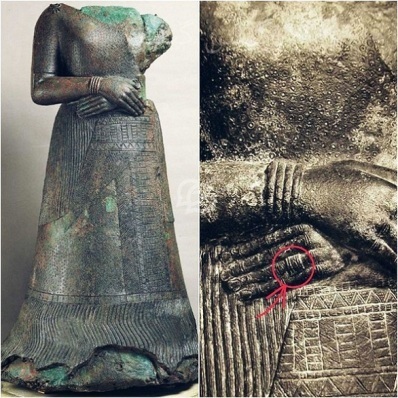
But according to the latest available documents, the world’s first marriage ring, back to 3260 years ago, belongs to the king of Ilam, Iran, Queen Napriasu, the wife of OnutasNaprisha!
So proudly, the marriage ring is about Iran!

The statue of Napir Asu is one of the remains of the Elamite civilization.The Queen of Napierasu was the wife of Untas Neapirisha, king of Elam.It dates back to 1250 BC.
The statue, made with a layer of copper and gold on a bronze molding, is about 130 cm high, 70 cm wide and 1750 kg Weight.

“This sculpture is the largest metalwork of the  East ancient, which is not even seen in Egypt, Babylon, and Anatolia.
This statue is not only an art piece but also a culmination in the art of bronze casting, which shows the presence of super-skilled craftsmen in the land of Elam.This statue is a very important art-work  dedicate the commemorating and honoring the Elamite emblem and in fact, show the value and credibility of the woman in the ancient Eilami civilization.”

The name of the Queen and the great gods of Susa carved into Elamite cuneiform on the boundary skirt of this statue.
There is a ring on the left hand, which is her wedding ring probably.
The statue of Napier  stores in the Louvre Museum.


An innovative approach in music tourism

Music, as the manifestation of human’s emotion is present in all aspects of his life; wedding, funeral, feast, work and war, therefore it best represents the culture of a society. Music as the common language of human beings binds people all over the world together in spite of their difference in mother tongues, cultures and ways of living. Travelling to a destination, one finds watching and even participating in musical performances among the most attracting activities to be engaged in. This is most fascinating when the music is representing the local culture, local games, old professions and accent of that specific region.

music tourism

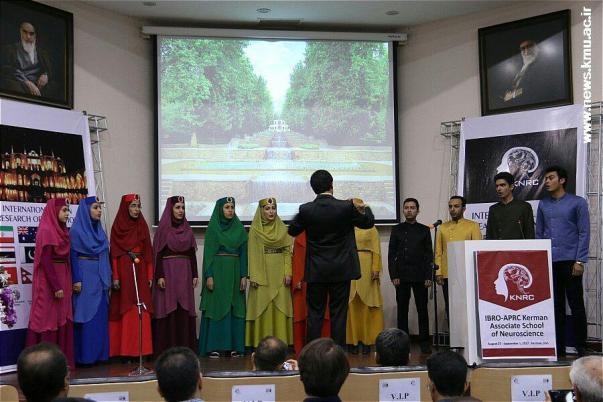
 Nasl-e-mehr Institute of Kerman having sixteen years’ experience in the artistic-cultural projects of music has developed styles to perform music in museums and historical places as well as the innovative designs of programmatic music, especially vocal music, which are peculiar to the same place in which they are performed and to music tourism and expresses the identity and culture of that region and historical place. Actually, the music styles devised by Nasl-e- Mehr institute enjoys the use of monuments in performing them so that the structure of that monument contributes to the acoustic aesthetics of the performance (performances in Moayyedi ice house of Kerman are carried out without use of Microphone, the circular and conical structure of the building allows the audience to hear the voice of performers) and the ancient atmosphere inspires the singers and performers in executing that program since the songs and movements of the related performances are themselves part of that antiquity to which the monument belongs. In other words, the atmosphere of the historical location reinforces the enthusiasm of the singers and performers. To capture the styles more fully, a brief explanation of each follows.

Musiceum
This style is a combination of vocal music of a cappella (music without instrumental accompaniment) and the use of museum space; in such a way that the museum will become live in and historical currents will be implemented with relevant scenarios. These currents are performed as either vocal or instrumental music and pulls the audience into it; that is, the audience moves in a direction and follows the stream of music which is the narrator of events in the museum and it itself is part of the events and ceremonies of that program. These programs have been held in the museums of Ganjali Khan Bathroom and Harandi music museum of Kerman at special nights and historical occasions and have surprised participants. Undoubtedly, there are few examples of this kind of programmatic music in the world and it is unique in its own way.

Nowruzgah
The rationale behind this style is to present the ceremonies of the last Wednesday of the year, the ceremonies before New Year and their customs through music performance, and to introduce the genuine Kerman foods in these programs. In this style more than 25 local games of Iran and Kerman were revived as a polyphonic choral acapella performed through the voice of children and adolescents and were registered in the list of the Iranian anthropology center.

music tourism-kerman

Actapella (act + a cappella)
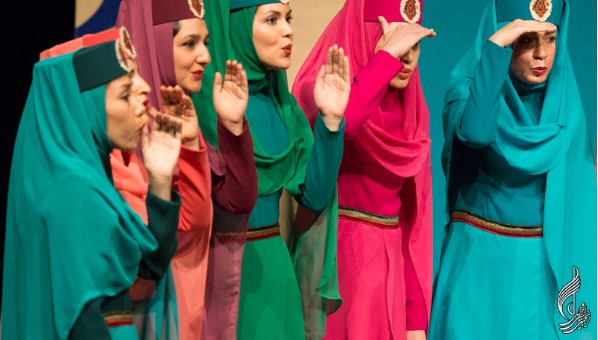
Actappella is a combination of the music of a cappella (without instrumental accompaniment) and action; an example of this is the performance of uprising of the shawl weavers acapella, the program was performed for 17 nights and faced an unrivaled welcome and was able to attract more than 3000 audiences. In this program a cultural current related to 250 years ago which was based on the silk industry and shawl weaving was performed in the language of music and motion (the uprising of shawl weavers occurred during Qajar dynasty in Kerman due to the poor life condition of weavers. Although shawl was an expensive and luxurious merchandise since made of silk, its weavers lived in adversity. This rise is said to have been the starting point of constitutionalism movement in Iran).

Voice work and behavior work
It is the production and performance of the steps of forgotten old jobs in the language of vocal along with their collective and related motions. In this style which is a choral a cappella each voice group plays its role and the sum of those songs and movements represent that profession.
Choir rock
This new style is built on two music methods of polyphonic a cappella choral and rock music which performs choral quartet parts accompanied with rock structure and wording. This kind of music consists of religious and local choral vocal parts some of which are performed with a specific dialect and in a special and energetic way. Basically, these two genres of music are fundamentally different, but the difference is undeniably attractive when combined.

Trash melody
Producing and performing music with waste items and garages to make people alert about less trash production and not using plastic packs was carried out in Kerman by Nasl-e-mehr institute in cooperation with Municipality and had an excellent feedback at national and international assemblies and had been displayed in various internal and external networks.
Nekooei festival and local tour
New experiences in vocal tours around the world is always attractive and informative for choral groups and singers. We have provided this opportunity for vocal groups in an appealing and spectacular place in Iran, Kerman. This event will be performed in Kerman with the participation of Iranian groups and groups from around the world. This festival and vocal tour is designed for Iranian and foreign groups to perform music in Kerman tourism places and has begun its national and international movement in the competitive, non-competitive and music video production sectors. This musical event can annually attract more than 10,000 Iranian and foreign tourists to Kerman and in return these vocal groups will produce their music video clips in Kerman historical places.
The main parts of this event are:
1. Non-competitive part
2. Competitive part
3. Tourism and recreational events
Kerman is an ancient city with a several-thousand-year-old history and cultural and artistic extraordinary attractions and special customs which will be attractive for Iranian and foreign tourists. For example: The Kalut (one of the most famous and specific deserts in the world), Meymand (the hand-carved and several-year-old village), the Ganjalikhan bazaar (400 years old), the citadel in Bam (2000 years old), the Shahzade garden in Mahan and… attract thousands of tourists every year.
Conducting master classes and specialized workshops by specialist tourists in Kerman
Conducting this masterclass and workshops in Kerman performed by Marcus Dieter Beck, the assistant director of the Choir Department in Europe, and Jan Schumacher, one of Europe’s well-known choir leaders, is the beginning of cooperation in attracting Iranian and foreign tourists to Kerman.

What are the problems of Muslim tourists?

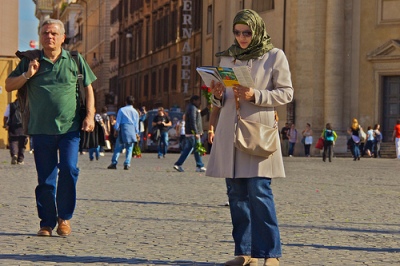
Fear of misconduct, misconceptions and inappropriate behaviors of other people will always create stress for Muslim tourists.During the journey, Muslim tourists must always wait for some of the problems and concerns that may occur to them.

Nowadays, with the expansion of social networks and media, Muslims are more and more exposed than ever.There are a lot of differences in the news and the dealings with them.
Conflict of thought and culture, especially in European and American societies with Muslims, has created different and almost negative opinions and opinions about them around the world.The issue that has been spoken today, are Muslim tourists.

Like other tourists, Muslims are also interested in traveling,experience new things and communicate with different tribes and cultures.Despite the current stressful life, traveling is the right of all human beings.But Muslims face more problems than other tourists.

Anxiety and stress are the main concerns of every Muslim tourist.There have been many reports of mistreatment of Muslims in different countries.Many people express their hatred towards Islam in their dealings with Muslims”Nonetheless, there are people who are well and completely affectionate with Muslim tourists”.

Traveling with airlines is one of the main problems of Muslims.
Because of security issues, the Muslims are treated more severely than other tourists.Airlines usually provide all the comfort of the flight and excellent facilities for passengers, But they never seek to provide peace of mind to travelers.Mental relaxation in air travel is one of the main concerns of any Muslim.Because they are subject to a lot of security inspections and stress is created for them.
Usually, packages of Quran, Sajda(The carpet for saying pray), Mohr(Special stone for prayer), and religious books in Arabic are also suspected for airport security officers.

These stresses are so pressing on Muslim tourists that, even if they can not book tickets because of systemic errors, they think the problem is related to being Muslim.Checking Muslim tourist documents at airports is generally longer than any other tourist, and this can be repeated several times.Also, traveling to the Middle East will bring a lot of trouble for them, and many security questions will probably be there.

Families of Muslim tourists will be under stress and anxiety.Because these people are always afraid of security issues.
Other Muslim troubles tourists are the telephone conversations because saying hello in Arabic can create a tumultuous atmosphere among the people around them and lead to repression and mistreatment.

The reservation of the hotel is another concern of Muslim tourists Because there is a lot of racism and discrimination for these tourists.Today, some companies(AirBnB & Home Away) have diminished this kind of racism and  Muslim tourists can do the hotel booking with less trouble.

Another Muslim problem is the saying of daily prayers.Usually, Muslim tourists can hardly find a mosque to read their prayers,
due to the wrong reactions of the people, they can not worship in public places or in the street.For this reason, most of them use the Fitting room in shops to say their prayers.

Another Muslim problem is the lack of halal foods.For this reason, most Muslim tourists seek destinations that have halal shops and restaurants in determining their destination.Or they try to be herbivorous during their trip.

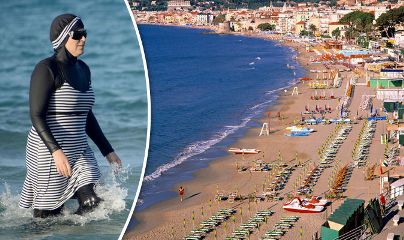
Some recreational activities are also not suitable for Muslims.Muslim women can not use recreational facilities such as seas, like other travelers.

Choosing the best time to travel is another problem for Muslim tourists.During Ramadan, traveling to other countries is a religious problem for them, or because of some festivals that conflict with the religion of Islam, they generally try to postpone their travel time.

Muslim tourists should check everything that may be problematic for them before traveling and select a destination that has the least trouble for them.


The most historic monuments of Iran
If Iran’s history is divided into three part,  prehistoric periods, ancient Iran and Islamic period.The temples of Choghazenbil, Persepolis and Jame Mosque of Isfahan are the best of the architecture of this era.


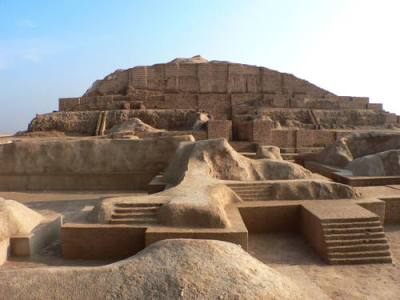
Chogha Zanbil

Dur Untash or Chogha Zanbil an ancient Elamite temple in the Khuzestan province south of Iran. It is one of the few ziggurats outside of Mesopotamia. It is about 30 km south-east of Susa and 80 km north of Ahvaz.In 1979, this structure was the first Iranian monument to be listed on the UNESCO World Heritage List.
The ancient city of D?r Untash or the historic site of Choghaznbil in the 13th century BC was built by “Ontas Nepirisha”, the king of Ilam.
The “ziggurat” is an Akkadian name used in Mesopotamia and Ilam for temporal temples.
The Chogha Zanbil ziggurat has a square shape with a length of about 105 meters.This building is made entirely of bricks and mud and sometimes baked bricks.The temple was built on seven floors, which now has 5 floors.The monuments were decorated with glazed bricks, gypsum, and ornaments of faience and glass.
Thousands of baked bricks bearing inscriptions with Elamite cuneiform characters were hand-engraved.Glazed terracotta statues such as bulls and winged griffins guarded the entrances to the ziggurat.
Orientalists consider this building the first religious building in Iran.


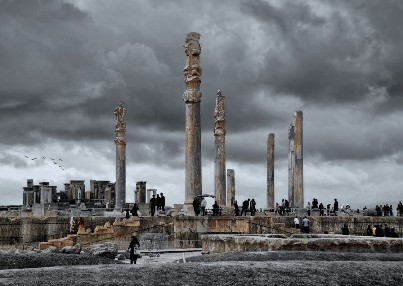
Persepolis

Takht-e-Jamshid or Persepolis the capital of Achaemenid Empire(550–330 BC) is located 80 Km from Shiraz city in Fars province.It exemplifies the Achaemenid style of architecture. UNESCO declared the ruins of Persepolis a World Heritage Site in 1979.In 518 BCE, the construction of Persepolis began as the new capital of the Achaemenids in Pars.The founder of Persepolis was great Darius, after whom his son Xerxes and his grandson, Ardeshir I, expanded to expand it.Historians believe that Alexander the Great, Macedonian commander in the 330 BC, invaded Iran and set fire to Persepolis.The Sassanid kings also have inscriptions on Persepolis at Tacher Palace.After the entrance of Islam to Iran, they also considered this place worthy of a thousand pillars or forty minars, and linked them with characters such as Suleiman Nabi and Jamshid.
Another historical monument related to the Achaemenid is Naghsh-e-Rostam.These Achaemenid temples are located 6 km from Persepolis.The Naghsh-e-Rostam includes the shrines of the kingdoms like Darius the Great / Xerxes / Ardeshir I and Darius II.


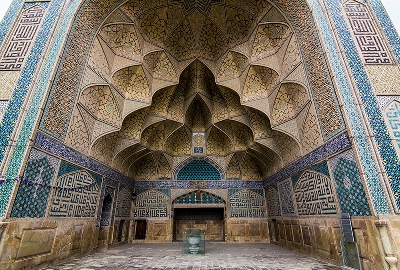
Jameh Mosque of Isfahan

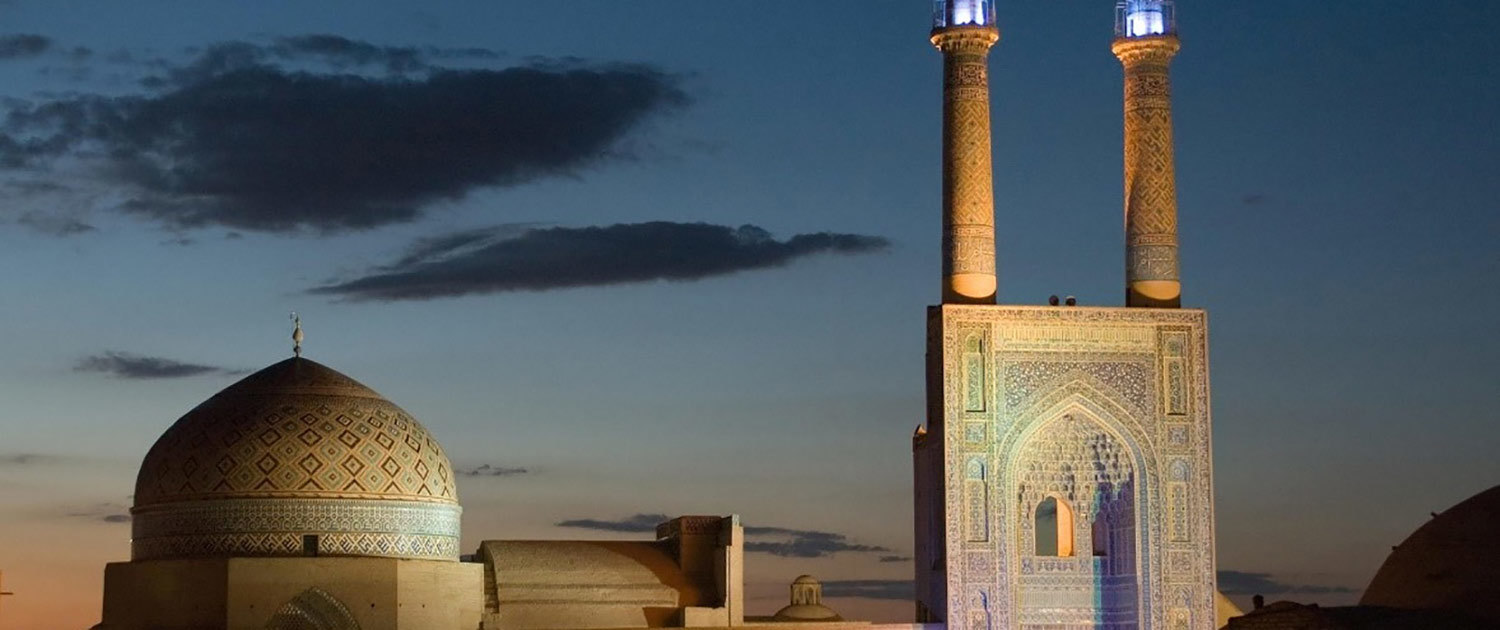
This mosque is one of the most important and oldest religious buildings in Iran.The Mosque of Isfahan is a reflection of Byzantine and classical art in the form of a traditional Islamic building.This mosque is a complete collection of Iranian architecture from the early Islamic centuries to the Safavid era.This mosque is a collection of the best of Iranian architecture that includes the most beautiful tile, the most beautiful Minbar and the most magnificent altar.The mosque has 4 Ivans and 8 entrances, each of them has been constructed in different periods of history.The four porch of the mosque identifies the method of Iranian mosques, which has become popular in other mosques after its construction.The entrances around the mosque indicate the extensive connection of the mosque with the old urban fabric.

It is one of the oldest mosques still standing in Iran, and it was built in the architectural style of four-iwan, placing four doors face to face. An iwan is an open vaulted room. The qibla iwan on the south side of the mosque was vaulted with muqarnas in the 13th century.


CONGREGATIONAL  MOSQUE  (MASJED  JAME)

masjed_jame_hamedan

In Islamic countries there is a congregational mosque in every city. In fact, the most important mosque in any city is called the Jame Mosque. Friday preaching or prayer is recommended to the Shiites and community mosques in cities are used for the Friday preachers. Large areas were allocated in the large cities.
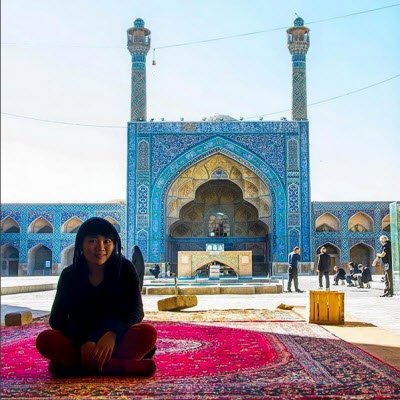
Masjede Jame in Isfahan is the most notable mosque in Isfahan. It is an encyclopedia of Iranian and Islamic art and architecture. Step by step development of Iranian art and architecture can be seen in this complex. It takes at least half a day to visit different parts of it. The complex shows different structures from different centuries, which date back to the 10th century to the 18th century.
The oldest part was built on a Sassanid fire temple, which belonged to the Zoroastrians. The first part of the mosque dates back to the 8th century. The second mosque or part belonged to 1030.
During the Buyid Dynasty in 908-932 one of the oldest parts was built. In Buyid, a court of several prayer halls was built. In later centuries changed in the mosque.
Saheb Ibn Ebad was a learned minister of the Buyid dynasty who lived in Isfahan and played a major role in the development of Isfahan. The Seljuk Dynasty extended the mosque in the 11th century.
The jame mosque shows specifications of Iranian mosques. It has a courtyard and there are four large Eivan (Grand Arches). It has one of the largest courtyards in Iran.
Four Eivans are connected by two storey arcades. Eivans are from the 15th to 17th century. These arcades are decorated with tiles. Some of these tiles are glazed and some are inlaced. There are two marble pools in the courtyard. One of these basins is covered by a structure that reminded Saint Kabeh of Mecca. Muslims were able to practice the Hajj rites before they traveled to Mecca.

View Masjede Jame


THE  SOUTHERN  EIVANS

This Eivan is known as Soffe Saheb Ibn Ebad. The present Eivan dates back to Seljuk period. There are two beautiful minarets on the top of Eivan, which are 35 meters high, and belong to Aq- Qunlu era.
Interior and exterior parts of Eivan are beautifully decorated with tiles and tile mosaics. The inscription comes from the Safavid dynasty. On the back of this Eivan there is a wonderful sanctuary called “Nezam Al Molk” dome.
Nezam Al Molk was a popular vizier of the Seljuk dynasty. This dome was built in 1030. The dome reminds us of Sassanid architecture.
There is fantastic calligraphy in Kufic script, which dates from the 11th century around the dome. The name of Nezam Al Molk can be seen in the calligraphy. The dome is one of the most glorious domes of Iranian mosques.
The base of the dome is in a rectangular shape, which is transformed into a circular dome. This is a pre-Islamic technique, but the size of the dome can not be compared with pre-Islamic domes, which were much smaller than this high monument. Ornaments of the Mehrab (prayer benches) and also marble stone of the lower part belong to the Safavid era.

NORTHERN  Eivan

Jame mosque

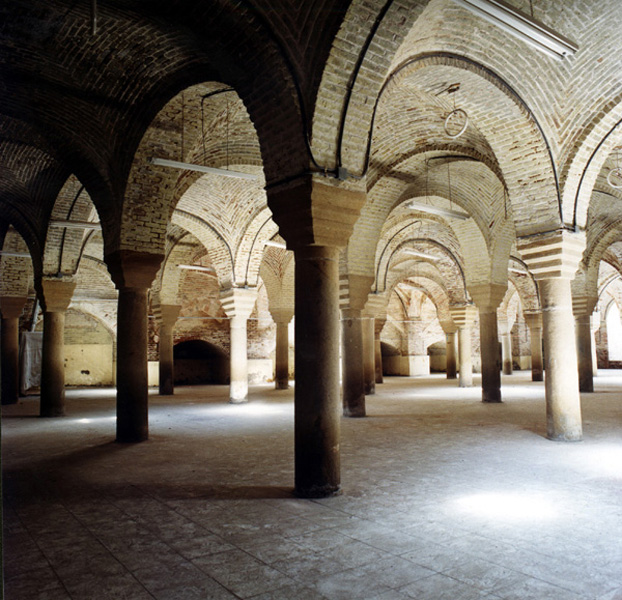
HYPOSTYLE  HALLS  &  TAJ AL MOLK  DOME.
Sofe – ye Darvish (Eivan) is from Seljuk dynasty. Fabulous ornamentations of this Eivans belong to later period. Specifications of ornamentation are different from other parts of the mosque. The magnificent stuccoworks are from Shah Soleiman Safavid.
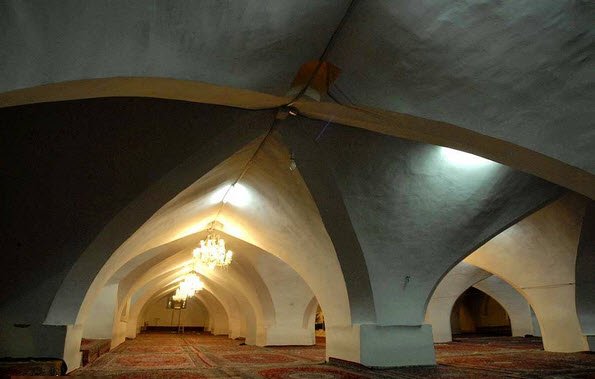
Behind the Eivan, there are successions of hypostyl halls, which come from different times. At the far end is the tall dome of the Taj Al Molk. Taj Al Molk was a Vizier from the Seljuk Dynasty. He competes with Nezam Al Molk. This magnificent dome was built by the command of Taj – Al Molk.
Interior decoration of Taj Al Molk dome is unique in all Iranian mosques. It is a single shelled dome. Fortunately the dome and its decoration have not been damaged. Great varieties of designs are made of plaster and small pieces of bricks are a splendid sample of huge artistic work. In fact there is a collection of designs which have survived for more than 900 years. The dome is without any Mehrab (prayer- niche).
One of the entrances to the mosque is located next to the dome. For those architects who are seeking traditional adornment, the dome is considered a museum of decorative designs. The Kufic calligraphy around the dome’s base dates back to 1080 and covers the name of Taj Al Molk. The Khaki dome is about 18 meters high and about 9 meters in diameter.

THE WESEREN EIVAN
The western Eivan is called Soffe – ye – Ostad. The original construction belongs to Seljuk dynasty. The beautiful tile and tile- mosaic work belong to era of Shah Sultan Hossein.
This Eivan is considered a wonderful museum of Iranian and Islamic calligraphy. Various types of calligraphy such as Solth, Nastaliq, Bannaeis and geometrically designed calligraphy have decorated inner parts of Eivans. For those artists who have selected calligraphy as their field of art, this Eivan has a lot to teach. Next to the Eivan, there is a door that opens to another part of the mosque built by Sultan Oljeitu. One of the most fantastic mehrabs is in this part. Many Iranians consider this Mehrab has a unique structure. It shows an excellent stucco work from the year 1310.
Unfortunately, it was damaged at bombing of Isfahan. There is an old wooden minbar in this part.
The Mehrab’s design shows a combination of calligraphy, imaginary flowers, blossoms and leaves which is a masterpiece in Islamic world. Such a fantastic work can be created by a unique faithful stucco work artist.

THE WINTER GALLERY (BEIT AL SHETA)

Jame Mosque

Each part of the Jameh mosque is a masterpiece of art and architecture. This winter gallery from Timurid era is one of the beauties of Iranian architecture, dates back to 1447.
Every part of it looks like tents used by Timurid. This part is quite cool and warm during the hot summer season during the cold days of the winter season. The style of the winter gallery is almost self-sufficient for heating and cooling systems. Daylight is reflected to Beit Al Sheta through small windows covered with slices of marble stone. The architect has made ideas from tents to create this part.

EIVAN  SHAGERD (SOFFEH- YE  SHAGERD)
It was originally built during the Seljuk period. Ornamentation is from Seljuk and IL – Khanid periods. Fortunately his ornamentation from Seljuk and IL Khanid has not been damaged. The calligraphy of this Eivan is from Shah Soleiman Safavid.
The central part of Eivan has a structure which is similar to Eivane Ostad, on the opposite side. Next to this Eivan there is a corridor leads us to a Madreseh (Theological School) from Mozafarid era.

Aran and Bidgol

Aran va Bidgol is a city close to Kashan. It took shape after the destruction of Sialk civilization. It was built as one of the forty-fence castles (Kashan old name). The word Aran is driven from Arian (Aria tribe). According to another narrative it is driven from the name of one of the pre Islamic respectable man, Aran ibn Ghasan. And the word Bidgol is the variation of Bibi Gol, Mogul commander’s daughter. Aranies people speak in farsi with accent. Imamzadeh Halal is the most important historical and cultural symbol of the city.

Maranjab Desert

The dazzling desert is stretched endlessly in north east of Aran va Bidgol covered by eye catching sand dunes, flowing sands and Haloxylons. Its approximately 850 meters above sea level and has hot-dry climate. Not being so fruitless, it has its own flora and fauna such as tamarix and Zygophyllum, fox, Jackal, Rüppell’s fox, hyena, sand cat, Monitor lizard, Chameleons, lizard, snake, Scorpion, See-see partridge and falcon. In Maranjab desert two North and Shahriari winds are desirable and the others like Khorasan, Qebla, black wind and Tire Lovar are viewed as notorious ones.

Salt Lake

stunning, enchanting, unique and economically vital in the region, Salt Lake is one of the most beautiful landscapes in desert. It is the result of centuries of salt deposit, carried by salty water of rivers and floods. its approximate expanse (2400 Km) alters depending on water debit and periodic seasonal rainfalls. Due to precipitation and evapotranspiration, dazzling white salt crystal polygons surround lake bank’s surface.

Maranjab caravanserai

Dating back to Safavid era, Maranjab caravanserai, 810 m above sea level, is located 50Km from Aran va Bidgol. In north its bordering Black Mountain range. Maranjab caravansary is situated on one of silk roadside roads, built under Shah Abbas command in 1604 in order to secure the transition of goods from China to Europe and domestic caravans who traveled from Khorasan to Isfahan (Safavid Capital) and Ray.

Due to the importance of the route and military and defensive role of the caravanserai, the roof, walls and watch out towers are built like a castle. It’s built of brick and consisted of rooms, stables, and King’s special place which are surrounding the central yard.

Drinking water from Qanat has formed a tiny pool surrounded by tall green trees right before the colossal structure. This rare confrontation of water and land, light and shadow, heat and cool weather opens a wondering landscape before desert goers’ eyes. That’s why a quotation regarding the name “Maranjab” sounds believable. “do not be hurt due to heat, wind and dust of desert, water pool and desirable shadow of trees awaits you.

Wander Island

Wander island, with 808 M height in highest point, is a vegetation free hill made of volcanic rock located inside Salt Lake.  The island is wandered because it looks endless from either side at long distance due to extreme heat, light breakdown and eye mistake. Based on an old belief this island has been moving constantly. Wander island is a mysterious beauty of Salt Lake from top of which mesmerizing sun rise and sun set leave you speechless.

Handmade well

Handmade well along with other caravansary’s ruins, located in east, 4Km from Maranjab caravansary. It was a resort for caravans commuting the route before Maranjab caravansary was built. Despite bordering Iran’s biggest salt marsh, surprisingly, its water is drinkable. The water is high enough and so close to the well mouse (about 2 meters deep), that the name sounds logical.

Dunes and pebbles

Dunes are sandy hills formed as a result of soil erosion, lack of rain and vegetation. They take different shapes with the wind direction such as curve and sword-like. situated in east, 12Km from caravansary, Band-e Rig starts from dunes’ west bank and continues to far east. A combination of growing green plants on brown sandy context bordering blue sky, creates dazzling beauty. On the dune’s side roads located on a two-way intersection, there is a steep uphill called Khatab shekan by locals. Khatab is part of the camel saddle and it breaks most of the time due to heaviness and high pressure of climbing steep hills in the area.


Elburz Mountains

also spelled Alborz, Albourz, Alburz, or Elburs, Persian Reshteh-ye Kūhhā-ye Alborz,

major mountain range in northern Iran, 560 miles (900 km) long. The range, most broadly defined, extends in an arc eastward from the frontier with Azerbaijan southwest of the Caspian Sea to the Khorāsān region of northeastern Iran, southeast of the Caspian Sea, where the range merges into the Ālādāgh, the more southerly of the two principal ranges there. More commonly, however, the westernmost part of the range is called the Talish (Talysh, Talesh, or Tavālesh) Range, or the Bogrov Dāgh. The Elburz Range, in its strictest sense, forms part of the central stretch of the chain, which also includes Iran’s two highest peaks, Mount Damāvand and Mount Alām. The Elburz mountain system traverses virtually all of the northernmost portions of Iran from east to west.
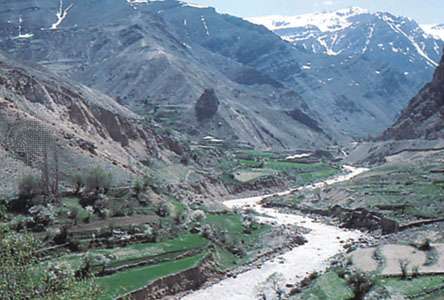
Elburz Mountains

The Elburz chain is not as truly alpine (i.e., resembling the European Alps) in its structure as is often suggested. On the one hand, continental conditions regarding sedimentation are reflected by thick Devonian sandstones (about 360 to 415 million years old) and by Jurassic shales containing coal seams (about 145 to 200 million years old). On the other hand, marine conditions are reflected by strata dating to the boundary of the Carboniferous and Permian periods (about 300 million years old) that are composed mainly of limestones, as well as by very thick beds of green volcanic tuffs and lavas. Orogenic (mountain-building) phases of importance date from the Miocene and Pliocene epochs (between about 23 and 2.6 million years ago). Over large areas they produced only a loose folding; but in the Central Elburz a number of folds were formed into blocks thrust mainly southward but in places northward, with cores made of Paleozoic rocks (more than 250 million years old). Structurally and topographically, the Elburz system is less clearly defined on the southern than on the Caspian (northern) side of the chain, since various off-branching elements interconnect it on the southern side with the adjoining Iranian plateau.

The Western Elburz Range runs south-southeastward for 125 miles (200 km). Varying in width from 15 to 20 miles (24 to 32 km), it consists of a single asymmetric ridge, the long slope facing the Caspian. Few of its peaks approach or exceed 10,000 feet (3,000 metres) in height. There is a low pass west of Āstārā, near the Azerbaijan frontier, 5,000 feet (1,500 m) above sea level. The Safīd River, formed by the junction of the Qezel Owzan (Qisil Uzun) and Shāhrūd rivers, is the only river to cross the whole width of the chain: its gorge, giving access to the low pass of Qazvīn, offers the best passage through the mountain chain, although by no means an easy one, between the Gīlān region on the shores of the Caspian and the inland plateau to the south.

The Central Elburz is 250 miles (400 km) long. East of the longitude of Tehrān, which lies to the south of the range, it reaches a width of 75 miles (120 km). Located among the longitudinal valleys and ridges of the range are some important centres of settlement, with the towns of Deylamān, Razan, Kojūr, and Namar located on the Caspian side and Emāmshahr (formerly Shāhrūd), Lār, Damāvand, and Fīrūzkūh on the southern side. There are likewise many gorges, by which the rivers find their way down one or another of the slopes. Only two passes allow a relatively easy crossing in a single ascent—those are the Kandevān Pass, between the Karaj and the Chālūs rivers, and the Gadūk Pass, between the Hableh and the Tālā rivers. The main divide runs generally south of the highest crest, which—with the exception of the towering and isolated cone of the extinct volcano Mount Damāvand (18,386 feet [5,604 metres])—culminates in the glaciated massif of Takht-e Soleymān, which rises to more than 15,750 feet (4,800 metres).

The Eastern, or Shāhkūh, Elburz runs about 185 miles (300 km) in a northeasterly direction. Since two ranges branch off on its southern side and no compensatory elements appear on the northern side, its width dwindles to less than 30 miles (48 km). With the exception of the Shāhkūh Range proper (which reaches an elevation of 12,359 feet [3,767 metres]), the chain decreases in height toward the east. Longitudinal valleys are found less and less frequently east of the Shāhkūh. There are several passes at low elevations.

The Caspian and the inland, or southern, slopes of the Elburz differ markedly from each other in climatic and vegetational aspects. The Caspian slope has a distinctly humid climate, thanks to northerly air movements, enriched with moisture from the sea, which collide with the steep faces of the mountains to cause precipitation. The precipitation amounts to more than 40 inches (1,000 mm) annually in the lowlands of the Gīlān region and is even more plentiful at higher elevations. Although it decreases toward the east, it still suffices to nourish a humid forest for the whole length of the chain on the Caspian side, where the soils are mostly of the brown-forest type. The natural vegetation of that slope grows in distinct zones: the luxuriant Hyrcanian forest on the lowest levels; a beech forest in the middle zone; and a magnificent oak forest from the elevation of 5,500 feet (1,700 metres) up to the levels where gaps in the divide allow the moist air to overflow into the inland basins. In some sheltered valleys there are extensive stands of wild cypress. Sheltered valleys adjacent to the Safīd River constitute the only olive-growing areas of note in Iran.

The southern slope of the Elburz, by direct contrast, shares the arid character of the Iranian plateau. Annual precipitation varies between 11 and 20 inches (280 and 500 mm) and is very irregular. The soils are mostly of the type associated with steppe (treeless, grassy, or shrubby) vegetation. The slope has become even more steppelike ever since the almost complete destruction of its original dry forest of junipers.

The Hyrcanian tigers for which the Caspian forests were famous are now extinct, but other wild cats, such as the leopard and the lynx, are still numerous in the Elburz. The bear, the wild boar, red and roe deer, the mouflon (wild mountain sheep), and the ibex are also present. Eagles and pheasants are notable among birds.

Although large areas of the Elburz Mountains are almost uninhabited—some being occupied only by nomads and others having been depleted by Turkmen raids in the 19th century—there are still several well-settled districts, including Deylamān, Alāmut, Tālaqān, and Lārījān (at the foot of Mount Damāvand). The landscape of the Caspian slopes is characterized by forest clearings with shingle-roofed loghouse villages and by lush fields and pastures. The landscape of the inland slopes is of the oasis type. Extensive grain cultivation occurs on both slopes, and cattle raising occurs on the Caspian side. Alpine pastures, seasonally dotted with flocks of sheep, cover an extensive zone yet higher. The land-distribution pattern prevailing in the Elburz includes a high proportion of peasant ownership. The holdings often are much-fragmented.

Many of the traditional ways of livelihood of the mountaineers, including charcoal burning (now prohibited because of devastation of the forests), the transportation of goods (especially of rice and of charcoal for Tehrān) by pack animals, and the working of hundreds of small coal mines, have been displaced by the 20th-century modernization of Iran.

Apart from the main line of the trans-Iranian railroad, which links Tehrān with Bandar-e Torkeman via the Gadūk Pass, there are several asphalted roads across parts of the Elburz. From west to east, those run between Ardebīl and Āstārā, between Qazvīn and Rasht, between Tehrān and Chālūs, between Tehrān and Āmol (via Damāvand); between Tehrān and Bābol (via Fīrūzkūh), and between Shāhrūd and Gorgān (via Kotal-e Zardāneh Pass).

The wild (natural or original) forests of the Elburz Mountains cover more than 8,000,000 acres (3,000,000 hectares), of which some 3,000,000 acres can be exploited commercially for timber and other wood. There are also a few modern coal mines, as well as some deposits of iron and other ores. But most important is the water of the rivers, which is used for irrigation, for generating hydroelectric energy, and for supplying the fast-growing Tehrān. Spectacular dams have been built. Those include the Safīd Rūd Dam, used for the irrigation of the Safīd Rūd delta; the Karaj Dam and the Jājrūd Dam, used mainly for supplying water to Tehrān and partly for irrigation; and a series of dams on other rivers of the Māzandarān ostān (province) also used for irrigation.

 

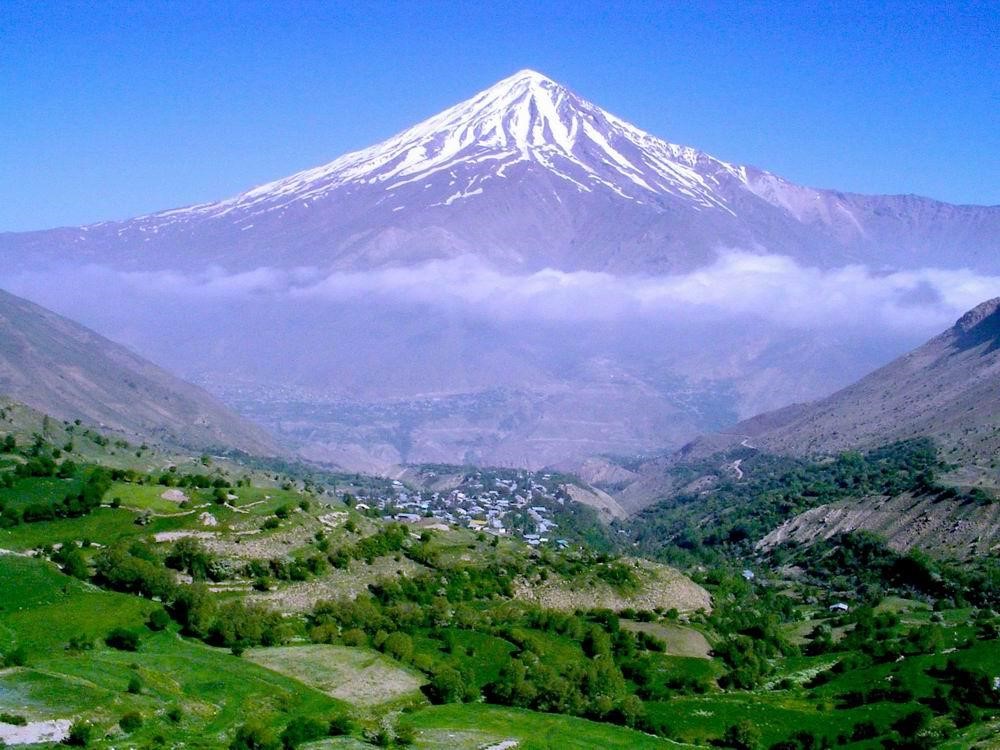
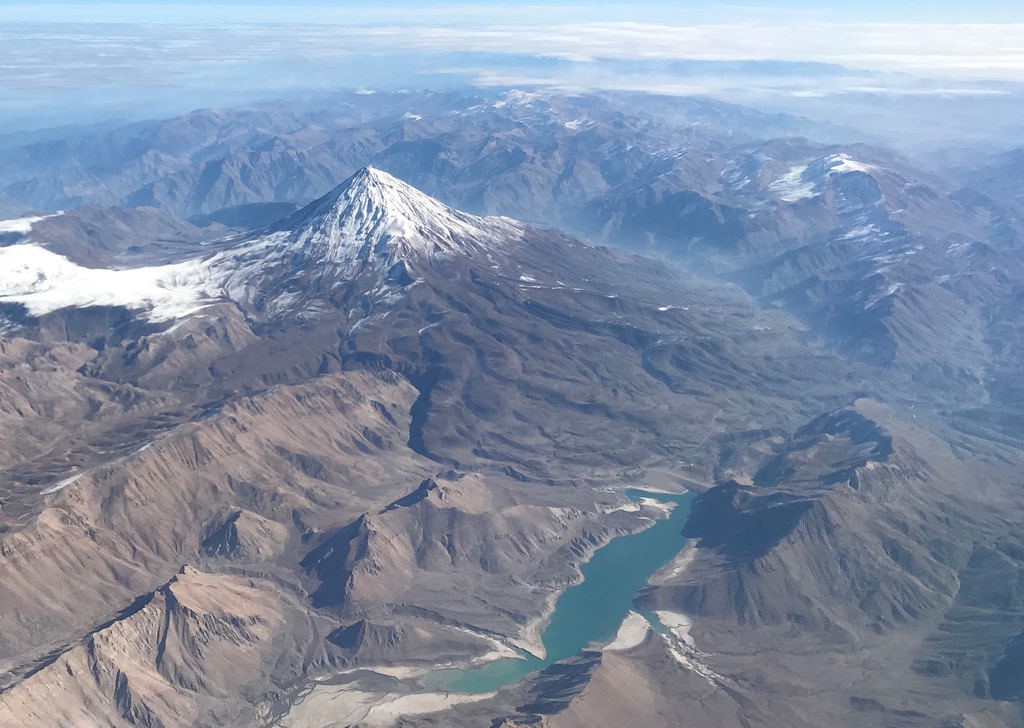
The other side to ancient Iran, with an abundance of culture & history, is its breathtaking four season nature which has no shortage of scenic views. Among the very best sits the holistic Mount Damavand wrapped in snow on its cap all year round, a popular destination for trekking lovers.

The volcanic Damavand, inactive for more than 38500 years, rises above the clouds at 5671 meters (18606 feet) and has crater with a 400-meter diameter. The region harbors a great variety of wildlife, vegetation and natural features such as huge glaciers & sulfuric hill at the peak besides its hot springs situated in lower level skirts.

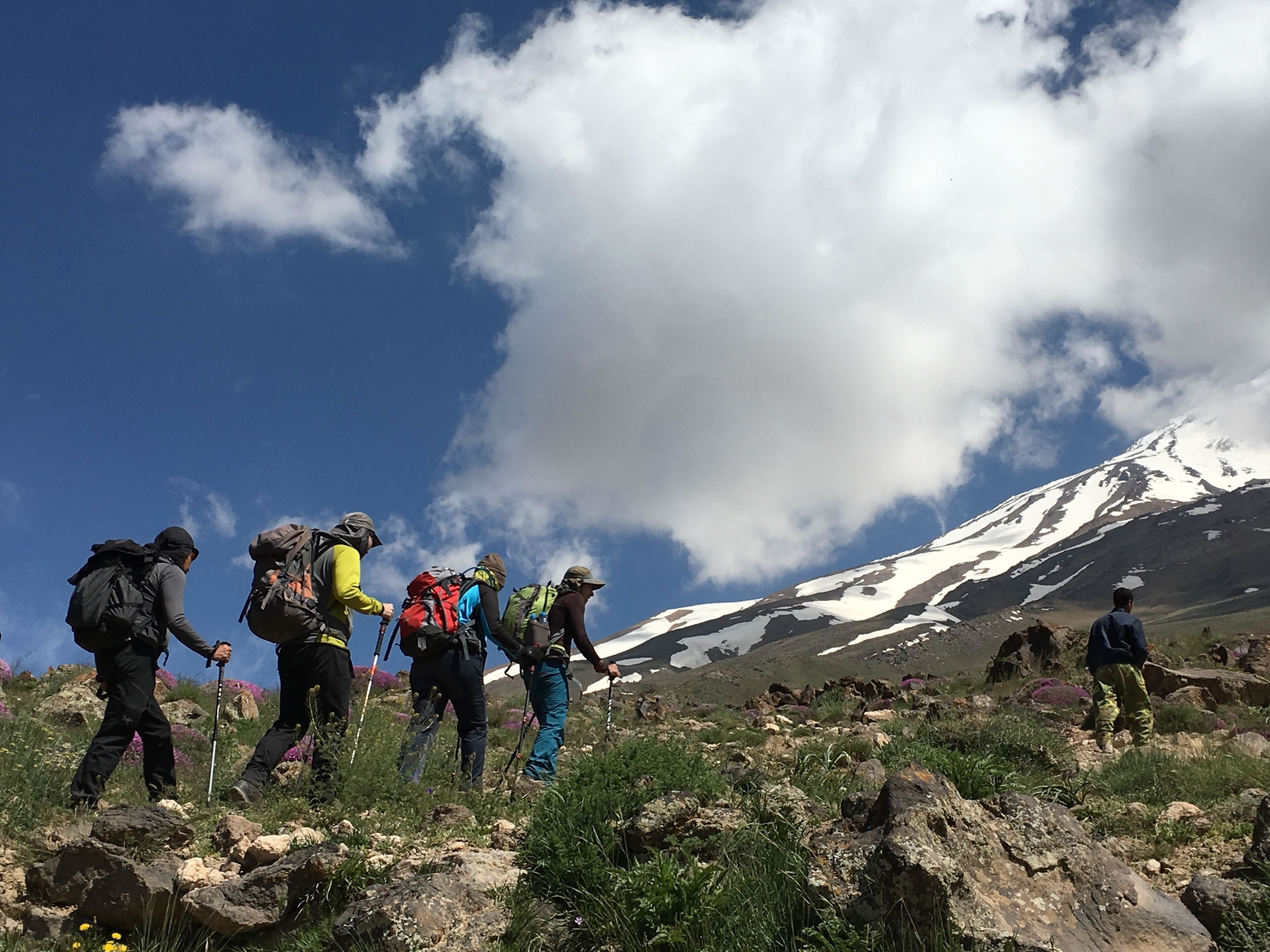
Cited in Ferdowsi’s Shahnameh, Damavand has deep roots in Persians beliefs and faith. There are 16 routes towards the peak with various degree of difficulty, making the Mount one of the most accessible peaks globally in class of 5000+ meters.

The southern face climb goes all the way up from Polur Village and your journey begins here. Your trekking adventure to Damavand summit starts from Polur. Read on to find out about the most exciting climb in Middle East happening to be the highest!

Itinerary of Damavand Trekking Tour is found here.

Damavand

Damavand


Polur


A heaven in the heart of hot summer days, the mountainous village of Polur (Pūlūr) becomes an ultimate destination for trekking camps base, most of which heading towards the splendid Mount Damavand – the highest peak in Mid-East.

Located at a height of 2300 meters, Polur sees dozens of wildflowers growing after snowmelt runoff occurs in mid-April followed by flourishing of yellow & Anemone flowers in late May & June.

This serene area, booming with tourists, backpackers and climbers specially in hot seasons, is believed to be home to some ancient hoards, artifacts and other treasure troves which besides the perfect weather has drawn attention to itself. Although some of these are based on legends, there’s been Glasswares & Ceramics dating back to Parthian, Sassanids and early Islam era of Iran found here.

Other belief of the villagers is that, long back in time there once lived maidens of a legendary King up here in a citadel worshiping Water.

This castle resembles the one in Firouzabad Shiraz, namely Qaleh Dokhtar (The Maiden Castle) – a castle made by Ardashir I 209 AD.


The highest waterfall of Mazandaran Province, Shahandasht Waterfall at a height of 180 meters is one of many tourist attractions of the area which is near Polur village, an approximate 40-minute drive away.

A rock climbing site in Polur Complex welcomes climbers in different types such as Bouldering, Top Rope & Competition in a 900 square meter area.

Damavand

Damavand

Rineh Hot Spring


On south face climbs you’ll come across one amazing natural gem, the Rineh Thermal Springs. Located 21km away from Mount Damavand this natural attraction has several bathtubs and pools.

Different options of residence are available here and people mainly come here for its therapeutic properties from Metropolis of Tehran and other nearby towns each and every day.


The pleasant weather combined health benefits of thermal waters has made Rineh a popular spot not only for mountaineering adventurers but also for others looking for some quality leisure time.


Goosfand Sara

Goosfand Sara

Goosfand Sara (Sheepfold) or Modque Base camp


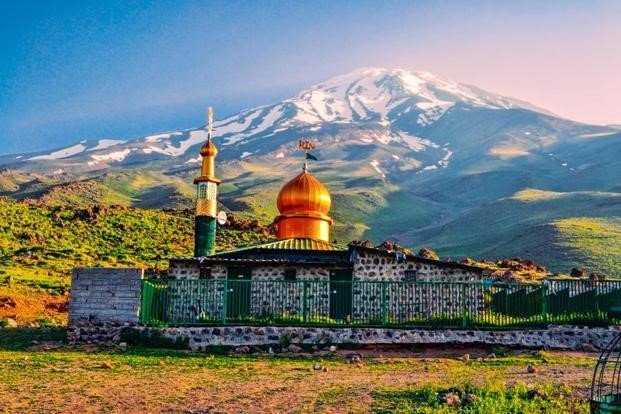
Goosfandsara is a mountain camping site located at 3050m altitude and is one main point as a stop in trekking to Damavand Summit. In this area there is a small mountain shelter or refuge, a mosque called Saheb Zaman (or Saheb al Zaman) and a sheepfold!

The climbing season sees to itself a lot of SUVs transferring climbers and their equipment to this campsite. Mules and porters are other means of transport available here on your way to the last campsite called Bargah Sevom.


Damavand

Damavand


Third Camp – Bargah Sevom

Coming up to the next and the last camp before reaching the top, is located Bargah Sevom at a level of 4150 meter. Standing up there you already are getting breathtaking views under your feet.


There is an old shelter, considered the oldest camp of Mount Damavand, and a newer hut built in 2009.

The trek towards the summit would take roughly 5-7 hours depending on physical conditions.

Plan your trip to Damavand as the best time is just now. This trek to the very top of Damavand has been labeled as a MUST and will be a unique experience you’ll never forget.

By Omid Mirzaie