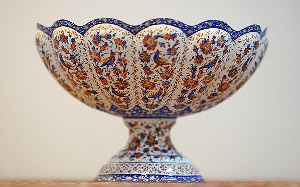
Sizdeh Bedar ~ 13th Day of Nowruz
Iran Nature Day
Spring in Iran is truly the season of renewal of nature’s life. The pleasant fragrance of flowers of spring has spread all over Iran. Seedlings emerged from the soil and lawn-like green velvets has covered gardens and plains.

Mountains are full of colorful flowers whereas the yellow, white and red flowers amidst the green lawn have granted a specific beauty to the nature of spring.


Iran is home to numerous climates, every part of which welcomes eco-tourists. The Iranian people are highly interested in nature which is a divine blessing. Watching the green landscapes, coupled with pondering in the power and glory of God are parts of benefits of presence in the green and beautiful nature. The holy Quran considers the scene of creation as the display of God’s glory and magnificence, and in many ayahs invites mankind to ponder in the nature so that he realizes the profound wisdom, prudence, and management of God Almighty. Therefore, the Iranian families, inspired by the Islamic culture, view and respect the nature as one of the great divine blessings. In various opportunities, the Iranians spend their times in the nature and try to keep it clean.

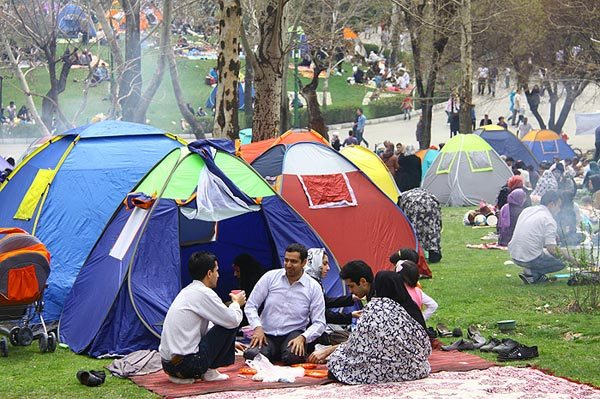
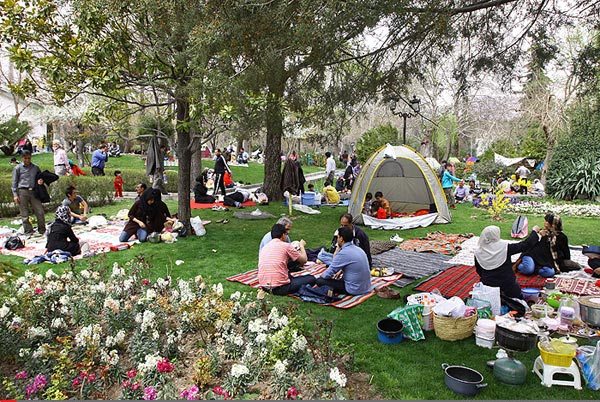
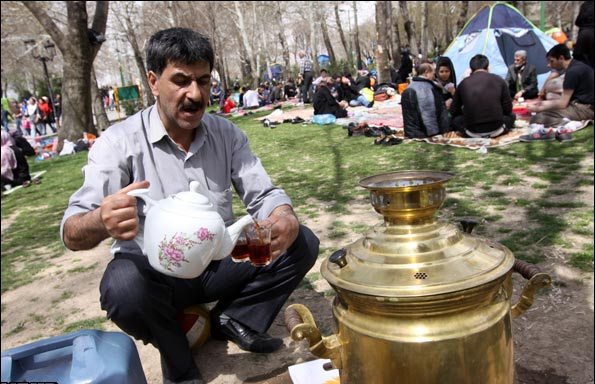
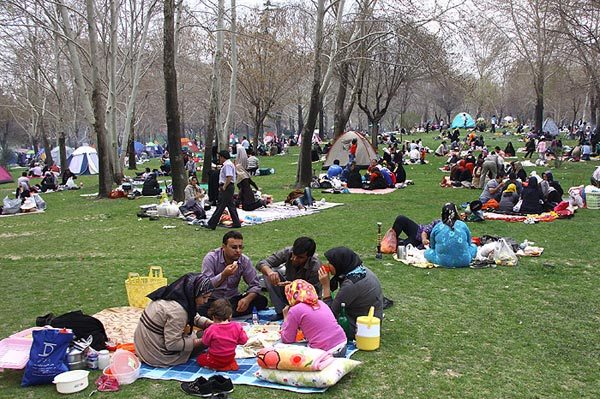
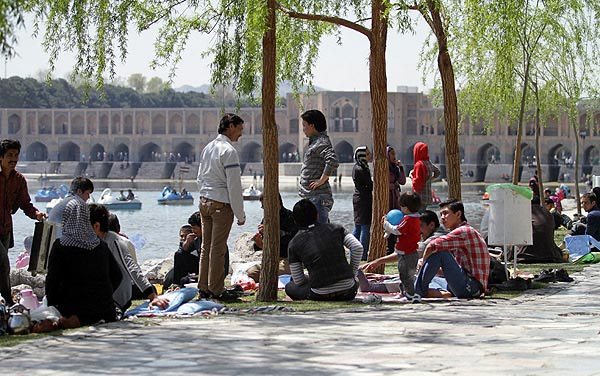
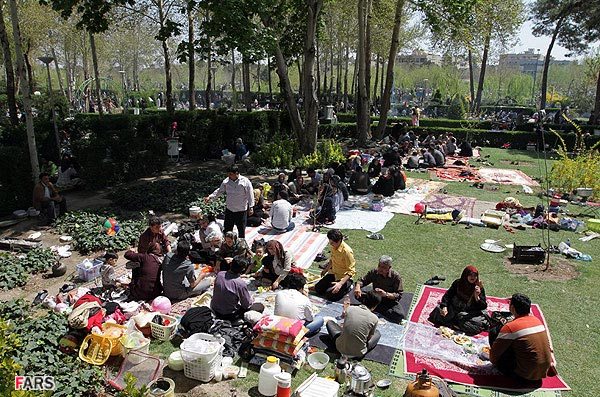
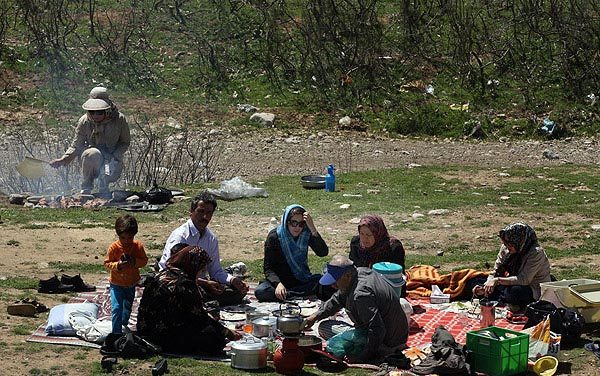
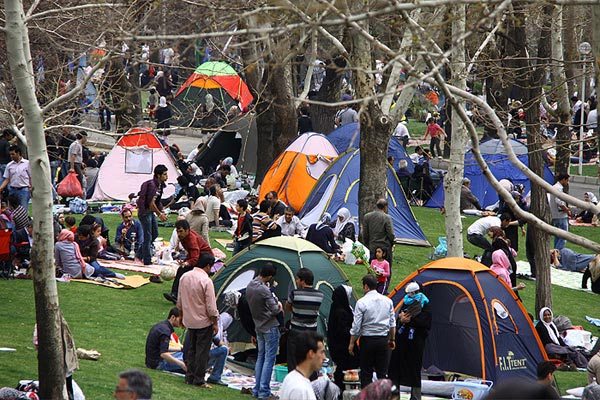
Throughout the initial days of spring in Iran, people visit their relatives and friends. Today is 13th of the Iranian month of Farvardin, referred to as The Day of Nature, which marks the end of Norouz celebrations. On this day, according to an ancient Iranian tradition, people leave their home and spend the day outdoors to enjoy the nature, far from the anxieties of the everyday life. They also take with them some foods such as nuts, fruits and even their lunch. This raises a golden opportunity to describe parts of Iran’s green landscapes.

The Caspian Sea coastal belt, coupled with its thick and attractive forests, citrus fruit groves, tea farms, paddy fields and wooden houses with ceramic roofs is very beautiful. Therefore, many of the Iranian holidaymakers spend the Iranian New Year in this blessed region. The region of “Kelardasht”, which lies 50 kilometers from of the Caspian Sea in northern Iran, at a 1,000-meter altitude above the sea level, is a tourist attraction site for the eco-tourists, who long for the beauties of this region. In this region, the “Velesht” lake is engulfed by Alborz Mountains, creating a unique landscape.

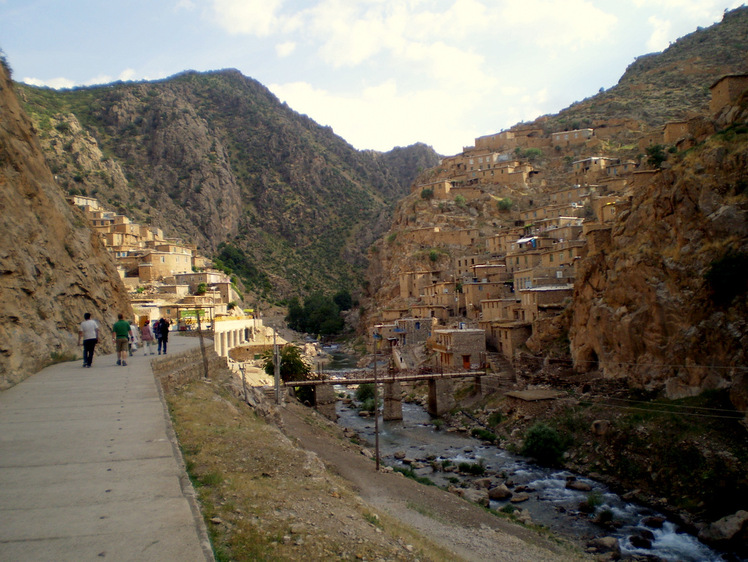
On The Day of Nature, the residents of Iran’s mountainous regions attend foothills to enjoy the moderate climate of these regions in spring. The high mountains blanketed with snow, deep valleys, springs, wonderful waterfalls and the natural oak forests are among the wonders of nature in Zagros mountainous regions in western Iran. Ealam province, given its natural beauties and rainfalls throughout these days, is decorated with bushes, and flowers, attracting a large number of eco-tourists to these scenic landscapes.  Upon seeing the natural beauties of Ealam, we are further touched by the infinite divine glory.

Spring season in Shiraz in southwestern Iran is familiar to all, especially those who have come to this city. All have heard of beauty of spring in this city.

When the breeze flows on pine, and orange trees, one can see the power and glory of God in the delicacy of flowers.
On the Day of Nature, the attractive nature of spring in Shiraz attracts holidaymakers to this beautiful city, leaving them with ever-lasting memories of Shirazi people’s hospitality.

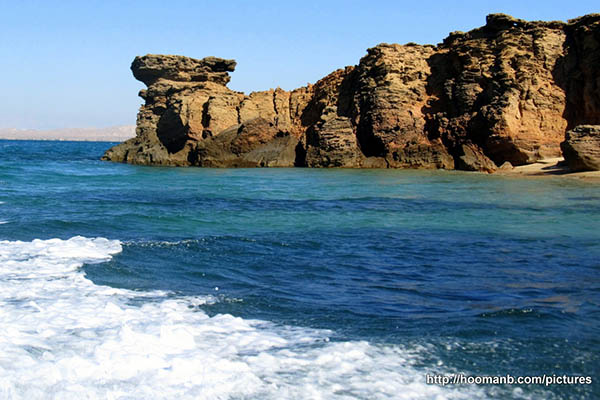
The beautiful Golestan Kuh plain in the vicinity of Khansar city in Isfahan province is another place which attracts the lovers of nature on this day. In spring, the rare species of red and yellow tulips and many medical herbs adorn Golestan Kuh. The springs in various parts of this area add to its beauty and freshness. Exactly on this time in southern Iran on the shores of the Persian Gulf, the pleasant weather and the sunshine grant a specific attractiveness to the port cities as well as Qeshm and Kish islands. Nature lovers in this part of Iran witness the species of colorful fish in the waters around Kish Island.

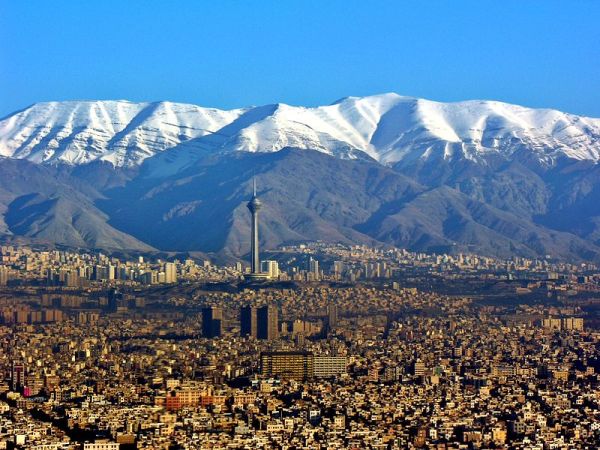
The heights around the capital Tehran have today turned into recreational regions for tourists, mountaineers, and athletes. On the nature day, the regions surrounding Tehran such as Suleqan, Darband, and Farahzad, are host to families, who enjoy the blessed nature on this day.

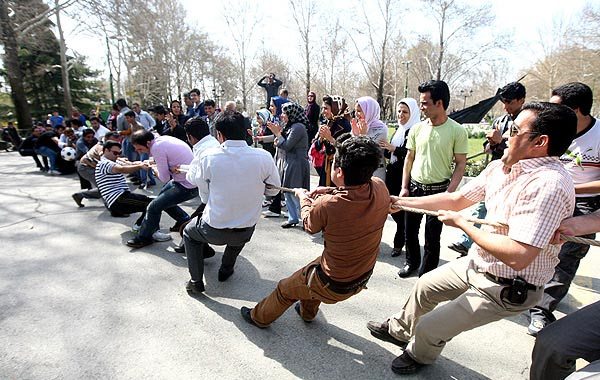
Every year, several organizations in various Iranian cities try to turn the nature day into a day full of happiness and security. Therefore, they prepare certain programs for people in parks so that people end the last day of holidays in a friendly atmosphere, and refresh themselves in the New Year.


Why Iran adventure tours
More than half of this vast land is covered with mountains with different heights.

In general, Iran Mountains are located in two large and long stretched mountain chains of Alborz & Zagrous. There are also numbers of Isolate Mountains around situated in Iran central deserts, a brief description of the above-mentioned chains and the isolated mountains of central desert are explained below:

ALBORZ MOUNTAIN RANGE
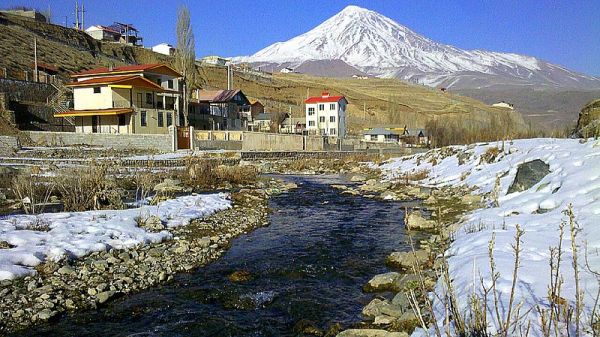
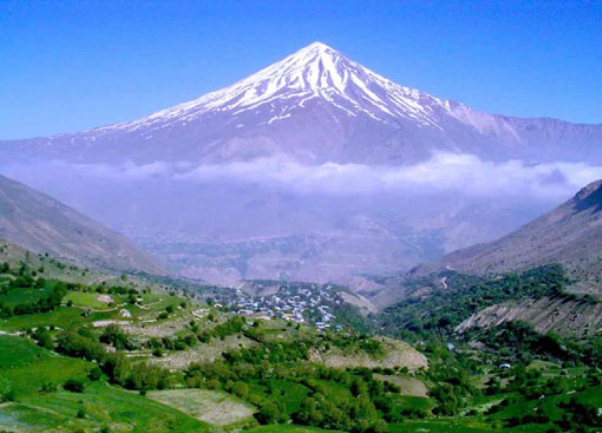
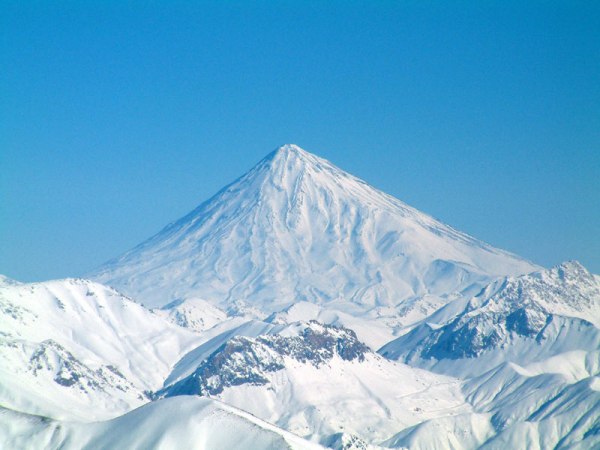
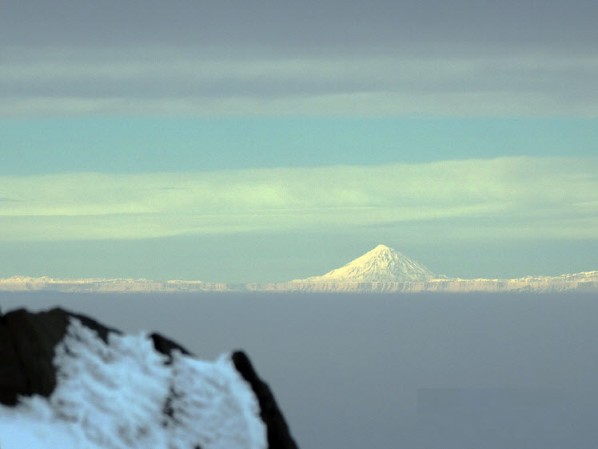
The name of Damavand has been repeated many times in the ancient Iranian myths and legends. In all of them it has been tried to describe Damavand with glory and strength. In one of the most famous legends it has been written that when Turians captured a part of ancient Iran, after sometime they realized it is difficult for them to govern and rule their new captured region and bet if an Iranian could shoot an arrow from his homeland to the farthest point in Turan, that point would be considered as the new border between Iran and Turan. To make this new point, Arash (the famous epic hero) who was the best arrow shooter at that time, climbed the peak and with all the love he had in this heart to his country, shoot the arrow with all his strength to the farthest point in Turan. After he shoot the arrow, all his strength was exhausted from his body and filled in the arrow which landed on the farthest point in Turanians country.
Damavand is a volcanic peak, when reaching the top, the climbers could see and also walk in the crater. The circumference of this crater is 450 m and it is covered with snow all the year.


When reaching the peak and looking to the west, Lar dam, Tehran and surrounding mountains are visible. Among other things that could be seen on the top are the corpses of some sheep died after reaching the peak which have not lost their shape very much because of the coldness of weather in the top of the mount.

Sulfur Hill
About 500 m left to reach the peak, there is a place called Sulfur hill or Dood Kooh which is the result of latest volcanic activities of this mount. This area is covered with Sulfur stones. In summers when the sun shines on them, sulfur gases rises from the stones, this is why that area is called Sulfur hill. The sulfur gas smells like a spoiled egg that may cause some irritation in the eyes and throat.


Abshar-e-Yakhi Waterfall
In the southern route of Damavand and before reaching the Sulfur hill, in the altitude of 5000 m, there is a frozen waterfall named Abshar-eYakhi (7 m high) which never melts. This frozen waterfall does not flow to any river. In warm seasons of the year when the upper frozen snow begin melting, the coldness of weather and wind prevent the melting of snow of this waterfall. This is why this waterfall is always frozen.

Damavand Climate
The speed of wind in Damavand region sometimes reaches even to 150 km per hours. Most of the winds blow from the west and the northwest, which causes considerable raining in this area.
The average annual rainfall in this region is 1400 mm; this is why the rivers of this area are filled with water nearly throughout the year.


Water Resources
Because of high amount of raining, Damavand region does not face with the problem of shortness of water, but in comparison with other regions, Damavand cannot be put among other mountains, which has considerable amount of water. The temperature of soil in Damavand is three times warmer than other mountains; this is why the snow melts very soon in this region.

Air Pressure
Route Name of Area Air Pressure mm/Hg
Northern First shelter 550
Northern Second shelter 490
Southern Masdjed 610
Southern Barghah-e-Sevom 540
Southern Abshar-e-Yakhi 480
Southwest Simorgh hut 540
Northeast Takht-e-Fereydoon hut 530
— Damavand Peak 465
— Sea level 760


Damavand Springs
Normally Damavand springs could be seen in the altitudes of lower than 3500 m. Several of its high altitude springs are seasonal. From 4000 m up to the peak there is not any spring, so the only source for obtaining water from 4000 up to the peak is water of snow.

Damavand wildlife
Animals such as fox, jackal and wolf can be found around Damavand. Those animals can also be seen up to the altitude of 4000 m. Because of the existing of forests in the northern part of this region, bears are found mostly in the northern forests and they avoid going to the high altitudes.
In these region animals such as goat, ewe, eagle, a kind of gazelle, boar and rabbit are also found in that region. Except boar and rabbit which live in the fields of Damavand other above mentioned animals live in the high altitudes in the warm seasons of the year, and when the weather become cold they come down to the lower altitudes. Those animals may climb up to 5000 m as well.
In Damavand region about 5 different types of snakes, scorpion, lizard and mouse can be found.
Damavand Glaciers
The most important glaciers of Damavand are:
– Two large glaciers of Sioleh and Dobi Sel in the northen of Damavand
– The famous glacier of of Yakhar in the northeast of Damavand which has been climbed many times in summers, but noone has already climbed it in winter.
– Western glaciers which do not have a particular name


Damavand Routes:
Damavand has 6 main routes and a number of side routes to climb, its main routes are:
Southern route, Northen route, Eastern route, Western route, Northeast route
Damavand Shelters:
In the altitude of 4100 m in the southern route, there is a shelter called “Bargah-e-Sevom” which holds about 30 people, it is also possible to camp near the shelter.
In the altitude of 4600 m of the northeast route there is a shelter called “ Takht-e-Fereydoon” which holds 30 people, it is possible to camp near this shelter as well.
In the western route and in the altitude of 4000 m there is a newly built shelter named “ Simorgh” .
In both altitude of 4000 and 5000 m of the Northern route there are two huts, each hold about 15 people, but there is no possibility to camp near those huts.

In the ancient Persian language AL OR HAR meant (long) and so Borz meant (mountain).
This chain is stretched more than 950 km from northeast to northwest and along the Caspian Sea which is largest lake of the world. The width of this chain varies from 25 km to 110 km. This long chain is connected through mountains of northern Khorasan to Hendo Kosh Mountains in Afghanistan.
The height of Alborz in its eastern and western parts is between 2,500 m to 3,000 m. While in its central part (located in the southern of the Caspian sea) since the width of this chain increases, more high altitude peaks are also seen in this part.
The highest peak in this mountain chain is DAMAVAND (5,671 m) volcanic peak which lies in northeast of the central Alborz.
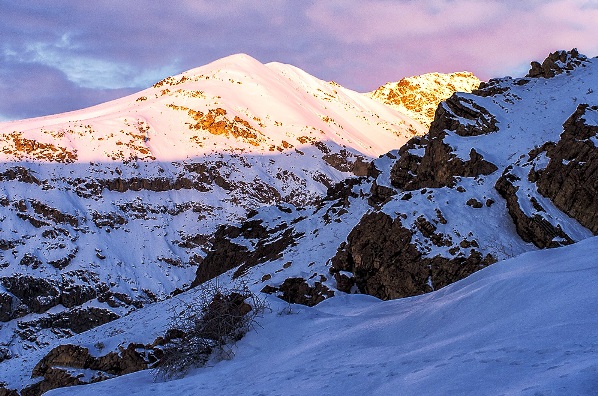
This great chain separates the Caspian Sea from central desert of Iran which results in different climatic conditions in those two regions as well as variety in grass covering, for this reason the northern part of this chain is green and covered with lush forests and its south part is rather dry and covered with bushes.


ALBORZ SUB RANGES
This chain has many ranges stretching from 30 km to more than 200 km suitable for hiking and strong and demanding mountaineering, some of theses ranges are: Takht-e-Soleyman, Central Alborz, etc.

Alborz Highest Peaks
Here are some of high altitude peaks of this great chain in its central part:
      – Kholenou (4,375 m)
     – Kooloon Basteh (4,200 m)
     – Shah Alborz (4,200 m)
     – Sarak Chal (4,150 m)
     – Azad Kouh (4,370 m)
     – Alam Kouh (4,845 m)
     – Shakhak-e-Alam (4,740 m)
     – North Khersan (4,670 m)
     – Marjikesh (4,520 m)

And in Takht-e-Soleyman part:
     – Takht-e-Soleyman (4,650 m)
     – Alam Kouh (4,850 m)


DENA MOUNTAIN RANGE
 Dena Mountain Range with over 50 km length is situated in northwest part of Shiraz and from geographical view it is stretched from northwest to southeast; between Isfahan and
Kohkiloyeh Boir-e-Ahmad provinces.

Dena range consists of eastern, central and western ridges. A pass called Bijan (3,200 m) separates eastern ridge from central ridge; in not snowy times; this pass can be covered by car. Because of the geographical situation of eastern part, which makes the snow melts rarely, the glaciers are found almost all the time in this part of the range, while in the western part some big walls could bee seen.

Dena range enjoys more than 40 peaks each with an altitude of over 4,000 m. “Bijan 3” (4,450 m) is known as the highest peak of this range.

The mountains of this region are calcareous and because of this many fossils are found in this region.

Dena Suitable Climbing Time
      • Climbing on Dena ridges:
         If the snowfalls have been considerable in winter: from mid July until mid September
         If less snowy winters: from mid June until mid September.

      • Individidual peaks of Dena Range
        The best time for climbing individual peak in this range is from mid May until mid September.

Dena water Resource
Springs could be hardly found in the high altitudes of this range, but it is possible to make use of the water results from snow melting.

Dena Plant Covering
In different altitudes of the southern foot of this range the following covering are seen:
      • Up to the altitude of 2,500 m, Oak forests
      • Up to the altitude of 3,500 m, small trees of wild plum and almond
      • Up to the altitude of 4,000 m, bush

Dean Wildlife
This region’s wildlife consists of some wild animals such as brown bear, partridge, different specious of eagles, vulture, wolf, panther and wild goat.

Iran to start issuing electronic visas by 2017


Iran will start issuing electronic visas for foreign tourists by the end of 2016, Masoud Soltanifar, Iran’s vice-president said.

Soltanifar, who heads Iran’s Cultural Heritage, Handicrafts and Tourism Organization, added that Tehran also pursues the issue of mutual visa waiver with certain countries, to promote tourism sector, IRNA news agency reported March 30.

He did not unveil the names of countries with which Iran plans to eliminate the visa, but said that boosting the country’s tourism sector is a priority for the Iranian administration.

The Islamic Republic, currently issues 30-day visas for citizens of 190 countries upon arrival in its airports which can be extended for another 15 days, the Iranian official added.

He also said that Iran needs to attract foreign investment to develop its tourism sector.

According to Soltanifar, Iran stands as world’s 36th country for tourism revenue with an annual income of $7.5 to $8 billion.

The country should increase the share of tourism income from 0.5 percent to two percent of the country’s total revenues by 2021, based on the 20-year economic development plan.

Some 3.8 million of foreign tourists visited Iran, bringing $1.11 billion worth of income to the country in 2012. The figure stood at 4.77 million in 2013, 24.4 percent more year on year.

Joining the dots
A “silk rail” between east and west

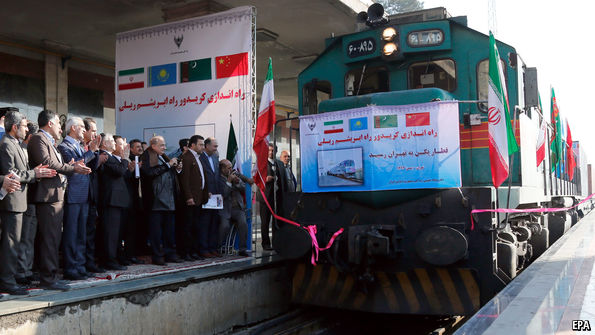
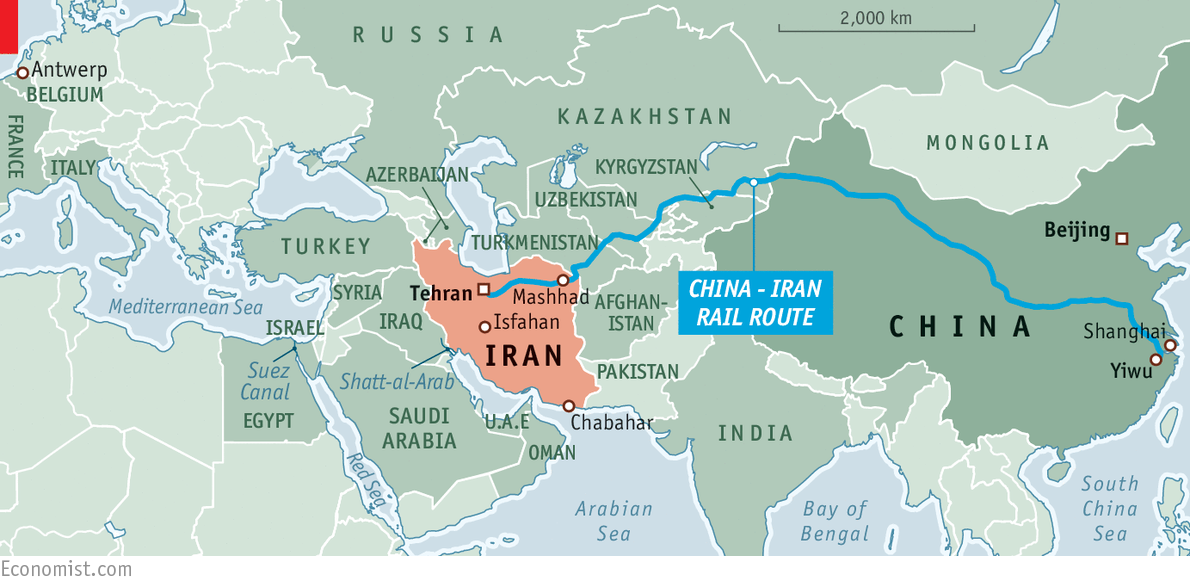
THE 10,500km (6,500 mile) journey from Yiwu City in eastern China through Kazakhstan, Kyrghyzstan, Uzbekistan and Turkmenistan was sluggish. But when the first Chinese train pulled into Tehran station after a 14-day haul, Iranian officials hailed a great leap forward. “We’re becoming the global hub between east and west,” boasted one minister. By April, when the new trans-Kazakh railway opens fully, executives in Iran hope to have cut the journey time to China (see map) to just eight days—a month less than the sea route takes. Should Turkey get on board, the line might even challenge the Suez Canal as a primary Chinese and Iranian route to Europe. Iranian companies will no longer be limited to an 80m-strong local market, President Hassan Rohani’s advisers promise, but will be connected to the European Union’s 500m.


Other rail links are coming down the line. Within six months Abbas Akhoundi, Iran’s British-trained transport minister, will open a track to Afghanistan’s mines, which will ship minerals to India via a revamped south-eastern port, Chabahar, bypassing Pakistan. Within two years Iran will have built a bridge over the Shatt-al-Arab river into Iraq and into the Fertile Crescent, he says. Fresh track will open the way through Azerbaijan to Russia and the Central Asian republics. “When we were inward we had poor cross-border links,” says Mr Akhoundi. “If we want to be outward-looking we need to improve them accordingly.” Iran also plans to more than double its internal 10,000km rail network over the next decade and replace rolling stock that trundles at 90kph with high-speed trains on electrified lines. Once the upgrades are complete, the 420km journey to Isfahan will take 90 minutes and the 920km trip to Mashhad less than six hours.

The hitch, of course, is finance. In Iran’s sixth five-year plan, now awaiting parliamentary approval, Mr Akhoundi wants to spend $28 billion on railways, $20 billion on roads, $50 billion on upgrading the country’s Shah-era air fleet and $7 billion on airports (including extending Tehran’s main airport, Imam Khomeini, so that the largest modern airliners can land there). Yet the low oil price means that his government can barely pay public-sector salaries, let alone pay for infrastructure. So it has been wooing foreign investors instead.

They seem keen. To finance the Mashhad line, China has reportedly offered a $2 billion loan, apparently underwritten by Iranian oil proceeds it had frozen during the time of sanctions. South Korea is exploring a similar deal. And while Italians recently waited in the wings, French rail executives, model trains in hand, paced the corridors of a Paris hotel waiting to greet Mr Rohani on the first trip by an Iranian president to Europe for 17 years. But with most foreign banks fearful of American fines, raising credit remains difficult.


A “silk rail” between east and west will also require better relations with neighbours who fear Iran’s post-sanctions rebound. “The nuclear deal has proved a double-edged sword,” moans a member of Iran’s Chamber of Commerce. “While relations have improved with the West, they have deteriorated closer to home.” Russia suspects that Iran will come to challenge its dominance of regional markets. And the United Arab Emirates, which backs Saudi Arabia in the region’s sectarian power struggle, fears that Iran, with its many tourist attractions, might challenge its position as a regional transport hub.

Much will depend on Mr Rohani’s diplomatic skills. Turkey’s prime minister, Ahmet Davutoglu, visited Tehran on March 4th with six ministers and discussed a high-speed rail link that might bridge Lake Van and triple bilateral trade, despite arguments over Syria. But should tensions persist, Iran is also exploring the seas. In February an Iranian cargo of petrochemicals arrived in Antwerp, the first Iranian ship to offload in Europe for six years. IRISL, the national shipping line, has plans to ship to the Far East, Oman and eventually the Americas; it hopes to enlarge its 160-strong fleet by floating some of its stock by the end of this year. Iran Air might go the same way after two years of restructuring, says the transport minister. Get ready for Iran’s reconnection with the world.

Rafting in Iran
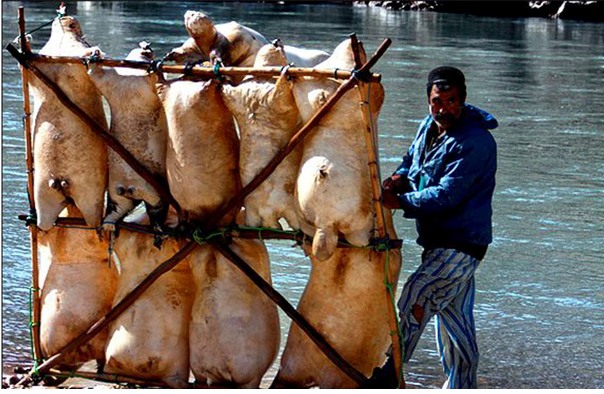
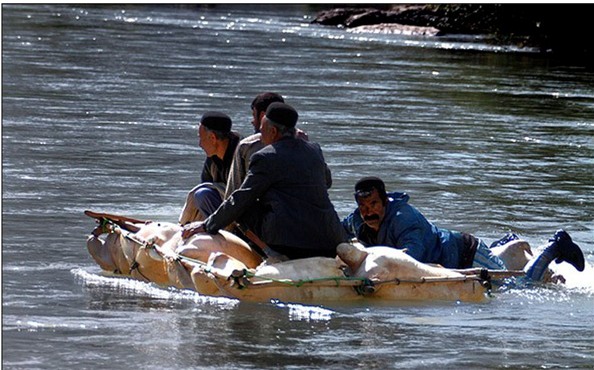
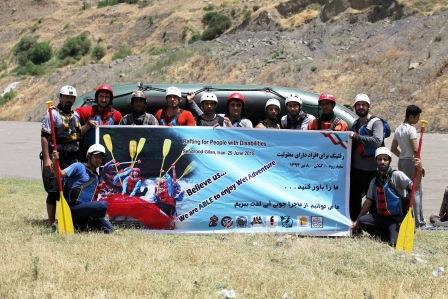
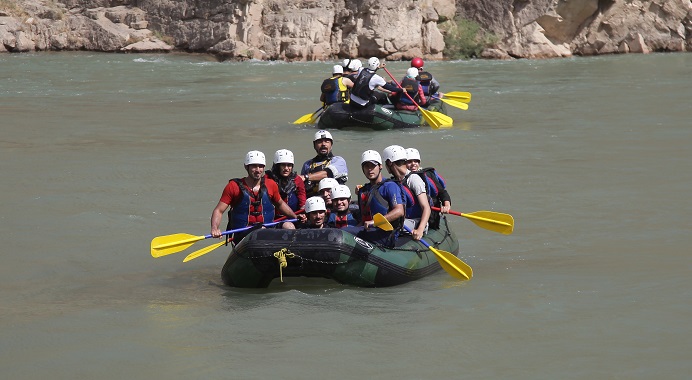
“Iran has a rich history in river trips.” – explains Hanieh – “But white water rafting as a relatively new adventure activity started in 2003 .
The standard rafting trips started on the Karoon river, Chaharmahal o Bakhtiari in 2008. There had been a few people arranging river trips before but not in a professional way. Many Iranians have enjoyed rafting trips up to date.


Rafting in Iran

The Iran Rafting Association (IRA) was formed by a team of experts in the fields of River Eco-tourism, Raft Guiding, River Rescue, with the assistance of the IRF in 2009.

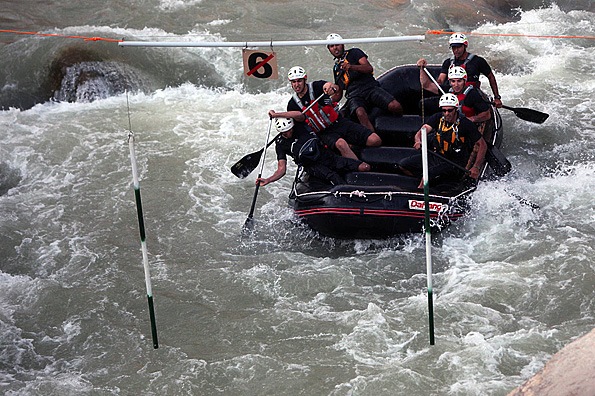
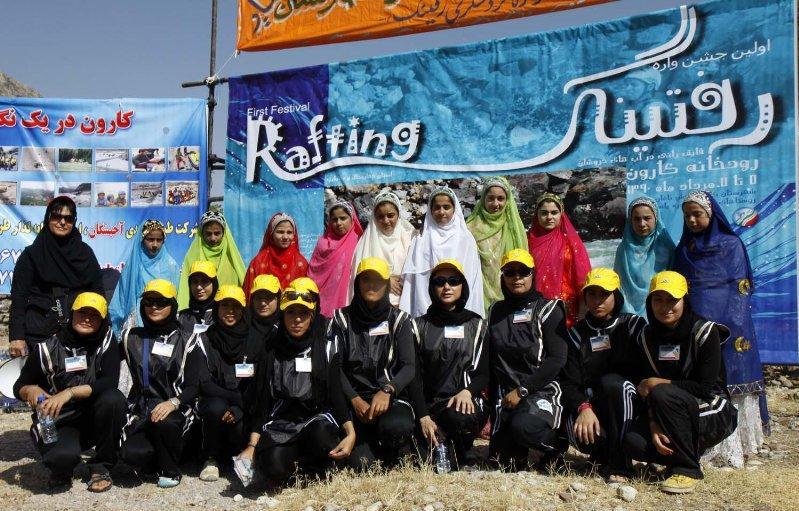
The “First Ever Rafting Festival”, which includied a Judges Workshop, was a rafting competitions base on IRF Race Rules, and a swimming competition for villagers. It was run by the IRA in 2011 with the collaboration of the IRF . At a similar time a Rafting Committee was formed within the Iran Canoe Federation.


Gaspar Goncz, the Head of IRF Guide Training & Education Committee, has traveled to Iran a few times since 2011 to run IRF Raft Guide workshops. Other courses and workshops have been run by the IRF and arranged by IRA inside Iran and a few guides have trained abroad. Now there are a good number of teams and raft guides who are active and many tourists can experience safe rafting in Iran.”


Rafting in Iran

“Rafting is a relatively new sport and adventure activity in Iran. Many people are attracted by rafting with the start of  the “River Ecotourism Plan”. A few groups formed with the purpose of commercial rafting but very few for sport purposes.

That is fantastic. No beginning is easy, but Iran is showing good progress which is a great reward for people who have invested a lot in the promotion of the sport rafting.


Rafting in Iran

Iranian qualified rafters are really interested and hopeful to find the chance of competing in the world scene. The IRA objectives are:

    Standardize Rafting in Iran
    Exploring more rivers
    Attracting international rafters, kayakers and tourists to paddle in Iran’s rivers
    Writing books, pamphlets, assays, reports about rafting, river tourism, river safety and related issues
    Making movies and documentaries
    Organizing training courses and workshops
    Organizing international and national festivals and competitions
    Empowering local communities
    Developing River Rescue
    Develop cooperation with international organizations such as IRF, Rescue 3 etc.
    Cooperating with Iranian Government Organizations and NGOs
    Encouraging qualified persons to enterprise in river tourists
    Talent Spotting
    Empowering Raft Guides and Sport Rafters
    Planning rafting for children
    Participating in international competitions
    Hosting Rafting competitions/cups”


“In Zagros area there is virgin nature and unseen landscapes where there is no access except by river. To explore the amazing nature of Zagros and to see unseen attractions you need a river craft and a professional team of river guides. The rivers are different levels, so all nature lovers from families to professional white water rafters and kayakers can enjoy paddling there. The main rivers in this area are Karoon (Armand) and Zayanderoud in Chaharmahal o Bakhtiari, Sezar in Lorestan, Zaab in Azarbaijan, Sirvan in Kordestan, Zayandeh Roud in Esfahan etc.

Dave Manby, a well known British kayaker has paddled in the rivers of Zagros area and made the amazing documentary, “Five Danger Zones” introducing Zagros rivers amongst the wildest and most beautiful rivers in the world.While in Alborz area rivers are mostly steep and good for creek kayakers such as Karaj and Haraz in Alborz and Mazandaran provinces. The river Seifdroud in Gilan and some parts of Haraz and Karaj are the exceptions with easy and safe rapids and suitable for families and non-professional paddlers.“


Rafting in Iran

After this, Iran is not a great mystery to us. We know by which rivers to paddle, we can see that much has been done in Iran so far, plans for the future are great, we wish them much success in their implementation, and we invite girls and boys, women and men to try this sport. We sincerely hope that we will watch Iran and in Brazil next year, as well as in many other competitions.

Iran, Azerbaijan to sign Action Plan on tourism
Tehran. Suleyman Farzaliyev – APA. Iran and Azerbaijan will sign an actin plan on tourism, Morteza Rahmani Movahed, the deputy head of Iran’s Cultural Heritage, Handicrafts and Tourism Organization (ICHHTO), told APA’s Iran bureau.  
 
According to him, the document will accelerate the development of cooperation between Iran and Azerbaijan in tourism: “The document will be signed soon. Azerbaijan and Iran have cultural, historical and religious ties. Both countries’ governments are interested in development of tourism field”.

 The deputy head noted that Azerbaijani citizens mainly travel to border regions and Mashhad city.
 
“One of important issues for Iran is to organize health and religious tourism for Azerbaijani tourists”, he added.


June 10 Marks the World Handicrafts Day

June 10 is celebrated as World Handicraft Day worldwide. Iranian artists have used the occasion to draw international attention to Iran’s unique art forms, specially the Persian rug. But many believe more needs to be done to introduce Iran’s handicraft to the rest of the world.

The World Handicrafts Council was established by the United Nations Educational, Scientific and Cultural Organization (UNESCO) and 90 countries have already joined it.

The World Crafts Council (WCC), affiliated to UNESCO, is a non-profit, non-governmental organization founded in 1964 to promote fellowship and foster economic development through income-generating craft-related activities. WCC offers encouragement, help and advice to craftsmen across the world. It is organized into five regions: Africa, Asia Pacific, Europe, Latin America and North America. The members of the WCC have marking the World Handicrafts Day (June 10) annually.

Iran is home to one of the richest art heritages and handicrafts in world history and distinguished in many disciplines, including architecture, painting, weaving, pottery, calligraphy, metalworking and stone masonry.

Persians were among the first to use mathematics, geometry, and astronomy in architecture and also have extraordinary skills in making massive domes which can be seen frequently in the structure of bazaars and mosques. Iran, besides being home to a large number of art houses and galleries, also holds one of the largest and valuable jewel collections in the world.

Persian Carpet

The art of carpet weaving in Iran dates backs to 2,500 years and is rooted in the culture and customs of its people and their instinctive feelings. Weavers mix elegant patterns with a myriad of colors.

The Iranian carpet is similar to the Persian garden: full of florae, birds and beasts. The colors are usually extracted from wild flowers, and are rich in colors such as burgundy, navy blue and accents of ivory.

The proto-fabric is often washed in tea to soften the texture, giving it a unique quality. Depending on where the rug is made, patterns and designs vary.

Some rugs such as Gabbeh, and Kilim have variations in their textures and number of knots as well. Out of about 2 million Iranians involved in the trade, 1.2 million are weavers who produce the largest amount of hand-woven carpets in the world.


Painting


Oriental historian Basil Gray believes “Iran has offered a particularly unique art to the world which is excellent in its kind”.

Caves in Iran’s Lorestan province exhibit painted imagery of animals and hunting scenes. Those in Fars province and Sialk are at least 5,000 years old.

Painting in Iran is thought to have reached a peak during the Tamerlane era when outstanding masters such as Kamaleddin Behzad gave birth to a new style of painting.

Qajarid paintings, for instance, are a combination of European influences and Safavid miniature schools of painting such as those introduced by Reza Abbasi.

Masters such as Kamal-ol-Molk further pushed forward the European influence in Iran. It was during the Qajar era when “Teahouse painting” emerged.

Subjects of this style were often religious and nationalist in nature depicting scenes from Shiite history and literary epics like Ferdowsi’s Shahnameh.

Miniature

A Persian miniature is a richly detailed miniature painting which depicts religious or mythological themes from the region of the Middle East now known as Iran. The art of miniature painting in Persia flourished from the 13th through the 16th centuries, and continues to this day, with several contemporary artists producing notable Persian miniatures. These delicate, lush paintings are typically visually stunning, with a level of detail which can only be achieved with a very fine hand and an extremely small brush.

Persian miniature is a small painting, whether a book illustration or a separate work of art intended to be kept in an album of such works. The techniques are broadly comparable to the Western and Byzantine traditions of miniatures in illuminated manuscripts, which probably had an influence on the origins of the Persian tradition.

Although there is an equally well-established Persian tradition of wall painting, the survival rate and state of preservation of miniatures is better, and miniatures are much the best-known form of Persian painting in the West.

Several features about Persian miniatures stand out. The first is the size and level of detail; many of these paintings are quite small, but they feature rich, complex scenes which can occupy a viewer for hours. Classically, a Persian miniature also features accents in gold and silver leaf, along with a very vivid array of colors. The perspective in a Persian miniature also tends to be very intriguing, with elements overlaid on each other in ways which sometimes feel awkward to people who are accustomed to the look and feel of Western art.

Pottery and Ceramics

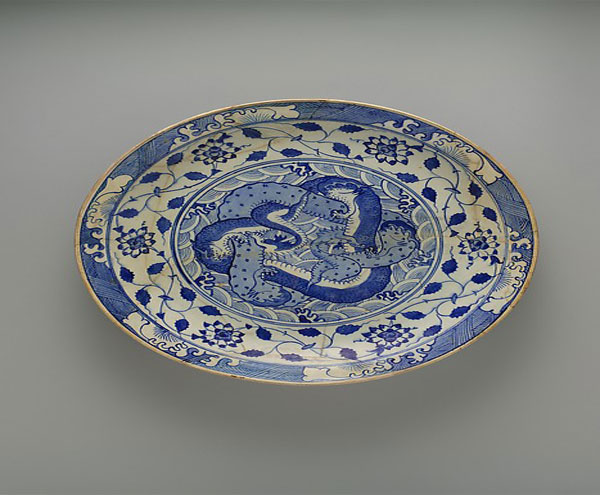
Prominent archeologist Roman Ghirshman said, “The taste and talent of these people [Iranians] can be seen through the designs of their earthenware.”

Of the thousands of archeological sites and historical ruins of Iran, almost every one of them can be found to have been filled, at some point, with earthenware of exceptional quality.

Thousands of unique vessels alone were found in Sialk and Jiroft sites.

The occupation of the potter (kouzehgar) has a special place in Persian literature.

Calligraphy

Persian calligraphy has several styles. The style initiated by Darvish was emulated by his contemporaries–Mirza Hassan Isfahani, Mirza Kouchek Isfahani and Mohammad Ali Shirazi.

After his death, the Shekasteh style fell into stagnation until it was revived in the 1970s.

Says writer Will Durant: “Ancient Iranians, with an alphabet of 36 letters, used skins and pen to write instead of earthen tablets.”

Such was the creativity spent on the art of writing. The significance of the art of calligraphy in works of pottery, metalwork and historical buildings is such that they are considered deficient without the calligraphic adorning.

Illuminations, especially in the Qur’an and works such as Shahnameh, Divan-e Hafez, Golestan and Boustan, are recognized as highly invaluable because of their delicate calligraphy alone.

Vast quantities of these are scattered and preserved in museums and private collections worldwide such as the Hermitage Museum of St. Petersburg and Washington’s Freer Gallery of Art among many others.

Tilework

Tilework is a unique feature of the blue mosques of Isfahan. In the old days, Kashan (kash + an literally means “land of tiles”) and Tabriz were famous centers of Iranian mosaic and tile industry in the past.

Since centuries, Iranian art has developed particular patterns to decorate Iranian crafts. These motifs can be:

– Inspired by ancestral nomad tribes (such as geometrical motifs used in kilims or gabbehs).

– Islam influenced, with an advanced geometrical research.

– Oriental based, also found in India or Pakistan.

Khatamkari

Delicate and meticulous marquetry has been produced since the Safavid period. In fact, khatam was so popular in the court that princes learned this technique alongside music and painting.

Khatam means incrustation and Khatamkari refers to incrustation work. This craft consists in the production of incrustation patterns (generally star shaped) with thin sticks of wood (ebony, teak, zizyphus, orange, rose), brass (for golden parts) and camel bones (white parts).

Ivory, gold or silver can also be used for collection objects. Sticks are assembled in triangular beams, themselves assembled and glued in a strict order to create a cylinder 70 cm in diameter, whose cross-section is the main motif: a six-branch star included in a hexagon.

These cylinders are cut into shorter cylinders, and then compressed and dried between two wooden plates, before being sliced for the last time, in 1 mm wide trenches.
These sections are ready to be plated and glued on the object to be decorated, before lacquer finishing. The trench can also be softened through heating in order to wrap around objects.

Many objects can be decorated in this fashion, such as jewelry/decorative boxes, chessboards, pipes, desks, frames or some musical instruments.

Khatam can also be used in Persian miniatures, making it a more attractive work of art.

Based on techniques imported from China and improved by Persian know-how, this craft has existed for more than 700 years and is still practiced in Shiraz and Isfahan.

Minakari

Enamel working and decorating metals with colorful and baked coats are one of the distinguished artwork in Isfahan.

Although this course is of abundant use industrially for producing metal and hygienic dishes, it has been paid high attention by painters, goldsmiths and metal engravers since a long time.

Worldwide, it is categorized as follows:

1- Enamel painting
2- Charkhaneh or chess-like enamel
3- Cavity enamel.

Enamel painting is practiced in Isfahan and specimens are kept in the museums of Iran and abroad, indicting that Iranian artists have been interested in this art and used it in their metalwork ever since the rule of Achaemenian and Sassanid dynasties.

Since enamels are delicate, we do not have many of them left from ancient times. Some documents indicate that throughout the Islamic civilization of and during the Seljuk, Safavid and Zand dynasties, there have been outstanding enameled dishes and materials.

Most of the enameled dishes related to the past belong to the Qajar dynasty during 1810–90.

Bangles, boxes, water-pipe heads, vases and golden dishes with beautiful paintings in blue and green colors remain from that time. This art stagnated for 50 years due to World War I and the social revolution.

However, this art was fostered in terms of quantity and quality by Master Shokrollah Saniezadeh, the outstanding painter of Isfahan, for 40 years.

Since 1992, this art has begun to thrive after many distinguished artists began working in this field.

Ghalamkar

Ghalamkar (Qalamkaar, also qalamkar, kalamkar) fabric is a type of Textile printing, patterned Iranian Fabric. The fabric is printed using patterned wooden stamps. It is also known as Kalamkari in India which basicaly is a type of hand-painted or block-printed cotton textile.

Termeh

Termeh is a handwoven cloth of Iran, primarily produced in the Yazd province.

Weaving Termeh requires a good wool with tall fibers. Termeh is woven by an expert with the assistance of a worker called “Goushvareh-kesh”. Weaving Termeh is a sensitive, careful, and time-consuming process; a good weaver can produce only 25 to 30 centimeters in a day. The background colors which are used in Termeh are jujube red, light red, green, orange and black. Termeh has been admired throughout history: Greek historians commented on the beauty of Persian weavings in the Achaemenian (532 B.C.), Ashkani (222 B.C.) and Sasanidae (226-641 A.D.) periods and the famous Chinese tourist Hoang Tesang admired Termeh.

After Islam’s arrival in Iran, the Persian weaving arts were greatly developed, especially during the Safavie period (1502-1736 A.D.), during which time Zarbaf and Termeh weaving techniques were both significantly refined. Due to the difficulty of producing Termeh and the advent of mechanized weaving, few factories remain in Iran that produce traditionally woven Termeh. Rezaei Termeh is the most famous of the remaining factories.

Kilim

Kilims are flat tapestry-woven carpets or rugs produced from the Balkans to Pakistan. Kilims can be purely decorative or can function as prayer rugs. Recently made kilims are popular floor-coverings in Western households.

Kilims are produced by tightly interweaving the warp and weft strands of the weave to produce a flat surface with no pile. Kilim weaves are tapestry weaves, technically weft-faced plain weaves, that is, the horizontal weft strands are pulled tightly downward so that they hide the vertical warp strands.

When the end of a color boundary is reached, the weft yarn is wound back from the boundary point. Thus, if the boundary of a field is a straight vertical line, a vertical slit forms between the two different color areas where they meet. For this reason, most kilims can be classed as “slit woven” textiles. The slits are beloved by collectors, as they produce very sharp-etched designs, emphasizing the geometry of the weave. Weaving strategies for avoiding slit formation, such as interlocking, produce a more blurred design image.

The weft strands, which carry the visible design and color, are almost always wool, whereas the hidden warp strands can be either wool or cotton. The warp strands are only visible at the ends, where they emerge as the fringe. This fringe is usually tied in bunches, to ensure against loosening or unraveling of the weave.

 

Iran’s First Mud-Hut Hotel
Iran’s first hut hotel was recently opened for tourists in the city of Qal’e Ganj in southern Kerman province, southeast Iran. The hotel can host up to 60 guests in its 31 huts. All goods, equipment and handicrafts used in the huts are produced by local inhabitants and craftspeople. The project was undertaken by the charities Iran Mostazafan and Janbazan (foundations for the oppressed and disabled).

Visitors now have the chance to experience traditional Iranian desert dwellings, but without missing out on the luxuries of a modern hotel.


Sobatan’s Alpine Valleys
Sobatan is a beautiful region located near Neor Lake in Iran’s northern province of Ardebil. Its beauty and peace attract many local visitors and foreign tourists each year, as its cool climate offers an escape from the summer heat of the plains. The region is also renowned for its livestock farming, producing some of Iran’s best quality meats and dairy products.


Qeshm Geopark to Become Tourist Destination


The Director of Qeshm Island Geopark announced that the park will be added to the list of global Geoparks when it is registered by the United Nations Educational, Scientific and Cultural Organization (UNESCO).

Hamid Reza Mohsenpour made the announcement while talking to reporters on Saturday June 11. Recorded as the only Geopark in the Middle East, the Qeshm Geopark has capacities which will turn it into an Iranian tourism brand, the official said.

The 7th International UNESCO Conference on Global Geoparks, which is to be held in Britain in September, 2016, will discuss the issue of Qeshm Island Geopark, the official said.

Two inspectors from the Global Geoparks Network will travel to Iran about two months before the Conference to compile a final review of the situation in this southern Iranian island. After discussion at the UNESCO meeting, the green card will be awarded to Qeshm, Mohsenpour noted.

Located in the strategic region of the Perisan Gulf in south of Iran, Qeshm Island Geopark holds a special position.