Alamout Castle, Headquarter of Assassins

Alamout Castle, Headquarter of Assassins

A trip to Alamout castle is full of wonders. It’s a hidden place among the high mountains of the Alborz, which assassins used as a stronghold for almost a couple of centuries to organize resistance against the foreign invaders occupying Iran. The incredibly hard terrain and location of the path to Alamout fortress had kept it from the eyes of the passer-bys.

You can only discover the genius choice of location and its marvelous architecture when you visit this Ishmaelite stronghold at the North East of Qazvin.

The Alamout Castle Itself

There are around 20 castles identified as Ismailis’ strongholds around Qazvin, where Alamout is located. Some local governors of the region, especially those known as the Alborz rulers, had used it as their own fortress. Hasan-e-Sabbah, the famous Iranian leader of Ismailis managed to make a plan to seize it without fighting or killing anyone. Therefore, it wasn’t built by him. First, he came to the area to work as a teacher and then found some allies inside the castle and via them, Hasan-e-Sabbah entered the stronghold and asked the previous owners to leave.

The constructional materials of this castle are bricks, gypsum, sarooj (traditional cement in Iran) and similar materials. It’s got four stories carved inside the rocks as well as several guard posts to have a good look over the valley. When you’re up there, you can see all around and beneath the hill. That’s why they call it Alamout – “Eagle’s Nest”.

Best Time to Visit Alamout Castle

If you plan to visit this site in Spring, April and May are the best times. If you go there in Fall, September and October are the best time. During these months, you can avoid the extreme heat or cold and there would less likely be any unpleasant weather conditions.

In Spring, when you drive toward this area, you will see the soft curves on the hills covered by natural grass creating a velvet-like scenery. The sunshine would also be pleasant and enjoyable. Coming from a polluted city like Tehran or other similar cities, you will certainly appreciate the huge amount of pure oxygen and astonishing landscape.

How to Reach Assassins’ Stronghold

Today, when you travel from Qazvin to Alamout, you have to cross high mountains and take hundreds of curves on a good road asphalted all the way for approximately 120 km. On the way, you will see the awesome mountains and difficult pathways the people had to take on the ancient times. You will wonder how they could make such a journey to find a fortress that isn’t easily noticeable.

On the other hand, because of the extremely cold winter time in this area, it’s unimaginable how people could survive in this remote place. You will find it amazing why they chose this location as a perfect hideout from which they planned and organized the hit-and-run missions.

You should bypass “Moalem Kelayeh” village on the way 20 km before getting to another village called “Gazorkhan”. From there, there’s few hundred meters to the foothill where the only pathway leads to the entrance of the castle. The interesting point is you get there and you cannot easily pinpoint where it is, because Alamout Castle is carved inside a huge rock that looks like every other rock on this mountain range.

About Ismailia

This sub-branch of Shiites Islam is known as Ismailia that is historically known as assassins in the Western world. It didn’t originate in Iran. The followers of this belief had entered the political realm of other countries like Syria before Iran. The founder of this movement in Iran is Hasan-e-Sabbah who traveled to west Asia and North Africa and learned about them before coming back home.

He used to be a fervent Sunni Muslim arguing with Shiites first.  Then, he traveled to Egypt and Syria as a result of which he converted to Ismailism. The political situation of Iran and people’s living conditions under foreign occupation led him to take this idea very seriously and use his leading capability in organizing volunteers fighting against the enemies, Seljuks.

Ishmaelite movement in Iran is an example of a nation resisting against the foreign invaders’ oppression at home and how to cast fear in their hearts to create the feeling of insecurity in them. Iranians couldn’t mobilize an army to fight against Seljuks then. Therefore, the only way to show them they were not welcomed and should not feel at home was to assassinate their people in charge. This is the core of this movement and unlike the claims of other sources, young people didn’t attack officials to kill them in hope for getting to the heaven and enjoy paradise. Shiite Islam emphasizes on Martyrdom very much, but this was more of a political movement that naturally any nation may have picked as an inevitable method.
arg-e-karimkhani-citadel

arg-e-karimkhani-citadel

If you’re interested in walking and if long-distance drives have made you tired enough to long for a walking tour in Shiraz, you will enjoy this sightseeing excursion. It takes half a day and you visit 6 major sites before ending up in an enjoyable local restaurant where traditional food is served.

What I’m introducing to you at this post is the Zand Quarter that was initially built in the second half of 18th century when Karimkhan-e-Zand was ruling over most parts of Iran from Shiraz. This is the flourishing era of Shiraz when a lot was constructed and economy was thriving. The king, who preferred not to be called as such and named himself Vakil-o-Roaya (Attorney of Servants), had chosen to build a citadel in the heart of the city and ruled form there. So, you can begin your sightseeing from this spot.

1. Arg-e-Karimkhany (Karimkhan Citadel)

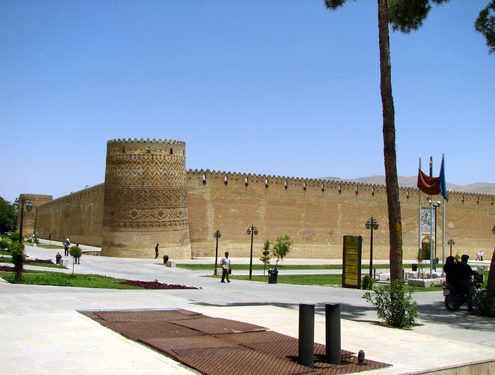
When you’re taking your tour to Iran, you rarely come across such a thing as an old citadel of huge size and quality in the center of a city. This is a rectangular brick-made fortress with bastion at all its corners located at the North East of Shahrdary Square. Karimkhan used to live inside this structure and ruled from this point. The stronghold appearance of this arg may make you think of anything but a presidential palace, but it has actually been such a building inside for him.

Karimkhan’s residence has got a decorative panel of glazed tiles on top of its Eastern entrance depicting Rostam, the protagonist of Shahnameh, the epic poems of Ferdosy, Iranian poet of 10th and 11th centuries. It resembles fighting against demonic forces. Inside, you’ll find a garden with orange trees and four major sections in the middle of each wing. In addition, there’s a private bath at the South East of this large courtyard that’ worth a visit.

2. Pars Museum

A View of Pars Museum Facade in Shiraz

A View of Pars Museum Facade in Shiraz

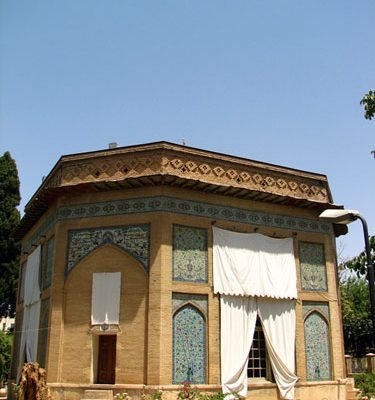
Around Arg-e-Karimkhani, there is a little park these days and the pedestrians’ street, which is in fact a roof on top of an underpass for cars driving under Zand quarter. On the other side of this street and almost at the south of the citadel, there can be seen a mall but elegant octagonal building inside a garden called Nazar.

This mansion used to be called kolah farangy (foreign hat) building too, because it seemed to be like what people used to know as a foreign hat. It has been converted into what is called Pars Museum today.

Karimkhan used to meet with the dignitaries both inside and outside Iran who came to his court for official visits. Now, it is the exhibition of exquisite Qorans, lacquer-painted boxes, beautiful paintings, etc among other stunning objects that invite visitors to spend some time there to appreciate the art of Iranians.

3. Vakil Mosque

A View of Vakil Moque in Shiraz

A View of Vakil Moque in Shiraz

Walking along the fences of Nazar garden toward East and a little before the main entrance to the bazaar, on your right-hand side, you will see a relatively broad street leading to the entrance of Vakil Mosque.

From far distance, it easily invites you to its colorful celebration of striking glazed tiles bearing beautiful floral patterns. After passing across a wide-open courtyard, you will enter the Southern Shabestan where a columned hall is hidden behind its tall entrance portal.

This hall is generously filled with pillars set in precise order and distance. They are so monochromatic that you will immediately notice the tiled ceiling leading you from the entrance to the mehrab. You won’t hues there’s such an elaborate mehrab and menbar (preacher’ seat) somewhere in this mosque when you were strolling at the courtyard.

4. Vakil Bathhouse

Inside Vakil Bathhouse in Shiraz during a Carpet Exhibition

Inside Vakil Bathhouse in Shiraz during a Carpet Exhibition


This public bath is a few meters to the West of Vakil Mosque. You will find interesting architecture of Zand Era as well as tasteful decoration of cultural authorities of Shiraz in it.

The vax statues of people from all walks of life living during that period, tells you more about life in 18th century Iran. You will learn about different parts of a typical public bath as it used to be.

This bath used to had been converted into a restaurant and then an exhibition of Persian rugs. Eventually, it’s been decided to use it as a museum in which traditional bath ambiance is introduced.

5. Vakil Bazaar & Sara-ye-Moshir

Just go back to the main street where you were walking from Pars Museum toward East and walk a bit further on the same direction to get to the main entrance of the bazaar. You will reach a point where on both Northern and Southern sides of the street, you will find entrance to Shiraz bazaar. Which one is the more exotic for most of the visitors? The Southern one does. It’s got very colorful shops and aromatic atmosphere thanks to the herb shops at the beginning of its passageway. The Northern one is the section where most of the local people go to for shopping necessary items of an ordinary lower middle-class family. It has its own charm as well. If your time allows, you may want to explore this one as well.

You will be amaze by the fascinating high-arched ceilings of Vakil Bazaar at the Southern section. Soon after you enter, there’s a chaharsoo, a dome with four directions underneath. It gives you an idea of the passageways crossing the main one offering similar items, workshops, warehouses, etc. Proceed to the end of this passageway and you will see dozens of fabric stores selling glittering materials usually Qashqai nomads go to Shiraz to buy to make their traditional costume.

At the end, turn left and walk less than 10 meters to find an entrance on the left that leads to the astonishing set of stores offering Iranian traditional handicrafts from carpets to enamel works, from inlaid wood-works to copper-made items, etc. This colorful place I called Sara-ye-Moshir.

This section is an impressive part of the bazaar easily distinguishable for its charming tile works and the pool in the middle of its courtyard. Several types of handicrafts from Fars province can be found here.

6. Eat in Sara-ye-Mehr Restaurant

This is a traditional restaurant inside Sara-ye-Moshir. The ambiance and decoration are like Iranian teahouses in the past couple of centuries. Traditional food is served including kebabs, stews as well as Dizi, traditional broth. The food is delicious and your dining experience will keep you in the same traditional mood of the past. You may feel you eat during Zand period!

Half Day Tour Ends Here!

This walking tour is very appealing to most of the foreign travelers. You will enjoy it and feel you’ve seen plenty of Iran in the 18th and 19th centuries. You will be immersed into the local culture so much that you may forget this country has changed! I’m sure you will get a strong impression of the pat as well as today’s traditional Iranian lifestyle. So, take this walking tour of Shiraz in half a day and get acquainted with what’s out there.

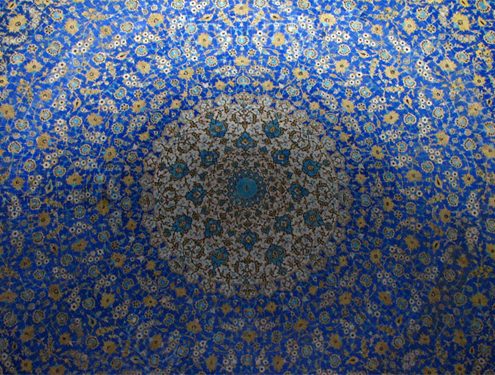
Ceiling of Imam Khomeini Mosque in esfahan

Ceiling of Imam Khomeini Mosque in esfahan

Isfahan is certainly one of the most-liked destinations inside Iran among foreign travelers. A walking tour of Esfahan in half a day will surely make you familiar with the ambience of traditional Iran and some of the most awesome monuments of this beautiful city. This is going to be a visit in and around Imam Khomeini Square formerly known as Naqsh-e-Jahan (image of the world) with several tourist attractions.

If your purpose of traveling in Iran is to learn about the highlights of the Islamic architecture together with bazaar, Handicrafts, garden planning as well as people, this walking tour of Esfahan is for you. It will take half a day, but will impress you with the varieties and utmost examples of Islamic architecture in Iran.


Begin Walking Tour of Esfahan with Chehel Soltun Palace

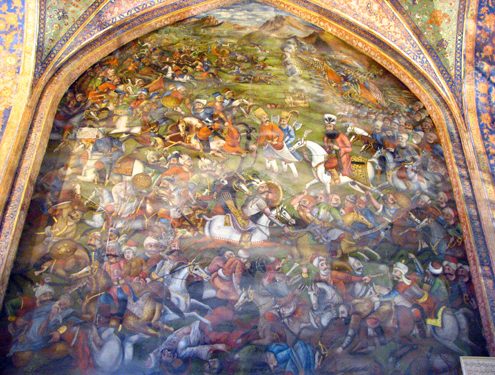
Mural Painting Inside Chehel Sotun Palace

Mural Painting Inside Chehel Sotun Palace


This royal building is located outside the mentioned square, but in a short distance from it. Make sure you begin with it first in the morning. When you enter the garden in which this palace is located, you will see the front of the building opposite the entrance. Chehel Sotun means forty columns and it refers to the number of columns in the portico of this structure in addition to their corresponding reflections in the water of the large pool in front of it. Such reflection can only be seen in the morning as the building looks at the East. Besides, forty is the number of abundance in Iranian culture.

Chehel Sotun in situated within a Persian garden with tall trees, beautifully kept lawn and flowers and surrounded by fences, previously walls.

Around the middle of the 17th century, Shah Abba II ordered this administration structure to be constructed so that he could use it as his office to meet with people and address his audience indoors as well as outdoors whenever required.

Probably the most outstanding decoration you will see at this palace will be the six huge mural paintings inside showing how Safavid kings protected their power and received other kings and governors. At the lower parts of the walls, there can be watched a series of Iranian miniature paintings depicting mostly courtiers, kings and nobles having a drinking party inside Persian gardens.

On the exterior sides of the palace and close to the back of it, you will see clear influence of European arts of 17 and 18 centuries practiced by Iranian Artists of that era.

Proceed to Isfahan’s Imam Komeini Square

There’s only a small park distance between the palace and Imam Khomeini Square. You cross this green area in less than 10 minutes and find yourself in an overwhelming large square that has accommodated hundreds of stores among three major monuments from 17th century. Shah Abbas I, who moved Safavids’ capital city from Qazvin to Esfahan, started this royal project at a virgin ground where no other structures were in place. This 160 by 500 meters open space was the showcase of the king’s flourishing economy and dedication to Shiite Islam.

The three main monuments around the square are Jame Abbasy Mosque (today known as Imam Khomeini Mosque), Sheikh Lotfollah Mosque and Aliqapoo Palace. It took various time periods for them to be completed, but all of them started to be constructed more or less around the beginning of 17th century. Today, UNESCO recognizes this square as World Heritage Site and the absolute majority of international travelers love to visit it time and again. It’s beautiful in the morning, but many also love it in the evening with illumination around the monument as well as shops’ window lights.


Make a Visit to Imam Mosque First

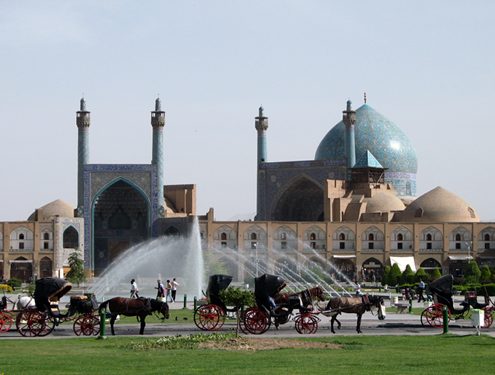
A View of Imam Khomeini Mosque in Isfahan

A View of Imam Khomeini Mosque in Isfahan

As both mosques are used as monuments and active worshiping places, you are recommended to visit them first and go to the palace later. Imam Khomeini Mosque is located at the Southern part of the square. Although Esfahan had its Friday mosque prior to the construction of Jame Abbasy, Shah Abbas decided to build his royal temple here. The beauty of this mosque is breathtaking and you will see the ultimate expertise of Iranian architects at the time of creating this mosque.

Plenty of lapis lazuli and turquoise tiles as well as exquisite inscriptions done by Reza Abbasy, the well-known artist of Safavid era are some of the unique characteristics of this monument. The spacious courtyard with four eyvans leading to roofed areas of the mosque are marvelously decorated inviting visitors to enter and enjoy the serenity of the temple.

This mosque has got four minarets and two symmetrically SE and SW of the courtyard used as madrassa. Another section at NE was used for treating the corpse of Muslims before transferring to graveyard.


Next Is Sheikh Lotfollah Mosque

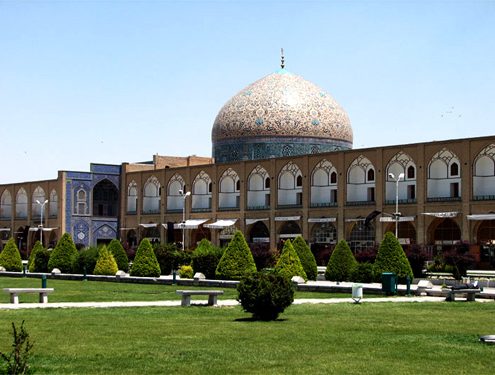
A View of Sheikh Lotfollah Mosque in Esfahan

A View of Sheikh Lotfollah Mosque in Esfahan


This mosque is named after the father-in-law of Shah Abbas I. The fact that it doesn’t have any minarets and doesn’t provide a large space for worshipers approves the reality that it was built to be used by the royal family members. They could spend their time on contemplation and worshiping God in a quiet place without any disruption.

The buff color of its dome as well as beautiful inscriptions worked out by mosaic work and exclusive motifs and decoration style of the interior have all contributed to the uniqueness of this mosque.

You should remember to complete the visit to this building before the noon prayer as it will be closed to visitors and only worshipers can get in at that time.

The Last Monument to Visit Is Aliqapoo Palace


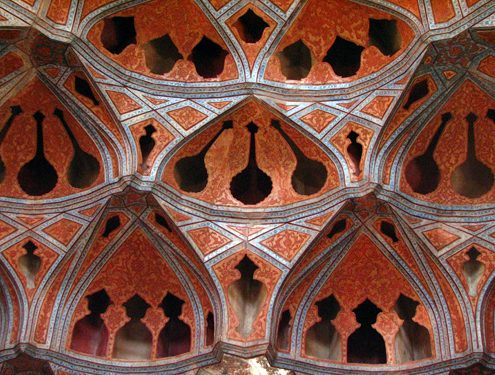
Ceiling of Aliqapou Palace in Imam Square

Ceiling of Aliqapou Palace in Imam Square


Shah Abbas I had included his residence and office to this square at the Western side. The tallest building of the square with a portico overlooking the square is Aliqapoo palace. This massive building has been standing for approximately 400 years without a steel structure. Of course, in recent decades efforts have been made to reinforce it to make sure it will stand the passage of time and weight of its upper floors.

On the sixth floor of this palace, there are some connected private rooms for the royal family who could enjoy the music played live for them. Therefore, the decoration is very unique making sure no echo could create distortion for the audience listening to musicians.

At the portico of this palace, you will have best view of the entire Imam Square and the other monuments as well as the Mount Soffeh at the South of Esfahan.

Lunch Time Is Now

By this time, you have covered the magnificent Chehel Sotun palace and the main sites of the square. It’s time to dine and you can choose either one of the restaurants inside the square or take other choices outside the square.

Most of the shops will close down in the middle of the day and it will not be very useful to spend your time there during siesta time. Thus, you may prefer to take some rest or get involved in other activities. Later in the day, you can come back to the square and explore its workshops, handicraft stores and so on.

Such half-day walking tour of Imam Square in Isfahan is unbelievably rich experience that will impress you for the rest of your life.

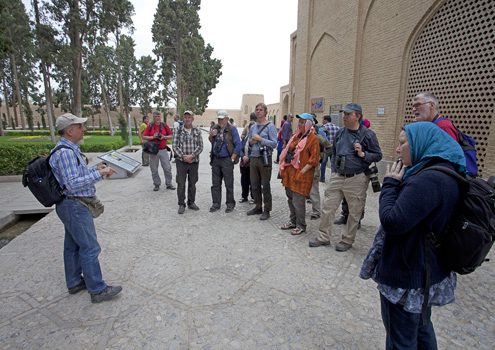
Recently I’ve noticed that large groups of international travelers visit Iran being accompanied by some guide coming from their countries who is specialized in some field somewhat related to what’s available in Iran. They could be specialized in Islamic studies, ancient history, Islamic architecture, etc. Of course, it could add a lot to the quality of the tours coming to visit our country. I appreciate those companies that send such proficient guides along with their groups although it would be much better if they also inform them what they know is part of what travelers want to know, not all of it.

iranian-tour-guide

iranian-tour-guide

I prefer to talk directly to those who travel to Iran in such groups and ask them not to miss the opportunity to learn from Iranian tour guides. They can do a lot for you. Here are three reasons why I say so:

1. You Travel to Iran to Hear the Voice of This Country

You have certainly waited for years for the right time to make this trip to Iran. Now, it’s your time to spend on such a tour to explore an unknown country and find out the realities first hand for yourselves. For years, you’ve been exposed to the available media at your countries and have read and learned several things from their perspectives. If you think you’ve learned sufficiently, there’s no reason to visit Iran anymore.

Therefore, there must be good reasons why you want to see the country for yourself. You certainly want to see what’s out there in the streets, countryside, etc. You want to hear from them what their worries are and how they plan for their lives. You want some real information from those who live there about their wishes, visions, needs, and so forth. Don’t you want to know how they handle different situations? Don’t you want to know how they get married, divorced, involved in business, travel, provide for their families, and many other things?

An Iranian silent guide isn’t the person to answer these questions even if you have a guide from your country who has traveled to Iran several times, studied several fields of arts, religions, anthropology, etc. The most accessible knowledgeable person who can answer all these questions and more is the one who travels with you all the time, the Iranian tour guide. Ask him and you will learn what Iranians’ perspectives are. I’m sure you will be amazed by the world of difference between what you’d heard and read before and what you discover for yourselves. In a word, let your guide speak out!

2. You Take a Tour to Iran to Learn about Iranian Version of Things

Again, I speak from experience, you may have read several specialized books about archaeological findings in Iran, cultural formation of an area, etc. Please go back to those books and see how old those books are, who has written them, etc. I assure you that you will hear new ideas and news in various issues. Even in architecture, a lot of books have been written after 1979 revolution that have not been translated to other languages. They suggest new theories, introduce new sites and findings, etc which could principally change the entire landscape of what had been written four decades ago. These are some of the sources of information available to the guides in Iran.

Iran is a developing country in various aspects. Things change quite rapidly. Books and reports aren’t published and distributed across the world about such developments. When you travel to Iran and let your Iranian tour guide explain those things to you, you will hear things you’d not read or heard of before. This is the privilege of traveling to Iran and finding out realities of today’s Iran for yourselves.

A silent tour guide in Iran cannot give you the latest information you need to know. You may have a local guide accompanying you all the time. You also have your own guide with you. Does he let him talk to you directly and express himself or he takes hold of microphone all the time and tries to impress you with his knowledge? Let your Iranian guide not remain a quiet one. Ask him and he will tell you a lot.

3. An Iranian Silent Guide Could Do Great for Your Nature Tour

I would say this isn’t right either. A safari tour, a mountain climbing tour, a bird watching tour, etc, could be the one you’ve taken to enjoy the nature. Your local guide is the one who knows how things work in his/her country. If a situation doesn’t turn in your favor, you need someone to do something for you. If you’ve already established a powerful rapport with your guide, she/he would go an extra mile to get you out of the troubled situation, negotiate with locals of his/her country to make a way for you, connect with more and more people he knows to provide better for you, etc.

I wouldn’t imagine a silent member of the group who has been pressed to the corner to keep quiet, would voluntarily jump into every situation to impress you and help your journey to turn into a great one. Human interaction and closely-built connection can bring about miraculous results. How would you expect an Iranian silent tour guide to go forward persistently for something you desire to happen? Don’t you think you can count on a someone who has been considered a pivotal member of the group both in words and action?

Final Word About Iranian Tour Guides

When I speak about iranian tour guides, I’m telling you about a particular class of people who are in an international business experiencing a lot of various situations. They’ve seen so many people like you before. They’ve found themselves in tons of similar situations before at the same country. They have friends and connections all over the world. Many of them could have left their country to live somewhere else, but they have chosen to stay in Iran and present their countries as best as possible.

Iranian Tour guides go through tough tour guiding training and learn about several topics. Not every soul graduated from such training courses become a national/local guide. It takes potential, dedication and love. They don’t like to stay quiet and usually they won’t as they feel they are there to say something.

What Do You Prefer?

Do you prefer your Iranian Tour guide to be a silent one or a talking type?

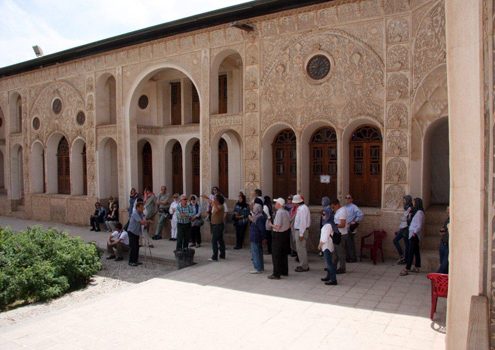
Very Large Group

Very Large Group

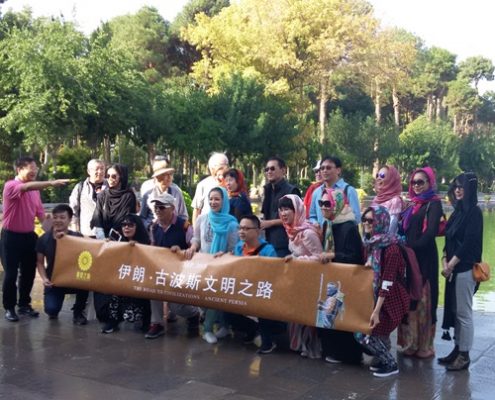
Tourism is undergoing a new phase in Iran facing much larger number of travelers visiting the country compared to the previous years and even decades! Therefore, all the professionals involved in this industry have to tackle several issues from visa and booking to guiding and transporting clients. From practical point of view, as a tour guide who is back from two extra large groups, I want to mention the problems you may face if you travel as such.

Group Size for Tours in Iran

There are various numbers of people traveling either alone or in groups in Iran. I’m categorizing the groups in an approximate manner based on my experience here.

Some prefer to hire a guide and a driver, or a driver-guide to explore the country. The means of transportation is usually a sedan or an SUV depending on the nature of the tour. These individuals pay a lot more for their journey and obviously experience more of what they want to see.

Small groups are the ones in which there are from 3 to 12. The tour groups traveling in such numbers in Iran are accompanied by a guide and a driver. Their vehicles are vans or minibuses.

Large groups are the ones in which 13 to 25 people are traveling together in buses. Although these buses are designed to accommodate up to 44 passengers, they are the only and ideal means of transporting such number of travelers.

And what I call the extra large group tours in Iran are the ones in which more than 25 people are traveling together in one bus with one guide! Yes, you’ve read it correctly. This is happening in Iran these days. I had two large groups to guide in spring of 2015, one was 34 pax and the other one 37 pax. From what I have experienced, here’s the conclusion:

Problem #1 of Extra Large Groups:

You Will Not Move on Rapidly Enough!

There are often some people who aren’t physically as fit as you are. Some are careless about the cause of the group and tend to enjoy their sluggish movement. Some ignorant ones walk with walkers, walking sticks or even sit in wheelchairs and still join a group! Don’t count on the tour operators whom you don’t know enough as they may invite everyone to sell as many packages as possible. Such operators only care about the larger financial benefit at the end of the tour. Extra large groups, even without such bonuses, tend to be much slower than smaller tour groups.

It takes time for the entire group to come together,

  • In the morning
  • Getting on and off the bus
  • Getting in and out of the museums & sites
  • Finishing their meals,
  • Etc.

Do you want me to tell a catastrophic story for you? In some groups, individuals pay individually for their meals before leaving the restaurants. For your information, this is a phenomenon Iranian restaurants aren’t prepared for. So, it would take ages!

In addition, such a tour will make you extremely exhausted. You have to start the day earlier and finish it later. There will be less flexibility and more strictness by the tour leader. He has to manage the tour like that to make sure all tour promises of the extra large group are put in action and covered.

Problem #2 of Extra Large Groups:

You will Not Be Sufficiently Informed!

It’s a likeable theory that buses have loudspeakers and microphones so that everyone could hear the guide’s explanation inside the bus. In practice, some buses have very good audio systems by which everyone can hear the guide from any seats. In some of the buses, some speakers aren’t working as perfectly as others. Sometimes, apart from technical inefficiencies, human factors could worsen the listening experience of receiving information like having extra low-pitch or high-pitch voices.

Not all the guides have got tour guide audio systems to gently talk, instead of shouting, and be heard by every tour member in Iran.  Actually, this is a new thing among Iranian tour companies. Although they will make your listening experience much richer and more convenient, imagine if some begin to ask questions and time flies away! By the way, how much time do you think you will get to contact your guide and ask your question?

Problem #3 of Extra Large Groups:

You will Not Make Enough Acquaintance with the Locals!

No matter how considerately your tour designer has worked to provide a rich experience for your trip, when the extra large tour group size is going on, things cannot be done the way you wish them to be done. A smart tour guide may arrange for some free time if the itinerary allows, but it would be just a small opportunity of what the tour should be like.

Have you ever experienced such golden moments when the tour stops and you’re on your own to explore the country’s culture? If you have such a time to feel the local culture, you will be amazed by how much people like to connect to you and get in touch with you. They love to talk to you, welcome you, ask you questions and invite you to a drink, meal, etc. How much of that type of experience do you think you will have in an extra large group?

How Could Extra Large Groups Be Avoided?

This is a question for you, because you are the ones who go to the tour companies in your countries and ask for a tour to Iran. Most of you, who plan to visit Iran, have traveled extensively before. Therefore, you are familiar with how to approach a tour operator, travel agent, etc and ask for a tour to visit Iran.

I would like to hear from you and see how you prevent such an experience. Please go ahead and leave your comments below here.

Iran-Photography-Tips

Iran-Photography-Tips

AS several people contact us and ask about tips on taking photos in Iran, this post addresses those questions. Most of you traveling to Iran face these essential questions and similar ones:

•    Can I bring my camera to Iran to take photos I like?
•    Can I take photos in Iran wherever I want to?
•    Is it possible to bring this or that photography equipment to Iran?
•    Will your country allow me to bring my professional camera to Iran?
•    And so on.

Those are the answers many of you would like to know so that you could plan your trip to Iran. In order to develop an understanding of how photography in Iran is possible, I’m going to offer you 7 practical tips you need to know about photography as a tourist in Iran.

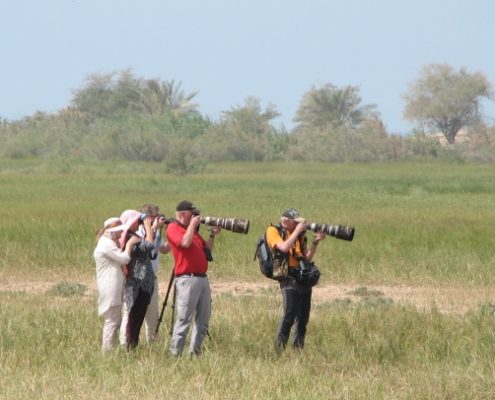
Tip No.1: Use Professional Cameras with Big Lenses outside historic monuments & Museums

Iran-Photography-Tips

Iran-Photography-Tips

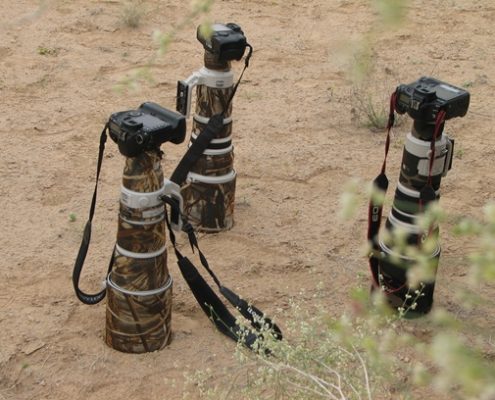
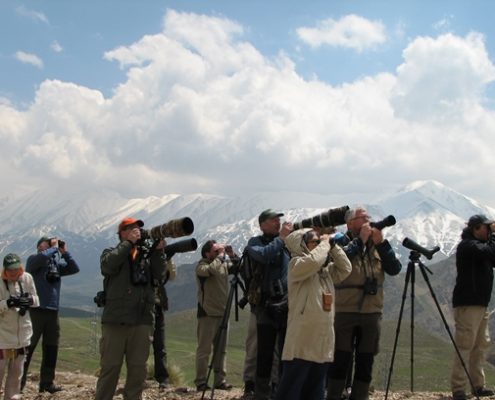
As the majority of the world travelers use small cameras or even mobile phones for the pictures they’d like to take in Iran, it grabs a lot of attention to carry big lenses with you when you visit a monument or museum. The people in charge of such places don’t allow such equipments unless you have special permit for them. Therefore, it’s not completely impossible to use such photography devices as professional cameras and/or big lenses in such places of interest.

However, when it comes to professional cameras with big lenses, you can always carry them with you outside monuments and museums without a problem. This is OK as long as you consider the photography dos and don’ts in Iran. You will enjoy the beautiful scenery out there in nature in Iran. So, as it’s alright to register those spots and moments, why not using your devices to take the best shot you can?

Tip No.2: Don’t Carry Tripods inside Museums & Sites

As a general rule of thumb, just like the prohibition about carrying big lenses inside historic monuments and museums, tripods are considered more serious equipments to use for photography. Amateurish photography isn’t supposed to need them. So, they are considered professional equipments. I know you may argue they are ordinary devices every photographer needs here and there, but I must say this is how tripods are looked upon in Iranian museums and sites. Therefore, you have to abide by the rules here.

Tip No.3: Apply for Special Photography Permit for Certain Places

If you would like to use particular equipments like those mentioned at the tips above inside certain sites, you have to ask specific organizations for special permits beforehand. This can be done by yourself, but it’s going to be time consuming for you as you spend limited time in Iran and you lose lots of time applying for photography permits in Iran.

A better way of obtaining such permits is through the tour operator arranging for your tour to Iran before you travel to Iran. If it’s possible to obtain such permits they know better how to apply and obtain them for you and provide you with them before you arrive in Iran.

Tip No.4: Take photos of People ONLY after They Allow You

Taking-Photos-Iran

Taking-Photos-Iran

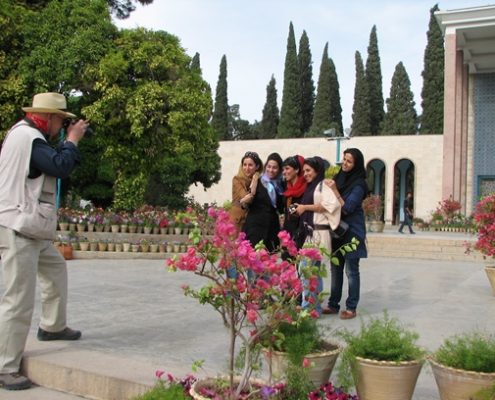
This is a very easy process as most of Iranians are so happy to take a photo with you or of you that you can easily get such permission. All it takes is a polite question with a friendly gesture. Don’t forget your smile! Of course, it doesn’t mean I’m introducing a general rule. There are many who wouldn’t like to be photographed. That’s why I have noted ONLY after they allow you to do so.

Some are conservative, shy, etc and don’t want to be in your photos. You must respect this and walk away. It’s no use to insist and argue. In some places like villages, remote parts of Iran, religious communities, etc, you have to be even more cautious as women don’t like to see anyone to take their photos. So, it’s better not to take the initiative to even ask. You can ask your tour guide for photography tips in such areas. Of course, sometimes, people themselves may take the first step and want to take a photo with you.

This is highly important to know that Iranians are very curious about the foreign travelers in their country. They may ask where you are from, what you do for a living, etc. Part of that is for practicing their foreign language. Art of that could be for learning about you.  Eventually, they welcome you to their country. Most of the time, they come forward to ask about your nationality, where you’ve traveled inside Iran, if you like Iran, which city, etc. This could break the ice between you and them. Everyone smiles and who knows, they may invite you to take photos with them before you apart.

Tip No.5: Don’t Take Photos of Prohibited Things

Traveling with or without a guide, it’s always safer to look around you, ask, etc to make sure it’s OK to take photos of certain places, things, facilities, etc. If it’s not, there must be no-photography signs nearby. Sometimes, there are such signs although you may not see them immediately. Therefore, my advice to you is not to rush, take your time and ask before you get yourselves into trouble.

In general, you’re not allowed to take photos of military sites, police stations, people in military/police uniforms, etc. Sometimes, you may see such no-photography signs at industrial facilities. The common sense says follow the rules and walk away instead of insisting or trying to take pictures secretly.

A simple photography tip inside Iran is that even it could be prohibited to take photos inside museums too. Usually palace museums are like that. In such cases, you can usually find some DVDs or photo albums of the same site, museum, etc for sale.

Tip No.6: Taking Photos of Private Places

Privacy is of ultimate importance to Iranians and they don’t like you to take photos of their private places. If you’re walking in a neighborhood and some house’s door is accidentally left open and you can see indoors, don’t even think about taking a photo of the scene even if nothing seems to be specially important in there. You will intrude into their privacy by doing so. This isn’t tolerated or accepted at all. You must know this when you have a camera on you visiting Iran and you look for interesting sites to photograph.

This is true of taking photos of the people inside their cars. Although the windows may not function like walls, people feel it’s their private place. You’re supposed to respect this and avoid getting into their privacy.

Tip No.7: Watch out When you Take Photos of Yourselves

Taking-Photos-Iran

Taking-Photos-Iran

You may have come from a different culture in which normally people hug or kiss one another in front of camera and in public places. This isn’t common in Iran and creates unpleasant feelings among most of Iranians. You may see some Iranians pose for a photo while placing arms on each other’s shoulders or around each other’s waists, but it’s different from hugging.

This isn’t a rule applying only to the people of the opposite sex. It applies to the people of the same sex too and it’s disgusted by Iranians to see such scenes.

You Will Take Lots of Photos despite Such Facts

Iran-Photography-Tips

Iran-Photography-Tips


Don’t worry! You will soon find yourselves taking lots and lots of photos in Iran that it would amaze you. There are so many attractive things and places, people and moments that you will be blown away by the opportunities.

This isn’t a photography tip, but equally essential: Remember to bring some external hard disk, flash drive, etc to save loads of photos you take with you during your trip to Iran. You will regret if you forget to do so although you can always buy such things in Iran. Yet, there are moments that you realize your camera memory chips run out of space and you have to transfer those beautiful photos, which you’ve taken before, to somewhere safe. You can upload the photos to the cloud, some online storage service, etc, but the slow internet speed in some places in Iran may make you change your minds.

This was an effort to help you with your desire to know how you could be taking photos in Iran. If you have other questions not answered here, please eave a comment below this post.


book-hotels-iran

book-hotels-iran


As Iranian hotels don’t necessarily follow all the international standards, when you plan your trip to Iran, it would be very helpful to consider certain factors before you book a hotel in Iran.  These factors relate to your possibilities, wishes and interests. Therefore, you can mention them as your criteria while asking for the best accommodation matching your ideals.

Affordable Hotel Rates

Some of you are looking for budget hotels as affordability is your main concern. There’s nothing wrong about this criteria. It can be sought after in various levels. Some compromise on hotel standard levels so that they can spend their money somewhere else. At the same time, you certainly have some minimums in mind that form your definition of acceptable accommodation. Make sure you mention them to your agent too.

I must mention that I’ve not seen any 3-star hotels in Iran without private bathroom, refrigerator, TV set, air-condition, etc. I’ve even seen a top 2-star hotel in which all these could be found too. Yet, I just wanted to mention that if these are the basic facilities you require, rest assured that 3-star hotels have them all.

Least-Hassle Stay

If you’re looking for the least hassle possible during your stay in Iran, high-end hotels can be your choice accommodation to stay in. The level of responsiveness and preparation of the room facilities for your comfort at such hotels are the best in the country. Obviously, 5-star hotels and in some cities lower available hotels, 4-star ones, are the ones you have to pick up.

Generally, one thing is the main criteria in these hotels: Things work the way they are expected to work. However, in several 5-star hotels of Iran, I’ve seen that when you need something to be done at your room, it is usually taken care of as fast as they can.

Nevertheless, compared to the other hotels in Iran, if you want the least headache with the room amenities, high-end hotels, generally 5-stars, should be your choice hotels.

Less Payment & More Functionality

Sometimes, you don’t want to spend a lot of money just on your accommodation. Instead, you prefer to spend that budget on something else. Therefore, you choose 4-star hotels. Personally, I recommend a combination of 3 and 4 star hotels as some top 3 stars and ordinary 4 stars are very close to one another in terms of facilities, service and even rates.

On the other hands, there are some very good 4 stars in Iran that in 5-stare 5 stars and in terms of rates are very close to them. It could be the least number of hotel room availability in a city or lack of enough 3-star hotel rooms that causes a tour operator to shift to such hotel.

In general, it’s always good to know there are some 4-star hotels with acceptable quality in a city when you need them as an alternative to 5-stars, of course, at lower rates.

Hotels Close to Certain Spots

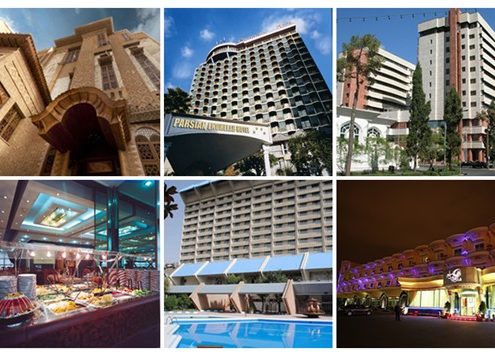
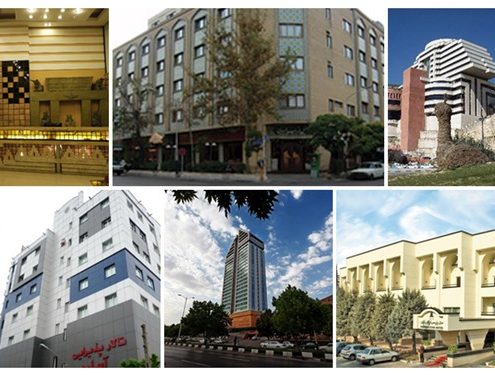
book-hotels-iran

book-hotels-iran

You may prefer to stay somewhere close to the museums, bazaar, shops, etc. If this is of high importance, you may have to compromise on the quality of hotel amenities, services, etc so that you could easily have access to those places in the vicinity of your place of stay.

In some cities, most of good hotels are scattered around the outskirt of the city, meaning quite far from the city center where usually most of the things are happening. Of course, such hotels have got their own benefits, quietness.

Accommodation with Character

Many have heard of certain hotels with character in Iran. They are usually old buildings converted to hotels like caravansaries, private houses of merchants, etc. Depending on how the restoration and redecoration has been handled, some could be really attractive and fun to stay in. Some are quite elegant too. There’s one thing in common in all these hotels: They remind the guests of the lifestyle in such buildings in the old times. The feeling of living in the past for a couple of days you could be so nice that you could close your eyes on certain things like small size of the rooms, etc. They are, in fact, part of the charm of the hotels.


Rig-Jenn

Rig-Jenn

There are some dark tourism sites in Iran that could attracts their fans to Iran. Such places create the same type of feeling and enthusiasm in their fans they’re looking for. As a reader of Iran tourism news and attractions, I’d never talked about it at Destination Iran. This is the first time I write about them.

What Is Dark Tourism?

By definition, it’s the tourism that involves traveling to places associated with death, grief, suffering and tragedy. Some call it “black tourism” or “grief tourism” as well. Such places create bitter and sad feelings in us. When people take tours to such places, they may visit the areas stricken by quake, flood, war, etc. The visitors learn about the human catastrophes, unpleasant situations, etc and how to cope with it. The inhabitants of such areas gain benefit from the money spent by such tourists.

Dark Tourism Sites in Iran

There’s huge potential for dark tourism in Iran. There are museums and sites for this type of tours. Some of them are:

  • Ebrat Museum: it showcases the torture of political prisoners in Iran before the 1979 Revolution by Shah’s intelligence service,
  • Shohada Museum: it shows the fallen soldiers and martyrs victimized by Iraqi imposed war against Iranians.
  • War-stricken areas: They witness the destruction resulted by Saddam’s invasion to Iran during 80’s,
  • etc.

The list can continue and include the areas suffering from post earthquake, war, flood, etc incidents. However, I’d rather take you directly to the top 6 dark tourism sites in Iran:

#1: Stone Garden of Darvish Khan

Darvish-Khan-Stone-Garden

Darvish-Khan-Stone-Garden

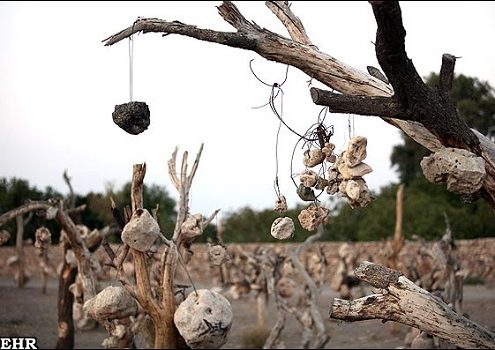
It’s also known as the saddest garden of Iran. Darvish Khan suffered from the land reforms in early 1960’s, which caused him to lose his garden. As a sign of opposition and resistance, he later decided to move his dried tree trunks to another location, 40 km South East of Sirjan, Kerman Province and hang small and large stones from their branches. Others thought he’d lost his mind. As he was mute and couldn’t communicate with others and explain his pain, people spread this rumor more widely. He died at the age of 90 in 2007. His body was buried at the same garden. Some go there these days to visit his garden and take photos of his stone garden.

#2: Earthquake-Stricken City of Bam

Bam-Earthquake

Bam-Earthquake

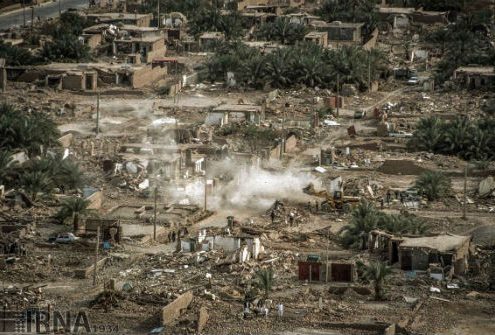
Earthquake is one of the deadliest nightmares human beings could face. Now, if it happens in a city where the world’s largest structure made of sun-dried bricks existed for almost 2000 years, the tragedy will be more sorrowful. In Bam, earthquake devastated approximately 90% of the city buildings in 2003. Soon after this disaster, UNESCO registered it at its World Heritage Sites’ list among other Iranian UNESCO sites. As a result, a budget was allocated to it for restoration. There are 12 countries working together on behalf of this organization to restore this huge site.

Lots of people lost their homes and their beloved ones. The city structures, mainly made of heavy bearing walls and mud bricks, soon turned into ruins. Humanitarian aids came from all around the world, but nothing could be done to reduce the human pain. This is the sad story of Bam inhabitants, which lingers on till now. The city and its ancient walled town had not returned to its previous state yet. Iranians cannot forget this calamity easily. The enthusiasts of dark tourism sites in Iran can visit Bam and learn more about the consequences of this disastrous incident.

#3: Khalu Hossein Carved Cave

Khalu-Hossein-Kuhkan

Khalu-Hossein-Kuhkan

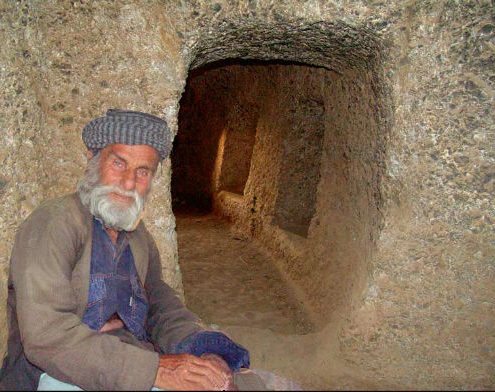
In Paveh area, Kermanshah Province, there’s a man called Hossein Kuhkan, know as Khalu Hossein or Farhad the Second (referring to an ancient mythological figure in Persian literature). He is a disabled man, who has lost a leg, but he’s very determined and hardworking. He has dug a cave with 7 rooms in 19 years. He’s even dug a grave for himself inside this cave.

Early in his life, during Iran-Iraq war, he lost his sons and sons-in law. His whole life turned to be nothing but loss. After the war, he came to a village called Banavareh or “Maygoreh” with a daughter of his. Khalu Hossein started digging the rocks with a spike and shovel to make a place for himself to pray, but later he continued this and despite others’ mockery, finished the job of fighting the mountain in 19 years. Today, several Iranians and non-Iranian travelers, go to this area to meet with him.

#4: Qasr Prison of Tehran

Qasr-Prison

Qasr-Prison

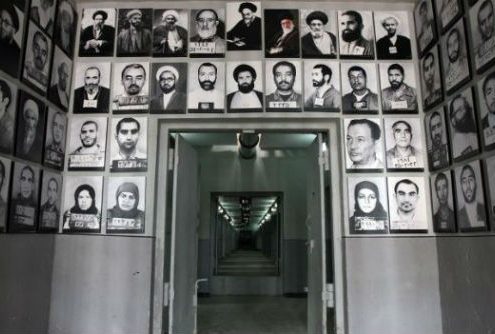
Before 1979 revolution in Iran, Shah’s regime imprisoned more than 10 thousands political prisoners in Qasr Prison. After the revolution, other prisoners were jailed there until 2004 when it was closed. The city authorities began to destroy it, but some opposed the idea and got it registered as National Heritage in Iran. Since 2012, it was turned into a a garden museum and there is a plan to convert it into Iran’s first prison hotel.

#5: Rig Jenn

Dark tourism sites in Iran aren’t limited to the historical buildings. There are some natural attractions that are also equally interesting to visit.

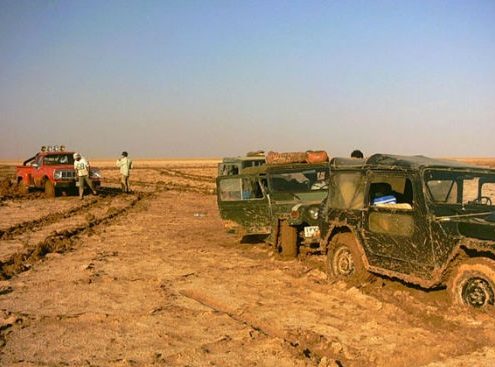
Somewhere in Dasht-e Kavir (Northern desert of Iran), there’s an area with lots of sand dunes at the South of Semnan, North of Chupanan and West of Jandaq called Rig Jenn. In the old times, as this vast area (3800 square km) has been very far from any source of water, even caravans didn’t go through it. It’s totally abandoned.

Due to some dominant strong wind in certain direction, it’s very difficult or sometimes impossible to go from the East to West of this area. Local people believe it’s a cursed area and nobody has returned from it. This is because of the existence of the moving sand dunes and salt marshlands dragging things down in it. In other words, the location of this area is moving and unknown.

Only in recent years, some researchers and adventure tourists have gone to Rig Jenn and liked it. Among the young Iranian safari fans with macho style, there’s a high level of interest to go to this area although everyone warns them about the consequences of not being prepared to face challenges. Wireless and electronic devices don’t work there. Maybe these mysterious features make it more interesting for the people to go there and explore one of the dark tourism sites in Iran for themselves.

#6: Khalaj Mount

It’s located in a village called Moghan at the south of Mashhad, NE of Iran. Because of its nature, soon after the sunset one may hear some sounds that are like the sound of crying or whistling. Therefore, many villagers and the local people have left that village.

Again, the sound heard at this mount has given it a mysterious reputation and local people have made stories about the invisible beings living there. That’s why it has become an interesting place to visit for the curious travelers.

Conclusion

If you are looking for some dark tourism sites in Iran, it’s possible to find some more too. The list isn’t limited to what I’ve introduced here. Actually, an ancient country like Iran has got plenty of such places with mysterious stories.

Note: This post is mainly adapted from an article by Ms. Afsaneh Jafary published in Persian by Miras-e Aria News Agency. I tried to choose and translate more interesting parts for you.

The joint efforts of Iranian-Italian excavation expedition bore further fruits in Tal-e-Ajory historical mound in the vicinity of Persepolis. The result has been a gateway had been constructed for an Achaemenian palace already in place before Persepolis had been built! Yes, the fact is that this discovery has unveiled some ambiguous unknown period about the ancient city of Parseh. The time period is between 559 and 521 BC, the era of the Persian Empire reigned by Cyrus the great and Cambyses.

The Square Structure of Gateway

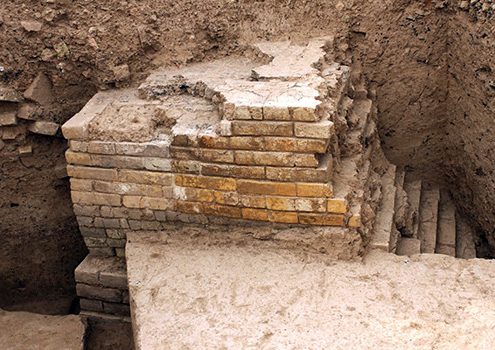
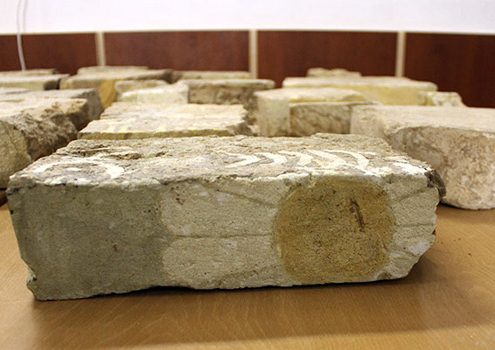
Part of the brick-made gateway

Part of the brick-made gateway

According to Cultural New Agency, the dimensions of the recently discovered gateway has been:

  • 40 m long walls on North-South side
  • 30 m long walls on East-West side
  • 10-12 m thick walls on all sides

This square gateway was built in a 40 sq meter area leading people in and out on SE and NW corridors. There could have been approximately 1000s of 33 cm by 33 cm bricks, each one 11 cm thick forming the gateway. After the fall of Achaemenians, this historical mound built by such large number of bricks was demolished. That’s why local people call it Tal-e-Ajory, meaning brick-made mound.

Art & Architecture at This Achaemenian Gateway

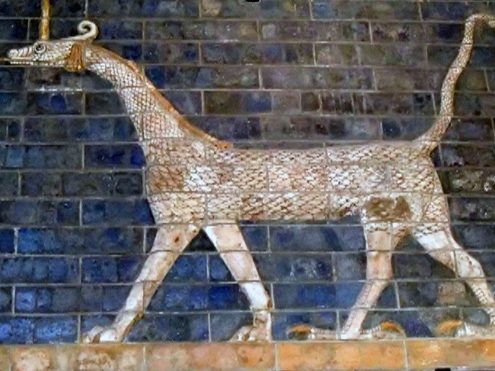
As a result of the recent archaeological excavations in Iran as well as studying 12 other Achaemenian monuments at this side of Persepolis, it’s largely speculated that this part of the ancient city of Parseh used to exist at the time of Cyrus the great and more importantly, before the construction of Persepolis. The reason for such inference is the fact that there are several similarities between the motifs on the glazed bricks of this newly discovered gateway and those of the Mesopotamian myths, in particular with those of Ishtar Gateway in ancient Babylon. Another similarity is found between the plan of the discovered palace near this Gateway and those of the ancient Babylon as well as Pasargadae.


Sample glazed bricks with patterns,

Sample glazed bricks with patterns

There can be found the traces of mythical animals on these glazed bricks. The most significant discovery of this season of archaeological excavations in Iran have been 30 glazed bricks decorated by combinations of winged animals. In most of them, there can be noticed mythical griffins of Elamite and Achaemenian eras depicted with the ancient traditions of SW Iran, Susa and the Mesopotamia. Among them all, Mushussu, is the legendary animal depicted on bricks like in ancient Babylon. It’s an animal that looks like dragons, lions and snakes combined.

Bas-relief of Mushussu in the Pergamon Museum,

Bas-relief of Mushussu in the Pergamon Museum


Approximately 100 m South of this historical mound, there’s another historical mound in which a large palace (50 m by 60 m) had been unearthed. The space between this palace and newly discovered gateway had been planned as Persian gardens with some water supplement structures. Geophysics studies have proved the existence of such gardens and their water supplying facilities.

More Discoveries at this Area

As more and more remnants of ancient monuments and archeological excavations are found at this area of Iran, an interesting fact is revealed to us: In an area of 600 square acres, there had been laid a landscape with several royal monuments as well as Persian gardens among them, creating a breathtaking view for those inside Persepolis.


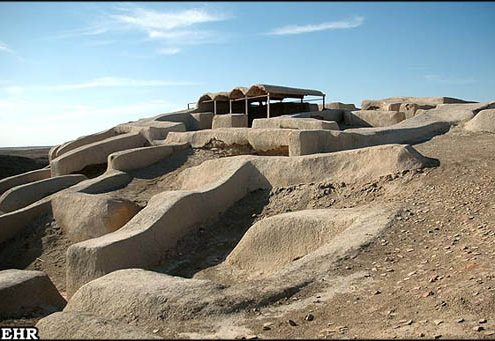
Shahr-e Sukhte

Shahr-e Sukhte

Shahr-e Sukhte (literally translated as the Burned City) has also been spelled differently as Shahr-i Shokhta in various sources. It is a vast archaeological site (151 hecares) made by mud bricks on the bank of the Helmand river, between Zahedan and Zabol cities, situated at South East Iran inside Sistan & Baluchestan Province. It dates back to the Bronze Age inhabited from 3200 to 1800 BC.

There were four stages of civilization living there. Before it was abandoned, the city had been burned down three times. Therefore, many had lost their lives. As a result, there’s a sizable graveyard attached to this settlement that has accommodated from 25,000 to 40,000 ancient graves.

The historical site consists of several historical mounds in a row. Each of them were allocated to a different function, like workshops, residence, graveyard, etc.

Archaeological Importance of Shahr-e Sukhte

There’s no doubt that this ancient human settlement is indebted its significance to the interesting artifacts unearthed there. Several items have been discovered in relatively very good condition and unique objects have indicated a brilliant civilization at Eastern part of Iranian plateau.

The List of some of the most outstanding unearthed items according to chtn.ir and wikepedia.org:

  • The skull of a 14-year old girl indicating traces of practicing brain surgery. She had eventually died as a result of the diagnosed illness,
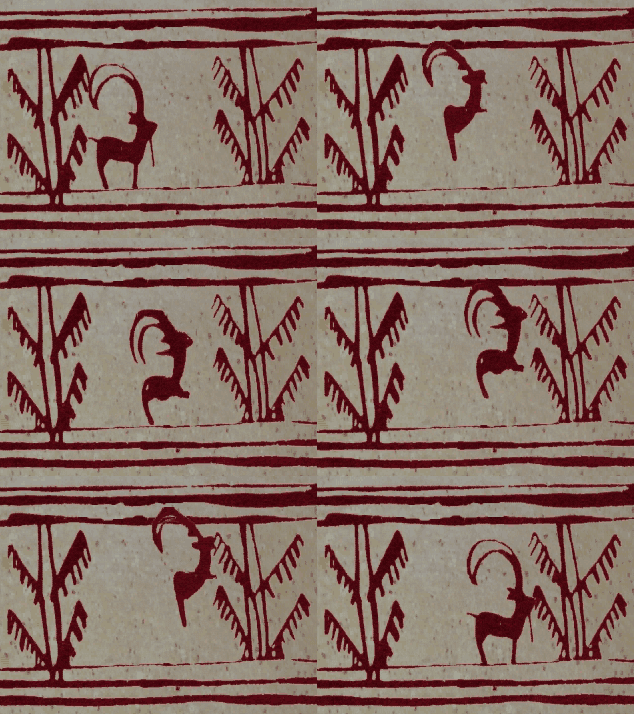
  • An earthen-made goblet depicting a goat in different running positions around it, which represents the first world’s animation example when turning,
Gif Animation courtesy of Historical Iran

Gif Animation courtesy of Historical Iran

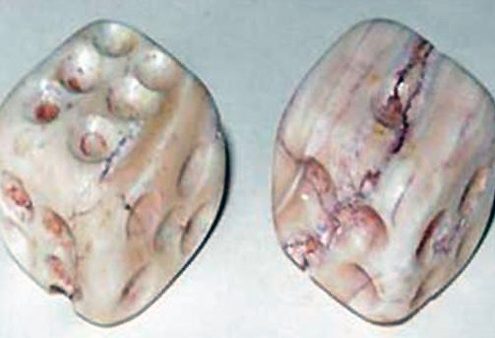
  • The oldest backgammon & dice ever discovered in the world indicating people used to play this game back then,
backgammon

backgammon

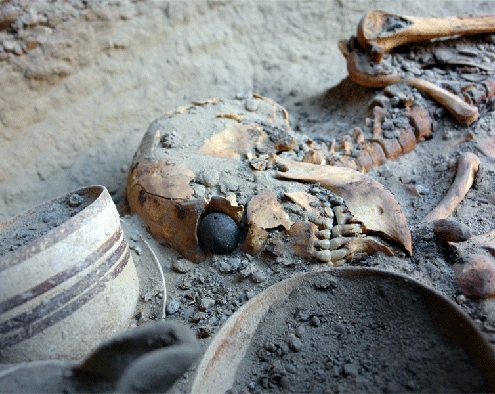
  • An artificial eyeball, which is known as the earliest example of its kind, made of a thin layer of gold on a light material,
burnt-city-eyeball

burnt-city-eyeball

  • a 10-cm ruler with high precision that indicates the mastery over mathematics by these people,
  • Beautifully painted motifs on a piece of leather together with several other fabrics each one dyed in several colors,
  • Unique marble vessel beautifully shaped unearthed from the grave of a young woman between 28 and 30 years of age,
  • And hundreds of other fascinating objects like an incense burner mounted on a mirror, colorful jars, very delicate necklaces, charcoal holders, seals, pottery and jewelry workshops, etc.

 Cultural Importance of Shahr-e Sukhte

Culturally, it has been a rich city associated with Jiroft culture. In other words, this ancient site has been a human settlement independent of ancient Mesopotamia. Several discoveries have contributed to the fact that Shahr-e- Sukhte must have had a particularly remarkable culture. Here are some of them:

  • According to some paleoanthropologists, women had a pivotal role in social aspects and financial fields of the families. Only inside some of women’s graves, particular type of insignias had been unearthed distinguishing prominent members of the society from the others.
  • The skeleton of a professional camel rider suggests he had been a courier delivering parcels, messages over long distances.
  • According to the excavations carried out at the Burnt City, there were farmers and craftsmen among various guilds working in this ancient settlement. Weavers who made carpets, baskets, etc, by teeth, were some of the main guilds who made several different items. Lots of teeth have been unearthed in Shahr-e Sukhte.

In addition, the culture beyond some of the practices and discoveries mentioned above (like artificial eyeball, brain surgery, ruler, backgammon, etc) are all indicative of a rich culture prevailing in this human settlement of the Bronze Age in South East of Iran.

The Fall of Shahr-e-Sukhte

According to the researchers, what led to the end of the civilization at this human settlement was a consequence of diversion in the courses of water and climate change. This area used to be quite humid with abundant sources of water and lots of trees. The inhabitants used to burn wood for fuel. As a result of less sources of water and more heat, the inhabitants abandoned the city and things fell apart.

More Archaeological Exploration Underway

A lot of excavations are performed at all the historical mounds of Shahr-e Sukhte. From time to time, there’s another news story about some new finding at this site. It should also be added that it’s not easy to carry out the archaeological excavation at this site due to the hostile climate of the region. Sand storm, high temperature of desert, etc are some of the difficulties the experts have to deal with.

However, some experts are working on the diet of people. They had found out that lentils and fish were some of the main foodstuff people used to eat there. More information will be coming out as more work is being done.