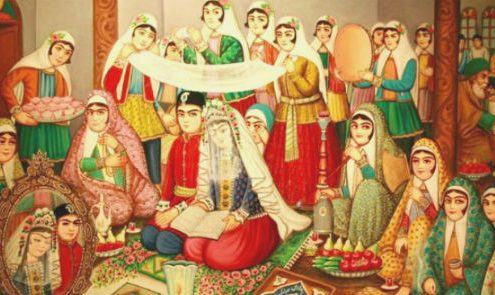
Traditional Ceremonies: Wedding Party

Traditional Ceremonies: Wedding Party


Like in any other cultures, since very ancient times, Iranians have also had special occasions to celebrate and revive traditions. Feasts are not necessarily happy gatherings. At times, people gather together to commemorate and honor an event a person, etc.

The Categorization of Feasts in Iran

Here is a categorization of the gatherings in Iran:

  1. Ancient, Mythical and seasonal feasts;
  2. Religious feasts;
  3. National and Governmental feasts;
  4. Family feats; and,
  5. Regional feasts.

The most commonly celebrated feasts, at present, in Iran are briefly introduced here.

Since ancient times, many feasts were accompanied by myths or legends as their sources of origination like Nowruz, Tirgan, Mehrgan, Yalda and Sadeh.

Some Ceremonies in Iran

Nowruz

When the Sun reaches the vernal equinox on the meridian, the 20th or 21st of March, days and nights are approximately equal. This very same day has long been called Nowruz (“now” means new and “ruz” means day). Since thousands of years ago, Iranians knew this and regarded it as the first day of the New Year in Iranian solar calendar.

The first mythical king, Jamshid, is said to have celebrated this occasion as the beginning of his establishing justice and defeating demons.

To celebrate Nowruz, there are some preparatory traditions observed by Iranians like: last Wednesday feast (firecrackers, etc), deceased day and the last Thursday (Honoring the Deceased in the cemeteries, etc), khaneh tekany (house cleaning, etc), cereal planting, haftseen (special combination of symbolic stuff at everyone’s home), new clothes, Nowruz dishes, visiting each other, the first Nowruz, its presents, its post cards, Sizdah-Beh-Dar (national day for picnicking) and so forth.

Tirgan

At the evening of the 12th day of the fourth month of their own calendar (Tir), the 2nd or 3rd of July, people in Mazandaran province celebrate Tirgan. Tir means arrow and Titgan refers to the occasion when Arash, the legendary bowman, shot an arrow to indicate the borderline between Iran and Turan. Arash lost his entire energy and died afterward. The feast includes many traditions like plays, poem reading, singing, eating, drinking, etc.

Mehrgan

Mehr is the 7th month of Iranian calendar, app Sept 21st to Oct 20th, and the name of the goddess of the Sun. At this harvest time, Zoroastrian people in Kerman celebrate the occasion by sacrificing a sheep or a chicken and honor it by feasting, etc.

Yalda (Chelleh)

It is the longest night of the year, the 21st or 22nd of September, and as some believe, the birthday of Mehr the undefeatable. They said at the end of this night, darkness is defeated and light gains victory. It is also the day of harvesting crops and the beginning of farmers’ rest period.

People gather together in the house of the eldest member of the entire family enjoying themselves eating summer fruits as well as nuts. They also read poems of Hafez and have a lot of chat.

Sadeh

It means emergence and refers to forty days after the birth of Mehr, 10th of Bahman (Jan 29th or 30th). People celebrate this occasion by setting huge fire outside some cities that, of course, can be interpreted differently. It is not celebrated by the whole nation nowadays.

Sadeh is a very ancient non-religious celebratory occasion during which all religions take part in the feast, have a special soup, and eat nuts and fruits. They all wear colorful clothes and make-ups and enjoy themselves.

Pir-e-Chak-Chak

It is a pilgrimage site for the Zoroastrians from all around the world who gather together at the 62km northeast of Yazd at the heart of desert once a year in the 21st or 22nd of June.

During their stay there, they go two or three times to the temple with their heads covered. They burn candles, pray, vow, wear special white dresses and bands around their waists. Votive soup and bread are served for everyone in addition to other foodstuff.

It is also a time for renewing the meetings, entertaining, water sprinkling, etc. Note that water sprinkling is customary in different parts of Iran during Nowruz or other feasts.

Qara Kelisa

It is a famous ancient church near Maku, West Azerbaijan province in Iran. Qara Kelisa or Tade’oos church is a pilgrimage site for the Armenians who go there as groups or families after mid August each year.

They stay there at least for three days of feasting, praying, singing in choir, entertaining, dancing, horse/mule/donkey ridding, etc.

Armenians who converted to Christianity in 300 were an ethnic group within the Iranian empire and Tade’oos is said to have been Jesus disciple who was evangelizing, was martyred and buried there. Later, this church was built at his burial place.

Carpet Washing in Mashad-e-Ardehal

To commemorate the martyrdom of one the descendants of the 5th Imam of Shiite Twelvers, people around Ardehal and Kashan perform a special ceremony once a year. It includes washing the carpet of his mausoleum in the spring nearby to commemorate the event during which the dead body was wrapped in a carpet and later the carpet was washed there.

During the ceremony, people also damn his enemies who murdered him and wave clubs up in the air to show their feeling of hatred toward his enemies. The feast includes going on picnic, shopping, etc. But it is a very unique feast because of its peculiar ceremonies.

Other Sites & Rites

There are thousands of tombs in Iran in which the descendants of Imams are buried. That is why there are called Imamzadeh (born of Imam). They are pilgrimage sites for Shiites, both local and non-local people. Some of the buildings of these tombs are very old, for example, 800 year old.

In each area of Iran, various ethnic and religious groups are living at the same neighborhood. Therefore, there can be found different varieties of the same feasts or different local ones.
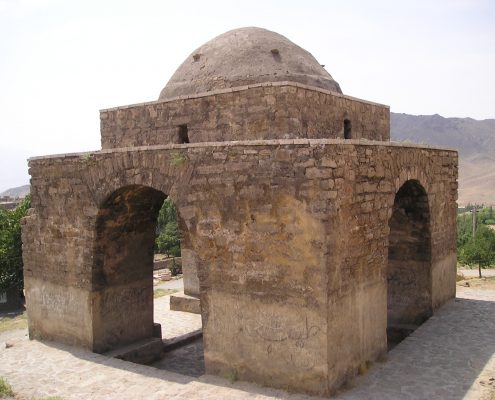
Calendar Building in form of a fire temple, Niasar, Iran

Calendar Building in form of a fire temple, Niasar, Iran


The very precise Iranian chronometry started at Nimrooz (meaning half of day), SE of Iran, on 62 degrees E meridian, at the 6th of April 1725 B.C. It is called Nimrooz, because thousands of years ago ancient Iranians knew when the Sun was setting in the east and rising in the west it was noon at Nimrooz.

The surprising point is the fact that this chronometry, which was carried out more than 3700 years ago, complies precisely with today?s calculations in mathematics and physics.

We are now sure that chronometry had first been lunar. Later it became solar lunar in which years were solar and months were lunar.

Old & New Avestan Chronometry Methods

Some say that Iranian chronometry calculated based on solar & lunar methods has been derived from Babylonia. Some say it has nothing to do with Babylonia and is independently Iranian. But the chronometry performed in 1725 B.C. is a solar-based one referred to as Old Avestan Chronometry (OAC) and the one that started during the reign of Darius is called New Avestan Chronometry (NAC).

The calculation of the leap year in NAC was very difficult and needed corrections. So 10 years after the advent of Islam when Yazdgerd III took power in Iran, he ordered NAC to be changed into a new method, called it Yazdgerdy calendar and stepped up to the throne on the first day of the first month of that year.

After the collapse of Sassanians by Arabs many Zoroastrians emigrated to India and Pakistan. They are still using Yazdgerdy calendar for their private activities and the official calendar of the country for other works.

OAC is one of the wonders of science beginning almost 40 centuries ago. Without any sophisticated instruments, the genius people of the time could work out a precise calendar. To examine the solar beams of light and their shades for chronometry, they had built special buildings through which the 62 degrees E meridian was passing. In ancient world, Nimrooz was the indicating base of chronometry.

The 62 degrees E meridian was considered 0 degree then, but tens of centuries later another spot on the Earth, Greenwich, replaced this point and Nimrooz was regarded as situated on the 62 degrees E meridian.

Zarathustra is also said to have observed in this observatory and a small structure near that building is believed to be his tomb according to local people.

Calendar Buildings in Iran

In addition to these structures, there are many other ancient structures used as observatories like Chogha Zanbil ziggurat near Susa and Zarathustra?s ka?be (cube) near Persepolis. Also some believe that tens of other structures believed to be holy buildings, fire temples (called Chahar Taqy meaning four-arched building), had been used as calendar buildings.

Time Division in Old Avestan Calendar (OAC)

According to OAC, time is divided as follows:

There are 2820-year periods. Each period consists of:

  1. 21 X 28-years periods. 128 years equals: 1X 29-years period plus 3 X 33-years period.
  2. 01 X 32-years period. 132 years equals: 1 X 29-years period and 2 X 33-years period plus 1 X 37-years period.

Jalaly Calendar

It was 29 centuries later when Omar Khayyam, the famous Iranian poet and mathematician understood this calculation and wrote it down.

Since Jalal-ed-din Malek Shah had ordered a precise calendar to be regulated it was called Jalaly calendar. So the origin of the present Jalaly calendar in Iran goes back to the calculations in 1725 B.C, which is the most precise one in the world, according to contemporary scholars.

backgammon, an Iranian game

backgammon, an Iranian game


According to psychologists, games are means of personal enjoyment and bring about changes in lives. The need to play games in people comes from their need to consume extra energy inside them.

Games are also considered social needs internalizing social behaviors and attitudes that institutionalize law and order in players and teach them the essential skills.

No matter where games are played, they actually reflect players? wishes, needs and orientations. Therefore, games are originated from general and common needs in tribes, villages, small towns and big cities.

In a vast ancient culture like Iran with its varied climates and lifestyles, a great variety of games and entertainments have been commonly given life to its people.

The history and whereabouts of games have not been recorded. It is only by scrutinizing into old and ancient books, one can trace some of them.

There have been different factors involved in games like type, age, range, gender, number of players, location, time, roles, means, etc. Some of the games were played with a little difference or different names in several parts of Iran the profound investigation of which can open one?s eyes to the Iranians? vital needs in local or national domain.

Iranian Games in Past & Present

For instance, in ancient Persia, parents usually taught horse riding, shooting and polo game to their children among wealthy families.

Modernization and industrialization have initiated radical changes in the lives of the people all over the world. Iran is not an exception to such developments. New technologies, time-consuming everyday activities, the transformation of some games to international sports, modern human international rules, etc have all forced away the old traditional entertainments and games. People set aside the recreations of vast plains, awesome forests, high mountains and sand beaches and rush into big cities.

So, experiencing hard situations and gaining necessary skills are not so important to people anymore. New games replace old ones. Could they really put positive impacts on the mental, psychological and physical aspects of people’s lives?

Various goals have ended in different games in Iran. Here is some categorization of them:

Types of Iranian Games

“Sports Games” which demand physical motions and skills.

“Theatrical Games” which demand (semi) professional skills under the level of serious theatrical plays and are performed in parties, feasts, celebrations and similar occasions.

“Recreational Games” which target aims like amusement.

To determine who is first to start a game, there have been many ways in different parts of Iran. To choose partners for a team, there have also been several methods to be taken in various parts of Iran.

Therefore, it would help you imagine the atmospheres of the games in Iran if you know and learn some of the procedures to start and play games. Here are some examples:

Examples

No.1) To Decide Whose Turn It Is:

[God or Earth]-Bushehr province, south west of Iran.

The head of one team chooses God and the other one chooses the Earth. Then, one of them throws a ball to some middle range distance. After that, he/she goes toward the ball by laying a wooden stick on the ground several times like he/she measures the distance. While doing so, in a praying gesture, each time the stick is moved to next position, he/she says: first God, second Earth, first God, second Earth. All players are watching this. If the stick touches the ball when the word ?God? is uttered, the God team will start the game.

No.2) To Choose Partners:

[Sun or Moon]-Khorasan province, north east of Iran.

Two persons called Khans choose partners by answering players? questions. Each two players have already chosen two names, either ?the Sun? or ?the Moon?. Then, two players go to the Khans at a time asking them: Do you want the Sun or the Moon? If a Khan can point to a player and give the right answer, he will be able to take him into his team. If not, the other khan will give the right answer and take the one he wants.

No.3) Sports Games:

[Ashirma (meaning “overturn”)] – Azerbaijan province, north west of Iran:

Wrestlers warm up themselves in open air while big drums are played and people are watching. Then, a referee, who has been a wrestler himself for a long time, checks the belts of two players if they are tightly tied. The one who can take the rival?s belt, lift him off the ground and throw him down will be the winner.

No.4) Theatrical Games:

[Zekr-e-Khanjar (meaning dagger praising)] ? Golestan province, north of Iran:

Two groups of people stand opposite each other in lines and the leading one stands between them. The leader sings praising religious-like songs to arouse dancers? religious passion. The others accompany him while singing and make moves in harmony with him. The movements gradually become faster. The climax is when dancers are moved with increasing emotions and meet each other in the center of a circle and each raises a dagger as a sign of brave challenge. This game is played in three stages each with its peculiar songs and movements.

Note: not all theatrical games are religious or played by men. A large number of them are the happy ones played by both sexes.

No.5) Recreational Games:

[Gol Gol (meaning flower, flower)] – Sistan and Baluchestan, south east of Iran:

Two people are chosen as heads of two five-people teams. A piece of land with a limited distance is assigned for the game. The heads choose the name of a flower without others noticing it. Then, they ask both teams? members one at a time and in turn: Flower, flower, which flower of flowers? The asked players must guess different flower names. The heads can lead them toward the right answer. The winner of the game will be the team whose member could have given the right answer. The loser team?s members must carry the winner team?s members on their backs all along the specified distance.

The Great Variety of Iranian Games

Altogether there are around 2500 various recorded games in Iran. At least hundreds of them are not repetitive with different names. First they might seem quite simple unimportant games, but they can each reflect various cultures of different corners of Iran. It is worth notifying that the cultural, social, climatic, historical, geographical and many other aspects of each locality are the determining factors of the games played there.

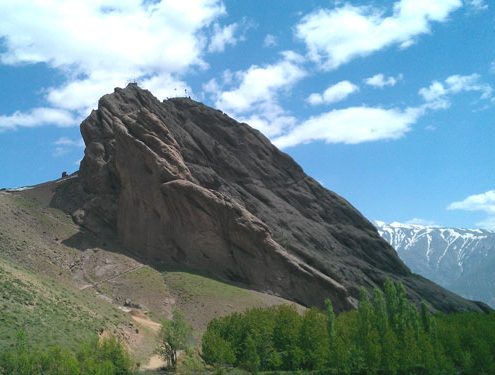
Alamout Castle, Headquarter of Ismailis

Alamout Castle, Headquarter of Ismailis


Ismailis are, in fact, a sub-branch of the Shiite Muslims who are known by various names like Ismailis, Bateni, Qermati, Saba’ie, etc.

The point of diversion between them and 12-Imam Shiite branch (the dominant branch in Iran) began after the 6th Imam, Jafar-e-Sadeq. Unlike the Twelvers who believe the 7th Imam is the 6th Imam’s son called Musa Kazem, Ismailis believe that the next righteous Imam is his other son, called Ismail.

This sect of Shiites is also called 7 Imam Shiites or Seveners, because of their belief in the 7th Imam. Ismail’s son had to follow up the leadership of his followers behind scenes, because Ismilis were afraid of their enemies especially Abbasid Caliphs. The leadership of Ismailis still goes on in a hidden manner.

Fatimids’ Caliphate

It was in 10th century that Ismailis founded a government at North Africa under the name of Fatimids Caliphate system. Since then, they turned to be a strong power in the Islamic world and grew much mightier than before. Their ruling realm was gradually expanded to other countries like Egypt, Syria, Iraq, etc as a result of summoning some people as missioners who tried to absorb more and more followers.

The Situation in Iran

Baghdad, then, was the capital of Seljuks who believed in the Sunni branch of Islam (then and now the dominant branch in the whole world of Islam). On the other hand, the Seljuks were the invaders who were defending the previous invaders, Arabs. Like Baghdad Caliphs, Seljuk invaders were Sunnis after they had converted to Islam. Although the majority of Iranians were Sunnis too, they had been treated by both of them as the invaded nation.

The caliphate system at North Africa declined, but did not collapse. Their movement was renewed and continued for another 170 years in Iran under the leadership of Hasan-e-Sabbah and his successors. He set his headquarter in a fortress up in the mountains of the central Alborz called Alamut fortress and led his followers from there. His successors maintained the leadership of Ismailis from Alamut fortress until 1256. It was in 1256 that Mongols seized the Ismailis’ castle. They had to go on with their activities for some time in a hidden way and then escape to the eastern neighboring countries, most of all, to India.

Since the leaders of Ismailis were interested very much in studying and researching, they founded a well-known library in India to which many famous researchers were attracted. When in Iran, they had also had very well-provided libraries.

Facts & Fictions

Western writers and travelers have written stories describing the beliefs and works of Ismailis that are not approved by Ismailis.

The common theme of such stories is as follow:

“There is an old man who is the head of Ismailis living in a castle high in the mountains difficult to reach. There he has made an example of how heaven has been elaborated in Koran to tempt the young sons of his subject villagers to do whatever he wants. Instead, they could enter the heaven promised by God.

This elder of mountains was as highly respected as a prophet by the villagers. Their sons of 12 to 20 years of age were sent to such fortresses to be taught of Ismailis? doctrine of Islam, to be acquainted with the quality and value of heaven (with all its tempting joys like streams of milk, honey, water and wine and beautiful female angels, etc) and to be prepared to do whatever the elder wants them to do; meaning killing an enemy by a gold-made dagger presented to them by the elder.

At the end, either killed or victorious, they could enter heaven. To start to be prepared to do their mission, they were given hashish (the Arabic word from which “assassin” has been derived) to deprive them from referring to their sound mind and have them act according to the elder’s commands.”

It is noteworthy that Ismailis are called Assassins by Westerners. The word “Assassin” comes from the Arabic word “hashish”. There was not such substance in Iran at the time of Ismailis. The Seveners of Iran did not speak Arabic and did not take hashish. So, it will not be a proper name to attribute to them.

But Ismailis reject these stories and introduce themselves as the true followers of Mohammad, the prophet of Islam. They believe that the lack of understanding of the philosophy of martyrdom in Islam by the western writers has led them astray. Ismailis were going out to different cities and countries after being trained to invite others to their religious doctrines.

Hasan-e-Sabbah was an activist of his time against the Turk invaders, Seljuks, occupying Iran and supporting Sunni Abbasid Caliphs. As a matter of fact, they were the first political oppositions who had their enemies killed.

Hasan-e-Sabbah

He was born at Qom, one of the early settlements of Arabs in Iran and a center of Twelvers in the early 11th century. He went on with his religious schooling at Rey, near Tehran, center of Ismailis activists. First he was against them, but later became the leader of them inviting others to this doctrine too. He set up his fortress at Alamut in an area where people were the last Iranians converting to Islam. The area was called Daylam and the people were always warriors disobeying Arabs and other invaders. In politics, they wanted their own independent dynasties and in religion, they wanted a branch different from that of Arab invaders.

Hasan-e-Sabbah managed to get some Seljuk officials assassinated in Iran and turn to be the major threat to ruling Seljuks. During this period of 170 years, Hasan-e-Sabbah and his successors created dreadful nightmares for the enemies of Iranians until, Hulagu, the Mongol seized the Alamut fortress.

Ismailis’ Famous Fortresses in Iran

Some of the preserved fortresses in Iran are: Alamut (north of Qazvin), Lambesar (near Shahrud river), Gerd kuh (near Esfehan), Khalenjan (near Esfehan), Meymoon Dezh (at Rudbar) and Samiran (near Manjil – the best preserved in its area out of many).

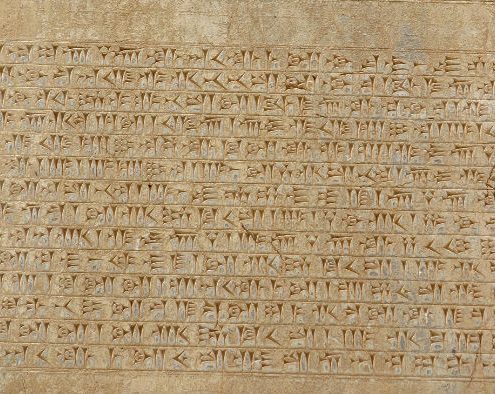
Cuneiform Script on Persepolis Walls for Ancient Iranian Language

Cuneiform Script on Persepolis Walls for Ancient Iranian Language


About 3000 years ago, the inhabitants of Iranian plateau and its sub-divisions were speaking languages called Irano-Aryan languages.

These languages are still spoken in the regions beyond the present borders of Iran, from Turkey to Pamir and from Caucasus Mountains to Oman Sea.

The common origin of all these languages was spoken at least since 2000 B.C. All of them had some feature in common: Iranian lexicon and grammatical structure.

The Irano-Aryan languages are within a more general branch called Indo-European. Because of the similarities between Indian languages and Irano-Aryan languages, during the early stages of the evolution of these languages, a branch called Indo-Iranian languages has been formed.

The History of the Irano-Aryan Languages

The history of the Irano-Aryan languages is divided to three main phases:

  1. Old Iranian: from early 2nd millennium to 4th & 3rd centuries B.C.
  2. Middle Iranian: from 4th &3rd centuries B.C. to 8th & 9th A.D.
  3. New Iranian: from 8th & 9th centuries A.D. to today.

The Old Iranian

Undoubtedly Aryan immigrants dispersed in different parts of Asia.  Other languages previously spoken in those regions subsequently influenced their language. It was the beginning of several dialects in the Irano-Aryan languages.

One of the deserts in central Iran, Kavir-e-Lut, was the dividing line between the Eastern dialects (Khorasmian, Sogdanian, Bactrian, Margianean) and the Western dialect (Median).

The only reliable source to explore the Old Iranian (Persian) language is the cuneiforms containing kings? orders and the events of that period. Avesta, the holy book of Zoroastrians, with its two dialects stands as a major source to explore the Middle Iranian (Persian).

The Middle Iranian

Between the Old Iranian and the Middle Iranian, there is a six-century gap (4th century B.C.- 3rd century A.D.) of which no written object has yet been discovered. But some fundamental changes had occurred in the whole grammar. Besides, the conjugational system had totally vanished.

The Eastern Iranian languages had also undergone such changes though in smaller scales. Most of the writings of this period were derived from Aramaic writing system. In general, the Middle Iranian was a direct continuation of the Old Iranian.

Pahlavi was the language spoken by Iranians during Parthians. When Arabs attacked Iran, Iranians spoke the Middle Persian. In Sogdiana, there were two dialects based on their religions: 1) Christian Sogdianian, and 2) Manichean Sogdianian.

Khorasmian was a language related to Sogdianian spoken at least from 3rd century A.D. to 12th and 13th centuries A.D. Between the Black sea and China, there was spoken another language, Scythian, since 1st Millennium B.C. for 2000 years. Turkish, later, replaced it. Bactrian was another language that was spoken at today?s north Afghanistan.

The New Iranian

‏‏‏The New Iranian, which was spoken in Sassanian court (Darbar) and capital, Ctesiphon, was called Dary and replaced gradually other Middle Iranian languages, specially in cities, during the 9th and 10th centuries A.D. This language has a remarkable share in the world?s culture and has introduced literary works by the people like Roodaky , Ferdosy, Khayyam, Hafez, Sa?dy, Jamy, Avicenna, etc.

It turned to become not only the literary and written language of the Persian speaking people of central Asia and Iran, but also the language of the Near East and Middle East people like Azerbaijanis, Kurds, Afghans, Indians, Central Asians, Turks, etc.

Farsi, the New Iranian, is the direct continuation of the Middle Iranian?s evolution although the grammatical system of some parts of speech, like verbs, has changed. Dary Farsi is the mother language of both contemporary literary Farsi and contemporary literary Tajiki.

Farsi Today

Today, Farsi is the language spoken and understood in all corners of Iran. It is the official language used in education and administration systems of Iran. Farsi is the mother tongue of the absolute majority of the population in Iran. Beyond the present borders of Iran, there are small groups of Farsi speaking people called Iranians.

Other Farsi Dialects Spoken Today

Tajiki dialects are referred to a large variety of dialects spoken in Afghanistan, being in connection with the Farsi dialects in central Tajiki dialects, Khorasan province dialects and Sistan province. But, Pashto is the dominant language spoken in Afghanistan. Since the former Soviet Union period, Tajiki was the language spoken by the people living in Uzbekistan, Kyrgyzstan and Kazakhstan. It is also the official language of Tajikistan.

Ossetic dialects are referred to the dialects spoken by Ossetians who are living in central Caucasia. Their language, including two major dialects, is the continuation of the western Scythian dialects of antiquity.

Kurdish is another Iranian language spoken by Kurds in a vast mountainous region including part of Iran, Turkey, Iraq and Syria. There are also Kurdish-speaking minor groups living in Khorasan, Central Turkey, other parts of Syria, Azerbaijan, Turkmenistan, Armenia, Georgia, etc.

Lurish and Bakhtiari dialects are spoken in the south of the region where Kurds are living in Iran.

Baluchi is mainly spoken in the historical province of Baluchestan extended from Iran to Pakistan and southern part of Afghanistan. Some Baluchi speaking-people are also living in Turkmenistan.

Tati is another dialect of Iranian language spoken in the republic of Azerbaijan and parts of Dagestan.

Taleshi is spoken in the republic of Azerbaijan and NW of Iran by the Caspian Sea.

Mazandarani and Gilaki are other dialects spoken along the southern coast of the Caspian Sea. They are the continuation of northwest Iranian dialects.

Other Dialects inside Iran

Almost all of the above said languages are spoken in different dialects. In addition, there are many other local dialects in central and western Iran that have not been satisfactorily investigated.

The geographical extents to which the Iranian languages have been transferred are, in short, indicative of the widespread Iranian culture outside of the geographical borders of present-day Iran.

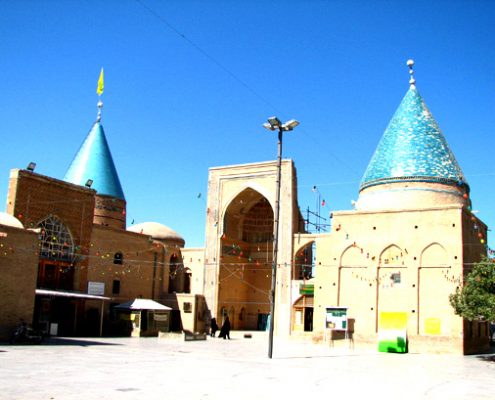
Tomb of Bayazid Bastamy, 14th Century Sufi

Tomb of Bayazid Bastamy, 14th Century Sufi


Mysticism is the heart-felt recognition obtained through revelation and intuition. Sufism has been defined in different ways. To better understand these two concepts, one can get a perception by comparing practical and theoretical mysticism.

Practical mysticism is the most audaciously wanted perfection and the highest spiritual interest that expresses human relations and responsibilities within and toward himself, his community and God. It takes a spiritual journey as a way of life.

Theoretical mysticism deals with the interpretation of existence.

It relies on revelatory and heart-felt principles and bases in its reasoning. In fact, Sufism is the practical aspect of mysticism.

Islamic Mysticism

Islamic scholars believe that Islamic mysticism and Sufism are adopted from the spirit and truth of Islam, but there have also been influencing attitudes entering into it from the mysticism of other religious communities.

The Islamic school of Basra, a city in present day Iraq, in mysticism and Sufism transformed devoutly Sufism to loving Sufism. The school of Khorasan was strongly based on rebuking oneself in people and/or God’s presence. People’s approval was believed to block their hearts from stepping toward God.

There are various methods in Sufism to be on the way toward the truth:

  • The method of devotion;
  • The method of revelation and recognition; and,
  • The method of pantheism.

The Way to Recognize The Truth

  1. A Sufism disciple, in his spiritual journey, must obey his master and go through eight austere stages to get intuition that is altogether the way to recognize the truth.
  2. Seeking,
  3. Refining morality, including degrees like repentance, refrainment, abstention, poverty, patience, reliance, contentment and submission. It is also inclusive of undergoing some states felt by heart. They are the feelings of being in carelessness, closeness to God, love, fear, aspiration, enthusiasm, observation, assurance, certainty, and praising.
  4. Having enthusiasm and anxiety,
  5. Loving,
  6. Getting perplexed,
  7. Becoming void, and
  8. Believing in one sole being.

There has been different people taking these stages in various ways and pioneered several orders of Sufism like Noorian, Hakimian, Qaderian, Sohrevardian, Molavian, Safavian, Nematollahian, Naqshbandian, etc.

Khaneqah or Khanegah

It is the residence and private place for Sufis to concentrate on their devoted life. These buildings consisted of bathhouses, stables, dance halls (ceremonial religious dancing), mosques, classrooms and a few other facilities.

Code of Dressing

A coarse cloak (Kherqeh) has been what a high spiritually ranked Sufi presented to another Sufi of lower rank. They are differently named depending upon various occasions under which they are presented to a Sufi.

Spiritual Dancing

Among some orders of Sufis, in occasions like thanksgiving, they follow an old tradition of playing music and dancing. Sama’ is a spiritual means to persuade Sufis to dance, which is mixed with spiritual rejoicing.

The Influence of Mysticism on Human Life

Mysticism and Sufism have influenced the societies they have grown in. True Sufism have put positive impacts on the others resulting in great changes like: producing balance in religions, respecting humanity, teaching uprightness and liberalism, purifying heart, associating with people, tending to cooperation and devotion, leading people toward the truth, introspecting, teaching love and kindness, ignoring the gravity of death, believing in the importance of human beings, helping religion to flourish, helping the richness of literature and so on.

Therefore, Iran’s culture is abundantly indebted its richness to the mysticism and Sufism that is still deeply rooted in its present cultural condition. Knowing mysticism helps to examine the today’s society in Iran as well as other fields impacting people’s lives.

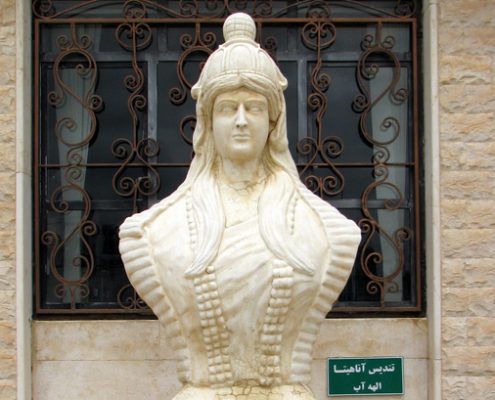
Anahita, The goddess of water & Fertility in Ancient Persia

Anahita, The goddess of water & Fertility in Ancient Persia

Iranian myths consist of the views and perspectives of the inhabitants of Iranian plateau about the confrontation with good and evil, gods acts, heroes’ bravery and legendary creatures. These myths play very crucial roles in Iranian culture.

Most of our information about Iranian myths come from two sources:

  1. Avesta, the holy book of Zoroastrians, and
  2. Shahnameh, Ferdosy’s epics work in verse.

Ancient Iranian gods

Ahuramazda is a wise master, ultimate God, absolute good, wisdom and recognition, the creator of the Sun, stars, darkness and light, human beings and animals and all mental and physical activities. Ahriman is an evil spirit, the opposite of Ahuramazda who always tries to destroy the truth and world and harms human beings and animals.

In this world, life is a reflection of universal struggle between Ahuramazda and Ahriman. All men must choose either of these too.

Anahita is the goddess of all waters on the earth and the source of all oceans in the universe. She is on a chariot being drawn by four horses: wind, rain, cloud and hail. Because of Anahita’s connection with life, warriors ask her to keep them alive and give them victory during wars.

Verethraghna is the god of warriors and assaulters and is the source of victorious power against demons. Ahuramazda advised Zoroaster to take a feather of Verethraghna from a bird’s body while trapped in adversary’s magic.

Mithra is the most famous ancient Iranian goddess. She was believed to watch human beings and their actions, agreements and contracts. She led people in the right path and protected them from attacks. She controlled the order prevailing in the universe.

Vayuo is the god of wind attacking evil spirits in supporting Ahuramazda’s good creatures. He reigns between the realms of Ahuramazda and Ahriman, meaning between light and darkness.

Tishtar is the god of rain originating from Varukasha Sea (Farakhkart) and distributing water among all countries.

Atar, fire, is Ahuramazda’s son. People were expected to present meat to fire as sacrifice while having a bunch of sacred plant called barsom in their hands.

Hoom is a god who presents health and power and blesses children and crops.

The Creation of Universe

Ancient Iranians believed that everything was created in a specific order beginning with heaven, water, earth, fire, human being, respectively. Some of the things created first were very well respected like the Alborz, the first mountain, Simorgh, the first bird, etc.

When the first sin was committed, the whole creation was filled with corruption and decay and replaced peace and order.

Demons & Evil Forces

Some evil forces attack human bodies directly and some indirectly. Demons are false gods and fairies are female evil spirits acting during nights. They all serve Ahriman.

Legendary Beings

Simorgh nests on the tree of all seeds and disseminates seeds by flapping wings all around the world.

Kar is a fish that lives around the tree of all seeds and keeps all harmful beings away from this tree.

Qoorbagheh, frog, tries to chew the roots of this sacred tree.

Karshaptar is a swift-winged bird that spreads Zoroaster’s words here and there.

Joghd, owl, is a bird that casts away demons by uttering holy words.

Chamroosh, a patriot bird, vanquishes lran’s adversaries and helps to spread the seeds of the tree of all seeds.

There were also some unpleasant creatures like rodents, lizards, turtles, spiders, bees, ants, beetles, etc. There were some legendary monsters against whom human heroes struggled. They were often in form of snakes or dragons the most significant of whom was called Azhdihak, a three-headed monster devouring human beings. It is called Zahak in Shahnameh.

The First Men & Heroes

Kyumars, meaning mortal, is the first legendary man who is described as a handsome and attractive man and as bright as the Sun. It is believed that he has been born out of the earth.

Hooshang is the first king founding the first legendary dynasty of Iran called Pishdadian. He promotes civilization in the world, exploits iron, uses ironsmith techniques, produces and uses tools and weapons, etc.

Jamshid is the greatest hero who is introduced as the king of the whole world. Everything is good during his ruling period.

Fereydoon, another king, is always remembered for his struggle against Zahak. He does not kill him, but imprisons him forever in the mount Damavand.

Rostam is one of the greatest mythical heroes in Shahnameh. He turns out to be the symbol of physical as well as spiritual power and devotion for his country. He is such a strong man who can defeat an elephant instantly by his mace.

Rakhsh is Rostam’s horse and the only horse whose belly does not reach the ground when Rostam presses his hand on its back. So, it is chosen by him to be his faithful servant. It passes through all hardship and battles along with Rostam and eventually dies with him.

Sohrab is Rostam’s son who grows up to be a strong brave young boy. His father, who does not know his son before giving him the last deadly blow, ultimately kills him.

Siavash is a prince who learns all the techniques and skills of princedom from Rostam. Since he refuses to answer positively to the temptations of his father’s wife, his father wants him to pass through fire to prove his innocence. This was a pre-Zoroastrianism tradition. At last, he becomes the victim of Garsivaz’ intrigues and is killed an innocent death.

Mythical Creatures

In addition to Rakhsh and Simorgh mentioned earlier, there are other mythical creatures like:

White Demon is an old demon imprisoning Kavoos, Iran’s king. After a lot of hard struggle, Rostam succeeds to kill White Demon and free the king, Kavoos.

Akvan-e-Deav is the most famous demon that attacks kings’ herds. Rostam is called for help and at last defeats it.

Ezhdeha, dragon, is another legendary creature who fights against Rostam. A more astonishing battle happens between dragon and Esfandyar, another legendary hero. Esfandyar shatters its brain into pieces in the end.

Conclusion

Ancient Iranians’ legends and myths still continue in People’s beliefs in various ways. It can be even traced in Iran’s present adjacent countries.

In fact, the secret of the survival of Iranian culture and language together with all rich traditions and social concepts can be found out in keeping these legends and myths directly or indirectly.


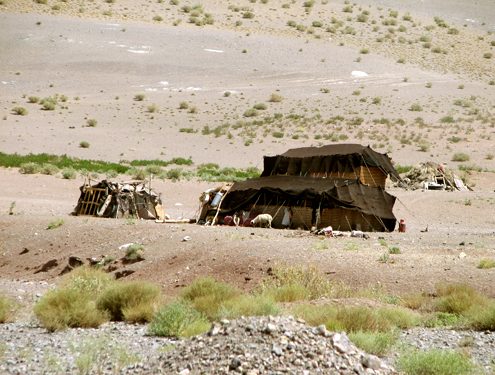
Black tent of some nomads in Iran

Black tent of some nomads in Iran


Nomads are the people who migrate from one place to another with their tribe, family and all their belongings. Migration is a way of life for nomads in which herding cattle is the basis of economic life. Changing of location and migrating of human groups are two outstanding characteristics of nomadic life.

In such annual or seasonal migration, nomads move from their winter resort locations to summer grazing lands with their animals and move back to their winter resort locations again when it gets cold.

The Beginning of Nomadic Life

Migration has started since many centuries ago. It began with a very simple form, but moving from place to place is still the fixed feature of such life style.

Researches on migrating way of life indicate that this phenomenon exists mostly in semi-dried and marginal territories, i.e. in areas where there is not any suitable piece of land for farming like slopes or stony grounds.

There are various theories concerning the causes of such a way of life. Reference can be made to some of them like the increase of population and expansion of agriculture, economic structure of a given society, social and political situations and ecological factors.

Two Kinds of Migration

There are two kinds of migration:

  • Horizontal migration occurs in dry, flat, vast deserts where water and grass can scarcely be found, like in Saudi Arabias deserts.
  • Vertical migration occurs in regions with large difference in altitude where people move from low altitudes to higher ones in search of more favorable weather for their families and their animals, like in Iran.

Gypsies vs. Nomads

They are wandering in small and large groups in many parts of the world. Although we do not precisely know their history, it seems that they have originated from India. The color of their skin and their accent make us think so. In Iran, peddling is their way of life. Gypsies also make metal tools like knives and sickles and repair some farming tools. They often pitch tents near villages and exchange goods for goods and, at times, for cash with villagers.

Some of gypsies are wandering musicians appearing to people while harvesting or wedding and skillfully play a few pieces of music, make them happy and earn some crops and go away.

They are not dependent upon lands or animals and have no clear plans for migration. Sometimes, they do not go back to where they have started traveling from.

Relation between Migrant & Settled People

The differences between villagers and nomads’ ways of life have frequently ended in quarreling and at times in dependence upon each other. Nomads could have been a major threat to villagers and could have been an essential factor to satisfy their needs.

Migrants, Semi-Migrants & Settled Tribes

Some tribes are merely tent dwellers and move in search of grazing lands for their herds. Other tribes are both living in tents and in some specific buildings. Agriculture is another minor thing they do for their needs. The third group has gone through previous stages and has settled at last as a result of decline in traditional cattle herding.

Large & Small Tribes

Large tribes are known as Turkmen, Shahsavans, Lurs, Bakhtiaries, and Qashqaies. Others are considered small tribes who had to settle in the past. Many of them have no other choice than to start migrating again. Of course, they have their own reasons for this.

Nomads in History

In many cases, nomads have had key roles in war with enemies. Sometimes, they were united as an independent army or an auxiliary force. The history of Iran witnesses many cases of their decisive assistance in defending the country.

The Social Structure of Nomadic Societies

As a unit of social life, a tribe has many duties to accomplish. A system is needed to connect a family to the whole tribe. This tribal organization is vital to integrate a tribe from within itself.

One of the subdivisions of a tribe is a “family”. The emotional links functioning inside and outside the families are links called “ethnic solidarity”, which is much stronger than among settled families.

In nomadic societies, a tribal family with its own definition and functions is distinguished from what we know, nowadays, as a family in modernized societies. A tribal family cannot mean anything without a wife and cannot perform its duties. In such a family, the whole family matters, not every individual member. This is the survival code of a tribal family.

“Polygamy” is sometimes seen among tribes. Another wife is another source of assistance the head of a family needs to manage the broadened responsibilities. Of course, this is how it is described by tribal men, but there should be other reasons for this phenomenon too.

Job Description in Nomadic Families

A husband, a wife and a child are each helping the family course of existence to go on. Even children have their own job descriptions from childhood that depend on their sexes. They learn and practice the serious life of being an adult.

Social Structure Classifications

Heads of tribes and guard heads are the wealthiest. Middle-class people are headmen, elders and similar ranks. The ordinary people are the majority who live hard lives.

Each group has its own different responsibility, property and characteristics. Sometimes, one can say which class they belong to by looking at the color and appearance of their tents.

Masoomeh Shrine at Qom

Masoomeh Shrine at Qom

The inhabitants of the ancient eastern world worshiped the Sun, the Moon, stars, rain, water, river, spring, cows, camels, horses, etc as well as the opposite extremes such as darkness, lightning, clouds, winter, snakes, eagles, wolves, etc to be away from their harms.

Iranians were influenced by Semites, Babylonians and Assyrians’ incantation sayings, magic and spells. Zarathustra rose against such superstitions and the beliefs of Iranian plateau local people like worshiping the Sun, the Moon and stars.

Ancient Iranians believed in dualism, life after death and rewards for human deeds. Aryans also believed in animism and fetishism. The influences of these beliefs are still observed in modern-day Iranians’ beliefs and superstitions.

Various Nations’ Beliefs

What we surely know about Elamites’ religion is the fact that they believed in a great god called Shushinak. Scythians were highly civilized and religious who believed in one heavenly power, but had various idols as well.

Aryans believed in a series of good beings that had presented the treasures of nature to human beings the most important of which were light and rain. They also believed in a series of bad beings struggling with good ones and trying to block humans from getting to prosperity.

In general, Aryans’ beliefs led them toward a better code of ethics compared to Babylonians and Assyrians. They relied more on a combination of human endeavor and action with honesty and righteousness. Aryans worshiped Mithra (the goddess of the Sun), Ashi (the goddess of fertility and marriage), Verethraghna (the god of attack and victory), Mazda (the great god of eastern and western settled, civilized Iranians), and several minor gods and goddesses.

Medes’ religion was very much identical with Hoorians’ and Assyrians’, especially according to the sphinxes discovered in their regions. Magi held religious ceremonies for Medes and later for Persians.

Religions during Pre-Islam Iran

In Achaemenians’ era, under Persians, all subject nations were free to believe in any religions and there was not any religion recognized officially by kings. The majority of people believed in four holy elements: light, water, earth and air. When Cyrus the great defeated Nebuchadnezzar, the captive Jews of Babylonia were freed by the Persian king and rendered helps to go back to Jerusalem to rebuild their temple. Undoubtedly, Jews owed their survival to Iranians. According to Old Testament, a group of them migrated to Iran at about 8th century B.C. Xerxes’ minister, later, prosecuted them.

Parthians’ religion was a combination of the religions of pre-Achaemenian Aryans, Zarathustra and Greek-influenced Seleucids. Mithraism was more popular among them.

After Alexander’s invasion to Iran and Seleucid dynasty till Parthians’ period, Buddhism found followers in Iran and stopped being practiced toward the end of Samanids.

During Sassanians, kings recognized Zoroastrianism as the official religion. The holy book of Zoroastrians, Avesta, was destroyed by Arabs’ invasion, but later could have been partly recollected and rewritten. It was written in Pahlavi. Later, it was interpreted in a book called Zand. Pazand was also written later to explain Zand in Dary Persian. All through the history, Zoroastrians have believed in three principles: good thought, good words and good deeds.

During the first half of the 3rd century A.D, an Iranian noble man called “Mani”, started Manichaeism. He declared his mission and began from Persia and found some followers from Syria, Egypt, North Africa to France and Spain. In the 2nd half of the same century, he was killed in Sassanians’ prison. He wrote six books in east Aramaic and Pahlavi.

“Mazdak” started his religious, political movement around the end of 5th and the beginning of 6th centuries A.D. He was killed when he had been taking part in a royal discussion meeting. His death won plenty of respect for his religion as well as Zoroastrianism.

At the end of Sassanians’ era, some other Jews had joined the ones in Iran. Christians grew in number during Parthians and found many followers, especially in Armenia during Sassanians and Romanians.

“Zorvanism”, the belief in the god called Zorvan, is not that much different from Zoroastrianism. It was practiced simultaneously with Zoroastrianism during Sassanians. This religion, like Manichaeism, Mazdaism and Christianity, was banned during Sassanians and the followers were prosecuted.

Religions during Post-Islam Iran

After Arabs’ invasion, the Iranian followers of Zoroastrianism were divided into three groups:

1. Those who converted to Islam,

2. Those who did not convert and migrated to India, and

3. Those who stayed in their homeland and kept believing in their own religions.

Zoroastrianism has gone through many changes since 14 centuries ago, but the main doctrine has remained intact.

There were two large mighty powers in the world when Islam emerged: Romans and Iranians. Sassanians were defeated by Arabs bringing a new religion, Islam.

After Mohammad was inspired by Allah to invite people to worship one true God, he obeyed God’s order and followed it for three years behind scenes.

Later he invited people in the public. After successive years of hard life and prosecutions, he decided to move from Mecca to Medina. Eight years later, he moved back to Mecca leading a large army of Muslims.

During his life, Mohammad united Arabs in the Arabia peninsula and founded a religious government that later extended its borders eastward, westward and northward.

At last, Islam has turned to be one of the most popular religions all over the world. The majority of the worlds’ Muslims are Sunni Muslims while Shiites are the minority. The followers of the latter branch form the majority of Muslims in Iran at present.

Later, under Mongols, Christians were well liked by early Ilkhanid kings, but latter kings prosecuted them. Nestorianism started in Ephesus, grew at the border area between Roman and Iranian Empires, found many followers in Iran and put a strong impact on the Christians of next centuries in Iran.

Mongols’ invasion to Iran ended in a kind of freedom in choosing religion. As a result, Abbasid caliphate collapsed in Iran and Shiite branch started to grow. Mysticism also started to attract many during Ilkhanid dynasty.

During Safavids, Zoroastrians were forced to pay special taxes, because they had not converted to Islam. In addition, some taxes placed on their business activities were a lot more than those placed on Muslims.

The Shiite branch had been divided into two branched, 12-Imam Shiites and 7-Imam Shiites. The first branch grew stronger and stronger up until Safavid period when this branch was announced as official branch of Islam in Iran. This happened when the majority of the Iranians were Sunnis. But, since Ottomans were Sunni, the first Safavid king, Ismail wanted to unite the whole nation against the foreign threat. Inside the country, Jews and Zoroastrians were not treated fairly. Christians enjoyed a little more advantages. Later during shah Abbas I, a large number of Christians migrated to Iran.

Under Afsharid dynasty, Nader Shah inherited an era of politics mixed with religion. He tried to win people’s hearts by paying respect to Shiite doctrine and the holy shrine of eight Imam, Reza, in Mashad. During Afsharid dynasty, Kashan turned into a small Jerusalem for Jewish Iranians and their clergymen. Business also flourished the town and lots of wealth was produced during Nader.

Karim Khan, the Zand king, rendered more freedom to non-Muslims. He respected religion, but did not let Muslim clergymen be seriously involved in politics.

Iranian society under Qajar dynasty was religious-oriented. Family morale, business and social interactions were all based on Islam. More than any other periods in Iranian history, Qajar kings paid plenty of attention to Imam Hossein’s martyrdom and his commemorative ceremonies.

Zoroastrians and Christians were not under much governmental pressure, but Jews were not treated likewise. They could have been forced easily to pay more and more taxes.

The Shiite branch of Islam has been divided into many sub-branches itself, but today, Twelvers are the majority of Iranian Muslims. The other branches are diminishingly decreased in number.

Conclusion

As one can simply conclude, religion has always played a key role in Iran’s history, both in people’s attitudes and in the ruling system of governments in various periods of time. Almost every aspect of Iranians’ lives was under direct or indirect impact of their religion. This is a concrete fact easily observed in every aspect of Iranians’ lives.


Ancient Persians have always been well-known for the ways they had treated water, supplied it, preserved it, harnessed it, transferred it, redirected it and distributed it. Water management in a geographical location where it cannot be found abundantly all year round is a challenge by itself. It represents the determination of a nation to survive and thrive.

There are different water-related structures and facilities that are still there in Iran for the Iranians as well as foreign travelers to visit and appreciate how mater has been managed for centuries in this country. I am going to introduce some of them here so that you can have a general picture about them.

Kariz (Qanat) Water Supplement System

In a different post about Kariz (Qanat), I’ve explained how interesting this system is. In principle, ancient Persians, who arrived in Iranian plateau after migrating from Caucasus mountains around 3000 years ago, settled in south and central Iran. These two areas are the places where we have most of such water management instances. Kariz is an underground aqueduct dug by shovel and spike through all sorts of soil and rocks to transfer water from high mountains located tens of kilometers away from the human settlements that have no easily accessible sources of water.

People did not leave their territories for discovering better living conditions. Instead, they invented this system using natural resources and laws to let water flow in man-made water channels in a smartly-devised gradient and run down the ducts for long distances to bring life to villages and towns. Up to this point, water has been transferred. Now, it’s time to harness the power of flowing water and preserve it.

Water Reservoirs in Human Settlements

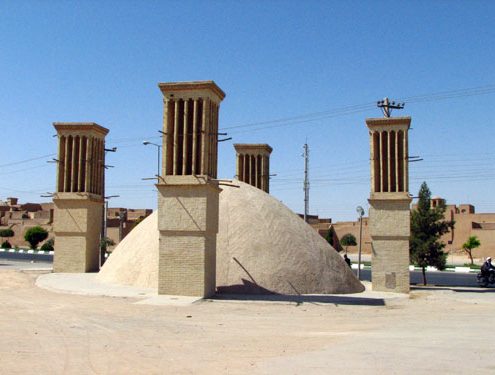
A water reservoir with four wind catchers

A water reservoir with four wind catchers


Huge underground tanks were built and insulated using traditional cement called Saruj for keeping the water that had arrived in a village after a long journey. Such structures are called Ab Anbar in Farsi, meaning water storage. There are two openings, one inlet and one outlet, at two sides of such structures at slightly different elevations.

Water was filling these tanks from one side and leaving them on the other. So, there was always a constant flow of water. It was never still. That’s why it could always be kept fresh and drinkable. Besides, the other vernacular energy-saving invention of Persians, Badgir (wind catcher), was implemented in these water reservoirs. At least a couple of them were constructed at both sides of such tanks and a dome covered the top of the tanks.

Badgirs let the air blow in from one side and out from the other. So, water was always exposed to fresh air too. A piece of salt rock was also thrown into the water to make sure it keeps water clean. Some other openings were worked out to have the light in as well. I’ve explained these structures at vernacular structures of Iran. You can read it to learn more about them.

Traditional Ice Houses of Iran

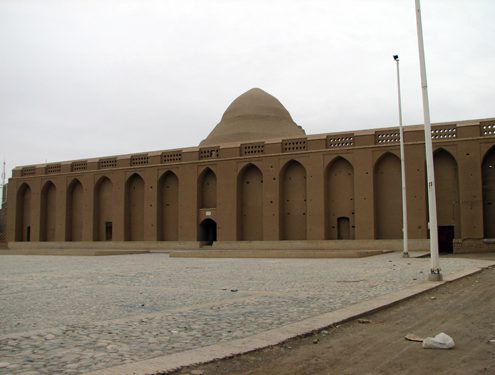
An Ice House with its wall casting shade on northern side in winter

An Ice House with its wall casting shade on northern side in winter

People loved to have something icy cold in the hot summer time. Although central Iran and eastern part of it was not so arid at the time when people started devising such systems for water management in ancient Persia, very warm climate demanded having some ice and icy refreshment to make and consume in  summer time.

Desert nights were quite cold and water could freeze. This is exactly what people needed to make ice out of water in ditches or pools next to a wall adjacent to a large mud-and-brick dome covering a huge storage underneath. Every night ice was made and the next day the wall cast shade when the ice needed to be preserved in a cool place. The ice made as such could be kept in such structures until the end of summer due to the efficient insulation system planned for ice-houses.

Multi-Functional Solid Bridges

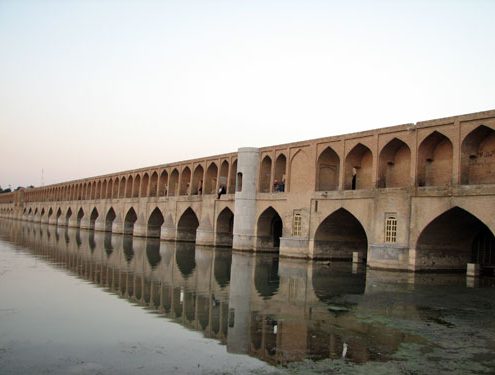
33-arch bridge in Esfehan from 16th century reviving the ancient styles

33-arch bridge in Esfehan from 16th century reviving the ancient styles

The oldest remnants of bridges trace back to Sassanian period, 3rd to 7th centuries. They are so strongly built that are still partially standing despite all the forcefully flooding events slapping them for centuries. Most of these bridges have been constructed on very powerful rivers at the south west of Iran. The main material contributing to the solidity of these structures was Saruj, the same traditional cement I referred to above.

There were arches built on top of the Saruj-made foundations with flat roofs on the very top of all the structure. These flat surfaces were connecting ancient roads on one side of the river to the other. The empty spaces between arches and below flat tops created enclosed areas as shelters or shady spots, which could sometimes function to let more raised water to go through and help the entire structure resist against the current.

Stone, rubble, pebble and bricks were glued to one another using Saruj. Once hardened, this locally crafted mixture turned into a hard rock-solid cliff-like wall making its presence felt in the powerful stream of water. Thank to this technique ancient Persians have invented to construct bridges in Iran, we can now view and study another aspect of water management in ancient Persia.

Water Dams in Large Rivers of Iran

What’s left from those ancient water dams indicate the rigidity of the structures they could make and install in those big rivers of Iran blocking the water and using this source of life for agriculture by redirecting them into the farming fields. The same local constructional materials referred to earlier were made use of for building such structures.

Basically, the purpose beyond building some of the bridges in Iran had been to make it possible for the caravans and people cross those rivers while it had been planned to raise the level of water for other purposes like irrigation.

In some cases, even before Sassanians, Persians had redirected part of the water in large rivers to transfer it to agricultural fields by making some water channels. In Shushtar, where you can see several such water management examples, Nahr-e-Dariun is a witness to such skillful  planning.

Water Mills to Harness the Power of Water

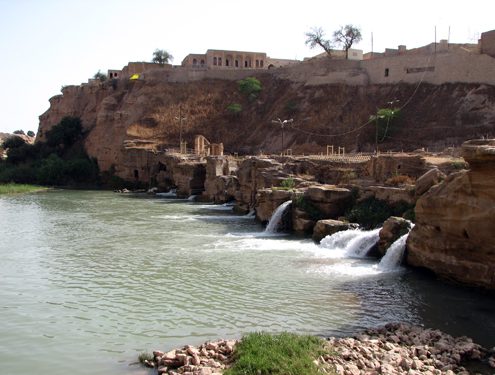
Water Mills at Shushtar built in Sassanian period for producing flour

Water Mills at Shushtar built in Sassanian period for producing flour


Shushtar and Dezful are two great examples of how proficiently people had brought the flowing water under control to use them for operating the mills either in the course of water inside rivers or inside the chambers dug into rocks. Such forceful streams of water could operate the mills for grinding wheat or other grains farmers produced.

In Shushtar, a water dam had been built to redirect the course of water from Karun river into a huge lime rock. Several tunnels had been carved into this rock to lead the water coming from a man-made river into them to turn the turbines and operate the mills.

Are these methods useless today? Are these structures obsolete? Are we so advanced in 21st century to say good-bye to them? You can visit Iran and go to these sites to explore the realities on the ground and learn about the fascinating passion for life in this country.