Iran Hotel & Tourism Investment Conference to debut in 2017
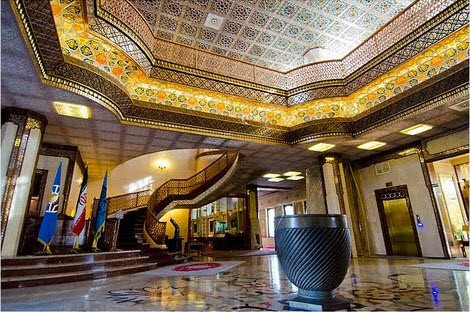

Iran is to host the first Iran Hotel & Tourism Investment Conference, a top-level gathering of international investors, owners, operators, developers and government officials.

In addition to rich reserves of oil, gas and metals, Iran has a promising consumer sector with a well-educated population of 80 million inhabitants.

There are huge investment opportunities across all of Iran’s economic sectors – energy, mining, hospitality and tourism, fast moving consumer goods, food and beverage, retail, automotive, aviation and manufacturing.

Under the 2025 Tourism Vision plan, Iran is expecting to increase the number of tourism arrivals from 4.8 million in 2014 to 20 million by 2025.

The 4.8 million tourists brought around $6.5 billion in revenue to the country despite sanctions and limitations imposed by the EU, the UN and the USA.
With the lifting of sanctions in January, it is expected that by 2025 the country will receive $30 billion from tourism income.

Only 13 out of the 96 hotels in Tehran are classified as four or five-star, although it is widely acknowledged that these would not meet internationally recognised standards for such classification.

Sébastien Bazin, chairman, AccorHotels speaking at AHIF 2015 said: “The Iranian market is a top priority for AccorHotels, as are Africa and India.

“These three geographies are ones where I want to make a major push.

“They have a lot of things in common: civilization, architecture, demography, booming medium-sized enterprises, lack of supply, lack of infrastructure and lack of low-cost airlines.”

In 2014, AccorHotels became the first international hotel group to enter the market since the 1979 revolution.

According to Iran chief of cultural heritage, handicrafts and tourism organisation, Masoud Soltanifar, investing in the tourism sector has become one of the priorities of the Iranian authorities.

The government has provided a series of incentives through the Foreign Investment Promotion and Protection Act including a 50 per cent full term tax reduction on income, loan structure and eligibility for government funding and property ownership rights.

Other hotel operators have also seen the potential and entered the market already.

Jonathan Worsley, chairman of Bench Events and founder of IHTIC, said: “I greatly enjoy pioneering new markets; it started with IHIF in Berlin 20 years ago and has continued right through to the Iran Hotel & Tourism Investment Conference in 2017.

“I believe in Iran’s hospitality potential and while breaking new ground is risky with numerous obstacles, those that are first-to-market will no doubt benefit from healthy ROI’s and relationships with both local partners, investors and authorities alike.”

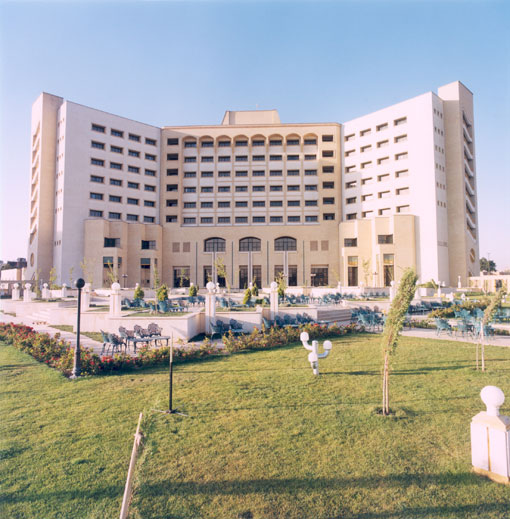
The Iran Hotel & Tourism Investment Conference will take place February 7th-8th at the Parsian Evin Hotel in Tehran.
 

Sand ski
by Ahmad Moghanizade

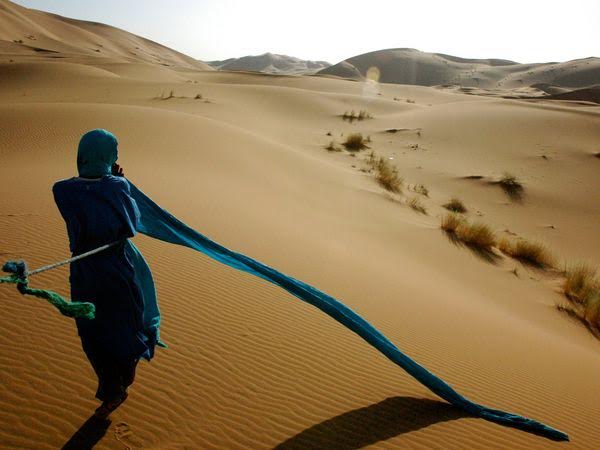
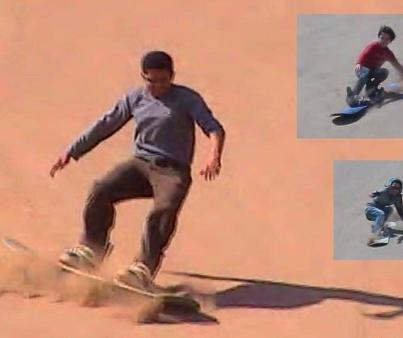
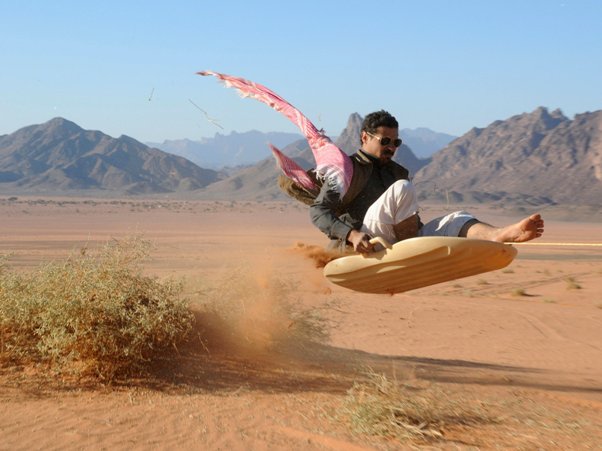
One of the nice and joyful recreations in Iran is skiing on sand dunes in the deserts of Iran. You can ask for sand ski tours in Yazd travel agencies. The tour is consisting of camel riding, sand dune trekking and sand skiing. Also the tour of camping in the desert is available in Yazd by the travel agencies. In some tours sky watching is also available.


Jahan Nama, Golestan

Jahan Nama is a village in Chaharkuh Rural District, in the Central District of Kordkuy County, Golestan Province, Iran. At the 2006 census, its population was 99, in 43 families. This area is situated in the southern heights of Gorgan and the southeast of Kord Kooy. In 1973, it was claimed as a protected place with 30,650 hectares in area. This region was a recreational area for people of Gorgan and its nearby villages. Some important regions like Torkat, Chalestan, Cholqoleh, Aq Reza, Chakel Geda, Landeh Kooh, Talou, Khoshdasti, Landou and Maqzi, are around this protected area.
The most important varieties of wildlife are: wild goat, wild sheep, vension, panther, wolf, beer, owl, eagle, shoulca, weasel, and porcupine and its important plants are: Rosh, Azad, Barberry, Sorkhdar, Kolahe Mir Hassan, Bolandmaza Namdar, Borage Cowslipe, Ras, and Darmaneh. Several studies in the area during 1999,2000, 2004, 2007 and 2008 found 1350 specimens, which included a total number of 607 vascular plant species that were identified from this area
The most important rivers and springs of this protected place are: Sefid Rood, Tarkan, Mahzi, Chaar Baq, Ziyarat, Marsang, Sbumargah, Shahpasand, Haji Abad, Gachian, Mord Cheshmeh, Vara, Khosh Dasti, Kalichal, Qormehtou, Pazeebon. Ancient relics of the said area are: water tank, ancient center of Kamarsarak and Jelingbling, Imamzadeh Razi and Marzieh, and the tower western of Radkan.

hircaniatourism
Everything in north of Iran.


Iran Prepares for an Uptick in Tourism


By Nicolas Parasie

DUBAI — A handful of mostly European hotel groups are looking to steal a march on their U.S. competitors by moving into the Iranian hospitality market while U.S. companies still face regulatory uncertainty.

Most international sanctions related to Iran’s nuclear program were lifted at the start of this year. That sparked widespread interest among international companies in entering a country of 80 million that remained isolated for decades.

Representatives of rapidly expanding U.S. companies such as Hilton Worldwide Holdings Inc., Marriott International Inc. and Choice Hotels International either declined to comment or said they are staying on the sidelines for now.

“We have been carefully watching the status of USA sanctions, the regulatory changes to those sanctions and we are evaluating the opportunities as a result of those changes,” said Alex Kyriakidis, president and managing director, Marriott International Middle East and Africa.

Meanwhile, other companies are wasting no time. Abu Dhabi-based-Rotana Hotel Management Corp. PJSC, France’s Accor, Spain’s Meliá Hotels International and Germany’sSteigenberger Hotel Group are all moving quickly in anticipation of a tourism and business boom.

Iran’s economy is the second largest in the Middle East behind Saudi Arabia.


“Everybody is waiting for the international changes to come into effect — we are moving forward,” said Guy Hutchinson, the chief operating officer of Rotana. “We are going full steam ahead,” he said.

Rotana, which operates out of more than two dozen cities in emerging and often complicated markets such as Iraq and Sudan, has four properties under construction in Iran, the first one of which, a five-star hotel with 362 rooms, will open next year in the holy city of Mashhad.

Rotana can draw from its experience in other holy cities such as Mecca and Karbala in Iraq, where targeting pilgrims as a major source of demand involves unique challenges, Mr. Hutchinson said. For example, more flexible check- in and checkout times might be needed to take into account the prayer times, he said.

“If you talk to U.S. companies, they don’t necessarily have the same understanding in markets like this, virgin markets where there are specific challenges on how you operate,” said Mr. Hutchinson.

Frankfurt-based Steigenberger recently signed a letter of intent to open 10 hotels in Iran, while Meliá has a five-star property in the works on the shores of the Caspian Sea. Part of their optimism is fueled by Iran’s ambition to increase the number of visitors to 20 million by 2025 from around five million in 2015.

Since the 1979 Islamic Revolution, Iran’s hotel sector has been a local affair marked by the absence of international brands. Visitors to Tehran, whether for leisure or business, lament the lack of top-end hotels.

“There’s not enough room for business travelers in Tehran,” said Maryam Kiaie, the international business development director for Rah Shahr, a major Iranian infrastructure firm. “We have business delegations postponing trips because of it.”

Ms. Kiaie estimates that Tehran needs 5,000 more high-grade hotel rooms. Hotels may be attractive for investors because they are easier to buy and upgrade than other property types.


“I think it’s a very safe sector to invest in,” Ms. Kiaie said. “It’s easier to get finance to build hotels, and there are many local investors who are interested in coming into a joint venture with foreign investors. It’s a good opportunity for hotel brands.”

A few of Tehran’s hotels market themselves as four- or five-star hotels but analysts say most of these wouldn’t receive the same classification by international standards. Room rates at the two Accor branches in Tehran range between $100 and $140 per night.

“Iran has some huge potential for growth because there is a lack in hotels both qualitatively and quantitatively,” said Christophe Landais, chief operating officer at Accor Hotels Iran. Paris-based Accor in the past year opened two properties, under the Ibis and Novotel brand, next to Tehran’s international airport. It is working on about 10 additional projects that will be located in Tehran and Mashhad.

Since opening its doors in Iran, Mr. Landais said the most positive feedback from clients he has received focused on Accor’s offering of free Wi-Fi and up to 40 international channels in the bedrooms — standard offerings in the West but more rare in existing Iranian hotels.

But being an early entrant to Iran’s hotel market also brought its challenges, in particular the relative inexperience of local investors with international hotel practices, Mr. Landais said.

“It’s an advantage (of being first) but the other side of the medal of us pioneering, paving the way is that it’s very hard,” he said. “We spend a lot of time explaining how hospitality development works.”

Mr. Hutchinson likened the present Iran situation to China before it became an economic powerhouse.

“It may take a little while until it fully opens and starts to move, but when it starts (it will go quickly),” he said.

There is also a risk of Iran’s leadership abandoning its current policies that enabled the country to rejoin the international business community in the first place.

“Right now, there is a progressive push from the leadership,” Mr. Hutchinson said. “If that shifted for any reason, that could close up things completely.”


Golestan national park
For the first time in 1958 the jungles located in eastern parts of Golestan province was selected as a protected area. Later in 1976 it was changed to the first national park in the country and now it is the oldest and biggest national park in Iran and one of 50 UNESCO biosphere reserve on the earth.
Golestan National Park with 900 square kiloometer area, has 1350 plant species and 302 animal species including half of the mammals of Iran. It is one of the best natural reserve in middle east.

The Shirabad Waterfall is a waterfall in the northern Iranian village of Shirabad. It is 7 kilometers south of Khanbebin, in the Fenderesk district of Golestan Province and in the slopes of the Alborz mountains in a forested area. This waterfall is in the form of a stairway and includes 12 large and small waterfalls. Its largest waterfall is 30 metres high and its plunge pool is 40 to 80 metres deep.


Farsian or Parsian is a village

Farsian or Parsian is a village in Azadshahr County, Golestan Province, Iran.
Farsian is approximately 36 km southeast of Azadshahr and 80 km northeast of Shahrood.
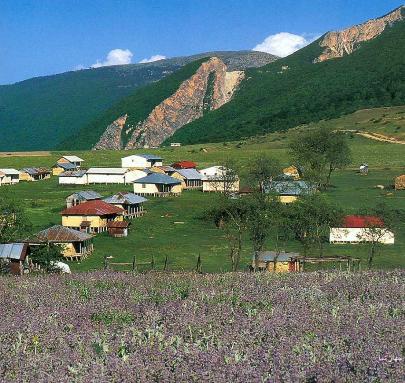
Farsian architecture is unique. It is one of the most beautiful stairy villages.
There are too many villages with stair form architecture in Iran. We have masoole in Gilan, Sar agha seyyed in bakhtiari, ouramanat, palangan…
The buildings of Farsian have been built into the mountain and are interconnected. Courtyards and roofs both serve as pedestrian areas similar to streets.
Farsian has many Sabat and many small and tight streets that named peace streets…
The village is one of the oldest in Golestan and in last year attracting numerous native and tourists.
On top of the village sits many castle, cemetery and waterfalls like Kaftar khane (that means pigeon-house, tallest waterfall of Farsian).

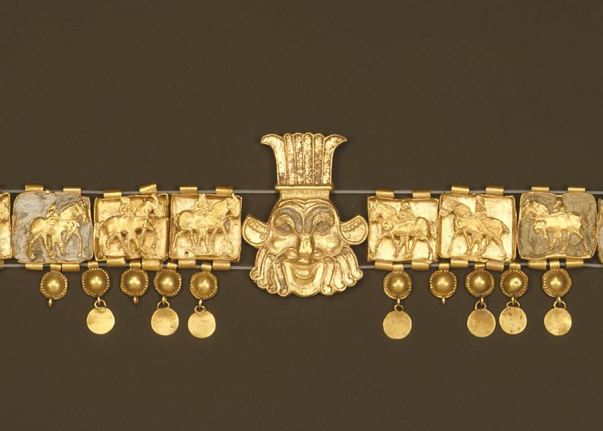
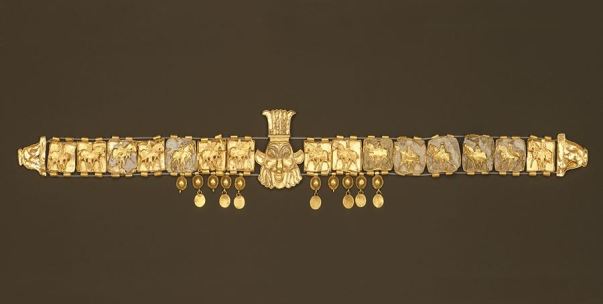
Achaemenid gold necklace with the Egyptian god
By Saeed Mousavi
In the fifth century BC, the same style of art and architecture that derives from the tradition of English was invented by people who lived under the Achaemenid Empire, of including people such as Ionians Greek, Lydian and Mesopotamian and Egyptian peoples named.


These ornaments have many forms and not only  women but also other men and the regime persons had been useing them and this is founded by the form of them.
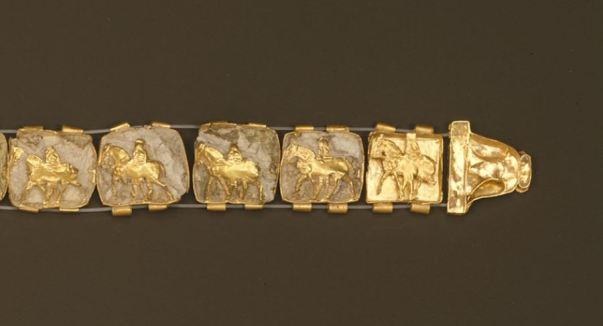
For example Achaemenid gold necklace, forms of horsemen and warriors can be seen as a result Surely this necklace belonged to a man. Since the necklace also has pictures of riders ahead is probably the necklace from the man’s court.
This necklace is full of iconic images, made with elements of Achaemenid.In the middle of the image of the god necklace “Bes”, the god of the ancient Egyptians to be seen.


Bes was Very famous among the Egyptians as the god of marriage and has the protective role for the lady of the house and home affairs and children’s clothes.
Icons of God cease to be surrounded around with plaques on the motifs of horse-riders form ,In the end, the motifs of lotus flower is visible.
The gold necklace belonging to the Achaemenid era, 2,600 years ago. it is 85.9 cm and is made by pure gold.


Next luxury travel hot spot: Iran?

By Jeri Clausing


Now, Cuba. Next, Iran?

This month’s historic nuclear deal and the announcement of plans to begin lifting sanctions against Iran has hoteliers and tour operators looking to expand in what many Americans have previously considered taboo territory.

According to MiddleEastHotelier.com, AccorHotels is now looking to develop some budget brands. And given the thirst by adventurous luxury travelers for new experiences in far-flung locales, luxury hoteliers will also no doubt be looking to the country.

A recent report by TRI Consulting, “Awaiting the Gold Rush: Exploring the Opportunities in Tehran’s Hotel Market,” says that Tehran currently has just 96 hotels, compared with Dubai’s 657. And only 16 of the Tehran properties are classified as four- and five-star.

So the potential opening of the market presents “enormous opportunities for the city’s untapped hotel market,” the report says.

For travelers who don’t want to wait, a North Carolina company already offers luxury tours to this intriguing destination.

“Few Americans realize that there are no sanctions or restrictions on travel to Iran,” says Steve Kutay, CEO of Iran Luxury Travel. “I speak seven languages and have traveled to more than 80 countries, and of all of them, Iran held the most fascination for me and my wife Pat.

“The country’s rich history, architecture and culture; warm and welcoming people; and spectacular scenery are unmatched.”

Kutay says his company is the only North American tour operator that offers trips to Iran.

“Iran is not just our specialty; it’s all we do,” he said. “We’ve stayed at or inspected almost every hotel we offer, and know American travelers will find them as luxurious as we did.”

The company offers eight- and 16-day tours, which include 10 Unesco World Heritage sites, concierge service and English speaking guides. The packages start at just $2,495 per person.

Kutay says spring and fall are the most popular months to travel, although this company also offer ski packages to Dizin, which is just two hours from Tehran and has a season that runs from November to May.


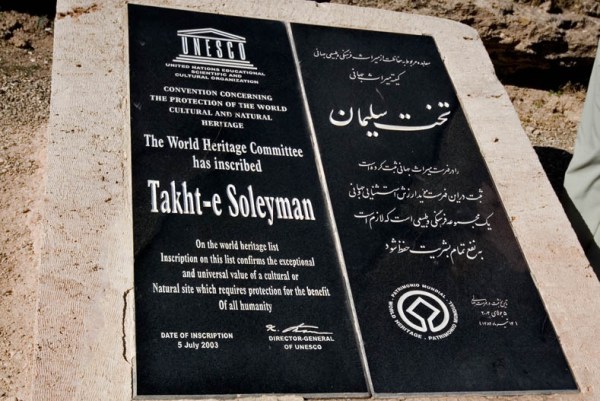
Iran’s Takht-e Soleyman among UNESCO World Heritage Sites
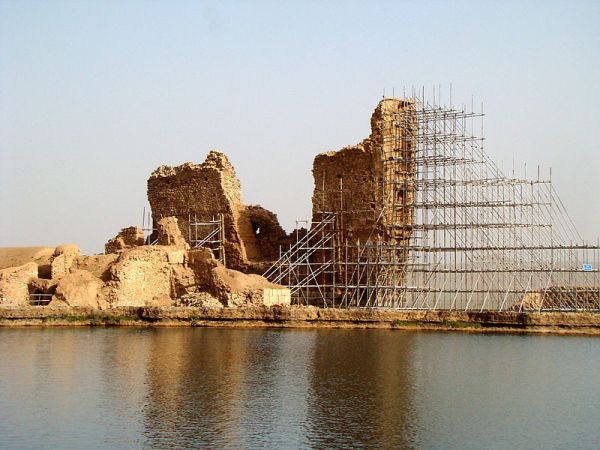
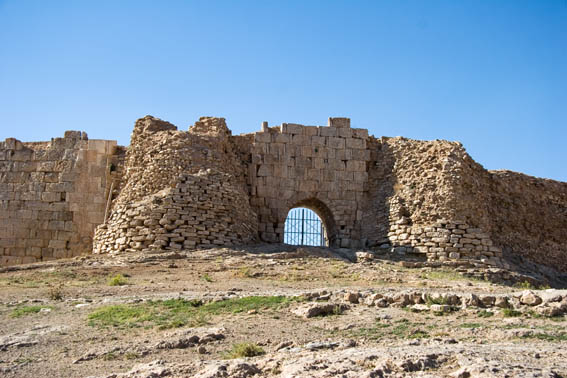
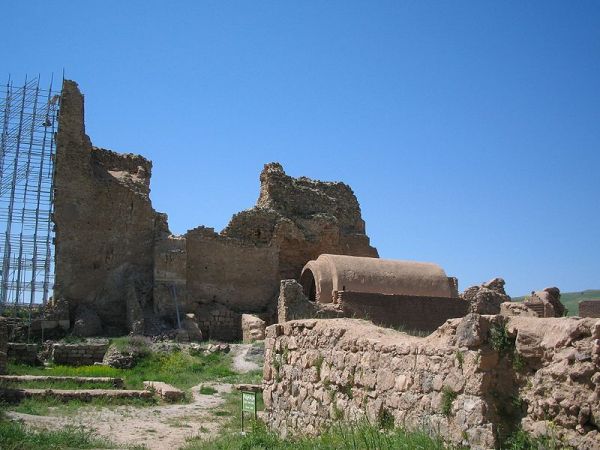
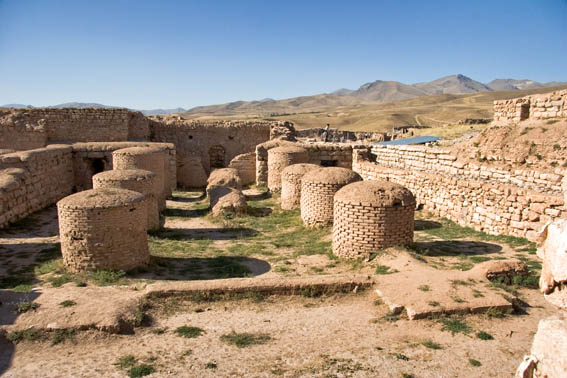
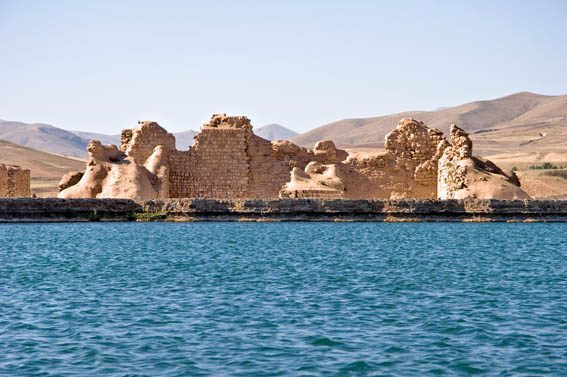
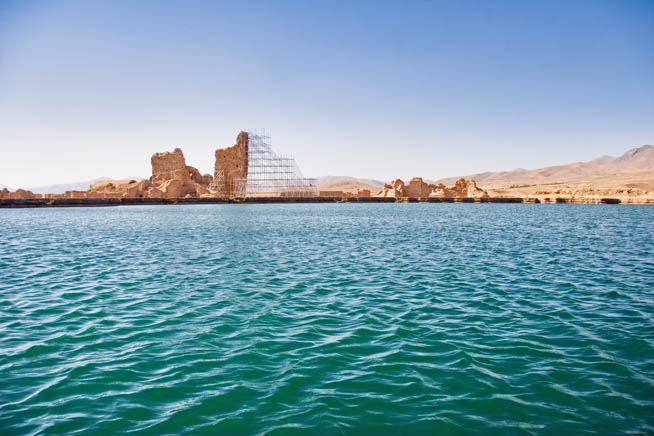
The archaeological ensemble called Takht-e Soleyman (“Throne of Solomon”) is situated on a remote plain surrounded by mountains in northwestern Iran’s West Azerbaijan province.

The site has strong symbolic and spiritual significance related to fire and water – the principal reason for its occupation from ancient times – and stands as an exceptional testimony of the continuation of a cult related to fire and water over a period of some 2,500 years. Located here, in a harmonious composition inspired by its natural setting, are the remains of an exceptional ensemble of royal architecture of Persia’s Sasanian dynasty (3rd to 7th centuries). Integrated with the palatial architecture is an outstanding example of Zoroastrian sanctuary; this composition at Takht-e Soleyman can be considered an important prototype.

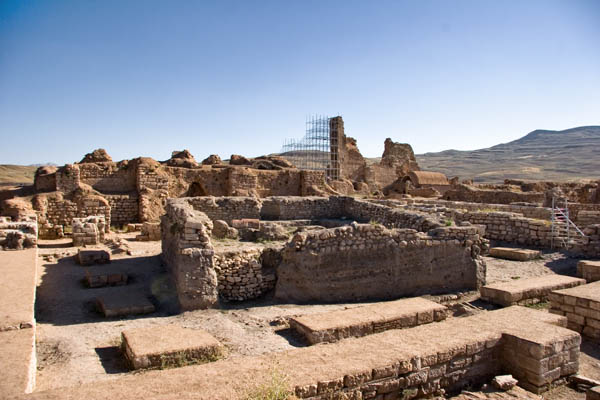
An artesian lake and a volcano are essential elements of Takht-e Soleyman. At the site’s heart is a fortified oval platform rising about 60 meters above the surrounding plain and measuring about 350 m by 550 m. On this platform are an artesian lake, a Zoroastrian fire temple, a temple dedicated to Anahita (the divinity of the waters), and a Sasanian royal sanctuary. This site was destroyed at the end of the Sasanian era, but was revived and partly rebuilt in the 13th century. About three kilometers west is an ancient volcano, Zendan-e Soleyman, which rises about 100 m above its surroundings. At its summit are the remains of shrines and temples dating from the first millennium BC.

Takht-e Soleyman was the principal sanctuary and foremost site of Zoroastrianism, the Sasanian state religion. This early monotheistic faith has had an important influence on Islam and Christianity; likewise, the designs of the fire temple and the royal palace, and the site’s general layout, had a strong influence on the development of religious architecture in the Islamic period, and became a major architectural reference for other cultures in both the East and the West. The site also has many important symbolic relationships, being associated with beliefs much older than Zoroastrianism as well as with significant biblical figures and legends.

The 10-ha property also includes Tepe Majid, an archaeological mound culturally related to Zendan-e Soleyman; the mountain to the east of Takht-e Soleyman that served as quarry for the site; and Belqeis Mountain 7.5 km to the northeast, on which are the remains of a Sasanian-era citadel. The archaeological heritage of the Takht-e Soleyman ensemble is further enriched by the Sasanian town (which has not yet been excavated) located in the 7,438-ha landscape buffer zones.

Criterion (i): Takht-e Soleyman is an outstanding ensemble of royal architecture, joining the principal architectural elements created by the Sasanians in a harmonious composition inspired by their natural context.

Criterion (ii): The composition and the architectural elements created by the Sasanians at Takht-e Soleyman have had strong influence not only in the development of religious architecture in the Islamic period, but also in other cultures.

Criterion (iii): The ensemble of Takht-e Soleyman is an exceptional testimony of the continuation of cult related to fire and water over a period of some two and half millennia. The archaeological heritage of the site is further enriched by the Sasanian town, which is still to be excavated.

Criterion (iv): Takht-e Soleyman represents an outstanding example of Zoroastrian sanctuary, integrated with Sasanian palatial architecture within a composition, which can be seen as a prototype.

Criterion (vi): As the principal Zoroastrian sanctuary, Takht-e Soleyman is the foremost site associated with one of the early monotheistic religions of the world. The site has many important symbolic relationships, being also a testimony of the association of the ancient beliefs, much earlier than the Zoroastrianism, as well as in its association with significant biblical figures and legends.

Integrity

Within the boundaries of the property are located the known elements and components necessary to express the Outstanding Universal Value of the property, including the lake and the volcano, archaeological remains related to the Zoroastrian sanctuary, and archaeological remains related to the royal architecture of the Sasanian dynasty. Masonry rooftops have collapsed in some areas, but the configurations and functions of the buildings remain evident.

The region’s climate, particularly the long rainy season and extreme temperature variations, as well as seismic action represent the major threats to the integrity of the original stone and masonry materials. Potential risks in the future include development pressures and the construction of visitor facilities in the buffer zones around the sites. Furthermore, there is potential conflict between the interests of the farmers and archaeologists, particularly in the event that excavations are undertaken in the valley fields.

Authenticity

The Takht-e Soleyman archaeological ensemble is authentic in terms of its forms and design, materials and substance, and location and setting, as well as, to a degree, the use and the spirit of the fire temple. Excavated only recently, the archaeological property’s restorations and reconstructions are relatively limited so far: a section of the outer wall near the southern entrance has been rebuilt, using for the most part original stones recovered from the fallen remains; and part of the brick vaults of the palace structures have been rebuilt using modern brick but in the same pattern as the original. As a whole, these interventions can be seen as necessary, and do not compromise the authenticity of the property, which retains its historic ruin aspect. The ancient fire temple still serves pilgrims performing Zoroastrian ceremonies.

Protection and management requirements

Takht-e Soleyman was inscribed on the national heritage list of Iran in 1931, and it is subject to legal protection under the Law on the Protection of National Treasures (1930, updated 1998) and the Law of the Iranian Cultural Heritage Organization Charter (n. 3487-Qaf, 1988). The inscribed World Heritage property, which is owned by the Government of Iran, is under the legal protection and management of the Iranian Cultural Heritage, Handicrafts and Tourism Organization (which is administered and funded by the Government of Iran). Acting on its behalf, Takht-e Soleyman World Heritage Base is responsible for implementation of the archaeology, conservation, tourism, and education programs, and for site management. These activities are funded by the Iranian Cultural Heritage, Handicrafts and Tourism Organization, as well as by occasional international support. The current management plan, prepared in 2010, organizes managerial strategies and activities over a 15-year period.

Sustaining the Outstanding Universal Value of the property over time will require continuing periodic on-site observations to determine whether the climate or other factors will lead to a negative impact on the Outstanding Universal Value, integrity or authenticity of the property; and employing internationally recognized scientific standards and techniques to properly safeguard the monuments when undertaking stabilization, conservation, or restoration projects intended to address such negative impacts.


Iran’s Jewish community in Esfahan: We ‘feel at home’
By Frederik Pleitgen, CNN


Esfahan, Iran (CNN)If you’re looking for the Jewish community in the Iranian town of Esfahan, you won’t have to search for long.
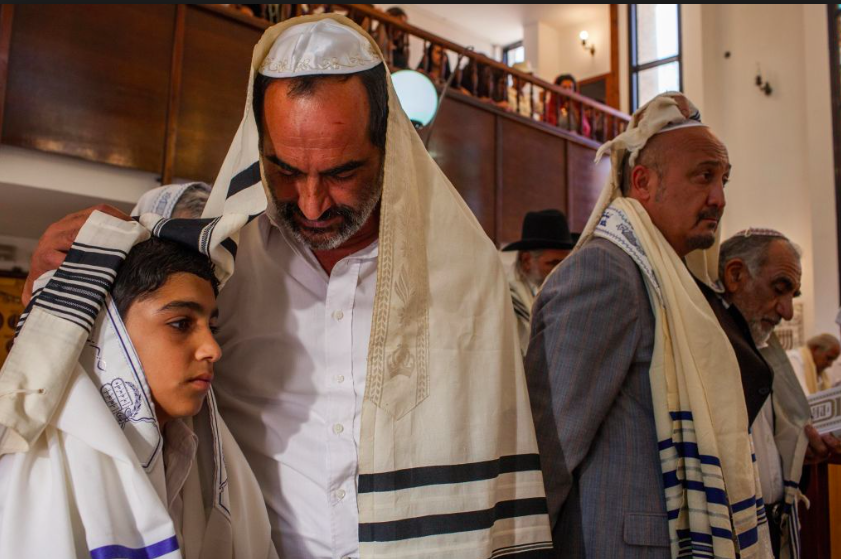
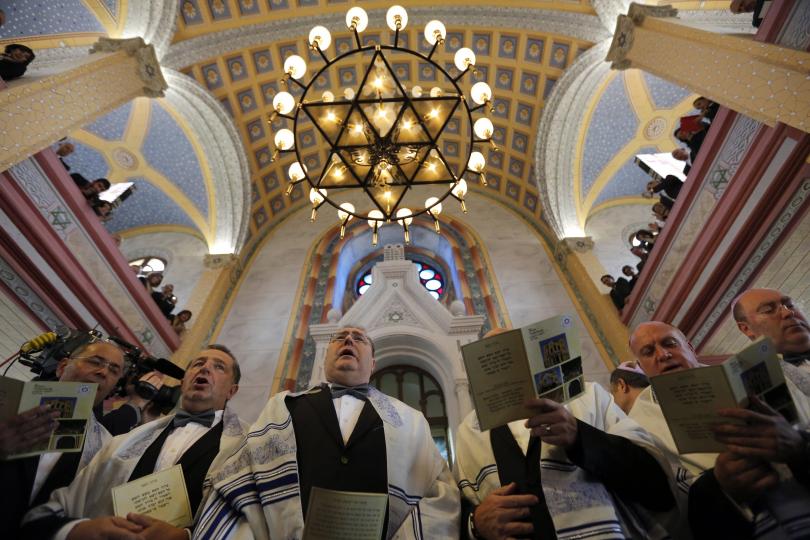
The main synagogue is on Palestine Square, right in the heart of Iran’s third largest city. There are public prayers several times a day — sometimes with more than a hundred people in attendance.

The Jewish community in Iran does not hide its heritage. At the synagogue, Michael Malakon leads the prayer service. He says he is proud of his Jewish identity. And even in a country that is so hostile towards Israel, Malakon says he can practice freely and that he has many Muslim friends.
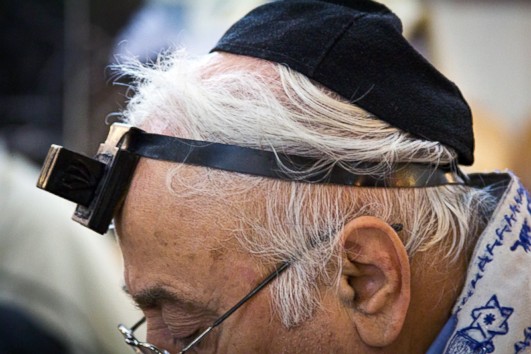
“I hang around with all kinds of young people and I have a lot of Muslim friends,” Malakon tells CNN after finishing the noon prayer on a Monday. About 20 people were in attendance, usually from local businesses around the synagogue. None of them tried to hide the fact that they were Jewish — and inside the synagogue the Star of David is proudly displayed in many places, alongside passages from the Torah.


Long history
There have been Jews in Iran for more than 2,500 years. Many left the country after the Islamic Revolution in 1979 that brought Ayatollah Ruhollah Khomeini to power. Khomeini said Iran wanted to destroy Israel, but he also issued a fatwa, a religious decree, saying that Iranian Jews were different to those in Israel and should be considered an integral part of the Islamic Republic.

Sion Mahgrefte is the head of the Jewish community in Esfahan. He declined to comment directly on political matters, especially in the current heated environment, but he did say that the members of his community felt very much at home in Iran.


“Israel and Iran are countries,” he said. “And we consider ourselves Iranian Jews, not Israeli Jews. So the hostilities between Israel and Iran do not affect us.”
There is even a Jewish representative in Iran’s parliament. And aside from the vibrant Jewish community in Esfahan — there are 13 synagogues in the city — there are also several Orthodox Cathedrals representing a sizable Christian community.