honey-shop-tabriz-bazaar

honey-shop-tabriz-bazaar

As world travelers, you have certainly heard of the world bazaars and seen several of them here and there. On the surface, they may look like shopping centers, but some deeper reality can be found under the skin of Iranian bazaars. I want you to know more about what’s down there and who’s doing what in such living communities in different cities of Iran.

There are certain people within specialized guilds working in the bazaars facilitating the business transactions. Also, there are various institutes forming the particular identity of the bazaars in Iran. We will look at them one by one.

Various Institutes inside Iranian Bazaars

Religious Institutes:

There are mosques, shrines and mausoleums inside these places. The people who are shopping, working or living in the vicinity of such centers, may need to pray or practice some religious beliefs. Therefore, these institutes are there for such people. Some may have fervent belief in praying at a particular mosque or shrine inside such bazaars. Some may want to meet others from other part of the bazaar. Noon prayer time could be a time to meet up.

In the history of each city, there could have been certain people whose contribution to the community have been preferred to be remembered by those living and working there. To honor such well-known people, mausoleums may have been constructed inside Iranian bazaars. People go to such places, pray for the peace of their souls and revere them.

Education Centers:

You may get surprised to know that there have been madrasas inside the bazaar compounds where religious students study. Those old structures have been well-maintained and still used as education centers. Many of the bazaars in Iran still have those schools in which Islamic doctrines are being taught. Therefore, students and teachers have to walk through the bazaar passageways to get to classes.

Of course, I must mention that modern colleges and universities aren’t found at these places. Bazaars are traditional communities in which you may buy modern commodities and find modern instituts like banks, but you won’t find modern education centers there.

Money Exchange Shops:

You may need to buy lots of things in the bazaars for which you will have to have Iranian currency, Rial. Such shops aren’t found in large numbers. They are usually at one part of the bazaars. Sometimes, some gold shops exchange various currencies like in the bazaars of Rasht and Kermanshah.

Sport Centers:

Zoorkhaneh is the traditional sport center in Iran that could also be found in Iranian bazaars. As it’s a mixture of exercising physical and ethical values, people of all walks of life may participate in it. Therefore, people of the bazaars are no exceptions. Many of those who work in these places go to such gyms everyday.

Various Guilds inside Iranian Bazaars

Traditional Craftsmen:

There are many craftsmen and artisans who are working in a number of workshops where traditional arts are practiced. Handicrafts are being created and sold to the shops where Iranians and non-Iranian visitors buy as souvenirs or even purchase them for personal use.

During your visits to Iranian bazaars, you may hear a lot of noise in particular parts of the bazaars where metals are hammered, wood is cut, fabrics are block-printed, etc. These are the shops in which traditional artists are working to create interesting items for other shops. You will certainly find them quite attractive parts of such communities.

Food Sellers:

There’ alway a part of the bazaars in Iran that is for selling foodstuff. Some sell food and some sell items for eating. Both are interesting to see as you will learn a lot about what people eat at home or in the restaurants.

If you go shopping in the bazaar or plan to have your business there, you will need to eat after some time. Bazaars are such large areas that you cannot easily get out of them just to eat and come back. This will not be practically ideal. Therefore, you have to eat inside the bazaars.

If you like traditional food, make sure you go to one of these places where you can find dishes like dizi, which is a mix of beans, chickpeas, potatoes, meat, dried lime, etc. If you like to go to a traditional tea houses instead of modern coffee shops that could be found everywhere, don’t forget to take the opportunity as long as you’re there.

Animal Sellers:

At particular parts of some Iranian bazaars, there are some of these shopkeepers working. These are some tradesmen who sell animals that people keep as pets like nightingale, parrots, myna birds, etc. On the other hand, some sell living animals who are soon slaughtered to be eaten like geese, chickens, quails, turkeys, ducks, etc.

Find Life in Iranian Bazaars

In a nutshell, if you’re traveling in Iran trying to find out more about life and how it continues in Iran, you can touch under the skin of Iranian bazaars by going to various corners of such living communities and learn a lot.

The people working at Iranian bazaars play major roles in politics, economy and social activities of the society. They are the traditional supporters of economy. They can raise fund for particular causes and they can ban laws, products, etc to block some new trends appearing in the entire country.

In general, bazaars are pro-traditions and support business enhancing laws that help them grow their capitals. They aren’t so much pro-modernity as it may bring about different systems of beliefs and jeopardize their businesses. They’re not very much pro-change. They are often conservatives who support old lifestyles and traditions.

 Find Life in Iranian Shopping Malls!

You may wonder why I’m taking you to an entirely different world – modern shopping malls in Iran! That’s a reality, which cannot be denied. You can find a lot of such modern centers. Cities are growing larger and larger. Therefore, it’s not practical to buy only in the traditional bazaars. They turn to be time-consuming and people will have to go long distances, spend a lot of time to buy some items that can be easily bought in a shopping center at their neighborhoods.

You cannot find traditional bazaars’ variety in shopping malls. They are imitations of western countries’ malls. Modern life has dictated its rules in large cities. You find coffee shops and restaurants (not teahouses) in these modern places. You find some of the latest clothing items offered by fashion brands. Even some of these centers are supplied with supermarkets, large and small.

The new middle class people and young generation, of course, prefer to go shopping in these places. They don’t feel the need to go to some of those traditional communities or buy from those traditional guilds. However, their needs are answered with what’s available to them.

I can briefly say that you can find varieties of true life in Iran only when you visit both traditional Iranian bazaars as well as modern shopping malls. Iran is in a transitional stage between traditionalism and modernity. You will find this distinct comparison a wonderful discovery in one country. I’d recommend you to explore it for yourself.

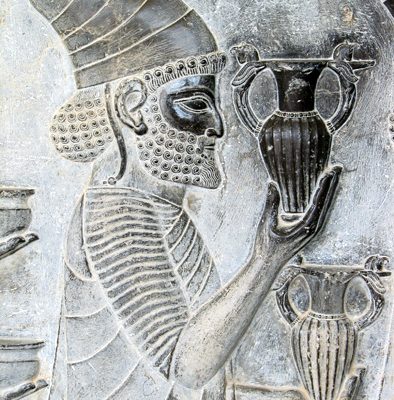
Nowruz, Iranian New Year, has got deep roots among ancient Iranians, particularly farmers. As their lives depended largely on agriculture and producing food, it has got strong connection to such lifestyle. You need to know Nowruz history and roots of Nowruz Celebration to understand it better.

Preparing for Nowruz Celebration in Persepolis

Preparing for Nowruz Celebration in Persepolis

When no agricultural activities were possible in Winter, each individual used to go home and try to keep warm on his/her own. The end of Winter and beginning of Spring, when it got warm again and the people, most of whom were farmers, could get out and come together for work and produce food, the time for togetherness started. This could be a solid reason for Nowruz celebration!

Nowruz & Mythology

According to the ancient myths, when Iranian mythological king, Jamshid, ruled in Iran for 1000 years, everything was good. Food was abundant, lies didn’t exist, plants didn’t go dry, people didn’t suffer from extreme cold and hot weather conditions, nobody got old, jealous, etc.

During such time and at the beginning of first day of the first month of Spring, Jamshid sat on his throne decorated with gems and put on a crown encrusted with jewels, against the East. When the Sun started shining at him and the throne, people saw him glittering like the Sun. Therefore, this brought plenty of happiness and joy to the nation. They celebrated that day and called it a new day, Nowruz. The happy ceremonies took five days and everyone celebrated the New Year and the revival of nature.

Nowruz & History

Since 3rd millenium BC, Nowruz was commemorated with joy in Iranian plateau, but not in the Eastern half of Iran. At the same time, it was celebrated in the Mesopotamia. Nowruz history doesn’t originally go back to a Zoroastrian nor an Aryan tradition.

Nowruz Celebration by Ancient Iranians

Nowruz Celebration by Ancient Iranians


There was another festivity popularly celebrated after the time of harvest around early November. During that time, Iranian calendar had 7 months of Summer and 5 months of Winter. Mehregan was at the end of Summer and the beginning of Winter. The cause of joy was the crops harvested, meaning food for people.

Nowruz and Mehregan were celebrated in several other adjacent countries. For example they were popular among Semites, Arabs of Medina, etc. These annual celebration have continued till now in various countries.

When you study Nowruz history, you find out it wasn’t a Zoroastrian festivity, because Avesta, the holy book of Zoroastrians, hasn’t mentioned it. On the other hand, it wasn’t celebrated at the Eastern half of Iran, where the main concentration of Zoroastrians used to live. One fact is for sure: Nowruz was celebrated in Persepolis.

Nowruz Festivity in Ancient Calendars

In Achaemenian era, people and officials commemorated Nowruz in form of an annual tradition everywhere – at home and in Persepolis. Some researchers believe that during early Achaemenian era, Mehregan was celebrated in Fall, but under Darius I, the beginning of Spring was determined to be the time for the annual festivity in Persepolis.

The Persian king was sitting in a particular direction and specific spot in Persepolis so that daylight could shine at his face at sunrise. This is why Persepolis is known as the throne of Jamshid and Iranians call it Takht-e-Jamshid.

In Parthian and Sassanian eras, various calendars caused the day of Nowruz to move to other days as the calculation for different calendars were not the same.

Iranians continued celebrating Nowruz even after Arabs’ invasion, which brought Islam to Iran. Arab caliphs weren’t happy about this at all, but Iranian Muslims kept on honoring and celebrating their national rituals.

Under Seljuks, when Turk authorities were very much against Nowruz festivities, Iranian calendar went through several manipulative changes. Eventually, a group of mathematicians were assigned a project to correct the calendar including Omar Khayyam. They fixed Nowruz time at the beginning day of Spring, almost the same as 21st of March, when Iranians celebrate Nowruz these days.

When Safavids ruled in Iran from 16th to 18th centuries, Nowruz celebration was mixed with some Islamic rituals. Religious leaders narrated traditions from Imams to approve that the prophet Mohammad and others did great things at such a day. Therefore, today Iranian Shiites celebrate Nowruz as an annual Iranian-Islamic event and even recognize it as a holy and blessed day.

Special Items to Buy for Nowruz Ceremonies

Special Items to Buy for Nowruz Ceremonies


This is the second part of the series of activities people are involved in before Nowruz and after that.

More Customs and Traditions before Nowruz

Below is the list of more customs and traditions of the Iranian New Year:

Making Noise with Spoon

Young girls/women hit the bowls at Chaharshanbeh Soori

Young girls/women hit the bowls at Chaharshanbeh Soori

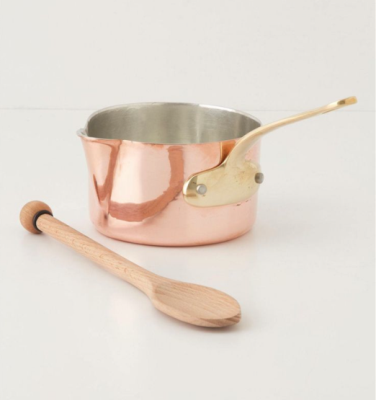
Decent girls and women, who had wishes like getting married, walked out at night with copper bowls and hit them with spoons at the threshold of seven doors without saying anything. The house dwellers knew they had certain wishes and replied with putting certain things like nuts, cookies, rice, legumes, etc at their bowls.

Refusing to give away anything would mean to those women that their needs wouldn’t be met. Receiving something, on the other hand, had the opposite meaning of the former.

Unlocking the Lock

According to various local customs and traditions before Nowruz, single girls who wanted better luck in getting married, went through different rituals. Sometimes, a mother chased her daughter with a piece of burning wood. It was symbolic of giving her away to her husband.

Sometimes, girls took bath in a particular spring to get married or married women did the same thing to push out the bad luck from their home and win their husbands’ love.

Several similar works were carried out at the night before the last Wednesday of the year to unlock the locked happiness of their lives.

Jar Breaking

Women used to break jars to keep their household safe

Women used to break jars to keep their household safe


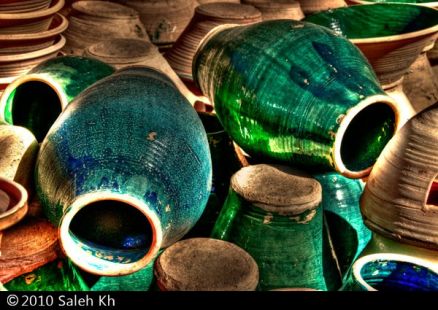
The women, who wanted to keep away evil from their household, went to the roof or some designated tower in their communities to throw down a new (not used) jars to break them. They believed this could keep their families safe.

Taking Amen by Jars

Women used to come together with a narrow-spout jar and everyone threw some object into it. Another woman wrote some love poems on small pieces of paper and threw them into the same jar. Then, a very young girls (who wasn’t grown up yet), was asked to take out an object and a piece of paper. The poem would say something about the life of the owner of the object.

Breaking Spells

Some made a particular liquid mixture with vinegar and sprinkled it at four corners of their houses, the rooms and the entrance to break the spells and let the blessing flow in their lives.

Chaharshanbeh Soori Soup

Special soup is prepared for Chaharshanbeh Soori celebration

Special soup is prepared for Chaharshanbeh Soori celebration


If someone was ill, his/her family made a votive soup at the night before the last Wednesday of the year. Some of it was given to the ill person and the rest was distributed among the poor. This was to bring back health to the ill person by some charitable act.

Distributing Chaharshanbeh Soori Nuts

Some nuts were bought by the women who had particular wishes. They bought a combination of seven different nuts, cleaned and unshelled them to eat the kernels with family, relatives and friends. While having the nuts, they narrated a particular story. Today this tradition is just to have something to eat and enjoy.

Remembering the Deceased

This pre-Nowruz tradition, like in many other nations, has got roots in the antiquity. Even in different religions, people tend to remember the beloved ones they have lost in specific days.
In some areas of Iran, people still keep this tradition in various ways. Some light up lanterns or put some fire on the roofs and turn on lights sooner at the last day of the year and keep them going until the dawn of the first day of the New Year.

In some other areas, firework on hilltops and outdoor is the tradition to remember the deceased. Other forms of such remembering are like burning candles at different corners of home. In particular cities, illumination of shops and fireworks symbolized such occasion. Today firework at the night before the last Wednesday of the year, Chaharshanbeh Soori, is another form of this tradition.

Conclusion

In general, people have been keeping several customs and traditions before Nowruz indicating the end of the old and the beginning of the new. They need to remember the dead ones and keep living in happiness and health.

Once a year, people get prepared for another year at Nowruz, 21st of March, by keeping such customs and traditions. This creates a state of bliss and joyfulness in everyone.


Nowruz Entertainer

Nowruz Entertainer


Since ancient times, Iranians have observed various customs and traditions before Nowruz (Iranian New Year) and after that. These are a series of activities that take different forms in various parts of Iran. Below is a list of some activities people have been involved to get prepared for this annual festivity.

Main Customs and Traditions before Nowruz

There are several activities going on among Iranians before the new year starts. You can read some of the main ones here and continue learning about them on the next part!

Nowruz Messengers

They are some groups of entertainers who bring the message of the New Year at public places by singing, dancing, acting, etc to make people happy. Such tradition has had various names and forms at different parts of Iran. What has been common among all of them is the intention to bring happy time to the people regardless of the clothes they wear, songs they sing and appearances they make.

At such days before Nowruz and sometimes several days after the equinox, people give presents to one another and to those messengers who entertain the whole community.

To Get Prepared for Nowruz

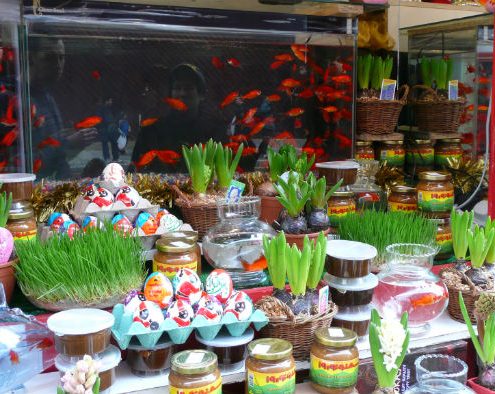
In ancient times, Iranians who have been mostly farmers, planted seven types of seeds of wheat, barley, beans, corn, chickpeas, rice, etc on top of column-like cylinders so that the green plants could grow at the outset of the New Year. This could bring the good news of the blessed New Year ahead. The plant growing better could be a sign of better crop from that seed in the year to come.

Today people plant seeds likewise about 2 or 3 weeks before Nowruz at small plates or vessels. At the end of Nowruz holidays, they take them out of their homes and leave them in nature and sometimes throw them into the running water. Here are some of the customs and traditions before Nowruz:

Home Clean-up before Nowruz

This happens at all levels at homes. People take dust away from walls, floors, household stuff, etc. They also wash vessels, clothes, curtains, carpets, etc and bleach copper vessels and soothe-stricken walls. Old broken things are thrown out or given away. Instead, new stuff replaces them so that everything is renewed. This is done every year before Nowruz.

All such cleaning customs at home symbolize the removal of evil from home and living environment and prepare a clean home to welcome the spirits of their beloved ones who had lost their lives.

Chaharshanbeh Soori

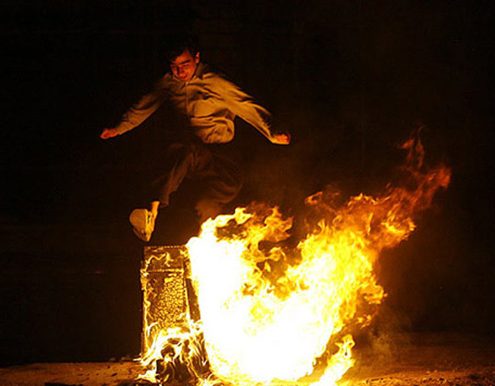
Jumping over fire at Chaharshanbeh Soori

Jumping over fire at Chaharshanbeh Soori

The last Wednesday of the year is celebrated by fireworks one night before it comes. Soor means celebration. Among some Iranians like Kurds, it means red. Ancient Iranians celebrated the end of the year by setting up the red flames of fire at the roofs of their houses showing the way to the spirits of their lost ones so that they could reunite with them.

Another tradition kept by the people is to put 3, 5 or 7 heaps of dry bushes and thorns in a row, set them on fire and jump over them one after another. In various parts of Iran, they sing different songs while jumping. The content of all such short songs are focused on giving away their pain, sorrow and illness to gain health, happiness and fresh lives. Then, ashes are thrown into running water.

Water Sprinkling Games

Another tradition before Nowruz is water sprinkling games. Women used to go to water springs to bring water home to sprinkle it over everything. They believed this would bring freshness and health to their lives. Some Kurds fetch water from a spring before sunrise in jars and jumped over them three times. They made up their eyes with charcoal, drank from these jars and offer them to their neighbors and friends. Some women trim their fingernails or cut a little of their hair and left them to rivers so that water took their misery and pain away.

Eavesdropping

An interesting custom among Iranians before Nowruz is eavesdropping. Girls and women who would like to get married, go on pilgrimage, journeys, etc, used to go out and stand at crossroads and corners for overhearing what others say. If they heard pleasant happy words, it would indicate a happy blessed year was ahead of them. If bitter and sorrowful words were heard, they wouldn’t reach their goals and their wishes wouldn’t come true.


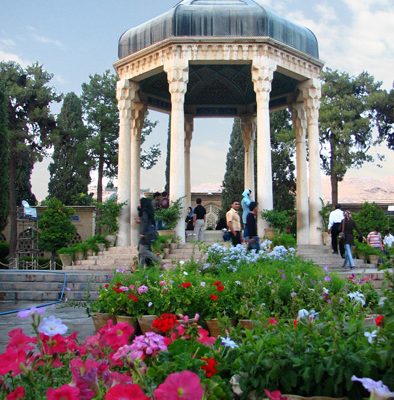
If you travel to Iran, you will certainly be amazed by the number of Iranians who visit the tombs of their poets. You see how they respect and show love for the ones buried in these places. You find out the passion and affection in their manners and treatment of the tombs. Based on what I’ve heard from the international travelers for years, this is some rare scene in the other parts of the world.

Poetry in Schooling System

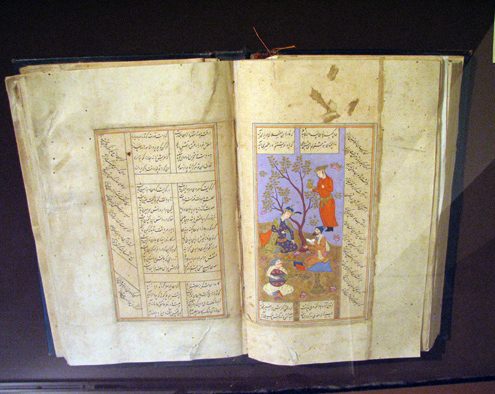
A book of Persian poems with miniature paintings

A book of Persian poems with miniature paintings

As children, Iranian students begin to learn poems and even memorize them in the early years of primary schools. They get familiar with the rhythm and rhyme as well as the different styles of poetry. They learn about the famous Iranian poets. Persian literature is full of distinguished styles. Many of the textbooks they study are written in Middle Persian, the language used in Iran some 1400 years ago. Although the language has gone through lots of changes, it’s still understandable.

During high school, students study more complicated Persian literature and particularly poetry. This continues in the universities regardless of what you study.

Poems in Everyday Life

A lot of Persian expressions are in form of poems. Persian poems are very rich in subjects like love, modesty, wisdom, appreciation of creation, nature, and so on. Therefore, there are several occasions coming our ways in which one remembers some Persian sayings. For centuries, those who knew such expressions and used them in certain situations were considered the educated ones. In some other cases, one may even recite some lines of poem.

There’s no Iranian home without Persian poetry books. People continue reading poems outside schooling system too. Before the time of equinox and the coming of the New Year (Nowruz), during Yalda night (the ceremonies for the longest night of the year – Dec 20th), and many other occasions, Iranians read poems.

Iranian traditional music is so full of classical Iranian poems. Some Iranian poets are well known for their musical poems. Some of them have got powerful soothing effect. Some make you very happy and some are deeply sad and full of emotions. In various states of heart, Iranians can listen to various types of music.

Tomb of Hafez decorated with flowers

Tomb of Hafez decorated with flowers

The eloquent Persian language is used in journalism too. Sometimes the headlines as well as the news articles you read are embellished with poems, expressions and references to particular poems. Some of these poems have got a work in them which are, by themselves, a reference to another story or group of people with particular mindset and belief, etc. Therefore, understanding Iranian poems, music, stories, news articles, etc could be quite complicated, but not very much for a nation who is brought up with it.

Iranian World Class Poets

I can say Iran has offered some of the most famous poets to the world literature. They represent a nation with profound culture and thoughtful ideas.

Ferdowsy is the Iranian poet of 1000 years ago. He composed the most famous Iranian poetry book called Shahnameh. This was an unparalleled effort to save the Persian language at the time when Arab invaders had forced Iranians not to speak, write or compose anything in Persian. His epic works set nationalistic feelings ablaze in Iranians hearts.

Omar Khayyam was a well-known mathematician and poets who lived some 900 years ago. His short poems are full of maxims about life and joy.

Saadi was a man of traveling living some 800 years ago. He had studied in Nezamieh University, Baghdad. He returned to his homeland toward the end of his life and soon gained large popularity due to his lovable poems highly appreciated by the people contemporary to his time. His famous poem has decorated the UN building as below:

Human beings are members of a whole,
In creation of one essence and soul.
If one member is afflicted with pain,
Other members uneasy will remain.
If you have no sympathy for human pain,
The name of human you cannot retain.

Rumi was the unique Iranian poet of 700 years ago. His rhythmic poems describe Iranian traditional systems of music. His words of wisdom, spiritual and love poems are still quoted by Persian speaking people. His book became the bestselling book of late 20th century in the US and his poems’ recordings made their way to the Billboard’s top 20 list.

Hafez was the master of Persian ghazals and still is after 700 years. The figurative language he’s used was an escape way under the rule of Mongols in Iran. His description of love and beautiful language of spiritual values are uniquely adorable.

In addition to such famous poets, there are large number of other poets who are quite well liked by Iranians although non-Iranians may have not heard of them.

Visiting Ritual of Persian Poets

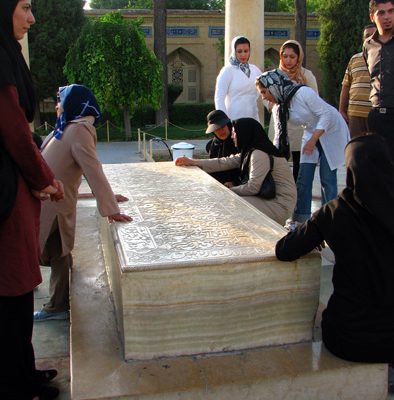
People showing their affection at a poet’s tomb

People showing their affection at a poet’s tomb

When Iranian go to the tombs of poets, they treat them like a lost beloved family member. They put flower on their tombstones. Sometimes, they wash the tomb with rosewater. They sit down and pray for the dead poet. They talk to them and ask them to talk back with them. They bring the poet’s book with them to read or recite some of their poems to stay connected with them.

Such tombs are inside beautiful gardens, not among other graves in a cemetery. The decoration of the settings around it and the monument built for them are parts of the whole honor dedicated to them.

Reputation of Iranian Poets among Foreigners

Every year, there are several commemorative ceremonies and conferences for the above poets and others in Iran. Many people specialized in studying these poets’ works come together to discuss various dimensions of their characters and works. There are universal days allocated to such poets and non-Iranians understand the importance of such men of wisdom in the development of human knowledge.

Therefore, when you visit Iran, make sure you have a deeper look at the settings in which Iranians go to such tombs and grasp the feelings and appreciation to such gems at Persian literature.


shovel-turning

shovel-turning


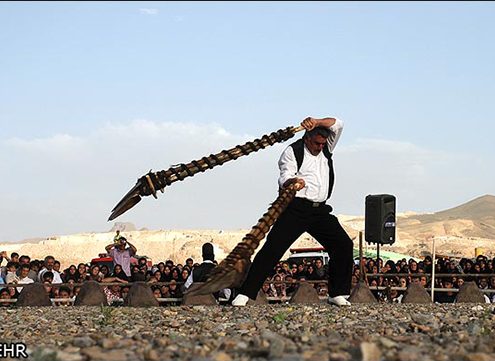
An athlete participating in “Shovel Turning” Ceremonies in Nimvar

People of Nimvar, near Mahalat, central Iran, still keep shovel turning ceremonies to cherish water and thank Anahita, the ancient goddess of water. “Bil” is shovel and “gardani” means turning in Persian. It symbolizes the joint effort and empathy among the people living in a community carried out every year at the beginning of the spring. This rain prayer ceremony in Iran is deeply rooted in irrigation culture and showing off the power to the enemies, those who steal the water, etc. In addition, Nimvar inhabitants believe they gain more water and blessing if they continue to keep observing it.

I must add that Iranian Cultural Heritage Organization has registered this tradition as “National Intangible Cultural Heritage” and every year more people are learning about this local annual festivity and participate in it.

How Shovel Turning Ceremonies Are Held

Late winter and early spring are the time periods when the local people and farmers go out to Shajoob, the main river of Nimvar. They unblock the water brooks anywhere the course of water is clogged by mud or wild grass. This is to make sure water reaches its destination. When water gets to the main sub-branch leading to a brook called “Vargoo”, the bilgardani ceremonies begin. Therefore, farmers can achieve their goals to irrigate their farms and be certain they would get the crops they’ve planted for.

Nimvar people marching to start Bilgardani Ceremonies

Nimvar people marching to start Bilgardani Ceremonies


When the elders of the town announce it’s time to clear the brooks off the obstacles, people collaborate to let water flow all the way to the farms. When this stage is left behind and the farms are irrigated, farmers and athletes of the region begin to go to the ceremonies location where a large crowd participates to watch it.

The festivity goes on for several days. Every day, farmers march with their shovels to the ceremonies location, which is at the center of Nimvar on a platform. The athletes of the region bring two sets of shovels tied in a bunch of 4 and 3 tied together separately. Now an athlete can go to the middle of the gathering and hold each set in one hand and start turning shovels. This requires a lot of physical strength and skill, which is something only the trained ones can do.

Each bunch of shovels could weight approximately 30 kg. Athletes are supposed to turn them from 5 to 30 times around their heads in opposite directions. During this time, people begin to pray for rain, the heavenly blessing. This involves the wish for the seven skies to start moving around and let the rain come down upon the area where they live. They want the divine mercy in form of rain for their farms as their lives depend on the crops they harvest each year.

Performing shovel turning on Nimvar platform for the spectators

Performing shovel turning on Nimvar platform for the spectators

The History of Shovel Turning Ceremonies

The people of Nimvar used to hold this public ritual of Bilgardani since 2000 years ago in central Iran. In addition to asking for heavenly blessing, they took the opportunity to show their physical strength to their enemies so that they could remain in peace without any outside threat to their peaceful lives. Also, this is a rain prayer ceremony in Iran out of several held in various parts of Iran.

Some also analyze this event as an example of ancient people’s encounter with natural challenges. People have always tried to tackle the obstacles in nature and in life reach to their goals. In doing so, some efforts have turned into traditions and accompanied by certain ceremonies. This is another example of such efforts by ancient Iranians.

Today’s Ceremonies

I know the following video isn’t in English, but imagine you’ve traveled to Iran and participated in a 15-minutes bilgardani gathering in which English isn’t spoken. Just go through the entire clip and see which activities it involves:

Iran isn’t the only ancient country in the world holding such ceremonies. You can find similar ones in other parts of the world too. What happens in Iran these days, is a lot more organized than the old times. Certain types of local food and soup are cooked and served. Traditional local music is played and people enjoy watching and listening to it. Sometimes, particular water-related plays are performed.

All this is a reminder of the importance of water and its vital role in today’s life. No matter how advanced we are, water is always a necessity and resources are scarce. All of us need to think twice about our models of water consumption. Industries need to think again about how they use water to reach their goals. What do you think about our usage of water today?

Yalda-Night

Yalda-Night


Iranians have celebrated Yalda night in Iran since ancient times. Dating back to about 8000 years ago, this festivity, making the longest night of the year, is one of the ancient Iranian traditions. This night is called Shab-e Yalda (Yalda night) and is the time between the last day of fall and the first day of winter.

People in ancient times knew that from the first day of winter on, days get longer and nights get shorter gradually. What’s more, they knew darkness as a symbol of evil. So, in fact, they considered the first morning after Yalda the day of victory of the sun and light over darkness and evil powers and celebrated it at this festival.

Shab-e Chelleh (the night of forty) is the other name of Yalda night in Iran. It’s called so because it’s the first day of a forty-day period in winter. In terms of Persian traditional calendar, it’s a period of time beginning from December 22nd and ending on January 30th. The last four days of this Chelleh are supposed to be the coldest days of winter.

Customs and Traditions of Yalda Night in Iran

In most parts of Persia, the extended family, relatives and friends gather around and stay up late till dawn, enjoying the night. People were advised to do it because it was believed that evil powers were at their peak at that time, and in this way they would be protected against evil and misfortune.

In most of these gatherings, the family and relatives visit grandparents and spend the night with them. A variety of fruits, sweets, and nuts alongside tea and sherbet are served at this occasion. The guests enjoy a fine dinner and after that the elders entertain the others by telling them tales and anecdotes. Reading Shahnameh and divining by Divan of Hafez are the other favorite and common pastimes of this ancient Iranian tradition.

Another practice which is prevalent in some areas is what a young engaged man is supposed to do. He sends seven kinds of fruits and a variety of gifts to his fiancée at this night. Sometimes, the girl and her family also try to provide some gifts for the young man in return for the favor.

Decorating and lighting the houses and yards with candles were also fascinating customs at Yalda night in Iran. Although it was done before invention of electricity, it’s still common in some areas due to the glamorous view created.

Foods and Drinks, the Central Part of This Ancient Iranian Tradition

Among all the edibles, the following are more common to be served at Yalda:

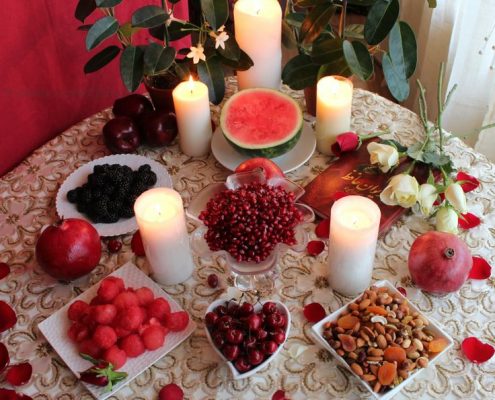
  • Fruits: watermelons, pomegranates, red apples, pears, persimmons, and cooked beets.

The first three items are the most important ones. In pre-Islam period, when Mithraism was practiced by Persians, red color was a symbol of the sun due to associating the color of dawn. So, it can be the color of these fruits that makes them the integral parts of this tradition.

It’s also believed that eating watermelons at Yalda protects individuals from the excessive heat or any disease caused by the hot weather of summer.

  • Ajil: a combination of nuts most commonly such as pistachios, almonds, hazelnuts, in addition to raisins, dried apricots or other fruits, figs, and roasted seeds of watermelon and pumpkin. The nuts can be roasted or raw to be mixed.
  • Beverages: usually tea and a variety of sherbets. And if there is snow, a mixture of snow and grape extract can be refreshing and memorable eating experience for you at Yalda night in Iran.
  • The main meal for dinner: rice and fish if possible, otherwise, one of the local foods depending on each city or region.

Celebrating the beginning of winter is not something happening just in Iran. There are some other areas like Pakistan, Japan, China, Korea, Philippine, Thailand, Vietnam, Scotland, Bolivia, Peru, Ecuador, Bahamas, Jamaica, Carolina and Virginia, Russia, etc. which hold such a ceremony. All of them welcome winter and celebrate this night according to their own traditions.

Music-Bakhshis-Khorasan

Music-Bakhshis-Khorasan

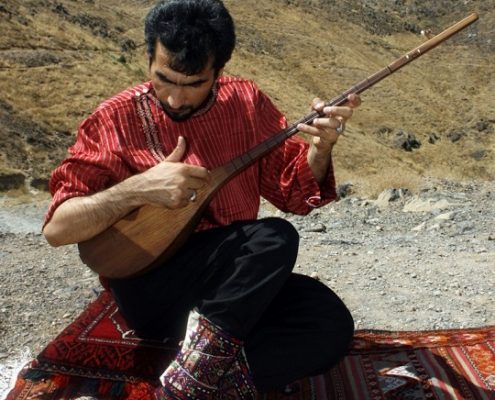
A Bakhshi Musician from Khorasan, Iran

Photo Courtesy of UNESCO Website

The music of Bakhshis of Khorasan is considered the cultural identity of the people of this region. It can be very fascinating to come to know and understand this type of music for the researchers, tourists and music lovers. It’s a specially enjoyable tourism opportunity for the enthusiasts of Iranian art and culture.The music of Bakhshis of Khorasan is considered the cultural identity of the people of this region. It can be very fascinating to come to know and understand this type of music for the researchers, tourists and music lovers. It’s a specially enjoyable tourism opportunity for the enthusiasts of Iranian art and culture.

Khorasan, the Cradle of Music of Bakhshis of Khorasan, Iran

Video courtesy of UNESCO’s YouTube Channel

Today there are three provinces of Northern Khorasan, Southern Khorasan and Razavy Khorasan in Iran. Traditionally, there has been a historical region mostly spread across modern day Afghanistan, eastern Iran and parts of Tajikistan, Turkmenistan, and Uzbekistan. It’s gained a reputation as the Sun of the East.

Accommodating a multitude of unique shrines and burial memorials of eminent figures and poets, Khorasan has become one of the unparalleled regions with tourist attractions inviting numerous fans of original Iranian music. Since Khorasan region is the motherland of this type of music, some call it the Florence of Iran.

Among various genres of ancient music of this region, the music of Bakhshis of Khorasan is one of the musical forms within traditional and Maqam system of Iranian music. Like other Maqams of Folkloric music, Bakhshis’ music has emerged from the life of migrating nomads (of Kurdish and Turkish origins) and villagers. The intellectual value of this music has been high enough to be registered by UNESCO as one of a series of intangible Iranian music properties.

What leaves an unforgettable impression in one’s memory is the experience of listening to such music in person where it’s played. Many enjoy taking part in their special circles, particularly while making the musical instruments by using different types of wood. This music is accompanied by peculiar style of minstrel, shout as well as ups and downs that have strikingly coordinated music with improvisation. Many of the musicians of this genre are sometimes so deeply inundated with their own music and song that continue singing without noticing their fingers are cut by the instrument’s strings.

Dotar, A love Icon in the Music of Bakhshis of Khorasan


Dotar-Bakhshis-Khorasan

Dotar-Bakhshis-Khorasan

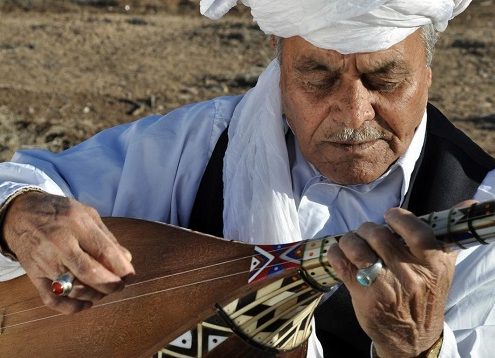
A Bakhshi Musician Playing Dotar

Photo Courtesy of Financial Tribune

What distinguishes this type of music from others is its instrument, “Dotar”. As the name implies (do: two & tar: string), it has got only two strings for playing, a couple regarded as male and female. The musician creates delightful melodies (Nava) that sit in listeners’ memory forever. One of the most famous songs of Bakhshi music of Khorasan is called “Navaee”. The wonderful tune of this style of music in Maqam system of Iranian music, you should listen to this song!

History and content of Music of Bakhshis of Khorasan

The history and creators of this type of music is unknown to us. According to the existing evidences, this traditional music of Iran has existed since ancient times and has been handed over to us from masters to pupils by our forefathers. The generation-to-generation transfer of this art has enriched it dramatically and given it a particular status.In the past, the singers of the music of Bakhshis of Khorasan were mainly farmers. Originally, it was sung by men while working in the farms or during resting intervals for various reasons and conveyed content like:

  • Detailed stories,
  • Incidents and accidents,
  • Maxims,
  • Inaccessibility of the beloved,
  • Complaints about the oppression,
  • Mystic state, and
  • Other human emotions.

This style of singing is a kind of minstrel in Turkish, Kurdish and Khorasani version of Persian. Later, it found its way to family circles, funerals, parties and even for healing of the patients. Today, the situation is different. It has turned into a type of Maqami music for happy occasions and Iran’s cultural heritage. Nowadays individuals and bands sing it for all ages. Famous bands playing the music of Bakhshis of Khorasan are invited to perform in various concerts across the world these days. Such musicians have obtained valuable titles for their unique and beautiful arts.

What It Takes to Become a Bakhshi Musician & Singer

From singers and Khorasan people’s points of view, one won’t become a Bakhshi artist if he merely has got mastery over performing as a singer and musician. To become a true Bakhshi music artist, you will have to have all the skill of making Dotar, performing the music, singing songs, improvisation, storytelling and composing poems.

As the word “Bakhshi” is rooted in “Bahshesh” meaning “giving” or “gift”, people believe that only God may give you such a gift to become such an artist. The performer should be essentially of a high artistic, spiritual and mystical position. Therefore, such performers are highly respected and valued among Khorasan people. Often times, the singers of this style of music are from elderly gray-bearded men of this region.

Take a trip to Khorasan, the Motherand of Maqami Music

You can explore the musical instrument workshops during your trip to Khorasan region and visit to cities and towns like Bojnourd, Torbat-e Jaam, Shirvan, Quchan, Esfarayen, Dar-e Gaz, etc. When you travel to North East of Iran, Khorasan provinces, remember to visit the bakhshi music singers who sing of love, people, religion and history in purple-color saffron fields. Also keep in mind that it will be quite rewarding to participate in Bakhshi musician circles, listen to the sound of their hand-made instruments and let this music tie your hearts and soul to the Eastern magic.


naqqali-dramatic-story-telling-001

naqqali-dramatic-story-telling


Naqqali and reciting Shahnameh has always been a common and favorite tradition among Iranians as a branch of performing arts and story-telling. Shahnameh is the world’s longest epic poem book created by a single poet, Ferdowsy, the famous Iranian poet of 10th & 11th centuries, who save the Persian language and identity by this book.

Naqqali is performed by one person. Its goal is to transfer wisdom and experience from previous generations to the present one. To join the spectators of this popular art in such circles is a special experience of an intangible cultural heritage inherited by Iranians. It’s a tourist attraction that hasn’t been tapped into yet as of this time.

Creation of Naqqali Art in Iran

It’s not clearly known when exactly this art has emerged. However, some authors have referred to it at some history books and works like Shahnameh. Some also believe it came into existence after Islam. After the arrival of Arians into the Iranian plateau, Naqqali has flourished more than before. Old stories like those of Mithra, Anahita, and Siavash indicate the age of this art registered by UNESCO as an intangible cultural heritage of Iranians.

From Naqqali to Shahnameh Recitation

It has been very common to narrate and tell stories during long nights of winter and Ramadan. Naqqals (story-tellers) used to tell the stories of Abu-Moslem, Samak-e Ayar, and Darab Nameh with poems and songs. Many literary works, like poems of Ferdowsy, Rumi, Nezami, Jami, Sa’adi and others, have become eternal with the help of Naqqqals’ restless works.

Gradually, story-tellers began narrating other sources as well. Among all such works, Shahnameh received a lot more attention than others. Narrating stories of Shahnameh was intertwined with the history of coffee shops (today’s teahouses) in Iran. Among all the other stories, the story of “Rostam and Sohrab” got the most significant status. Therefore, it got to the point that Naqqali in coffee shops is synonymous with “Killing Sohrab”.

Reciting Shahnameh is rooted in Iran’s rituals and traditions and its focal point is the mausoleum of Ferdowsy. Today Shahnameh recitation circles are formed at his burial place. Such circles attract large number of people from all over the world to the festival of performing arts of Iran, in particular, to Naqqali.


Features of Naqqals

Naqqals have been the guardians of folklore, epic stories and folkloric music. They were dressed in white or navy-blue shirt, special long cloak, vest, traditional shoes (charoq) and a special dervish-style shawl (rashmah) to be present in coffee shops. Sometimes, they also put on some old hats and armored coats to narrate battle scenes and various other topics as stories.

Comparing champions’ stories with the lives of the people at the present time, kept myths and legends alive. Story-tellers tried to attract their audience to their performance by performing arts that suited their stories’ events. When it comes to Naqqals features, one can say they:

  • Taught stories of the previous generations to the present generation,
  • Carried with themselves particular scrolls of various stories written in prose,
  • Were known as artists with high social status among people,
  • Had good voice and talent of eloquence and improvisation,
  • Were known to have particular ability to imagine,
  • Had capability to perform swift and exaggerated movements,
  • Used scepter to imitate scenes like using an arch or sword,
  • Performed in roofed places and mainly in coffee shops, and
  • Mastered reciting scrolls and memorizing different types of stories.

Naqqali, an Art for Women

Story telling is an art and event made for women. Our childhood stories are mixed with our mothers’ voices. In other words, we’ve heard our first stories from our mothers. According to cultural and historical evidences, the first Iranian female naqqal was Shahrzad. The second one was Ferdowsy’s wife called “Bot-e Mehraban” (meaning kind idol).

Women were the earliest performers of the art of naqqali, but they lost it to men due to some social issues. Naqqali was taken to coffee shops, which culturally weren’t considered decent places for women. As women have found other places to perform, today they are some of the most outstanding Iranian Shahnameh recitation artists. As a result, they contribute largely to keep this old art alive. Such beautiful event is an important attraction that brings the art and culture fans together in Iran.

Naqqali vs European Opera

One can say Naqqali is comparable to some European arts like opera. Of course, opera is categorized as a genre of musical and theatrical performance, but one can find similarities in its style of developing stories. Like Naqqali, Opera uses musical language to narrate stories, but it’s different in performing style and the number of performers.

Just remember, when you travel to Iran, make sure you join the circles of Naqqali and Shahnameh recitation. It is performed in various places and particularly in performing arts festivals. Also, keep in mind that there are many old traditional coffee shops all across Iran beautifully decorated with scenes from old stories. Each of those places and their paintings have got some stories in them that could provide you with unique and pleasant stories.


Food-in-Iranian-Restaurants

Food-in-Iranian-Restaurants

Photo Courtesy of Persian Food Page on Facebook

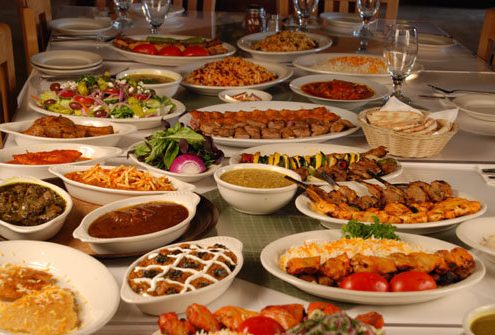
Food is part of each nation’s life and culture. You will find a variety of different local dishes in Iran when you travel across the country. As the climate is different in humid areas of the Caspian Sea, as it’s hot and arid in central deserts, as cold winter time up in the Zagros mountains creates extremely cold days and as hot summer days at Persian Gulf makes you feel over-heated, Iranian cuisine isn’t a simple one to define and present.

Western style restaurants in big cities like Tehran may offer a wider variety of food whereas you will discover there’s not the same diversity in the type of dishes at other restaurants while traveling in Iran. Of course, what I’m going to explain here is an overview of what you generally find in Iranian restaurants inside the country.

What’s out There in the Restaurants?

Typically, most of the restaurants present a menu including starters, main courses, deserts and drinks. The items in each one could be as below:


1) Starter in Iranian Restaurants’ Menus:

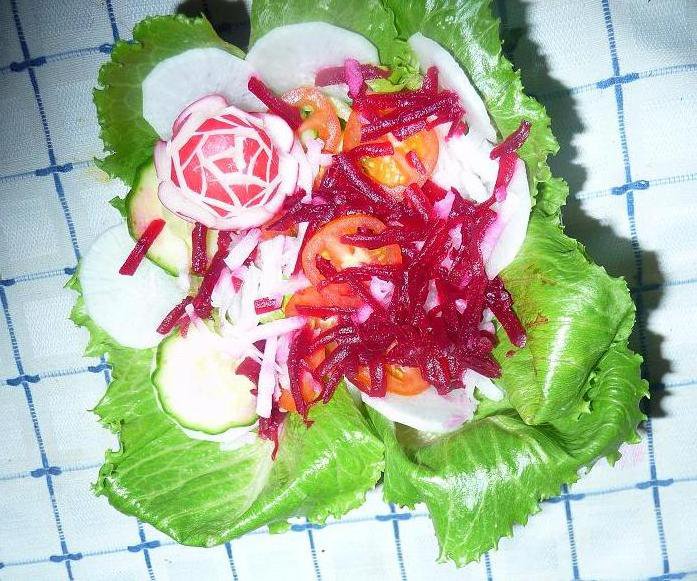
Salads in Iranian Restaurants

Written or not, Barley Soup is almost always there, but they cook it in different ways. Sometimes, they add tomatoes to it and sometimes they add milk. Tastes are also different depending on various spices they add to it. You would love to start your meal with one such dish specially if it’s a bit cold out there. Tomato soup, vermicelli-like soup, etc are also available in some places.

Season Salad or Cabbage Salad is another item in starter section of your Iranian food menus. It’s something they serve with some chef-made dressing, mostly rich in mayonnaise. Factory-made lime juice (tastes like everything but lime juice!) and sometimes olive oil are there with it as well. IF olive oil is available, you won’t expect a very nice-quality one.

Yogurt (with or without shallot) is another item at Iranian restaurants’ menus as starter. If they serve some dripped yogurt, I would recommend you not to miss it. As you know yogurt is a very helpful foodstuff to have in a foreign country as it prevent diarrhea. At the first days, as your intestines’ bacteria are different from the local people’s, you would want to order some yogurt rather than salad.


2) Main Course in Iranian Restaurants’ Menus:

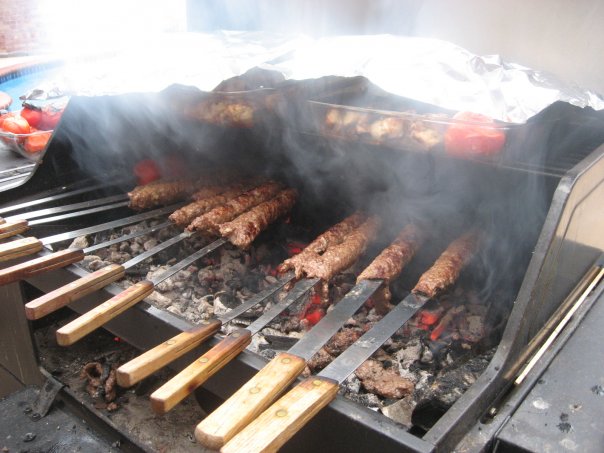
Kebab in Iranian Restaurants

Kebab is the BIG thing in Iran, not because I love it (I’m a vegetarian!), but as it is the first word you hear from any restaurant waiters. “What have you got?”, you ask him. The answer is,”lamb kebab, chiken kebab, beef kebab, shish kebab, mixed kebab, etc”. Sometimes, they go further and offer dishes like Caucasian kebab, Greek kebab, etc. Don’t expect non-Halal types of meat like pork that Islam forbids for Muslims. They’re not available in Iranian restaurants.

Stew, if available, will be something you must have as they are less often serveed in Iranian restaurants. People usually make them and eat them at home. Instead, when they eat out, they’d rather some grilled food that’s not easy to make at apartments!

Rice is a main thing in Iranian cuisine. The cooked rice is called polo, which has got nothing to do with playing Polo! There are different combinations of rice with other ingredients that make Iranian dishes like:

  • Zereshk Polo: rice with saffron, barberries, and chicken.
  • Baqali Polo: rice with herbs, broad beans and lamb shank or chicken.
  • Sabzi Polo: rice with herbs and fish
  • Albaloo Polo: rice with sour cherries and chicken
  • Shirain Polo: rice with saffron, orange skin and chicken
  • Lubia Polo: rice with green beans and lamb pieces
  • Adas Polo: rice with lentils and lamb pieces
  • and some other ones.

Fish is another food served with or without rice. The types of fish available in Iranian restaurants in Iran are either from farms like trout fish (found in most of the restaurants) or from the bodies of water at the North (Caspian Sea) or South (Persian Gulf). The sturgeon isn’t something you could find everywhere, but if you happen to see it on the menu of a nice restaurants,  go for it! The large fish from the Persian gulf (fried or grilled) has got only a backbone and is delicious if cooked well.


3) Desert in Iranian Restaurants’ Menus

Having a large variety of deserts cannot be seen at Iranian restaurants’ menus. People tend to have a cup of tea at home in Iran. When they eat out, they have deserts like:

  • Traditional Ice Cream
  • Tea
  • Instant Coffee

Let’s not forget that many of Iranian restaurants don’t even have the first two items, but some other ones (particularly in the hotels) have them. Now, go to some trendy restaurants and find a whole series of different desert dishes. What I’m trying to introduce here is just the general items on the restaurants when you’re traveling in Iran.


4) Drinks in Iranian Restaurants:

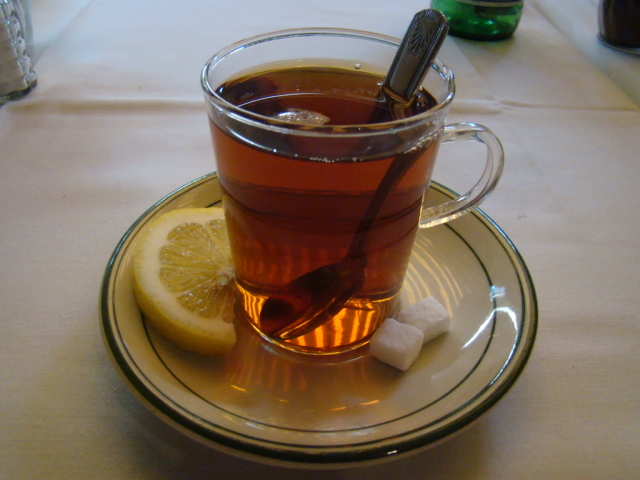
Tea in Iranian Restaurants

Local cola drink factories started to produce Iranian drinks in Iran after 1979 revolution. Today Zam Zam is exported to tens of countries. However, they are not the only soft drinks you may try.

Soda drinks like Coke, Pepsi, Sprite, etc can be found at the menus if you go to the restaurants a level higher. This could be a surprise as you may ask yourself, “what are they doing here?”

Yogurt drink, Dough, is a combination of yogurt, water, salt and sometimes some herbs. Some of them are fizzy too. It’s refreshing and something new to some people. You want to try it.

Bottled water is another drink, that you may want to carry with you almost everywhere you go specially during your trip in relatively hot weather. The carbonated version is rarely found in Iran. This is THE drink that I recommend you to have instead of the tap water during your visit to Iran. It’s becoming popular in Iran these days as well. 10 years ago, this was not the case.

Fast Food Restaurants in Iran

As this is some international concept that you could find almost everywhere in the world, I found nothing special about them to introduce here at this post. However, one point may be interesting to you: the international chains like King Burger, McDonald, etc are not found in Iran. Yet, you may find the same style in Iranian names. The items at menus of such restaurants are similar to those of the famous brands.

Places to Have Hot Drinks

Iranian Teahouses


Regarding the drinks, I should add that, likewise, Coffee Bean, Starbucks, etc are not present in Iran. The reason isn’t the non-popularity of coffee in Iran as recently young people have started going more and more to coffee shops asking for good coffee – real ones made with machines, not instant ones!

Tea Houses are the traditional shops where only black tea is served. Some people go to these places inside bazaars to smoke some water pipe afterward too.

Note: one traditional dish is also served in tea houses called “Dizi” or “Abgusht”. It’s a mixture of lamb, potatoes, beans, peas, spices, etc. To eat this dish, you cannot simply take fork and knife and begin. it requires a whole new post to explain. I may do that some day.