Cyrus II, who was later known as Cyrus the Great, is the founder of Achaemenian dynasty, creator of Persian Empire and the father of a nation called Iran. He was appointed as governor at the Southern part of Iran by Medes who rules from Zagros Mountains at the Northwestern and Western of Iranian plateau. He was also the king of an area known as Anshan for eight years. It was a territory at central Iran.

cyrus-the-great

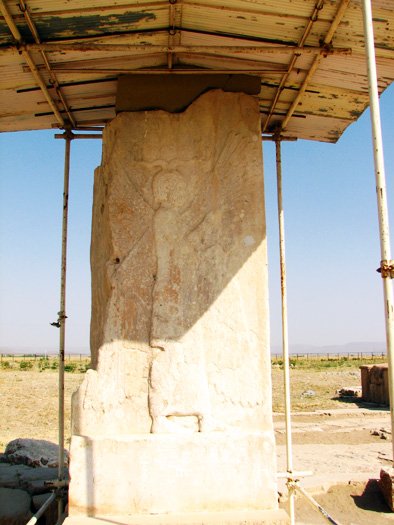
Famous Reliefs attributed to Cyrus the Great in Pasargadae

Two Major Accomplishments of Cyrus the Great

The reputation of Cyrus the Great is due to two major accomplished tasks he had brought to reality:

  1. He changed the small country of Persia to a powerful empire in a vast territory. No other government had reached this level of authority in the world till then.
  2. His ethical values had made him a well-behaved emperor with humble policies and favorable method by which he treated the conquered nations.

The world was dominated by brutal arrogant rulers who didn’t care about their nations’ rights. In fact, they oppressed everyone with sheer rigidness to put awe in their hearts. Cyrus changed all such mannerism.

When the final years of Medes’ domination was accompanied by oppressing people and treating them unfairly, the level of injustice was so high and suppression so severe that Median people had no choice but to wait for someone to save them from their brutal ruler. Cyrus turned to be this savior character. When he came to power, the new situation couldn’t corrupt him and make another monster out of him. Instead, he won lots of hearts and gained many nations’ respect for his mannerism. Cyrus united Medes with Persians.

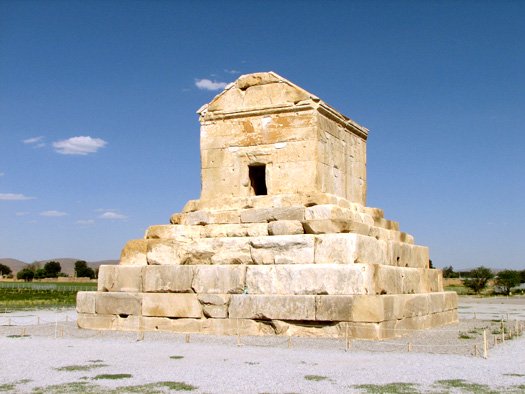
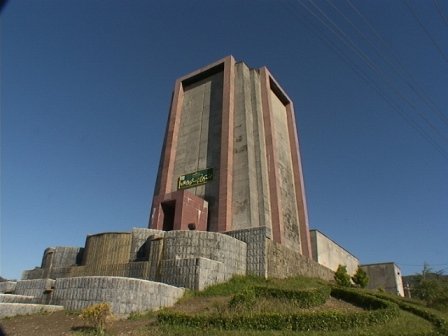
cyrus-tomb-pasargadae

The tomb of Cyrus the Great at Pasargadae


The Policies of Cyrus the Great

He maily focused on bringing peace, security, understanding, respect for others’ opinions and justice to his empire. He deeply influenced the civilization at the world of his time with positive impacts. The century in which he established Achaemenian Empire became the golden era of the world history and the century of creating arts and cultures. Subsequently, he brought about the acceleration in evolution of human societies and the development in ethical values, civilizations and human rights.

Cyrus the Great is well-known for his policy of tolerance and respect. When Cyrus defeated Croesus, the last king of Lydia, he ordered him to be saved, not killed and made him an advisor for his empire. He conquered Babylonia without a fight. He respected hand-made gods of all conquered nations despite of the fact that he believed in an unseen God. He went further and even helped the followers of other religions to rebuild their temples and take back their gods to their worshipping places. Historians and the Old Testament has recorded the way he treated captivated Jews forever.

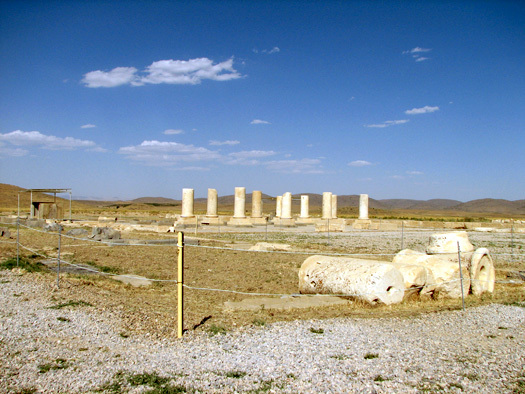
pasargad-palace

Ruins of the residential palace of Cyrus at Pasargadae

Cyrus allowed the nations under Persian Empire to keep their religions, traditions, dress code, language, etc. He didn’t force the ideas, rituals and beliefs of Persians to the rest of the world. However, today we see that there are lots of powerful influences of Persian culture outside the present boundaries of Iran in a vast area.

The mighty rulers before him used to build minarets out of people’s heads and created heaps of corpses to demonstrate their power to the subject nations. They burned the people alive in fire, gouged their eyes, cut their tongues and boasted of the number of young girls and women imprisoned and taken away by their brutal soldiers. On the contrary, he didn’t carry out bloodshed, plunder, brutality, etc to prove his power. He established a government that tried hard to found unity and peaceful coexistence among nations from India to the Mediterranean Sea. To win people’s support, he used a different policy: He supported their rights, promoted justice and worked for their prosperity.


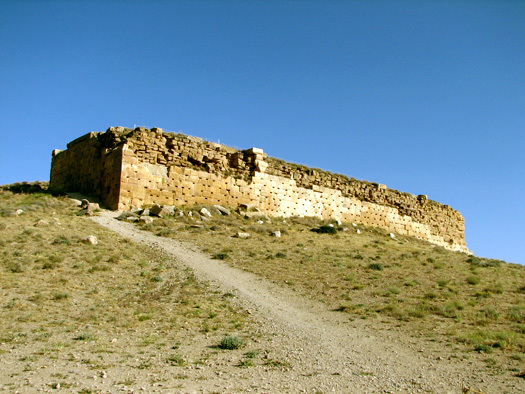
tall-e-takht-pasargad

Ruins of the fortification at Tal-e-Takht at Pasargadae

The Legacy of Cyrus the Great

After the death of Cyrus the Great, Pasargadae, his capital city, wasn’t the capital anymore. Yet, it kept its significance among the succeeding Achaemenian kings. They held their coronation ceremonies there first and paid their respects to him as the founder of the dynasty. Then, they went to Persepolis to keep up with their festivities.

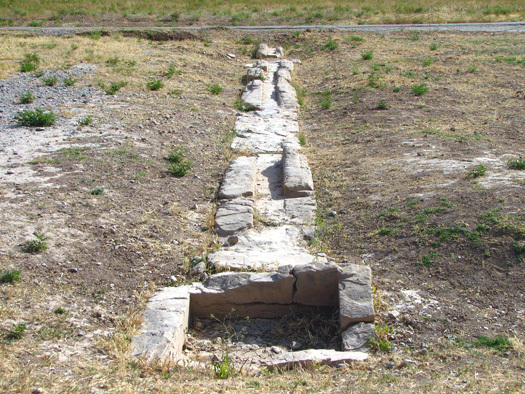
He built the first series of Achaemenian palaces in Pasargadae. He planned and made the first examples of Persian gardens at Pasargadae. He planned water channels and basins along the ducts there. We see the same style of parks and gardens made in Iran using the same plan.

persian-garden-channels

Water Channels of Persian Gardens remained at Pasargadae


Without Cyrus the Great, there wouldn’t be any nation called Persia and later Iran. He united different ethnic groups via mutual respect and humanitarian supports under one flag. He taught everyone that tolerance and kindness is more powerful than any other weapons.

Even until 20th century, all dynasties in Iran tried to connect themselves somehow, through bloodline, etc, to Achaemenians and Persian Emperors. He’s the author and father of Iran. He’s the source of pride for everyone in Iran.

Cyrus II, known as Cyrus the Great, was the founder of Achaemenid dynasty. His maternal grandfather was Astyages, the last king of the Medes, and his paternal grandfather was Achaemenes, the first founder of hereditary rule among the Persians.

Cyrus presented a new empire based on morality, justice, and decency to the world. Unlike the previous emperors, he treated the defeated with compassion, enemies with tolerance, and those with opposing beliefs and customs with liberality. His statement in Babylon, written on a clay cylinder, is the first draft of the Declaration of Human Rights.

The followings are three sites worth exploring to learn more about the rise and fall of Achaemenids. You can leave Shiraz for a one-day tour to visit these spectacular sites and then come back.

Pasargadae: This Is Where Achaemenids Rose to Power

pasargadae-achaemenids

Tomb of Cyrus at Pasargadae, Iran


It was the dynastic capital of Achaemenid Empire, the first great multicultural empire in western Asia. Today, it’s located near Shiraz in Fars province, south western Iran. It’s where Cyrus the Great conquered Astyages, the last Median king, in his last battle, and then founded the first Persian Empire in the same region and beyond. He founded Pasargadae and constructed palaces in memory of his victory. It was the rise of Achaemenids and Cyrus the Great was the author of Achaemenid dynasty. His tomb is also here in this city.

According to UNESCO, “palaces, gardens, and tomb of Cyrus are outstanding examples of the first phase of royal Achaemenid art and architecture, and exceptional testimonies of Persian civilization”.

A brief description of the site

The tomb of Cyrus has long been a focal point for visitors to Pasargadae and the palace area lay almost a kilometer north of it. This area included a palace to receive audiences and a whole series of adjacent gardens. They emerged to be the first Persian gardens. Unfortunately, all that has remained from Achaemenid era in this region are stone foundations and some wall socles.

In this site, the columned hall is the most common form of design. A notable architectural point about this hall was making use of stone-working techniques. It’s notable because all the previous columned halls in Iranian plateau were built in mud-brick walls and wooden columns.

Such an innovation facilitated the production of stone platforms, staircase, floors, and stone columns. Each one of these structures was to become a hallmark of architecture in Achaemenid era from about 540 BCE onward.

The gardens at Pasargadae would appear to be the first known occurrence of chaharbagh or fourfold garden, a specific articulation of space. It went on to become a distinctive characteristic of later garden designs in Iran for centuries.

Pasargadae kept its importance to Achaemenid emperors, but during the reign of the next kings, the capital moved to other cities.

Persepolis: The Glorious Times of Achaemenids


persepolis-achaemenids

Gate of All Nations at Persepolis, Achaemenid Era


It’s the other dynastic center of Achaemenid kings located about 60 kilometers south of Pasargadae. After Cyrus the Great, Darius I, known as Darius the Great, succeeded in ruling the Persian Empire. He started the construction of Persepolis. It consists of ceremonial palaces, provisional residential palaces, a treasury, and a chain of fortification. It was built as a ceremonial palace complex mainly for celebrating Nowruz, the Persian New Year festival.

The gate to the site was from the south, through a staircase. To the right of this entrance, you can see a huge rectangular block bearing four cuneiform inscriptions in the name of Darius the Great: Two in Old Persian, one in Elamite, and the fourth in Babylonian. These scripts were clearly meant to inform visitors of the nature of Persepolis, the people who contributed to its construction as well as Darius’ beliefs and ideals.

The remarkable parts of the palace complex consist of:

  • The Gate of All Nations.

It was a four-columned square hall with three stone doorways. Two enormous winged bulls are carved at the inner side of eastern as well as western doorways, and the gates are decorated in the upper part with six cuneiform inscription sections.

  • The audience palace of Darius, The Apadana

The double-reversed stairways of this palace are the most splendid parts of Persepolis

  • The Palace of Darius known, the Tachara.

A charming structure which is the oldest palace of Persepolis. Here, you can find three different scripts carved in various historical periods: one in cuneiform from Achaemenid era, one in Pahlavi from Sassanid era, and one in modern Persian from Qajar era.

  • The Palace of Xerxes, the Hadish

It was the Xerxes’ temporary residence.

  • The Central Palace, the Tripylon

A small but lavishly ornamented structure located in the center of the complex. Three doorways and a couple of corridors and staircases were linked to the other palaces. It must be attributed to Xerxes and Artaxerxes I.

  • The second largest palace of Persepolis, The Hundred Column Hall

Its main feature was a square hall provided with ten rows of ten columns. It was an audience hall.

These structures were built by Darius the Great and his successors, Xerxes and Artaxerxes I, and maintained until 330 BCE, when they were looted and burnt by Alexander of Macedonia. Although today you can see only the remains of this complex, its magnificence can still impress you.

Darius the Great was a powerful and sage emperor in the ancient world. His territory was so extended that there were no such imperial expansion until then and long after.

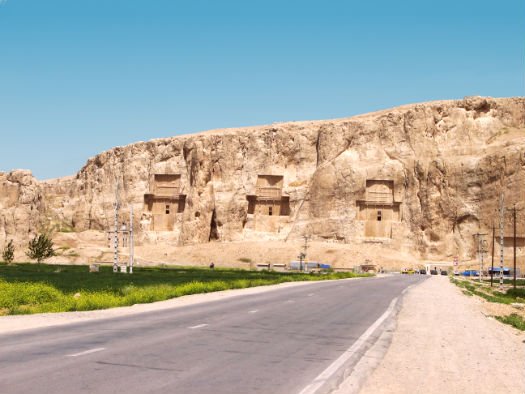
Naqsh-e-Rostam, Mighty Emperors Have Rested Here

Naqsh-e-Rostam

Naqsh-e Rostam, Achaemenids’ Necropolis near Shiraz, Iran


It’s one of the most spectacular ancient sites of Achaemenid era dating back to the times when the fall of Achaemenids was about to happen. It’s located almost 5 kilometers northwest of Persepolis, and consists of the colossal rock tombs of Persian kings dating back to the first millennium BC. Here you can see the best ancient rock reliefs in Iran from both the Achaemenid and Sassanid periods.

The rock-cut tombs of Achaemenid rulers and their families dating back to the 5th, 4th, and 3rd centuries BC have been engraved on the façade of a mountain. The tombs belong to Darius the Great, Xerxes I, Artaxerxes I, and Darius II. In addition to being a royal necropolis, Naqsh-e-Rostam was a major ceremonial center for the Sasanians until the 7th century AD.

I highly suggest you to put these three spectacular Achaemenid sites in your checklist for travelling to Iran. It takes just one day to visit them all and learn about the rise and fall of Achaemenids. I promise there will be so many amazing things that can cause your admiration.


Damavand volcano is a majestic stratovolcano located 70 km NE of Tehran and 70 km south of the Caspian Sea. Mt Damavand is the highest peak in the Middle East and the second highest volcano in Asia (after Kunlun volcano in Tibet).
Damavand last erupted about 7,300 years ago. There are no historical eruptions, but fumaroles at the summit crater suggest that the volcano is still active.

Damavand is located on the tectonically active thrust and fold belt of the Alborz Mountains.
It is a massive stratovolcano with a volume of about 400 cubic kilometers and consists of a younger cone that was constructed during the past 600,000 years above an older, 1.78 million years old edifice, remnants of which were previously thought to be part of a caldera.
Damavand has only few flank vents. Most activity has been from the summit crater, which has erupted a series of radial lava flows, mostly of trachyandesite composition. Most eruptions of Damavand seen to have been effusive, and only one significant explosive deposit is known, a welded ignimbrite that was produced about 280,000 years ago.
The latest activity occurred about 7300 years ago and produced lava flows from the summit crater that cover the western flank.
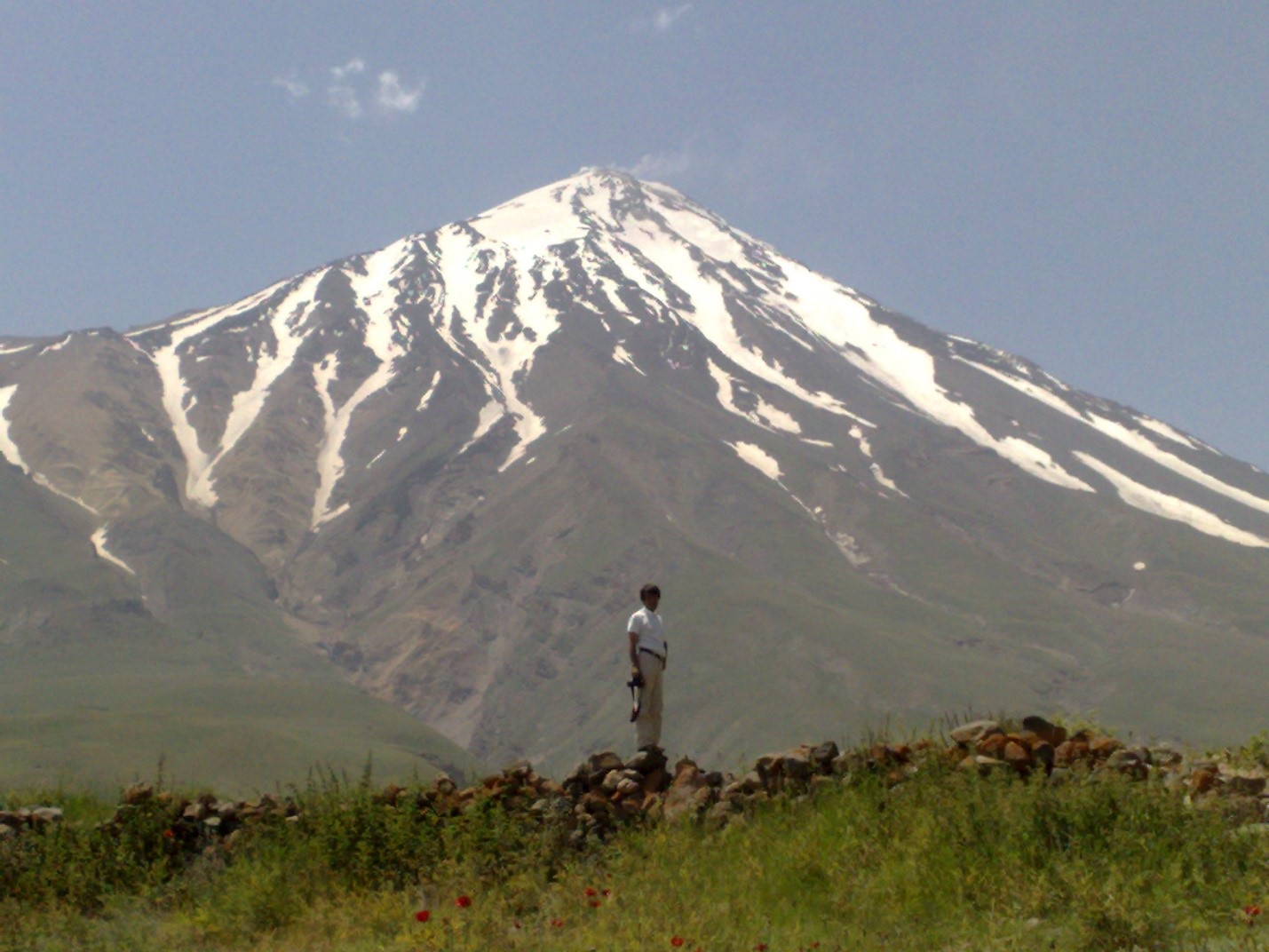
Damavand

Damavand, the oldest mountain ever been climbed, is world’s mountaineering heritage.


Looming high above the wind-scoured steppes of the Alborz Mountains – the crescent range that divides the Great Salt Desert from the fertile Caspian coast – Damavand’s dimensions make a mockery of its limited renown outside its homeland. Based on its summit’s most widely cited height of 5,671m, this is the highest point in Eurasia west of the Hindu Kush. It’s also the highest volcano in Asia, and it’s this aspect of its physiology that lends Damavand its near-symmetrical lines, the graceful form of a stratovolcano that has lain dormant for 10,000 years.

But the thing that had struck me most that first day on the mountain, wending up the vague mule-trails on its north-eastern flank, was how much it transfixed the eye. Though surrounded by lesser peaks in every direction, Damavand still cut an aloof and imperious figure. We’d come here to bag a peak, and found ourselves on a pilgrimage to a country’s geographical heart.

As dusk fell, a cloud inversion filled up the northern valleys like a tidal surge, blanketing the lowlands to leave behind an archipelago of mountaintops nudging above a rolling purple ocean. Every ten minutes the clouds’ tendrils clawed up the slope and lapped at our feet.

The only direction left to look was up. After a fitful night, we broke camp with the dawn, each lamenting the thin air and lack of sleep. Damavand’s broad topography means that the journey to its summit starts high, and night one had been spent at the already heady altitude of 3,800m.

Mercifully, our second day’s trek was a short one, spent engulfed in a mist of condensation that filtered out the scorch of the sun. we climbed over ground covered in hardy, dew-soaked flowers, flourishing in soils made fecund by the ashy deposits of ancient eruptions. Three hours’ march took us to the ice-line at a translucent slick the shape of an inverted teardrop. We stopped to replenish empty water bottles from the glacial run-off, while the guides grumbled about wider issues down on the plains.

“On the north side, the Siyouleh Glacier used to stretch all the way down to 4,000m; now it finishes 600m higher up the mountain,”

As we shivered over this forlorn remnant of Damavand’s colder past the country below was feeling the burn.
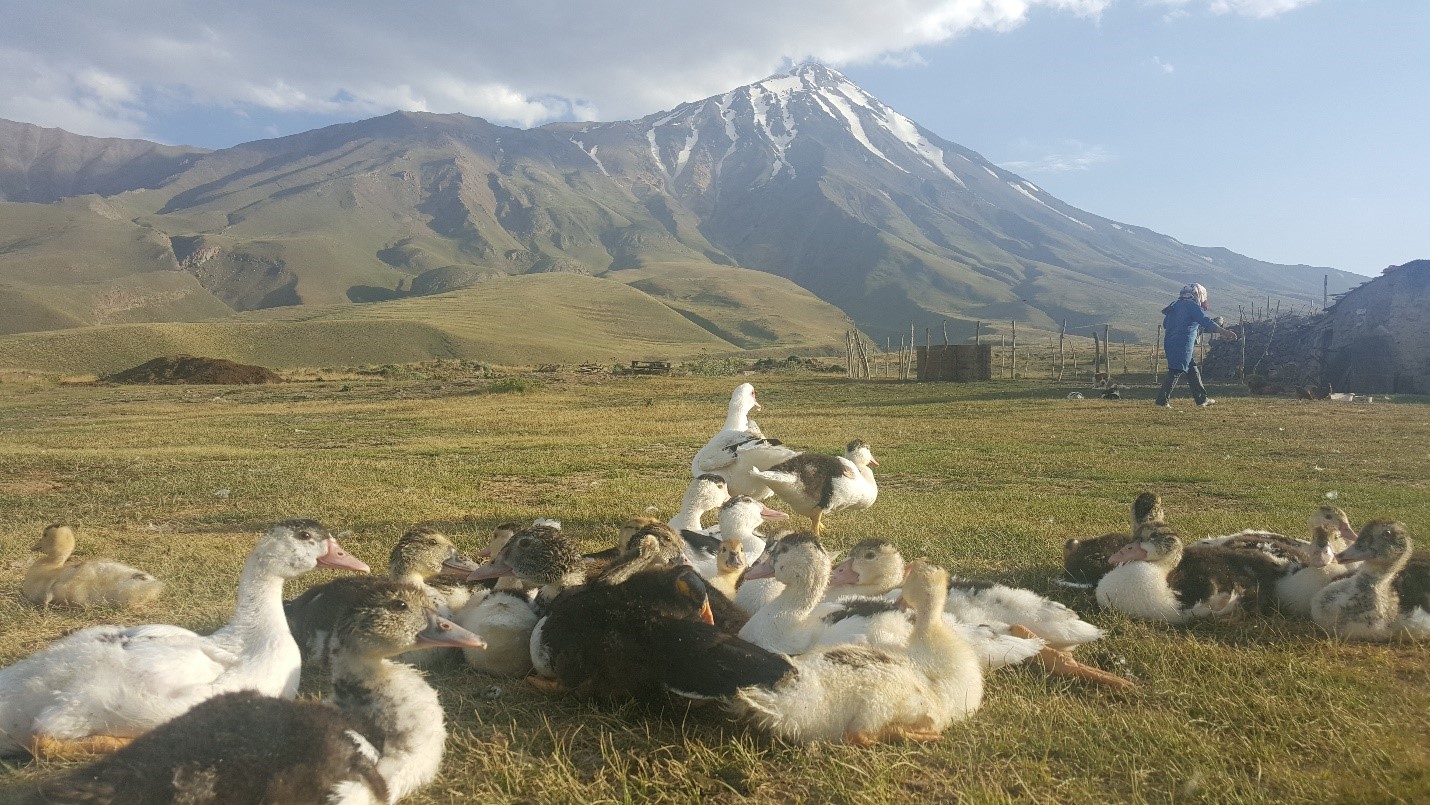
 

damavand foothills

Damavand, this unique beauty is located south of Caspian Sea. It is 5610 meters high and quite visible from southern Caspian Sea shores.


A little past midday, above a cruddy slope of light brown pumice, the base camp hut came into view, looking like a miniature aircraft-hanger around 10m long by 4m wide, its semi-cylindrical roof striped orange and blue. Inside we found a shrine to past expeditions. The gloomy room reeked with the musty smell of anxious nights, while all over the bare-brick walls and sheet-steel ceiling, swirls of Persian graffiti – Islamic invocations and summit posts – reflected the human tendency to leave a mark where humans seldom tread.

We unfurled our sleeping bags on a dirty wooden platform, strewn with woven plastic sheets and discarded pistachio husks, and chugged down some sugar-laden tea. The plan for the afternoon was to ascend ‘Himalayan style’, ditching our gear in the hut and then trekking up to 4,900m or so to accustomise lungs to the lofty altitude, before heading back down for supper and sleep.

Lightning darkens the mood

The weather ignored the script of course. Bound by the Englishman’s congenital over-excitement at the sight of weather that’s not drizzle, we scampered outside when the snow started tumbling out of the firmament in heavy, thumb-sized dollops. But this was only a prelude to something more sinister, its coming heralded by a thunderclap of biblical fury and a fizz in the air that crackled in our ears: lightning hunting for a salient point to strike.

So much for Himalayan style. For the next four hours we were confined indoors while a scything wind consumed the shelter, jeering us as it rattled the opaque Perspex windows.

At 6.30pm, as the light began to fade, quiet finally returned to the mountainside. Their tantrum exhausted, the clouds fled downhill like a sheet being drawn back to reveal a whole new mountain: starkly placid and dressed in two inches of snow. On the craggy promontory that overshadowed the hut, we submitted offerings to a 2m-high, meticulously crafted rectangular cairn in thanks for the turn in providence, and gritted our teeth against the biting chill.

The scene below – a replay of last night’s surreal cloudscape – was suitably magical, for this was a mountain swathed in myth. In the Shahnameh, the poet Ferdowsi’s epic 11th-century distillation of Persian folklore, this region was the scene of a showdown between the hero Fereydun and Zahhak, a tyrant king said to have fed his pet serpents on his subjects’ brains.

Confronting his nemesis on the slopes of Damavand, Fereydun smote Zahhak with his ox-head mace, imprisoned him within the mountain and usurped the crown. His benevolent rule lasted for 500 years.

In the centuries since, the spectacular ridge on which we stood, and which delineates much of the north-east route from here on up, has come to be known as the Takht-e Fereydun – Fereydun’s throne. Zahhak, meanwhile, remains trapped in the earth that lay beneath our feet, his vengeful rages expressed in the sulphurous billows that belch daily from the summit crater.

with the sun rising at our backs, we set off up the spine of the ridge, eyes squinting in the direction of the summit – from here a blazing white dome, defiant and still impossibly remote, framed against an auspicious cobalt sky.

With boots crunching through snow hardened by the night winds, I reassured myself with the knowledge that we were embarking on the business end of what is a relatively uncomplicated climb. “Basically a walk-up,” one website had declared reassuringly as I researched the trip from the comfort of sea level. “Technically easy and physically moderate.”

As long ago as 1837 it had proved straightforward enough for the English explorer W Taylor Thomson to achieve the first recognized ascent, no doubt attired in tweed and probably taking pot-shots at the Asiatic wolves and black bears, now so rare in the region, with his musket.
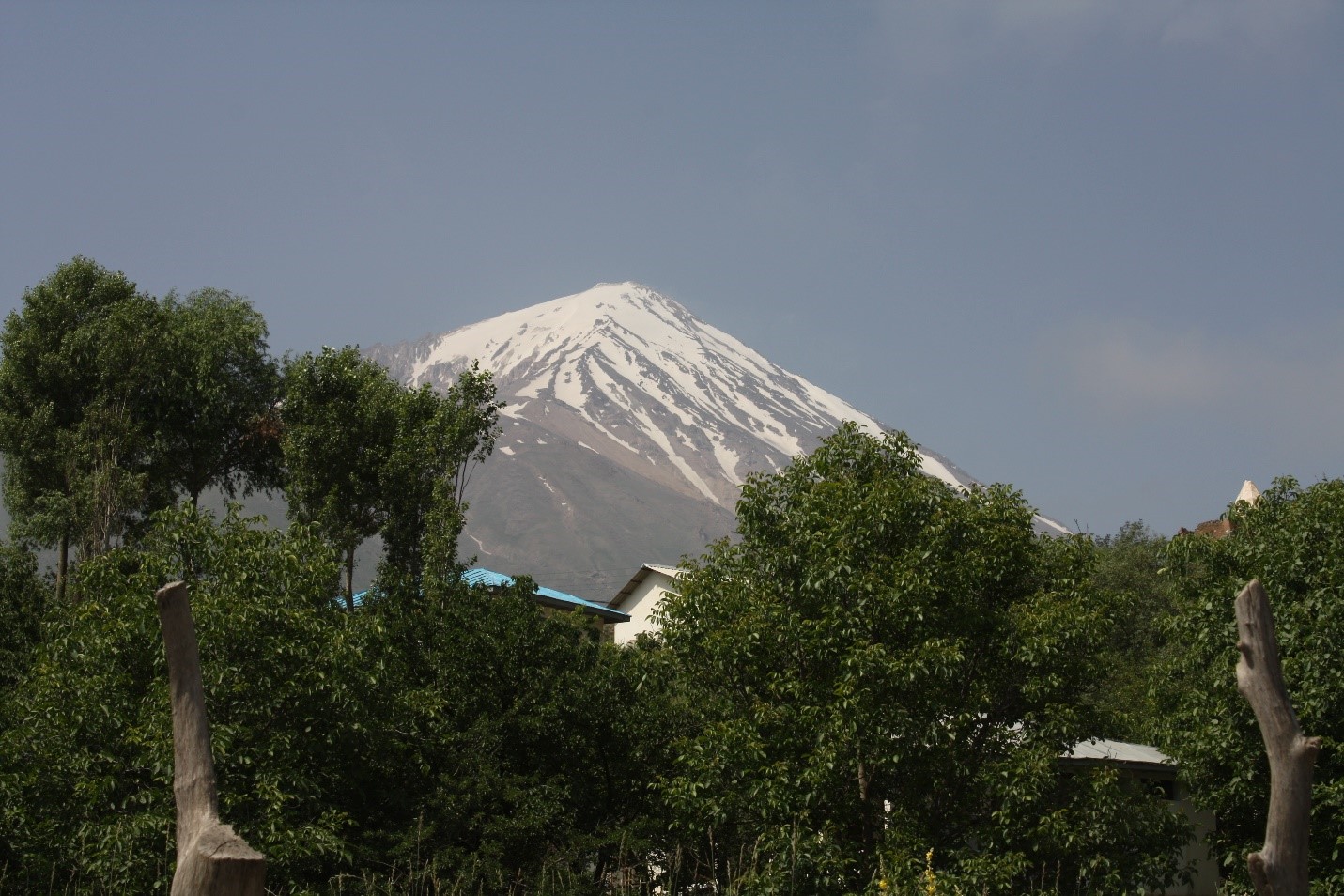
damavand peak

It is 5610 meters high and quite visible from southern Caspian Sea shores. it was listed as the Iran’s first natural heritage and preserved as national natural monument.


Braving the elements

But I also knew that we had been unlucky with yesterday’s sudden squall. The previous evening, Mohammad, who likes to quantify things, had conceded that Damavand snow showers only occur about 15% of the time in the summer months, and that the snow cover was likely to make the climb around 25% more difficult than it would be otherwise. How much harder could things get, I pondered nervously, if the elements turned again?

The digital display on Nasir’s GPS flickered past 5,000m, and we stopped to take stock of rapidly deteriorating conditions. This morning’s plucky breeze had become a biting gale, while an angry carpet of slate-colored cumulus was working its way up the slope to the east, threatening to converge with the wispy penumbra coalescing about the summit. The icy wind had left my extremities numb, and I couldn’t help but recall images of frostbite victims from the Everest disaster book in my luggage, a regrettable choice of holiday reading.

Taking on this mountain means dueling with its fickle winds. Like other prominent peaks around the world, Damavand has a weather system all of its own: hot air blowing up from Iran’s parched interior bombards the mountain’s southern flank, yielding storms that are sudden, unpredictable and capable of quashing the ambitions of the most seasoned summiteer.

In the early 1970s, the man widely considered the greatest alpinist in history, Reinhold Messner, learned this lesson the hard way when a storm swept in and sabotaged his summit bid. Henceforth, Messner, whose normal playground is the death-zone of the Himalaya, would describe Damavand as “that little hill that defeated me”.

Determined to outdo the great Tyrolean but far from sharing the “little” sentiment, our single file trundled on, heads bowed in submission to the eye-watering headwind. (Later, recuperating in a Tehran café, we calculated our average speed on the way up: 1.2km/h.)

At 5,400m we were within touching distance of ‘the gate’, a gap between two rocky outcrops, like a half-finished barricade, through which lay our goal. Cheered by its apparent proximity we urged Nasir onwards. “Ten minutes from here,” said the indefatigable Azerbaijani, fibbing brazenly in a last-gasp attempt to raise our spirits – it turned out to be more like 40.

Smell to high heaven

Eventually, at a little before noon, we clambered onto the roof of the Middle East, a barren plateau festooned with ugly, Sulphur-yellowed stones. It seemed a slightly anti-climactic end; enveloped in cloud, we had no sweeping views of the land below and no fresh mountain air.

Instead, an acrid smoke contaminated each breath, as fumaroles within the snow-covered crater – the reason behind the rocks’ jaundiced coloration – pumped out a noxious brew of gases from the center of the earth. The stench served as a reminder of Damavand’s earthly purpose: a pressure-valve built by nature to relieve the earth-shuddering friction at the conjunction of the Arabian and Eurasian plates.

Even so, at 5,650m, we congratulated ourselves at being the highest earthbound people for thousands of miles around. To find humans suffering at higher altitudes you would have had to travel east to the Pamirs, west to the Rockies, and south to Kilimanjaro.

In a fit of clarity that belied my exhaustion, it struck me then that Damavand was indeed an appropriate symbol of the multifarious melting-pot that is modern Iran. Heightened over millennia by the eruption of successive layers of lava, this is a mountain borne of ferment and upheaval. Like the country in which it resides, a hostile reputation had disguised a place that was magnificent to behold and engrossing to explore.

For now, it merely slumbered, a sleeping giant waiting to be discovered.
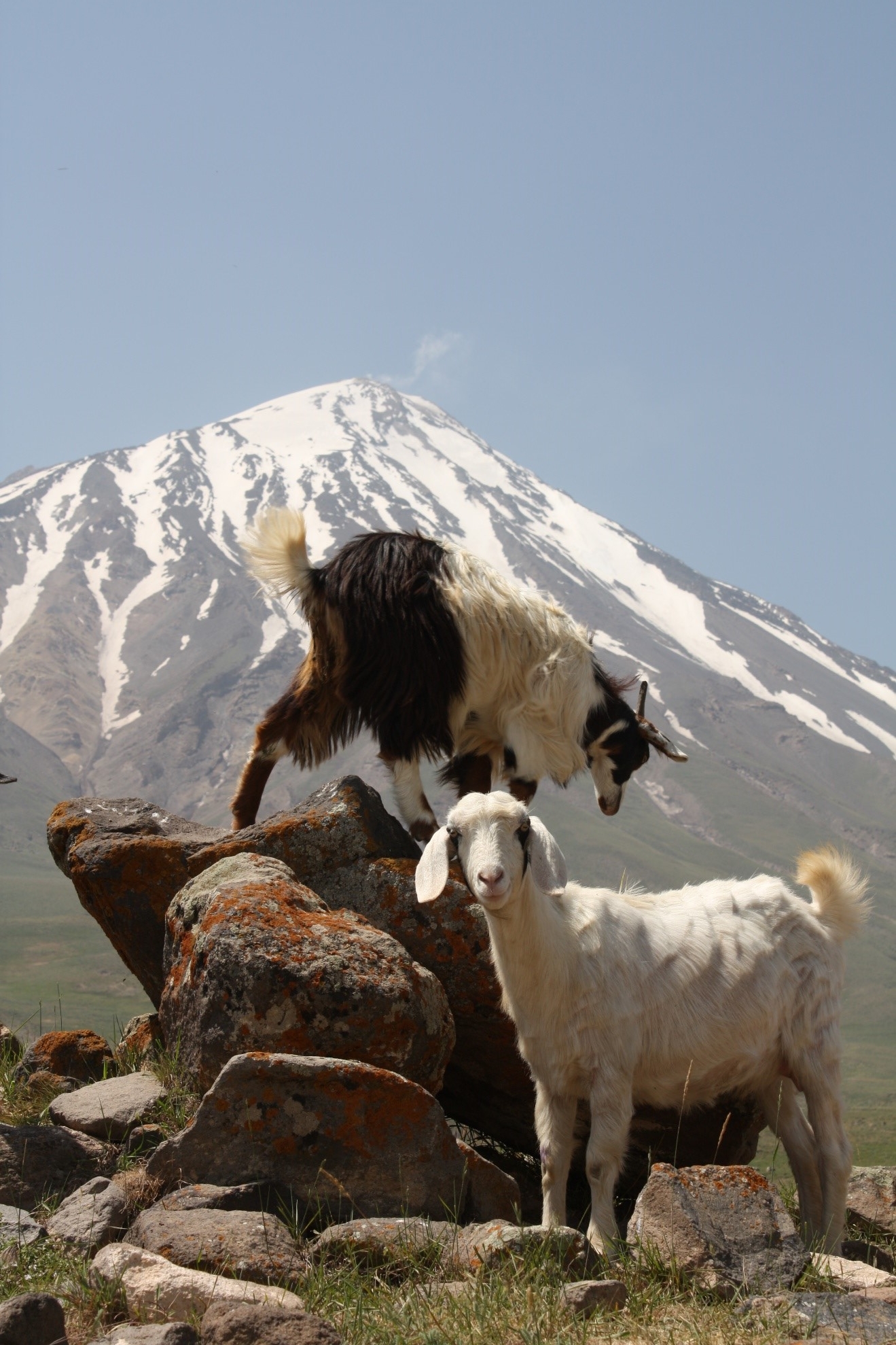
damavand volcano

The steepest volcanic mountain, Mythical Damavand peak, deserves to be hiked more than 20 times from different faces.

Iran-tea

Tea first reached Iran by caravans traveling the Silk Road 450 years before the modern Christian era. Residents were largely coffee drinkers until the seventeenth century but now consume four times the world average for tea.

The beverage is served hot at almost all social occasions and family gatherings.

Every morning, in houses all over Iran, a gas burner flickers to life under a kettle that will continue to boil all day. It boils through morning prayers, lunches of rice and kebabs, afternoon conversation and late into the evening meal, sustaining talk of politics, gossip and news well into the night.

The kettle contains tea, one of the most important cornerstones of Iranian culture, and the tea house is its centuries-old keeper.

culture

culture


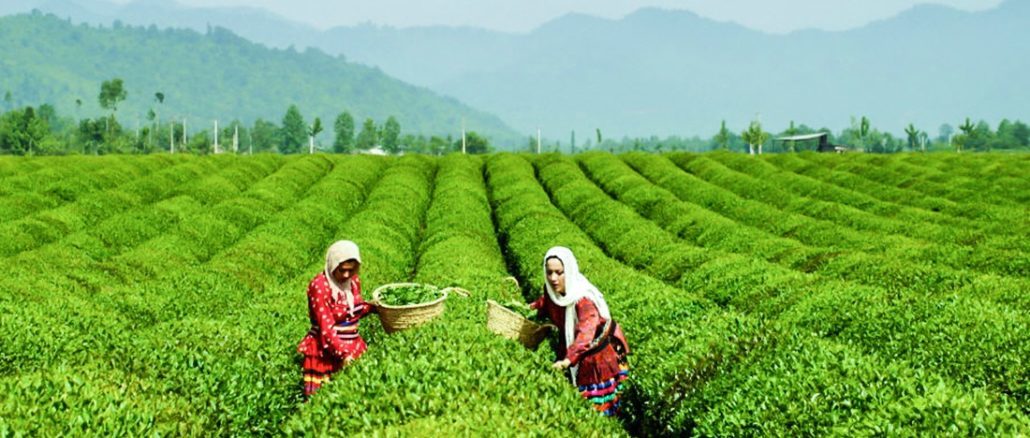
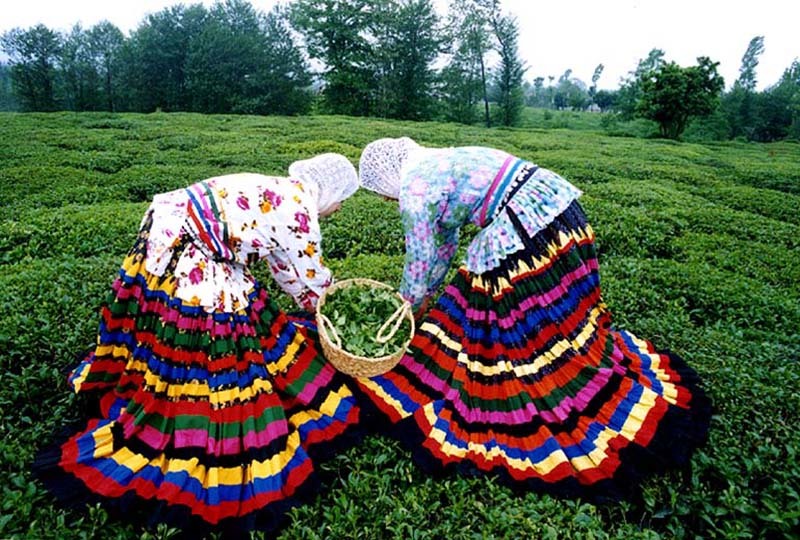
Tea production is a major industry in the Caspian Sea area and a large part of its economy. Before 1900, there was no tea production in Iran, but in 1895, an Iranian diplomat named Kashef Al Saltaneh decided to change that.

At the time the English had a strict monopoly of tea production in India, with rigid rules against non-Europeans engaging in this trade. Kashef Al Saltaneh, who had studied in Paris as a young man and was fluent in French, went to India, posed as a French businessman, learned the trade and smuggled some tea saplings and seeds to Iran.

lwjxLXeV_Ethnology

After six years of experimentation, he introduced his first product to the market, and started the industry that revolutionalized the economy of two northern states, Gilan and Mazandaran, and made Iranians avid tea drinkers.

He is known today as the father of Iranian Tea, and his mausoleum, in the city of Lahijan, houses the tea museum.

kashefolsaltane

Further reading reveals that Kashef Al Saltaneh’s other honorable titles include Prince Mohammad Mirza, Iranian ambassador to India, and first mayor of Tehran.  Moreover, the stash that commenced the tea plantation might have actually been 3,000 saplings!

Tea houses, or chaikhanehs, have been in existence since the Persian Empire. They gained prominence after the 15th century, when coffee was abandoned in favour of tea leaves that were easier to come by through China’s Silk Road.

Though once the purview of men, chaikhanehs have increasingly become frequented by all members of society, and especially by Iran’s large youth population.

kerman tea house by travfotos

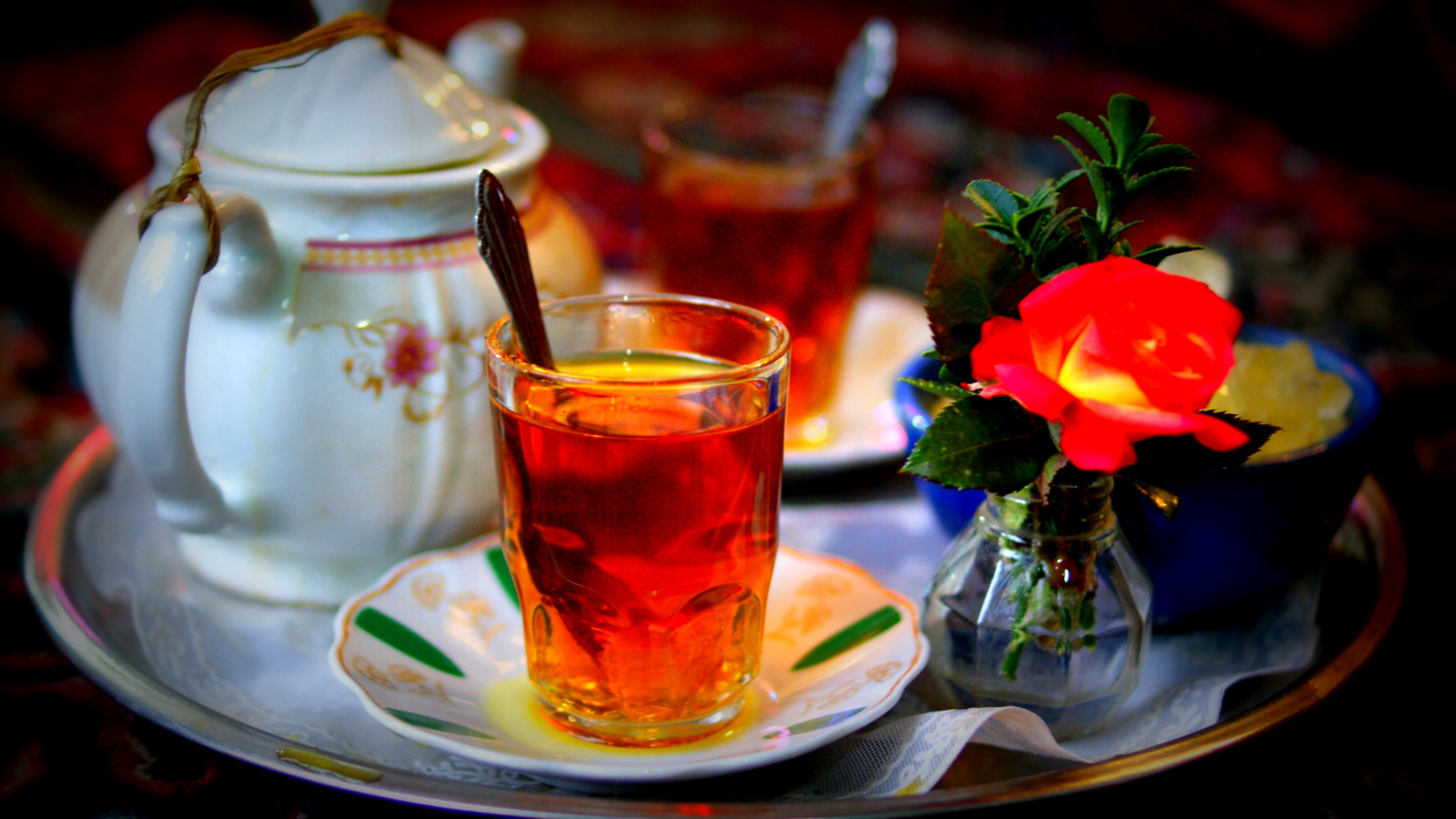
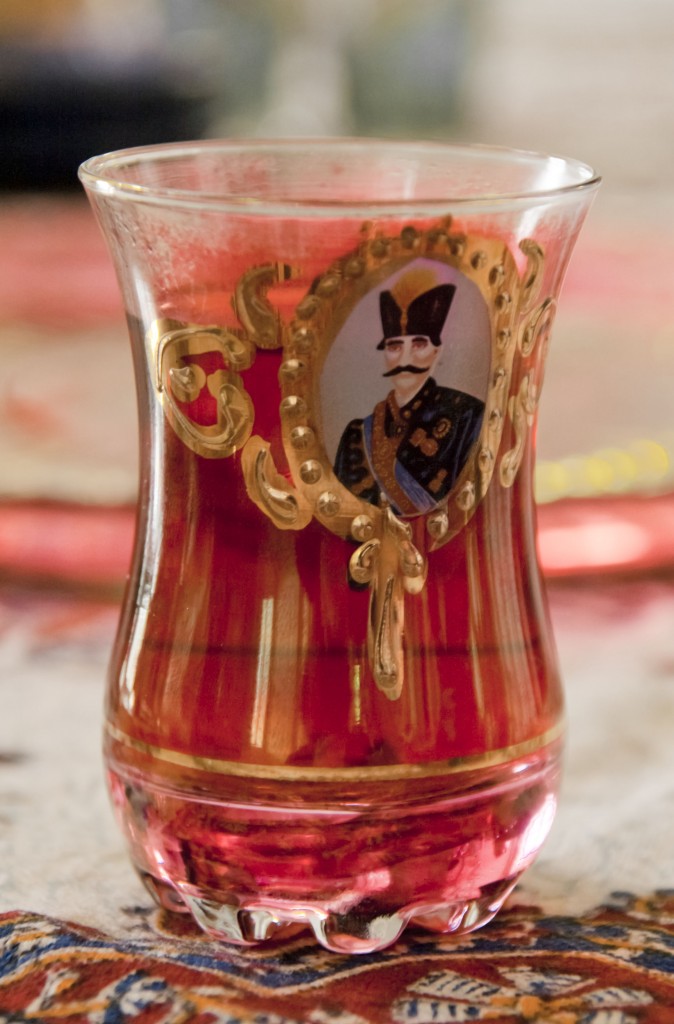
Iranian tea comes in a variety of subtle flavours, but its defining characteristic is its deep reddish-brown colour, which tea-drinkers can choose to dilute with water depending on their preference. Despite its cultivation in the country’s northern provinces, other teas from Sri Lanka and India are also widely consumed as the country imports a majority of its tea in order to meet the large demand.

tea-party


Most chaikhanehs will serve tea on the stronger side unless otherwise indicated by the drinker. The stronger the tea, the higher the concentration of tannin and caffeine, so a good cup of tea is like a good cup of coffee for those who take it straight. Because of its bitterness, many prefer to have sugar with their tea. The traditional way to do this is to take a sugar cube and place it between your teeth. You then sip the tea and allow the sugar to melt. Iranians, especially in colder regions of the country, find this a convenient way to drink multiple cups. Crystal, or rock sugar, can be found throughout the country and bought in spice shops for this specific purpose.


The taking of tea is a ritual unto itself: most meetings or formal occasions will begin with the offering of tea, and most meals will end with it. Some chaikhanehs have takhts, or low-rise platforms covered in rugs and pillows that you may recline on. Remove your shoes before doing so; most meals are served on a tablecloth laid at your feet.

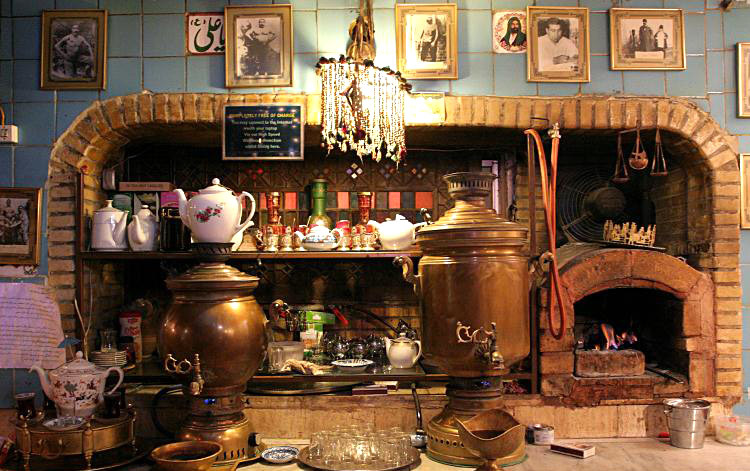
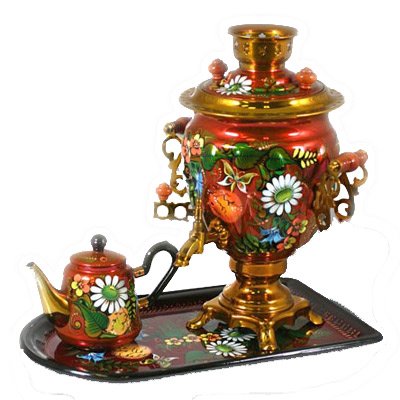
Traditionally, tea is served from a samovar, a heating vessel originally imported into Persia from Russia. Literally meaning “self-boiler”, the samovar is used to keep water hot for prolonged periods of time through a fuel-filled pipe in the middle of the structure that heats the contents surrounding it. Made from copper, brass, silver or gold, the samovar is still used throughout Russia, central Asia and Iran, and ornate versions from the -Qajar dynasty may still be found in use.

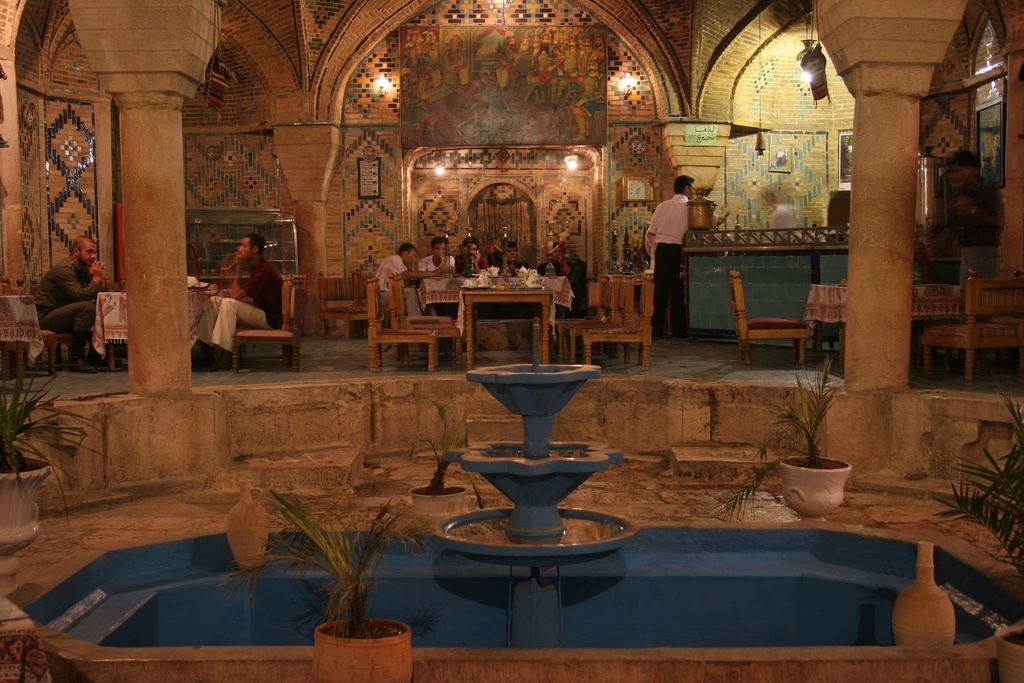
Chaikhanehs come in all shapes and forms, from the simple kitchen-turned-tea room in villages to ornate venues in urban centres, and from underground venues to popular tourist destinations.


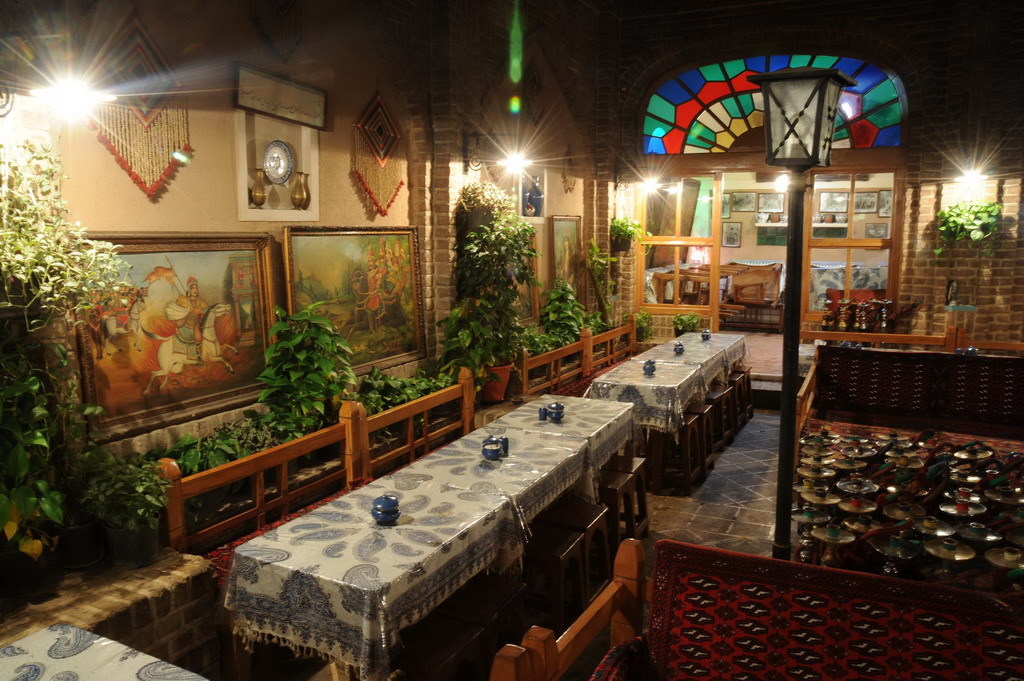
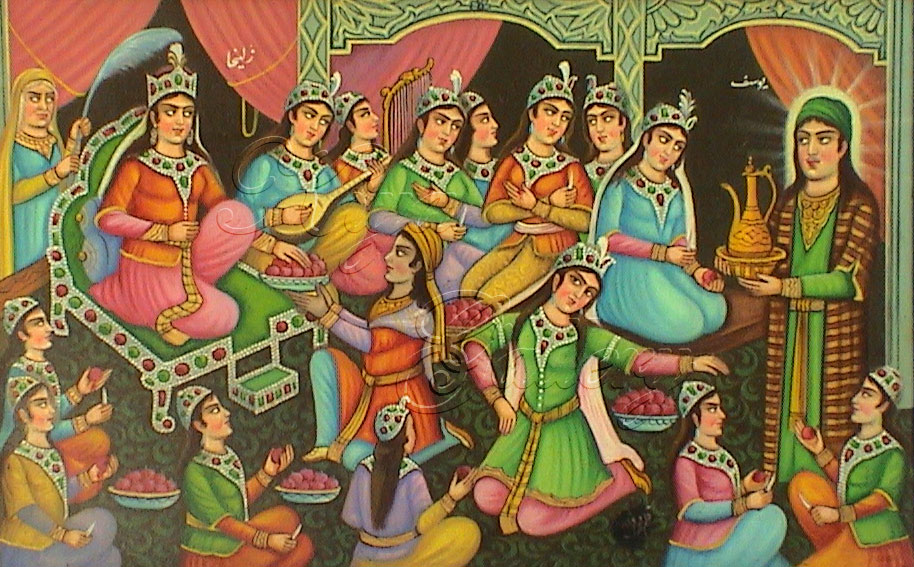
The Azari Tea House in Tehran is one of the most famous chaikhanehs known to tourists and locals, with its detailed architecture and traditional decoration. In existence since the 14th century, this chaikhaneh on Vali Asr street contains one of the more interesting embellishments to emerge from tea house culture: teahouse painting.

cycling-in-Iran

Don’t believe what people tell you about Iran

Iran was undoubtedly the most surprising country for positive experiences. After months of being told that I would be killed there, and the media reporting that it’s a country full of terrorists, I was humbled to enter a country of incredibly intelligent, thoughtful and kind people. I shared many nights in the houses of strangers and wouldn’t be allowed to leave in the morning without having my bags filled with food and gifts. They have many problems of their own in Iran, and are also aware of how the Western media portrays then, yet they still took it upon themselves to help me as best they could.
The beauty of travel by bike is how slow it is, and how it offers intimate view of the lives of strangers. I cycled between 60 and 80 miles a day, occasionally much more, sometimes much less due to weather, altitude or people I would meet on the way. It’s been hard, but the experiences it has given me sure beats working in an office. My freedom and lack of deadlines or destinations led to aimless wandering, mainly guided by the avoidance of bad weather systems and fitting around the seasons. All I really knew was that I wanted to circumnavigate the world and that I was doing that in an easterly direction.

Whenever I struggled to motivate myself to continue, it was the strangers I met on the road that helped me carry on. I’ve lost count of the favors I’ve been granted and the times I’ve been offered assistance. Wherever I went, human goodness shone through.

The Zagros Mountains Bakhtiari world | traveling with Nomad in Iran as a Australia woman

Bakhtiari world

Kerri-Ann Smith:  Our three days traveling with Nomad. Tours in the Zagros Mountains was a highlight of our recent trip to Iran. We experienced firsthand the world of the Bakhtiari nomads and the stunning natural wonders of the high ranges. Here, perhaps a million people live a nomadic pastoral lifestyle, moving between summer and winter camps with their flocks of goats and sheep.
Out of Shar-e-Kord, the bitumen soon gave way to dirt road that unraveled across green ridges. Like a child’s drawing of mountains, a zigzag line of remnant snow formed white triangles on grey pyramids. Being late May, the lower altitudes were already sweltering in the heat haze of the high 30s and the nomads had reached their cooler summer camps.  Occasional black goat hair tents and simple stone structures covered with boughs and tarps appeared on the hillsides.
Along the way, we enjoyed a picnic lunch cooled by a fine mist floating from a 30-metre waterfall. We traveled through villages of flat-roofed stone houses where some nomads have settled over the last century.  Our guides quickly became our friends as we talked and they shared their knowledge of the area, its people and the issues facing them.

Bakhtiari-Nomad-Iran


Later, we were welcomed at a camp to experience a nomad family’s typical day. Their lives are dominated by the care and use of their animals – meat, milk products, and wool. It’s raw and unrefined. It’s physically hard. Women in long, brightly-colored and multi-layered dresses poured milk from the afternoon’s milking into large pans for boiling. A hapless goat was selected from the herd and was led away. A gaggle of smiling children giggled as we swapped words: “goat” – “boz”, “milk” – “sheer”. The Bakhtiari speak a Lorish dialect as well as Farsi.

Later, by firelight, we ate succulent fresh goat kebabs and stew. A blackened teapot sat on the fire; the glasses of tea were filled many times. For hours we chatted and ate with the men. The women worked and ate separately. We slept where we ate, under the woven goat hair tent.

The culture and traditions of the Bakhtiari nomads are under pressure from government settlement policy; the need for better access to health, education and employment; and the simple desire for a more comfortable life. Some years ago, the patriarch Assad Allah had sold off the family’s flocks and moved them all into a village. But, unhappy there, he returned to his nomadic roots, bringing his wife, Batool, and many of their four daughters and four sons and their husbands, wives and children.


Iran-Zagros-Bakhtiari-Nomad

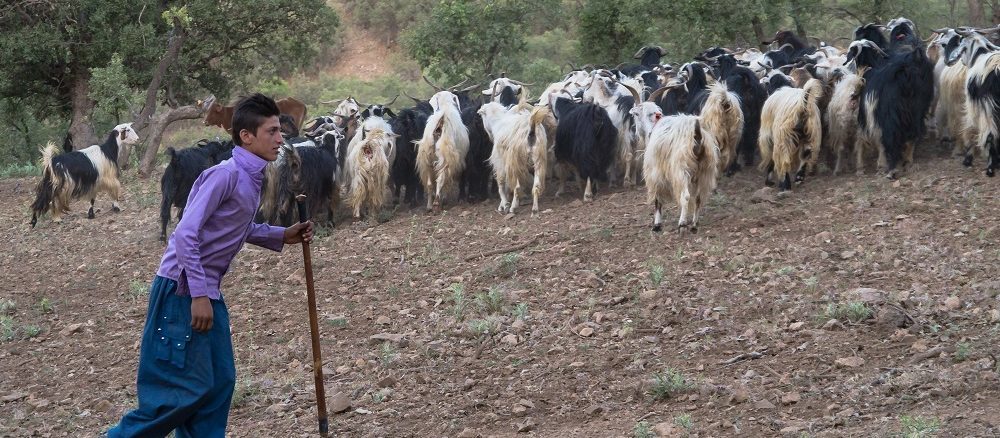
The chores were underway at dawn. Two men headed out with a rifle, but returned empty-handed. In a branch enclosure, the younger women caught and milked the goats before they could dart for the exit. One boy set out for a three hour walk to school to sit an exam. Then, as the sun crept higher in the sky, we accompanied one young shepherd and his flock of goats and fat-tailed sheep over rocky ridges in search of good grazing.

Some of the women headed out on their daily 2-3 hour walk to collect water from a spring. When slaughtered, animal hides are carefully preserved intact to become water receptacles and butter churns. Batool started the hours of rhythmic churning needed to turn milk into butter. Hung from a sturdy wooden tripod and decorated with colorful pom poms, skins filled with milk are rocked vigorously and left to hang.

While we could have stayed for much longer, we said goodbye and continued our journey through the mountains, visiting villages and seeing the handicrafts of the local people. Along the way, we gave lifts in our truck to a mother seeking medical help for her child and to two men wanting to visit their cousins in a camp further downriver. Hospitality and generosity is given and expected. A way of life.


Zagros-Nomad-Iran


Our last overnight stay was at Sar-Aqa-Seyyed, a stepped village yet to be discovered by tourism, where the roof of each house forms the verandah of the one above, grasses are tossed with wooden forks and villagers share common toilets along the creek. From there we walked part of a nomadic route along a steep-sided gorge and visited a salt mine worked in the summer by local women. Our last main stop before heading back to Isfahan was the majestic Koohrang spring where millions of liters of water gush from a slit in a cliff before roaring off as a large river.

‘Authentic’ is a ridiculously overused word to describe experiences. But here, it could not be more appropriate. Be ready to be awed.

Kerri-Ann Smith, Canberra Australia

Photos by Kerri-Ann Smith

travel trip adventure pictures photographer fotografo fotografia viajes periodismo periodista aventura viaje oliver munoz phototempus retrato portrait muñoz tehran isfahan yazd farsi khaju iran persa iman jomeini shahrekord bakhtiari Naqsh-e Jahan hakim kashan abyaneh kurdistan garmeh zurkhaneh shiraz Mashhad Shah Cheragh Nasir al-Mulk qeshm howraman uraman marivan palangan sanandaj bandar abbas Paiposht Laft minab


Reaching Nisf Jahan with limited time and unlimited wishes, setting aside all worries of this or that world, fully living in those moments

Treasure remains hidden in distant lands. I can’t exactly describe how and when the idea got stuck in my imagination. I feel a curious combination of mysteriousness and sacredness associated with the wordtreasure. Things like vessels, gold pots, jars, stones, carpets and never-deciphered writings do not come to my mind when I think of the word treasure. Instead, whenever I come to imagine some distant land, a vague yet strongly moving idea of ‘holy mystery’ weighs in on me.

Isfahan-Iran-tourism


Isfahan epitomised that distant land for me. So when a few years back, I sat in the bus destined to Isfahan from Tehran, I was under the spell of the idea of a treasure that was going to be uncovered in the next few hours. I looked through the window and wondered at Isfahan Nisf Jahan (half the world) and the half-hidden sun.

I dropped the curtain abruptly. Secrets should not be revealed so fast.

It took us almost six hours to reach Isfahan, a city of 17th century Safavids, capital of Persia in the 16th and 17th centuries, city of Hasht Bahisht, Maidan e Naqsh-e-Jahan, Imam Mosque, Chehel Satoon, Chahar Bagh Boulevard, mosques, bridges and of Zinda Rood (Zayanderood).

In Isfahan, one strongly notices Iranians’ unwavering love for their ancient culture. They have preserved, maintained and promoted old texts, monuments and even rituals.

As I was about to reach Isfahan, I tried to unpack the meaning of Nisf Jahan. People have put this single city against the rest of the world because of its sheer splendid beauty. I too had read and listened about the unmatched beauty, the splendour of its gardens, palaces, mosques, historical buildings, bazaars etc. Suddenly, an idea flashed into my mind: this mundane and the world hereafter both makeJahan-e Mukkamal (the whole world). This particular Islamic interpretation seemed more valid. Muslim Kings have been in pursuit of emulating and creating the Heavenly Paradise as it has been described in the Holy Scripture. Isfahan might have been a copy of Bahisht, the other yet complementing half of the Jahan.

As I got out of the bus, I felt tired, as were the seniors accompanying me. Contrary to my expectations, first impression of Isfahan was more of an ordinary city. The first people who ‘warmly’ welcomed us in the ‘paradise’ were not Hoors or Ghilman but taxi drivers, not speaking Arabic or our mother tongue but Persian. They were looking for good fortune among foreign people while we too were in search of a treasure in a foreign land. A clash of interest was apparent.

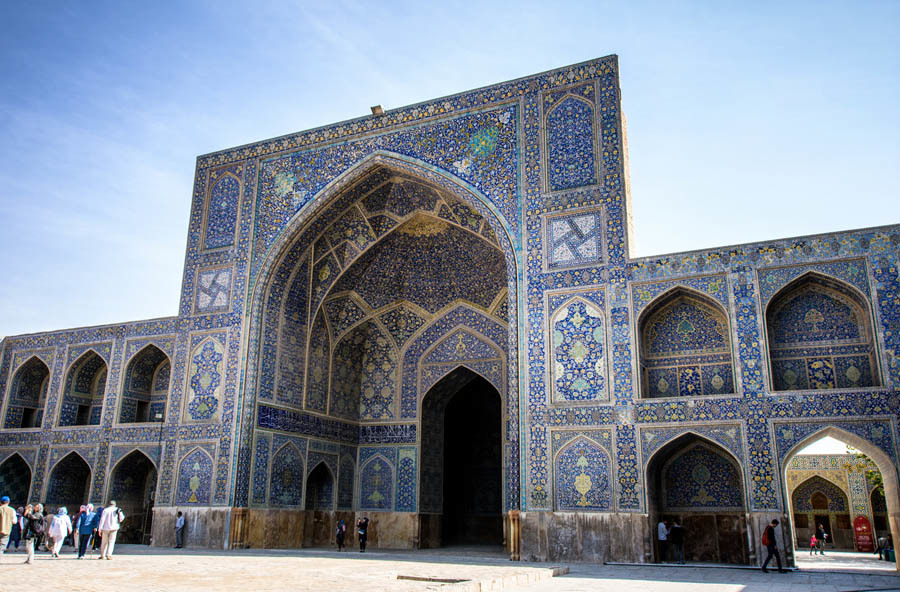
Imam Mosque.

Imam Mosque.

Airports, railway stations and bus stands of all major cities of the world offer a unique opportunity to understand how two strands of worldliness (on the part of taxi drivers) and disinterestedness (on the part of travellers) collide as well as cooperate. Anyhow, we did hire a taxi and arrived at a hotel. It is a long story how we shopped for hotels, bargaining and finally succeeding in getting a room in a comparatively low-rent hotel.

After having a cup of black tea, we left the hotel. I must admit how much I loved the ‘black tea’ in Iran. I couldn’t enjoy Doogh-e-Goshfil and Burgers. Chulo Kababs were delicious but, unfortunately, weren’t for me since I am allergic to rice.

We had limited time — we had to leave for Tehran the next evening — but wishes unlimited. We decided to see all what we could on foot. We started our journey from the main tree-lined boulevard that wasn’t not too far from our hotel. I was reminded of Agar Firdos Bar Roo e Zameen Ast/ Hameen Ast o Hameen Ast Hameen Ast.

It was May which is not hot in Isfahan. It was as mildly cold as Lahore is in February. Cool shadows of breezy trees standing in a symmetrical order along both sides of the wide metallic main road were soothing. Chirping of birds deluded us into a world that is discoloured by globalisation. There were shops on both sides of the boulevard but the bustle of big cities was absent.


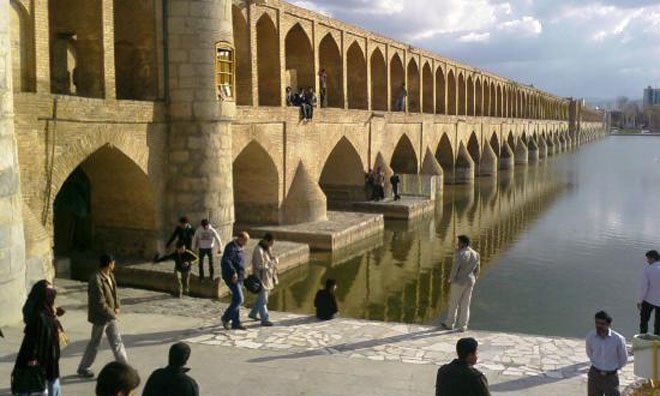
Si-o-Seh Pul.

Si-o-Seh Pul.

The markets on both sides of the road made it seem like a western city. Most people wore western clothes, except perhaps the headscarf which has been made compulsory after Inqilab for women in Iran. Iranian women seem to have carved a way to assert their freedom by putting on tight jeans and shirts and with an unflinching love for cosmetics.

In Isfahan, one strongly notices Iranians’ unwavering love for their ancient culture. They have preserved, maintained and promoted old texts, monuments and even rituals. They have also incorporated ancient cultural values and ‘world-view’ in their ‘new’ architecture. This we observed while visiting Hasht Bahisht, Maidan e Naqsh-e-Jahan, its adjacent bazaars, Imam Masjid, Chehel Satoon, bridges of Zinda Rood and reliquaries.

Converting to Islam has not made them skeptical, disdainful or disrespectful to their earlier history and its texts and heroes. We in Pakistan need to learn from Iran in this regard.

The most exciting experience was visiting the three red bridges — Pol-e-Khaju, Si-o-Seh Pul, Pol-e-Chobi — built in 17th century by the Safavids on Zinda Rood. They seem to redefine the meaning and purpose of bridging the brinks. If you really want to connect the two shores, you will have to create a kind of ambience that could make the act of crossing a true, deep experience of bridging two different worlds and diverse perspectives.

Crossing Si-o-Seh Pul (bridge having 30 arches) was a marvellous experience. We literally stopped at every step, praising the wonders of architecture.

In the evening, we spent an hour at a café built under a bridge. I could never forget the moments while sipping black tea, listening to the whispering of slow waters of Rood mixed with the twitter of evening birds and radiant faces of Iranian people. In those moments, I was able to set aside all kinds of worries of this or that world, fully living in those moments. I felt fortunate to have finally grasped the ‘holy mystery’ of Isfahan.


 Iran Tourism Overview


Iran Tourism Overview

Impressive archaeological sites, carefully planned museums, and ecological wonders await the curious traveler in Iran, a country that has something for everyone.

Iran successful domestic market has laid the groundwork for an increased amount of foreign visitors interested in the history, natural beauty, and business opportunities Iran has to offer.
Travelers seeking to delve deep into history and the origins of civilization need look no further than Iran, where a mosaic of cultures and natural landscapes transcends the perception of the country in the international arena.
Iran’s Cultural Heritage, Handicrafts, and Tourism Organization (ICHTO) is the related authority in Iran.
With the goal of capitalizing on the already productive domestic market, ICHTO has identified 1,200 Tourism special Zone that investors can take advantage of it .With the support of OIETAI, ICHTO aims to attract a much  larger  FDI figure to the  tourism industry in 2013.

Iran’s Potentials in Tourism

  • 15 UNESCO World Heritage sites
  • 10th Country on Tourism Attractions and 5th on Ecotourism
  • One of  the rich countries of the cultural places, ecotourism sites and historical monuments which called the cradle of civilization in other way the history of theCountry  goes back to 7000 written history
  • An array of museums
  • Amyriad of ecotourism opportunities
  • Numerous religious sites
  • Affordable healthcare services
  • Extensive bus network and air and rail infrastructure in the country

Historical Tourism

Until now, UNESCO has designated 15 of Iran’s various historical and natural sites as part of world heritage; includes:
especially for those interested in religious history it is estimated that there are more than 28 messengers of God have tombs throughout Iran.
Some of top sites are as below:
• Persepolis, the complex of Xerox palaces having the detail of 2,500 year-Old Persian reliefs.
• The ancient Mesopotamian ziggurat and complex of Chogha Zanbil is an intriguing remnant from the Elamite Empire more than 3,500 years ago which stand as a testament to the feats of ancient engineering.
• Soltaniyeh Dome, recognized as a UNESCO World Heritage site in 2005, is an  architectural masterpiece that was built  in 1302 AD. As the  oldest  double-shell dome  in  the  country, the structure paved  the  way   for  construction of holy  buildings throughout  the  Muslim  world and  has  captivated the  attention of both  pilgrimsand historians for centuries.

The Iranian government has established a number of museums to showcase artifacts and present the stories of civilization to an international audience
• The  Treasury   of  the  National Jewels in Tehran,  the  National Museum,  Golestan  Palace in Tehran,  and the Sheikh Safi Museum in Ardabil are just a handful of venues that feature  the  collage  of Iran’s historical and traditional past.
• In addition, Tehran’s Contemporary Art Museum showcases over 7,000 texts in both Persian and English as part of a specialized library.
• Iran’s natural beauty   and   conservation efforts are nothing short  of impressive. Stunning waterfalls, deserts, forests,  lagoons, caves, swamps,  and  lakes  represent a diverse   array  of  climatic  zones  and  landforms, comparable only to the  continental US.

In total, the country boasts 28 natural parks,43 protected wildlife zones,  and  166 protected areas,  committing  nearly 5% of its land-an area of 8 million  hectares-to ecotourism and  the  preservation of natural resources. Among  the  most popular destinations for eco-holidaymakers are Galestan  National  Park,   Kavir   National  Park, Lar Protected Area,  Bakhtegan Lake,  and   Bamou National Park.

Religious Tourism

The city of Mashhad, visited  by the Muslims to  pay homage to the  Holy Shrine of   am  Reza, the largest  mosque in the world  by area which  accommodates 20 million pilgrims and  tourists every   year.   Other   notable  holy sites include the
Danial-e Nabi Mausoleum, one the messengers of God in shosa,

Shrine of  Hazrat-e Masumeh, the sister of and  the  Chak  Chakoo  Fire Temple, which is famous  for the legendary dripping water that  falls from surrounding rock formations.

Sea and Coastline:

Due to the  extensive bus  network and  air and rail  infrastructure  in  the   country,  domestic tourists most  often  travel  to  visit  friends and family  during the  summer months. Given the country’s abundant natural beauty and coastal destinations, approximately 24% of domestic tourists traveled for sightseeing or entertainment purposes in 2011. However, medical tourism and pilgrimage make up an additional 23% of travel throughout the country.
In addition to beaches 700 Km alongside the Caspian Sea are the most popular destinations for domestic tourism.

Plans for Future:

As part of Vision 2025, the government aims for Iran to achieve a stronger position among global tourism destinations, setting a target of 7.5 million foreign arrivals.
Although the number of international arrivals  has  been  steadily increasing-up  from  2.2 million  people  in  2009  to  3.6  million  from  in 2011 at a growth rate of 58% domestic tourism is a key segment of the  sector  overall.

A large majority of Iranians frequently travel within the  country on  a yearly  basis,  and  although they do not typically inject  as much  money  into the  economy as foreign  tourists are known to contribute, the development of transportation and communications infrastructure is fueled by the  large  amount of domestic traffic.

The overall goal of the Tourism industry is to attract 2% of the world’s tourists, or 20 million people, to Iran by 2025. In 2011, the country earned approximately $6 billion from the tourism sector, and in 2013 analysts expect the tourism industry to grow by a significant 135%.

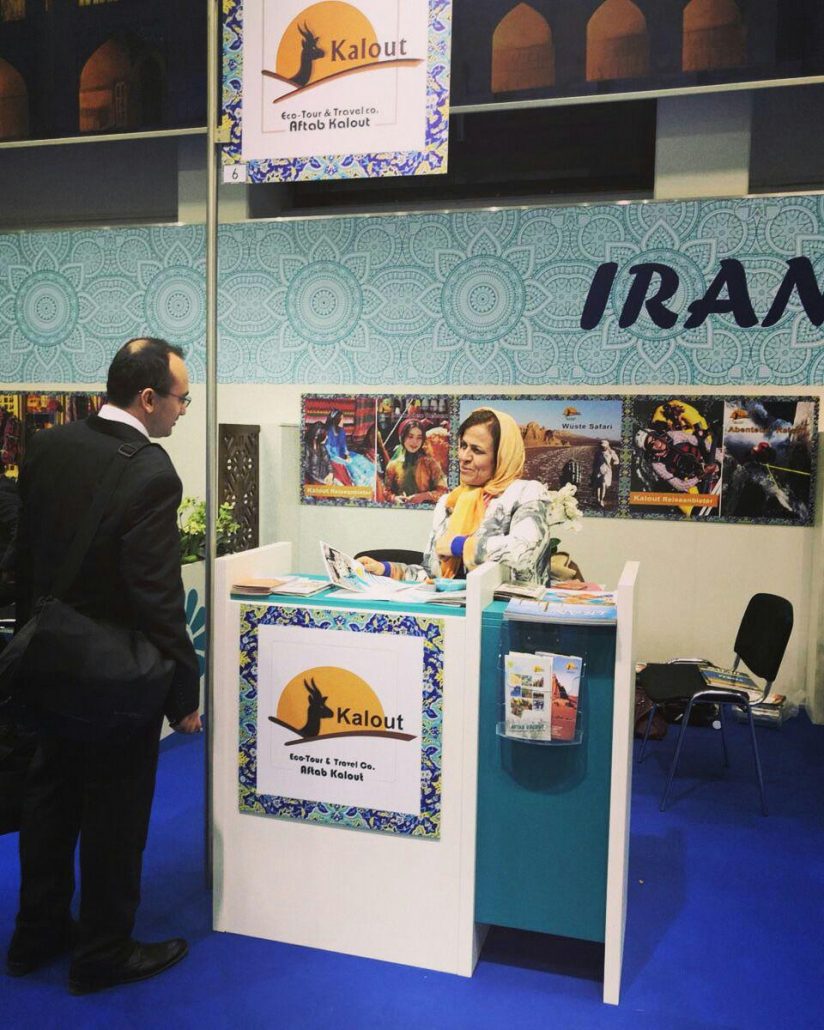
Kalout Travel Agency attends ITB Berlin again this year. The show takes place from the 7th -11th of Marc 2018 in ExpoCenter City, Messedamm 22, 14055 Berlin.

You’ll find Kalout’s CEO, Mrs. Nabizadeh in hall 7.2a at stand 6. ITB is always a brilliant opportunity for us to catch up with our current partners as well as connecting with new partners.


Kalout CEO, Mrs. Nabizadeh at ITB Berlin 2018

We want to meet travel agencies and tour operators that are interested in selling package tours on the Kalout Travel. This year we have a particular focus on group tours and are looking to work with partners who can help us facilitate this.

Kalout offers tailor-made packages for individuals and groups. We provide airport transfers, luggage transfers, accommodation and a detailed holiday pack for our clients. Furthermore, we can also offer dinner and day tour options on some routes. Our 24-hour emergency line is open to all clients on the trail, including those who have booked through third-party agents.

Over the last seven years, Kalout Travel Agency has emerged as a market leader in Iran Inbound tours particularly Iran Desert Tours. We’d like to welcome any interested parties to come and join us at our stand to have a chat about how we can help each other!

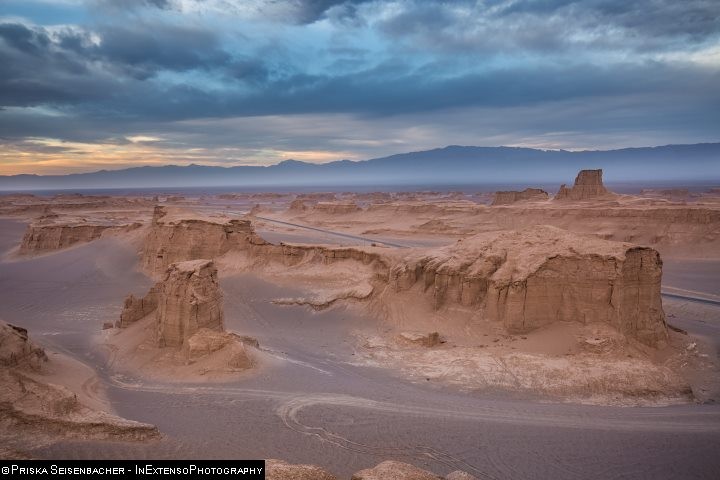
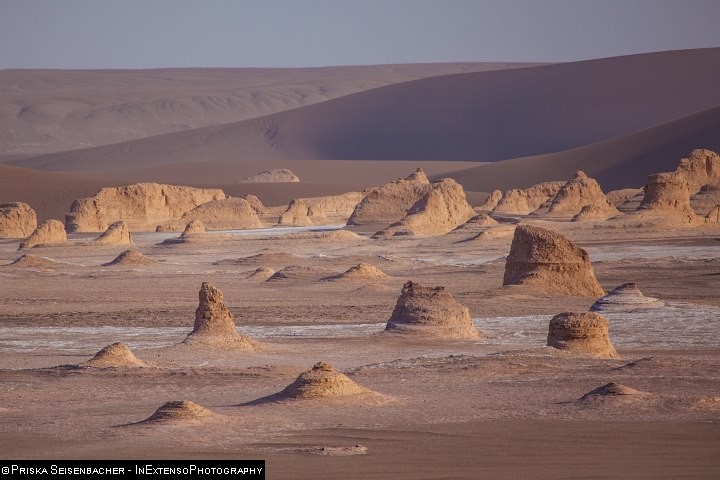
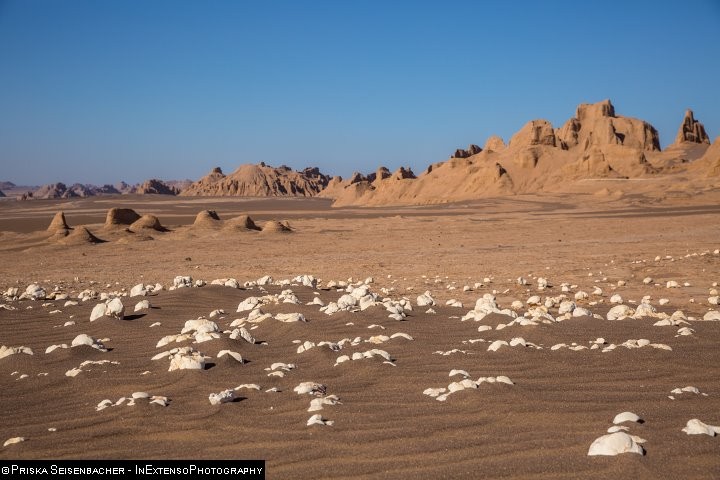
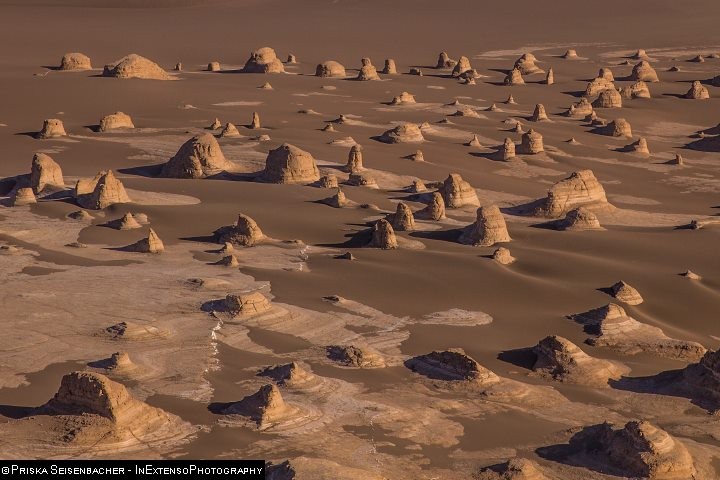
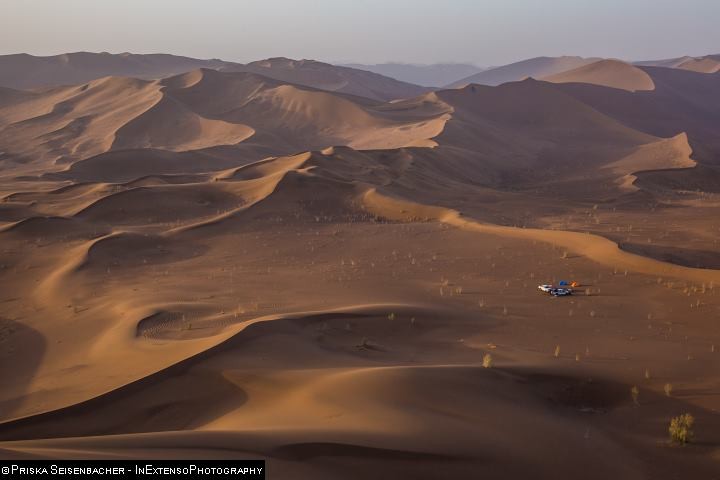
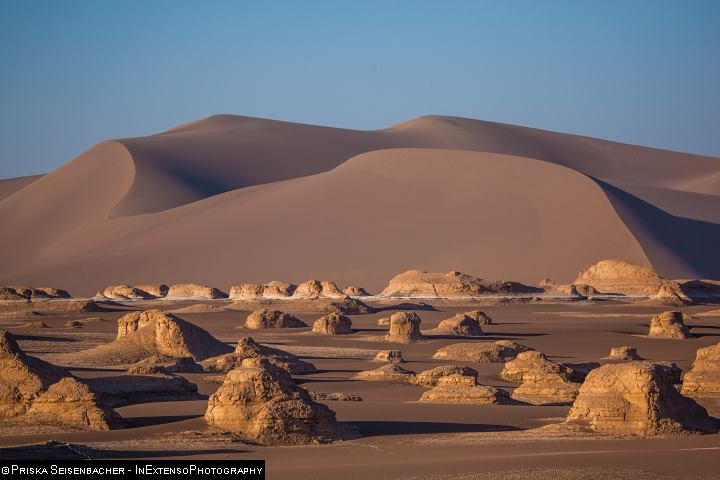
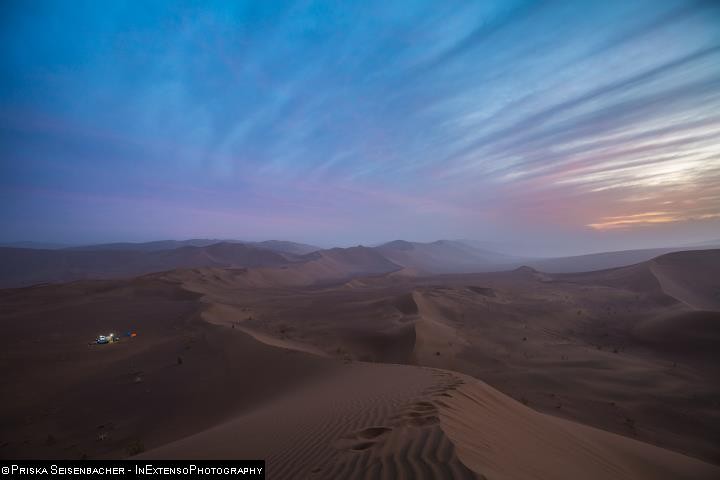
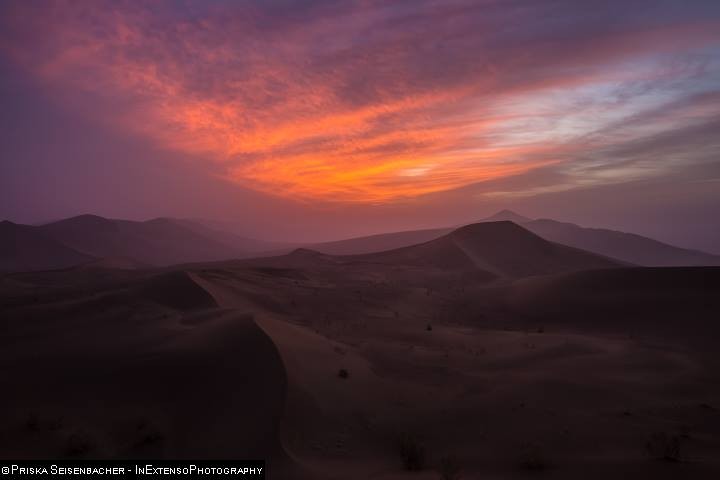
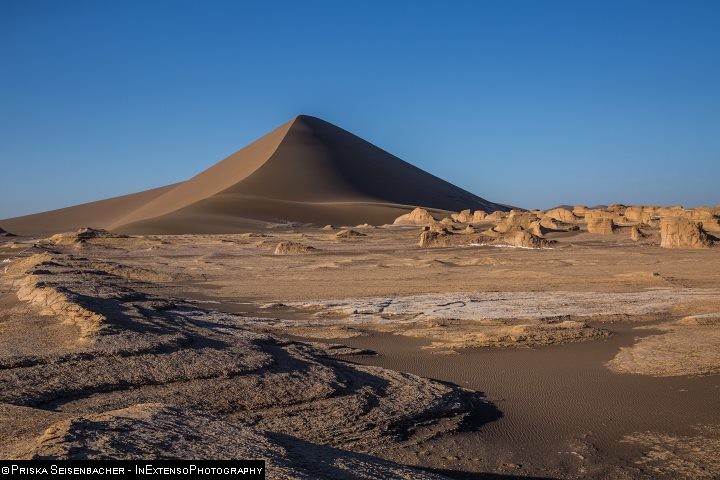
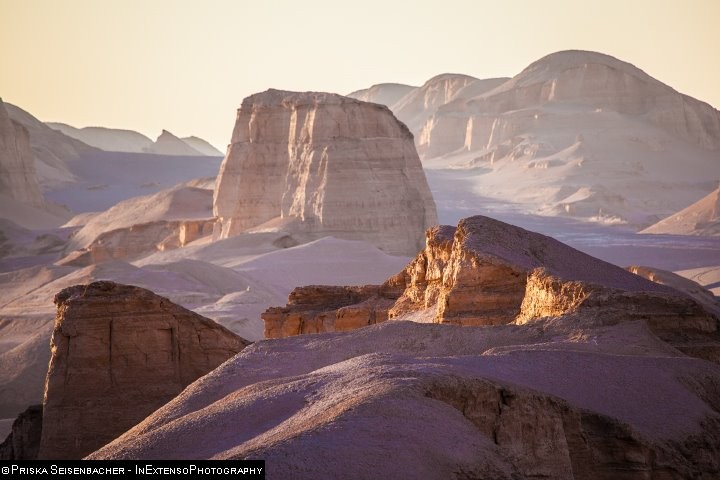
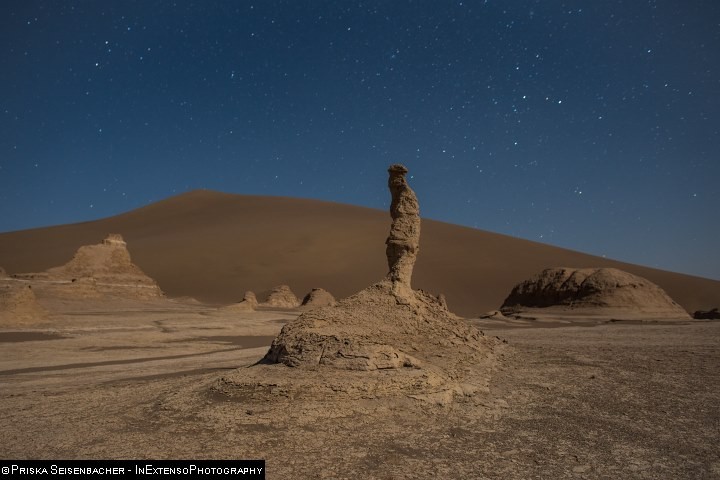
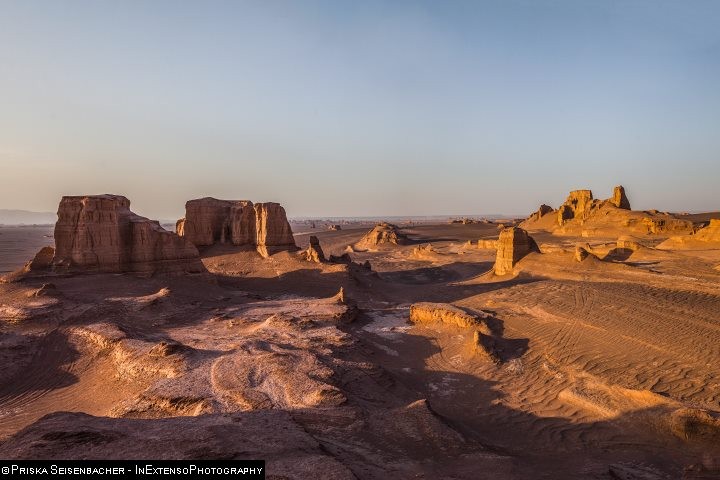
Our lovely traveler, Priska Seisenbacher, a professional photographer chooses Kalout Travel Agency for its travel to Iran. In her fourth trip to Iran, she travels to the only UNESCO World Heritage Natural site of Iran, Dasht-e Lut in order to see Iran from different angle. Priska tries to capture the unique beauty of Lut Desert through its lens which are truly amazing and wonderful.

Priska Seisenbacher In Extenso Photography

Priska Seisenbacher In Extenso Photography

Read her own words and see her feelings through these splendid pictures.

Priska Seisenbacher’s own words:

Our trip through Iran’s desert Dasht-e Lut

The fourth journey to Iran gave us the opportunity to explore the Dasht-e Lut much deeper than the short trip to the Kalouts just next to the road in 2016. Known as the hottest place of the world (because of several temperature records) the Lut is definetely worth a visit.

As we wanted to follow an off-road adventure this time it was pretty clear that we would have to drive with two jeeps to guarantee our safety in all the loneliness. Starting in Shafiabad we trusted in our well experienced guides to find a way to another superlative: The biggest sand dunes of the world are located a one day drive from the little village. Even we have seen a lot of other beautiful places in the deserts of Iran this trip amazed us because of the huge sand dunes and the variety of desert landscapes. So I am really convinced that such an off-road trip is one of the best desert trips you can do in the world. But also if it is such a beautiful area not many western people know it as a place to visit. That and the huge proportions of the area are the main reasons why we have not seen any other people during our three day trip through the Dasht-e Lut.

Thanks for the great trip! Kalout Kalout Adventures

Priska Seisenbacher In Extenso Photography

Priska Seisenbacher In Extenso Photography


Priska Seisenbacher In Extenso Photography

Priska Seisenbacher In Extenso Photography

Priska Seisenbacher In Extenso Photography

Priska Seisenbacher In Extenso Photography

Priska Seisenbacher In Extenso Photography

Priska Seisenbacher In Extenso Photography

Priska Seisenbacher In Extenso Photography

Priska Seisenbacher In Extenso Photography

Priska Seisenbacher In Extenso Photography

Priska Seisenbacher In Extenso Photography

Priska Seisenbacher In Extenso Photography

Priska Seisenbacher In Extenso Photography

Priska Seisenbacher In Extenso Photography

Priska Seisenbacher In Extenso Photography

Priska Seisenbacher In Extenso Photography

Priska Seisenbacher In Extenso Photography

Priska Seisenbacher In Extenso Photography

Priska Seisenbacher In Extenso Photography

Priska Seisenbacher In Extenso Photography

Priska Seisenbacher In Extenso Photography


Travel unique with Kalout Travel Agency!