While the countless historical sites, monuments, and museums in Tehran can easily fill up a visitor’s day, there are some off-the-radar activities that can offer more insight into both the present and past of the Iranian capital and its people. Here’s a list of 10 unusual things to do in Tehran.

Go gallery-hopping

Tehran has a happening art scene, and every Friday afternoon, galleries around the city open to display exhibitions of well-known and up-and-coming young artists. Your idea of modern Iran is sure to change after viewing not only the contemporary art but also the catwalk-like style of fashionable Tehranis who come to see and be seen in these galleries. Sip on some tea as you contemplate the works, meet the artists, and maybe even purchase a piece from the next big name.

Tehran

Tehran

Conquer Valiasr Street

At nearly 12 miles (19 kilometers) long, Valiasr is the longest street in the Middle East, running from north to south, and dividing Tehran into east and west. This tree-lined avenue has wide sidewalks and cascading water features that offset the hum of traffic. Starting at Rah Ahan Square in the south, you’ll pass some of Tehran’s best sites, including Saee Park, Mellat Park, and the City Theater, which also make nice resting spots, before reaching Tajrish Square in the north. Take notice of the street sculptures and art projects along the way. Not feeling up to the walk? Consider taking the bus for all of the sights, but none of the exertion.

Tehran

Tehran

Play dress up

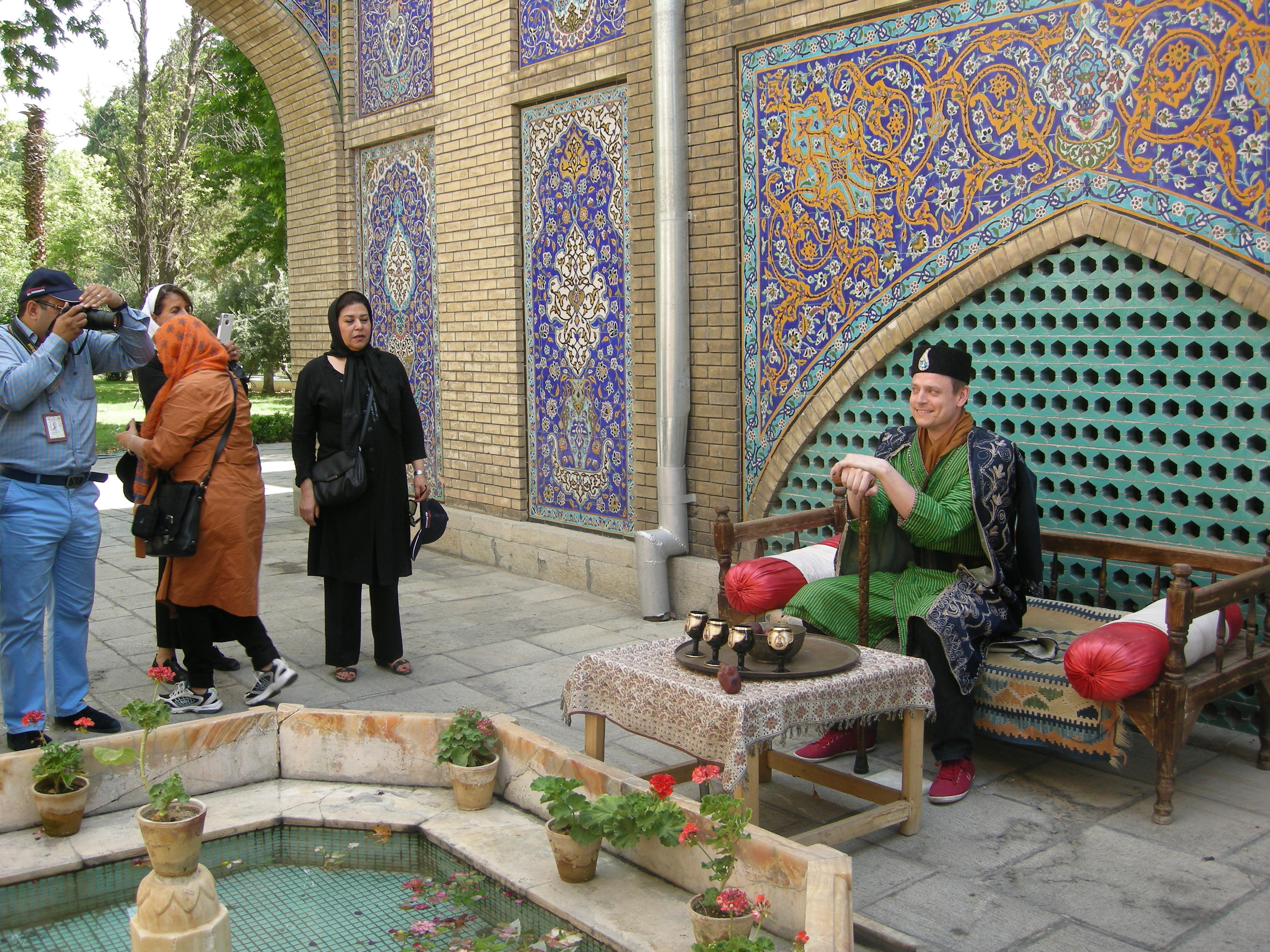
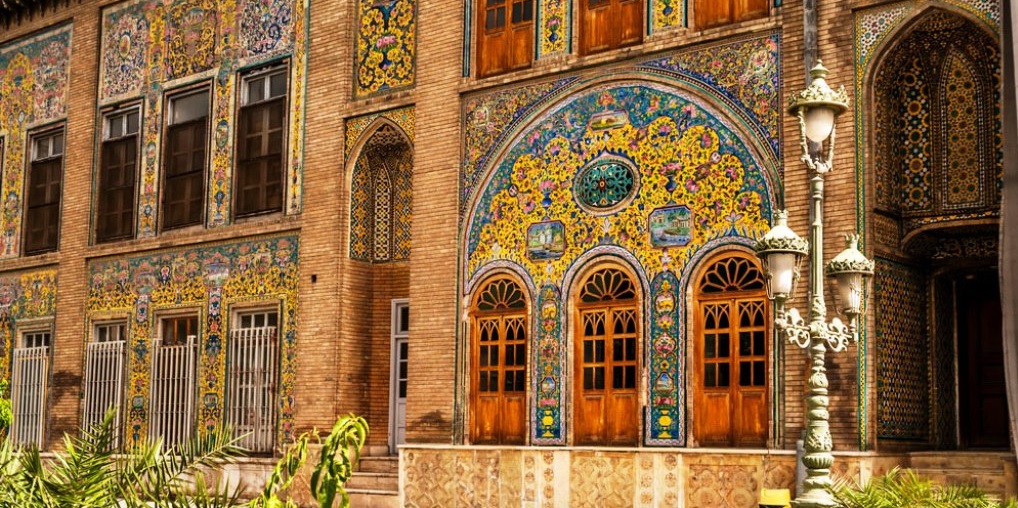
Many of Iran’s historical sites offer the opportunity to play dress up in Qajar-era clothes, but why not do it against the backdrop of a palace from the same period? You’re sure to be doing some sightseeing at Golestan Palace, so while you’re there, toss on some royal clothes and feel like a noble as you pose alongside silver antiques, ruby pomegranates, and colorful mosaics. When you’re done, you’ll snap back into present-day Tehran, with your pictures ready in the blink of an eye.

Tehran

Tehran

Be transported to old Tehran

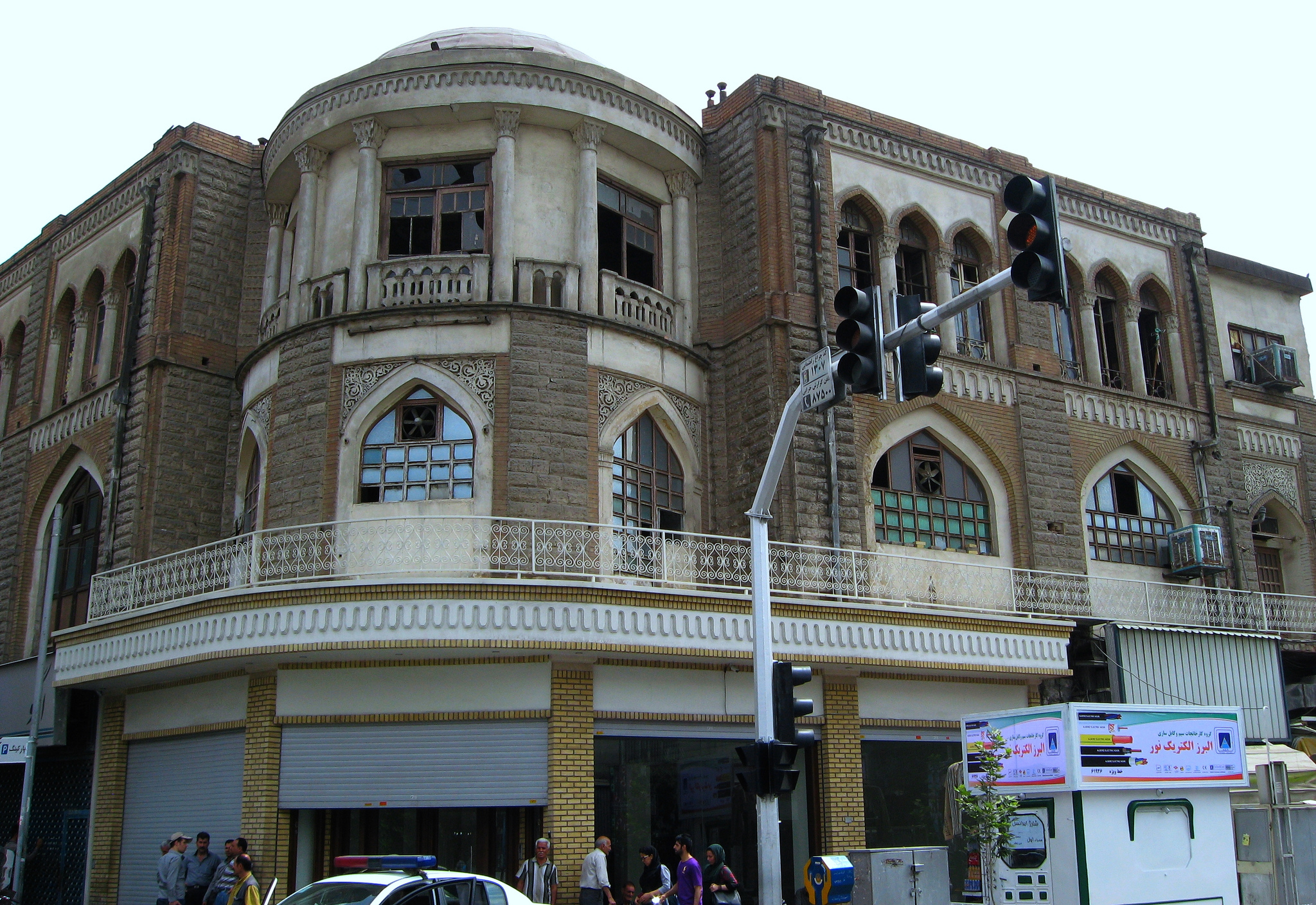
Once known as the “Champs-Élysées of Tehran”, Lalezar Street is a far cry from its former days as a thriving hub of cafés, cinemas, and theaters. Named for the tulip gardens that were once plentiful, the first modern boulevard of the city is now lined with lamp and chandelier stores, but you only have to glance up to catch a glimpse of old Tehran. You may get lost in your imagination as you reconstruct broken windows and the happenings behind them. Among the forgotten jewels on and around this street is the former Grand Hotel, home of renowned writer Sadegh Hedayat, and Ettehadieh House, an early 20th-century-style Iranian mansion where the popular 1976 TV series, My Uncle Napoleon, was filmed.

Tehran

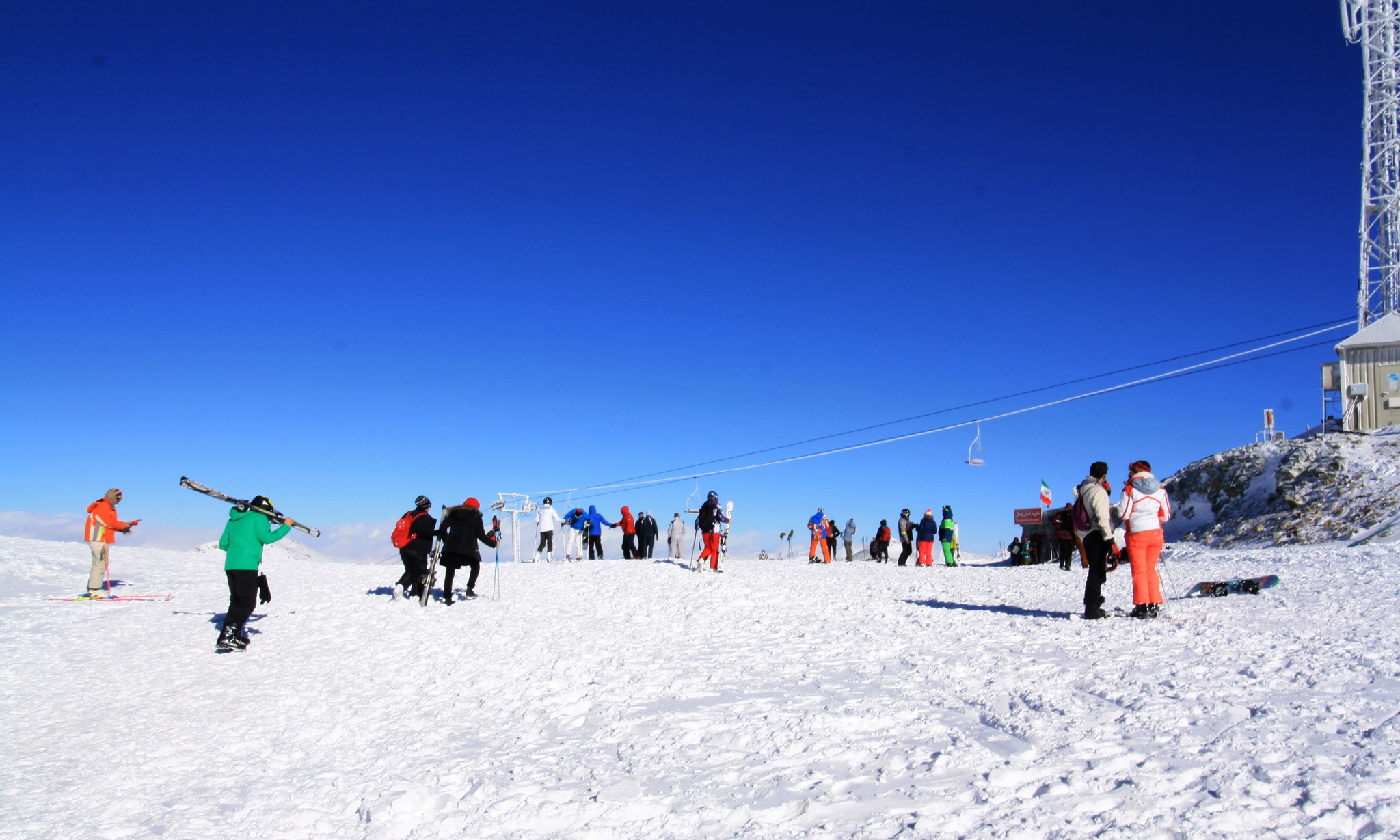
Get an adrenaline rush at Tochal

Located in the north of Tehran, Tochal has something for everyone. For a more relaxing time, catch a skyline view of the capital or strike out on an early-Friday-morning hike to station 1 or 2, where you can enjoy breakfast with a view. Those after some more excitement can try archery or zip-lining in the complex. Even though Shemshak and Dizin are more popular ski resorts, taking the telecabin to station 7 will throw you in the middle of white, powdered mountains, without having to venture too far from the city.

Tochal

Tochal

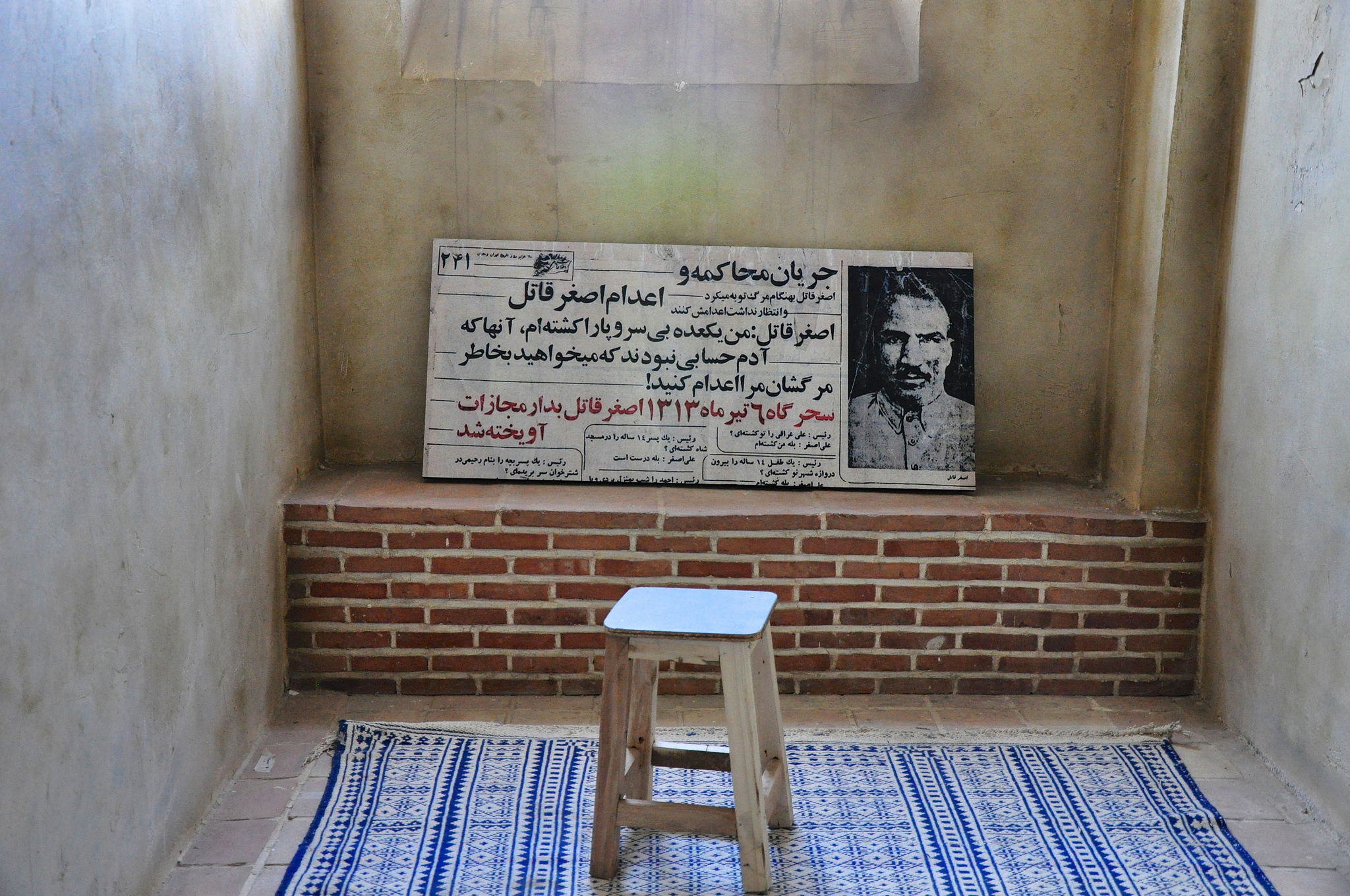
Tour Qasr Prison Museum

One of the oldest political prisons in Iran, Qasr Prison was originally built as a Qajar palace by Georgian architect Nikolai Markov and combines elements of Persian and European architecture. It was later converted into a prison for several decades until it finally closed for good. It reopened in 2012 as a museum, with the surrounding area transformed into a public park. Framed photos of male and female political prisoners hang around the entrance while a few former inmates lead guided tours, providing first-hand accounts of the atrocities they endured during their time behind the bars of this hauntingly beautiful prison.

Qasr Prison Museum

Qasr Prison Museum

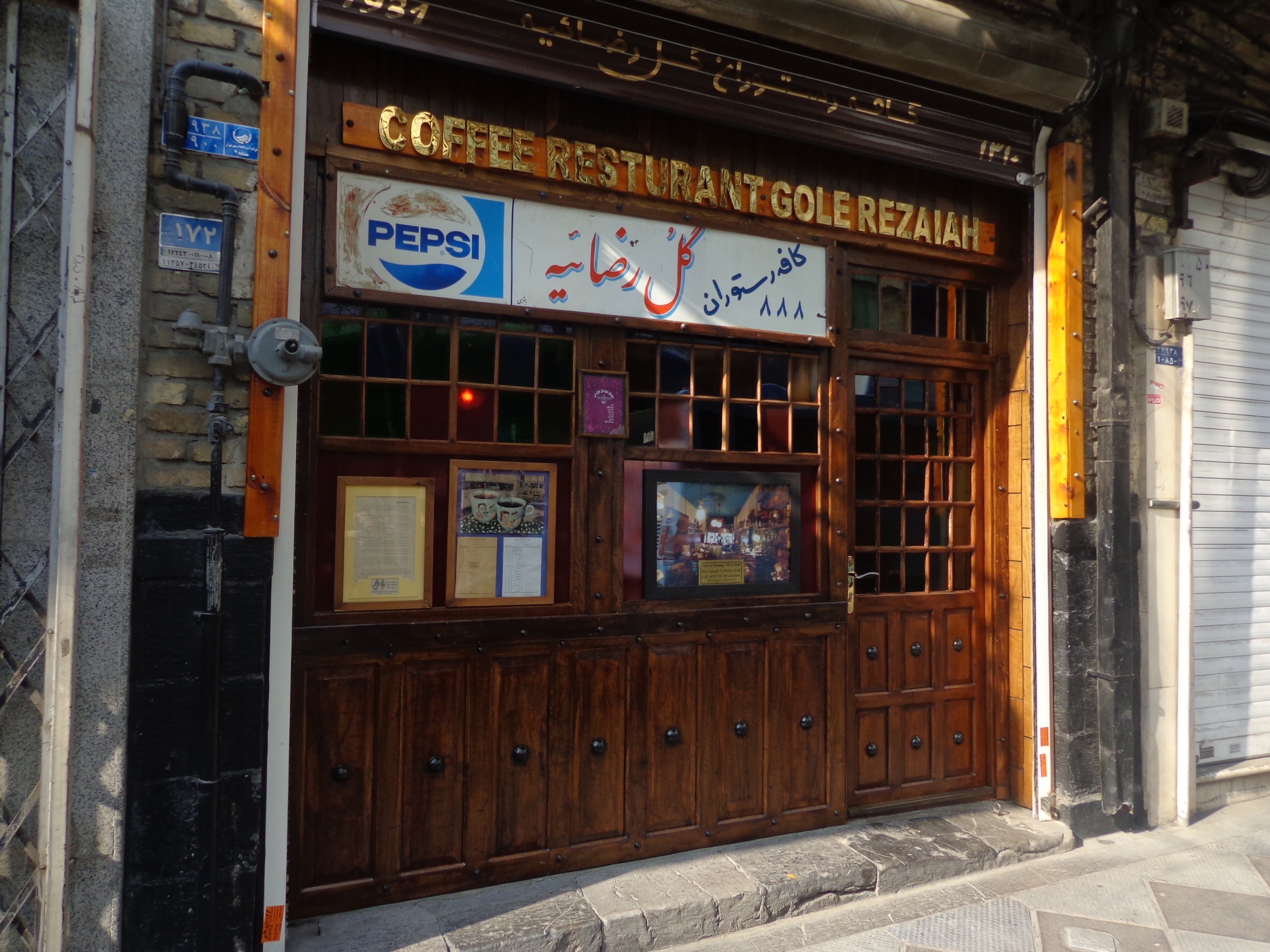
Dine among the intellectuals at Cafe Gol Rezaeieh

Along the cobblestone streets of Si-e Tir sits a quaint, unassuming café that’s easily overlooked if you don’t know what it is. Throughout its 70-plus years, Cafe Gol Rezaeieh has been the scene of Iran’s writers and artists. Displaying framed pictures from old magazines and photos of prominent figures in literature and cinema, its quirky, cluttered décor makes it feel like a museum of Tehran’s artistic scholars and their inspiration. After a day exploring the nearby museums, stop here to try the café’s famed appetizers and meals, which include borscht (beetroot-based soup) and homemade Persian stews.

Cafe Gol Rezaeieh

Cafe Gol Rezaeieh

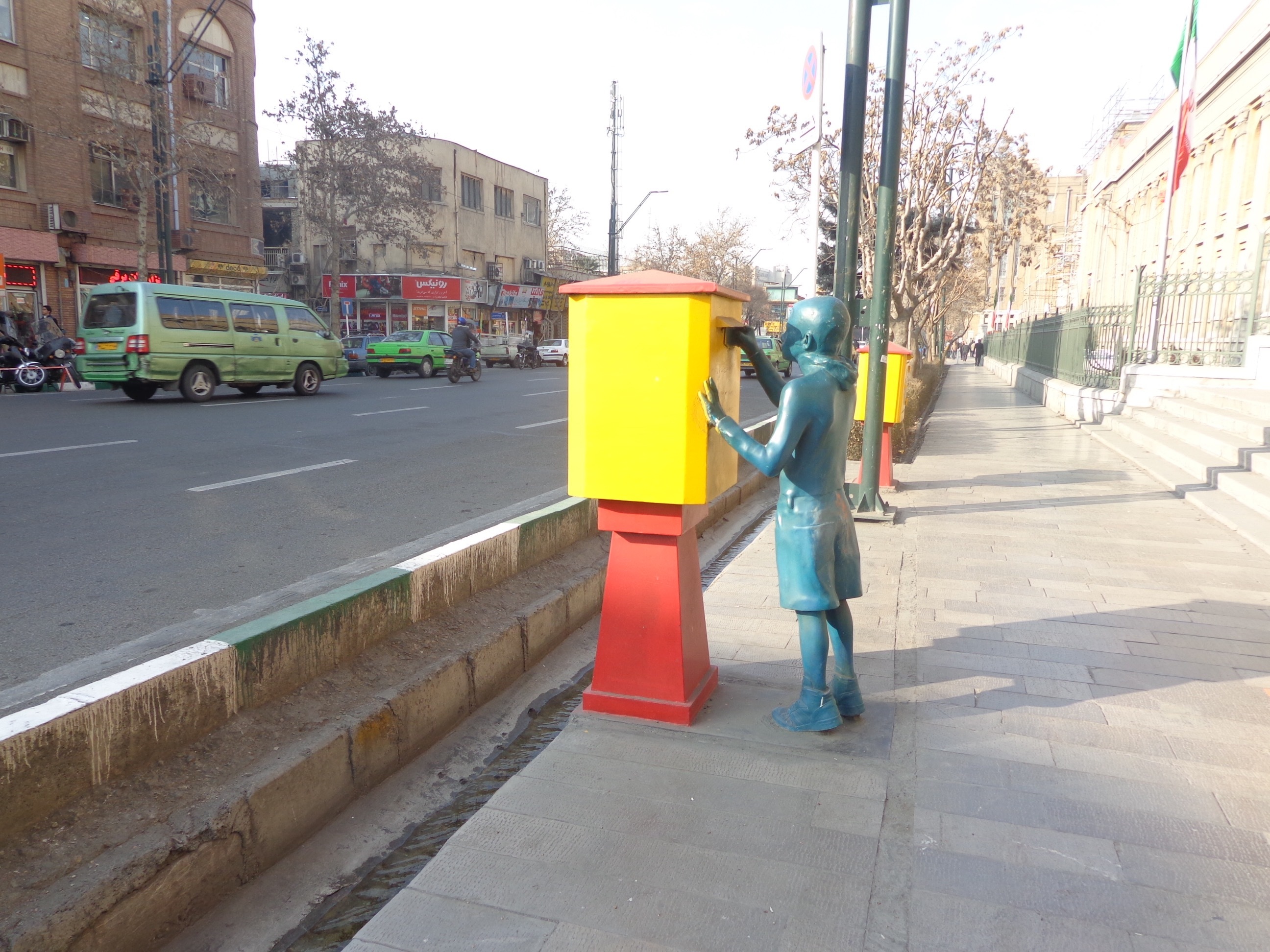
Learn about Iranian communication before the smartphone

Before the Telegram messaging app took the nation by storm, communication in Iran was vastly different. Rather underrated, the Post and Communications Museum takes us through the history of Iran’s postal system and exhibits various collections, from stamps, post boxes, and horse-drawn carts that delivered mail, to the first telephones and radios. Perhaps just as exciting as the exhibits themselves is the architecture of the building, which gives us yet another example of architect Nikolai Markov’s innovative designs.

Iranian communication before the smartphone

Iranian communication before the smartphone

Ascend Tehran’s three towers

Ranging from ancient to modern, these three towers shouldn’t be missed. The oldest of the trio, the 12th-century Tughrul Tower is located in the city of Ray (connected to Tehran by metro) and serves as the tomb of Seljuk ruler Tugrul Beg. Further north, Azadi Tower combines pre- and post-Islamic architecture and is the symbol of Tehran. Finally, Milad Tower is the most modern of the three and is the sixth-tallest telecommunication tower in the world. The elevator to the observation deck will give you a view of Tehran from about 300 meters (984 feet).

Catch some culture

Catch some culture

Catch some culture

In addition to the many annual music and film festivals on offer in Tehran, there are other concerts on an ongoing basis in various locales. Whether it’s the Tehran Symphony Orchestra at Vahdat Hall, musical concerts at Milad Tower, or adaptations of Western plays in Iran Shahr Theater, you’re sure to find something almost every night of the week.

Persepolis:

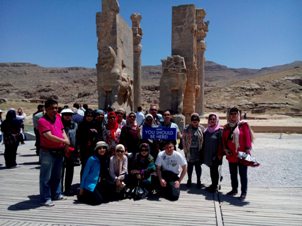
Persepolis was the ceremonial capital of the Achaemenid Empire (ca. 550–330 BC). It is situated 60 km northeast of the city of Shiraz in Fars Province, Iran. The earliest remains of Persepolis date back to 515 BC. It exemplifies the Achaemenid style of architecture. UNESCO declared the ruins of Persepolis a World Heritage Site in 1979.
The site includes a 125,000 square meter terrace, partly artificially constructed and partly cut out of a mountain, with its east side leaning on Rahmet Mountain. The other three sides are formed by retaining walls, which vary in height with the slope of the ground. Rising from 5–13 meters (16–43 feet) on the west side was a double stair. From there, it gently slopes to the top. To create the level terrace, depressions were filled with soil and heavy rocks, which were joined together with metal clips.
Archaeological evidence shows that the earliest remains of Persepolis date back to 515 BC. André Godard, the French archaeologist who excavated Persepolis in the early 1930s, believed that it was Cyrus the Great who chose the site of Persepolis, but that it was Darius I who built the terrace and the palaces.
Since, to judge from the inscriptions, the buildings of Persepolis commenced with Darius I, it was probably under this king, with whom the scepter passed to a new branch of the royal house, that Persepolis became the capital of Iran proper. As the residence of the rulers of the empire, however, a remote place in a difficult alpine region was far from convenient. The country’s true capitals were Susa, Babylon and Ecbatana. This accounts for the fact that the Greeks were not acquainted with the city until Alexander the Great took and plundered it.
Darius I ordered the construction of the Apadana and the Council Hall (Tripylon or the “Triple Gate”), as well as the main imperial Treasury and its surroundings. These were completed during the reign of his son, Xerxes I. Further construction of the buildings on the terrace continued until the downfall of the Achaemenid Empire.

Around 519 BC, construction of a broad stairway was begun. The stairway was initially planned to be the main entrance to the terrace 20 meters (66 feet) above the ground. The dual stairway, known as the Persepolitan Stairway, was built symmetrically on the western side of the Great Wall. The 111 steps measured 6.9 meters (23 feet) wide, with treads of 31 centimeters (12 inches) and rises of 10 centimeters (3.9 inches). Originally, the steps were believed to have been constructed to allow for nobles and royalty to ascend by horseback. New theories, however, suggest that the shallow risers allowed visiting dignitaries to maintain a regal appearance while ascending. The top of the stairways led to a small yard in the north-eastern side of the terrace, opposite the Gate of All Nations.
Grey limestone was the main building material used at Persepolis. After natural rock had been leveled and the depressions filled in, the terrace was prepared. Major tunnels for sewage were dug underground through the rock. A large elevated water storage tank was carved at the eastern foot of the mountain. Professor Olmstead suggested the cistern was constructed at the same time that construction of the towers began.

The uneven plan of the terrace, including the foundation, acted like a castle, whose angled walls enabled its defenders to target any section of the external front. Diodorus Siculus writes that Persepolis had three walls with ramparts, which all had towers to provide a protected space for the defense personnel. The first wall was 7 meters (23 feet) tall, the second, 14 meters (46 feet) and the third wall, which covered all four sides, was 27 meters (89 feet) in height, though no presence of the wall exists in modern times.

Persepolis-Iran-Shiraz

Persepolis-Iran-Shiraz

Naqsh-e Jahan Square:
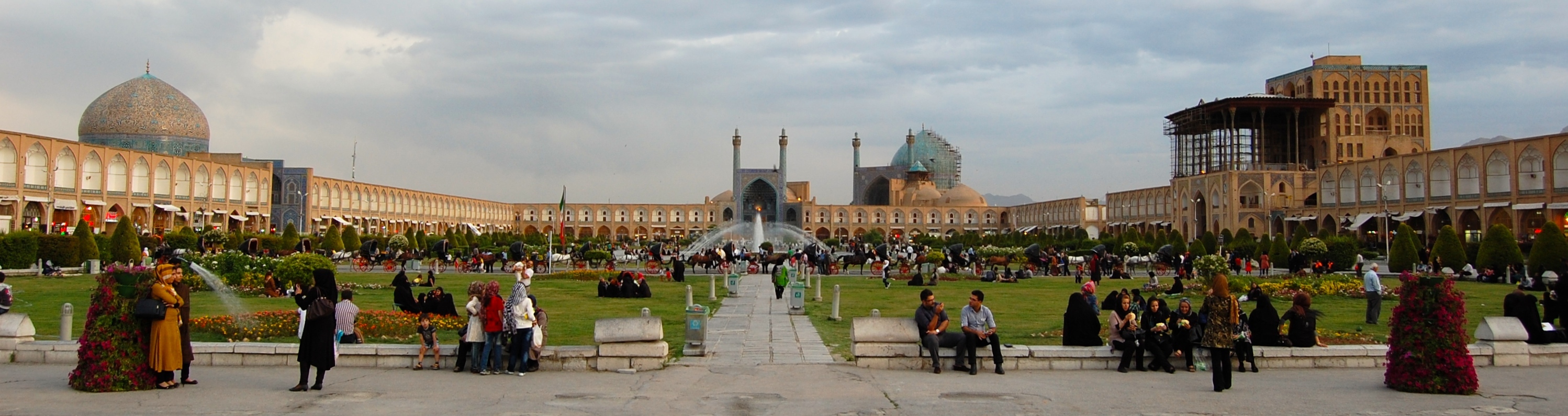
Naghsh-e-Jahan Square is a huge rectangular square in Isfahan, Iran, which is surrounded by monuments from Safavid period. Naghsh-e-Jahan Square was built during the reign of Safavid Shah Abbas. There are other historical monuments in the square including Ali Qapu Palace, Imam Mosque, Sheikh Lotf Allah Mosque, Qeisarieh Gate. In addition to these monuments, there are 200 chambers around the square, in which Isfahan’s handicrafts are presented.
In comparison with “Place de la Concorde” in Paris, Naghsh-e-jahan Square is historically superior, and after “Tiananmen Square” in Beijing, it is the second largest square in the world.
Due to the harmony existing in the construction of it, Naghsh-e-Jahan Square has surprised Europeans during centuries.
The square was registered in Iran’s National Heritage on January 28, 1935 under the registration number of 102. Also, it was among the first Iranian monuments, which was registered in UNESCO World Heritage in April, 1979 under the registration number of 115.
The square was named “Shah Square” after it was built, and it was registered in World Heritage list under this name. Currently, however, it is also known as “Imam Square” in that list.

Naqsh-e Jahan

Naqsh-e Jahan

Yazd city:
Yazd city is the center of Yazd province, Yazd is considered to be of the old cities of Iran and one of the best desert cities. It’s the first raw adobe city and the second historical city in the world after Venice in Italy. This region has been considered as one of the main and historical path and passageways of Iran and has always been noted by governments. Yazd is known as the “City of Wind Tower”. Also, “Bride of the Desert”, “Dar al Elm”, “City of Bicycles” and “the City of Sweets” are considered to be its other titles. Yazd is the city of different cultures and religions and its cultural inhabitants live peacefully together. This city is sister to the cities of Homs in Syria, Jaszbereny in Hungary, Nizwa in Oman, Jakarta the capital of Indonesia, Holguin in Cuba and Yeosu in South Korea.Yazd city was Just registered in UNESCO World Heritage in July, 2017

Yazd city

Yazd city

Tabriz Bazaar:

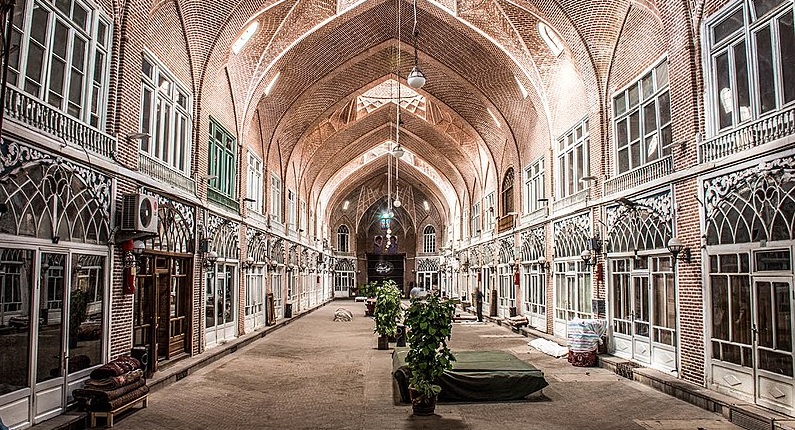
The Bazaar of Tabriz (Romanized as Bāzār-e Tabriz) is a historical market situated in the city center of Tabriz, Iran. It is one of the oldest bazaars in the Middle East and the largest covered bazaar in the world. [Citation needed] and is one of Iran’s UNESCO World Heritage Sites.
Tabriz has been a place of cultural exchange since antiquity. Its historic bazaar complex is one of the most important commercial centers on the Silk Road. A bazaar has existed on the same site since the early periods of Iranian urbanism following Islam.

Located in the center of the city of Tabriz, Iran, the structure consists of several sub-bazaars, such as Amir Bazaar (for gold and jewelry), Mozzafarieh (a carpet bazaar, sorted by knot size and type), shoe bazaar, and many other ones for various goods such as household items. The most prosperous time of Tabriz and its bazaar was in the 16th century when the town became the capital city of the Safavid kingdom. The city lost its status as a capital in the 17th century, but its bazaar has remained important as a commercial and economic center. Although numerous modern shops and malls have been established nowadays, Tabriz Bazaar has remained the economic heart of both the city and northwestern Iran.

Tabriz Bazaar has also been a place of political significance, and one can point out its importance in the Iranian Constitutional Revolution in the last century and Islamic Revolution in the contemporary time.

The bazaar was inscribed as a World Heritage Site by UNESCO in July 2010.

Tabriz-bazaar

Tabriz-bazaar

Traditional water sources of Persian antiquity (Qanat):

Most rivers in Iran are seasonal and have traditionally not been able to supply the needs of urban settlements. Major rivers like the Arvand, Aras, Zayandeh, Sefid and Atrak were few and far between in the vast lands of Persian antiquity.
With the growth of urban settlements during the ages, locally dug deep wells (up to 100 meters deep) could no longer keep up with the demand, leading to the systematic digging of a specialized network of canals known as Qanat.
Persia’s Qanat system dates back many centuries, and thousands of years old. The city Zarch in central Iran has the oldest and longest qanat (over 3000 years and 71 km long) and other 3000 years old qanats have been found in northern Iran. The Qanats mostly came in from higher elevations, and were split into a distributing network of smaller underground canals called Kariz when reaching the city. Like Qanats, these smaller canals were below ground (~20 steps), and were built such that they were very difficult to contaminate. These underground aqueducts, built thousands of years ago suffer no evaporation loss and are ideally suited for drinking water since there is no pollution danger.
But with the further growth of the city in Persian lands, even the Qanats could not respond to the needs of residents. That is when some wealthy inhabitants started building private reservoirs called Ab Anbar.
This Qanat surfacing in Fin is from a spring thought to be several thousand years in running, called The Spring of Solomon (“Cheshmeh-ye Soleiman”). It is thought to have been feeding the Sialk area since antiquity.
In the middle of the twentieth century, it is estimated that approximately 50,000 qanats were in use in Iran, each commissioned and maintained by local users. Of these only 25,000 remain in use as of 1980.
One of the oldest and largest known qanats is in the Iranian city of Gonabad which after 2700 years still provides drinking and agricultural water to nearly 40,000 people. Its main well is more than 360 meters deep and the qanat is 45 kilometers long. Yazd, Khorasan and Kerman are the known zones for their dependence with an extensive system of qanats.

In traditional Persian architecture, a Kariz is a small Qanat, usually within a network inside an urban setting. Kariz is what distributes the Qanat into its final destinations.
Qanats of Gonabad also is called kariz Kai Khosrow is one of the oldest and largest qanats in the world built between 700 BC to 500 BC. It is located at Gonabad, Razavi Khorasan Province, Iran. This property contains 427 water wells with total length of 33113 meters. This site were first added to the UNESCO’s list of tentative World Heritage Sites in 2007, then officially inscribed in 2016 with several other quants under the World Heritage Site name of “The Persian Qanat.

Qanat

Qanat

Shushtar:

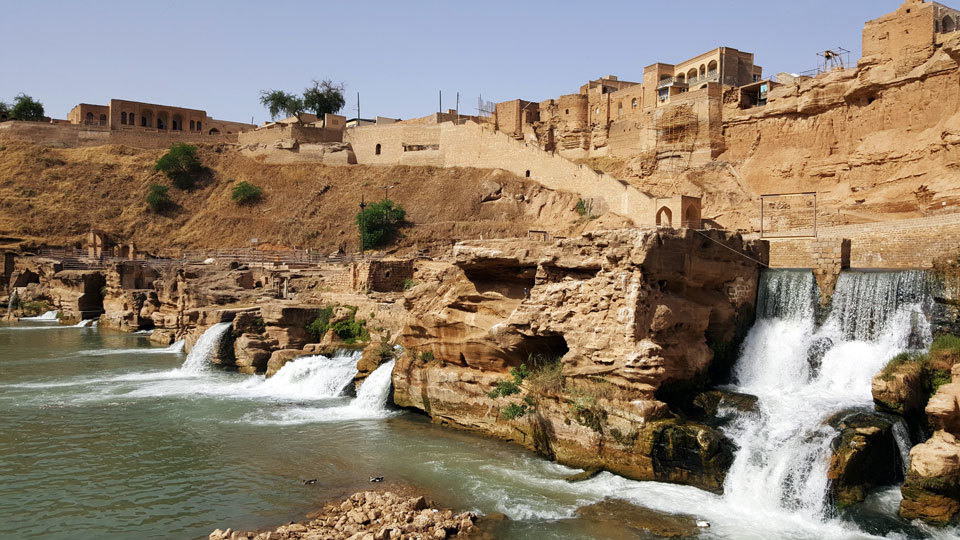
Shushtar is located in Khuzestan province. This region is situated on the slope of Zagros mountains and has unparalleled historical and tourist attractions. This county is known as one of the most important tourist areas of Iran and its mills and hydraulic systems, which have been registered in World Heritage, attracts many Iranian and foreign tourists.

shushtar-historical-hydraulic-system

shushtar-historical-hydraulic-system

Susa:

Susa is of the northern counties of Khuzestan province and its center is the city of Susa. The ancient Susa city has been of the centers of old civilization, of the most famous cities in the world, several thousand year old capital of Elam civilization and also the winter capital of the Achaemenian empire. Of its valuable historical monuments Chogha Zanbil ziggurat and the historical site of Susa can be mentioned; which are all registered as world heritage. Susa county, due to its special geographical location and valuable and unique historical and religious monuments, has a special place in the area of tourism

Susa

Susa

Gonbad-e Qabus Tower:

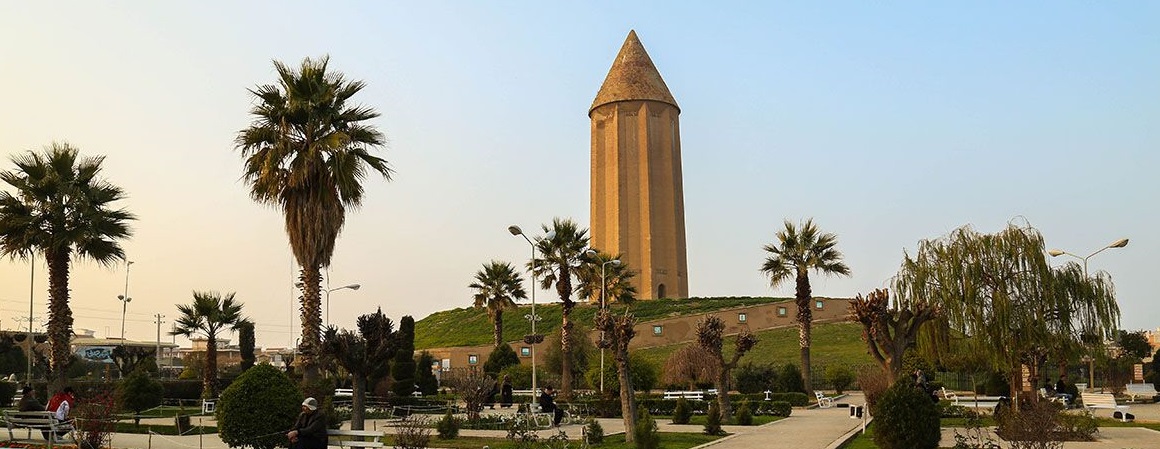
Tower of Gonbad-e Kabus is a historical and glorious construction and it is one of the attractions of Gonbad-e Kabus town in Gulistan province and it is located in a vast and beautiful park and attracts the eye of any observer from kilometers long. The Tower of Gonbad-e Kabus is a valuable relic left from the fourth Hijri century and is a remnant of Ziyarid dynasty in this land of Iran. This tower used to be the guide and landmark of travelers who used to pass this land. Tower of Gonbad-e Kabus is the largest brick tower of Iran and is one of the longest towers of the world.
Tower of Gonbad-e Kabus was registered in the 36th UNESCO conference as a world heritage.

Gonbad-e Qabus Tower

Gonbad-e Qabus Tower

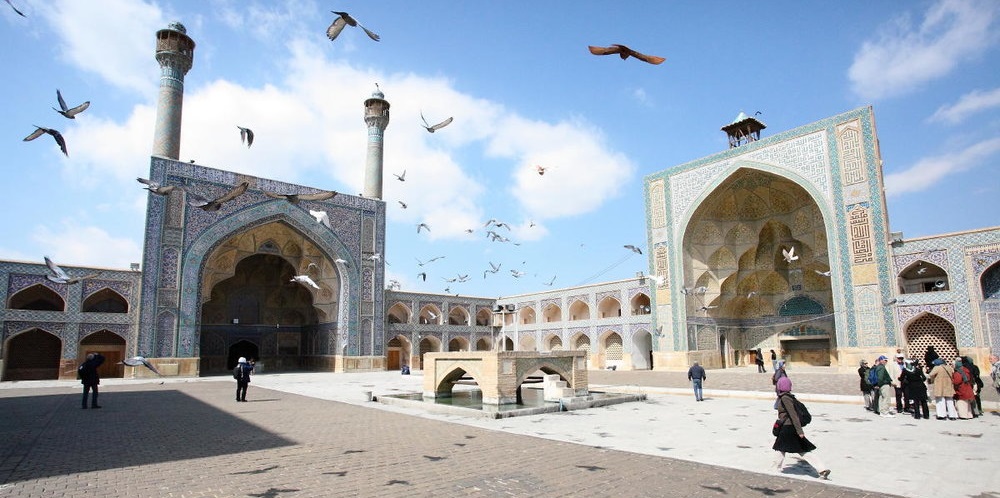
Jameh Mosque, Isfahan:

Isfahan is one of the famous cities in the world due to its ancient history and numerous ancient monuments. According to Andre Malraux, it is only comparable to two cities of Beijing and Florence. The major part of this city is related to the period after the advent of Islam, especially Seljuks and Safavid eras and precious monuments have remained among the mosques, inns, squares, bridges and streets from those periods.
Isfahan has sister city relationship with ten cities of Freiburg in Germany, Kuala Lumpur in Malaysia, Florence in Italy, Xi’an in China, St. Petersburg in Russia, Havanna in Kuba, Yash in Romania, Kuwait City and Barcelon in Spain.
Jom’e Mosque or Jameh Mosque of Isfahan is one of the most important and oldest religious monuments in Iran. This mosque presents a vast historical complex of 170 × 140 meters in dimension in the north east of Isfahan and beside the old square and today it includes different parts such as Nezam al-Molk Dome, Taj ol-Molk Dome, four-porch yard and its circle chambers, Mozaffari School and Aljayto Altar, each of which represents the process of Islamic architecture over different periods. Architecture of this mosque is admirable and it has a unique altar. Based on historical evidences, Jameh Mosque of Isfahan has been built on the ruins of an even older mosque which was built in Judea by resident Arabs of Tehran in the second Hijri century. The first mosque was established on the ruins of buildings related to the late Sassanid period.
The most important development plans took place in Buyids and Safavid era. The architecture of the mosque is in Razi Style. Jameh Mosque of Isfahan reflects Byzantine and classic art in the form of a traditional and Islamic building.
This mosque is one of the monuments registered in UNESCO World Heritage.

Jameh Mosque

Jameh Mosque

Pasargadae:

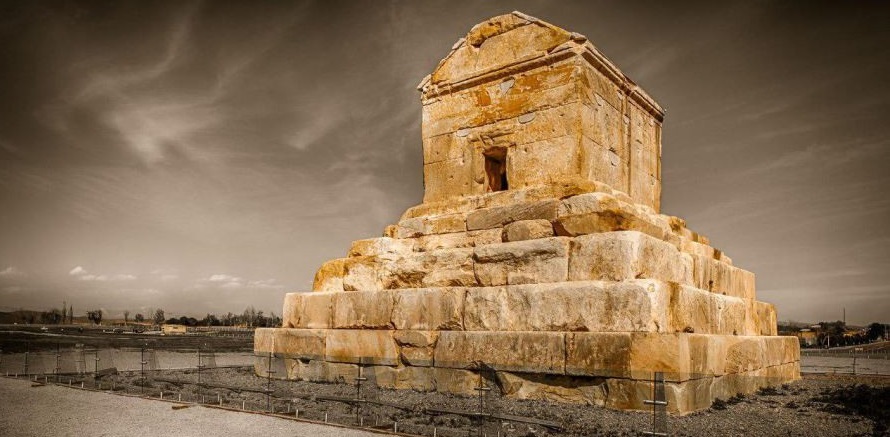
Pasargadae was the capital of the Achaemenid Empire under Cyrus the Great who had issued its construction (559–530 BC); it was also the location of his tomb. It was a city in ancient Persia, located near the city of Shiraz (in Pasargad County), and is today an archaeological site and one of Iran’s UNESCO World Heritage Sites.
Cyrus the Great began building the capital in 546 BC or later; it was unfinished when he died in battle, in 530 or 529 BC. The remains of the tomb of Cyrus’ son and successor Cambyses II have been found in Pasargadae, near the fortress of Toll-e Takht, and identified in 2006.

Pasargadae remained the capital of the Achaemenid Empire until Cambyses II moved it to Susa; later, Darius founded another in Persepolis. The archaeological site covers 1.6 square kilometres and includes a structure commonly believed to be the mausoleum of Cyrus, the fortress of Toll-e Takht sitting on top of a nearby hill, and the remains of two royal palaces and gardens. Pasargadae Persian Gardens provide the earliest known example of the Persian chahar bagh, or fourfold garden design (see Persian Gardens).

The Gate R, located at the eastern edge of the palace area, is the oldest known freestanding propylaeum. It may have been the architectural predecessor of the Gate of All Nations at Persepolis.

Pasargadae

Pasargadae

Arg-e Bam:

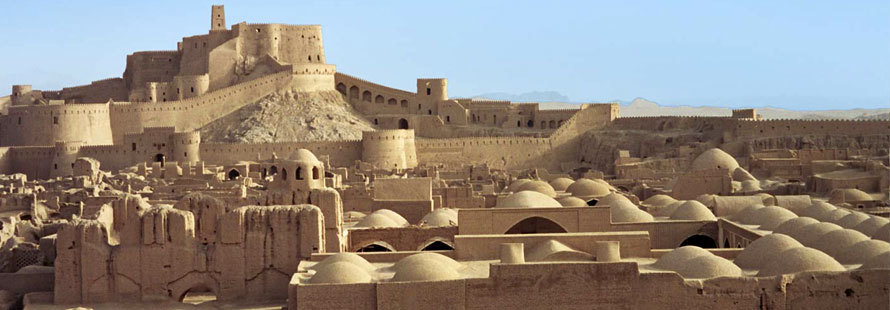
The Arg-e Bam was the largest adobe building in the world, located in Bam, a city in Kerman Province of southeastern Iran. It is listed by UNESCO as part of the World Heritage Site “Bam and its Cultural Landscape”. The origin of this enormous citadel on the Silk Road can be traced back to the Achaemenid Empire (sixth to fourth centuries BC) and even beyond. The heyday of the citadel was from the seventh to eleventh centuries, being at the crossroads of important trade routes and known for the production of silk and cotton garments.

The entire building was a large fortress containing the citadel, but because of the impressive look of the citadel, which forms the highest point, the entire fortress is named the Bam Citadel.

On December 26, 2003, the Citadel was almost completely destroyed by an earthquake, along with much of the rest of Bam and its environs. A few days after the earthquake, the President of Iran, Mohammad Khatami, announced that the Citadel would be rebuilt.

Arg-e Bam

Arg-e Bam

Takht-e Soleyman:

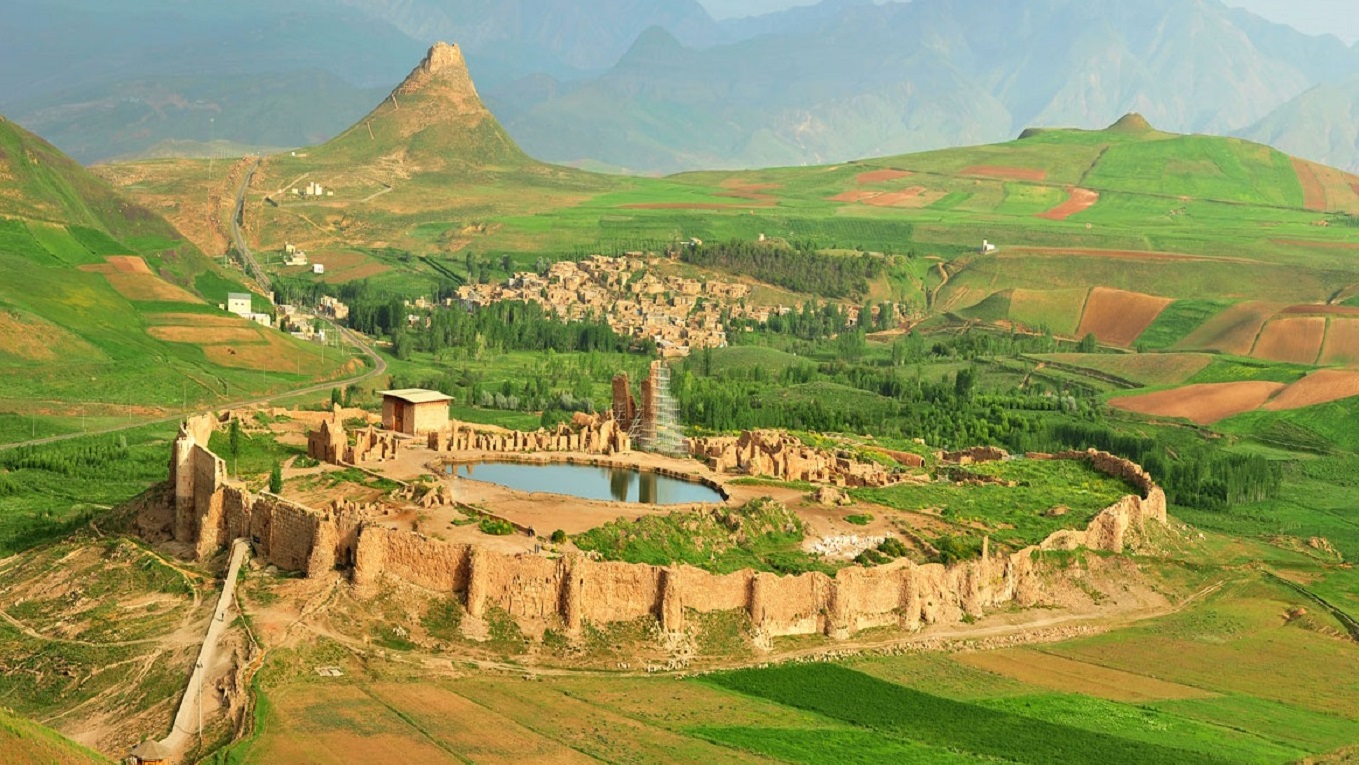
Takht-e Soleyman, also known as Azar Goshnasp, literally “the Fire of the Warrior Kings”, is an archaeological site in West Azarbaijan, Iran. It lies midway between Urmia and Hamadan, very near the present-day town of Takab, and 400 km (250 mi) west of Tehran.

The originally fortified site, which is located on a volcano crater rim, was recognized as a World Heritage Site in July 2003. The citadel includes the remains of a Zoroastrian fire temple built during the Sassanid period and partially rebuilt during the Ilkhanid period. This site got this Semitic name after the Arab conquest. This temple housed one of the three “Great Fires” or “Royal Fires” that Sassanid rulers humbled themselves before in order to ascend the throne. The fire at Takht-i Soleiman was called ādur Wishnāsp and was dedicated to the arteshtar or warrior class of the Sasanid.

Folk legend relates that King Solomon used to imprison monsters inside the 100 m deep crater of the nearby Zendan-e Soleyman “Prison of Solomon”. Another crater inside the fortification itself is filled with spring water; Solomon is said to have created a flowing pond that still exists today. Nevertheless, Solomon belongs to Semitic legends and therefore, the lore and namesake (Solomon’s Throne) should have been formed following Arab conquest of Persia. A 4th century [citation needed] Armenian manuscript relating to Jesus and Zarathustra, and various historians of the Islamic period, mention this pond. The foundations of the fire temple around the pond is attributed to that legend. Takht-E Soleyman appears on the 4th century Peutinger Map.

Archaeological excavations have revealed traces of a 5th-century BC occupation during the Achaemenid period, as well as later Parthian settlements in the citadel. Coins belonging to the reign of Sassanid kings, and that of the Byzantine emperor Theodosius II (AD 408-450), have also been discovered there.

Takht-e-Solyman-Iran

Takht-e-Solyman-Iran

The Armenian Monastic Ensembles:

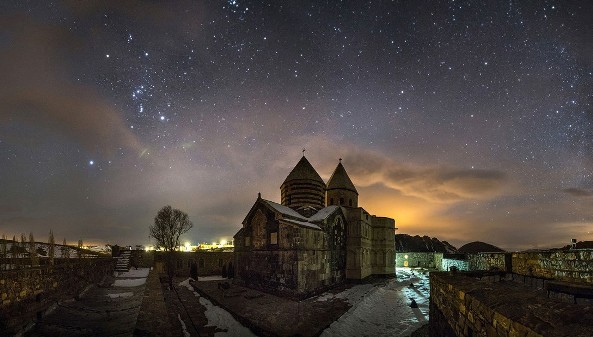
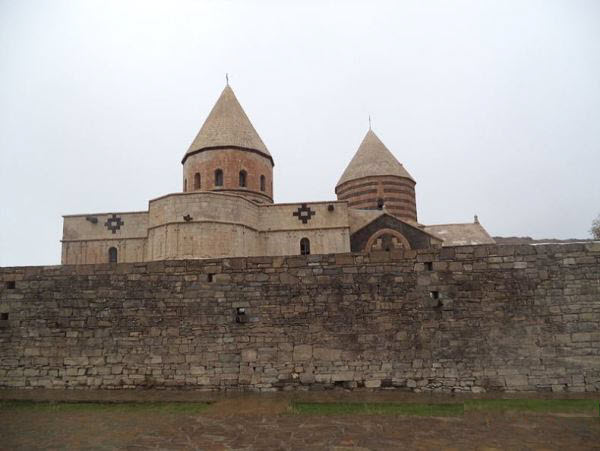
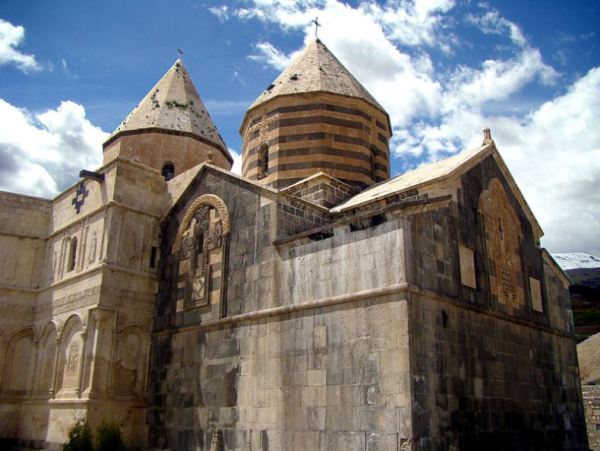
The Armenian Monastic Ensembles of Iran, located in the West Azerbaijan and East Azerbaijan provinces in Iran, is an ensemble of three Armenian churches that were established during the period between the 7th and 14th centuries A.D. The edifices—the St. Thaddeus Monastery, the Saint Stepanos Monastery, and the Chapel of Dzordzor—have undergone many renovations. These sites were inscribed as cultural heritages in the 32nd session of the World Heritage Committee on 8 July 2008 under the UNESCO’s World Heritage List. The three churches lie in a total area of 129 hectares (320 acres) and were inscribed under UNESCO criteria (ii), (iii), and (vi) for their outstanding value in showcasing Armenian architectural and decorative traditions, for being a major centre for diffusion of Armenian culture in the region, and for being a place of pilgrimage of the apostle St. Thaddeus, a key figure in Armenian religious traditions. They represent the last vestiges of old Armenian culture in its southeastern periphery. The ensemble is in a good state of preservation.

Armenian Monastic Ensembles

Armenian Monastic Ensembles

The Bisotun Relief:

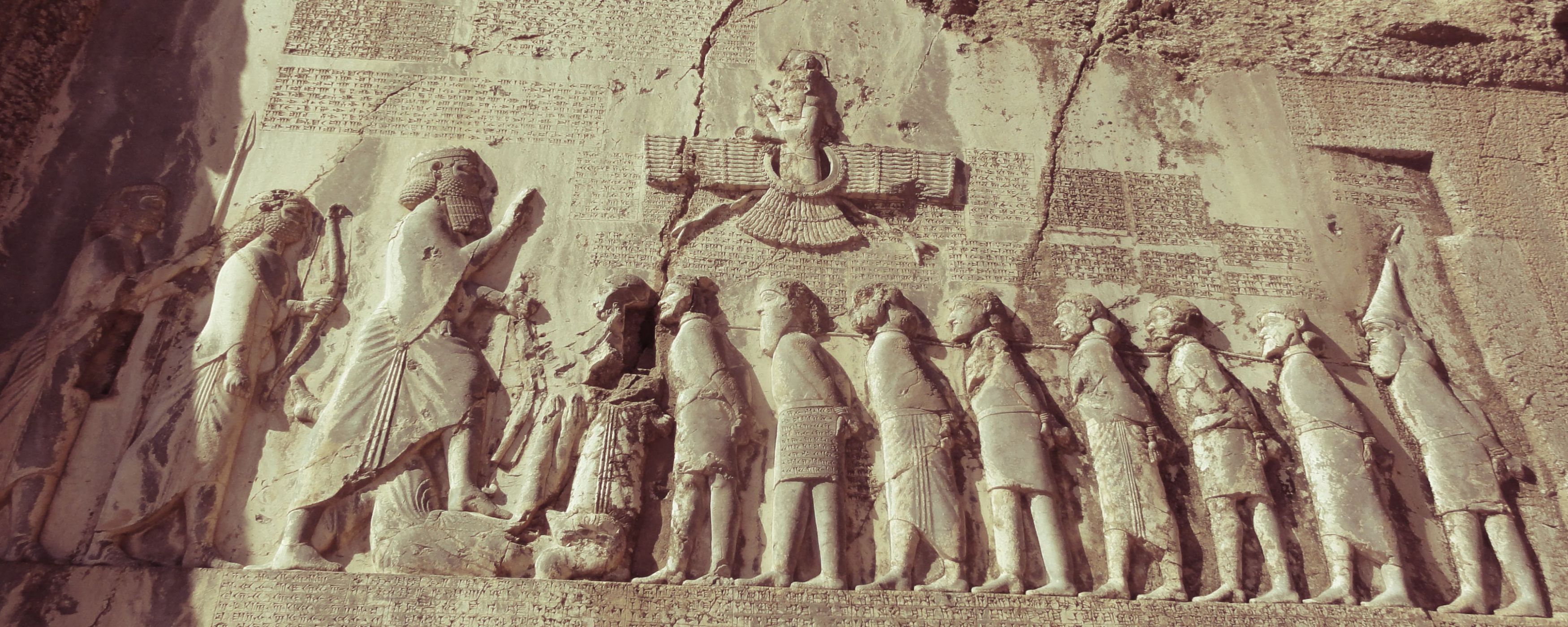
The Behistun Inscription (also Bisotun, Bistun or Bisutun ‎‎, Old Persian: Bagastana, meaning “the place of god”) is a multilingual inscription and large rock relief on a cliff at Mount Behistun in the Kermanshah Province of Iran, near the city of Kermanshah in western Iran. It was crucial to the decipherment of cuneiform script.

Authored by Darius the Great sometime between his coronation as king of the Persian Empire in the summer of 522 BC and his death in autumn of 486 BC, the inscription begins with a brief autobiography of Darius, including his ancestry and lineage. Later in the inscription, Darius provides a lengthy sequence of events following the deaths of Cyrus the Great and Cambyses II in which he fought nineteen battles in a period of one year (ending in December 521 BC) to put down multiple rebellions throughout the Persian Empire. The inscription states in detail that the rebellions, which had resulted from the deaths of Cyrus the Great and his son Cambyses II, were orchestrated by several impostors and their co-conspirators in various cities throughout the empire, each of whom falsely proclaimed kinghood during the upheaval following Cyrus’s death.

Darius the Great proclaimed himself victorious in all battles during the period of upheaval, attributing his success to the “grace of Ahura Mazda”.

The inscription includes three versions of the same text, written in three different cuneiform script languages: Old Persian, Elamite, and Babylonian (a variety of Akkadian). The inscription is to cuneiform what the Rosetta stone is to Egyptian hieroglyphs: the document most crucial in the decipherment of a previously lost script.

The inscription is approximately 15 metres high by 25 metres wide and 100 metres up a limestone cliff from an ancient road connecting the capitals of Babylonia and Media (Babylon and Ecbatana, respectively). The Old Persian text contains 414 lines in five columns; the Elamite text includes 593 lines in eight columns, and the Babylonian text is in 112 lines. The inscription was illustrated by a life-sized bas-relief of Darius I, the Great, holding a bow as a sign of kingship, with his left foot on the chest of a figure lying on his back before him. The supine figure is reputed to be the pretender Gaumata. Darius is attended to the left by two servants, and nine one-meter figures stand to the right, with hands tied and rope around their necks, representing conquered peoples. Faravahar floats above, giving his blessing to the king. One figure appears to have been added after the others were completed, as was Darius’s beard, which is a separate block of stone attached with iron pins and lead.

bisotun

bisotun

Meymand Village:

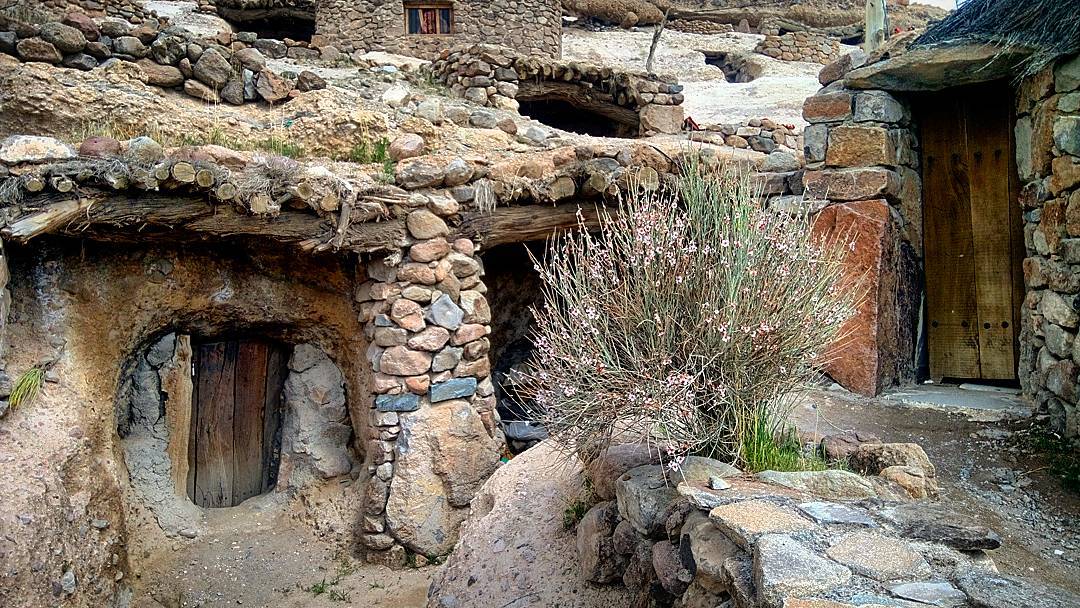
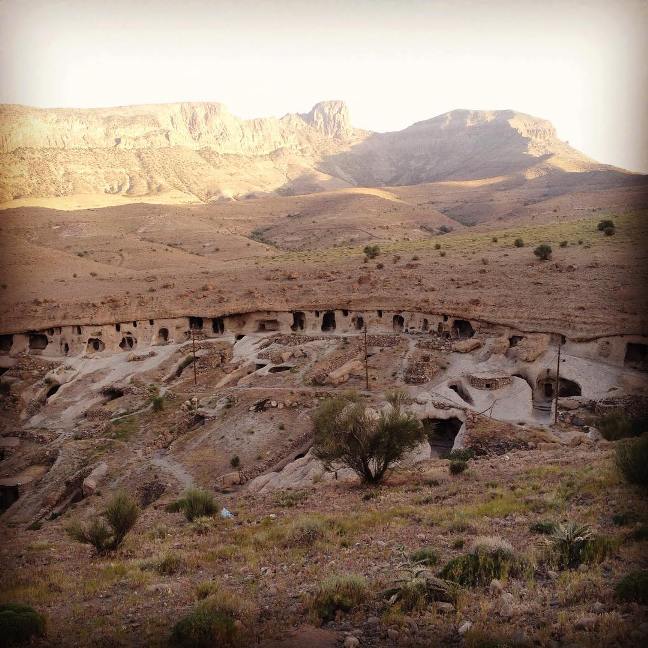
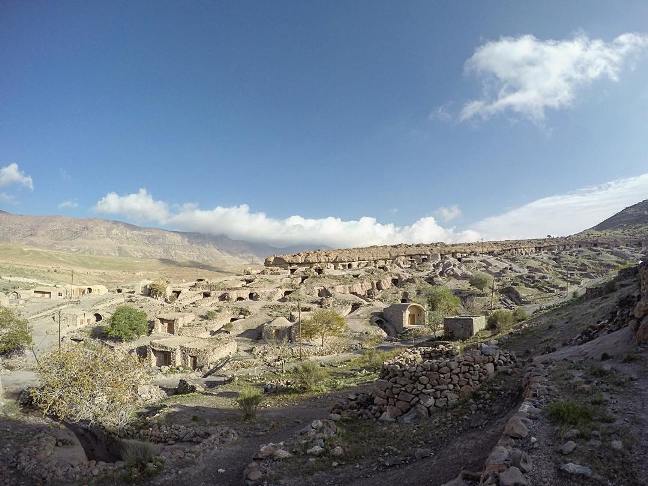
Meymand (Romanized as Maymand, Meimand and Maimand) is a village in Meymand Rural District, in the Central District of Shahr-e Babak County, Kerman Province, Iran. At the 2006 census, its population was 673, in 181 families.

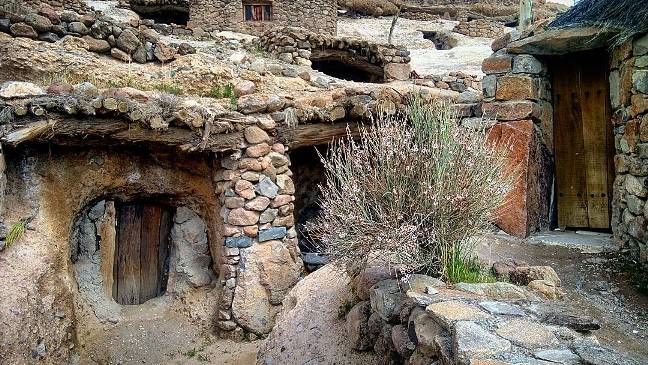
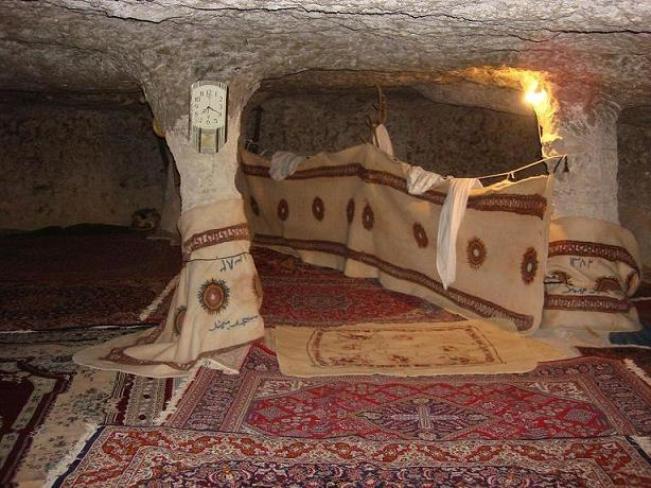
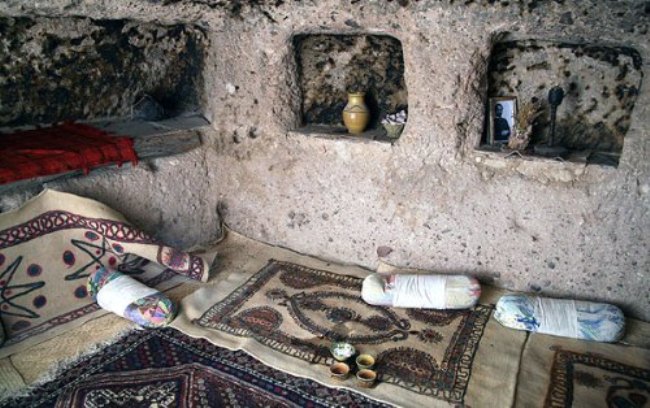
Meymand is a very ancient village which is located near Shahr-e Babak city in Kerman Province, Iran. Meymand is believed to be a primary human residence in the Iranian Plateau, dating back to 12,000 years ago. Many of the residents live in the 350 hand-dug houses amid the rocks, some of which have been inhabited for as long as 3,000 years. Stone engravings nearly 10,000 years old are found around the village, and deposits of pottery nearly 6,000 years old attest to the long history of settlement at the village site.

Regarding the origin of these structures two theories have been suggested: According to the first theory, this village was built by a group of the Aryan tribe about 800 to 700 years B.C. and at the same time with the Median era. It is possible that the cliff structures of Meymand were built for religious purposes. Worshippers of Mithras believe that the sun is invincible and this guided them to consider mountains as sacred. Hence the stone cutters and architects of Meymand have set their beliefs out in the construction of their dwellings. Based on the second theory the village dates back to the second or third century A.D. During the Arsacid era different tribes of southern Kerman migrated in different directions. These tribes found suitable places for living and settled in those areas by building their shelters which developed in time into the existing homes. The existence of a place known as the fortress of Meymand, near the village, in which more than 150 ossuaries (bone-receptacle) of the Sassanid period were found, strengthens this theory.

Living conditions in Meymand are harsh due to the aridity of the land and to high temperatures in summers and very cold winters. [citation needed] The local language contains many words from the ancient Sassanid and Pahlavi languages.

In 2005, Meymand was awarded the UNESCO-Greece Melina Mercouri International Prize for the Safeguarding and Management of Cultural Landscapes (about $20,000).

On 4 July 2015, the village was added to the UNESCO World Heritage Sites list.

meymand

meymand

The Golestan Palace:

The Golestan Palace (‎‎Kākh-e Golestān) is the former royal Qajar complex in Iran’s capital city, Tehran.

One of the oldest historic monuments in the city of Tehran, and of world heritage status, the Golestan Palace belongs to a group of royal buildings that were once enclosed within the mud-thatched walls of Tehran’s arg (“citadel”). It consists of gardens, royal buildings, and collections of Iranian crafts and European presents from the 18th and 19th centuries.

Golestan-Palace-Tehran

Golestan-Palace-Tehran

Sheikh Safi al-Din Khānegāh and Shrine Ensemble:

Sheikh Safi al-Din Khānegāh and Shrine Ensemble is the tomb of Sheikh Safi-ad-din Ardabili located in Ardabil, Iran. In 2010, it was registered on the UNESCO World Heritage List.
Sheikh Safi, an eminent leader of an Islamic Sufi order established by the Safavids, was born in Ardabil where this complex is located. The Safavids valued the tomb-mosque form, and the tomb with its mausoleum and prayer hall is located at a right angle to the mosque. The buildings in the complex surround a small inner courtyard (31 by 16 meters). The complex is entered through a long garden.
The Mausoleum of Sheikh Safi, in Ardabil, was first built by his son Sheikh Sadr al-Dīn Mūsā, after Sheikh Safi’s death in 1334. It was constructed between the beginning of the 16th century and the end of the 18th century. The mausoleum, a tall, domed circular tower decorated with blue tile and about 17 meters in height; beside it is the 17th-century Porcelain House preserving the sanctuary’s ceremonial wares. Also part of the complex are many sections that have served a variety of functions over the past centuries, including a library, a mosque, a school, mausolea, a cistern, a hospital, kitchens, a bakery, and some offices. It incorporates a route to reach the shrine of the sheikh divided into seven segments, which mirror the seven stages of Sufi mysticism. Various parts of the mausoleum are separated by eight gates, which represent the eight attitudes of Sufism.

Several parts were gradually added to the main structure during the Safavid dynasty. A number of Safavid sheikhs and harems and victims of the Safavids’ battles, including the Battle of Chaldiran, have been buried at the site.

safiodin-ardebili

safiodin-ardebili

The Lut Desert:

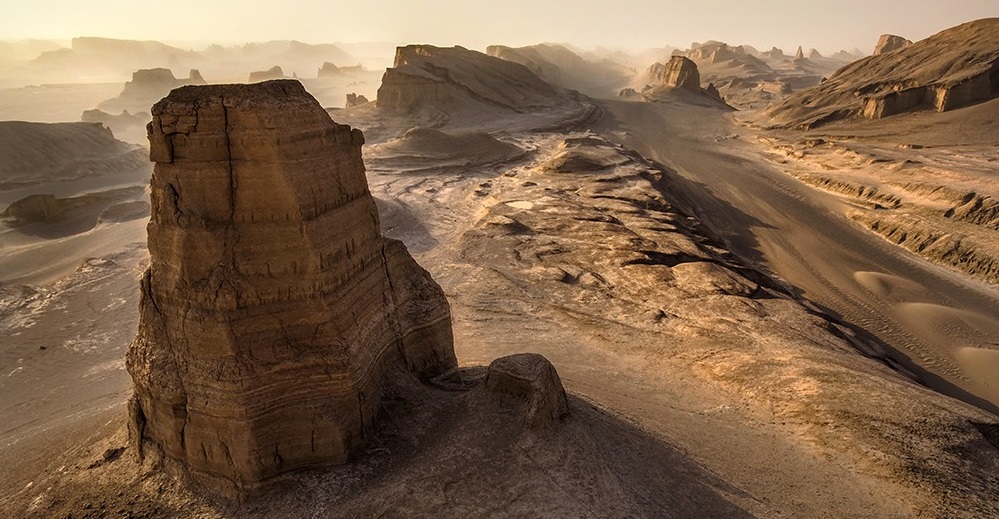
The Lut Desert, widely referred to as Dasht-e Lut (“Emptiness Plain”), is a large salt desert located in the provinces of Kerman and Sistan and Baluchistan, Iran. It is the world’s 27th-largest desert, and was inscribed on UNESCO’s World Heritage List on July 17, 2016. The surface of its sand has been measured at temperatures as high as 70 °C (159 °F), making it one of the world’s driest and hottest places.

lut-desert

lut-desert

Soltaniyeh Dome:

Soltaniyeh (Romanized as Solţānīyeh, Solţāneyyeh, Sultaniye, and Sultānīyeh; also known as Sa‘īdīyeh; Latin: Soltania/ Sultania) is the capital city of Soltaniyeh District of Abhar County, Zanjan Province, Azerbaijan, northwestern Iran.
Soltaniyeh, located some 240 kilometres (150 mi) to the north-west of Tehran, was built as the capital of Mongol Ilkhanid rulers of Iran in the 14th century. Its name which refers to the Islamic ruler title sultan translates loosely as “the Regal”.

In 2005, UNESCO listed Soltaniyeh as one of the World Heritage Sites. The road from Zanjan to Soltaniyeh extends until it reaches to the Katale khor cave.

William Dalrymple notes that Öljaitü intended Soltaniyeh to be “the largest and most magnificent city in the world” but that it “died with him” and is now “a deserted, crumbling spread of ruins.

Soltaniyeh-dome-zanjan

Soltaniyeh-dome-zanjan

Persian Gardens:

The tradition and style of garden design represented by Persian gardens or Iranian gardens has influenced the design of gardens from Andalusia to India and beyond. The gardens of the Alhambra show the influence of Persian garden philosophy and style in a Moorish palace scale, from the era of al-Andalus in Spain. Humayun’s Tomb and Taj Mahal have some of the largest Persian gardens in the world, from the era of the Mughal Empire in India.
Persian gardens may originate as early as 4000 BCE. [dubious – discuss] [verification needed] Decorated pottery of that time displays the typical cross plan of the Persian garden. The outline of Pasargadae, built around 500 BCE, is viewable today.

During the reign of the Sasanian Empire (third to seventh century), and under the influence of Zoroastrianism, water in art grew increasingly important. This trend manifested itself in garden design, with greater emphasis on fountains and ponds in gardens.

During the Islamic period, the aesthetic aspect of the garden increased in importance, overtaking utility. During this time, aesthetic rules that govern the garden grew in importance. An example of this is the chahār bāgh, a form of garden that attempts to emulate the Garden of Eden, with four rivers and four quadrants that represent the world. The design sometimes extends one axis longer than the cross-axis, and may feature water channels that run through each of the four gardens and connect to a central pool.

The invasion of Persia by the Mongols in the thirteenth century led to a new emphasis on highly ornate structure in the garden. Examples of this include tree peonies and chrysanthemums. [clarification needed] The Mongols then carried a Persian garden tradition to other parts of their empire (notably India).

Babur introduced the Persian garden to India. The now unkempt Aram Bagh, Agra was the first of many Persian gardens he created. The Taj Mahal embodies the Persian concept of an ideal paradise garden.

The Safavid dynasty (seventeenth to eighteenth century) built and developed grand and epic layouts that went beyond a simple extension to a palace and became an integral aesthetic and functional part of it. In the following centuries, European garden design began to influence Persia, particularly the designs of France, and secondarily that of Russia and the United Kingdom. Western influences led to changes in the use of water and the species used in bedding.

Traditional forms and style are still applied in modern Iranian gardens. They also appear in historic sites, museums and affixed to the houses of the rich.

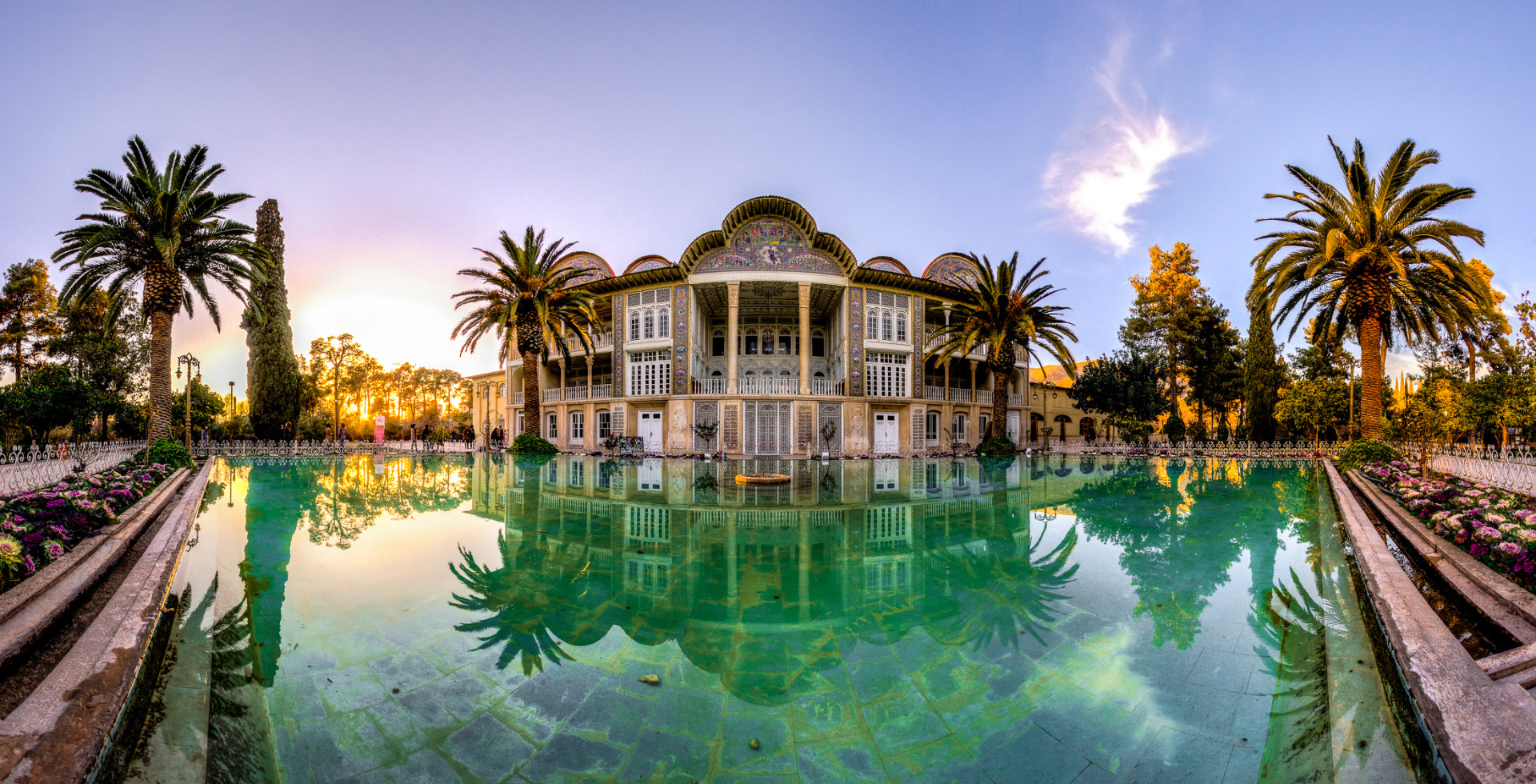
Elements of the Persian garden, such as the shade, the jub, and the courtyard style hayāt in a public garden in Shiraz.
Sunlight and its effects were an important factor of structural design in Persian gardens. Textures and shapes were specifically chosen by architects to harness the light.

Iran’s dry heat makes shade important in gardens, which would be nearly unusable without it. Trees and trellises largely feature as biotic shade; pavilions and walls are also structurally prominent in blocking the sun.

The heat also makes water important, both in the design and maintenance of the garden. Irrigation may be required, and may be provided via a form of underground tunnel called a qanat, that transports water from a local aquifer. Well-like structures then connect to the qanat, enabling the drawing of water. Alternatively, an animal-driven Persian well would draw water to the surface. Such wheel systems also moved water around surface water systems, such as those in the chahar bāgh style. Trees were often planted in a ditch called a juy, which prevented water evaporation and allowed the water quick access to the tree roots.

The Persian style often attempts to integrate indoors with outdoors through the connection of a surrounding garden with an inner courtyard. Designers often place architectural elements such as vaulted arches between the outer and interior areas to open up the divide between them.

Eram-Garden-Shiraz-HD

Eram-Garden-Shiraz-HD

History of Persia (Beginning – Revolution)

C. 8000-7500 BC – Pre-Pottery Neolithic period c. 8000 BC – First settlements on the Iranian plateau; the earliest domestication of sheep and goats in Iran c. 7500-5000 BC – Pottery

Neolithic period c. 6300 BC – First evidence of copper smelting in Iran c. 5000-3500 BC – Chalcolithic period c. 5000 BC – A wine jar discovered at the Hajji Firuz Mound proves to be the world’s oldest evidence of wine-making c. 4000 BC – Sialk Mounds

(pi 65) yield some of the most ancient remains of settled life on the Iranian plateau c. 3500-2000 BC – Early Bronze Age

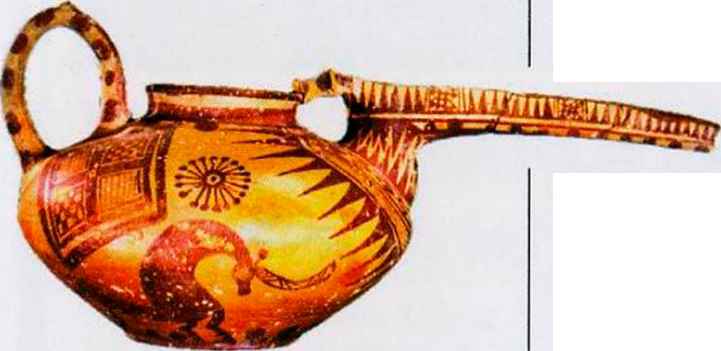
By the end of the 4th millennium BC, craftsmen had made a great progress in pottery; producing the most vivid and lively painted ceramics, found at the Sialk Mounds and Susa. This pottery is decorated with geometric abstractions, showing a naive but strong expression of the lives of its makers.
sialk-kashan-earthenware
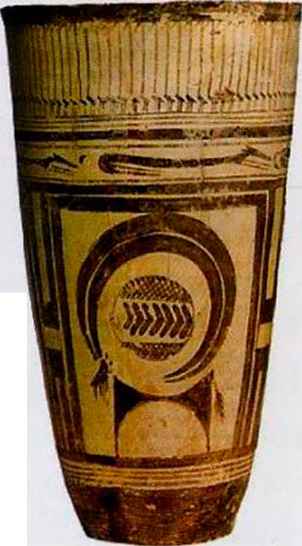
sialk-kashan-earthenware

sialk-kashan-painting

sialk-kashan-painting

Early Civilizations in Iran
Man’s presence on the Iranian plateau during the Paleolithic and Mesolithic ages has not yet been properly studied. Life during the Neolithic period, however, is much better known. Considerable geological and natural evidence has proven that Iran was home to one of mankind’s first major cultures, ahead of every other part of the world except Egypt, Mesopotamia, and India. Significant shifts in tool manufacture, settlement patterns, and subsistence methods, including domestication of plants and animals, characterize the Neolithic Iranian settlements, all of which date wholly or in part from the 8th and 7th millennia. Iranians were probably the first to cultivate wheat and dates, and to tame camels and sheep. The existence of rich mines in Iran can be an indication that metal was excavated and processed here since ancient times. One of the recently excavated archaeological sites – Arisman (p201) – has proved to be one of the world’s earliest centers of the metallurgical industry. By approximately the 6th millennium BC, village farming was widespread over much of the Iranian plateau and in lowland Khuzestan. Among others, Sialk [pi65) on the rim of the central salt desert has yielded evidence of fairly sophisticated patterns of agricultural life. Having begun in the Paleolithic era, Iran’s first vigorous growth had developed by the 3rd millennium BC into a civilization of great sophistication – Elam.
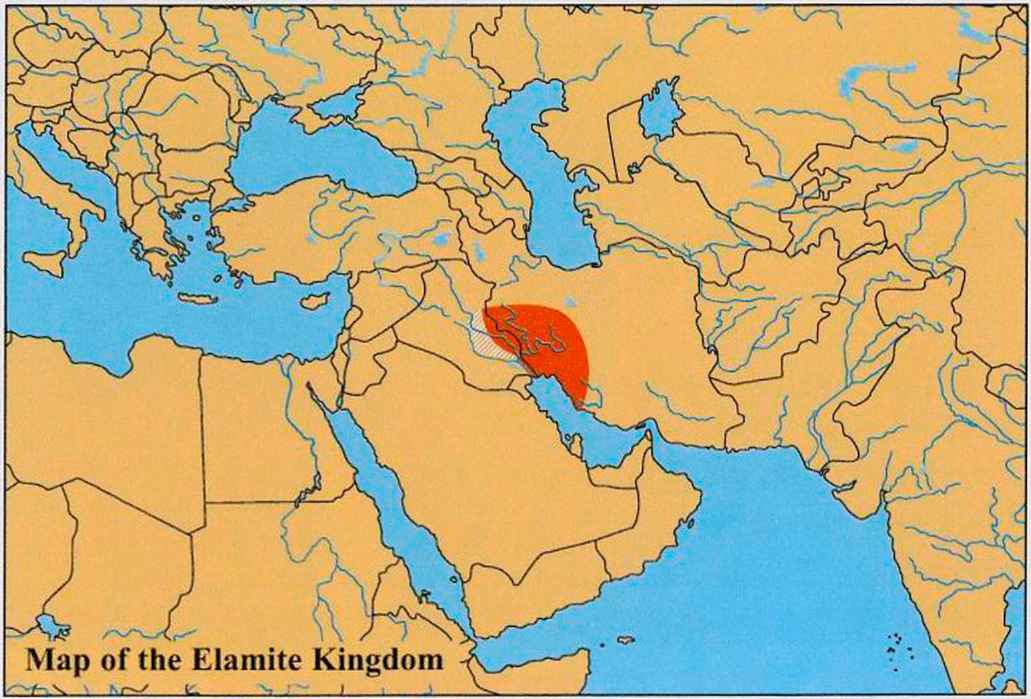
iranian-plateau

1000-bce-judaism

1000-bce-judaism

C. 2700-1500 BC -Old Elamite period 2348 BC -Year of the Flood, 600 years after the birth of Noah, as will be reckoned by Biblical chronology c. 1700 BC-Judaism is founded by Abraham c. 1500-1000 BC-Middle Elamite period c. 1450-1250 BC – Iron Age I c. 1340-1300 BC – A new capital and religious complex, including a ziggurat, is built by King Untash-Gal at Chogha-Zanbil c. 1250-800 BC – Iron Age II c. 1100 BC – Nebuchadrezzar I of Babylon invades Elam, plundering the countryside and destroying Susa; Zoroaster founds a faith whose sacred literature will be the Zend-Avesta; The Iron Age that began more than 400 years before in the Near East moves to Europe 1000-539 BC – Neo-Elamite period 9th century BC – First mention of the Iranians in Assyrian texts 961-931 BC – Rule of Judea’s King, Prophet Solomon c 800 BC – Hasanlu, a Mandaean fortified city in northwestern Iran is destroyed

800-550 BC – Iron Age III

Elam BC
In the late 4th and early 3rd a brilliant ancient culture came into being on the Iranian territory – Elam, “The Land of Gods”. The origin of the Elamites is unclear. Their earliest kings reigned around 2700 BC. These early rulers were succeeded by the Awan (Shustar) dynasty, which was then replaced by a new ruling house, the Simash dynasty. About the middle of the 19th century BC, power in Elam passed to a new dynasty, that of Eparti.

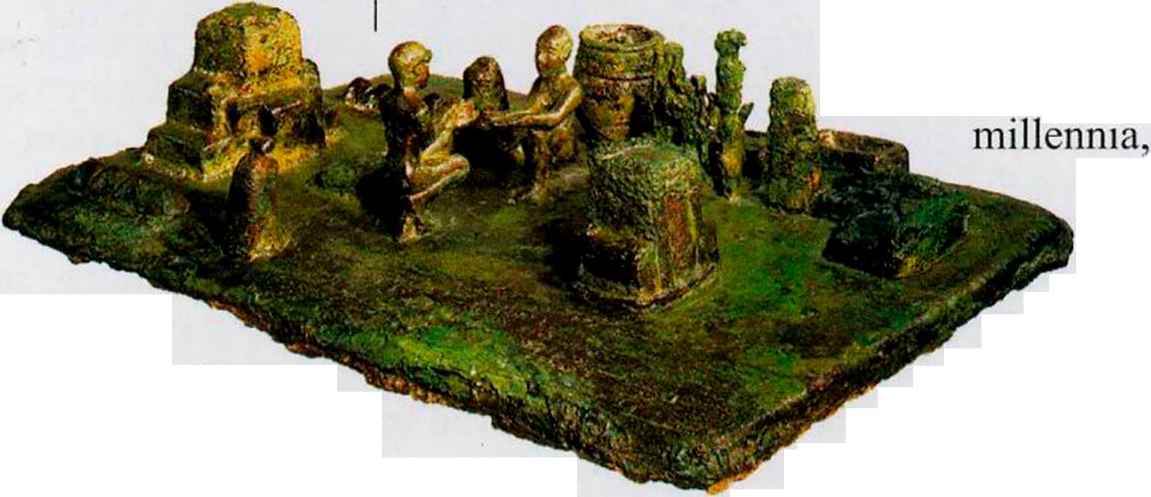
This Elamite bronze tableau is the only three-dimensional example of worship in progress in the ancient Middle East (now in the Louvre)
elamites-glass-iran

elamites-glass-iran

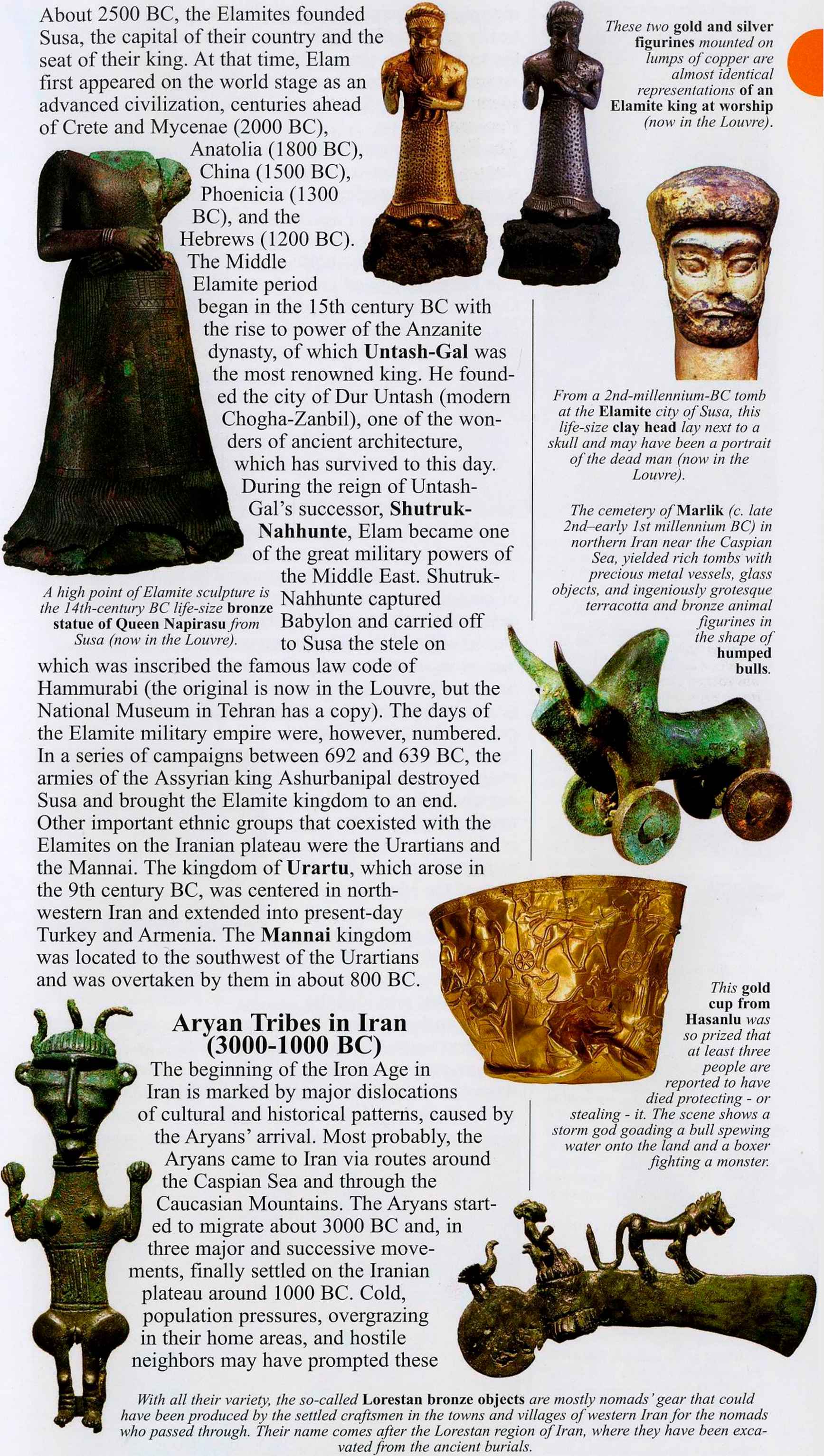
These two gold and silver figurines mounted on lumps of copper are almost identical representations of an Elamite king at worship (now in the Louvre).

From a 2nd-millennium-BC tomb at the Elamite city of Susa, this life-size clay head lay next to a skull and may have been a portrait of the dead man (now in the Louvre).

The cemetery of Marlik (c. late 2nd—early 1st millennium BC) in northern Iran near the Caspian Sea, yielded rich tombs with precious metal vessels, glass objects, and ingeniously grotesque terracotta and bronze animal __ figurines in the shape of m. humped 4 bulls.

Died protecting – or stealing – it. The scene shows a storm god goading a bull spewing water onto the land and a boxer fighting a monster.
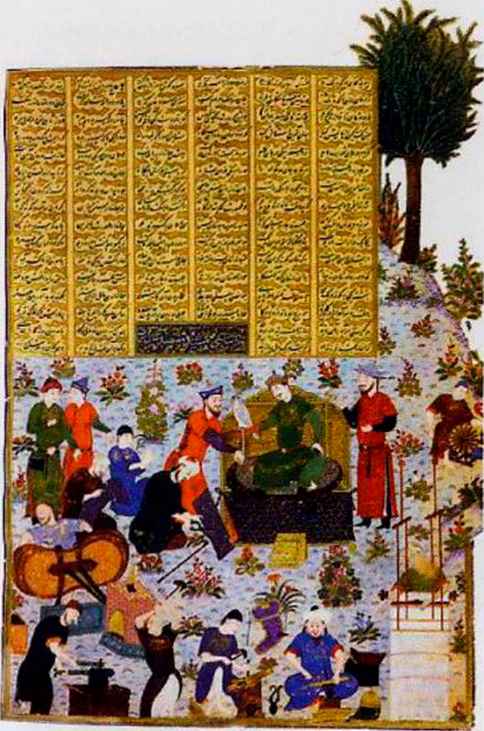
iranian-king-jamshid

iranian-king-jamshid

According to Iranian myths, King Jamshid led his people from lran-Vij (a mythical place, probably the last common motherland oflndo-lranians) to Iran. He is reported to have shoved his sword into the earth three times, and made it expand thrice as big during three periods – the myth that has prompted the scholars that Aryan migrations were held in three major waves.

According to Iranian myths, King Jamshid led his people from lran-Vij (a mythical place, probably the last common motherland of lndo-lranians) to Iran. He is reported to have shoved his sword into the earth three times, and made it expand thrice as big during three periods – the myth that has prompted the scholars that Aryan migrations were held in three major waves.

825 BC – Rise of the Medes

776 BC – Greece’s first recorded Olympic games are held 753 BC – The city of Rome is founded 728 BC – Deioces founds the Median Empire 644 BC – Assyrian king Ashurbanipal sacks Susa, ending Elamite supremacy 633-584 BC – Cyaxares 612-606 BC-Medes and Babylonians overthrow Assyrian Empire; destruction of Nineveh 584-550 BC – Astyages 565 BC – Daoism is founded by the Chinese philosopher Lao Zi 550 BC – Astyages is defeated by his grandson, future Achaemenid king Cyrus II
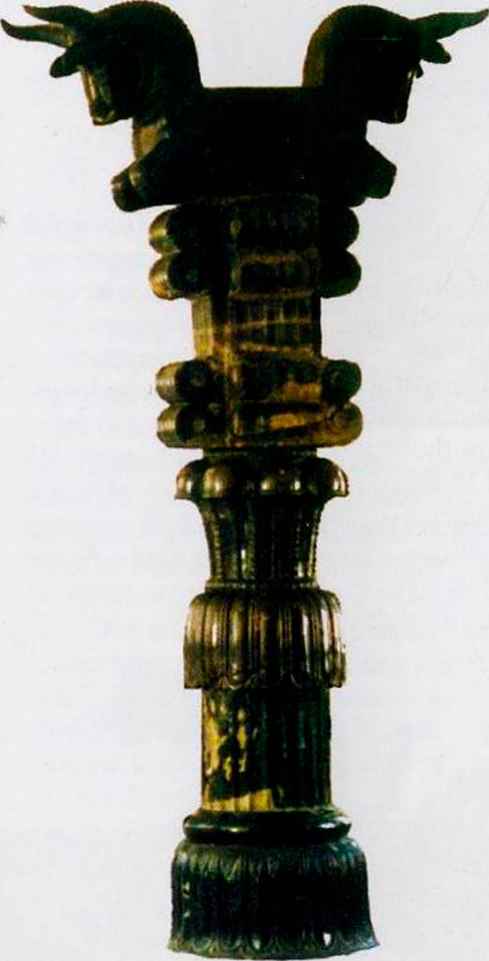
persepolis-palace-darius

persepolis-palace-darius

Parts of the column from Persepolis, a complex of palaces built by Darius the Great and his successors, almost exclusively to stage the ceremonies of the Persian New Year (today in the National Museum in Tehran).

Migrations. The natives of the Iranian plateau enthusiastically greeted the newcomers, who brought with them the technologies that could help them to survive. Among the Aryan tribes in Iran, three major groups are identifiable – the Scythians, the Medes, and the Persians.

The Scythians established themselves in the northern Zagros Mountains and clung to a semi nomadic existence in which raiding was the chief form of economic enterprise.

The Medes settled over a huge area, reaching as far as modern Tabriz in the north and Isfahan in the south. The Persians settled in three areas: to the south of Lake Orumiyeh, on the northern border of the Elamite kingdom, and in the environs of modern Shiraz, where they established their main settlements, to which they gave the name Parsa (or Persia, in Greek). Gradually Iranian tribes, especially under the pressure of constant Assyrian attacks, started to reorganize themselves into kingdoms and then empires. The first-known Iranian empire was that of the Medes.

Median Empire BC
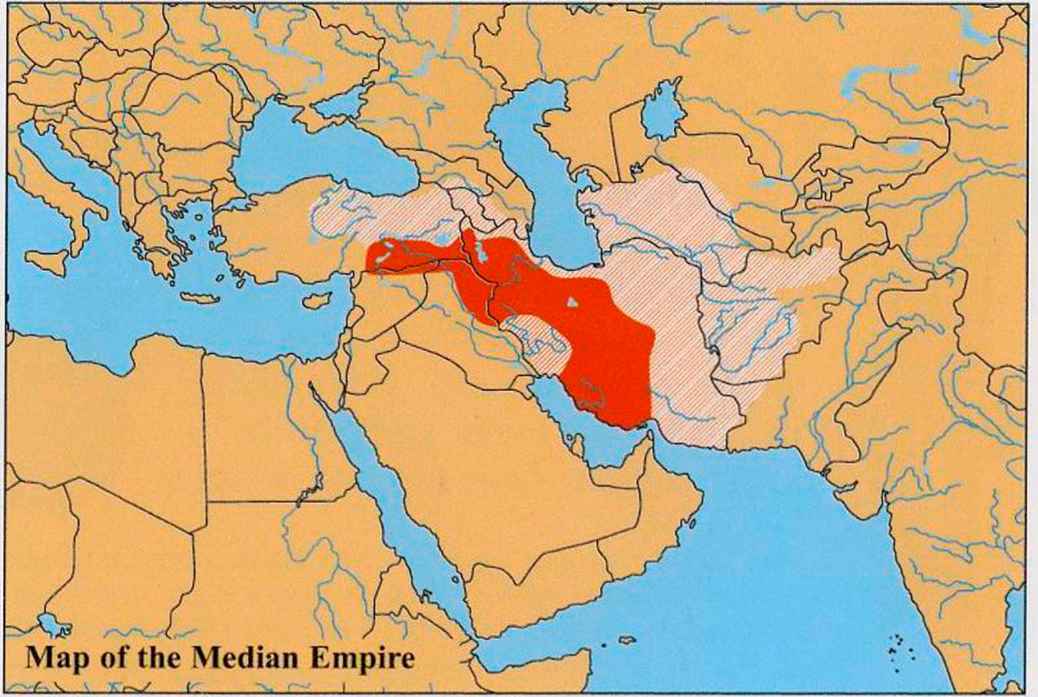
The Median Empire started with Deioces’s rule. He organized his realm into several provinces and created a strong army to stop the Assyrians. The military genius of his son and successor, Phraortes, helped the Medes defeat the Assyrians. After Phraortes, there was a short period of Scythian domination over the Medes until they were overthrown by Cyaxares, who induced Scythian kings to get so drunk that they were then easily slain. Cyaxares, the greatest king of the Medes, reorganized the army and utterly defeated the Assyrians. At his death, the Medes controlled vast territories, stretching from Anatolia in modern Turkey to the area of Tehran as well as all of southwestern Iran. The last king of the Medes, Astyages, was perhaps the first unjust ruler of the country. Moreover, the sim- A sold Mede rhyton is one of the rarest artifacts of the Mede period plastic lire style or tne (today in the Reza Abbasi Museum Aryans that provided in Tehran).

Medes with their amazing conquests, was replaced with an extravagant Mesopotamian court life. The Median Empire started to decline. The Persian Achaemenid dynasty, tracing their origin from Achaemenes, in Greek, were gaining power.
median-empire-map

median-empire-map

Map of the Median Empire
median-empire

median-empire

Achaemenid Empire B
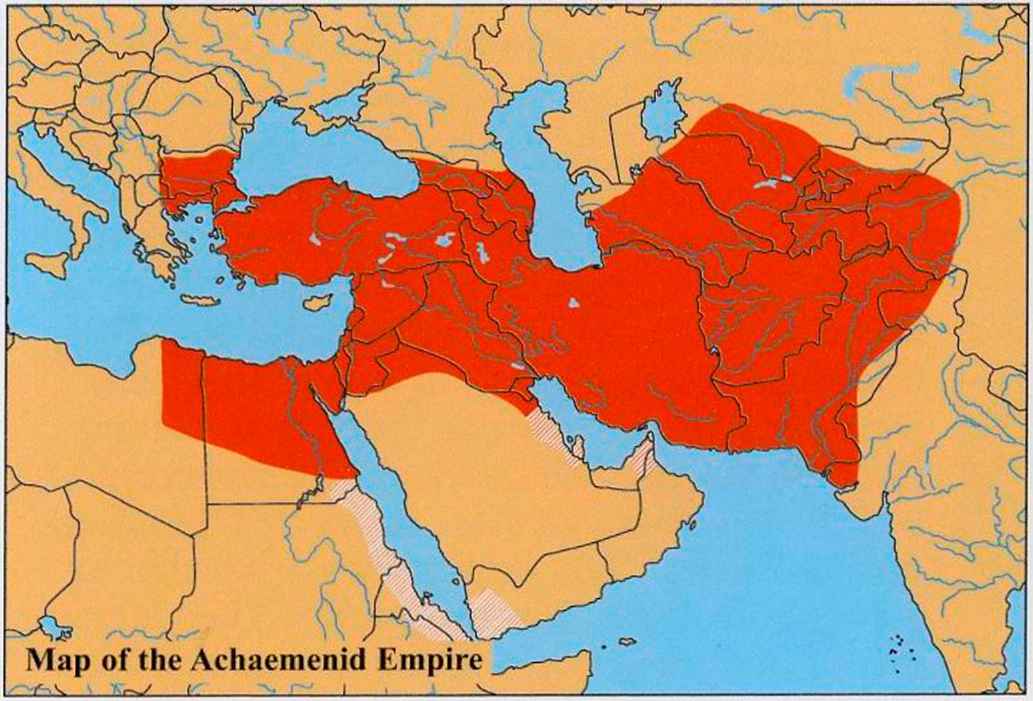
Cyrus the Great was the first important Achaemenid ruler. By the time he became king, Persia was already a large domain, but Cyrus aspired to nothing less than the conquest of the entire known world. In a campaign that lasted for less than two years, he took Elam, Media, Lydia, and several Greek cities on the Ionian coast. Having strengthened his power, Cyrus besieged and captured Babylon and released the Jews who had been held captive there, thus earning immortality in the Book of Isaiah. His territories in the east also were great and stretched as far as the Hindu Kush in present-day Afghanistan. Cyrus was a world conqueror unlike any other. Not only Persians but even Greeks held him in the sentiments of esteem and even awe, and it was no accident that Xenophon praised Cyrus as an ideal monarch. Cyrus died in battle, while putting down a revolt, and was buried in Pasargadae, the capital he had founded. Cyrus’s son and successor, Cambyses II, was less successful. However, he managed to invade Egypt and create the dynasty of Persian kings there. He was killed (or died of a self-inflicted wound) during a revolt led by a priest, Gaumata, who held the throne until overthrown by a member of a collateral branch of the Achaemenid family, Darius I. Darius I, another “Great” of the Achaemenid dynasty, finished Cyrus’s incomplete job of invasion, having conquered Northern India and some parts of Greece, as well as the whole of Asia Minor.

Important Achaemenid Kings:

Cyrus II, The Great – 559-530 BC Cambysus II – 530-522 BC Darius I, The Great – 522-486 BC Xerxes I – 486-465 BC Artaxerxes I – 465-425 BC Darius III – 336-330 BC

c. 559 BC – Croesus, king of Lydia, invents metal coinage 550 BC – Persian Empire, the first major Indo-European power, is established by Cyrus the Great 549 BC – Armenia becomes a Persian satrapy after 63 years under the kings of Media 546 BC – Cyrus defeats Croesus 539 BC – Cyrus conquers Babylon and Syria

Cyrus’s Mausoleum in Pasargadae is an early example of Achaemenid monumental art (photo by Naser).
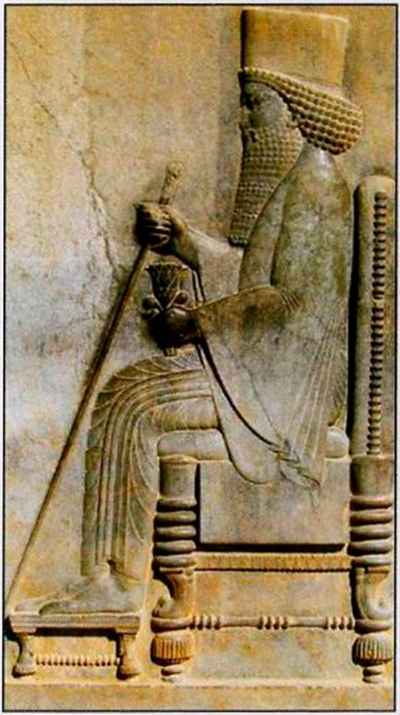
median-empire

median-empire

528 BC – Buddhism has its beginnings in India

525 BC – Cambysus conquers Egypt; he learns that his throne has been usurped by a “false Smerdis” (called by Darius Gaumata, a Magian priest from Media) and dies en route home from Egypt 521 BC – “False Smerdis” is killed in battle by Darius I 500 BC – Beginning of Persepolis’s construction 495 BC – Confucian teaching is spread in China

490-479 BC – Persian-Greek wars 490 BC – Battle of Marathon, won by the Greeks

481 BC- Persian victory over the Spartans at Thermopylae; Xerxes conquers Athens and sets lire to the Parthenon

480-479 BC – Battles of Salamis and Plataea, won by the Greeks

449 BC – Herodotus writes his Histoiy

333 BC – The Battle of Issus is won by Alexander the Great over the Persians

331 BC – The Battle of Arbela (Gaugamela) in northern Mesopotamia gives Alexander the Great another victory over Darius III 330 BC -Darius III is murdered by his satrap Bessus

The so-called Oxus Treasure comprises about 170 items, mostly dating from the 5th and 4th centuries BC. The gold ringlet with griffins is one of the most spectacular pieces of this collection. Ringlets were considered a prestige gift at the Persian court.
gold-susa-louvre

gold-susa-louvre

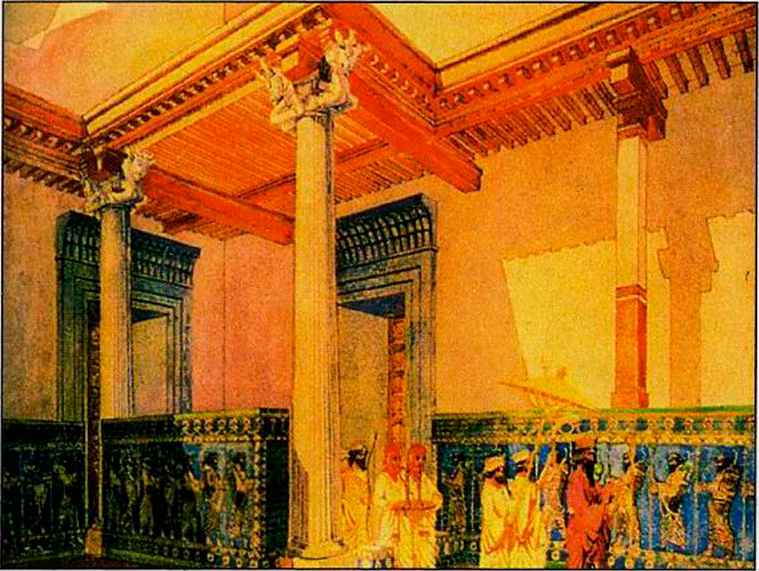
In a watercolor painted in 1913 by French architect and archaeologist Maurice Pillet, Darius I leads a procession into his palace at Susa. Susa was always the pride of the Elamites and later the Persians, a city that stood for 5000 years until totally sacked and razed by the Mongols.

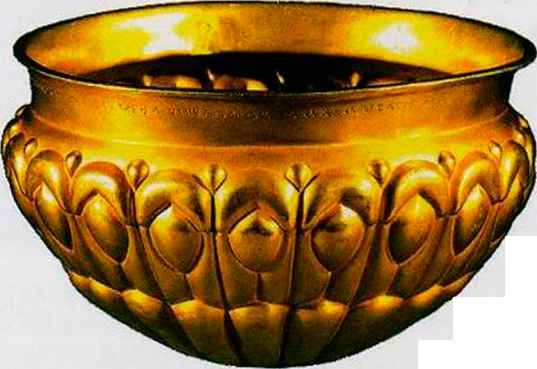
A golden bowl from the Achaemenid period features a cuneiform inscription in Old Persian, saying

“Khashayarsha [Xerxes], the King yy
achaemenid-empire-symbol
achaemenid-empire-symbol

7030_56_79

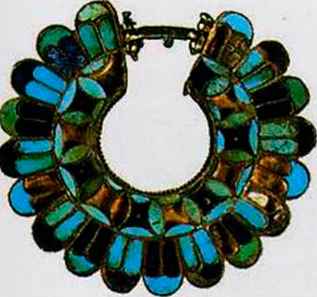
Earrings inlaid with turquoise and lapis lazuli and similar in design to this pair from Susa were common during the Achaemenid period; they were worn by both men and women (now in the Louvre).

330 BC – Alexander becomes master of the Persian Empire and destroys Persepolis 323 BC – Alexander dies at age 32, and a 42-year struggle begins that will be called the Wars of the Diadochi (successors) 317 BC – Armenia’s Persian satrap Ardvates frees his country from Seleucid control

310 BC – Cassander, Macedonian ruler, has Roxana, widow of the late Alexander the Great, put to death along with her young son, Alexander IV

245 BC – Babylon and Susa fall to the Egyptian armies of Ptolemy III

Important Seleucid Kings:

Seleucus I Nicator – 312-281 BC

Antiochus I Soter – 281-261 BC

Antiochus II Theos – 261-

The statuete of Zeus

(Today in the National Museum in Tehran) exhibits direct Greek influence in Persian art.
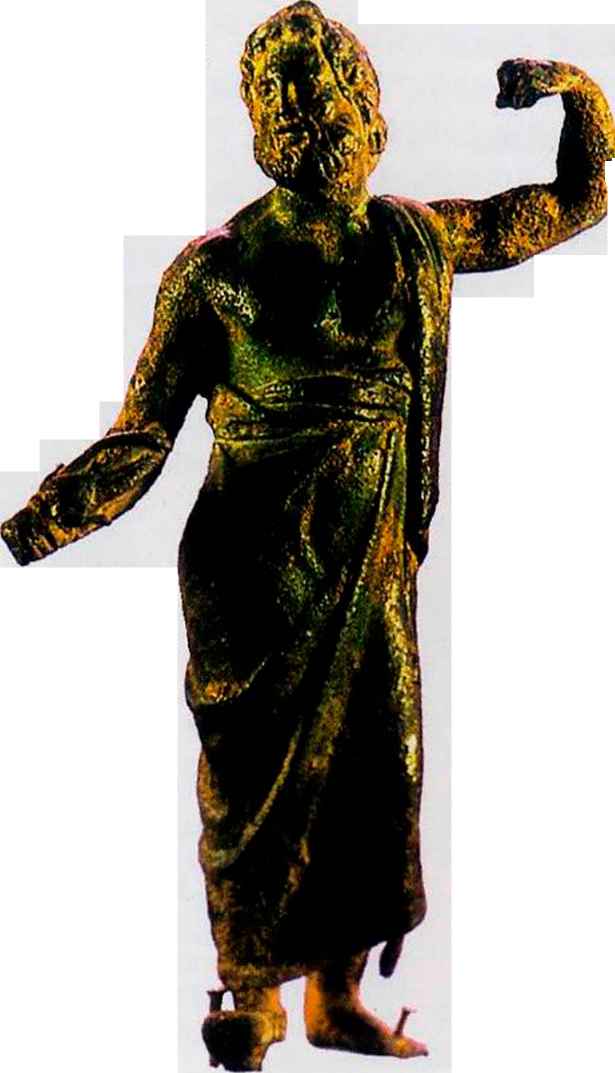
seleucid-empire-art

seleucid-empire-art

Tured to the northern Black Sea region, but was thrown back by the Scythians. Darius also attacked the Greek mainland, but as a result of his defeat at the Battle of Marathon was forced to retract the limits of the empire to Asia Minor. Despite this defeat, Darius’s empire was the largest the world had ever known, and administering such a gigantic land was quite a challenge. Maybe not a great army general, Darius was certainly the greatest of politicians. One of his amazing achievements was creating the world’s first highway network. The stone-paved Royal Road, 2,703 km (1,679 miles) long, ran from the empire’s winter capital at Susa to Ionian Ephesus on the Mediterranean and had 111 stations. Darius is also credited for the introduction of the world’s first postal system (band). He coined money (darik), established the institution of political marriage, appointed royal inspectors to be aware of state affairs, and was the first ruler to ask for sons and heirs of the defeated kings as hostages and guarantors of their fathers’ loyalty. Other accomplishments of Darius’s reign included the codification of data, a universal legal system upon which much of later Iranian law was based, and the construction of a new capital at Persepolis. Trade was extensive and, as a result of this commercial activity, Persian words for typical items of trade became prevalent throughout the Middle East and eventually entered Western languages. Examples in English are bazaar, shawl, tiara, orange, lemon, peach, ‘chalcedony’Though rarely repre-spinach, and asparagus.

His successor Xerxes, the Achaemenid power started to decline. The last Achaemenid king, Darius III, was overthrown by Alexander the H Great. In 330 BC, the 26-year-old Macedonian conqueror set fire to Persepolis and put a full stop to the Achaemenid rule.

Hellenistic Period 323-141 BC
In his world-conquering campaign, Alexander hoped for a fruitful union of the Europeans with the peoples of the Middle East. In the effort to reach this goal, Alexander married Roxana, daughter of the most powerful of the Bactrian chiefs, and commanded 80 of his top officers and 10,000 of his soldiers to marry Persian women in a mass wedding at Susa. However, his plans to consummate the union of the Greek and Iranian peoples ended when Alexander was struck with fever and died in Babylon. His generals began squabbling over rights to his extensive empire. They assassinated Alexander’s widow and son, and all but…
Then they divided the empire among three of them. Iran passed on to Seleucus, the only officer under Alexander who had kept his Iranian wife whom he genuinely loved. He eventually became known as Seleucus I Nicator, or the “Conqueror”. Under Seleucus’s son, Antiochus I, many Greek colonists entered Iran. By establishing mixed Greek-Iranian colonies, the Seleucids tried to strengthen their power. A strong Seleucid monarch, Antiochus III, the sixth in the Seleucid line of kings, was successful in suppressing the threat of constant insurrection by local rulers, but in general he could not stem a tide of rebellion that arose in the Iranian provinces. Despite Selucid’s strenuous efforts to introduce Greek culture in Iran, the Greeks remained strangers to the Iranian people. After approximately a century and a half of Greek rule in Iran, the Seleucids were completely overthrown by the Parthians.
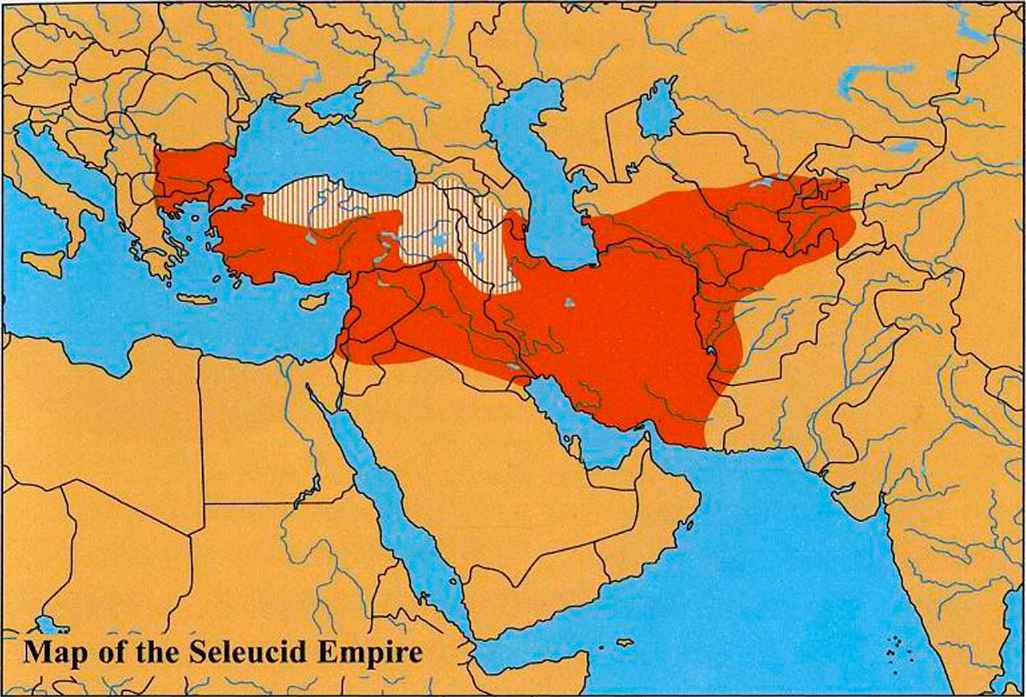
leucos-nicator
leucos-nicator

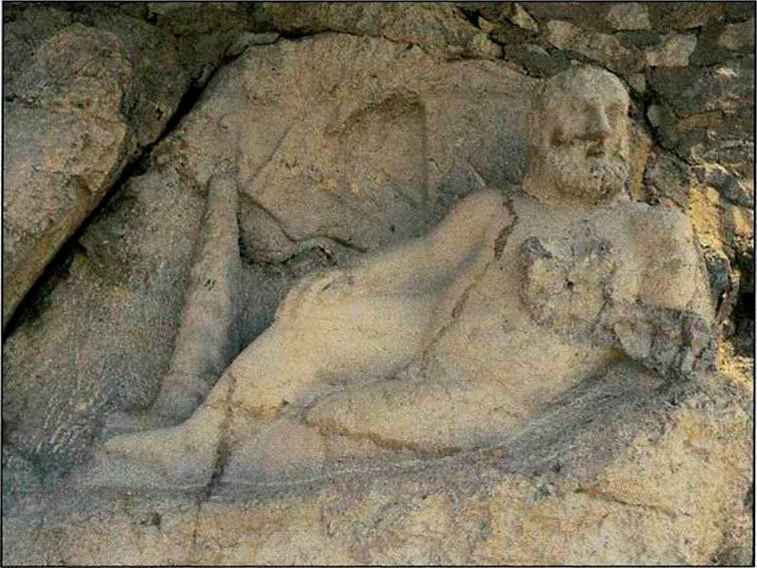
seleucid-statue-hercules

seleucid-statue-hercules

Drinking cup in hand, club resting by his feet, a life-size Hercules lounges on a lion skin beside Bisotun. A protective canopy casts a shadow across a corner of the Seleucid rock carving, which has been dated 148 BC by a Greek inscription found behind it (photo by Naser Mizbani).

Parthian Empire (247 BC-224 AD)

Under the Achaemenids, a satrap named Parthava was annexed to the empire during Cyrus the Great’s campaign south and east of the Caspian Sea. The Parthians were among the first to revolt against the Seleucids and were led by two brothers, Arsaces and Tiridates. Arsaces was proclaimed the first king, and his name became the honorific title used by all subsequent Parthian kings, who were generally known as the Arsacids.

Mithradates I is considered the founder of the Parthian empire. He is believed to have established his capital.

Important Parthian Kings:

Arsaces I – 250-247 BC Tiridates-247-211 BC Artabanus 1-211-191 BC Mithradates I – 161-138 BC Phrates II- 138-124 BC Mithradates II, the Great – 123-87 BC

Orodes II – 54-38 BC Phrates IV – 38-29 BC Artabanus V – 216-224 AD

250 BC – Parthians (Arsacids) capture Khorasan from the Seleucids

2nd century BC – The Silk Road “opens” for commercial trade of silk and other goods 129 BC – Phrates II finally defeats the Seleucids

92 BC – Mithradates II makes an alliance with Rome and invades Mesopotamia; Mithradates II concludes the first peace treaty in the history of Parthia and Rome 53 BC – The Roman legions under Crassus suffer a decisive defeat at the hands of the Parthians at Haran (ancient Carrhae) in Mesopotamia; this victory elevates the Parthians into a superpower of their era 46 BC – Caesar institutes the Julian calendar

36 BC – The Partians defeat Mark Anthony’s troops in Azerbaijan.

23 BC – The Roman Emperor Hadrian averts a new war with the Parthians by meeting in person with the king of Parthia 222 – Succesful revolt of Ardashir, the ruler of Persia, against Artabanus V
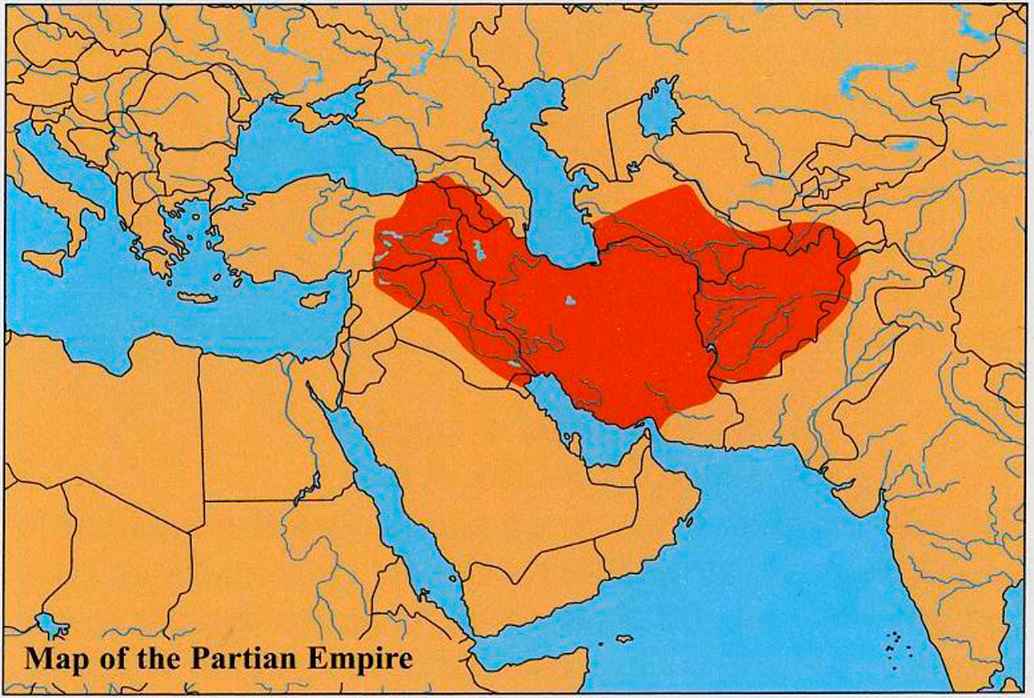
revolt-ardashir
revolt-ardashir

Sorena

Sorena

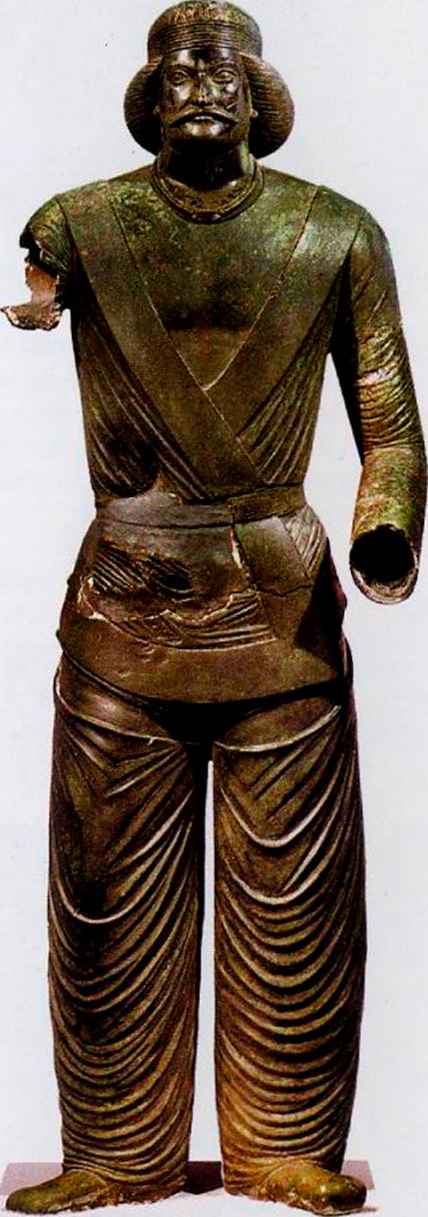
Among the most important artistic remains from the Parthian period is a bronze statue of a prince, now kept in the Iranian National Museum in Tehran.

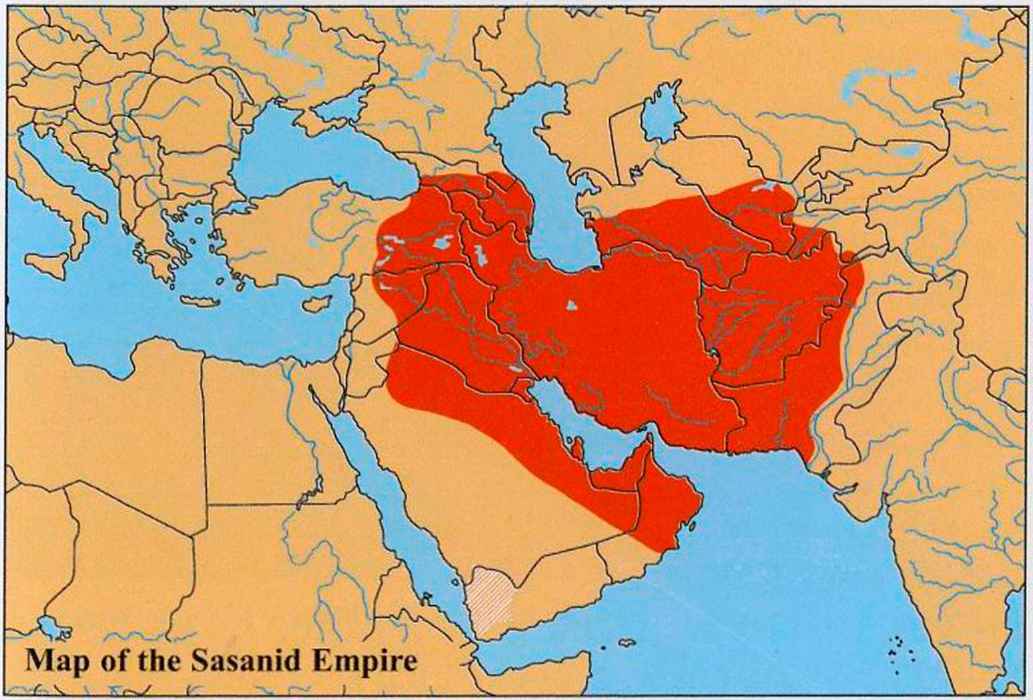
Sassanid Empire (224-651 AD)

The last Parthian king, Artabanus V, lost the final battle to the Sasanids around 224 AD near Hormozdegan (site unknown). A legend claims that Ardashir Babakan, a vassal of Artabanus V, provoked the encounter.
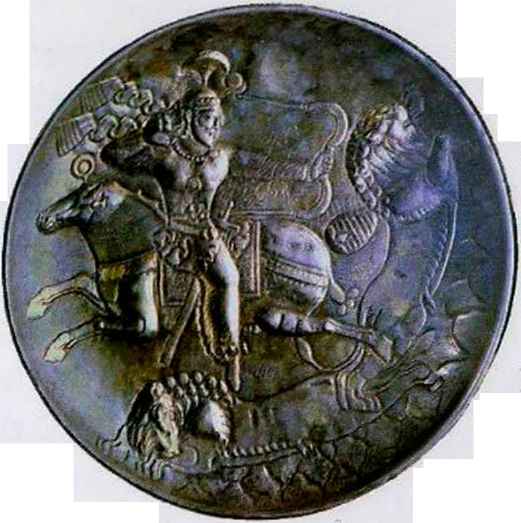
Hunting scenes are the most popular themes on Sasanid silver plates.

Sasanid coins often shown fire altars on their reverse sides, as seen on one of Bahrain V’s coins.

Founded a city called Gur, or the “Glory of Ardashir”, near Firuzabad. Ardashir traced his ancestry to Sasan, a Zoroastrian priest, who gave his name to the last native dynasty in Persia before the Arab conquest. A strong centralized government, a strict principle of dynastic legitimacy, and an official religion, which were quite contrary to the Parthian confederation and freedom of religious practices, characterized the Sasanid domain, which rapidly rose to rank among the world’s largest empires.

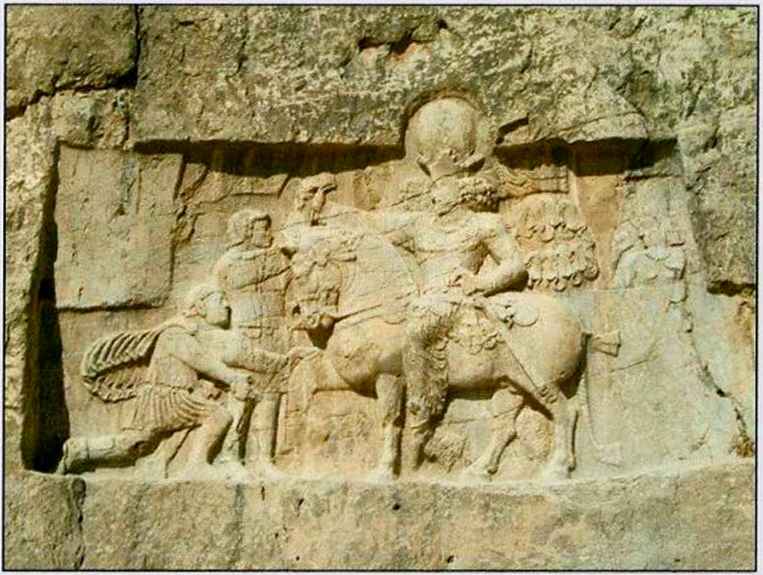
Under Ardashir’s successor, Shapur I, the Sasanid Empire extended from the Indian Punjab to the eastern border of Capadocia in Anatolia. The level of prosperity had risen so much that Shapur I was able to wage a war against Rome and even to take the Roman Emperor Valerian prisoner. In contrast to Ardashir, who claimed to be “king of kings of Iran”, Shapur I assumed the title “king of kings of Iran and non-Iran”, a title that was retained by his successors.

The Sasanids chose the Zoroastrian religion as the main means of unifying the diverse peoples of their expanded country. Shapur I, however, did not oppose Manichaeism, a teaching combining the beliefs of Zoroaster, Jesus, and Buddha. However, his successors suppressed other faiths severely, and the high priest, Kartir, was the most infamous instigator of this intolerance.

Shapur’s victory over Valerian was greatly replicated during the early Sasanid reign. The best relief in Naqsh-e Rostam in Fars shows the victory scene with the utmost splendor.

244 – Roman Eemperor Philip the Arabian makes a disgraceful peace with the Persians 260 – Shapur I takes Emperor Valerian prisoner 242-276 – Preaching of Mani

297 – Nerseh (Narses), the Sasanid king, cedes Armenia and Northern Mesopotamia to Rome

301 – The kingdom of Armenia makes Christianity an official state religion, the first nation to do so

306-337 – Constantine the Great 337-361 – Persian-Roman wars 364 – Emperor Jovian signs an onerous treaty with the Persian Shah Shapur II, yielding the kingdom of Armenia and most Roman holdings in Mesopotamia 371 – Persian Empire reaches its height as the Romans and Persians renew their wars 376 – Peace is established with Rome

421 – Eastern Roman Emperor Theodosius II sends his army against Bahram V

422 – Theodosius II concludes peace with Persia after 2 years of war 460 – A famine that will last for several years begins in the Persian Empire

524 – Rome and Persia renew hostilities to begin a war that will last for 7 years

525 – “Easter Tables” are issued by Roman theologian-mathematician Dionysius Exiguus, giving the birthday of Jesus incorrectly as December 25, 753 years after the founding of Rome, the error that will be standardized in all Christian calendars.

528 – Mazdak advocates abolition of private property and the division of wealth – the world’s first “communist/socialist” ideas.

529 – The Academy founded at Athens by Plato in 347 BC is closed by Emperor Justinian, and many of the professors emigrate to Persia and Syria; Khosrow Anushirvan’s famous prime minister, Bozorgmehr, reportedly invents the game of backgammon

532 – Justinian signs a “Perpetual Peace” with Khosrow I to free his armies for operations in the West

539-562 – Persian-Byzantine war

540 – Persian forces take Antioch from the Byzantines

549 – Pctra falls to the Persians, who will hold the eastern outpost of Byzantium for 2 years

570 – Birth of Prophet Mohammad peace be upon him

572-591 – Persian-Byzantine war

589 – Bahram Chubin, a Persian military, deposes Khosrow II, who flees to Constantinople

591 – Byzantine Emperor Maurice restores Khosrow II to his throne and receives territorial concessions for his help

608-622 – New series of Persian-Byzantine wars

614-615 – Khosrow II captures Damascus and Jerusalem, bringing the True Cross to Ctesiphon
iran maps

Shapur Rock Relief of Naqsh-e Rustam
Shapur Rock Relief of Naqsh-e Rustam

Shapur Rock

Shapur Rock

616 – Persian forces overrun Egypt and subjugate its people

620 – Khosrow II captures Rhodes and restores the Persian Empire as it existed in 495 BC under Darius the Great

621 – The year of the Islamic Prophet’s flight from Mecca (Hegira) – the starting point of the Islamic calendar; Khosrow II is defeated by Heraclius

627 – Heraclius gains a decisive victory over the Persians in the Battle of Nineveh

628 – Khosrow II is imprisoned and murdered after a mutiny by the military; his son Hormoz IV makes peace with the Byzantine Emperor Heraclius; the True Cross is returned to Jerusalem

632 – Death of Prophet Mohammad; Abu Bakr succeeds him as the first Islamic caliph

633 – Muslim forces attack Persia

634 – The first caliph, Abu Bakr, is succeeded by Omar

636 – Arabs defeat the Sasanids at Qadisia

637 – Arabs take Ctesiphon

642 – Arabs defeat the Sasanids at Nehavand; Persia is formally annexed to the Arab Caliphate

Four various patterns dividing the object into four separate parts (as seen on this Sasanid shield were among the most popular of late-Sasanid motifs.

A Sasanid king thought to be Khosrow II is portrayed in relief at Taq-e Bustan near Kermanshah. He slays a leaping wild boar from a boat. He is accompanied by a large entourage, including a vessel filled with harp-playing musicians.

They were also persecuted, particularly after the Roman Empire, the archenemy of the Sasanid Empire, had become Christian.

Shapur II, the next important ruler after Shapur I, is credited with the longest reign in Iranian history – 70 years. His period was darkened only by perennial wars with Byzantium over the newly Christianized Armenia. Shapur had several unsuccessful successors until Yazdgerd I initiated a relatively peaceful era. Yazdgerd I left the country to his son, Bahram V. Sur-named Gur (Wild Ass), Bahram became the favorite of Persian popular tradition, which exuberantly celebrated his prowess in hunting and love. Bahrain’s descendant, Qobad, was an unusual king in Iranian history in the sense that he actually cared more about the opinions of the common people than of the highly-placed courtiers. He moved away from official religion and greatly welcomed Mazdak and his teaching. His son Khosrow I (Chosroes), an orthodox Zoroastrian, however, destroyed the Mazdakites in a great massacre. Nonetheless, this act has not prevented him from being entitled the Just. Khosrow’s grandson, Khosrow II, was surnamed Parviz (the Victorious). He was immortalized in Persian literature for his devotion to his wife, an Armenian Christian called Shirin. During Khosrow’s rule, the Persian Empire occupied the largest area in its history and was marked by the highest level of civilization. At this time, a message was brought to the king from Medina, bidding him acknowledge Mohammad as the Prophet of God. The king treated the missive with contempt, little thinking that before many years had passed the followers of the Prophet would have swept away the Sasanid line. Instead, he ordered his agent in Yemen called Bazan to capture the Prophet and bring him before the king. However, this mission was never accomplished because of Bazan’s conversion to Islam.

At Khosrow’s death, eleven rulers succeeded one another to the vacant throne, two queens among their number – the first women who had ever held the scepter in Persia – but their united reigns amounted to only five years. After a succession of short-time rulers, Khosrow’s grandson, Yazdgerd III, took the throne. His story is reminiscent of the story of Darius III Achaemenid. Like Darius, Yazdgerd was not destined to rule. A new force was coming from the Arabian deserts, a force that changed both the state and the religion. In 650, only a few years after the death of Prophet Mohammad, the Muslim armies attacked the southern provinces of the Sasanid Empire. Soon afterwards, Ctesiphon, the Sasanid glorious capital and the largest city in the world, was invaded and sacked by the Muslim armies. At the battle of Nehavand, the Arabs utterly defeated the Persians and gained possession of their national standard, the blacksmith Kaveh’s leather apron. Yazdgerd sought refuge in one province after another, until he was assassinated near Merv.
brain-travela

brain-travela

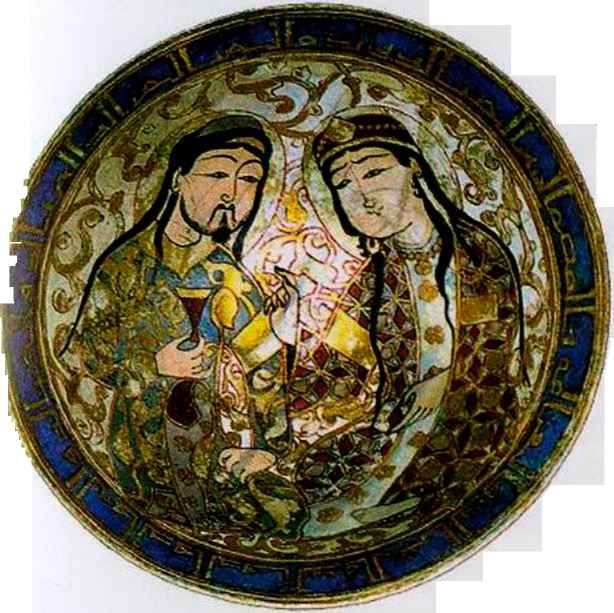
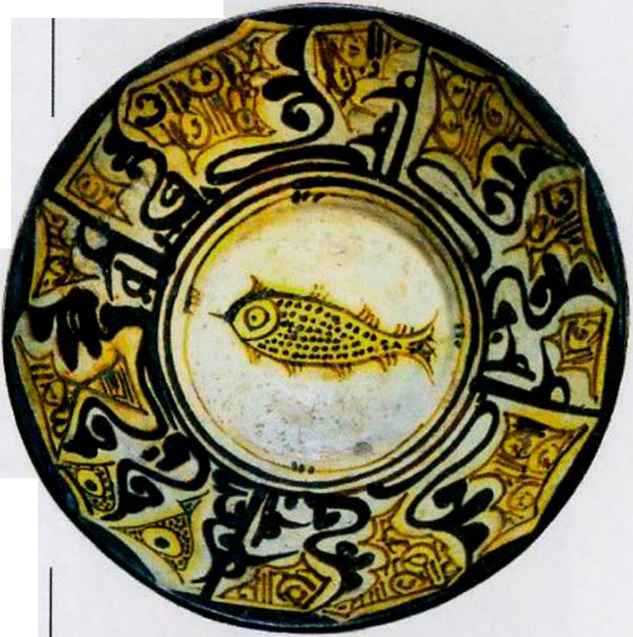
Bowl from the early-Islamic period is today on display in the Ceramics and Pottery Museum in Tehran.

Arab Conquest and the Early Iranian Islamic Dynasties 636-C .1100:
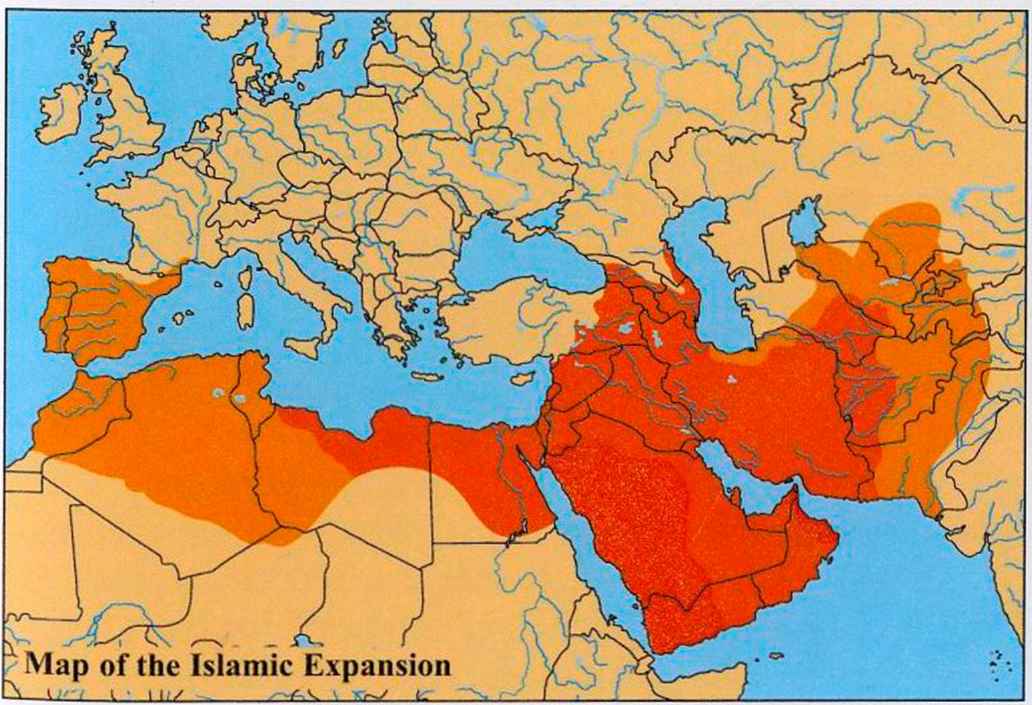
The Muslim Arabs who toppled the Sassanid Empire were inspired by a new religion -Islam.

Although the Koran, the holy book of the new religion, considered people equal regardless their race and social status, the conquerors, especially the Umayyads (the Muslim rulers who succeeded Prophet Mohammad), tended to stress the primacy of Arabs. Despite this, the Iranians rapidly integrated into the new Islamic community. They began to contribute significantly to all branches of Islamic learning and to play an important role in the economic and even political life of the new Muslim Empire. The new caliph came to power due to the Iranian military leader called Abu-Muslim, who led the armies of Saffah against the last of the Umayyad caliphs. Saffah was a great-grandson of Abbas, Prophet Mohammad’s uncle, so he called his dynasty Abbasid. The Abbasid dynasty was the most famous in the Islamic world. Abbasid caliphs were the generous patrons of Islamic culture and arts. However, despite the outstanding progress achieved in the cultural field, the military problems.
642-661 – Rule of the Rightly Guided Caliphs

644 – Caliph Omar is assassinated by Abu Lolo (plS4) in Medina and succeeded by Osman 656 – Caliph Osman is assassinated in Medina and succeeded by Mohammad’s nephew and son-in-law Ali

661 – Imam Ali is assassinated in Kufa

661-750 – Umayyad Caliphate, ruling from Damascus
680 – Imam Hossein, Imam Ali’s son, is killed in Karbala in Iraq; his martyrdom will be commemorated annually by Shiite Muslims 696 – Arabic becomes the official language of the Islamic world 744-749 – Shiite revolt led by Abu Muslim results in establishing the Abbasid Caliphate 750-1258 – Abbasid Caliphate, ruling from Baghdad 771-814 – Rule of Charlemagne, king of the unified Franks and then the first Holy Roman Emperor 817 – 8th Shiite Imam, Reza, dies of suspected poisoning and is buried in Mashhad 820-873 – Rule of the Tahirid dynasty in Khorasan 838 – Persian social and religious revolutionary Babak is executed by the Abbasid caliph al-Mutasem 867-903 – Rule of the Saffarid dynasty in Sistan.
umayyad-empire
umayyad-empire

fragment-the-arab-conquests-yarmouk

fragment-the-arab-conquests-yarmouk

Ghaznavid Dynasty (962-1186)
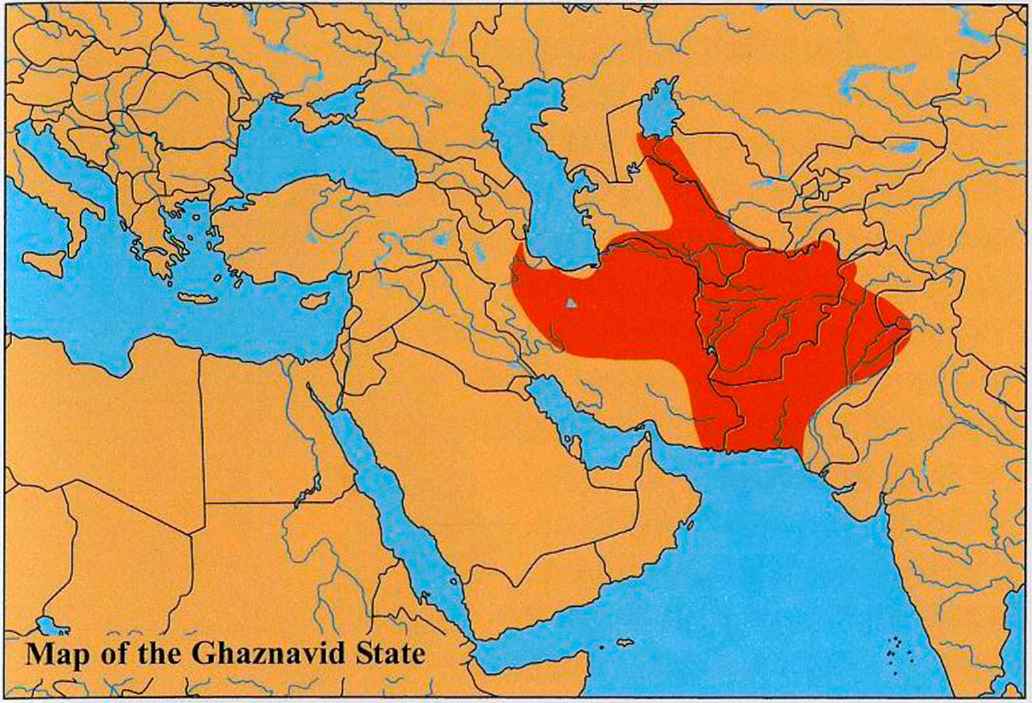
The Ghaznavid dynasty was of Turkish origin. It was founded by Saboktekin, a former Turkish slave who was recognized by the Samanids as governor of Ghazna (modem Ghazni, in Afghanistan). As the Samanid dynasty weakened, Saboktekin consolidated his position and expanded his domains as far as the Indian border. His son Mahmud continued the expansionist policy, and during his reign, Ghaznavid power reached its zenith. Mahmud created an empire that stretched from the Oxus to the Indian Ocean. In the west he captured (from the Buyids) the Iranian cities of Rey, Esfahan, and Hamadan. A devout Muslim, Mahmud was the first to carry the banner of Islam into the heart of India. Although the Ghaznavids were proud of their Turkic descent, Mahmud encouraged the use of Persian, and the greatest Persian epic, Shah-Nameh (pp44-46), was completed by Ferdowsi at his court. Among the other great Persians at Mahmud’s court were Biruni, an outstanding scholar of encyclopedic knowledge, and Abolfazl Beyhaqi, the writer of a remarkable history of the Ghaznavids, the first major prose work in New Persian. Mahmud’s son, Masud I, could not keep the integrity of the empire. Challenged by Seljuk Turks, he lost most of his territories, but retained possession of eastern Afghanistan and northern India, where the Ghaznavids continued to rule until 1186.

867-903 – Rule of the Safarid dynasty in Sistan 871-899 – Alfred the Great of England

875-999 – Rule of the Samanid dynasty in Khorasan 922 – First Persian most important Sufi and mystic al-Hallaj is sentenced to death for heresy 928-1077 – Rule of the Ziarid dynasty

936-973 – Otto 1 the Great of Germany

940 – Rudaki, first major poet of the Modern Persian language 945-1055 – Buyid rule; the influence of the Abbasid caliphs is limited to the moral and spiritual spheres as the heads of Orthodox Sunnite Islam

950-1020 – Ferdowsi, poet of the greatest Iranian epic “Shah-Nameh” (pp44-46)

The empire and its administrative organization were left unsolved. Moreover, Iranians who gladly accepted Islam, which freed them from the dictates of the taboo-ridden and excessively ritualized Zoroastrian-ism, could not bear invaders in their homeland. Numerous rebellions took the form of peasant revolts in Azerbaijan and Khorasan. Soon the first Iranian dynasties threatened the Abbasid empire with dreams of Iranian independence. Purely Iranian states were formed in the main part of Iranian territory (Tahirids in Khorasan with Nishapur as the capital, Saffarids in Sistan, Samanids in wealthy Transoxanian and east Khorasanian cities, Ziarids in Tabarestan, and Gorgans and Buyids all over Iran excluding the Samanid properties). The Buyids shared with the Samanids the fame for having brought to fruition the Iranian renaissance.
Iran under Seljuk Rulers (1037-1200)
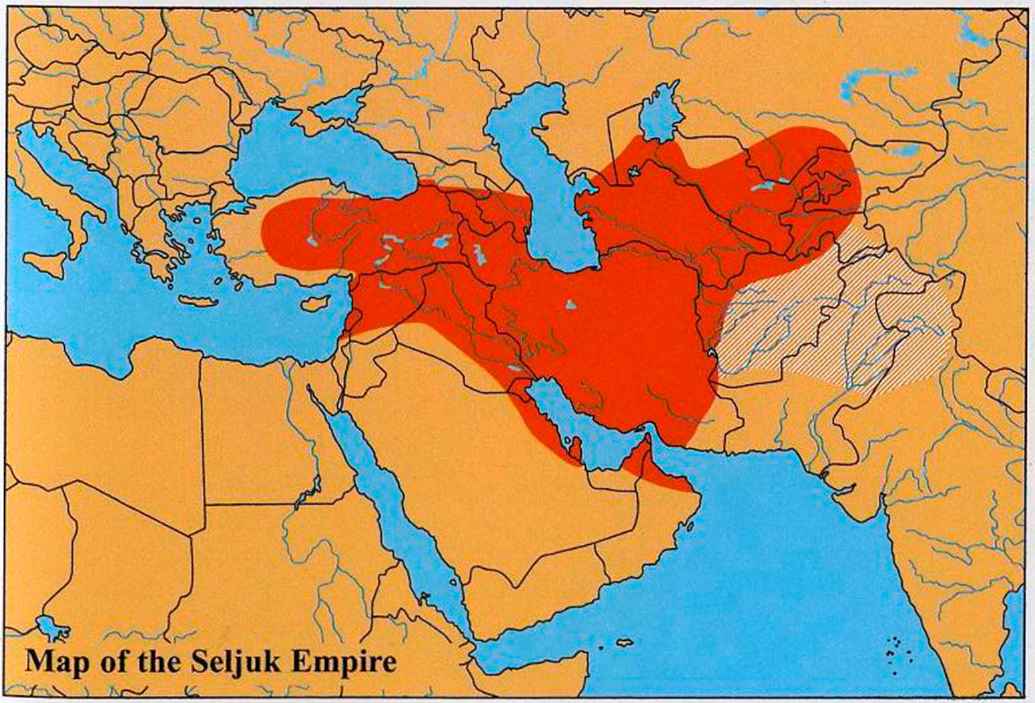
The Seljuks were a clan of the Oghuz Turks, who traced their ancestry to a chieftain named Seljuk. Seljuk’s two grandsons, Chaghri Beik and Toghrol Beik, enlisted Persian support to win realms from the Buyid and Ghaznavid rulers. After “petitioning” the Abbasid caliph for permission, Toghrol Beik was also able to occupy Baghdad. At his death in 1063, Toghrol Beik headed an empire that included Iran and Mesopotamia and held the title King of the East. In 1071, a Seljuk army led by Alp Arslan defeated the Byzantines. The way was open for Turk tribesmen to settle in Asia Minor. Under Alp Arslan and his successor, Malek Shah, the Seljuk Empire included all of Iran, Mesopotamia, Syria, and first influences of Far Eastern Palestine. The Seljuks were art reveal themselves in Seljuk great architectural patrons and ceramics. r , . r in addition to constructing numerous mosques, Madreseh, orphanages, caravanserais, and bridges, they were particularly known for their tomb-towers. Their buildings are notable for their decorative masonry, elaborately ornamented portals, and the use of Kufic script as an architectural decorative device. The Seljuks also attained a high standard in decorative arts, especially in metalwork, wood carving, and pottery.

Important Seljuk Kings:

Toghrol Beik – 1037-1055 Alp Arslan – 1063-1072 Malek Shah – 1073-1092 Sanjar- 1117-1157

The tomb-tower of Gonbad-e Sorkh (Red Dome) in Maragheh in northwestern Iran is a typical example of Seljuk architecture characterized by its distinctive brickwork.

1037 – Seljuk Turks invade Persia under Toghrol Beik 1042 – Seljuk Turks rise against their Byzantine overlords 1055 – Toghrol Beik ends the Buyid rule and makes himself temporal master of the caliph 1048-1123 – Omar Khayyam, a great mathematician, poet and astronomer (p47) 1063-1092 Nezam al-Molk ip57), the renowned prime minister of Alp Arslan and Malek Shah Seljuk is assassinated by the Ismailites

1064 – Seljuk Turks conquer Armenia
Mongol Rulers of Iran (1219-1353)
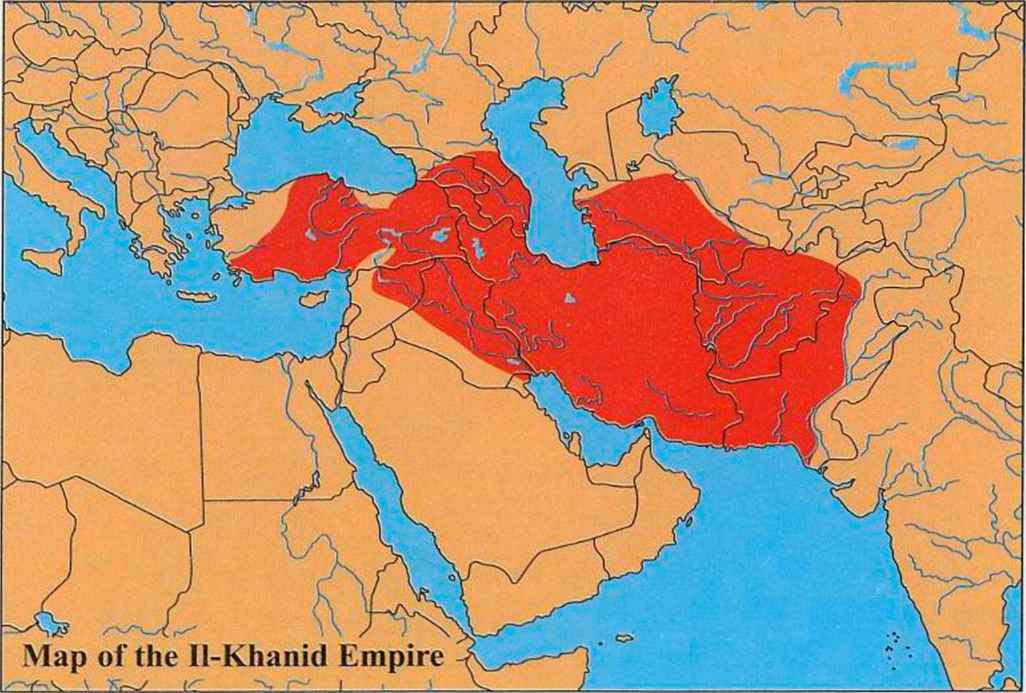
Mongol occupation was disastrous to Iran. Numerous cities were razed, and a large number of people (particularly males) were killed. The Kharezm-Shahs could not oppose the Mongol hordes led by Genghis Khan. The last Kharezm-Shahs’s prince, Jalal od-Din, tried to restore the empire but failed to unite the Iranian regions, although by that time Genghis Khan, who had withdrawn to Mongolia, was dead. Iran was left divided between Mongol agents and local adventurers, both of whom profited from the lack of order.

A second Mongol invasion began when Genghis Khan’s grandson Hulagu Khan destroyed the Ismailite fortress at ewer inlaid with Alamut. He then besieged silver and copper dates from the I2th-13th centuries (today in British Museum in London).
cengizhan-rlar-harita

cengizhan-rlar-harita

The Soltaniyeh Dome near Zanjan is one of the most famous memorabilia of Oljeitu, the Il-Khanid ruler who was reportedly buried there.

Ordered the execution of the last Abbasid caliph. Hulagu hoped to consolidate Mongol rule over western Asia and to extend the Mongol Empire as far as the Mediterranean. He made Iran his base, but the Mamluks of Egypt (1250-1517) prevented him and his successors from achieving their imperial goal. Instead, a Mongol dynasty, the Il-Khanids, or “Deputy Khans” to the Great Khan in China, was established in Iran to attempt repair of the damage of the first Mongol invasion. They made Azerbaijan their center and chose Maragheh as the first capital until Sultaniyeh was built early in the 14th century. A later Mongol ruler, Ghazan Khan, and his famous Iranian vizier of Jewish descent, Rashid od-Din Fazlollah, brought Iran a partial revival. Ghazan Khan was the first Mongol ruler to adopt Islam. His successor to the throne was Oljeitu. Oljeitu changed his religious affiliations several times. A great-grandson of Hulagu, founder of the Il-Khanid dynasty, Oljeitu was baptized a Christian and given the name Nicholas by his mother. As a youth, he adhered to shamanism but was later, apparently under the influence of one of his wives, converted to Sunnite Islam, taking the name Mohammad Khodabandeh. During the winter of 1307-08, a bitter religious feud ensued between the adherents of the Hanafi and Shafii schools of Sunnite Islamic law. This so disgusted Oljeitu that he considered converting back to shamanism, but that course proved politically impossible. Greatly influenced by the Shiite theologian, Ibn al-Mutahhar al-Hilli, he came to embrace the Shiite religion. On his return from a visit to the tomb of Imam Ali in Iraq, he proclaimed Shiite Islam to be the state religion. Oljeitu’s conversion gave rise to great unrest, and civil war was imminent when he died in 1316. His son and successor, Abu Said, reconverted to Sunnite Islam and averted war, but during his reign factional disputes and internal disturbances became rampant. The Il-Khanid line was interrupted by the death of Abu Said, who died without leaving an heir, and Iran again lapsed into petty dynasties – the Jalayirids, Injuids, and Mozaffarids.

The Sultaniyeh Dome near Zanjan is one of the most famous memorabilia of Oljeitu, the Il-Khanid ruler who was reportedly buried there.

1380-1393 – Tamerlane conquers Iran

1405 – Tamerlane’s death; the accession of his son Shahrokh 1411-1492 – Jami, the last important Persian classical poet

1429 – Joan of Arc (Jeanne d’Arc) bccomes the heroine of France

1447-1452 -Rule of Ulugh Beik, Timur’s grandson, who is better remembered in history as a great scientist 1452-1466 – Abu Said’s rule

1453 – Constantinople falls to the Ottoman Turks, who end the Byzantine Empire that has ruled since the fall of the Roman Empire in 476 1455-1536 – Behzad, one of the major Persian painters and the founder of the Herat miniature school 1478-1506 – Rule of decorations of the Shrine of Ali ibn Hossein Bayqara

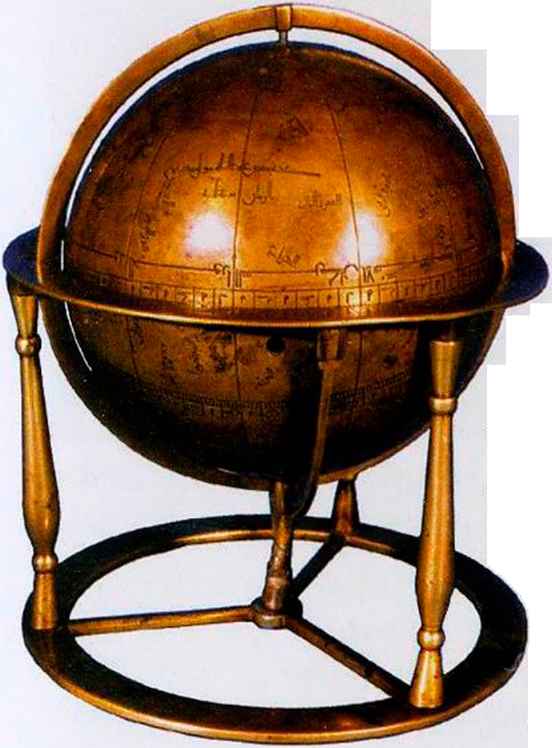
J afar in Qom) reached the highest 1500 – Overthrow of the level of craftsmanship during the Timurids Mongol and Timurid periods.
tamerlane-mongol

tamerlane-mongol

Timurid and Turkman Rulers (1389-1508)

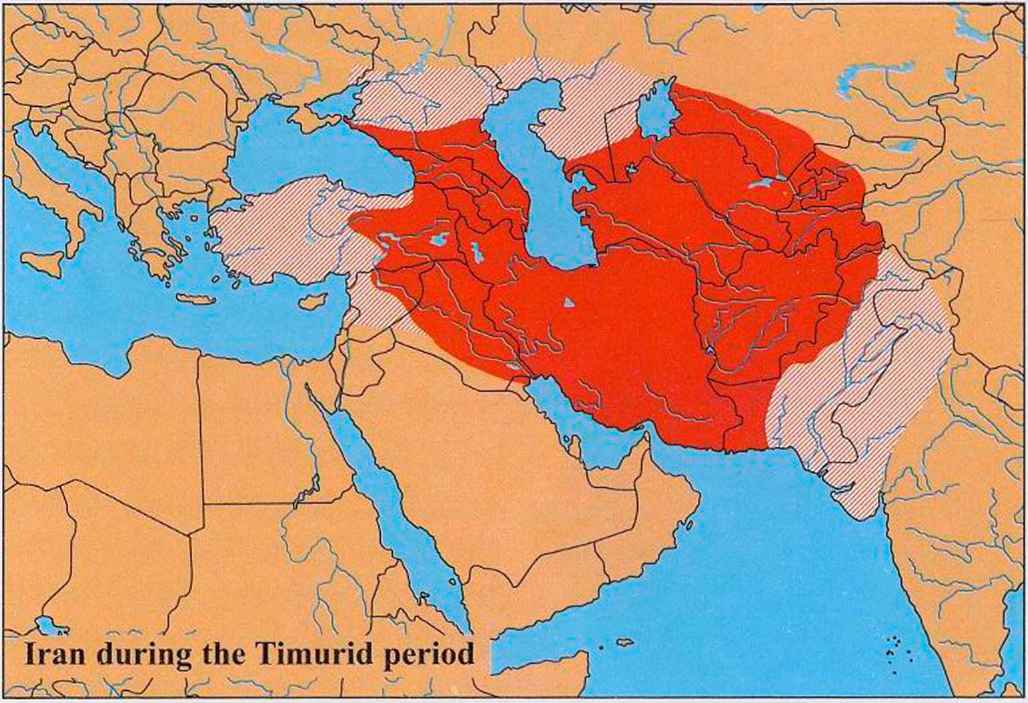
Tamerlane (Timur), who claimed descent from Genghis Khan’s family, was the next ruler to achieve the status of emperor.
mosque-dark-blue-tabriz

mosque-dark-blue-tabriz

The splendid Blue Mosque in Tabriz, founded in 1465 at the order of Jan Beygom Khatun, a pious Jahanshah Qara-Qoyunlu s consort, is the most famous architectural commission from the Turkman reign.

VsA.

Iran during the Timurid period

1406-1469 – Qara-Qoyunlu dynasty

1439-1467 – Rule of Jahan Shah, the most prominent Qara-Quyunlu ruler, famous for his patronage of architecture and the arts of the book

1453-1490 – Uzun Hasan Aq-Quyunlu

1456 – The Gutenberg Bible published at Mainz

1460-1485 – England’s Wars of the Roses

1462-1505 – Ivan 111 the Great, the first Russian national sovereign 1469-1508 – Aq-Quyunlu dynasty 1492 – Christopher Columbus crosses the Atlantic 1497 – Rostam Shah dies, leaving the Aq-Quyunlu tribe without a powerful ruler

1500 – Aq-Quyunlu dynasty comes under attack from tribesmen commanded by the Safavid leader Ismail, at that time only 14

The splendid Blue Mosque in Tabriz, founded in 1465 at the order of Jan Beygom Khatun, a pious Jahanshah Qara-Quyunlu s consort, is the most famous architectural commission from the Turkman reign.

1509-1547 -Henry VIII of England

1510 – Shah Ismail defeats an Uzbek army extending his realm from the Tigris to the Oxus 1514-1555 – War with Turkey

1514 – Shah Ismail is defeated at Chaldoran by his Sunnite rival, the Ottoman Sultan Selim I

1515 – Portuguese naval strategist Alfonso de Albuquerque takes Hormuz at the mouth of the Persian Gulf

1517 – Reformation of the Catholic Church, appearance of Protestanism (gets its name in 1529)

1520-1566 – Soleiman the Magnificent of Turkey the huge forces of earlier Mongol leaders, so his conquests were slower than those of Genghis Khan or Hulagu Khan. Ironically, this ruthless warrior and appalling killer was a great patron of arts and initiated a true civilization with a center in Samarqand. Timur was famed for his great interest in unorthodox religious beliefs, among them Sufism (p36-37), which developed considerably in his time.

Under Timur’s son Shahrokh and grandson Ulugh Beik the Iranian culture began to flourish. Their capital, Herat, was turned into the seat of splendid culture, the atelier of great miniature painters, and the home for a revival of Persian sciences and arts. The Timurid Empire, however, disintegrated rapidly after Ulugh Beik’s death. After the Timurid princes, Iran was dominated, particularly in its northern part, by the Qara-Qoyunlu, the “Black Sheep” Turkmen tribe. On Shahrokh’s death, their leader, Jahan Shah, extended his rule deep into Iran. Their rival was another Turkman tribe of Aq-Qoyunlu, the “White Sheep”, who were concentrated around Diyarbakir in Turkey. The White Sheep, led by Uzun Hasan, destroyed Jahan Shah’s troops by the end of 1467. Uzun Hasan established a short-lived empire but was confronted by a new power in Asia Minor -the Ottoman Turks. Minor Mongol tribes, Uzbeks, and Turkmen clans ruled over Iran until the rise of the Safavid dynasty.

Safavid Dynasty (1501-1736)

While the Turkman dynasties ruled in Azerbaijan, Sheikh Heydar headed a movement that had begun in the late 13th century as a Sufi order under his ancestor, Sheikh Safi od-Din of Ardabil, who claimed descent from the Seventh Shiite Imam, Musa al-Kazem. By the end of the 15th century, this Sufi order was turned into a militant movement with numerous followers, mainly from the Turkman tribesmen of Anatolia. They were called the Qizil-Bash, Red Heads, because of the distinctive red headgear that they had adopted to mark their adherence to the Safavids. With their help, the Safavids conducted several successful military campaigns, especially in the Caucasus. By virtue of their descent from the Prophet’s family, the Safavid movement was invested with a semi-sacred character, and the religious character of the new claimants to the throne was particularly acceptable to the Persians. When Sheikh Heydar was killed in one of his battles in the Caucasus, his son Ismail avenged his death by con-quering Azerbaijan and then the whole of Iran. In 1501, Ismail was proclaimed Shah of Iran. He became the founder of one of the most famous ruling dynasties in Iranian history – the Safavids.

The Safavids declared Shiite Islam the state religion and used proselytizing and force to convert the large majority of Muslims in Iran to the Shiite sect. Their main external enemies were the Uzbeks and the Ottomans. The Uzbeks were an unstable element along Iran’s northeastern frontier, raiding Khorasan and blocking the Safavid advance northward into Transoxiana. The Ottomans, who were Sunnites, were rivals for the religious allegiance of Muslims in eastern Anatolia and Iraq and pressed territorial claims in both these areas and in the Caucasus. A series of battles between Iran and the Ottoman Turkey lasted throughout the reign of the Safavids.

Tahmasb, the eldest son and successor of Shah Ismail, had none of his father’s appeal or personal courage. For a long period after coming to the throne, he was a pawn of powerful tribal leaders.
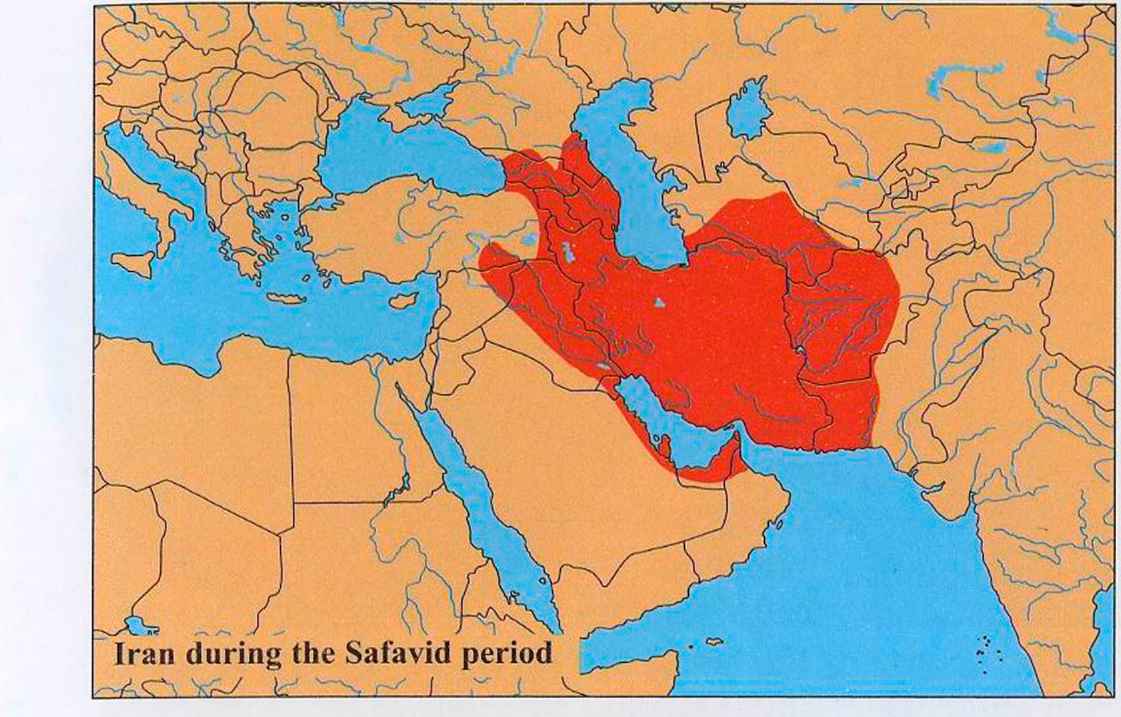
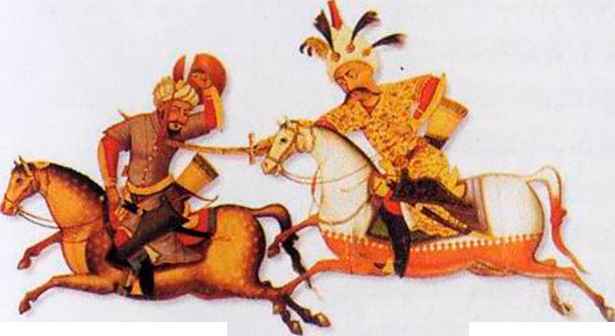
iranian-shah

ismail-safavid-leader

ismail-safavid-leader

Ismail I (1501-1524)

Abbas I, The Great (1587-1629)

1533-1584 – Ivan IV the Terrible of Russia, who in 1547 is crowned czar (caesar) to be the first Russian ruler formally to assume this title 1534 – Ottoman forces attempt to take Tabriz from the Persians; Shah Tahmasb, now 20, has his regent executed and assumes personal power

1548 – Ottoman forces occupy Tabriz

1555 – Safavid capital is removed to Qazvin

1558-1643 – Queen Elizabeth of England

1582 – A new Gregorian calendar is instituted by Pope Gregory 1589-1610 – Henry IV the Great of France

1590 -Shah Abbas and the Ottoman Sultan Murad III end a 12-year war

1595 – The Dutch East India Company sends its first ships to Iran

1587 – Shah Abbas chooses Esfahan as his capital and undertakes to make it a showplace of the world.

1603-1625 – James I of England, the first king to rule over a united kingdom

1616 – England’s East India Company begins trading with Persia from its Indian base at Surat 1618 – The Ottoman Sultan Mustapha I gives up Georgia and Azerbaijan by treaty with Abbas the Great

1622 – Persians take Qandahar from the Mughal Empire and drive the Portuguese out of Hormuz.
1623 – Abbas I takes all of Mesopotamia from the Ottoman Turks

1629 – Abbas I dies on January 19 at age 72 after a 42-year reign. Two of his five sons died, he had two others executed and another blinded, so he is succeeded by a grandson aged 13. The new shah has his grandfather’s counselors beheaded along with most of Persia’s best generals, all the blood princes, and even some of the princesses. Qandahar’s Persian governor defects to the Uzbeks, who take the city and province.

1630 – The Ottoman Sultan Murad IV defeats the Iranian army and captures Hamadan.
1635 – Murad IV leads an Ottoman army against Persia, Erivan capitulates after a siege, Tabriz surrenders without resistance but is deliberately destroyed

1636 – Shah Safi retakes Erivan and signs a treaty with Constantinople setting western borders that will remain substantially unchanged for more than two centuries

1638 – Murad IV retakes Baghdad from the Persians after a 40-day siege, slaughtering the city’s defenders

1642-1646 The Great Civil War in England.
1643-1715 – Louis XIV of France 1649-1660 – The Commonwealth is established in England 1650 – Abbas II retakes Qandahar, but Mughal emperors will besiege the city repeatedly 1667 – Shah Abbas II dies at age 33 after a 25-year reign. His ministers pretend that his son of 20 is blind and try to install a younger son, but a court eunuch betrays their scheme, and the dissolute elder son will reign as Soleiman I 1689-1730 – Peter the Great of Russia

1707 – The Kingdom of Great Britain is established

1722 – Mahmud, an Afghan chieftain and a vassal of the Safavids, attacks Persia and captures Esfahan, thus ending the Safavid rule decline of the dynasty. He was crowned at a very early age and thus successfully escaped the seclusion of the harem, which may well be the reason why he developed more favorably than the other of Shah Abbas’s successors. Although inclined to lose control under the influence of alcohol and narcotics, he was more gifted than any other descendant of Shah Abbas the Great, and history records him as a just ruler and an intelligent patron of arts. Abbas IT died in 1666 at the age of thirty-three. Abbas’s eighteen-year-old son ascended the throne as Shah Safi. However, shortly after his accession, the shah fell ill. The doctors ascribed his illness to the miscasting of his horoscope at the time of his accession. Therefore on a day proclaimed by the astrologers as unlucky, a mock coronation of a Zoroastrian was performed. The following day, allegedly a lucky one, an effigy of the Zoroastrian was decapitated, and Shah Safi reassumed his throne as Shah Soleiman. Soleiman’s harem upbringing had left him under the thumb of the eunuchs. Like most of the Safavid rulers, he cared more about women and wine than his country. Chardin reported that he could drink any Swiss or German under the table. The Soleiman’s reign was for the most part peaceful, though it was not the ruler’s merit but rather a fortunate culmination of circumstances. His piety earned him the nicknames of “Mullah Hossein” and “Yashki dir” (Turkish: “It is good”), the second deriving from his invariable reply of assent to every proposal made by the clergy. His feebleness accelerated the decline of the country. Once again the eastern frontiers began to be breached, and a small body of Afghan tribesmen led by Mahmud, a former Safavid vassal in Afghanistan, won a series of easy victories before taking the capital. Although the Safavid dynasty claimed rule for many following years, bearing illustrious but hollow names like Tahmasb II and Abbas III, the glory of the Safavid reign was never re-established.

1729-1747 – Nader Shah 1729 – Nader expels the Afghans from Iran.

1736 – Nader ascends the throne 1740-1786 – Frederick the Great, Prussia’s King.
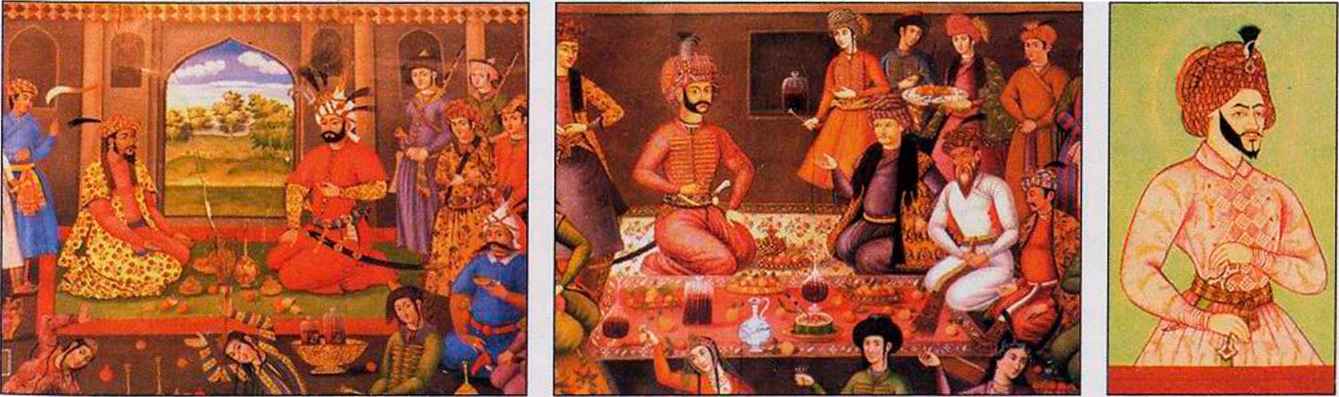
Afsharid and Zand Dynasties:
After a disastrous but brief Afghan occupation, the country was united  under the power of Tahmasb Qoli, a chief of the Afshar tribe. He expelled the Afghans in the name of  surviving Safavid members, but soon dethroned them and was him- self crowned as Nader Shah. He chose Mashhad as his capital.

He wanted to restore the glory and prestige of his country by regaining the diamond. The treasures brought by Nader I to Iran (today in the Jewelry drove the Ottomans from Georgia Museum in Tehran).
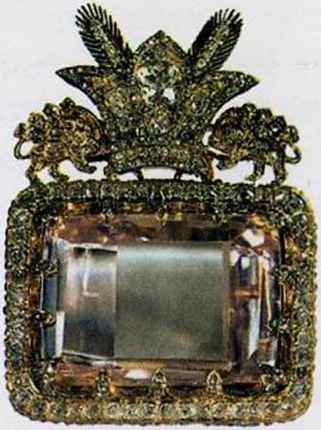
iranian-throne

iranian-throne

Karim Khan the king of Zandieh and Armenia and the Russians from the Iranian coast on the Caspian Sea, and restored Iranian sovereignty over Afghanistan. He also took his army on several campaigns into India, bringing back fabulous treasures. Among them were two of the world’s largest diamonds.

Zand decorates the interior of of Light (now part of the the Pars Museum in Shiraz. British Crown Jewels) and the Sea of Light (now in the Jewelry Museum in Tehran). His Indian expedition solved the problem of how to make his empire financially viable. Too powerful and ambitious in the view of some of its neighbors, Nader Shah seemed to have pose a threat to their imperialistic plans. Perhaps a victim to their conspiracy, Nader died from the hands of his own tribesmen, assisted by some Qajar chiefs.

Almost immediately after Nader’s murder, the country fell into anarchy. Afshar, Qajar, Afghan, and Zand chieftains struggled for supremacy, until finally Karim Khan Zand defeated his rivals and unified the country (except for Khorasan) under a loose form of central control. Karim Khan’s geniality and common sense inaugurated a period of peace and popular contentment. He refused to assume the title of shah and ruled as Vakil al-Roaya (Deputy of the Subjects). Shiraz was made the capital city under his rule.
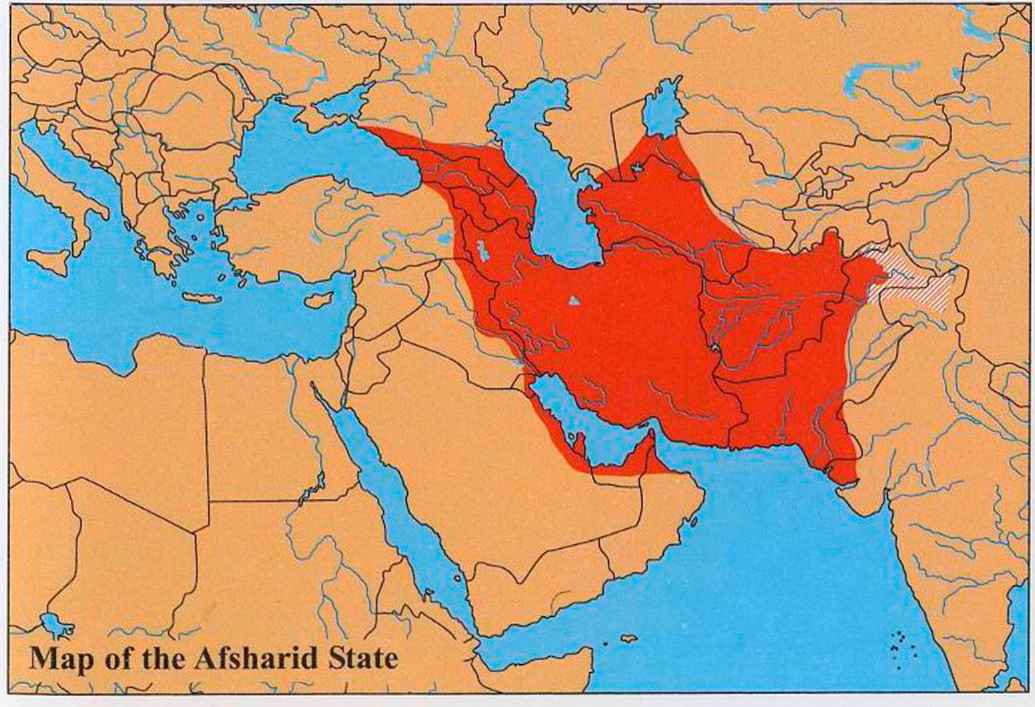
iran-afsharid-map

iran-afsharid-map

Qajar Dynasty (1794-1925)
After Karim Khan’s death, Agha Mohammad Qajar, who was brought up at the Zand court, gathered a large force of his Qajar tribesmen and embarked upon a war of conquest. He defeated the last Zand ruler and in the same year took Mashhad, which was at the time the residence of the last Afsharid king. In this way, he made himself master of the country and founder of the Qajar dynasty. Under his successors – Path Ali Shah, Mohammad Shah, and Naser od-Din Shah – a degree of order and stability returned to the country. However, from the early 19th century, the Qajars began to face pressure from two great world powers, Russia and Britain.

1750-1779 – Karim Khan Zand 1756-1763 – Seven Years’ Anglo-French War in North America 1757 – Karim Khan places on the throne the infant Shah Ismail III, the grandson of the last official Safavid king, as a figurehead ruler 1762-1796 – Catherine the Great, Empress of Russia 1775-1783 – The American War of Independence

1776 – The American Declaration of Independence

1789-1894 – Lotf Ali Khan Zand

1789 – Bastille falls, French

Revolution begins

1794 – Lotf Ali Khan is defeated by Agha Mohammad Qajar; Agha

Mohammad Khan chooses Tehran as his capital city.
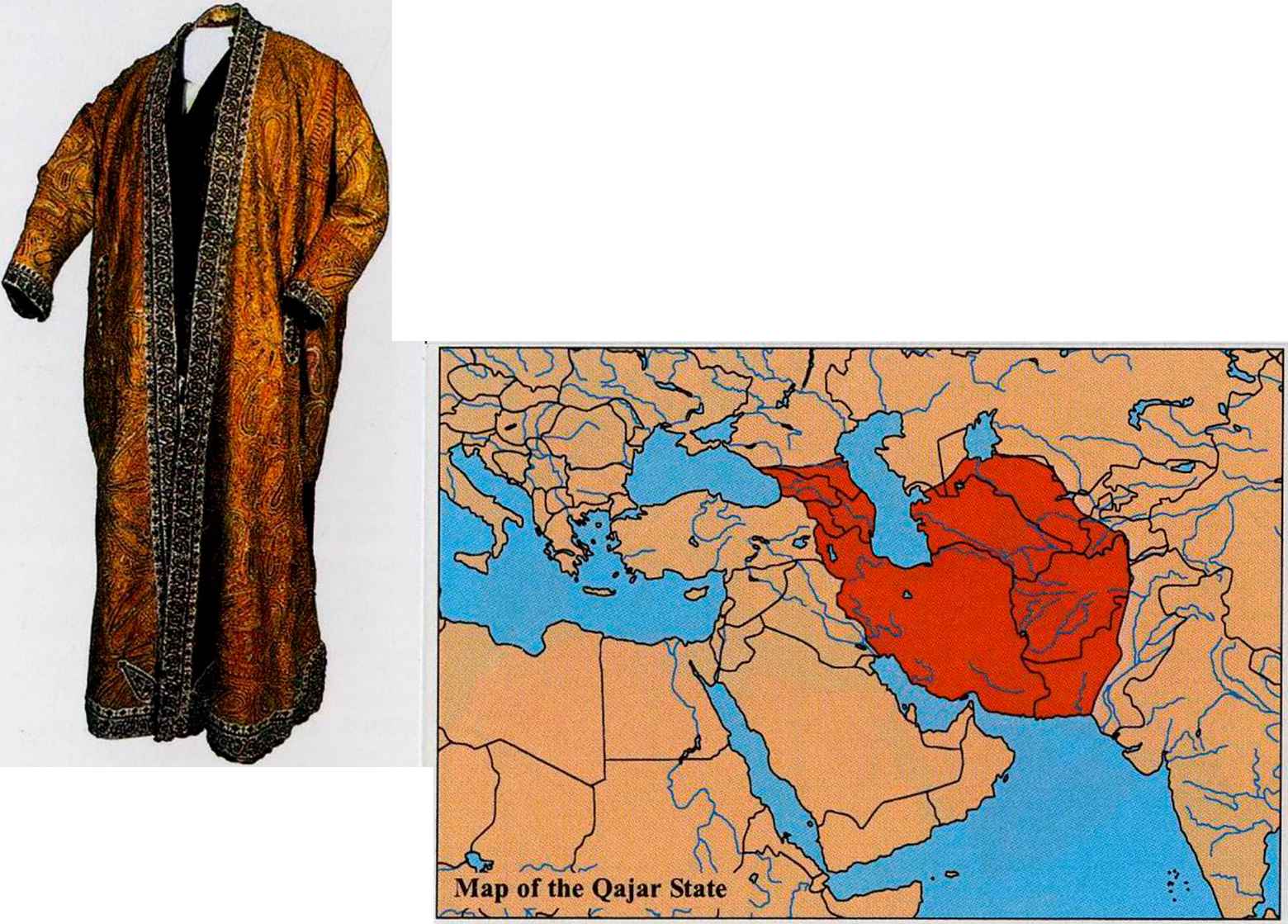
agha-mohammad-khan-qajar-crown

agha-mohammad-khan-qajar-crown

Qajar Kings:

Agha Mohammad Khan – 1794-1797

Fath Ali Shah – 1797-1834 Mohammad Shah – 1834-1848 Naser od-Din Shah – 1848-1896 Mozaffar od-Din Shah – 1896-1907 Mohammad Ali Shah – 1907-1909 Ahmad Shah – 1909-1923

1796 – Agha Mohammad is formally crowned shah 1803-1815 – Napoleonic Wars 1813 – Treaty of Golestan that stipulates Russia’s annexation of former Iranian territories in Georgia and north of the Caucasus region 1819-1901 – Queen Victoria of Britain

1828 – By the Treaty of Turkmanchai Iran acknowledges Russian sovereignty over the entire area north of the Aras River (territory comprising present-day Armenia and Republic of Azerbaijan)

1844-1850 – Preaching of Bab, the prophet of Bahaism 1851 – Amir Kabir, a prime minister of the Qajars, is assassinated (pl66)

1861-1865 – The American Civil War

1905 – Constitutional Revolution; First Revolution in Russia

1906 – Mozaffar od-Din Shah signs the first Iranian constitution 1914-1918-World War I

1917 – February and October Revolutions in Russia

1921 – Coup d’etat of Reza Khan
1925 – Reza Khan is crowned the first Pahlavi Shah

1934 – Hitler becomes Fuehrer of Germany

1935 – Country’s name is changed from Persia to Iran 1939-1945 – World War II

1941 – Britain and the USSR invade Iran and send Reza Shah into exile

1941 – Mohammad Reza Shah ascends the throne

1943 – Tehran Conference of Rosevelt, Churchill, and Stalin

1944 – Reza Shah dies in exile 1951 – Dr. Mohammad Mosaddeq becomes Prime Minister; Nationalization of oil from British control 1953 – British Intelligence and the CIA sponsor a coup d’etat to topple Dr. Mossadeq’s government 1962-1963 – Beginning of the reform programs known as the White Revolution.

1971 – Shah holds in Persepolis an extravagant celebration of 2,500 years of Persian monarchy 1976 – Shah replaces the Islamic calendar with an “imperial” calendar, which began wit i the foundation of the Persian empire more than 25 centuries earlier 1979 – General uprising of the discontent.
In 1909, his son Ahmad, a boy of 11, was crowned. Meanwhile, Reza Khan staged a coup d’etat and took control of all the military forces. After the deposition of the last Qajar Shah, Reza Khan took the throne for himself and started to reign as Reza Shah Pahlavi, having found the last royal dynasty in Iran.
January 16, 1979 – Shah left Iran.
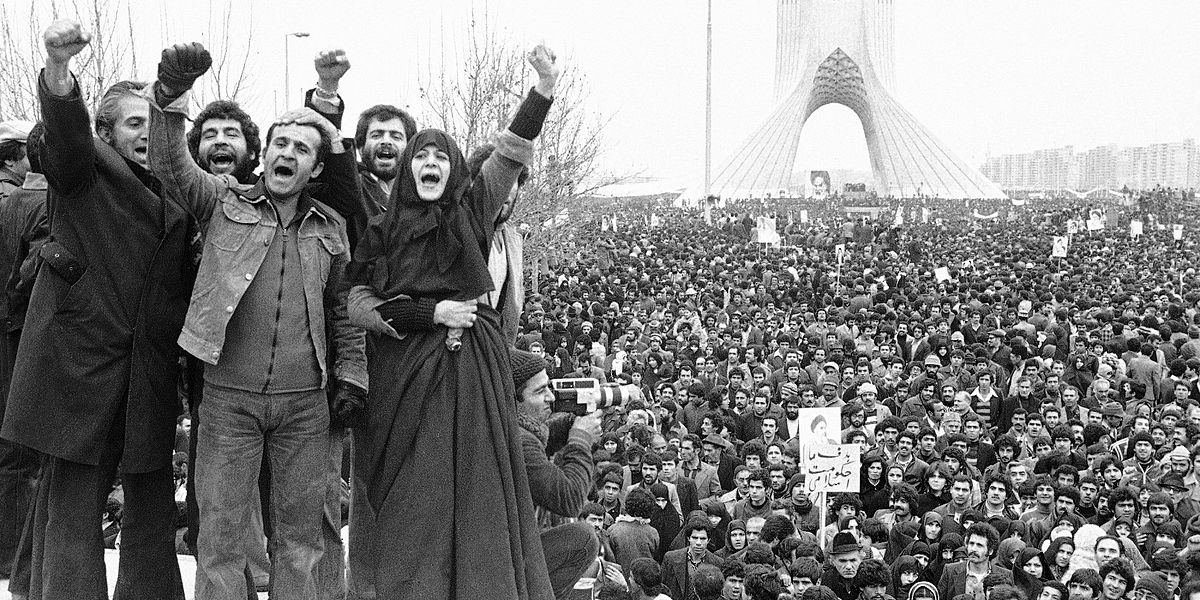
Iranian_Revolution_in_Shahyad_Square

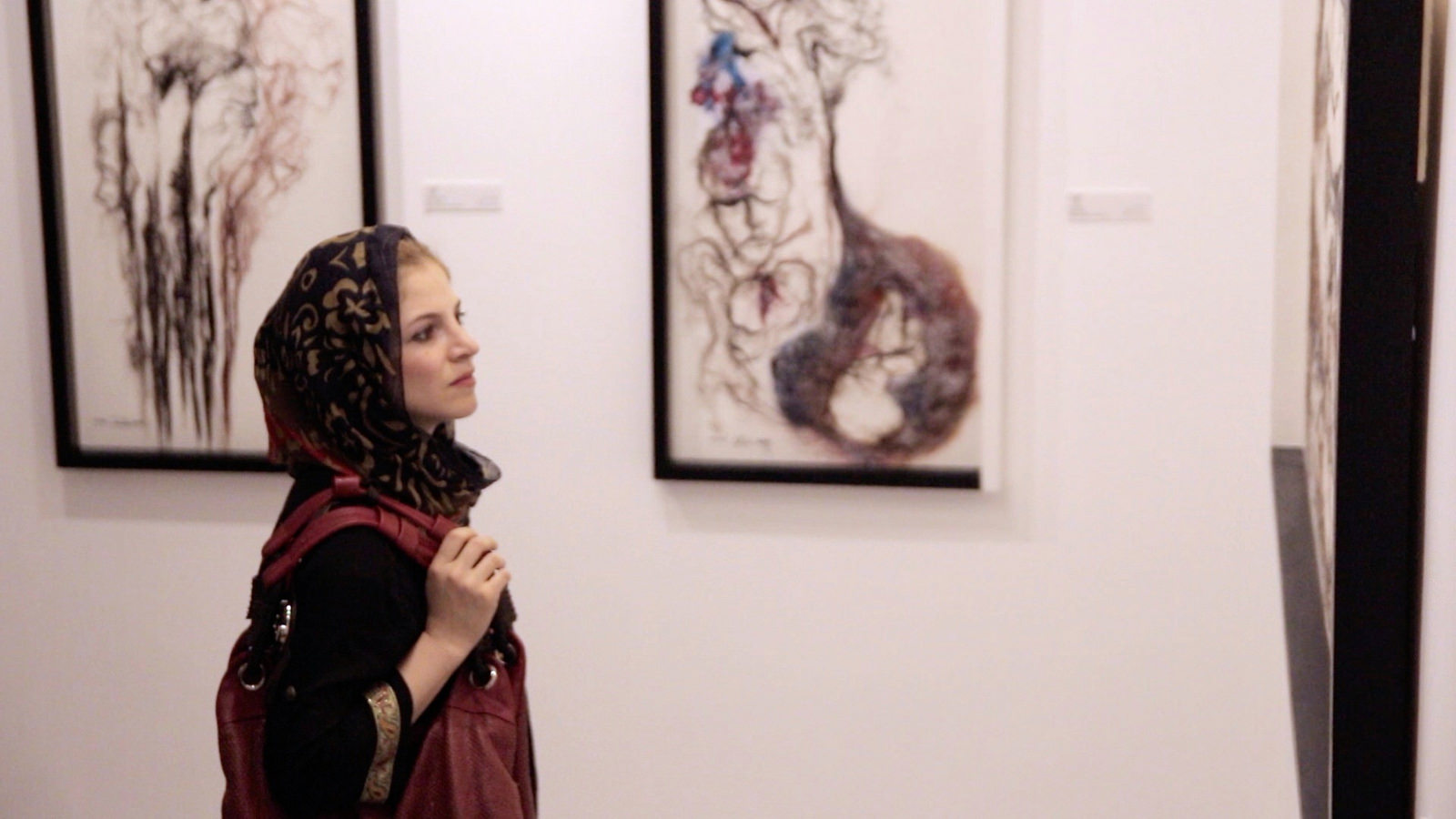
Iranian_Revolution_in_Shahyad_Square
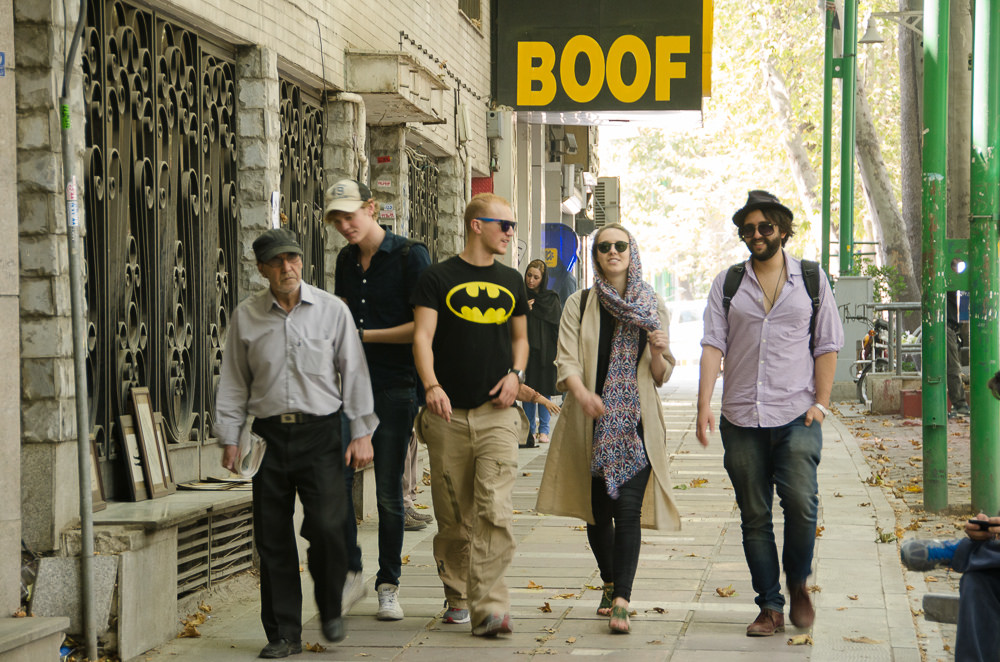
Iran attracts more Western tourists

 wonderfully amazing trip

At least 1,148 million tourists visited Iran during the first three months of the current financial year (20 March-21 June), Abdolreza Mohajerinejad, an official of the Cultural Heritage, Crafts and Tourism Organization Of Iran.

The figure shows a decrease of 9.6 per cent compared to the same period of the previous year, said Mohajerinejad, director of the Cultural Heritage, Crafts and Organization Tourism Development and Planning Bureau Of tourism, the ISNA news agency reported on 23 August.

Autumn is mainly related to the decline in the number of tourists from the northern states and the Persian Gulf, he said.

Nevertheless, the number of tourists from the EU and the US who visit #Iran is increasing added Mohajerinejad.

Without disclosing the exact number of Western tourists who visited Iran during the period, Mohajerin stated that during the 15-month period from March 2016 to June 2017, their number increased by 56.6% the previous year.

More than 4,911 million tourists visited Iran during the last fiscal year (ended March 20, 2017), indicating a decline of 2.5 percent year-on-year, he said.

According to Mohajerinejad, the number of tourists from the northern states and Iraq decreased by 9.9 percent in one year.

Meanwhile, Iranian officials earlier announced that the number of tourist flows over the past year had increased by 33% to reach six million visitors.

Iran’s annual tourism income, over the past year, increased by 11 percent to 8.3 billion.

The Memory of Saint Thaddeus and His Faithful Followers

Iran’s Qara Kelisa will honor the memory of Saint Thaddeus and his faithful followers during a ceremony in the northern province of West Azerbaijan.
The church is located at the end of a road which has been constructed merely for this church and a small nearby village. Qara Kelissa was registered as the ninth historical-cultural heritage of Iran at the 32nd International Heritage Committee of the United Nations Educational Scientific and Cultural Organization (UNESCO) in Quebec, Canada.

Scores of Armenians, Assyrians, and Catholics from Iran and other countries will attend the annual event as part of their pilgrimage on the Day of St. Thaddeus.
The ceremony is known as one of the largest religious ceremonies held by Armenians.
Qara Kelisa, also known as the St. Thaddeus Church, is one of the oldest and most notable surviving Christian monuments of Iran that carries great significance for the country’s Armenian Orthodox community.

The church is composed of two parts: a black structure, the original building of the church from which it takes its name and a white structure, the main church, which was added to the original building’s western wing in 1810 CE.
An ancient chapel two kilometers northwest of the church is said to have been the place where the first Christian woman, Sandokh, was martyred. The chapel is believed to be as old as Qara Kelisa. The structure was inscribed along with two other monastic ensembles of the Armenian Christian faith namely St. Stepanos and the Chapel of Dzordzor.

Saint Thaddeus Monastery
The Saint Thaddeus Monastery is an ancient Armenian monastery located in the mountainous area of Iran’s West Azarbaijan Province, about 20 kilometers from the town of Maku. The monastery is visible from a distance because of the massiveness of the church, strongly characterized by the polygonal drums and conical roofs of its two domes. There are several chapels nearby: three on the hills east of the stream, one approximately 3km south of the monastery on the road to Bastam, and another that serves as the church for the village of Ghara-Kilise.
One of the 12 Apostles, St. Thaddeus, also known as Saint Jude, (not to be confused with Judas Iscariot), was martyred while spreading the Gospel. He is revered as an apostle of the Armenian Apostolic Church. Legend has it that a church dedicated to him was first built on the present site in AD 68.
Not much appears to remain of the original church, which was extensively rebuilt in 1329 after an earthquake damaged the structure in 1319. Nevertheless, some of the parts surrounding the altar apse date from the 10th century.
Most of the present structure dates from the early 19th century when Qajar prince Abbas Mirza helped in renovations and repairs. The 19th-century additions are from carved sandstone. The earliest parts are of black and white stone, hence its Turkish name Kara Kilise, the Black Church. A fortified wall surrounds the church and its now-abandoned monastery buildings.

According to Armenian Church tradition, the Apostles Thaddeus and Bartholomew traveled through Armenia in AD 45 to preach the word of God; many people were converted and numerous secret Christian communities were established there.
The ancient Christian historian Moses of Khorene tell the following story, considered a legend by most modern historiography.
Thaddeus converted King Abgar V of Edessa. After his death, the Armenian kingdom was split into two parts. His son Ananun crowned himself in Edessa, while his nephew Sanatruk ruled in Armenia. About AD 66, Ananun gave the order to kill St. Thaddeus in Edessa. The king’s daughter Sandokht, who had converted to Christianity, was martyred with Thaddeus. Her tomb is said to be located near the Ghara Kelisa.

History and Architecture
In Turkish, Qara means black and the church was called so because a part of it was black. Apparently, the main building of the church was built entirely of black stones but after reconstruction part of the stones was replaced by white ones. This was most probably done intentionally so that future generations would be informed of the original shape and façade of the church.
The church was destroyed and reconstructed at different eras for different reasons. A great part of the church was destroyed in the year 1230 (616 Lunar Hejira) during the attack of Genghis Khan.
When Hulagu Khan was residing in Azarbaijan, Khaje Nassireddin Toosi embarked on its reconstruction.
The main church, built in 1811-1820 is a massive structure, built of light sandstone and adorned with blind arches and decorative and geometric shapes.
Its twelve-sided tambour has been built in alternating light- and dark-colored stones and has an equal number of windows.
The church has two large courtyards, the first of which seems to have been used for agricultural purposes, while the second encircles the white structure, the portico, and a number of rooms.
The first courtyard includes oil-extracting rooms, a miniature windmill, an oven, and a fountain. It is decorated with ornamental motifs and two intricately designed stone crucifixes.
A small door opens to the second courtyard where the refectory and the kitchen along with rooms for resident monks and abbots are located.

The portico, which has been left unfinished, dates back to the mid 19th century.
The building’s exterior is adorned with five rows of alternating dark and light stones as well as numerous round and blind arches, decorated with rosettes, coats-of-arms, flowers and animal figures.
Statues of angels adorn the front facade of the church and its northern and southern facades are decorated with dark-colored stone crucifixes.
Sculptured bas-reliefs bearing passages from the Old and New Testaments, mythical animals, and effigies of saints have added to the beauty of the monument.
Armenians hold that Qara Kelisa is the world’s first church and was constructed in 68 CE by one of the apostles of Jesus, Saint Thaddeus, who traveled to Armenia, then part of the Persian Empire, to preach the teachings of Christ.
The church was destroyed as a result of an earthquake in 1319 and as narrated by Andranik Hovian there is a document showing it was rehabilitated by Saint Zachary in 1329.

Iran: Literary Tourism

Many scholars have different divisions from literary places.But many of them believe that tourism places are in three main categories:

1-Real places: These places are directly linked to the writer’s life.These places are very attractive for enthusiasts of literature, For example, visiting the work table, where their favorite writer wrote survival effects, create a great feeling for them.The place of residence, burial place or birth place are other real places.For example, Shahriyar’s house in Tabriz and Nima’s house in Yosh-Mazandaran, the tomb of Hafez, Saadi, Ferdowsi and others. . .

2-Imaginary Places: These places are somewhat fanciful and relate to the spaces of novels, poem, and plays.

3-Fictitious Places: These places are built with the attention to literary spaces to attract tourists.Dickens World, Chatham, Stratford, that can see the facilities with the theme of Shakespeare’s works.

Top 10 Literary Destinations
Literature in pre-Islamic Iran goes back to the Avesta poems around 1000 BC.These poems, which were part of the ancient Iranian tradition of oral tradition, were shifted chest to chest, and later they created parts of the Avesta book during the Sassanid era.Persian classical literature was created during the first era of Islam in Iran under the rule of the Arabs.The Iranian people’s attention to culture and art has led to the emergence of very famous poets in Iranian literary history.With this long history in the literary history of the world, unfortunately, Iran does not have a good Position among literary tourists.
Discover the top 10 literary destinations, unfortunately, Iran does not have a special place.

1- London: Tomb of Geoffrey Chaucer and John Milton
2- Stratford: Shakespeare’s Birthplace.
3- Edinburgh: The home of writers or important literary figures of the world, Sherlock Holmes Or Harry Potter.
4- Dublin-Ireland: writers such as James Joyce.
5- New York: Rebecca Miller.
6- Massachusetts: With the reputation of the book " Small Women”Louisa May Alcott’s Orchard House”
7- Paris: With Victor Hugo & Alexandre Dumas And bookstores along the Sen River and Cafe Books.
8- San Francisco: Due to the immigration of some writers such as Allen Ginsberg.
9- Rome: with the characters of the ancient world, to contemporary artists “Kites”, “Shelley” and “James.”
10- St. Petersburg: With Tolstoy, Chekhov, Pushkin, and Dostoyevsky.

Today Literary Tourism

–  One billion US dollar revenue per year from literary tourism.
About 118 million American readers spend on average $ 994 per trip, generating more than $ 192 million a year for the US economy.

– Kierkegaard, Denmark: Denmark became the world’s literary tourist destination.
Thousands of literature lovers go to Copenhagen from around the world.The Center for Kierkegaard Studies at the University of Copenhagen in Denmark, organizing hundreds of ceremonies and transformed the city into the world’s top literary tourism destination.

– Literary tourism attracts German readers to Britain.The stories of the English novelist, Razamwood Pilcher,
attract Germans tourists.

Food tourism

Food tourism or “searching stomach” is a delicious experience of travel
Food tourism is one of the types of tourism that can play an important role in attracting tourists.This kind of tourism is related to the customs and culture of countries.It is attractive to visitors who travel from other countries of the world with different culture and also are ready to experience their culture and customs.Food tourism is currently generating $ 200 billion in revenue.

Important countries in food tourism
The main market for this tourism is in Europe and North America, and in Germany, England, Belgium, the Netherlands, Luxembourg, Italy, France, Scandinavia and the United States.The countries that compete with each other and are trying to get a good foothold on the market: Spain, France and Italy in Europe and Japan, India, and Thailand in Asia.

Food tourism, or as the Iranians say, “searching stomach” is a tourist style, which has been a tourist attraction for many years, and every year number of tourists travel with the aim of experiencing new flavors.

Iranian Food Scientists believe there are over 2,500 types of foods and 109 types of beverages and bread and sweets in Iran.Although the Iranian Cooking style is one of the three main schools of food alongside the Roman and Chinese cooking style and the vast geographical area of our country has caused to have a lot of food, but unfortunately, but, Unfortunately, the native foods of Iran are still unknown, and they do not know how Iranian ladies wonder in their kitchens.

Our country, with its diverse climates and subcultures, has the potential to become a destination for food tourists.Guilan province is one of the provinces that has been considered for this purpose from many years ago, and the province was introduced as the first destination for food tourism.

In fact, no matter your travel destination, You’re sure to have a wonderful, memorable and delicious local cuisine at your destination.Unfortunately, this important feature has not been considered and has not become a tourist attraction in Iran.

The most beautiful trails of forestry from north to south
The Green Charm of Iran’s Forests!

Just take a few days out of our daily routine and let’s go to the dreamy regions of Iran.Cool air, green landscape and tranquil silence, and the clear waters of the springs, along with the whisper of the birds, are ahead of you.The beauties of the forest are not limited to the northern fringes of the country.Although traveling to the north and logging in one of the beautiful forests of this region will never be repetitive and tedious.But the journey to the Zagros forests and the ever-spring Mangrove forests on the south coast will also be an enjoyable and memorable experience.
Most of Iran’s forests are located in the northern regions of the country and south of the Caspian Sea.
These temperate climatic zones are drawn from the east of Ardebil province to North Khorasan province, and along with them, there are three provinces of Gilan, Mazandaran, and Golestan.

The most beautiful trails of forestry from north to south Header

The most beautiful trails of forestry from north to south Header

A few essential things:
“Jungle Trekking” is one of the most entertaining and exciting branches of “nature”, whose potential risks aren’t less than climbing.But with caution and a little familiarity with the route, there can be no possible risks.
The most important principle in “forestry” and sightseeing in the depths of the woods is to have a local guide.
But some other principles are essential:
1- Try to have a few bottles of water.
2- Wear cotton clothes, and to walk, use Walking boots, not flat.
3- It can always rain.So have a cover for your backpack.
4- If you go away from the countryside, be careful not to get close to the house, because it may be damaged by domestic dogs.
5- Take equipment like a rope, a sharp knife, a compass, and a map.
6- If you unconsciously separated from the group, inform them with making the loud noise.
7- Remember, this is you who have entered the nature and environment of the animal life, vazSo respect the privacy of the homeowners.Animals do not basically attack humans until they are noticed.So always keep your distance with every living thing.Remember, the quietest animals in the forest can also be dangerous to humans.

The most beautiful trails of forestry from north to south Vaz forest

The most beautiful trails of forestry from north to south Vaz forest

The songs of the “Waz” forest in a dream way

The forests of this area are related to millions of years ago and also the third period of geology.The paths of the “Vaz” forest pass through the old trees of this region.The highlands of the foresVaz” are part of the ancient Hyrcanian forest.The unique beauty of this area is for those who are going to visit the area on foot.You can see the beauty of this area in an 80 km way.

The most beautiful trails of forestry from north to south Gisom Beach

The most beautiful trails of forestry from north to south Gisom Beach

Camping in the beautiful Gilan Forest Tunnel

We take you to one of the Plain area and semi-mountainous regions of Gilan.This area has many beauties that attract every visitor.There is less tourist who comes to Gilan Province and does not go to Gisum forest.Gisum is one of the most beautiful and spectacular areas of the city of Talesh, located 18 km from Talesh Route in Rasht.The characteristic of the Gisom forest, which has made it attractive to tourists, is the existence of thick and tall forest trees that have risen to the sky on either side of the coastal road of Gisom.
These trees have created a beautiful and spectacular tunnel road with their green walls.

The most beautiful trails of forestry from north to south Alimestan

The most beautiful trails of forestry from north to south Alimestan

Jack and the Beanstalk, Alimestan forests!

When you walk on the roads of this forest, you enter the green heaven among the forests.When we run the roads of this forest path, Jack and the Beanstalk dream looks more believable!The beautiful forests of Alimistan are located 140 km from Tehran and you have to cross the road to Haraz.The people who roam the forest will be amazed by the beauty of this beautiful and pristine jungle.For climbers, the Alimistan Peak with a height of 2510 meters is the best choice.

The most beautiful trails of forestry from north to south Hara

The most beautiful trails of forestry from north to south Hara

The wonders of the ever-spring forest “Hara”

Just have a tidal journey to see one of the strangest planets in Qeshm Island and enjoy its beauty.Hara forest on the southern coast of Iran is the center of various types of aquatic animals, birds, and amphibians.Hares Forest, Qeshm Island, is the world’s largest hara forests, and UNESCO has recorded this forest on the world’s environmental inventory.Hara forests are located on the southern coast of Iran with an area of 9200 hectares in different parts of southern Iran.Most parts of the forests are located in the central part of the Persian Gulf.One of the most attractive parts of this forest is the fishing experience, go  toyougo to the dense forests of Hara in the evening and, while watching the dreamy sunset of the Persian Gulf, enjoy it.

The most beautiful trails of forestry from north to south Gorgan Forest

The most beautiful trails of forestry from north to south Gorgan Forest

Life Song in Golestan Fossil Forest

National Park of Golestan Iran is one of the fossil forests.Golestan forests are very wide and each section has a special type of climate.it is connected to the arid and semi-arid regions of the east of the country and northern Khorasan and Semnan provinces, and on the other hand, it is linked to the Caspian forests or Hyrcanian forests.A collection of broad-leaved trees that have covered all the north of Iran.In this forest, you can have wild and domestic animals like the bear, Boar, wolf,
Jackal, deer, And other kinds of animals.

The most beautiful trails of forestry from north to south Shahrood

The most beautiful trails of forestry from north to south Shahrood

Walk in the clouds, between the earth and the sky!

Let this life be upside down!No reason, walk on the clouds, sleep, experience another season of life.
The city of Shahrud is located i the desert and has a warm climate, but the “Cloud” forest is 50 kilometers far from it, it is cold.And always foggy.Cloud Forest, behind Bastam, facing Aliabad Katoul and Gorgan plain is the final destination for a memorable jungle.

The most beautiful trails of forestry from north to south Dalkhani Forest

The most beautiful trails of forestry from north to south Dalkhani Forest

Crossing the “Paradise Hall” in the Dalkhani forests!

Everything can be found in this area Mountain, Grass, Jungle, south-eastSea and whatever you expect to see in a forest area.The beautiful Dalkhani forests which is known as “Paradise Hall”, with massive trees and pleasant weather, can provide one of the finest naturalist experiences.
Dalkhani is a village in the central part of Ramssoutheast of Ramsar.Dalkani is a semi-mountainous forest with a height of about 800 meters and is a good option for climbers.

The miracle of nature in the heart of Iran’s Lute Desert

In the central desert of Iran.In the dry desert of Reagan.
The largest reserve of forests by the name Kahoor and one of the wonders of nature in Iran is located in this area.
While Kavir Lut(desert) is in the eastern part of Kerman,
there are some natural species in the heart of this desert, it remains as an incredible miracle that has endangered the lives of many animals exposed to desert extinction.
This unique Iranian jungle saves 120 villages from the flood of sand.The spectacular jungle with 12 meters high and a safe place for animals and wildlife.

The most beautiful trails of forestry from north to south Tonekabon

The most beautiful trails of forestry from north to south Tonekabon

A Resorts In the heart of the forest over the cloud!

Nice sound, calm and quiet, full of rain, fog, waterfall and trees, place for being at a forest hut.The Aghoozhal forests, due to their location in the protected natural resources and environment area, have no habitat and are intact up to a distance of 30 kilometers.The forests are located in the Tonekabon area of Mazandaran province.

The most beautiful trails of forestry from north to south Fandogh Loo 1

The most beautiful trails of forestry from north to south Fandogh

Together with birds, Beside the hazel trees!

Fandoglu Forest is located in Ardebil province, 10 km from Namin city.Fandoglu area due to unique forest attractions, Rangelands and Heyran Road with a variety of natural charm, has an excellent feature of development in the ecotourism industry.The Fandoglu forest area is part of the forests of the eastern province of Ardebil, which is a continuum of the subtropical forests of Gilan province.

The Americans’ trip to Iran is not stopped

Iran does not reject visa applications by US citizens and there has been no change in the number of tourists entering the United States, according to the official of the Iranian Association of Tour Operators.

ast week, the US State Department issued a travel warning by advising the Americans against Iran’s visit, saying the two Iranian and US nationals are being persecuted.

He added that he had “received reports” that Iran denies visas to the Americans in response to an executive order of US President Donald Trump restricting travel to the United States for the Iranians and five other Muslim majority countries.

However, according to the head of the Iranian Association of Tour Operators Ebrahim Pourfaraj, the claims of the US State Department are false.

“Despite the US threatening us and taking action that violates the spirit of JCPOA, Iran has not reacted and will never respond by targeting US tourists,” he said, referring to Common global plan of action, the official name of the benchmark The Iran nuclear agreement signed with six major world powers two years ago.

“Visa applications from US travel companies have not been denied. Each application is reviewed in detail by the Department of Foreign Affairs, and so far this year all applications have been approved,” Added Pourfaraj.

Iran has relaxed its visa rules and issued a visa upon its arrival to citizens of more than 180 countries in 10 of its international airports. The duration of the airport visa is 30 days, but can be extended for an additional 60 days.

Citizens of the United States, Britain, Canada, Colombia, Somalia, Bangladesh, Jordan, Afghanistan and Pakistan must obtain a visa before leaving for Iran

Amazing 12,000-year-old, Meymand Village

Man and nature joined together to create one of the most amazing and extraordinary places in the world in southern Iran.
Meymand is a rocky village in the district of Meymand in the central part of the city of Babak in the province of Kerman in southeastern Iran.
Meymand dates back to 8,000 to 12,000 years, is another example of the historic tourist attraction in Iran.
The village of Meymand and the Kandovan rocky village in Tabriz are among the few architectural forms of the rock that are widely used in the entire structure of the villages.

As an example, the most important attributes of these villages in comparison with those of the Cappadocia village of Turkey are the residential units of these two villages.In other words, life is still in this village.
The village was registered on July 4, 2015, at the thirty-nine UNESCO World Heritage Summit as the 19th UNESCO World Herald of Iran.
Meymand Village attracts thousands of tourists eager to see its cavern-like houses and experience the traditional rural culture of the region.
This ancient man-made building is certainly among the first human settlements in Iran.It is not yet known who created this collection, and what were the motives of these people for the construction of such structures.
But the motives of the people are very important,Because with simple facilities, the creation of such magnificent collection with an outstanding architecture is admired.

Some people believe that Mithraism used these caves only for the worship and burial of the dead.And after a while due to the emergence of water and air or any other effective environment, these caves have been chosen to reside.The religion of Mithraism was prevalent in Iran before the advent of Ayn Zoroastrianism and continued until long after its emergence.
At the time of Sasanian, Shahrbabak was considered as the birthplace of Babak Sassanid.After the advent of Islam and its entry into Iran, the people of Meymand who believed in the Zoroastrian religion accepted Islam.

Traditional houses in the village are carved out of the rocks and include corridors, pillars and a stove used to cook and heat the house during glacial winters.Locals say their ancestors did not use hammers and scissors, but a type of pointed stone to sculpt images in rocks. The method is still practiced today in the region.
The current inhabitants of the village build their cave houses, known as Kicheh, by chiseling six to nine-meter horizontal cuts into the hillside’s soft sedimentary rock.Meymand’s sedimentary rocks are soft enough to be shaped by hand and hard enough to support the roof of cave units.
There are about 400 Kitchens in Meymand. Each Kicheh covers an area of about 16 to 20 square meters and is nearly two meters high.

The houses are built on one another and accommodate 130 to 150 people, many of whom lead a nomadic life, escaping warm weather by switching to higher pastures in summer.
The houses usually consist of a single square or round room with carved windows as much as possible. Some houses are windowless and dark due to lack of natural light and soot-coated walls.
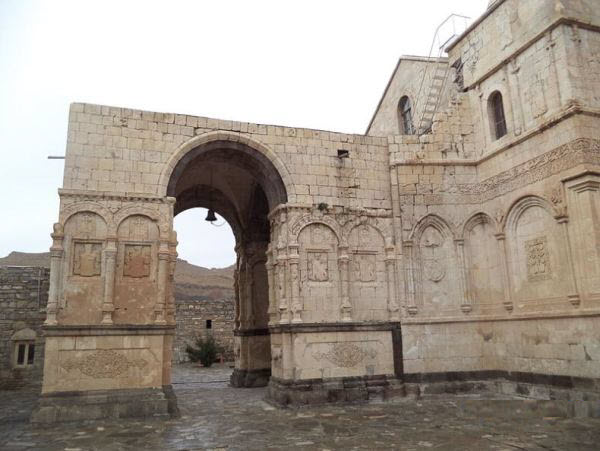
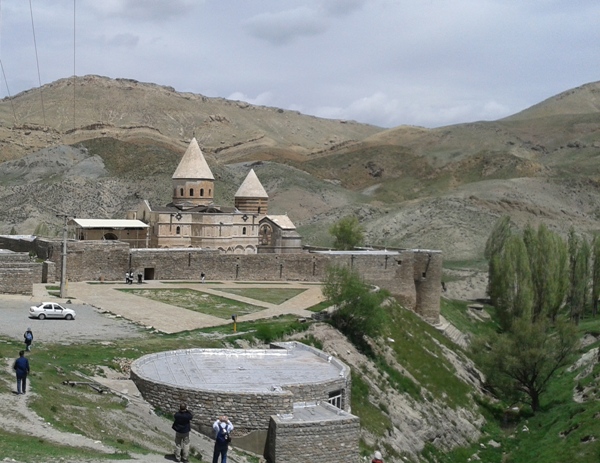
Larger houses have more than one room and sometimes an adjacent shelter or animal shelter. The doors are generally rectangular and wooden, with a latch that locks on a hole drilled in a stone frame.
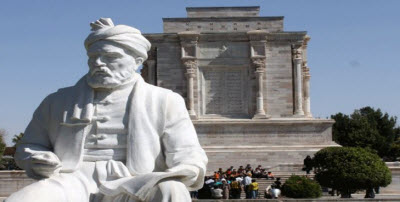
Tourists, who arrive in the village can either stay in guest houses or enjoy staying in cozy, soot-stained cave houses.Guest house rooms are covered with pressed wool felt, called Namad in Persian, and carpets.Meymand also has a public bath, a school, a restaurant, a museum and a number of shops mostly offering herbal medicine and traditional handicrafts.